Author: Fiona Craig

  • Cornish Metals Secures £52 Million Shareholder Credit Facility to Progress South Crofty Tin Project (TIN)

    Cornish Metals Secures £52 Million Shareholder Credit Facility to Progress South Crofty Tin Project (TIN)

    Cornish Metals (LSE:TIN) has obtained up to approximately £52 million in short-term secured credit facilities from key shareholders National Wealth Fund Limited and Vision Blue Resources Limited to help advance development activities at its South Crofty tin project in Cornwall.

    The financing package complements the company’s recently completed US$210 million Nordic bond placement. Part of the proceeds will be used to fund an escrow account required in connection with the bond issue, while the remaining capital will support underground mine development, refurbishment of the project’s shafts, upgrades to surface infrastructure, and broader corporate requirements.

    Facility Structure and Shareholder Support

    The six-month facilities carry an annual interest rate of 13% and are secured through fixed and floating charges across substantially all group assets. The arrangement includes both committed and uncommitted tranches and contains mandatory prepayment provisions tied to the completion of a qualifying equity fundraising.

    As the agreements qualify as related party transactions under AIM regulations, independent directors reviewed the terms and concluded they were fair and reasonable for shareholders. The funding package also highlights continued backing from Cornish Metals’ strategic investors as the company works toward a final investment decision and pursues additional project financing from institutional investors and potential offtake partners.

    More About Cornish Metals

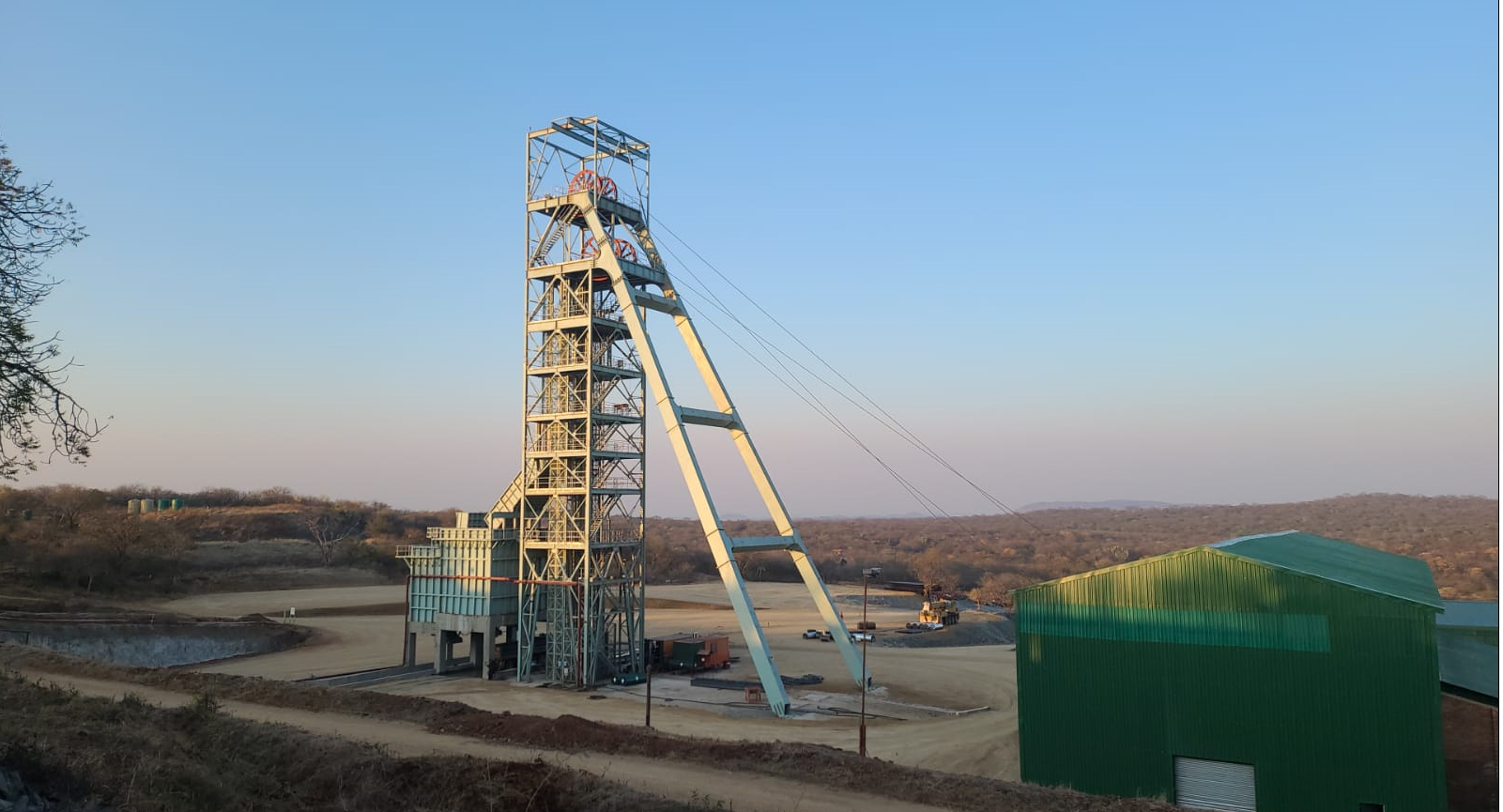
    Cornish Metals is a mineral exploration and development business focused on bringing the South Crofty underground tin mine in Cornwall, U.K., back into production. South Crofty is a fully permitted, historically important high-grade tin asset with existing shaft infrastructure and forecast low all-in sustaining costs. The project also has the potential to become the first primary tin producer in either Europe or North America, supplying a critical mineral widely used in electronics and electrical infrastructure.

  • Zanaga Iron Ore Launches Retail Share Offer at 4p Discount

    Zanaga Iron Ore Launches Retail Share Offer at 4p Discount

    Zanaga Iron Ore Company (LSE:ZIOC) has launched a conditional retail share offer through RetailBook, giving private investors the opportunity to participate in the company’s latest fundraising alongside institutional investors.

    The company said new ordinary shares will be offered at 4 pence each, representing a 13.1% discount to the closing mid-market share price on 13 May. The retail raise is being conducted separately from a previously announced institutional placing and subscription.

    The AIM-listed iron ore developer said the proceeds from the retail offer would be used for additional working capital and general corporate purposes.

    The retail offer is open to both existing shareholders and new investors in the UK, with a minimum subscription of £250. Investors can apply through RetailBook’s network of participating brokers, investment platforms and wealth managers, with shares eligible to be held in ISAs, SIPPs and general investment accounts.

    The offer is conditional on admission of the new shares to trading on AIM, which is expected to take place on 22 May 2026. Completion of the retail offer also depends on the successful completion of the institutional placing.

    Zanaga said it decided to include a retail tranche as part of the fundraising in recognition of its private shareholder base and to allow wider investor participation.

    The company noted that the total value of shares available under the retail offer will be capped at £500,000 unless increased at the company’s discretion. It also reserved the right to scale back applications or reject subscriptions.

    The retail offer is expected to close at 9 p.m. on 14 May, although the company said it could close earlier in the event of strong demand or at its discretion.

    RetailBook will not charge commission on applications submitted through the offer, although investors may still face fees from their chosen broker or platform.

    Zanaga also reiterated the risks associated with investing in AIM-listed companies, warning that investments in smaller and emerging businesses can carry a higher degree of risk and that shareholders could lose part or all of their invested capital.

  • U.S. Futures Climb as Tech Momentum Builds Around Cisco and Nvidia: Dow Jones, S&P, Nasdaq, Wall Street

    U.S. Futures Climb as Tech Momentum Builds Around Cisco and Nvidia: Dow Jones, S&P, Nasdaq, Wall Street

    U.S. equity futures traded higher on Thursday morning, with the Nasdaq set to build on the record close it achieved in the previous session as investors continued to favor technology shares.

    Much of the positive sentiment centered on Cisco Systems (NASDAQ:CSCO), whose quarterly earnings report sparked another wave of buying across the tech sector.

    Cisco shares surged 14.5% in premarket activity after the company posted fiscal third-quarter revenue and earnings above analyst expectations while issuing stronger forward guidance. The company also disclosed plans to eliminate nearly 4,000 jobs as part of its restructuring efforts.

    Nvidia Advances Following China Chip Approval Report

    Nvidia (NASDAQ:NVDA) also moved sharply higher before the opening bell after Reuters reported that the U.S. government had approved sales of Nvidia’s H200 AI chip to roughly 10 Chinese firms.

    The report surfaced as Donald Trump and Chinese President Xi Jinping continued their closely watched summit in Beijing.

    After nearly two hours of discussions at the Great Hall of the People, Trump described the meeting as “great.”

    According to the White House, “The two sides agreed that the Strait of Hormuz must remain open to support the free flow of energy.”

    China’s foreign ministry separately stated that both leaders agreed to pursue a “constructive strategic stable relationship” as the guiding framework for bilateral ties over the coming years.

    Nasdaq and S&P 500 Set Fresh Records

    Wednesday’s session saw strong gains in technology names push the Nasdaq to another all-time closing high.

    The S&P 500 also ended at a record level, while the Dow Jones Industrial Average finished marginally lower after earlier gains.

    The Dow slipped 67.36 points, or 0.1%, to 49,693.20. The S&P 500 added 43.29 points, or 0.6%, to close at 7,444.25, while the Nasdaq climbed 314.14 points, or 1.2%, ending at 26,402.34.

    Chipmakers Continue to Drive Market Leadership

    Semiconductor companies remained among the market’s strongest performers, helping lift the Philadelphia Semiconductor Index by 2.6%.

    Nvidia (NASDAQ:NVDA) helped lead the sector higher after CEO Jensen Huang joined Trump’s delegation to China shortly before the trip began.

    Salesforce and Other Blue Chips Weigh on the Dow

    The Dow underperformed broader markets partly because of weakness in Salesforce (NYSE:CRM), whose shares fell 3.2%.

    Additional declines in IBM (NYSE:IBM), Home Depot (NYSE:HD) and Visa (NYSE:V) also pressured the index.

    Hotter Producer Inflation Adds to Market Concerns

    Investors also digested fresh inflation data from the U.S. Labor Department showing a much stronger-than-expected rise in producer prices during April.

    The producer price index for final demand climbed 1.4% during the month following an upwardly revised 0.7% gain in March. Economists had forecast a 0.5% increase.

    The reading represented the largest monthly increase since March 2022, when producer prices jumped 1.7%.

    Annual producer inflation accelerated to 6.0% from 4.3% in March, surpassing expectations for 4.9% growth and marking the strongest yearly increase since late 2022.

    Economists See Inflation Pressures Persisting

    “The jump in input prices portends further increases for consumer prices in May,” said Ben Ayers of Nationwide. “We expect annual CPI inflation to move above 4.0 percent in May with energy prices still highly elevated more than two months into the Iranian conflict.”

    He added, “With inflation still trending higher, we expect the hawkish wing of the FOMC to advocate for an extended pause in interest rates even with incoming Fed Chair Kevin Warsh likely to prefer to lower rates over time.”

    Rate-Sensitive Sectors Retreat

    Following the inflation release, sectors closely tied to interest-rate expectations — including utilities and housing-related stocks — came under pressure during Wednesday’s trading session.

  • European Markets Advance as UK Growth Beats Expectations: DAX, CAC, FTSE100

    European Markets Advance as UK Growth Beats Expectations: DAX, CAC, FTSE100

    European equities traded mostly higher on Thursday as investors monitored the start of U.S.-China negotiations and reacted to stronger-than-expected economic growth data from the United Kingdom. Official figures showed the UK economy expanded at a quicker pace during the first quarter, supported by growth across all major sectors.

    UK gross domestic product rose 0.6% quarter-on-quarter after increasing 0.2% in the previous quarter. March GDP alone climbed 0.3%, beating economists’ expectations for a 0.1% contraction. For full-year 2025, the UK economy grew 1.4%, compared with growth of 1.0% in 2024.

    Germany’s DAX gained 1.3%, France’s CAC 40 advanced 0.8%, while the UK’s FTSE 100 moved 0.4% higher.

    Technology shares strengthened after U.S. networking giant Cisco (NASDAQ:CSCO) reported quarterly revenue and profit above market expectations.

    Future plc (LSE:FUTR) rallied after the specialist media group reported strong first-half cash generation and reiterated its full-year outlook.

    Premier Foods (LSE:PFD), owner of the Mr Kipling brand, also climbed after beating annual profit forecasts and increasing its dividend payout.

    Land Securities Group (LSE:LAND) posted strong gains after the real estate group projected additional rental growth following full-year earnings that matched consensus expectations.

    Utility company National Grid (LSE:NG.) also moved higher after reporting improved annual earnings.

    Spanish telecom operator Telefonica (BIT:1TEF) surged after reducing its first-quarter losses and reaffirming its guidance for the full year.

    Meanwhile, shares in Burberry Group (LSE:BRBY) fell sharply after the luxury fashion house reported a 2% decline in full-year reported revenue, despite a notable recovery in profitability.

  • Renault CEO Calls for 10-Year Halt to EU Auto Rules (RNO)

    Renault CEO Calls for 10-Year Halt to EU Auto Rules (RNO)

    Renault (EU:RNO) chief executive Francois Provost said on Thursday that he has urged the European Commission to suspend the introduction of new automotive regulations for the next decade in an effort to make smaller vehicles more affordable and improve the competitiveness of Europe’s car industry.

    Speaking at the FT Future of the Car conference in London, Provost said European carmakers are being overwhelmed by regulatory demands. “Our engineers are dealing with a tsunami of regulations from Europe,” Provost said.

    Renault Pushes for Regulatory Stability to Support Electrification

    The Renault CEO explained that a long-term pause in rule changes would allow manufacturers to redirect resources toward reducing vehicle costs and accelerating the shift toward electric mobility.

    “Freeze regulations during 10 years, and then we can focus on affordability, we can focus on electrification,” he said.

    Provost added that stabilising the regulatory framework could provide broader support for the European automotive industry and help revive market conditions across the region.

    “This for sure will help the European market to reboost,” he added.

  • Market Open: ITV Sky Talks, National Grid Investment

    Market Open: ITV Sky Talks, National Grid Investment

    European markets advanced while the FTSE 100 slipped as National Grid unveiled a £70bn plan and Brent crude moved higher.

    Market Overview

    European markets traded higher in early dealing, with the DAX rising 0.76 per cent and the CAC40 up 0.35 per cent, while the FTSE 100 slipped 0.26 per cent. In the US, the Nasdaq and S&P 500 both edged higher after a mixed Wall Street session. Investor sentiment remained focused on inflation risks, political uncertainty in Europe and ongoing central bank caution, while UK banking reforms and corporate investment announcements added to the market narrative.

    Commodity markets reflected continued supply concerns, with Brent crude and natural gas both moving higher amid reports of rapidly declining oil inventories. Copper weakened, pointing to softer industrial demand expectations, while gold eased slightly. Sterling was weaker against the euro, US dollar, Japanese yen and Swiss franc, though it edged firmer versus the Australian dollar. Bitcoin gained against sterling as risk appetite remained supported.


    Market Numbers

    FTSE 100: Down (-0.26%), 10,324.45
    CAC40: Up (0.35%), 8,007.970
    DAX: Up (0.76%), 24,136.81
    NASDAQ: Up (0.07%), 29,504.3
    S&P 500: Up (0.14%), 7,462.6


    In the Headlines

    World Cup advertising hopes – ITV (LSE:ITV)

    ITV said it expects the FIFA World Cup to provide a boost to advertising revenues later this year while confirming it remains in active discussions over a potential Sky TV partnership. Investors are monitoring the talks closely as the broadcaster looks to strengthen its long-term streaming and distribution position.

    Major infrastructure spending – National Grid (LSE:NG.)

    National Grid unveiled plans to invest at least £70 billion over five years as it accelerates electricity network upgrades and energy transition projects. The programme highlights the scale of UK infrastructure spending required to support renewable energy expansion and grid resilience.


    Currencies (vs GBP)

    USD: Down (-0.04%), $1.3515
    CHF: Down (-0.07%), Fr.1.05666
    EUR: Down (-0.03%), €1.1535
    JPY: Down (-0.07%), ¥213.382
    AUD: Up (0.05%), $1.862670
    Bitcoin (BTC/GBP): Up (0.79%), £59,087.3


    Commodities

    Copper: Down (-1.07%), 6.6033
    Gold: Down (-0.45%), 4,698.00
    Brent Crude: Up (0.27%), 103.975
    Natural Gas: Up (0.53%), 3.0365

  • Oil Prices Firm as Investors Watch Trump-Xi Summit for Iran Breakthrough

    Oil Prices Firm as Investors Watch Trump-Xi Summit for Iran Breakthrough

    Oil prices traded modestly higher on Thursday as markets closely followed the summit between Donald Trump and Xi Jinping for signs that diplomatic discussions could help ease tensions surrounding the Iran conflict.

    Trump is expected to encourage Beijing to use its influence with Tehran in an effort to secure a deal with Washington aimed at ending the war. However, analysts remain doubtful that Xi will place significant pressure on one of China’s key strategic partners.

    Brent crude futures rose 45 cents, or 0.43%, to $106.08 a barrel by 07:14 GMT, while U.S. West Texas Intermediate crude futures gained 41 cents, or 0.41%, to $101.43 a barrel.

    Rising Inflation Risks Continue to Pressure Energy Markets

    Both benchmark oil contracts had moved lower on Wednesday as traders worried that higher fuel costs could add to inflationary pressures and increase the likelihood of additional U.S. interest rate hikes.

    Brent crude dropped by more than $2 per barrel in the previous session, while WTI crude fell by more than $1 per barrel.

    At the opening of the two-day summit in Beijing, Xi Jinping told Trump that trade discussions were progressing, although he warned that disputes surrounding Taiwan could push relations between the two countries onto a dangerous path.

    Xi’s remarks, published by Chinese state news agency Xinhua, came ahead of what Trump described as potentially the “biggest summit ever” following a ceremonial welcome at Beijing’s Great Hall of the People.

    Traders Adopt Wait-and-See Approach

    Analysts at ING Group said in a note that “Oil prices are in a wait-and-see mode,” while cautioning that markets may be overly optimistic about the possibility that U.S.-China talks could deliver meaningful progress toward resolving the Iran conflict.

    The Strait of Hormuz, one of the world’s most strategically important energy corridors, has remained largely closed since the outbreak of the war at the end of February.

    “Failure to make meaningful progress on reopening the strait could leave the US with few options other than renewed military action,” said Tony Sycamore of IG Group in a research note.

    Iran Expands Regional Shipping Arrangements

    Iran appears to have tightened its grip over the Strait of Hormuz by securing agreements with Iraq and Pakistan to transport oil and liquefied natural gas from the region.

    A Chinese supertanker carrying two million barrels of Iraqi crude successfully crossed the strait on Wednesday after being stranded in the Gulf for more than two months. It marked only the third tanker to leave the strait since the conflict began.

    IEA Warns Supply Could Fall Behind Demand

    The International Energy Agency said on Wednesday that global oil supply is now expected to lag behind demand this year as the conflict disrupts Middle Eastern production and rapidly depletes inventories.

    Prior to the escalation of the war, the agency had forecast a global supply surplus.

  • Gold Firms as Traders Monitor Trump-Xi Summit and Inflation Pressures

    Gold Firms as Traders Monitor Trump-Xi Summit and Inflation Pressures

    Gold prices posted modest gains on Thursday as investors focused on developments from the meeting between Donald Trump and Xi Jinping, while persistent concerns over energy-driven inflation continued to shape sentiment across precious metals markets.

    Spot gold climbed 0.3% to $4,700.25 per ounce by 02:56 ET (06:56 GMT), recovering slightly after declines in the previous two sessions. U.S. gold futures, however, slipped 0.2% to $4,697.97.

    Markets Await Clarity From Trump-Xi Discussions

    Investors remained cautious as the first phase of the two-day summit between Trump and Xi got underway.

    During the meeting, Xi Jinping said China and the United States had achieved “positive progress” in recent trade talks and stressed that cooperation between both nations would help support global stability.

    Donald Trump praised Xi as a great leader and said ties between Washington and Beijing would become “better than ever before.”

    Financial markets are closely watching for signs that the discussions could help reduce geopolitical tensions that have unsettled commodity and foreign exchange markets in recent weeks.

    Gold, which is often viewed as a defensive asset during periods of political and economic uncertainty, continued to draw support from concerns surrounding the Middle East conflict and disruptions affecting the Strait of Hormuz, one of the world’s most important oil shipping routes.

    Strong U.S. Inflation Data Caps Bullion Gains

    Despite support from geopolitical uncertainty, gains in gold remained limited as stronger-than-expected U.S. inflation readings and a firmer dollar weighed on bullion prices.

    Producer prices in the United States accelerated in April at the fastest annual pace since 2022, while consumer inflation also came in above expectations as rising energy prices linked to the Iran conflict filtered into the wider economy.

    The latest inflation figures reinforced expectations that the Federal Reserve could maintain higher interest rates for an extended period, reducing demand for non-interest-bearing assets such as gold.

    The U.S. Dollar Index hovered near its highest level in two weeks following the inflation data, creating additional pressure on bullion by making gold more expensive for overseas buyers.

    Oil prices remaining above $100 per barrel also continued to concern investors, amid fears that prolonged supply disruptions in the Gulf region could intensify global inflationary pressures.

    India Increases Duties on Precious Metal Imports

    Traders were also assessing India’s decision to raise import duties on gold and silver to 15% from 6%, as authorities attempt to curb overseas purchases of precious metals and protect the country’s foreign exchange reserves.

    The higher tariffs may weaken physical demand in one of the world’s largest bullion markets.

    “India meets most of its gold demand through imports, with gold and silver accounting for nearly 11% of total imports. The tariff hike is likely to be a near-term headwind for physical gold demand in India, potentially tempering local buying and weighing on import flows,” analysts at ING Group said in a research note.

    Copper Pulls Back While Remaining Near Historic Highs

    Elsewhere in metals trading, silver fell 0.6% to $87.01 per ounce, while platinum declined 0.4% to $2,128.60 per ounce.

    Copper prices also retreated, although they continued to trade close to record territory. Benchmark copper futures on the London Metal Exchange dropped 1.3% to $13,953.33 per tonne, while U.S. copper futures lost 0.5% to $6.58 per pound.

    LME copper had earlier climbed to $14,191.48 per tonne during Wednesday’s trading session, remaining close to the all-time high of $14,531.70 per tonne reached in late January.

    “The move above $14,000/t highlights just how tight the copper market has become. Low inventories outside the US and ongoing disruptions across key producing regions leave prices increasingly sensitive to any incremental demand growth,” ING analysts added.

  • Trump-Xi Talks, Cisco’s AI Shake-Up and Oil Surge Drive Global Market Moves: Dow Jones, S&P, Nasdaq, Wall Street Futures

    Trump-Xi Talks, Cisco’s AI Shake-Up and Oil Surge Drive Global Market Moves: Dow Jones, S&P, Nasdaq, Wall Street Futures

    U.S. equity futures traded higher on Thursday as investors balanced optimism surrounding artificial intelligence against geopolitical uncertainty linked to the summit between Donald Trump and Xi Jinping.

    Meanwhile, crude oil prices stayed above the $100-per-barrel mark as markets looked for potential diplomatic progress regarding the conflict involving Iran. Shares of Cisco Systems (NASDAQ:CSCO) also jumped after the company announced a major restructuring initiative tied to artificial intelligence, while Kevin Warsh was formally confirmed as the next chair of the Federal Reserve.

    Futures Climb as AI Momentum Continues to Support Tech

    As of 03:40 ET, futures tied to the Dow Jones Industrial Average were up 176 points, or 0.4%, while S&P 500 futures gained 18 points, or 0.2%. Nasdaq 100 futures led the advance with a rise of 144 points, or 0.5%, extending the strong performance in AI-related technology stocks.

    Reuters reported that the U.S. government has approved approximately 10 Chinese firms to purchase Nvidia’s H200 artificial intelligence chip, currently the company’s second-most-powerful processor, although deliveries have not yet started.

    Jensen Huang, chief executive of Nvidia, is accompanying Trump during the China visit, increasing speculation that discussions could pave the way for expanded H200 sales in China.

    On Wednesday, the S&P 500 closed at another record high, while the Nasdaq Composite advanced 1.2%. The Dow Jones Industrial Average underperformed, slipping 0.1%.

    Analysts at Vital Knowledge said semiconductor stocks rallied after reports that Huang joined Trump on the trip to China, while software and services companies “were not invited to the latest tech bacchanalia.” They added that broader market activity “wasn’t nearly as robust,” citing weakness in the equal-weight S&P 500 index.

    Investors also largely dismissed stronger-than-expected U.S. producer inflation figures, marking the second consecutive day of upside surprises in inflation data.

    “Equity bulls dismissed the PPI as simply a function of Iran and since the consensus view continues to anticipate an accord with Tehran, the assumption is that inflation will cool once that deal is reached,” the Vital Knowledge analysts said.

    Trump and Xi Complete Opening Round of Summit Discussions

    The initial phase of talks between Donald Trump and Xi Jinping wrapped up during the opening stage of the two-day summit in Beijing.

    Chinese state media reported that Xi said negotiations — especially those focused on trade — were making progress, although he warned that continued tensions surrounding Taiwan could damage bilateral relations.

    Markets are also closely monitoring whether the summit could produce diplomatic initiatives related to the Iran conflict. Some analysts believe Trump may attempt to secure Chinese support for a longer-term peace framework, given China’s role as a major importer of Iranian crude oil, although it remains unclear whether Beijing would be willing to take on such a role.

    The summit is taking place against a backdrop of mounting global economic uncertainty caused by the ongoing closure of the Strait of Hormuz, the strategically important shipping route near Iran through which roughly 20% of the world’s oil supply moves.

    Oil Prices Stay Elevated Amid Geopolitical Concerns

    Crude prices continued to edge higher on Thursday, with analysts at ING Group saying traders are “eagerly awaiting the outcome of the meeting between [Trump and Xi], and whether it could yield some positive results on the Iran war.”

    Brent crude remained above $105 a barrel, compared with levels near $70 before the escalation of the conflict.

    The sharp rise in energy prices has intensified fears of renewed inflationary pressure worldwide, especially following recent U.S. consumer and producer inflation reports.

    Analysts at Morgan Stanley warned that the energy shock could weigh on economic growth while also pushing inflation higher beyond energy-related sectors.

    Cisco Shares Rally Following AI-Driven Restructuring Plan

    Shares of Cisco Systems (NASDAQ:CSCO) surged in after-hours trading after the networking company announced a broad restructuring strategy centered on artificial intelligence.

    Cisco said it expects to record approximately $1 billion in charges tied to severance payments and related expenses. The company also confirmed plans to cut roughly 4,000 positions, representing around 5% of its total workforce.

    The group expects approximately $450 million of these restructuring costs to be recognised during the fourth quarter of fiscal 2026, with the remaining charges expected during fiscal 2027. Cisco said the majority of these costs will involve cash expenditures.

    Chief executive Chuck Robbins told analysts following the earnings release that the company does not “always have the exact resources that we need going forward in the right places,” adding that the restructuring effort is more about reallocating resources “versus savings.”

    The announcement comes as companies increasingly invest in AI processors and high-speed networking infrastructure required to support advanced data centres.

    Cisco also raised its fiscal 2026 revenue guidance, now expecting revenue between $62.8 billion and $63 billion, compared with prior guidance of $61.2 billion to $61.7 billion.

    Kevin Warsh Officially Confirmed as New Fed Chair

    The U.S. Senate officially confirmed Kevin Warsh as the next chair of the Federal Reserve on Wednesday, placing the former banker and lawyer at the helm of the central bank as policymakers continue navigating rising inflation pressures.

    The Senate vote followed approval of Warsh’s appointment to the Federal Reserve Board of Governors earlier in the week.

    Warsh will succeed current Fed chair Jerome Powell once Powell’s term expires on Friday. Powell will remain on the Federal Reserve Board, while Fed governor Stephen Miran is expected to step down from his position to make way for Warsh.

  • European Markets Advance as Trump-Xi Talks and AI Momentum Support Tech Shares: DAX, CAC, FTSE100

    European Markets Advance as Trump-Xi Talks and AI Momentum Support Tech Shares: DAX, CAC, FTSE100

    European equities traded modestly higher on Thursday as investors monitored developments from the summit between Donald Trump and Xi Jinping in Beijing, while continued enthusiasm surrounding artificial intelligence provided further support to technology stocks.

    By 07:05 GMT, the pan-European Stoxx 600 index had gained 0.4%. Germany’s DAX advanced 1.1%, France’s CAC 40 rose 0.6%, while the UK’s FTSE 100 traded broadly flat.

    Technology shares remained among the strongest performers in Europe, following the positive momentum seen on Wall Street during the previous session. Companies including ASML (EU:ASML) and STMicroelectronics (BIT:STMMI) both moved higher as investor appetite for AI-related stocks continued to strengthen.

    The first round of discussions between Donald Trump and Xi Jinping concluded during the opening phase of their two-day summit. According to Chinese state media, Xi said negotiations — particularly on trade — were progressing, although he also warned that disagreements over Taiwan could negatively affect relations between the two countries.

    Markets were also watching closely for any signs of diplomatic discussions linked to the conflict involving Iran. Some analysts believe Trump may attempt to encourage China, one of the largest importers of Iranian crude oil, to support efforts aimed at securing a longer-term peace arrangement, although uncertainty remains over whether Beijing would be willing to take on such a role.

    At the same time, investors continue to assess the economic risks associated with the prolonged disruption of the Strait of Hormuz, the key shipping route off Iran’s southern coast through which around 20% of global oil supply passes.

    Oil prices extended recent gains, with Brent crude trading above $105 per barrel compared with levels near $70 before the conflict escalated. The sharp rise in energy prices has increased concerns about renewed inflationary pressure globally, particularly after recent U.S. consumer and producer inflation data.

    Analysts at Morgan Stanley said in a note that “Higher energy prices come with softer growth and higher inflation.”

    European corporate earnings also remained in focus. Shares of Burberry (LSE:BRBY) fell after the luxury group announced it would not pay a dividend and warned about ongoing macroeconomic uncertainty heading into fiscal 2027.

    Meanwhile, shares of Allegro moved higher after the company upgraded guidance for its international business operations.