Author: Fiona Craig

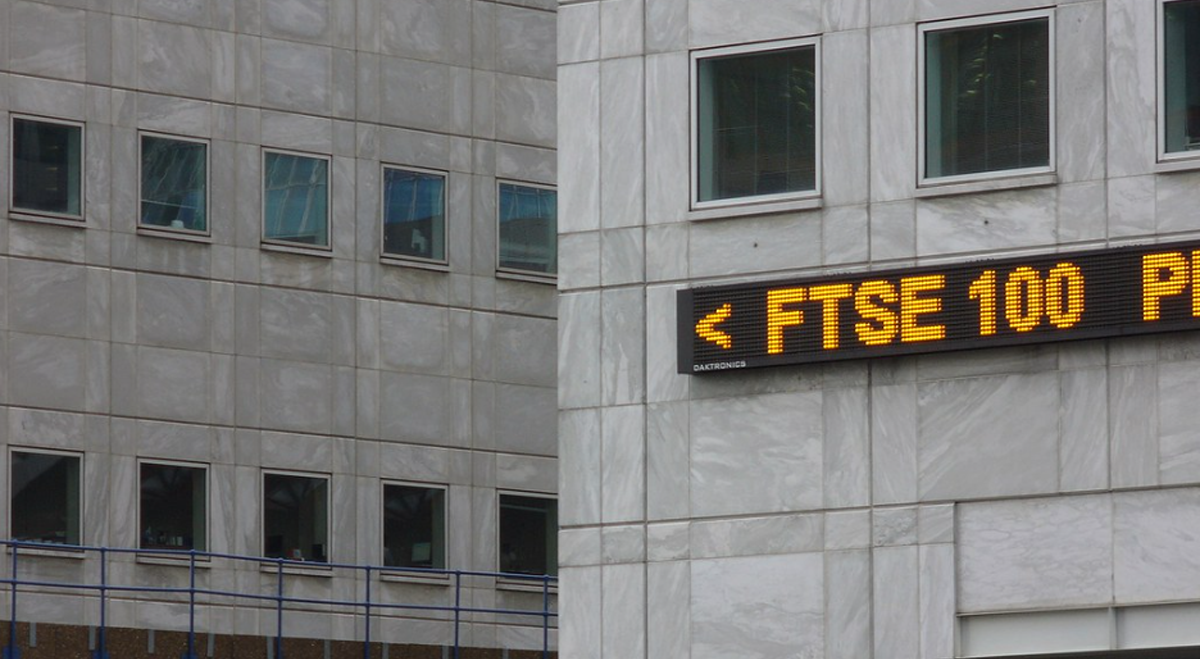
  • FTSE 100 Edges Lower as UK Growth Slows and Hormuz Risks Remain in Focus

    FTSE 100 Edges Lower as UK Growth Slows and Hormuz Risks Remain in Focus

    UK equities moved modestly lower on Thursday as investors assessed a slowdown in British economic growth alongside continuing geopolitical uncertainty surrounding the Strait of Hormuz.

    As of 03:06 ET (07:06 GMT), the FTSE 100 was down 0.10%, underperforming its major European counterparts. Germany’s DAX advanced 0.40%, while France’s CAC 40 gained 0.27%.

    Sterling was broadly steady against the U.S. dollar, with GBP/USD trading near 1.3481, down around 0.10%.

    UK GDP Growth Cools in Second Quarter

    Preliminary figures from the Office for National Statistics showed that the UK economy expanded 0.4% during the second quarter of 2026, matching economists’ forecasts but slowing from growth of 0.6% in the opening three months of the year.

    The monthly figures provided a somewhat stronger signal heading into the second half. GDP increased 0.3% in June, beating expectations for a decline.

    That followed unchanged output in May, which was revised down from an earlier estimate of 0.1% growth, while April’s 0.1% contraction was left unrevised.

    The stronger June performance helped offset the subdued start to the quarter, although the overall figures confirmed that the pace of UK economic expansion moderated from the first quarter.

    Strait of Hormuz Tensions Keep Investors Cautious

    Geopolitical developments remained another major influence on market sentiment as uncertainty surrounding the Strait of Hormuz continued.

    U.S. Central Command said on Wednesday that American forces had redirected 59 commercial vessels, disabled three and boarded two as of August 12 as part of efforts to enforce a naval blockade against Iran. CENTCOM described the operation as America’s “steel wall blockade” in the Strait of Hormuz.

    U.S. President Donald Trump said earlier on Wednesday that the United States had “total control” of the Strait of Hormuz and would retain it. He described the naval operation as a “wall of steel” and said Iran had no navy, air force or effective military leadership.

    Meanwhile, Iranian Foreign Minister Abbas Araghchi criticised France and other Western countries over what he characterised as hypocrisy regarding human rights.

    A New York Times report concerning events around last month’s NATO summit in Ankara also said Iran had obtained precise information about Trump’s location. According to the report, U.S. officials identified a surface-to-air missile threat against his aircraft, leading to the use of a decoy operation.

    Gold and Oil Prices Move Lower

    Precious metals weakened during Thursday’s session despite the continuing geopolitical uncertainty.

    Gold futures fell 0.70% to $4,436.65 an ounce, while spot gold declined 0.65% to approximately $4,380.

    Oil prices also moved lower. Brent crude slipped 0.48% to $88.55 a barrel, while WTI crude declined 0.53% to $82.83.

    Energy markets remain sensitive to developments around the Strait of Hormuz given the waterway’s importance to international oil and gas shipments.

    UK Round-Up

    Antofagasta (LSE:ANTO) reported a 27% increase in first-half core earnings as stronger copper prices helped counter weaker production. The miner also reduced its 2026 production forecast following a shutdown at one of its operations.

    Entain (LSE:ENT) exceeded expectations for first-half core profit, with strong customer engagement around the World Cup and cost-saving measures helping the gambling group absorb the impact of higher UK gaming taxes.

    With domestic economic growth losing some momentum and geopolitical uncertainty remaining elevated, investors are likely to continue monitoring incoming UK data and developments in the Middle East for direction.


  • Why UK Food Inflation Has Stayed Lower Than Expected Despite Rising Costs

    Why UK Food Inflation Has Stayed Lower Than Expected Despite Rising Costs

    Warnings of a sharp acceleration in UK food inflation have so far failed to materialise, with intense supermarket competition, stronger supplier hedging and consumer resistance to higher prices helping contain the impact of rising industry costs.

    Britain’s food sector warned in February that surging energy prices following U.S. and Israeli strikes on Iran could push food price inflation towards 10% by Christmas. Six months later, the direction of travel has been markedly different, with food inflation falling to its lowest level in almost two years.

    UK food and non-alcoholic beverage prices increased 1.7% in the 12 months to June 2026, slowing from 2.2% in May and recording the weakest rate since August 2024.

    That was comfortably below the 3.6% June rate projected by the Bank of England in April and far short of the more than 9% increase the Food and Drink Federation had anticipated by December.

    Supermarket Competition Keeps a Lid on Prices

    One of the biggest factors limiting food inflation has been the increasingly aggressive battle between Britain’s major grocery chains.

    Tesco (LSE:TSCO), Sainsbury’s (LSE:SBRY), Asda, Morrisons, Marks & Spencer (LSE:MKS), Aldi and Lidl are competing intensely for customers, making retailers reluctant to pass the full impact of higher costs onto shoppers.

    Fresh and chilled products have become particularly important battlegrounds because consumers frequently use prices in these categories when deciding where to shop. Some supermarkets have consequently accepted pressure on margins to maintain competitive shelf prices.

    Branded food producers have also been cautious about demanding substantial price increases, partly because doing so could encourage consumers to switch towards cheaper supermarket own-label alternatives.

    “The single biggest factor behind food inflation not progressing as strongly as we thought is the competitive intensity of the industry,” Shore Capital’s head of consumer research Clive Black said.

    Worldpanel by Numerator data showed Tesco’s market share slipped during June and July for the first time since July 2023, demonstrating that even Britain’s largest supermarket is facing significant competitive pressure.

    Chief executive Ken Murphy has described the UK grocery sector as an “incredibly competitive” market.

    Promotions Help Consumers Manage Grocery Bills

    Retailers are also relying heavily on promotions to attract and retain shoppers following years of weak improvements in living standards and an extended cost-of-living squeeze.

    Nearly one-third of grocery purchases were made on promotion during the four weeks to June 14, according to Worldpanel.

    A weekly pricing study from The Grocer provides another indication of the intensity of competition. Five major supermarket groups have each ranked as the cheapest retailer during at least one of the publication’s last 15 surveys.

    The continued expansion of German-owned Aldi and Lidl has added further pressure, forcing traditional supermarket groups to remain competitive on everyday prices as well as promotional offers.

    “There’s lots of things going on to manage cost push inflation and keep a lid on the price that the consumer sees on the shelf,” said Kunal Kothari, a fund manager at Aviva Investors, which owns shares in Tesco and Sainsbury’s.

    Cost Savings Give Supermarkets More Flexibility

    Behind the competition on supermarket shelves is a significant push to reduce operating expenses.

    Retailers have been implementing cost-saving programmes to compensate for higher wages, taxes, regulatory expenses and other pressures, giving them greater scope to avoid passing every cost increase directly to consumers.

    Tesco has generated more than £2.2 billion ($3 billion) of savings during the past four years and is targeting another £500 million this year.

    Supply-chain automation has contributed to those efficiencies, while artificial intelligence is increasingly being deployed to improve product markdown decisions and reduce food waste.

    These measures have allowed retailers to redirect some savings towards maintaining lower prices even as other areas of their cost bases have increased.

    Suppliers Better Prepared for Commodity Volatility

    Food manufacturers and suppliers have also changed their approach following the inflation shock triggered by Russia’s invasion of Ukraine.

    Companies that were previously exposed to sudden increases in energy and ingredient prices are now hedging costs further in advance, reducing their vulnerability to short-term commodity market volatility.

    “They’ve learnt their lessons,” Tesco’s Murphy said. “People are a lot better hedged this time round,” he added.

    Lower prices for some soft commodities, including cocoa and coffee, have provided additional assistance to producers and retailers.

    Morgan Stanley UK economist Bruna Skarica has also highlighted the tougher competitive environment facing Tesco this year. The supermarket had previously been able to increase prices while simultaneously gaining market share in 2023 and 2025, but that strategy has become harder to repeat in 2026.

    Lower Inflation Comes at a Cost to Profits

    Consumers may have avoided the food price increases previously feared, but supermarkets themselves are feeling the financial consequences.

    Both Tesco and Sainsbury’s have provided unusually broad ranges for their full-year profit guidance. At the lower ends of those forecasts, earnings would decline compared with the previous year.

    That highlights the trade-off facing the industry: retailers can absorb higher costs and protect market share, but doing so places pressure on margins and profitability.

    The situation also raises questions over how long supermarkets can continue shielding households if operating and supply-chain expenses remain elevated.

    Food Price Risks Have Not Disappeared

    Food inflation has also remained relatively subdued across the euro zone, although broader UK inflation has generally been higher than in other parts of Europe. This could indicate that British supermarkets and suppliers have absorbed a larger proportion of recent cost increases rather than immediately passing them through to consumers.

    For households, the trend offers some relief from broader cost-of-living pressures as Prime Minister Andy Burnham’s government places affordability among its early priorities.

    However, the outlook remains uncertain. Britain’s continuing drought is emerging as a potential threat to agricultural output and food costs in 2027, while energy and commodity markets remain vulnerable to geopolitical disruption.

    The experience of the past six months suggests retailers and suppliers are better equipped to manage sudden cost shocks than during the previous inflation cycle. Whether they can continue doing so without materially damaging profitability will be a key question for the remainder of the year.

  • UK Economy Grows 0.4% in Q2 as Strong June Provides Encouragement

    UK Economy Grows 0.4% in Q2 as Strong June Provides Encouragement

    The UK economy expanded by 0.4% during the second quarter of 2026, matching economists’ expectations but slowing from the 0.6% growth recorded during the opening three months of the year, according to preliminary figures from the Office for National Statistics.

    While the headline quarterly figure pointed to a loss of momentum, the underlying data provided some more encouraging signs, particularly towards the end of the period.

    June GDP Beats Expectations

    June delivered the strongest monthly performance of the quarter, with GDP increasing by 0.3%. The result comfortably exceeded forecasts that had pointed to a modest contraction.

    The rebound followed a flat reading for May, which was revised down from the previously estimated 0.1% increase. GDP contracted by an unrevised 0.1% in April.

    June’s stronger performance therefore helped compensate for the subdued start to the quarter, although overall economic growth still moderated compared with the first quarter.

    Services and Construction Support Growth

    Services, which account for the largest share of UK economic activity, expanded by 0.5% during the second quarter and provided the main contribution to growth.

    Construction output increased by 0.3%, while overall production was unchanged. Improvements in manufacturing were offset by weaker activity across electricity, gas and water supply.

    The figures underline the continuing importance of the services sector to the UK’s economic performance while showing a more uneven picture across industrial activity.

    Investment and Household Spending Rise

    Looking at expenditure, gross fixed capital formation was one of the principal contributors to second-quarter growth, increasing by 1.2%.

    Household consumption also provided support, rising 0.3% during the period.

    Government consumption moved in the opposite direction, falling 0.3%. The decline partly reflected lower spending on health and education, with weaker education activity potentially linked to school closures during the June heatwave.

    GDP Per Head Shows Improvement

    Real GDP per head, which can provide a closer indication of changes in living standards than overall economic output, increased 0.4% during the quarter.

    Compared with the same period a year earlier, real GDP per head was 1% higher, indicating that economic growth continued to outpace population effects on an annual basis.

    Nominal GDP, which measures economic output at current prices, increased 0.8% during the quarter and was 4.1% higher year-on-year.

    According to the ONS, much of the increase in nominal output was attributable to stronger gross operating surplus.

    June Rebound Provides More Positive Signal

    Although the slowdown from first-quarter growth indicates that the UK economy lost some momentum during the spring, June’s stronger-than-expected expansion provides a more positive signal heading into the second half of 2026.

    Growth across services, investment and household consumption also suggests that activity was relatively broad-based in several important areas of the economy. However, stagnant production and weaker government consumption highlight continuing areas of softness.

    The strength of subsequent monthly data will now be important in determining whether June represented the beginning of renewed economic momentum or simply a rebound following the weaker start to the second quarter.

  • Amaroq Raises Gold Production and Recoveries as Main Market Move Supports Growth

    Amaroq Raises Gold Production and Recoveries as Main Market Move Supports Growth

    Amaroq Ltd. (LSE:AMRQ) delivered approximately 9,000 ounces of gold production from its Nalunaq mine during the first half of 2026, exceeding the midpoint of its guidance as the Greenland-focused miner continued to ramp up operations.

    Financial performance also strengthened, with second-quarter revenue reaching $37.3 million and gross profit totalling $25.0 million. Net profit came in at $11.1 million, while an expanded US$70 million revolving credit facility provided additional financial flexibility as the company advances its growth plans.

    The improving operational and financial performance comes alongside Amaroq’s move to the London Stock Exchange’s Main Market, broadening its potential access to institutional investors and international capital.

    New Flotation Circuit Lifts Gold Recoveries

    Amaroq completed and commissioned a new flotation circuit at Nalunaq during the period, helping push gold recovery rates towards 90%.

    The improvement represents an important step in optimising the processing operation as mining and plant throughput continue to increase. Amaroq plans to further ramp up both mining and processing during the second half of 2026.

    Despite the ongoing expansion of operations, the company has maintained its full-year production and cost guidance.

    An updated mineral resource estimate for Nalunaq has also confirmed more than 500,000 ounces of gold at high grades, providing additional support for the mine’s longer-term production potential.

    Exploration Expands Beyond Nalunaq

    Alongside the Nalunaq ramp-up, Amaroq is progressing an extensive exploration programme across its wider Greenland portfolio.

    Work is advancing at the Ilua rare earths prospect, while the company is also targeting the high-grade Minturn iron oxide copper-gold opportunity and continuing exploration at the Nanoq gold project.

    These programmes provide Amaroq with exposure to commodities beyond its existing gold production and could ultimately broaden the company’s resource base across strategic and critical minerals.

    Main Market Listing Strengthens Strategic Position

    Amaroq has transferred its shares to the Main Market of the London Stock Exchange, a move intended to strengthen its capital markets profile and improve access to a wider pool of investors.

    The company has also reinforced its board as it transitions from an exploration-led business towards a larger mining and development group.

    Investment in logistics forms another part of this strategy. Amaroq has acquired the Thorbjorn icebreaker and is progressing its Suliaq logistics venture, which is intended to enhance transportation and operational capabilities in Greenland’s challenging environment.

    Building dedicated logistics infrastructure could support both Amaroq’s existing mining activities and the future development of its broader mineral portfolio.

    Stronger Financial Position Supports Expansion

    Higher production, improved recovery rates and stronger profitability have reinforced Amaroq’s financial position as it continues the Nalunaq ramp-up.

    The enlarged revolving credit facility provides further liquidity for operations and development, while the Main Market listing potentially increases the company’s financing options as it advances exploration and strategic infrastructure investments.

    Execution of the Nalunaq ramp-up remains central to the near-term outlook, while exploration results from Ilua, Minturn and Nanoq could provide additional catalysts as Amaroq seeks to establish a broader Greenland-focused mining business.

    More About Amaroq Ltd.

    Amaroq Ltd. is a Greenland-focused mining and exploration company whose principal producing asset is the Nalunaq gold mine.

    Beyond gold production, the company is developing a portfolio spanning gold, iron ore and strategic minerals. It also has exposure to rare earth elements through the Gardaq joint venture.

    Amaroq is additionally expanding its logistics capabilities through its Suliaq Maritime subsidiary, supporting its longer-term ambition to develop an integrated mining and infrastructure platform in Greenland while accessing international capital through its London Stock Exchange Main Market listing.

  • Petro Matad Advances Oil Sales and Expands Mongolian Renewable Energy Portfolio

    Petro Matad Advances Oil Sales and Expands Mongolian Renewable Energy Portfolio

    Petro Matad (LSE:MATD) has implemented its 2026 Oil Sales Agreement with PetroChina, removing a significant commercial hurdle and providing a route to export and sell crude produced from its Block XX operations in Mongolia.

    The agreement covers approximately 48,000 barrels of Block XX crude, with Petro Matad expecting to receive the associated revenue later in 2026. The development provides greater clarity over monetisation of existing production after delays in finalising the sales arrangement.

    While awaiting the proceeds, the company is prioritising cash preservation and has deferred several planned exploration and development activities.

    Seismic Survey and Well Work Postponed

    Petro Matad has postponed a planned 3D seismic programme as well as work at the Heron-2 and Gobi Bear-1 wells to conserve financial resources until revenue from the oil sales agreement is received.

    Alongside its existing operations, the company continues to seek partners capable of helping fund and accelerate development of its Mongolian upstream portfolio.

    Five companies, predominantly from Asia, are currently reviewing potential farm-out opportunities covering Blocks XX and VII. Securing a suitable partner could provide additional funding while sharing the financial and operational risks associated with future exploration and development.

    SunSteppe Builds 600 MW Renewable Energy Portfolio

    Petro Matad is also making progress with its diversification into renewable energy through its 50%-owned SunSteppe Renewable Energy joint venture.

    SunSteppe has secured exclusivity over three utility-scale solar and battery storage projects with combined capacity of 290 MW. It also intends to bid for an additional 100 MW wind development.

    These opportunities take SunSteppe’s exclusively held renewable energy portfolio to approximately 600 MW, creating a potentially significant development pipeline alongside Petro Matad’s traditional oil operations.

    The renewable projects have received strong government support as Mongolia seeks to accelerate the expansion of domestic clean-energy capacity.

    Two 100 MW Projects Secure Key Approvals

    Two fast-tracked projects, each with planned capacity of 100 MW, have already received feasibility approvals and construction licences.

    Progressing these developments could allow SunSteppe to begin crystallising value from its renewable portfolio while giving Petro Matad greater exposure to Mongolia’s expanding clean-power sector.

    Over time, successful development or monetisation of these assets could create a more diversified business model, balancing Petro Matad’s upstream oil exposure with renewable energy investments.

    Cash Flow Remains a Key Financial Risk

    Despite the commercial progress, Petro Matad’s wider financial outlook remains constrained by significant losses, negative margins and continued negative operating and free cash flow.

    Technical indicators are also generally bearish, with the shares trading below major moving averages and MACD remaining negative. Oversold readings could indicate that selling pressure has become extended, although they do not remove the broader technical weakness.

    The company’s relatively low level of debt provides some financial resilience. However, conventional valuation metrics remain difficult to apply while earnings are negative and no dividend is available.

    Receipt of proceeds from the Block XX crude sale, progress on farm-out discussions and advancement of SunSteppe’s renewable projects are therefore likely to be important factors in Petro Matad’s near-term outlook.

    More About Petro Matad

    Petro Matad is an AIM-quoted oil exploration, development and production company focused on Mongolia. It holds 100% working interests and operatorship of the Block XX and Block VII production sharing contracts.

    Alongside its upstream operations, Petro Matad owns a 50% interest in SunSteppe Renewable Energy, a joint venture developing utility-scale clean-energy projects in Mongolia.

    The combination gives the group exposure to both conventional oil production and the country’s emerging renewable energy market, with solar, battery storage and wind projects forming an increasingly important part of its development portfolio.

  • Costain Builds Record Order Book as Strong Cash Position Supports Growth Plans

    Costain Builds Record Order Book as Strong Cash Position Supports Growth Plans

    Costain (LSE:COST) delivered further growth in the first half of 2026, with a stronger cash position and record forward work providing increased visibility as the infrastructure group prepares for what management expects to be a significant acceleration in growth from 2027.

    Revenue increased 3.4% to £543.1 million, while adjusted operating profit rose 3%. The adjusted operating margin was maintained at 3.2%, demonstrating continued profitability as Costain positions the business for its next phase of expansion.

    Management views the current period as an inflection point, with recently secured contracts and major infrastructure programmes expected to translate into stronger activity over the coming years.

    Net Cash Rises Despite Higher Shareholder Returns

    Costain’s net cash position strengthened to £164.4 million, improving year on year despite increased dividend payments and continued expenditure on share buybacks.

    The balance sheet strength allowed the board to double the interim dividend, reflecting confidence in the group’s financial position and future cash-generating potential.

    Costain’s improved liquidity also provides flexibility to invest in growth opportunities while continuing to return capital to shareholders.

    Record £7 Billion Forward Work Provides Revenue Visibility

    The group’s forward work reached a record £7.0 billion, providing substantial visibility over future revenue. The secured workload covers approximately 91% of forecast revenue for both 2026 and 2027.

    Activity is expected to strengthen during the second half of 2026, supported by projects across the water, airport and road sectors.

    The scale of the order book provides a foundation for management’s expectation of a step-change in growth beginning in 2027, when several major infrastructure programmes are expected to contribute more meaningfully to revenue.

    Costain is particularly well positioned for investment associated with the AMP8 water cycle, alongside continued spending on transport infrastructure and other nationally significant projects.

    Improving Fundamentals Support Outlook

    Costain’s outlook is supported by improving profitability, a strong balance sheet and healthy cash generation. These measures point to a substantially stronger financial position than the company experienced during 2020 and 2021.

    Technical indicators also remain constructive, with Costain shares trading above key moving averages and MACD in positive territory, while broader momentum is relatively neutral.

    Valuation appears reasonable rather than particularly inexpensive. The principal financial concern remains the longer-term decline in revenue recorded over recent years, making delivery of the expected growth acceleration an important test of the company’s strategy.

    The record order book and high level of revenue coverage provide greater confidence in that transition, although successful project execution will be necessary to translate secured work into sustained revenue, margins and cash flow.

    More About Costain

    Costain Group is a UK infrastructure solutions specialist operating principally across transportation and natural resources.

    The company delivers complex infrastructure programmes spanning roads, rail, aviation, water, energy, defence and nuclear energy. Its business model is centred on long-term relationships with government departments, regulated utilities and other major infrastructure clients.

    Costain is positioned to benefit from sustained UK infrastructure spending, including investment associated with the AMP8 water programme and major upgrades across the country’s transport, energy and strategic infrastructure networks.

  • Entain Beats First-Half Revenue Expectations and Begins CEE Exit

    Entain Beats First-Half Revenue Expectations and Begins CEE Exit

    Entain (LSE:ENT) delivered stronger-than-expected revenue growth in the first half of 2026, supported by improved performances across both its online and retail operations and particularly strong trading in the UK and Ireland and Australia.

    Net gaming revenue increased 5% on a constant-currency basis, exceeding market expectations, while online NGR advanced 7%. Higher volumes and increased player engagement, including activity surrounding the Men’s World Cup, helped drive the improvement.

    However, increased UK taxation on online gambling placed pressure on profitability, resulting in underlying EBITDA finishing slightly below the level recorded in the corresponding period last year.

    Entain Raises Interim Dividend Despite Higher Taxes

    The group reported a loss after tax of £11.4 million, although this represented an improvement compared with the previous year. Entain also increased its interim dividend by 5%, demonstrating continued confidence in the group’s cash-generating potential.

    Leverage stood at 3.1 times, while management maintained its full-year expectations for online growth and underlying EBITDA.

    Improving cash generation remains an important part of the investment case, particularly as the group works to absorb higher gambling taxes and improve the consistency of profitability across its international operations.

    Entain Begins Phased Exit From CEE Business

    Alongside its first-half results, Entain outlined a significant portfolio move through a planned phased withdrawal from its Entain CEE operation.

    The process will begin with the sale of a 20% interest in the business, with the transaction implying an enterprise value of €2.1 billion for Entain CEE. The move provides a valuation benchmark for the operation while giving Entain a route to gradually release capital from the asset.

    Proceeds from future stages of the disposal are expected to be directed initially towards reducing debt, with management targeting leverage below three times.

    Once that objective has been achieved, additional proceeds could potentially be returned to shareholders, depending on the group’s capital requirements and financial position.

    Strategy Focuses on Leaner and More Cash-Generative Group

    The CEE exit forms part of Entain’s wider effort to simplify its portfolio and create a more focused business capable of delivering stronger and more predictable cash generation.

    Progress at BetMGM also provides support for the outlook, with management highlighting improving profitability at the U.S. joint venture. Continued gains there could strengthen Entain’s overall earnings and cash flow profile as the business matures.

    Nevertheless, profitability has remained inconsistent, while the higher UK online gambling tax burden represents an ongoing headwind.

    Technical indicators are also relatively weak, with Entain shares trading below important moving averages. Valuation support is limited by negative earnings and the resulting negative price-to-earnings ratio, although the dividend yield provides some support for shareholders.

    More About Entain plc

    Entain plc is a London-listed global sports betting and gaming group operating across online and retail markets.

    The company provides sports wagering and iGaming products across regions including the UK and Ireland, Continental Europe, Australia and other international markets. Its portfolio includes a range of established betting and gaming brands serving customers through digital platforms and physical locations.

    Entain is increasingly focused on online growth, disciplined capital allocation and improving cash generation, while major sporting events remain important drivers of customer activity and engagement across its markets.

  • Light Science Technologies Targets Stronger Second Half as Acquisitions and Order Pipeline Support Growth

    Light Science Technologies Targets Stronger Second Half as Acquisitions and Order Pipeline Support Growth

    Light Science Technologies Holdings (LSE:LST) is targeting a stronger second half of 2026 after a transitional opening six months characterised by acquisitions, fresh funding and a shift in the group’s divisional mix.

    For the six months to 31 May 2026, revenue declined to £3.73 million and the company moved to an adjusted operating loss. However, management highlighted the strengthening of its liquidity position following a £6.6 million fundraising and the completion of three strategic acquisitions spanning passive fire protection, contract electronics manufacturing and AgTech.

    The transactions are reshaping the group’s operations and increasing its exposure to AgTech, while management expects the enlarged portfolio to provide a stronger platform for future revenue and margin growth.

    Acquisitions Reshape Divisional Portfolio

    Within passive fire protection, Light Science Technologies completed the integration of Injectaclad, expanding its capabilities in fire remediation as demand begins to recover following regulatory delays.

    The contract electronics manufacturing division also secured new customers that are expected to generate up to £1 million of annual revenue, providing additional visibility over future activity.

    Meanwhile, the AgTech business continued to advance several projects, including work on a major smart agriculture centre. The division remains focused on technology for controlled-environment agriculture and other applications designed to improve food production efficiency.

    Regulatory Bottlenecks Ease in Fire Protection Market

    Management has highlighted improving pipeline conversion within passive fire protection as regulatory bottlenecks affecting the sector begin to ease.

    A growing order book, combined with stronger revenue momentum since the end of the reporting period, supports the company’s expectation that trading will accelerate during the second half.

    Light Science Technologies expects the improvement in activity to produce a materially stronger and higher-margin second-half performance. If the anticipated order conversion continues, management also sees scope for stronger cash generation extending into 2027.

    The pace at which the passive fire protection pipeline converts into recognised revenue will therefore be an important factor in determining the scale of the anticipated recovery.

    Financial and Technical Indicators Remain Challenging

    Despite the more positive second-half expectations, Light Science Technologies continues to face financial headwinds. Revenue declined during the 2025 financial year and the business returned to losses, leaving its financial performance as a key constraint on the outlook.

    Technical indicators are also bearish, with the shares trading below important moving averages and MACD remaining negative.

    There are some more supportive elements in the financial picture, including positive operating and free cash flow alongside reduced debt. However, negative earnings mean conventional valuation measures such as the price-to-earnings ratio currently provide little support.

    Delivery of the anticipated second-half improvement, successful integration of the recent acquisitions and sustained conversion of the growing order pipeline will therefore be important indicators of the group’s progress.

    More About Light Science Technologies Holdings plc

    Light Science Technologies Holdings operates through three principal divisions: passive fire protection, contract electronics manufacturing and AgTech.

    The group designs, manufactures and installs products and customised solutions addressing areas including structural fire safety, advanced electronics and controlled-environment agriculture.

    Its activities serve customers in the UK and international markets, with the company’s technologies targeting challenges including fire remediation, food security and more efficient agricultural production in changing climatic conditions.

  • Secure Trust Bank Lifts First-Half Profit as Growth Strategy Gains Momentum

    Secure Trust Bank Lifts First-Half Profit as Growth Strategy Gains Momentum

    Secure Trust Bank (LSE:STB) delivered a stronger financial performance in the first half of 2026, with higher lending balances, improved profitability and a stronger capital position providing further evidence of progress under its strategy for targeted growth and increased returns.

    Net lending balances grew 4.9% to £3.5 billion, while the bank maintained a stable risk-adjusted margin of 4.2%. Capital strength also improved, with the Common Equity Tier 1 ratio rising to 14.3%, supported in part by the group’s withdrawal from vehicle finance.

    Adjusted profit before tax increased 9.4% to £31.3 million, while total profit before tax climbed 40.8%, reflecting stronger underlying profitability and lower losses associated with discontinued operations.

    Cost Savings Support Improved Profitability

    Secure Trust Bank delivered £5.5 million of cost savings during the first half and reached an annualised savings run rate of £15 million as management continued to focus on operating efficiency.

    The group remains on track to meet its 2026 guidance, which includes a cost-income ratio of approximately 47% and a CET1 ratio of around 13.5%.

    Its medium-term ambitions also remain unchanged. Secure Trust Bank is targeting annual lending growth of approximately 10% and a return on average equity above 16%, combining expansion in selected specialist lending markets with tighter cost and capital management.

    Retail and Business Finance Operations Expand

    Operational growth continued across several areas of the business. In retail finance, Secure Trust Bank established new partnerships with Magnet and Centrica British Gas while also onboarding 19 smaller retailers operating in the home improvement market.

    The business finance division originated £40 million of bridging loans during the period and developed a speciality finance pipeline for the second half of the year.

    The bank also expanded its funding capabilities by introducing a base rate tracker deposit product and establishing its first relationship with a deposit aggregator, broadening the channels available to attract customer deposits.

    Digital Investment Targets More Efficient Growth

    Secure Trust Bank continued to invest in digital capabilities, including the launch of a new application portal for bridging finance. The platform is intended to streamline the application process and support expansion in the bank’s specialist lending activities.

    Customer adoption of its retail finance app also increased significantly, with the number of users rising to more than 660,000. Additional automation has been introduced within the savings business, allowing the bank to bring new products to market more quickly.

    These investments are intended to improve customer engagement while reducing operational friction as lending volumes increase.

    Share Buyback Reinforces Capital Discipline

    The bank is also returning capital to shareholders through a £10 million share buyback programme, approximately half of which had been completed by the end of the period.

    Combined with its progressive dividend policy, the buyback reflects management’s focus on balancing investment in growth with shareholder returns and maintaining appropriate capital levels.

    Secure Trust Bank’s wider outlook nevertheless carries some financial uncertainty following volatile historical performance, including a move to a net loss in 2025 and inconsistent cash flow. Recent balance sheet improvements provide some counterbalance to these concerns.

    Technical indicators are more supportive, with the shares displaying a clear upward trend and positive momentum. Valuation appears reasonable, although not sufficiently compelling on its own to eliminate the risks associated with previous financial volatility.

    More About Secure Trust Bank

    Secure Trust Bank is a UK specialist retail bank with a trading history spanning more than 72 years. Based principally in Solihull in the West Midlands, the group operates across Business Finance and Retail Finance, including through its V12 brand, supported by a diversified deposit franchise.

    The bank concentrates on specialist lending segments where it believes it can generate attractive risk-adjusted returns. Its strategy is focused on targeted lending growth, higher profitability and disciplined use of capital while serving consumers and businesses across multiple financing categories.

    Secure Trust Bank combines specialist lending with expanding digital capabilities, including savings and retail finance applications, alongside newer areas such as bridging and speciality finance. Partnerships with major home improvement and energy brands form part of its strategy to broaden distribution and drive efficient growth.

  • Distil Secures First U.S. Order as Blavod Black Vodka Returns to American Market

    Distil Secures First U.S. Order as Blavod Black Vodka Returns to American Market

    Distil plc (LSE:DIS) has secured its first U.S. order through distribution partner AIKO Importers, marking the return of Blavod Black Vodka to the American market following the withdrawal of its previous distributor during the Covid period.

    The agreement gives Distil renewed access to the world’s largest spirits market and, in particular, the U.S. vodka segment, which represents the country’s biggest spirits category. The company plans to use AIKO’s extensive distribution capabilities to rebuild Blavod’s presence and capitalise on the brand recognition it previously established among U.S. consumers.

    AIKO operates through a network of 185 distributors and maintains relationships with major retailers across the United States, Canada and Puerto Rico, providing a platform for potentially broader North American expansion.

    Initial Blavod Shipment Expected in Third Quarter

    Distil described the first order as substantial, with the shipment expected to leave the UK early in the third quarter of the company’s current financial year.

    The order will also represent the first production run completed under Distil’s new manufacturing agreement with Inter-Continental Brands, the production division of Fortitude Spirits Group.

    Combining the new manufacturing arrangement with AIKO’s established distribution network gives Distil a revised supply and market-access structure as it seeks to rebuild sales of Blavod in the United States.

    Distil Targets Growth in U.S. Premium Vodka Market

    Management at both Distil and AIKO views the relaunch as a significant commercial opportunity. Blavod previously developed brand equity in the U.S., giving the partners an existing foundation on which to rebuild awareness and distribution.

    Successful execution of the relaunch could strengthen Distil’s position within the premium vodka category and potentially create opportunities for wider growth across North America.

    The size of the U.S. spirits market makes the region strategically important for Distil, although the longer-term financial impact will depend on repeat orders, retailer adoption and the ability to convert initial distribution into sustained consumer demand.

    Financial and Technical Weakness Weighs on Outlook

    Despite the progress in the U.S., Distil’s broader outlook remains constrained by weak financial performance. The company continues to report losses and consume cash, leaving successful commercial expansion important to improving its financial position.

    Technical indicators also remain particularly weak, with the shares trading well below major moving averages. Negative MACD readings and an extremely low relative strength index point to substantial bearish momentum, although heavily oversold conditions can also contribute to increased volatility.

    Valuation provides limited support while Distil remains loss-making, resulting in negative earnings-based valuation measures, while no dividend data is available.

    More About Distil plc

    Distil plc is a UK-based owner and marketer of premium spirits brands, including RedLeg Spiced Rum, Blackwoods Gin and Vodka, and Blavod Black Vodka.

    The company focuses on distinctive premium products and uses international distribution partnerships to expand into major spirits markets. North America represents an important growth opportunity, particularly through the large U.S. vodka category and the renewed distribution of Blavod Black Vodka.