Category: Market News

  • Barclays Sees Corporate Earnings Taking Centre Stage Despite Middle East Tensions

    Barclays Sees Corporate Earnings Taking Centre Stage Despite Middle East Tensions

    Barclays expects investors to shift their attention from geopolitical headlines to corporate earnings as the second-quarter reporting season begins.

    Although renewed conflict between the United States and Iran has increased market volatility, the bank believes company fundamentals will ultimately determine the direction of equity markets.

    Markets React to Higher Oil Prices

    The latest military developments pushed crude oil prices higher while weighing on stocks and bond markets.

    “Equities received more reality checks this week, with the broadening trade coming under pressure as U.S.-Iran tensions re-escalated,” Barclays strategists led by Emmanuel Cau said in a note.

    The bank added that recent market positioning may have intensified the reaction following the sharp decline in oil prices seen earlier this year.

    Focus Turns to Company Results

    Barclays maintains that “the current fragile peace is likely to hold,” limiting the probability of a prolonged energy shock.

    Instead, the bank believes the upcoming earnings season will become the market’s primary catalyst.

    According to the strategists, second-quarter results will be “crucial in reconnecting price action with fundamentals” and will indicate whether equities can continue their recent advance.

    While the bank expects periods of higher volatility during the summer, driven by geopolitics, artificial intelligence valuations and Federal Reserve uncertainty, it believes earnings growth will remain the dominant factor for investors.

  • UK Expands Financial Oversight to Microsoft, Google, Amazon and Oracle Cloud Services

    UK Expands Financial Oversight to Microsoft, Google, Amazon and Oracle Cloud Services

    The UK has introduced a new regulatory framework that brings Microsoft (NASDAQ:MSFT), Google (NASDAQ:GOOG), Amazon (NASDAQ:AMZN) and Oracle (NYSE:ORCL) under direct oversight as critical technology providers supporting the country’s financial sector.

    The initiative is designed to reduce systemic risks arising from cyber threats, technology failures and the increasing reliance of financial institutions on cloud infrastructure.

    Financial Regulators Target Operational Resilience

    Government officials said the designation reflects the growing importance of cloud computing in the delivery of financial services.

    “As banks, insurers and financial market infrastructures become increasingly reliant on cloud services, disruption at a major supplier could affect multiple firms at the same time, potentially impacting services customers depend on,” the government said in a statement on Friday.

    From July 13, Microsoft Ireland Operations Ltd, Google Cloud EMEA Ltd, Amazon Web Services EMEA SARL and Oracle Corporation UK Ltd will be formally recognised as critical third-party providers.

    Regular Testing and Incident Reporting Required

    The companies will be supervised by the Bank of England, the PRA and the FCA under a joint oversight framework.

    Requirements include resilience testing, periodic self-assessments and mandatory reporting of significant operational disruptions.

    Google Cloud welcomed the initiative, saying:

    “With effective implementation and meaningful industry engagement, this new Critical Third Party framework can enhance the long-term resilience of the UK’s financial ecosystem and increase understanding, transparency, and trust between all parties.”

    The UK’s approach follows similar regulatory efforts in the European Union, reflecting a broader global focus on protecting financial markets from technology-related risks.

  • Campari Strengthens Aperol Strategy as Competition Intensifies in the Global Spritz Market

    Campari Strengthens Aperol Strategy as Competition Intensifies in the Global Spritz Market

    Campari (BIT:CPR) is increasing its investment behind the Aperol brand as competition within the fast-growing spritz category continues to accelerate. With more rival aperitifs and private-label alternatives entering both retail shelves and hospitality venues, the company is focusing on reinforcing brand recognition while expanding its presence in key markets.

    Aperol has become Campari’s largest revenue contributor, representing roughly one-quarter of group sales. The brand has remained a major source of growth even as the broader spirits industry has faced softer consumer spending and changing purchasing habits.

    Brand Protection Becomes a Strategic Priority

    The company is placing greater emphasis on distinguishing authentic Aperol Spritz cocktails from competing orange-coloured alternatives that have become increasingly common in bars, restaurants and supermarkets.

    Andrea Neri, Managing Director of House of Aperitivi at Campari, said some consumers are served similar-looking drinks without realising they are not made with Aperol.

    “The new development is that, since 2023, some bars and restaurants have begun serving orange-coloured drinks, often from tap, that are not necessarily made with Aperol,” he said, adding that consumers often think they are drinking the original.

    To reinforce the brand’s identity, Campari has expanded promotional campaigns across Italy and introduced a loyalty programme that recognises bars and restaurants serving genuine Aperol Spritz cocktails. The initiative already includes around 2,000 participating venues.

    The company has also broadened the rollout of ready-to-serve Aperol Spritz kegs, providing hospitality operators with a faster and more consistent way to prepare the drink.

    Spritz Category Continues to Expand

    Demand for spritz cocktails has risen rapidly over recent years, creating opportunities for established brands as well as new entrants.

    According to IWSR data, worldwide spritz consumption increased from fewer than 2.5 billion servings in 2019 to almost 4 billion servings in 2024, making the category one of the strongest growth areas within the global beverage industry.

    Campari has identified Aperol as one of its most important strategic brands and continues to prioritise advertising and promotional spending to support long-term growth.

    New Rivals Target Consumer Demand

    Competition is expanding beyond supermarket private labels. Alternative aperitif-based cocktails, including the Hugo Spritz, have become increasingly popular across Europe and North America, offering consumers different flavour profiles while benefiting from growing interest in lighter, lower-alcohol drinks.

    Many Hugo Spritz recipes feature St-Germain elderflower liqueur, while Campari has responded by expanding its own aperitif portfolio with products such as Sarti Rosa, alongside established brands including Campari, Cynar, Crodino and Mondoro.

    Neri said consumers continue to embrace aperitif-style drinks and lighter daytime occasions.

    “As the category leader, we have worked to expand our spritz portfolio across multiple brands,” he said.

    Analysts See Continued Growth Potential

    Despite increasing competition, analysts remain optimistic about Campari’s position within the category.

    “The fact that there are lookalike products is a sign that Aperol is a very strong brand,” said Sandro Castaldo, professor of marketing at Bocconi University, noting that colour is often the first element copied by imitators.

    Market analysts also believe the company’s investment in marketing, distribution and brand protection should help maintain its leadership.

    “I don’t see lookalike products representing a threat for now,” AlphaValue analyst Theodore Duval-Segard told Reuters.

    “Campari has literally reinvented the spritz. At this point, Aperol and spritz are almost inseparable.”


  • Gold Slips Toward Weekly Decline as Inflation Concerns Eclipse Safe-Haven Demand

    Gold Slips Toward Weekly Decline as Inflation Concerns Eclipse Safe-Haven Demand

    Gold prices moved lower on Friday and remained on track for a weekly loss as escalating tensions between the United States and Iran boosted oil prices, reinforcing concerns that inflation could remain elevated and delay future interest rate cuts.

    Silver and platinum were also heading for weekly declines, while the U.S. dollar steadied after last week’s weakness and crude oil continued to trade at elevated levels.

    By 04:46 ET (08:46 GMT), spot gold had fallen 0.6% to $4,101.11 an ounce, while gold futures were down 0.8% at $4,108.90 an ounce. Spot prices have declined approximately 1.8% since the beginning of the week.

    Oil Rally Revives Interest Rate Fears

    The precious metal came under renewed pressure after U.S. military strikes against Iran pushed oil prices sharply higher.

    President Donald Trump declared the ceasefire with Iran over and authorised additional military operations, prompting retaliatory action from Tehran.

    Although Axios reported that regional mediators continue efforts to preserve the recent U.S.-Iran memorandum of understanding, uncertainty surrounding the conflict remains elevated.

    The rise in crude prices has revived fears that energy-driven inflation could keep the Federal Reserve on a more hawkish path. CME FedWatch data showed that markets have increased expectations for a U.S. rate hike in 2026.

    Higher interest rates typically reduce demand for gold because the metal offers no yield, making fixed-income investments comparatively more attractive.

    “Gold found some support on expectations of limited escalation in the Middle East conflict. This is despite earlier concerns that a rebound in energy prices could see the Fed keeping interest rates higher for longer to combat stubbornly high inflation,” ANZ analysts wrote in a note.

    Despite heightened geopolitical tensions, gold has failed to outperform as a traditional safe-haven asset, with inflation concerns continuing to outweigh defensive buying.

    Other Precious Metals Also Weaken

    Silver and platinum also ended the week on a weaker note.

    Spot silver declined 0.7% to $59.5250 an ounce and has lost more than 4% over the week.

    Spot platinum edged 0.1% lower to $1,616.14 an ounce, limiting its weekly decline to around 0.3% and outperforming the broader precious metals complex.

  • Oil Prices Hold Firm as Traders Expect Middle East Conflict to Stay Limited

    Oil Prices Hold Firm as Traders Expect Middle East Conflict to Stay Limited

    Oil prices were broadly unchanged on Friday, with both Brent and WTI remaining on course for healthy weekly gains as markets continued to assess renewed hostilities between the United States and Iran while betting that the conflict will not significantly disrupt crude exports from the Persian Gulf.

    At 14:18 ET (18:18 GMT), U.S. West Texas Intermediate (WTI) crude futures slipped 0.1% to $72.01 a barrel, while Brent crude futures edged 0.07% lower to $76.25 a barrel.

    Although prices eased slightly during Friday’s session, Brent was still set to finish the week around 5% higher and WTI roughly 4% higher after attacks near the Strait of Hormuz briefly reignited supply concerns. Those fears have since moderated as investors increasingly expect the latest military confrontation to remain contained.

    Shipping Risks Continue to Drive Market Attention

    Thursday saw another round of U.S. airstrikes against Iranian military positions, with Washington saying the operation was intended to reduce threats to commercial shipping in the Strait of Hormuz.

    Iran responded by launching missile and drone attacks against U.S.-aligned nations, including Bahrain, Kuwait, Qatar and Jordan, in one of the largest military exchanges since the temporary agreement reached last month.

    The escalation followed attacks on commercial vessels earlier this week that prompted some shipping companies to postpone or reconsider voyages through the Strait of Hormuz. While tanker traffic has improved since the June agreement reopened the passage, shipping activity remains below normal as insurers and operators continue to evaluate regional security risks.

    President Donald Trump said attacks on commercial vessels had effectively ended the ceasefire and warned that any further action against shipping would prompt a stronger U.S. response. At the same time, diplomatic talks continued, with Iranian Foreign Minister Abbas Araghchi meeting officials from Saudi Arabia, Oman and Turkey in an effort to contain the crisis.

    Analysts See Limited Supply Risks for Now

    Analysts at IG said in a note that oil’s relatively modest price reaction suggests investors believe the conflict is unlikely to develop into a broader regional war.

    The brokerage noted that U.S. military operations have focused on Iranian military facilities rather than oil production or export infrastructure, while Gulf crude shipments have continued largely without interruption.

    IG added that oil prices would likely move significantly higher only if the United States imposed tighter sanctions on Iranian crude exports or if the conflict directly affected energy infrastructure or shipping through the Strait of Hormuz.

    For now, resilient exports and the continued movement of commercial vessels through the region are helping to limit additional price gains despite elevated geopolitical uncertainty.

    Markets will continue monitoring military developments over the weekend, tanker movements and any signs of slowing crude exports from the Gulf.

  • Wall Street Futures Trade Cautiously as Earnings Season Nears: Dow Jones, S&P, Nasdaq

    Wall Street Futures Trade Cautiously as Earnings Season Nears: Dow Jones, S&P, Nasdaq

    U.S. equity futures were mixed on Friday as investors looked ahead to the start of second-quarter earnings season while continuing to assess geopolitical risks in the Middle East and strong momentum in Asian technology stocks.

    “Steady earnings fundamentals continue to anchor index volatility, Q2 results will be key to confirm this,” Barclays strategist Emmanuel Cau wrote in a note.

    “Q2 results will be crucial in reconnecting price action with fundamentals, determining whether markets can extend gains from here and affirming sector/factor leadership.”

    Gold remained under pressure heading into the weekend, while crude oil held onto most of its recent gains amid ongoing uncertainty surrounding the conflict between the United States and Iran. Japanese markets also attracted attention after the government proposed measures to increase domestic pension fund investment, and SK Hynix (USOTC:HXSCL) completed one of the largest ADR offerings ever seen in the United States.

    Pension Reform Boosts Japanese Markets

    Japanese government bonds and the yen strengthened after Finance Minister Satsuki Katayama said the government intends to encourage large pension funds, including the $2 trillion Government Pension Investment Fund (GPIF), to increase exposure to domestic assets.

    The initiative could redirect significant capital toward Japanese stocks and bonds while supporting the currency if overseas allocations are reduced. Investors are also awaiting the government’s “Honebuto” economic strategy, due on 21 July, which is expected to include investment plans for artificial intelligence, semiconductors and energy.

    SK Hynix Draws Strong Investor Demand

    SK Hynix (USOTC:HXSCL) priced its U.S. ADR offering at $149 per share, raising approximately $26.5 billion in one of the biggest semiconductor equity offerings on record.

    The offer was priced at about a 3% premium to the previous closing price in Seoul, while Reuters reported that investor demand exceeded the number of shares available by more than seven times.

    Asian Markets Outperform Europe

    Asian equity markets posted strong gains, led by semiconductor shares. South Korea’s Kospi rose roughly 5%, supported by Samsung Electronics, while Japan’s Nikkei 225 also advanced.

    European markets were more subdued. The STOXX 600 traded close to unchanged after Thursday’s AI-led rally as investors focused on renewed geopolitical risks and the potential impact on inflation and global trade.

    In the United States, S&P 500 futures slipped 0.2%, while Dow Jones futures added 0.1%.

    Oil Retains Weekly Gains

    Oil prices remained higher, with Brent and WTI both heading for strong weekly gains despite easing from the week’s highs as concerns over supply disruptions through the Strait of Hormuz moderated.

    Gold, silver and platinum all remained on course for weekly declines as investors reassessed the outlook for inflation and interest rates.

    Delta to Set the Tone for Earnings Season

    Attention now shifts to second-quarter corporate earnings.

    Delta Air Lines (NYSE:DAL) is scheduled to report results later today, with Wall Street expecting adjusted earnings per share of $1.51 on revenue of $17.53 billion, including passenger revenue of $15.63 billion and cargo revenue of approximately $231.6 million.

    The airline’s outlook will be closely watched for signs of consumer travel demand and the health of the broader economy.

  • European Stocks Steady as Middle East Tensions Offset AI Optimism: DAX, CAC, FTSE100

    European Stocks Steady as Middle East Tensions Offset AI Optimism: DAX, CAC, FTSE100

    European equity markets traded little changed on Friday as early optimism generated by a major U.S. technology listing faded, with investors instead focusing on escalating tensions between the United States and Iran that have reignited concerns over inflation and global trade.

    The pan-European STOXX 600 was broadly unchanged in early trading after posting a modest rebound in the previous session, supported by gains in artificial intelligence-related stocks.

    Germany’s DAX and France’s CAC 40 were also largely flat, while London’s FTSE 100 and Italy’s FTSE MIB each advanced around 0.3%.

    Despite Friday’s stability, the STOXX 600 remained on course for a weekly decline of almost 2%, marking its weakest weekly performance since mid-April as investors reassessed the economic risks posed by the growing conflict in the Middle East.

    Geopolitical Risks Return to the Forefront

    Market sentiment weakened after reports that U.S. forces carried out airstrikes on 90 Iranian targets on Wednesday in an effort to reduce threats to international shipping.

    Iran responded with strikes targeting U.S. assets in Kuwait, Bahrain and Qatar, significantly increasing concerns over maritime traffic through the Strait of Hormuz, one of the world’s most important energy transport routes.

    The collapse of the fragile ceasefire agreed on 17 June pushed Brent crude back towards $77 per barrel, reversing the recent decline in oil prices and prompting investors to reassess expectations for inflation and central bank interest rate policy.

    Technology Rally Loses Momentum

    The geopolitical backdrop overshadowed what had initially been a positive session for technology stocks following the successful U.S. Nasdaq listing of South Korean semiconductor manufacturer SK Hynix (USOTC:HXSCL), which raised $26.5 billion in one of the largest share offerings on record.

    Although the heavily oversubscribed flotation initially lifted semiconductor and AI-related shares that had recently come under pressure, the rally gradually lost momentum as investors returned their focus to macroeconomic risks and elevated valuations.

    European semiconductor stocks moved lower, with Siltronic (TG:WAF) falling 2%, Soitec (EU:SOI) declining 2.8% and ASML (EU:ASML) easing 2%.

    Corporate Movers

    EasyJet (LSE:EZJ) surged 13% after agreeing in principle to a takeover approach from Apollo.

    Vodafone (LSE:VOD) climbed 12% after French telecom entrepreneur Xavier Niel acquired e&’s stake in the company.

    St. James’s Place (LSE:STJ) fell around 5% after reports that one of its partner advisory firms plans to leave the wealth manager.

  • European Gas Prices Fall as LNG Shipments Continue Through Strait of Hormuz

    European Gas Prices Fall as LNG Shipments Continue Through Strait of Hormuz

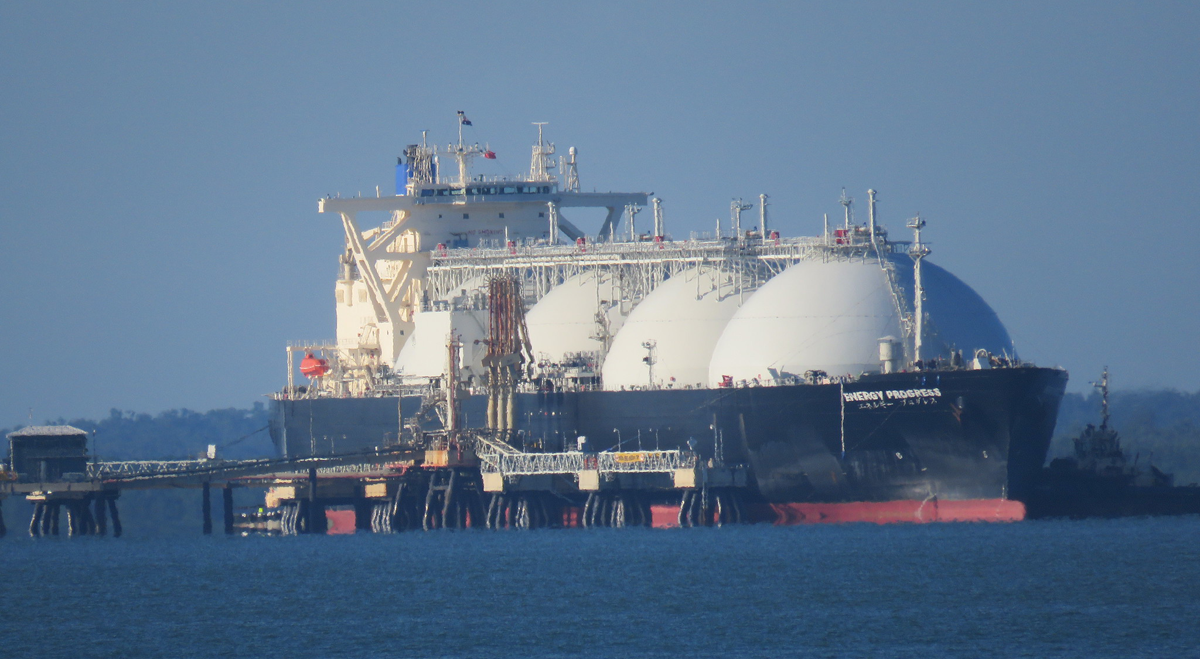
    European wholesale natural gas prices moved lower on Friday after shipping data showed that liquefied natural gas (LNG) cargoes continue to transit the Strait of Hormuz, easing immediate concerns over a major disruption to global supplies despite escalating tensions in the Middle East.

    The benchmark Dutch front-month gas contract declined 2.3% to €48.97 per megawatt-hour (MWh), giving back part of the sharp gains recorded earlier in the week. In the UK, the equivalent front-month contract fell 2.4% to 117.90 pence per therm.

    Although prices retreated during Friday’s session, both contracts remained on track to post a second consecutive week of gains as geopolitical developments continued to add a risk premium to energy markets.

    LNG Shipping Activity Reassures Traders

    The decline in gas prices came despite continued military tensions following the latest exchange of airstrikes between the United States and Iran. The breakdown of the 17 June ceasefire has heightened concerns over security around the Strait of Hormuz, one of the world’s most important energy shipping routes.

    However, traders took comfort from live satellite tracking and shipbroking data showing that several LNG tankers departing from Qatar successfully passed through the waterway during the previous 24 hours without disruption.

    While Iran has increased naval patrols and intensified vessel inspections in the area, commercial shipping has continued to operate, reducing fears of the severe supply interruption that markets had begun to anticipate.

    Healthy European Storage Limits Price Impact

    European gas markets have also been supported by strong storage levels, with inventories remaining comfortably above the seasonal average for July. The healthy stock position has helped cushion the market against short-term geopolitical uncertainty.

    Even so, traders remain alert to further developments. A prolonged confrontation, direct disruption to LNG export infrastructure or a withdrawal of insurance cover for vessels travelling through the Persian Gulf could quickly reverse recent price declines and push European gas prices back above the €50 per MWh level.

  • Euro Zone Bond Yields Stabilise After Middle East Tensions Spark Sharp Sell-Off

    Euro Zone Bond Yields Stabilise After Middle East Tensions Spark Sharp Sell-Off

    Eurozone government bond yields were little changed on Friday as markets steadied following a sharp sell-off in the previous two sessions, driven by renewed concerns that escalating tensions between the United States and Iran could reignite energy-led inflation.

    Germany’s benchmark 10-year Bund yield edged higher to 3.033%, remaining close to its highest level in seven weeks. The benchmark recorded its biggest two-day rise in several months on Wednesday and Thursday after heavy military exchanges between Washington and Tehran unsettled global markets.

    The yield on Germany’s two-year government bond, which closely reflects expectations for European Central Bank (ECB) monetary policy, held around 2.63% after experiencing a similarly pronounced jump as investors moved away from safe-haven debt.

    Inflation Fears Return to the Forefront

    The latest escalation, which has raised concerns over the durability of the fragile ceasefire agreed on 17 June, followed U.S. strikes on Iranian targets and subsequent retaliation by Tehran against American assets in Kuwait and Bahrain.

    Disruption to shipping through the Strait of Hormuz has fuelled a sharp rise in oil prices, with Brent crude climbing back towards $78 per barrel, prompting investors to reassess near-term inflation expectations.

    Before this week’s geopolitical developments, bond markets had been pricing in the prospect of easing inflation and a more neutral approach from central banks. The renewed conflict has now cast doubt over that outlook, forcing investors to reconsider the likely path of monetary policy.

  • Market Open: EasyJet Takeover Proposal, Hays Trading Update

    Market Open: EasyJet Takeover Proposal, Hays Trading Update

    FTSE 100 opens slightly down as EasyJet takeover developments and Hays’ trading update lead headlines, while Brent crude and gold edge lower.

    Market Overview

    The FTSE 100 opened marginally lower at 10,471.94, while the Euronext 100 gained 0.04 per cent and Germany’s DAX rose 0.06 per cent. Overnight, the Nasdaq closed higher at 26,206.89 and the S&P 500 finished at 7,543.64, both ending the previous session in positive territory. Market sentiment was supported as Middle East tensions eased, although investors continued to monitor inflation risks and energy markets following recent geopolitical developments.

    In commodities, copper edged higher while gold, Brent crude and natural gas all traded lower. Bitcoin rose against sterling. Currency moves were modest, with the US dollar and euro strengthening slightly against sterling, while the Swiss franc and Japanese yen were little changed and the Australian dollar weakened.


    Market Numbers

    FTSE 100: Down (-0.001%), 10,471.94
    Euronext 100: Up (+0.04%), 1,913.47
    DAX: Up (+0.06%), 25,133.38
    NASDAQ: Up, 26,206.89
    S&P 500: Up, 7,543.64


    In the Headlines

    Takeover interest – easyJet (LSE:EZJ)
    easyJet is reported to favour Apollo’s improved takeover proposal over a rival approach from Castlelake. The development could influence the next stage of the bidding process and remains a key focus for investors.

    Trading update – Hays (LSE:HAS)
    Recruitment group Hays has released its fourth-quarter trading update ahead of an investor briefing. The update provides investors with the latest view on trading conditions and recruitment demand before further guidance.


    Currencies (vs GBP)

    USD: Up (+0.06%), $1.3414
    CHF: Unchanged (+0.00%), Fr.1.0819
    EUR: Up (+0.01%), €1.1732
    JPY: Up (+0.02%), ¥217.786
    AUD: Down (-0.01%), $1.9319
    Bitcoin (BTC/GBP): Up, £47,627.47


    Commodities

    Copper: Up
    Gold: Down
    Brent Crude: Down
    Natural Gas: Down