Category: Market News

  • Hays Releases Fourth-Quarter Trading Update Ahead of Investor Briefing (HAS)

    Hays Releases Fourth-Quarter Trading Update Ahead of Investor Briefing (HAS)

    Hays plc (LSE:HAS) has published its trading update for the fourth quarter ended 30 June 2026, offering investors an overview of recent business performance and prevailing market conditions. The announcement has been made available through the London Stock Exchange’s document service, the Financial Conduct Authority’s National Storage Mechanism and the company’s investor relations website.

    Investor Conference Call Set for 10 July

    The recruitment group will host a conference call for analysts and investors on 10 July 2026. The session will be led by Chief Financial Officer James Hilton and Head of Investor Relations and M&A Kean Marden, who will discuss the latest trading performance, provide management commentary and answer questions from participants.

    The event is intended to give investors additional insight into Hays’ current operating environment, business performance and strategic priorities.

    Outlook Reflects Mixed Financial Picture

    Hays’ investment outlook continues to be constrained by weak technical indicators, with the shares trading below all major moving averages and a negative MACD reading signalling subdued momentum. The stock also trades on a notably elevated price-to-earnings ratio of 748.65, suggesting a demanding valuation.

    Financial performance presents a mixed picture. While revenue has declined and the company remains loss-making, improvements in free cash flow provide some support for the broader investment case.

    More about Hays plc

    Hays plc is a global specialist recruitment and workforce solutions provider operating across professional and skilled employment markets. The company recruits candidates for permanent, temporary and contract positions, serving both private and public sector organisations in a wide range of industries.

    Alongside its recruitment services, Hays provides workforce advisory, talent management and staffing solutions, helping employers source skilled professionals across multiple international markets.

  • EasyJet Favors Apollo’s Improved Takeover Proposal Over Castlelake Offer (EZJ)

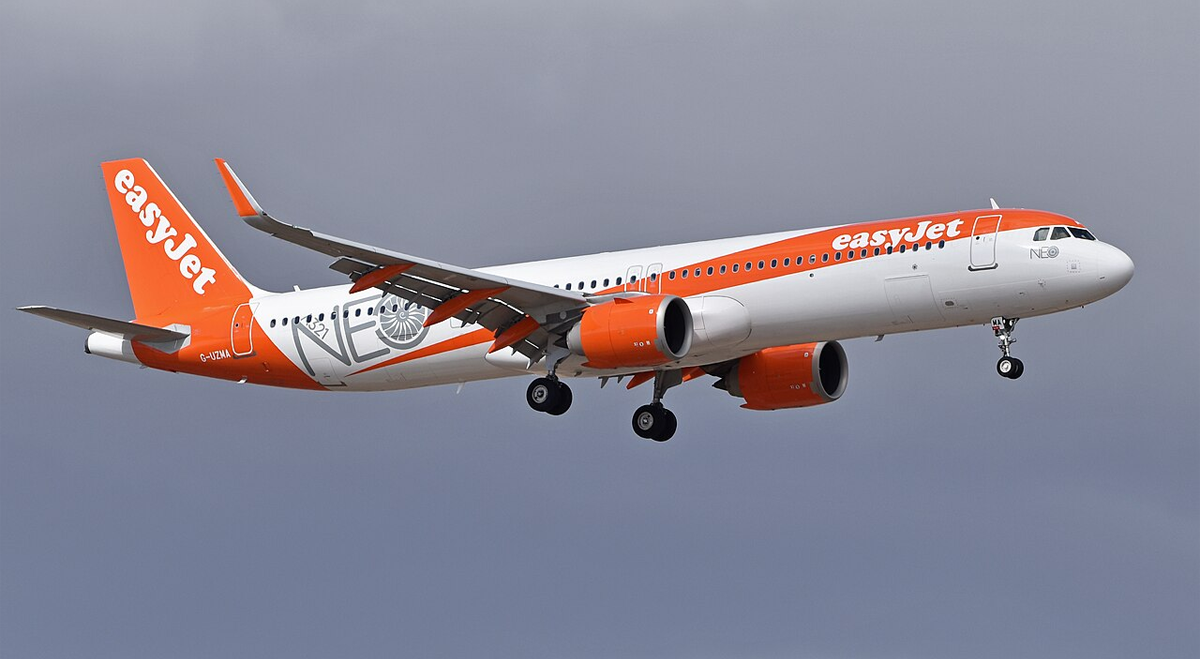
    EasyJet Favors Apollo’s Improved Takeover Proposal Over Castlelake Offer (EZJ)

    EasyJet (LSE:EZJ) has reached agreement in principle on the key financial terms of a potential all-cash acquisition by funds managed by Apollo, with the proposed offer of £7.15 per share valuing the airline at approximately £5.7 billion. The bid represents a significant premium to recent market prices and may also include a stub equity option, enabling certain shareholders to retain an investment alongside Apollo.

    Apollo said the transaction would be fully financed through committed equity and debt facilities. The private equity firm believes taking easyJet private would support the airline’s long-term growth plans, safeguard its brand identity and create additional opportunities for employees.

    Board Signals Support for Apollo Bid

    EasyJet’s board has unanimously indicated that it would be prepared to recommend Apollo’s proposal, subject to the completion of due diligence, agreement on final terms and execution of definitive documentation. The board now views Apollo’s approach as more attractive than Castlelake’s earlier £6.90 per share proposal.

    No firm offer has yet been made under UK takeover regulations, and shareholders have been advised not to take any action at this stage. Nevertheless, the board’s backing suggests Apollo has emerged as the preferred bidder, potentially paving the way for a change in ownership while highlighting the growing role of private equity in the European airline sector.

    Outlook Supported by Stronger Financial Performance

    EasyJet’s investment outlook is underpinned by improving profitability, a healthy balance sheet and an attractive valuation, supported by a relatively low price-to-earnings ratio and dividend yield.

    Technical indicators remain favourable, although they suggest the shares may be approaching overbought territory. Management has also maintained a positive tone regarding liquidity and medium-term growth prospects, while acknowledging that higher costs and demand uncertainty could continue to weigh on near-term performance.

    More about EasyJet

    EasyJet is a UK-based low-cost airline serving destinations across Europe through a network focused primarily on short-haul passenger services. The carrier also offers a range of complementary travel products and services to leisure and business travellers.

    Operating in the highly competitive European budget airline market, easyJet seeks to drive growth through scale, operational efficiency and brand recognition while maintaining a strong focus on cost discipline and customer value.

  • Vodafone Confirms e& Exit as Niel Family’s Vega Acquires Strategic Stake (VOD)

    Vodafone Confirms e& Exit as Niel Family’s Vega Acquires Strategic Stake (VOD)

    Vodafone (LSE:VOD) has announced that Emirates Telecommunications Group Company, trading as e&, has agreed to sell its entire shareholding in the company to Vega, an acquisition vehicle wholly owned by the Niel family group. The transaction represents a major change to Vodafone’s shareholder structure and brings the strategic relationship between Vodafone and e& to an end.

    Governance Changes Follow Shareholding Transfer

    Following completion of the agreement, the relationship agreement established between Vodafone and e& in May 2023 has been terminated. Hatem Dowidar, who served on Vodafone’s board as e&’s nominated director, has also stepped down with immediate effect.

    The ownership change removes e&’s direct role in Vodafone’s governance and introduces the Niel family group as a significant shareholder. The transition may influence investor sentiment and future strategic direction as Vodafone begins a new chapter without its previous partnership with e&.

    Financial Strength Balanced by Ongoing Challenges

    Vodafone’s investment case continues to be supported by resilient cash generation and management’s expectations of delivering results at the upper end of fiscal 2026 guidance, alongside anticipated growth in fiscal 2027.

    However, the outlook remains tempered by continued earnings volatility, net losses and a relatively high debt burden. Technical indicators also suggest near-term weakness, while valuation remains difficult to assess given the company’s loss-making price-to-earnings ratio, despite offering a moderate dividend yield.

    More about Vodafone

    Vodafone is a global telecommunications provider with operations focused on Europe and Africa. The group delivers mobile, broadband and digital connectivity services across 17 markets, holds investments in three additional countries and maintains partnerships spanning more than 40 markets worldwide. It also operates one of the world’s largest Internet of Things (IoT) platforms, manages capacity across more than 70 subsea cable systems and provides mobile financial services to millions of customers throughout Africa.

    The company serves more than 370 million mobile and broadband customers while supporting over 240 million IoT connections globally. Its network infrastructure spans subsea cables, terrestrial networks and emerging satellite technologies, helping businesses and consumers remain connected across international markets.

  • MJ Gleeson Meets Profit Expectations as Homes Division Offsets Slower Land Sales (AVG)

    MJ Gleeson Meets Profit Expectations as Homes Division Offsets Slower Land Sales (AVG)

    MJ Gleeson plc (LSE:GLE), the affordable housebuilder and land promotion specialist, expects adjusted group profit before tax for the year ended 30 June 2026 to broadly match market forecasts. Solid trading at Gleeson Homes helped offset slower-than-anticipated land transactions at Gleeson Land. The company also maintained a prudent financial position, with modest net debt, limited land creditor exposure and a disciplined approach to working capital and land investment amid ongoing economic uncertainty.

    Homes Business Delivers Stronger Performance

    Gleeson Homes completed 1,968 properties during the year, representing a 9.8% increase on the previous period. Growth was supported by the division’s first partnership completions, stronger private multi-unit sales, a modest increase in the forward order book and the launch of 13 new developments.

    The business also completed its Project Transform operational overhaul, introducing strengthened leadership and improved operating processes. However, management said continued build cost inflation, increasing regulatory requirements and planning delays are likely to limit short-term margin improvement and leave the number of active sales outlets slightly below earlier expectations.

    Land Division Impacted by Deferred Transactions

    Gleeson Land completed five site disposals during the year but is expected to report a small operating loss after three planned sales were delayed into the next financial year. Despite the postponed transactions, the division expanded its portfolio of consented and near-consented development sites, increasing its future plot potential.

    Management said market conditions for land sales remain cautious, with uncertainty surrounding the timing of transactions. Nevertheless, it believes the strengthened land portfolio, combined with improvements across the homes business, positions the group to benefit when conditions across the housing and land markets improve.

    Market View Remains Cautious

    The company’s investment outlook continues to be weighed down by weak technical indicators, including a share price trading below major moving averages, a bearish MACD reading and a deeply oversold RSI. While the balance sheet remains robust and revenue growth has been steady, pressure on margins together with negative recent operating and free cash flow continues to temper investor sentiment.

    More about MJ Gleeson PLC

    MJ Gleeson plc operates two complementary businesses: Gleeson Homes and Gleeson Land. Gleeson Homes develops affordable, traditionally built homes across the Midlands and the North of England, offering a range of properties from one-bedroom apartments to five-bedroom family homes and bungalows. Its strategy focuses on providing homes where ownership is more affordable than renting, with a significant proportion aimed at buyers earning the National Living Wage.

    Gleeson Land specialises in promoting land for residential development throughout South, West and Central England. The division identifies development opportunities, secures planning permission to enhance land value and manages the sale of sites to housebuilders on behalf of landowners. Across the group, sustainability and social impact remain central priorities, with business objectives aligned to selected United Nations Sustainable Development Goals.

  • Wall Street Futures Climb as Chipmakers Boost Market Sentiment: Dow Jones, S&P, Nasdaq

    Wall Street Futures Climb as Chipmakers Boost Market Sentiment: Dow Jones, S&P, Nasdaq

    Semiconductor Stocks Support Positive Start

    U.S. equity futures traded higher ahead of Thursday’s opening bell, pointing to a stronger start after the major indexes delivered mixed performances in the previous session.

    Technology shares looked set to lead the advance, with semiconductor companies providing fresh momentum following Wednesday’s late recovery in the Nasdaq.

    Nasdaq 100 futures rose about 1%, helped by strong pre-market gains in Micron Technology (NASDAQ:MU) and SanDisk (NASDAQ:SNDK).

    Middle East Developments Remain in Focus

    Investors continued to monitor geopolitical developments as tensions between the United States and Iran remained elevated.

    U.S. Central Command said American forces carried out another round of strikes against roughly 90 military targets in Iran, aiming to weaken Tehran’s ability to threaten commercial shipping in the Strait of Hormuz.

    “This is in retribution for yesterday’s bombing of ships by Iran. If it happens again, it will get much worse!” President Donald Trump wrote on Truth Social.

    Iran reportedly retaliated with attacks targeting Bahrain, Kuwait and Qatar.

    Speaking aboard Air Force One, Trump said Iran wanted to “make a deal so badly,” while adding that he was unsure whether the country was “worthy of making a deal.”

    Markets Recover After Early Selloff

    Wednesday’s trading session began with broad losses before equities recovered during the afternoon.

    The Dow Jones Industrial Average ended down 576.76 points, or 1.1%, at 52,348.39, while the S&P 500 slipped 0.3% to 7,482.71. The Nasdaq Composite outperformed, rising 0.2% to close at 25,870.65.

    The initial decline followed Trump’s announcement that the U.S.-Iran ceasefire was “over.”

    “As far as I’m concerned, it’s over,” Trump told reporters during the NATO summit in Ankara, calling negotiations with Iran a “waste of time.”

    He later said the United States would “very probably” strike Iran “hard again tonight.”

    Oil and Interest Rate Concerns Shape Trading

    Crude oil futures initially surged by more than 5%, raising fresh concerns that higher energy prices could keep inflation elevated and delay interest-rate cuts.

    As oil retreated from its intraday highs, equity markets recovered much of their earlier losses.

    Housing, airline, banking and commercial real estate stocks finished lower, while energy shares outperformed alongside stronger crude prices. Semiconductor and computer hardware companies also posted solid gains, helping technology stocks outperform.

  • European Stocks Edge Higher as Tech Rebounds and Middle East Tensions Remain in Focus: DAX, CAC, FTSE100

    European Stocks Edge Higher as Tech Rebounds and Middle East Tensions Remain in Focus: DAX, CAC, FTSE100

    European Markets Advance Despite Ongoing Geopolitical Uncertainty

    European equity markets traded modestly higher on Thursday, supported by gains in technology stocks, while oil prices eased even after the U.S. military carried out a second consecutive day of strikes on Iranian targets. President Donald Trump said the latest escalation would be resolved quickly.

    U.S. forces reportedly struck around 90 targets across Iran, while Tehran responded with attacks targeting Gulf states.

    German Trade Data Beats Expectations

    Fresh economic data from Germany provided an additional boost to sentiment.

    Official figures showed exports rose 0.9% in May compared with the previous month, defying expectations for a 0.3% decline. The increase was largely driven by stronger shipments to the United States.

    Imports, meanwhile, unexpectedly fell 2.5%, reversing April’s 1.1% increase and marking the first monthly decline in four months.

    Major European Indices Mixed

    France’s CAC 40 advanced 0.5%, while Germany’s DAX gained 0.3%.

    The UK’s FTSE 100 underperformed, falling 0.6% as weakness in major energy companies, including BP Plc and Shell, weighed on the index.

    Company Movers

    French pharmaceutical group Ipsen (EU:IPN) moved higher after reporting positive Phase III trial results for Dysport in migraine prevention.

    Bytes Technology Group (LSE:BYIT) also posted strong gains after announcing robust trading during the first four months of its financial year through 30 June.

    German wind turbine manufacturer Nordex (TG:NDX1) surged after revealing that second-quarter wind turbine orders increased by almost one-third compared with a year earlier.

    Meanwhile, AstraZeneca (LSE:AZN) was among London’s biggest decliners after announcing that its experimental drug Wainua failed to achieve its primary objective in a late-stage clinical trial focused on reducing cardiovascular-related deaths.

  • BP CEO Sets Out Strategy Centered on Cost Control and Capital Discipline (BP)

    BP CEO Sets Out Strategy Centered on Cost Control and Capital Discipline (BP)

    BP Refocuses on Simplicity and Core Operations

    BP (LSE:BP.) Chief Executive Meg O’Neill said the energy group will sharpen its focus on financial discipline by simplifying its portfolio, reducing costs and tightening capital allocation as it reinforces its commitment to core oil and gas operations.

    Reflecting on her first 100 days in the role, O’Neill said the company is becoming more selective with investment decisions as it continues to implement its strategic reset following an unsuccessful expansion into renewable energy.

    “We need to be deliberate about where we invest and where we don’t,” O’Neill said in a LinkedIn post marking her 100th day in the role. “We need to make fewer, better choices and hold ourselves to account.”

    Three Priorities to Drive Long-Term Value

    O’Neill identified three key areas that will shape BP’s next phase of development: improving operational performance, strengthening accountability across the business and maintaining strict discipline over costs, cash generation and capital allocation.

    She said these priorities are intended to simplify the organisation while enhancing shareholder value over the longer term.

    New Operating Structure Takes Effect

    Earlier this month, BP completed its transition from three operating divisions to a streamlined structure built around two core business segments: upstream and downstream.

    According to O’Neill, the revised organisation will reduce complexity across the company, with its trading operations serving as a link between the upstream and downstream businesses.

    Energy Market Volatility Tests New Leadership

    O’Neill assumed leadership of BP as conflict involving the United States, Israel and Iran disrupted global energy markets and reduced shipping activity through the Strait of Hormuz.

    She said BP responded by coordinating its trading, shipping and refining operations to strengthen fuel supplies. The company delivered an additional 50 million litres of diesel from its Cherry Point refinery in Washington state to Sydney, while its Castellón refinery in Spain increased jet fuel production by 30% ahead of the European summer travel season to help meet higher demand.

  • Gold Rebounds as Investors Balance Geopolitical Risks and Fed Outlook

    Gold Rebounds as Investors Balance Geopolitical Risks and Fed Outlook

    Gold prices edged higher on Thursday as investors returned to safe-haven assets following renewed military action between the United States and Iran, while a steadier U.S. dollar and expectations for Federal Reserve policy remained in focus.

    Spot gold climbed 0.7% to $4,104.22 per ounce, while U.S. gold futures also gained 0.7% to $4,112.75 per ounce by 05:47 ET (09:47 GMT).

    Fed Minutes Provide Mixed Signals

    The latest Federal Reserve meeting minutes offered support to bullion after suggesting policymakers were divided over the interest-rate outlook.

    Analysts at Vital Knowledge noted that officials saw reasons to consider another rate increase during June while also discussing the possibility of easing monetary policy later this year.

    Although lower interest rates generally benefit gold by reducing the opportunity cost of holding non-yielding assets, the minutes also highlighted ongoing concern about inflation remaining above target.

    Price pressures in the United States have accelerated since the conflict between the U.S. and Iran intensified in late February. Federal Reserve Chair Kevin Warsh reiterated last week that bringing inflation back to the central bank’s 2% objective remains a priority.

    Safe-Haven Demand Returns

    Gold entered Thursday after posting losses for three consecutive sessions as rising oil prices strengthened expectations that inflation could remain elevated.

    The U.S. dollar remained firm, with the dollar index trading close to the 13-month highs reached in June. A stronger greenback typically reduces demand for gold among overseas investors.

    “Any rebound in energy prices will reinforce expectations that the Fed may keep interest rates higher for longer to combat stubbornly high inflation,” ANZ analysts said in a note.

    The United States launched additional strikes against Iran after President Donald Trump announced that the ceasefire with Tehran was “over.”

    Washington said the military action followed attacks on commercial ships travelling through the Strait of Hormuz.

    Iran retaliated with strikes against what it described as U.S. military facilities in Kuwait and Bahrain, while the Islamic Revolutionary Guards Corps warned that further attacks would follow if American operations continue.

  • Bernstein Reaffirms Aluminium Price Target as Market Deficit Offsets Supply Recovery

    Bernstein Reaffirms Aluminium Price Target as Market Deficit Offsets Supply Recovery

    Bernstein has left its aluminium price outlook unchanged for the second half of 2026, maintaining a forecast of $3,100 per ton despite improving supply conditions following the reopening of shipping through the Strait of Hormuz and a faster recovery in Middle Eastern production.

    Geopolitical Risks Fade but Supply Remains Tight

    Aluminium prices rallied between March and May as concerns over the Strait of Hormuz threatened both aluminium exports and the flow of key raw materials into the market. Since the ceasefire and the resumption of maritime traffic, much of that geopolitical premium has disappeared, although physical supply remains tighter than it was before the conflict.

    Emirates Global Aluminium (EGA) said its Al Taweelah smelter, which has annual production capacity of 1.6 million tons, is returning to operation sooner than expected. The company stated that “a return to pre-crisis shipment levels is expected, based on current conditions, to require the re-opening of the Strait,” while warning that a full recovery may still take up to a year.

    Chinese Production Continues to Grow

    Bernstein also highlighted China’s ongoing capacity expansion, with an additional 740,000 tons of annual aluminium smelting capacity expected to come online this year. That would lift total Chinese production to approximately 45.3 million tons.

    While export-oriented manufacturing in China has remained resilient, domestic demand continues to be constrained by weakness in the property and construction sectors. Meanwhile, manufacturing activity has stabilised in Europe, Japan and the United States, although overall demand remains relatively soft.

    Prices Expected to Stay Above $3,000

    According to Bernstein, aluminium producers continue to benefit from margins that remain above historical mid-cycle averages.

    The firm expects the global aluminium market to remain in deficit throughout 2026, supporting prices above $3,000 per ton before gradually returning toward longer-term equilibrium levels.

  • Oil Prices Ease as Traders Monitor U.S.-Iran Escalation and Hormuz Risks

    Oil Prices Ease as Traders Monitor U.S.-Iran Escalation and Hormuz Risks

    Oil prices declined on Thursday as investors evaluated the latest military developments between the United States and Iran and their potential impact on diplomatic efforts and shipping through the Strait of Hormuz.

    Brent crude futures dropped $1.03, or 1.32%, to $76.99 per barrel by 07:49 GMT, while U.S. West Texas Intermediate (WTI) crude fell 88 cents, or 1.2%, to $72.64 per barrel.

    Both benchmarks had reached their highest levels since June 22 during Wednesday’s trading.

    Geopolitical Tensions Continue to Drive Energy Markets

    Oil prices surged after Wednesday’s settlement when the U.S. launched a fresh round of strikes against Iranian targets, prompting retaliatory attacks by Iran on Kuwait and Bahrain and increasing concerns that the conflict could widen.

    Washington said the operation followed Tuesday’s attack on three commercial cargo ships in the Strait of Hormuz. The latest military action came shortly after U.S. President Donald Trump announced that the interim ceasefire with Iran was “over.”

    “Traders are now reassessing the situation, especially as things are very much up in the air regarding oil flows through the Strait of Hormuz,” said Tim Waterer, chief market analyst at KCM Trade.

    “The possibility that the next move could be de-escalatory is what’s currently preventing oil from pushing meaningfully higher.”

    Trump later added that Iran had contacted the United States “a while ago” and was looking to negotiate a new agreement.

    Shipping Through Hormuz Remains Under Close Watch

    Insurance market sources said several marine insurers have advised shipping companies to delay voyages through the Strait of Hormuz, while others are reviewing policy conditions following renewed attacks on commercial vessels.

    Prior to the latest escalation, crude prices had been retreating as traders responded to improving Middle East supply conditions following the ceasefire agreement and evidence of rising inventories.

    Around 20% of global oil and liquefied natural gas exports normally pass through the Strait of Hormuz, making the route a critical component of global energy security.

    Analysts Outline Possible Scenarios

    Goldman Sachs said oil market risks remain balanced.

    The bank believes Gulf export flows could return to normal by the end of July if diplomatic negotiations resume, sanctions relief for Iranian oil is restored and shipping companies receive sufficient security guarantees. Such a scenario would require an additional 6.6 million barrels per day to move through the Strait of Hormuz.

    However, Goldman warned that renewed attacks on tankers, stalled negotiations or tighter restrictions on Iranian exports could prolong market disruption.

    “In the base case Brent probably trades in a $75–85 range over the next month, with a mild upward bias,” said Aneeka Gupta, director of macroeconomic research at WisdomTree.

    “The underlying supply recovery is real but incomplete, the surplus narrative is discredited for now, and diplomatic engagement (while stalled) hasn’t collapsed entirely.”

    Separately, Russia introduced a ban on diesel exports to support domestic fuel supplies following Ukrainian drone attacks that disrupted refinery operations.