Category: Market News

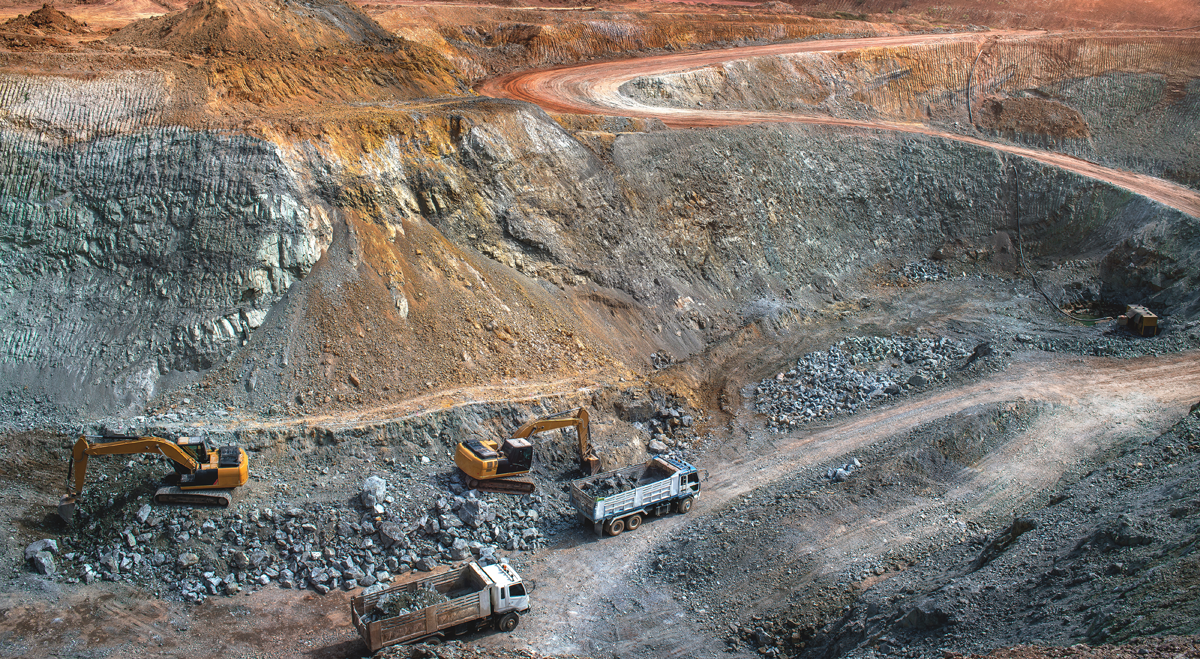
  • Bernstein Lifts Copper Outlook Despite Ongoing Macro Challenges

    Bernstein Lifts Copper Outlook Despite Ongoing Macro Challenges

    Bernstein has updated its forecast for copper prices, projecting an average of $12,419 per metric ton in 2026. The research house expects prices to average $11,750 per ton during the second half of the year, slightly below the broader market consensus of $12,515 per ton.

    Structural Supply Tightness Supports Long-Term View

    Looking beyond next year, Bernstein expects copper to average approximately $10,700 per metric ton by 2030 as structural supply shortages become more pronounced toward the end of the decade.

    The firm believes that tightening mine supply will increasingly outweigh demand growth, creating a more supportive backdrop for copper prices over the longer term.

    Federal Reserve and Dollar Remain Key Headwinds

    Bernstein said copper continues to face pressure from a challenging macroeconomic environment. Higher energy costs resulting from the ongoing conflict in the Middle East have weakened industrial sentiment, while the stronger U.S. dollar and expectations of a more hawkish Federal Reserve have reduced appetite across commodity markets.

    These macroeconomic factors continue to weigh on price performance despite improving supply fundamentals.

    Physical Copper Market Becoming Tighter

    On the supply side, Bernstein pointed to lower production guidance from several mining companies and continued inventory accumulation in the United States as factors tightening the physical copper market.

    According to the firm, its revised forecast reflects the balance between near-term pressures from monetary policy and currency movements and increasingly constrained physical supply, which should continue to underpin copper prices.

  • Wall Street Futures Rise as Geopolitical Risks Persist and PepsiCo Earnings Approach: Dow Jones, S&P, Nasdaq

    Wall Street Futures Rise as Geopolitical Risks Persist and PepsiCo Earnings Approach: Dow Jones, S&P, Nasdaq

    U.S. equity futures traded higher on Thursday as investors monitored renewed military action between the United States and Iran while preparing for another busy earnings day led by PepsiCo (NASDAQ:PEP).

    Although crude oil prices eased slightly, they remained well above levels seen before the latest escalation in the Middle East, keeping concerns over inflation and global energy supplies firmly in focus.

    Futures Point to Higher Open

    As of 02:53 ET (06:53 GMT), Dow Jones futures were higher by 82 points, or 0.2%. S&P 500 futures added 0.3%, while Nasdaq 100 futures outperformed with a gain of 0.5%.

    The previous session ended mixed, with the Dow Jones Industrial Average falling 1.1% and the S&P 500 slipping 0.3%, while the Nasdaq Composite posted a modest 0.2% gain thanks to continued strength in technology stocks.

    Markets reacted cautiously after U.S. President Donald Trump said the ceasefire framework with Iran was “over”, reviving fears that higher oil prices could complicate the inflation outlook.

    Technology shares helped cushion broader losses. Nvidia extended gains after reports suggested China may allow limited domestic access to the company’s H200 AI chips.

    Minutes from the Federal Reserve’s June meeting also attracted attention. Analysts at Vital Knowledge described the overall tone as “fairly dovish tone on the monetary policy outlook”, despite policymakers remaining alert to inflation risks linked to energy prices.

    Fresh Conflict Keeps Markets on Edge

    Military operations continued overnight as the United States launched strikes against approximately 90 Iranian military targets, including air defence systems and missile facilities.

    Iran responded with attacks targeting U.S. military installations in Kuwait and Bahrain, while the Islamic Revolutionary Guards Corps warned that additional strikes could follow if further U.S. military action takes place.

    The latest exchange has raised fresh doubts over the durability of the temporary ceasefire reached in June. Negotiations remain complicated by disagreements over the Strait of Hormuz, Iran’s nuclear programme and broader regional conflicts.

    Speaking after the NATO summit, President Trump said Iran wanted to “make a deal so badly”, although Iranian officials have not publicly indicated that negotiations have resumed.

    Oil Holds Above Pre-Conflict Levels

    Brent crude traded below $78 per barrel, slipping 1.0% to $77.26 by 03:42 ET.

    Despite the decline, prices remain considerably above the roughly $71 level recorded before the latest escalation, as traders continue to price in the risk of disruption to shipping through the Strait of Hormuz, one of the world’s most important energy transport routes.

    Higher energy prices continue to cloud the inflation outlook and could influence future interest-rate decisions by major central banks.

    PepsiCo Results Take Centre Stage

    Investors are also awaiting quarterly earnings from PepsiCo before the opening bell.

    When reaffirming its annual guidance in April, Chief Financial Officer Steve Schmitt warned that the “macroeconomic environment has become more volatile and uncertain because of ongoing geopolitical conflicts.”

    Markets will be looking for updates on how higher transportation, energy and raw material costs are affecting margins. While Schmitt acknowledged that price increases remain an option, he stressed they would only be implemented if necessary.

    PepsiCo shares have gained approximately 0.2% since the beginning of the year.

    China’s Inflation Signals Uneven Recovery

    China’s latest inflation figures painted a mixed picture.

    Consumer inflation slowed to 1.0% year-on-year in June, while producer inflation accelerated to 4.1%, its strongest reading since July 2022.

    Analysts said rising prices for electronics linked to AI-related chip shortages partly offset weaker pricing across many industrial sectors.
  • European Natural Gas Prices Retreat as Markets Digest Middle East Tensions

    European Natural Gas Prices Retreat as Markets Digest Middle East Tensions

    European wholesale natural gas prices edged lower on Thursday after climbing to their highest levels in almost a month, as traders paused to assess the impact of the latest escalation in the Middle East and its implications for the region’s energy security.

    The benchmark Dutch gas contract fell 0.8% to around €48.50 per megawatt-hour after surging to its strongest level since mid-June during Wednesday’s session. In the UK, the benchmark wholesale gas contract was little changed at 116.86 pence per therm, easing back from the multi-week high reached during the previous day’s sharp energy market sell-off.

    Energy Markets Face Renewed Geopolitical Uncertainty

    The recent price volatility reflects renewed concerns over the security of global energy supplies following the collapse of the latest diplomatic efforts between the United States and Iran.

    Only weeks after the 17 June memorandum of understanding between Washington and Tehran raised hopes that shipping through the Strait of Hormuz could remain stable, those expectations were quickly reversed.

    On Wednesday, U.S. President Donald Trump declared the agreement “over”, before a second consecutive day of U.S. air strikes targeting Iranian military positions intended to protect commercial shipping routes from potential retaliation.

    For Europe, which continues to rely heavily on imported liquefied natural gas (LNG) after the loss of much of its Russian pipeline supply, the renewed tensions have revived concerns over supply security. With European gas storage levels still slightly below seasonal averages, any disruption to LNG shipments from Qatar through the Persian Gulf could complicate efforts to replenish inventories ahead of winter.

    Inflation Risks Return to the Fore

    The consequences of higher energy prices extend well beyond wholesale gas markets. The simultaneous increase in oil and natural gas prices has revived broader concerns about inflation across Europe.

    Persistently elevated wholesale gas prices risk feeding through into electricity costs for businesses and households, potentially complicating efforts by central banks to bring inflation under control after several years of aggressive monetary tightening.

  • Market Open: Sizewell B Extension, Computacenter Profit Growth

    Market Open: Sizewell B Extension, Computacenter Profit Growth

    FTSE 100 edges lower as Centrica backs Sizewell B extension, Computacenter forecasts stronger profits and Brent crude eases.

    Market Overview

    The FTSE 100 opened marginally lower at 10,487.89, while the Euronext 100 gained 0.16 per cent and Germany’s DAX advanced 0.44 per cent. Overnight, the Nasdaq closed higher at 25,870.65, while the S&P 500 finished lower at 7,482.71. Investor sentiment remained cautious as markets assessed renewed geopolitical tensions following the collapse of the US-Iran ceasefire, while European equities attempted to stabilise after the previous session’s sharp losses.

    Against sterling, the US dollar strengthened slightly while the Swiss franc, euro, Japanese yen and Australian dollar all edged firmer. Bitcoin was up. In commodities, copper advanced, while gold, Brent crude and natural gas all eased, with oil continuing to reflect geopolitical risks in the Middle East despite softer prices at the open.


    Market Numbers

    FTSE 100: Down (-0.01%), 10,487.89

    Euronext 100: Up (+0.16%), 1,895.27

    DAX: Up (+0.44%), 25,006.76

    NASDAQ: Up, 25,870.65

    S&P 500: Down, 7,482.71


    In the Headlines

    Nuclear agreement – Centrica (LSE:CNA)

    Centrica has agreed a 20-year contract supporting the extension of the Sizewell B nuclear power station, helping secure long-term low-carbon electricity generation and reinforcing the UK’s energy security strategy.

    Trading update – Computacenter (LSE:CCC)

    Computacenter expects first-half profit to more than double compared with 2025, reflecting stronger trading performance and indicating improving momentum across its technology services business.


    Currencies (vs GBP)

    USD: Down (-0.00%), $1.3394

    CHF: Down (-0.08%), Fr.1.0824

    EUR: Down (-0.03%), €1.1727

    JPY: Down (-0.01%), ¥217.703

    AUD: Down (-0.01%), $1.931

    Bitcoin (BTC/GBP): Up, £46,967.94


    Commodities

    Copper: Up

    Gold: Down

    Brent Crude: Down

    Natural Gas: Down

  • European Stocks Advance as Technology Sector Recovers and Investors Track Middle East Developments: DAX, CAC, FTSE100

    European Stocks Advance as Technology Sector Recovers and Investors Track Middle East Developments: DAX, CAC, FTSE100

    European equity markets moved higher in volatile trading on Thursday, supported by a strong rebound in technology shares as investors assessed the latest developments in the Middle East after U.S. President Donald Trump said Iran wanted to “make a deal”.

    The pan-European STOXX 600 index gained 0.5% to 639.12 points by 08:16 GMT. Technology and basic resources led sector performance, advancing 1.8% and 2.8% respectively.

    Semiconductor-related stocks drove much of the rally, with Siltronic (TG:WAF) surging 10.5%, Soitec (EU:SOI) rising 4.5% and ASML (EU:ASML) adding 2.6%.

    The technology sector had paused after recording its strongest quarterly performance since 2001 in June, and Thursday’s recovery suggested investors were temporarily looking beyond concerns over stretched valuations. Even so, the sector remains the weakest performer on the STOXX 600 so far this month.

    Market sentiment also received support from reports that China could permit domestic artificial intelligence companies to access Nvidia’s (NASDAQ:NVDA) H200 chips on a limited basis, raising expectations of continued investment in AI infrastructure.

    Oil prices edged lower as investors continued to monitor geopolitical developments. Energy markets remained focused on the conflict between the United States and Iran after fresh U.S. strikes followed President Trump’s statement on Wednesday that negotiations with Tehran were over, contributing to the STOXX 600’s largest one-day decline since March.

    “Positive developments around the AI trade are supporting sentiment, but it’s not simply a case of AI outweighing concerns over U.S.-Iran tensions. Investors have also become a little more immune to developments in that story, viewing them as part of what has always been a choppy path towards a broader agreement,” said Fiona Cincotta, senior market analyst at City Index.

    Spanish equities outperformed the wider European market, climbing 1.1% after recovering from a three-week low reached on Wednesday. The rebound followed President Trump’s comments describing Spain as “very generous” after his decision to halt trade with the country over its NATO contribution.

    Company Movers

    Healthcare was the weakest-performing sector, falling 1.5%, largely due to a 9.1% decline in AstraZeneca (LSE:AZN). The pharmaceutical company came under pressure after its experimental drug Wainua, developed with U.S.-based Ionis, failed to meet the primary objective of reducing cardiovascular deaths and recurrent heart complications in a late-stage clinical trial.

    Elsewhere, IT services company Computacenter (LSE:CCC) surged 11.1% after forecasting full-year results comfortably ahead of market expectations, supported by continued strong demand for AI-related infrastructure.

    Wind turbine manufacturer Nordex (TG:NDX1) gained 5% after reporting that second-quarter project orders increased year-on-year to 3,054 MW, driven by significant contract wins in the United States.

  • TotalEnergies Sells European Distributed Solar Portfolio to Focus on Utility-Scale Renewables

    TotalEnergies Sells European Distributed Solar Portfolio to Focus on Utility-Scale Renewables

    TotalEnergies SE (EU:TTE) has completed the sale of its entire European distributed solar portfolio as the French energy group reshapes its renewable energy strategy to concentrate on large-scale solar and wind projects.

    The announcement follows a positive session for the company’s shares, which finished higher yesterday after oil prices recovered amid renewed geopolitical tensions between the United States and Iran.

    The transaction covers approximately 170 MW of distributed solar assets, primarily rooftop photovoltaic (PV) systems located in France, Belgium, the Netherlands, Spain, Portugal, the UK and Luxembourg. The portfolio has been acquired by independent renewable energy producer Amarenco together with AMPYR Distributed Energy, which will take ownership and operational control of the assets.

    The companies did not disclose the financial terms of the transaction.

    The disposal forms part of TotalEnergies’ 2026–2030 Strategy and Outlook, under which the company plans to reduce capital and operating expenditure by USD 7.5 billion (EUR 6.55 billion) in response to an uncertain macroeconomic environment. The strategy includes monetising renewable assets in non-core markets while accelerating investment in battery energy storage to benefit from electricity price volatility. TotalEnergies said its business model is better suited to developing utility-scale renewable projects, where economies of scale are greater, than smaller distributed generation assets of less than 3 MW. The company added that the divestment will not affect its wider renewable energy development plans.

    Over the past 12 months, TotalEnergies has commissioned 8 GW of gross renewable generating capacity, bringing its total installed renewable portfolio to 35 GW at the end of March. The group intends to maintain that annual deployment rate through 2030, with the objective of exceeding 75 GW of installed capacity and achieving net electricity production of 100 TWh.

  • FTSE 100 Slips as Middle East Tensions Rise and AstraZeneca Weighs on Index

    FTSE 100 Slips as Middle East Tensions Rise and AstraZeneca Weighs on Index

    The FTSE 100 traded lower on Thursday as investors reacted to escalating tensions in the Middle East, while shares in AstraZeneca (LSE:AZN) declined sharply after disappointing late-stage clinical trial results. The UK benchmark index fell 0.49% by 03:30 ET (07:30 GMT), lagging its European counterparts. Germany’s DAX advanced 0.61%, France’s CAC 40 gained 0.45%, and sterling strengthened 0.30% against the U.S. dollar to $1.3426.

    Investor sentiment remained fragile after U.S. Central Command confirmed overnight strikes on around 90 Iranian military targets, including air defence systems, missile and drone storage facilities, and naval infrastructure along Iran’s coastline. The operation marked a second consecutive night of military action aimed at reducing Tehran’s ability to threaten commercial shipping through the Strait of Hormuz.

    Iran responded by launching attacks targeting U.S.-allied Gulf states. Kuwait said its air defence systems intercepted incoming drones and missiles, while Bahrain activated air raid sirens and urged residents to seek shelter. Iran’s Revolutionary Guard claimed responsibility for attacks on both countries, with Qatar also reported to have been targeted. No immediate reports of significant damage were released.

    The latest escalation follows comments by U.S. President Donald Trump at the NATO summit in Ankara, where he declared that last month’s ceasefire with Iran was “over” after renewed attacks on commercial tankers in the Strait of Hormuz. Speaking aboard Air Force One, Trump later said Iran had reopened communication channels, stating, “They want to make a deal so badly,” before adding, “I just don’t know if they’re worthy of making a deal.”

    Vice President JD Vance also reiterated Washington’s position during remarks in Milwaukee, saying, “If they shoot at ships, we’re going to knock the hell out of them.”

    In commodity markets, Brent crude slipped 0.53% to $77.58 a barrel, while U.S. West Texas Intermediate crude eased 0.48% to $73.11. Gold continued to benefit from safe-haven demand, with futures rising 0.85% to $4,116.92 per ounce and spot gold advancing 0.74% to $4,107.82.

    UK Market Round-Up

    AstraZeneca (LSE:AZN) came under pressure after announcing that its experimental heart treatment Wainua failed to achieve the primary endpoint in a late-stage clinical trial, limiting its plans to expand the therapy beyond its current approved use.

    Computacenter (LSE:CCC) upgraded its outlook after reporting stronger-than-expected trading, forecasting that first-half adjusted pre-tax profit will be nearly double the level recorded a year earlier. The company also expects full-year 2026 earnings to come in comfortably ahead of current market forecasts.

    Informa (LSE:INF) announced that former Reuters chief executive Tom Glocer has been appointed chair-elect and will succeed John Rishton as chair in 2027 as part of a planned leadership transition.

    Capita (LSE:CPI) warned that issues related to its Civil Service Pension Scheme contract will reduce adjusted operating profit by between £25 million and £40 million this year, while also lowering free cash flow by £35 million to £50 million.

  • Hugo Boss Rejects Frasers Group Bid, Says €38 Offer Undervalues Business (FRAS)

    Hugo Boss Rejects Frasers Group Bid, Says €38 Offer Undervalues Business (FRAS)

    Hugo Boss (TG:BOSS) has urged shareholders to reject the voluntary takeover offer from Frasers Group (LSE:FRAS), with both its management and supervisory boards stating that the British retailer’s €38-per-share proposal does not adequately reflect the company’s long-term value or future growth prospects.

    Frasers Group, which owns Sports Direct and is Hugo Boss’s largest shareholder, announced the offer last month. However, the German fashion group said the bid significantly undervalues the business as it continues to execute its strategic plan through 2028.

    “The offer does not reflect the standalone prospects and future value creation potential of Hugo Boss,” the company said. “On this basis, the Managing Board and Supervisory Board recommend that shareholders do not accept the offer.”

    Hugo Boss shares were little changed in European trading by 08:18 GMT following the recommendation.

    The company also noted that the €38 offer represents the minimum price permitted under German takeover regulations. The figure is based on the highest price Frasers Group paid for Hugo Boss shares during the six months preceding the offer and, according to the board, should not be viewed as an assessment of the company’s intrinsic value.

    Shares in Hugo Boss surged when Frasers Group announced its proposal last month, valuing the fashion retailer at approximately $2.3 billion. At the time, Hugo Boss described the approach as uncoordinated and confirmed that its board would conduct a formal review. The offer values the company’s outstanding shares at around €2 billion.

    Following the announcement, analysts at JPMorgan said the proposal was likely to provide a near-term floor for the share price but saw limited scope for a competing offer to emerge.

    Hugo Boss shares remain well below the levels seen three years ago as the company continues to implement its turnaround strategy. Its “Claim 5 Touchdown” plan focuses on modernising stores, streamlining product ranges and expanding its womenswear business. Through the strategy, the company is targeting an EBIT margin of around 12% and average annual free cash flow of approximately €300 million by 2028, supported by stronger brand positioning, improved distribution and greater operational efficiency.

  • Saga Shares Climb After Berenberg Starts Coverage with Buy Rating (SAGA)

    Saga Shares Climb After Berenberg Starts Coverage with Buy Rating (SAGA)

    Saga (LSE:SAGA) shares gained 4.0% during Thursday’s trading session, rising to 612.6p after Berenberg initiated coverage of the specialist provider for the over-50s market with a Buy recommendation and a price target of 1,025p. The target suggests potential upside of around 62% from the previous closing price of 589p.

    The broker’s initiation attracted strong investor attention at the market open, with Berenberg outlining several factors supporting a more positive outlook for the company.

    A key element of the investment case is Saga’s 20-year affinity insurance partnership with Ageas, which began in mid-2025 after the company sold its underwriting business for £67.5 million. Berenberg believes the agreement transforms Saga’s insurance operations into a capital-light broking model, improving the group’s long-term financial profile.

    The analysts also highlighted continued strength in Saga’s Ocean Cruise division, together with a significant reduction in net debt, as evidence that the company is making solid progress in strengthening its balance sheet and executing its turnaround strategy.

    Saga’s share price performance contrasted with a more subdued broader market. The FTSE 100 traded cautiously on 9 July as investors remained focused on rising geopolitical tensions in the Middle East after comments from U.S. President Donald Trump that the Iran ceasefire was “over” weighed on sentiment and pushed oil prices higher. Against that backdrop, Berenberg’s positive assessment provided a company-specific catalyst that helped Saga outperform the wider market.

    The combination of a favourable analyst initiation, a price target substantially above the current share price and confidence in the company’s ongoing transformation was enough to trigger a strong re-rating in the shares despite the uncertain market environment.

    Following the latest gains, Saga shares remain within reach of their 52-week high of 680p, suggesting positive momentum could continue if additional analyst support emerges.

  • Goldman Sachs Turns Positive on Glencore, Citing Copper and Zinc Strength (GLEN)

    Goldman Sachs Turns Positive on Glencore, Citing Copper and Zinc Strength (GLEN)

    Glencore PLC (LSE:GLEN) received an upgrade from Goldman Sachs on Thursday, with the investment bank raising its recommendation to Buy from Neutral. The broker said the diversified miner is well placed to benefit from favourable market conditions in copper, zinc and metallurgical coal, even as it remains cautious on the outlook for iron ore.

    Shares in Glencore climbed 3.5% to 507.80 pence in London trading, comfortably outperforming the FTSE 100, which gained around 0.7% during the session.

    Although Goldman Sachs reduced its 12-month price target to £6.30 from £6.60, it said the recent weakness across the mining sector has created a more attractive valuation. The revised target continues to indicate significant upside from the current share price.

    According to the broker, Glencore offers one of the strongest combinations of exposure to its preferred commodities, together with potential earnings upside from its marketing division and an attractive valuation compared with other diversified mining companies.

    Goldman expects copper prices to remain well supported by tightening global mine supply and the possibility of U.S. import tariffs. It also believes zinc fundamentals remain favourable due to ongoing shortages of concentrate supply. In addition, the bank has become more optimistic about metallurgical coal following supply disruptions in China’s Shanxi province and expectations of seasonal restocking demand from India and China later this year.

    The broker also highlighted additional upside potential from Glencore’s marketing business, pointing to elevated volatility in energy markets and ongoing dislocations across the physical copper and aluminium markets. Goldman added that potential asset sales—including infrastructure holdings, Glencore’s remaining stake in Bunge and selected mining investments—could provide additional capital for enhanced shareholder returns over the next 12 to 18 months.

    Looking more broadly across the sector, Goldman Sachs reiterated its positive view on European mining companies with significant exposure to copper and aluminium. The bank maintained Buy ratings on Antofagasta, Norsk Hydro and Lundin Mining, while continuing to take a more cautious stance on iron ore, warning that weaker steel demand could push prices towards $90 to $95 per tonne.