Category: Market Summary

  • European Stocks Slide as Rising Middle East Conflict Fuels Market Anxiety: DAX, CAC, FTSE100

    European Stocks Slide as Rising Middle East Conflict Fuels Market Anxiety: DAX, CAC, FTSE100

    European equities tumbled on Tuesday, marking their steepest two-day decline since April, as intensifying tensions in the Middle East drove investors toward safer assets and heightened volatility across financial markets.

    European Central Bank chief economist Philip Lane cautioned that a drawn-out conflict in the region, combined with sustained disruptions to oil and gas supplies, could trigger a “substantial spike” in inflation and a “sharp drop in output” across the euro area, according to an interview with the Financial Times.

    Energy markets reacted sharply. European natural gas prices jumped more than 20% after operations were halted at Qatar’s largest liquefied natural gas export facility, compounding supply concerns.

    The renewed surge in oil and gas prices has revived memories of the 2022 energy crisis sparked by Russia’s invasion of Ukraine — a shock that sent global energy costs soaring and hit Europe especially hard.

    U.S. President Donald Trump indicated that military operations involving Iran could last four to five weeks and added that the United States has the “capability to go far longer than that,” amplifying fears that the conflict could broaden significantly.

    Major European indices were firmly in negative territory. Germany’s DAX fell 3.5%, France’s CAC 40 declined 2.9%, and the U.K.’s FTSE 100 dropped 2.6%.

    On the macroeconomic front, flash data showed eurozone inflation unexpectedly accelerated in February, even before the latest Middle East escalation began. The harmonized index of consumer prices rose 1.9% year-on-year, up from 1.7% in January and compared with expectations for an unchanged 1.7% reading. December had seen a 2.0% increase.

    In the United Kingdom, data from the British Retail Consortium indicated that shop price inflation eased to 1.1% in February from 1.5% the previous month, largely due to declining non-food prices. Economists had anticipated a 1.4% increase.

    Banking stocks extended losses from the prior session. Commerzbank (TG:CBK), Deutsche Bank (TG:DBK), BNP Paribas (EU:BNP), and Barclays (LSE:BARC) all posted sharp declines as investors reassessed risk exposure.

    International Workplace (LSE:IWG) shares also retreated significantly in London, despite the flexible workspace provider reporting largely stable 2025 earnings and a slight rise in revenue.

    Engineering group Smiths Group (LSE:SMIN) fell after announcing a £164 million acquisition of DRC Heat Transfer (DRC), a deal that appeared to weigh on investor sentiment.

    Construction firm Kier Group (LSE:KIE) moved lower as well, even though it delivered solid half-year results.

    French aerospace and technology company Thales (EU:HO) also slipped, despite posting fourth-quarter figures that exceeded market expectations.

  • Futures retreat and oil rallies as Iran tensions unsettle markets – what’s driving trading: Dow Jones, S&P, Nasdaq, Wall Street Futures

    Futures retreat and oil rallies as Iran tensions unsettle markets – what’s driving trading: Dow Jones, S&P, Nasdaq, Wall Street Futures

    U.S. stock futures are pointing sharply lower, despite Wall Street’s rebound on Monday following the outbreak of renewed hostilities involving Iran. President Donald Trump suggested that the joint U.S.-Israeli military effort could extend for weeks, pledging that Washington will do “whatever it takes.” Oil prices are climbing on concerns about potential supply disruptions through the critical Strait of Hormuz, while spot gold has edged lower as the U.S. dollar strengthens. Investors are also awaiting quarterly earnings from Target (NYSE:TGT).

    Futures signal renewed selling pressure

    U.S. equity index futures fell steeply early Tuesday, indicating a weak open after markets steadied in the previous session even as geopolitical tensions persisted.

    At 03:03 ET, Dow futures were down 540 points, or 1.1%. S&P 500 futures had declined 76 points, also 1.1%, while Nasdaq 100 futures dropped 347 points, or 1.4%.

    On Monday, the S&P 500 and the tech-focused Nasdaq Composite both closed higher, bouncing back from sharp early losses sparked by weekend strikes on Iran carried out by the U.S. and Israel that reportedly killed Iran’s long-serving leader Ayatollah Ali Khamenei. The Dow Jones Industrial Average ended just 0.2% lower, trimming most of its initial slide.

    “[S]tocks saw pressure out of the gate, but the major indices staged an impressive rebound from their lows as U.S. equity investors stayed calm about events unfolding in the Middle East,” analysts at Vital Knowledge wrote in a note to clients.

    They added that although Trump warned the military campaign could last four to five weeks and Iran responded with airstrikes across the region, the “consensus view is that this conflict won’t metastasize into an uncontrolled quagmire.”

    Beyond the Middle East developments, investors were also weighing a rebound in previously out-of-favor technology shares and fresh data showing a spike in input costs for U.S. manufacturers.

    Iran conflict remains central focus

    The outlook for the conflict remains uncertain, with Trump acknowledging that the timeline could extend beyond earlier projections.

    At his first public appearance since the launch of the attacks, Trump said “we’re already substantially ahead of our time projections,” but stressed that “whatever the time is, it’s okay.”

    “Whatever it takes,” Trump said, later adding on social media that the United States has a “virtually unlimited” supply of certain types of weaponry.

    Reuters reported that the joint U.S.-Israeli offensive has led to the sinking of at least 10 Iranian naval vessels and struck more than 1,000 targets. Israel’s military said it is continuing operations in Iran and neighboring Lebanon, and that its forces have advanced into new areas of southern Lebanon.

    According to media reports, Tehran escalated its retaliation early Tuesday, striking sites in the Gulf region, including the U.S. embassy in Saudi Arabia and Dubai International Airport, a key global travel hub. Airline and hotel stocks were among the worst performers on Monday, reflecting fears of widespread travel disruptions.

    Amazon’s cloud computing arm disclosed that two of its facilities in the UAE and Bahrain were hit by drone attacks and were “significantly impaired.”

    Oil prices extend sharp gains

    Crude prices continued to rally Tuesday, adding to substantial gains from the prior session as threats to shipping flows through the Strait of Hormuz intensified supply concerns.

    Brent crude futures jumped 4.3% to $81.10 per barrel, while U.S. West Texas Intermediate crude rose 4% to $74.05 per barrel.

    Both benchmarks had already settled more than 7% higher on Monday after surging as much as 13% to their highest levels in a year.

    Tensions escalated after Iranian officials vowed to target any vessel attempting to pass through the Strait of Hormuz, a strategic chokepoint through which roughly one-fifth of global oil supply transits.

    “While a full, long-term closure of the Strait remains an extreme scenario, even partial disruption to tanker traffic tightens market balances and could push crude prices materially higher if sustained. Continued military escalation and elevated risk premia in energy markets are likely to dominate price action until there is clearer evidence of de-escalation or alternative supply routes emerge,” Laurence Booth, Global Head of Markets at CMC Markets, told Investing.com.

    Some analysts noted that potential output increases from OPEC+ could partially offset any significant supply interruptions.

    Energy-related fears weighed heavily on Asian markets Tuesday, with stocks in South Korea, Japan and Taiwan posting declines. European equities also moved lower.

    Gold slips as dollar firms

    Spot gold eased after early gains, pressured by a strengthening U.S. dollar even as investors monitored escalating geopolitical risks and oil market volatility.

    Spot gold was last down 0.3% at $5,309.17 per ounce, after climbing as much as 1% earlier in the session to $5,379.65 per ounce. U.S. gold futures edged up 0.2% to $5,320.24 per ounce. The metal had advanced 1% in the previous session.

    Gold is typically viewed as a safe-haven asset during periods of geopolitical stress, but it often comes under pressure when the dollar appreciates.

    Target earnings in spotlight

    Target is set to release its latest quarterly results, offering further insight into U.S. consumer spending trends amid persistent cost-of-living pressures.

    Although Trump has described the U.S. economy as “roaring,” recent polling suggests many Americans remain unconvinced. A Reuters/Ipsos survey last month found that 68% of respondents — including members of Trump’s Republican Party — disagreed with that assessment.

    U.S. economic growth slowed more than expected in the fourth quarter, though many analysts attributed the weakness to a temporary government shutdown, noting that underlying consumer and business spending remained solid. Some economists project modest economic expansion in 2026, supported in part by tax cuts included in Trump’s signature budget legislation enacted last year.

    Against this backdrop, Target has struggled to attract budget-conscious shoppers, in contrast to competitors such as Walmart. The retailer’s profit has fallen 14% over the past five years.

    Large shareholders, including public pension funds in New York and California, have since begun openly questioning the company’s strategic decisions and leadership approach.
  • European equities slide as Middle East tensions escalate: DAX, CAC, FTSE100

    European equities slide as Middle East tensions escalate: DAX, CAC, FTSE100

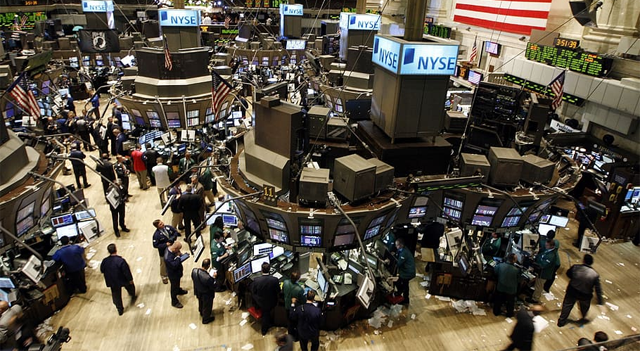
    European stock markets fell sharply on Tuesday, pressured by mounting concerns over the expanding conflict in the Middle East and its impact on global risk appetite.

    By 08:05 GMT, Germany’s DAX had dropped 1.9%, France’s CAC 40 was down 1.2%, and the UK’s FTSE 100 declined 1%.

    Escalation in the Gulf

    Investor sentiment has deteriorated as hostilities between the U.S. and Iran, which erupted over the weekend, show signs of spreading across the wider Gulf region.

    Reports suggested that the U.S. embassy in Riyadh was targeted by missile fire, while Amazon data centres in the UAE and Bahrain were also struck, as Iran launched retaliatory attacks across multiple Middle Eastern countries.

    The developments have cast fresh doubt on the long-held perception of Gulf hubs such as Dubai as safe havens.

    At the same time, Israel said it was conducting operations against both Iran and Lebanon, after the Tehran-backed Hezbollah group launched missiles and drones toward Tel Aviv.

    The U.S. State Department announced on Tuesday that non-essential U.S. government staff and family members had been ordered to leave Bahrain, Iraq and Jordan.

    U.S. President Donald Trump said overnight that Washington would do “whatever it takes” to accomplish its military objectives, indicating that operations could continue for several weeks.

    Earnings remain in focus

    Despite geopolitical tensions dominating headlines, investors are also assessing a fresh batch of corporate results.

    Thales (EU:HO) delivered fourth-quarter figures ahead of expectations, supported by robust performance in its Aerospace and Defence divisions, though its Cyber & Digital segment remained subdued.

    Swiss packaging firm SIG Group reported a loss for 2025 after booking €350.7 million in one-off charges related to a strategic review, while revenue remained broadly flat in a weak market environment.

    Kuehne & Nagel (TG:KNIA) posted a 24.8% decline in annual profit for 2025, citing currency headwinds and margin pressure. The Swiss logistics group’s equity ratio fell to 18.5%, compared with 27.8% the previous year.

    Lottomatica (BIT:LTMC) exceeded expectations for 2025, reporting 21% profit growth as the Italian gaming operator expanded its online market share.

    Inflation data awaited

    Markets are also looking ahead to the release of Eurozone flash inflation data for February later in the session, particularly given the renewed rise in energy prices.

    Annual headline inflation is forecast at 1.7%, unchanged from January, while core inflation — which excludes food and energy — is expected at 2.2% year-on-year.

    Oil prices extend rally

    Crude prices surged further on Tuesday, building on the previous session’s sharp gains, as concerns over potential disruptions to shipments through the Strait of Hormuz intensified.

    Brent futures jumped 4.3% to $81.10 per barrel, while U.S. West Texas Intermediate crude advanced 4% to $74.05 per barrel.

    Both benchmarks had already closed more than 7% higher on Monday after spiking as much as 13% to one-year highs.

    Tensions escalated after Iranian officials threatened to target any vessel attempting to transit the Strait of Hormuz, raising fears of significant disruptions to oil exports from major Gulf producers.

  • FTSE 100 Slides as Geopolitical Tensions Weigh; Pound Falls Ahead of UK Budget

    FTSE 100 Slides as Geopolitical Tensions Weigh; Pound Falls Ahead of UK Budget

    The FTSE 100 extended its recent decline, tracking broader European weakness as escalating tensions in the Middle East dampened investor sentiment. Market participants were also digesting a fresh wave of UK corporate earnings while keeping a close eye on the upcoming UK Spring Budget.

    By 0821 GMT, the blue-chip index was down 1.4%. Sterling weakened 0.7% against the U.S. dollar to 1.3322. On the continent, Germany’s DAX fell 2.3% and France’s CAC 40 dropped 1.6%.

    Overnight, U.S. President Donald Trump said Washington would do “whatever it takes” to achieve its military objectives, signalling that operations could extend for several weeks. Analysts at Jefferies suggested that identifying a clear exit strategy may prove challenging, noting that any leadership change in Iran without broader structural shifts would likely be insufficient for U.S. or Israeli objectives. They added that further escalation could occur before diplomatic progress is achieved.

    UK Corporate Round-Up

    Greggs plc (LSE:GRG) reported full-year profit before tax of £171.9 million for the 52 weeks to 27 December 2025, down 9.4% year-on-year but broadly in line with analyst expectations. Total sales rose 6.8% to £2.15 billion, supported by new store openings, while like-for-like sales growth slowed to 2.4% amid tougher trading conditions and an unusually warm summer.

    Inchcape Plc (LSE:INCH) posted 2025 pretax profit of £443 million, matching consensus forecasts, and announced a £175 million share buyback — its second in under a year. Earnings per share rose 13% on a constant currency basis to 80.8 pence, ahead of expectations, while the dividend increased 13% to 32.3 pence.

    Aberdeen Group plc (LSE:ABDN) reported adjusted operating profit up 4% to £264 million, with IFRS profit before tax jumping 76% to £442 million. Assets under management and administration rose 9% to £556 billion, and operating profit at its interactive investor platform climbed 34%. The company deferred its £1 billion net inflow target to 2027.

    Fresnillo plc (LSE:FRES) delivered strong 2025 results, with adjusted revenue up 27.6% to $4.65 billion and EBITDA surging 80.7% to $2.80 billion, benefiting from higher precious metal prices and improved cost discipline.

    Keller Group plc (LSE:KLR) reported revenue of £3.09 billion and adjusted operating profit of £218.2 million, alongside a new £100 million share buyback programme.

    International Workplace Group Plc (LSE:IWG) posted adjusted EBITDA of $531 million for 2025, up 6%, and lifted its 2026 buyback programme to $100 million.

    Morgan Advanced Materials plc (LSE:MGAM) reported 2025 sales of £1,030 million, ahead of consensus, though organic growth declined 3.3%. Management said 2026 guidance aligns with market expectations.

    Johnson Service Group plc (LSE:JSG) announced full-year adjusted EBITA of £72.5 million, broadly matching analyst forecasts.

    With geopolitical uncertainty persisting and fiscal policy under scrutiny, markets remain sensitive to both global developments and domestic economic signals.

  • Wall Street poised for losses as U.S.-Iran tensions shake investor confidence: Dow Jones, S&P, Nasdaq, Futures

    Wall Street poised for losses as U.S.-Iran tensions shake investor confidence: Dow Jones, S&P, Nasdaq, Futures

    U.S. equity futures signaled a sharply weaker start to trading on Monday, pointing to further declines after stocks posted losses in each of the previous two sessions.

    Market sentiment deteriorated following coordinated military strikes by the United States and Israel on Iran over the weekend that resulted in the death of Iranian Supreme Leader Ayatollah Ali Khamenei.

    Regional tensions intensified further after Israel launched additional air attacks on Hezbollah positions in Beirut and other parts of Lebanon in response to projectiles fired into northern Israel from Lebanese territory.

    President Donald Trump indicated that hostilities with Iran could continue for as long as four weeks, fueling concerns that the conflict may expand across the broader Middle East.

    The escalation has pushed crude oil prices sharply higher, reviving fears that inflationary pressures could strengthen again.

    “Scenes in the Middle East have caused widespread nervousness across financial markets,” said Dan Coatsworth, head of markets at AJ Bell. “The U.S. attacks on Iran have caused oil prices to soar amid fears of disruptions to supplies, pushing up costs for businesses and consumers.”

    He added, “If the issues persist then the market will start to worry about new inflationary pressures and that could lower expectations for near-term interest rate cuts.”

    Stocks had already declined notably on Friday, extending Thursday’s sell-off, with technology shares leading losses and the Nasdaq continuing to underperform.

    Despite recovering somewhat from session lows, the major indices still closed firmly lower. The Dow Jones Industrial Average dropped 521.28 points, or 1.1%, to 48,977.92, the Nasdaq Composite fell 210.17 points, or 0.9%, to 22,688.21, and the S&P 500 slipped 29.98 points, or 0.4%, to 6,878.88.

    For the week, the Dow lost 1.3%, the Nasdaq declined 1.0%, and the S&P 500 edged down 0.4%.

    Additional pressure came from fresh economic data showing U.S. producer prices rose more than anticipated in January. The Labor Department reported that its producer price index for final demand increased by 0.5% following a downwardly revised 0.4% gain in December.

    Economists had forecast a 0.3% increase compared with the earlier estimate of a 0.5% rise for the prior month.

    On a yearly basis, producer price growth slowed slightly to 2.9% in January from 3.0% in December, while economists had expected a decline to 2.8%.

    “For the past month the market has been worried about AI disruption and its impact on the labor market, so inflation hasn’t been top of mind,” said Chris Zaccarelli, Chief Investment Officer for Northlight Asset Management.

    He continued, “But this morning’s inflation readings could give the Fed another reason to be more patient with rate cuts and wait until the second half of the year before making any changes.”

    The stronger-than-expected inflation data, combined with concerns over AI-related job losses, has raised fears that the economy could face stagflationary conditions.

    Adding to worries about technological disruption, Block (XYZ) announced plans to cut nearly half of its workforce.

    Block Chief Financial Officer Amrita Ahuja said the company sees an “opportunity to move faster with smaller, highly talented teams using AI to automate more work.”

    Airline stocks were among the worst performers, sending the NYSE Arca Airline Index down 5.0% to its lowest closing level in nearly a month.

    Financial stocks also came under heavy pressure, with the KBW Bank Index and the NYSE Arca Broker/Dealer Index falling 4.9% and 3.0%, respectively.

    Software and semiconductor shares also declined noticeably, while pharmaceutical, retail and telecommunications stocks posted gains during the session.

  • European stocks slide as Middle East tensions weigh on markets: DAX, CAC, FTSE100

    European stocks slide as Middle East tensions weigh on markets: DAX, CAC, FTSE100

    European equities moved sharply lower on Monday as escalating conflict in the Middle East weakened investor sentiment and prompted a shift away from risk-sensitive assets.

    Concerns about inflation resurfaced after Brent crude prices surged nearly 10%, reaching their highest levels since January 2025 amid fears that regional instability could disrupt global oil supplies.

    Market participants are closely monitoring developments around the Strait of Hormuz, a vital shipping route responsible for a significant share of worldwide oil transportation.

    On the economic front, fresh data showed German retail sales declined more than anticipated in January, while UK house prices rose slightly faster than expected in February following a late-2025 slowdown.

    Major European indices posted broad declines, with Germany’s DAX falling 2.6%, France’s CAC 40 dropping 2.2%, and the UK’s FTSE 100 retreating 1.5%.

    Banking stocks were among the worst performers, as Commerzbank (TG:CBK), Deutsche Bank (TG:DBK), BNP Paribas (EU:BNP) and Barclays (LSE:BARC) all recorded notable losses amid renewed concerns about transparency in private lending markets.

    UK engineering group Senior (LSE:SNR) also traded lower after reporting 2025 revenue that fell short of market expectations.

    Medical technology company Smith & Nephew (LSE:SN.) declined sharply despite announcing improved profit and cash flow figures for 2025.

    In contrast, Bunzl (LSE:BNZL) gained ground after the distribution group reported 3.0% revenue growth at constant exchange rates for 2025, supported by acquisitions.

    Shares in Sage Group (LSE:SGE) edged higher after the software firm announced plans to launch a share buyback programme worth up to £300 million.

  • Luxury stocks decline as Iran conflict clouds Middle East consumer outlook

    Luxury stocks decline as Iran conflict clouds Middle East consumer outlook

    Shares of luxury goods companies moved lower on Monday after Morgan Stanley analysts warned that escalating conflict involving Iran could weigh on consumer spending sentiment across the Middle East.

    In Paris, shares of Louis Vuitton owner LVMH (EU:MC) fell more than 3%, while Gucci parent Kering (EU:KER) dropped 4.3%. Switzerland-listed Richemont (TG:RITN) declined over 6%, and UK luxury brand Burberry (LSE:BRBY) lost around 4%. Sports car maker Ferrari (BIT:RACE) also slipped 3.8% in U.S. premarket trading.

    In a research note, Morgan Stanley analysts estimated that the Middle East accounts for roughly 5% of total sales for most luxury companies, with the United Arab Emirates representing the largest individual market within the region.

    They added that spending in the Middle East typically accelerates toward the latter part of the Ramadan holy month, particularly in the run-up to Eid al-Fitr, which this year falls on March 19 and 20. However, the recent outbreak of violence could dampen luxury purchases during this key seasonal period — often referred to as the “Ramadan rush” — according to analysts including Natasha Bonnet and Edouard Aubin.

    On Saturday, the United States and Israel announced coordinated strikes targeting multiple locations in Iran, resulting in the deaths of several senior Iranian officials, including Supreme Leader Ayatollah Ali Khamenei. U.S. President Donald Trump called on Iranian opposition groups to overthrow the country’s long-standing political system, although many senior U.S. officials remain doubtful that regime change is imminent, Reuters reported.

    Questions also remain over how long Washington intends to remain involved in the conflict. Trump told the New York Times that military operations could continue for “four to five weeks.” He also declined to outline how a political transition in Iran might unfold, saying he has “three very good choices” but “won’t be revealing them now,” according to the New York Times.

    The strikes prompted retaliatory actions by Tehran targeting locations across the Middle East, including several energy-producing Gulf nations.

  • BAE Systems shares rally as Middle East tensions lift defence sector outlook

    BAE Systems shares rally as Middle East tensions lift defence sector outlook

    Shares in BAE Systems PLC (LSE:BAE) climbed 5.5% on Monday following heightened tensions in the Middle East over the weekend, with JPMorgan analysts identifying the UK defence contractor as one of the companies best positioned to benefit from a potential increase in U.S. defence spending.

    In a research note, JPMorgan said the European defence sector could see further gains amid ongoing geopolitical conflicts and expectations of higher military budgets in the United States.

    The bank highlighted comments from President Trump in January 2026 indicating plans to raise the U.S. defence budget by as much as 50% in fiscal 2027, although JPMorgan considers a rise of around 20–30% to be a more realistic scenario.

    Analysts said the accelerating pace of U.S. military operations during 2026 is increasing pressure on policymakers to boost defence expenditure. BAE Systems derives roughly 44% of its revenue from the U.S. defence market — the highest exposure among European defence companies covered by JPMorgan.

    JPMorgan also pointed to the need for the United States to replenish missile inventories following recent military activity. Media reports from June 2025 suggested the U.S. deployed between 15% and 25% of its total THAAD interceptor stockpile during a 12-day conflict, using approximately 100 to 150 interceptors from an estimated inventory of around 650 units.

    BAE Systems supplies the infrared seeker component used in the THAAD missile guidance system, with JPMorgan estimating the company generates about $1 million in revenue per THAAD unit.

    Other UK-listed defence companies also traded higher on Monday. Babcock International Group PLC (LSE:BAB) rose 0.9%, while Qinetiq Group PLC (LSE:QQ.) gained roughly 3% as of 11:00 GMT.

    JPMorgan additionally highlighted several European defence firms with meaningful exposure to the U.S. market, including RENK Group AG (TG:R3NK) with around 25% exposure, Leonardo SpA (BIT:LDO) at approximately 23%, and Qinetiq Group PLC at about 18%.

  • Futures sink and oil rallies as Middle East tensions escalate — key market drivers: Dow Jones, S&P, Nasdaq, Wall Street Futures

    Futures sink and oil rallies as Middle East tensions escalate — key market drivers: Dow Jones, S&P, Nasdaq, Wall Street Futures

    U.S. equity futures signalled sharp declines after large-scale airstrikes by the United States and Israel against Iran heightened fears of a broader regional conflict. The escalation sent oil prices higher and prompted investors to shift away from risk assets toward traditional safe havens such as gold. Asian equities also moved lower, pressured by uncertainty surrounding artificial intelligence developments and their potential impact on the technology sector.

    Futures fall sharply

    U.S. stock futures dropped significantly on Monday as markets reacted to the joint U.S.-Israeli attacks on Iran and growing concerns that hostilities could spread across the wider Middle East.

    At 02:54 ET, Dow futures were down 733 points, or 1.5%, S&P 500 futures had fallen 104 points, also 1.5%, and Nasdaq 100 futures declined 463 points, or 1.9%.

    The coordinated strikes carried out on Saturday targeted multiple Iranian locations and reportedly killed several senior Iranian figures, including Supreme Leader Ayatollah Ali Khamenei. U.S. President Donald Trump urged Iranian opposition groups to challenge the country’s long-standing governing system, although many senior U.S. officials remain doubtful that regime change is imminent, according to Reuters.

    Uncertainty remains over how long Washington intends to stay militarily engaged. Trump told the New York Times that operations could continue for “four to five weeks.” He also declined to outline a detailed plan for political transition in Iran, saying he has “three very good choices” to lead the country but “won’t be revealing them now,” the New York Times reported.

    Iran responded with retaliatory strikes targeting locations across the Middle East, including energy-producing Gulf states. Media reports citing U.S. Central Command said three American service members were killed and five seriously injured, while Trump warned that additional casualties could follow.

    Indications that the conflict may be expanding emerged as Israel struck Hezbollah targets in Lebanon. The Wall Street Journal also reported that at least one U.S. aircraft had been downed in Kuwait.

    Oil surges on supply disruption fears

    Oil markets rallied strongly following the escalation, as traders weighed the possibility that Iran could attempt to block the Strait of Hormuz — a critical shipping route responsible for roughly one-fifth of global oil supply and about 20% of worldwide liquefied natural gas flows.

    By 03:24 ET, Brent crude futures had jumped 10% to $80.14 per barrel, while U.S. West Texas Intermediate crude futures climbed 9.3% to $73.26 per barrel.

    Although Tehran has not officially closed the strait, Reuters reported that maritime tracking data shows tankers beginning to accumulate on both sides as operators grow concerned about potential attacks or face difficulties securing insurance coverage.

    A sustained increase in oil prices could pose risks to the global economy by reigniting inflation pressures and weighing on consumer demand. If the conflict continues for an extended period, costs for fuel, electricity and other energy-related goods may rise further.

    “How sustained any spikes are depends on how long attacks persist,” analysts at ING said in a note to clients.

    “While it is still very early days and the situation is developing at a fast pace, it does not appear that this military action will be quick and short-lived,” like previous U.S.-Israeli attacks on Iran last year, they added.

    Some analysts cited by the New York Times noted that, despite the surge, oil prices remain within historical ranges. A prolonged global supply surplus could help cushion the impact, further supported by OPEC+ plans announced Sunday to modestly increase production next month.

    Gold gains as investors seek safety

    Gold prices rose as investors moved funds into safe-haven assets amid escalating geopolitical risk.

    Spot gold advanced 2.3% to $5,402.31 per ounce by 03:44 ET, while U.S. gold futures climbed 3.3% to $5,418.09.

    “A regional spillover or disruption to energy supplies would materially boost gold through higher oil prices, increased inflation expectations and contained real yields,” the ING analysts said.

    Beyond geopolitical developments, investors are also preparing for a busy week of economic data releases and corporate earnings. The February U.S. jobs report is due alongside results from Broadcom and Target during the first week of March.

    Asian markets decline

    Asian equities also fell, following a weaker close on Wall Street on Friday as concerns over artificial intelligence developments and interest rate expectations weighed on technology shares.

    Hong Kong’s Hang Seng index and Japan’s Nikkei 225 were among the region’s biggest decliners, dropping 2.1% and 1.4%, respectively.

    Alongside geopolitical concerns, technology stocks faced additional selling pressure amid uncertainty about how AI advancements may reshape competition within the sector. Software companies in particular experienced notable losses in February due to fears of increased competition from AI-driven tools.

    Berkshire Hathaway earnings fall

    Berkshire Hathaway (NYSE:BRK.B) reported on Saturday that fourth-quarter operating profit declined nearly 30% year over year, primarily due to weaker insurance underwriting performance.

    In Warren Buffett’s final quarter as chief executive officer, insurance underwriting earnings more than halved to $1.56 billion, while insurance investment income dropped nearly 25% to $3.07 billion.

    The conglomerate also recorded $4.5 billion in impairment charges linked to its investments in Kraft Heinz (NASDAQ:KHC) and Occidental Petroleum Corporation (NYSE:OXY).

    Operating earnings totaled $10.2 billion for the quarter ended December 31, compared with nearly $14.53 billion a year earlier.

    The results included the first shareholder letter written by Greg Abel, Buffett’s chosen successor, who acknowledged that Buffett was “obviously a hard act to follow.”

  • European stocks slide as Middle East tensions escalate; oil prices surge: DAX, CAC, FTSE100

    European stocks slide as Middle East tensions escalate; oil prices surge: DAX, CAC, FTSE100

    European equity markets declined sharply on Monday as global risk sentiment deteriorated following large-scale military strikes by the United States and Israel against Iran over the weekend.

    By 08:05 GMT, Germany’s DAX had fallen 2.5%, France’s CAC 40 was down 2.1%, and the UK’s FTSE 100 dropped 0.8%.

    Middle East conflict weighs on markets

    Stock markets across Asia and Europe traded lower, while U.S. futures signalled further weakness ahead of the Wall Street open after the weekend attacks, which reportedly killed several senior Iranian figures, including Supreme Leader Ayatollah Ali Khamenei.

    Iran responded with strikes targeting multiple locations across the Middle East, including U.S. military bases in the region.

    There were few indications that tensions would ease soon, with U.S. President Donald Trump stating overnight that joint U.S. and Israeli military operations would continue and could extend for several weeks.

    “We will not negotiate with the United States,” Iran’s top security official Ali Larijani said in a post on X on Monday, reinforcing Tehran’s tougher stance after earlier discussions last week about the possibility of a nuclear agreement with Washington.

    Rally momentum at risk

    The market decline followed a strong run for European equities, which had closed at record highs on Friday after eight consecutive months of gains supported by stronger-than-expected corporate results.

    The pan-European STOXX 600 had just recorded its longest monthly winning streak since the 2012–2013 period.

    Although the earnings season is nearing its end, several corporate updates remained in focus on Monday, even as the broader market tone shifted more cautious.

    Smith & Nephew (LSE:SN.) reported a 15.5% increase in annual profit, reflecting progress in its turnaround strategy, which has delivered cost efficiencies and supported growth across business segments.

    Bunzl (LSE:BNZL) posted a 9.8% decline in annual adjusted pretax profit, as weaker trading conditions in its key North American division were compounded by supply-chain disruptions linked to tariffs.

    Galp Energia (EU:GALP) highlighted solid operational performance in 2025, supported by strong cash generation and a resilient balance sheet despite softer oil prices.

    Economic data in focus

    On the macroeconomic front, German retail sales declined more sharply than expected in January, falling 0.9% month on month compared with forecasts for a 0.2% drop, according to data released Monday.

    In the UK, house prices rose 0.3% in February, leaving prices 1.0% higher than a year earlier, according to figures from mortgage lender Nationwide Building Society.

    Investors are also awaiting the final February reading of the Eurozone manufacturing PMI later in the day, which is expected to confirm that the sector returned to expansion last month.

    Oil prices jump

    Oil markets rallied strongly on Monday after Iranian retaliatory strikes disrupted shipping activity in the strategically important Strait of Hormuz.

    Brent crude futures surged 9.6% to $79.85 per barrel — their highest level since January 2025 — while U.S. West Texas Intermediate futures climbed 9.3% to $73.22 per barrel, the strongest level since June.

    The spike followed reports that three oil tankers were damaged while transiting the Strait of Hormuz, a key maritime route linking the Gulf with the Arabian Sea.

    On a typical day, shipments equivalent to roughly one-fifth of global oil demand pass through the strait, carrying crude exports from Saudi Arabia, the UAE, Iraq, Iran and Kuwait.

    A prolonged disruption or closure of the passage could push oil prices significantly higher and create supply shortages for major importing nations such as China and India.