Category: Market Summary

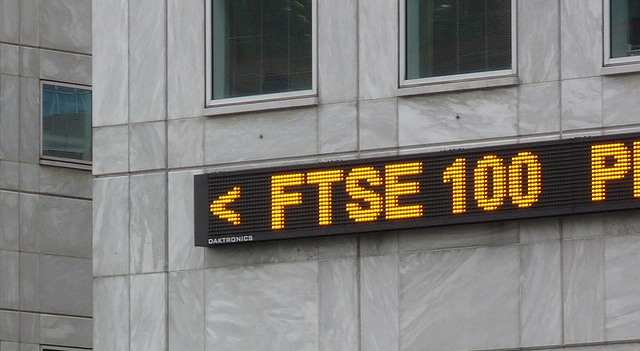
  • FTSE 100 today: UK stocks fall and pound weakens amid rising geopolitical tensions

    FTSE 100 today: UK stocks fall and pound weakens amid rising geopolitical tensions

    UK equities opened lower on Monday while the British pound slipped to around $1.33, as escalating tensions involving Iran, the United States and Israel dampened investor sentiment. Market participants remain sceptical that the current geopolitical flare-up will ease in the near term.

    Recent developments showed U.S. President Donald Trump expressing willingness to engage with Iran’s new leadership, while senior Iranian official Ali Larijani indicated that Tehran is not ready to enter talks with Washington.

    Investors are heading into a busy week in which market direction is expected to be heavily influenced by geopolitical headlines and any indications that tensions could begin to de-escalate.

    “From a market perspective, we see further downside in the coming days. We had lowered our risk profile early last week as we thought that the market was being too complacent around geopolitical risks. We are still happy to remain in the low risk mode and keeping our powder dry. At some point we would be ready to buy the dip, but that some point seems far for now,” according to a Jefferies economist.

    As of 08:14 GMT, the FTSE 100 index was down 0.7%, while the pound weakened roughly 1% against the U.S. dollar to 1.3352. European markets also declined, with Germany’s DAX falling 2.3% and France’s CAC 40 dropping 1.7%.

    UK market roundup

    Smith+Nephew PLC (LSE:SN.) reported fourth-quarter revenue that exceeded consensus forecasts by 1.6%, while reiterating its full-year 2026 guidance despite ongoing market headwinds. The medical technology group delivered underlying revenue growth of 6.2% in the quarter, beating expectations by around 1.5 percentage points. Second-half EBIT margin exceeded consensus by 7 basis points, and earnings per share came in 2.6% ahead of forecasts.

    Bunzl (LSE:BNZL) released full-year results broadly in line with expectations, showing modest improvement in organic growth during the fourth quarter and a slower pace of margin compression in the second half. Revenue grew 3% excluding currency effects, at the top end of its 2%–3% guidance range, while organic growth reached 0.4% compared with flat guidance. Adjusted EBIT declined 7% to £910 million, slightly above the £896 million consensus estimate. Operating margin fell 60 basis points to 7.7%, though the rate of decline eased in the second half, driven by improved performance in North America.

    Oxford Nanopore Technologies PLC (LSE:ONT) issued 2026 revenue guidance below analyst expectations but projected tighter control over operating expenses. The company forecasts revenue growth of 21–25% at constant exchange rates, compared with consensus expectations of 27.5% on a reported basis. Currency movements are expected to create a headwind of around 1.5 percentage points. Operating expenses excluding depreciation and amortisation are expected to rise between 0% and 5%, below the company’s typical annual range of 3%–8%.

    Big Yellow Group (LSE:BYG) confirmed that Chief Executive Jim Gibson will retire on July 20 following the company’s Annual General Meeting, with Chief Operating Officer John Hunter set to succeed him. Gibson, who co-founded the company in September 1998 and has served as CEO since 2003, is widely credited with building Big Yellow into a market leader after launching the business from a small 600-square-foot office in Bagshot.

    Meanwhile, UK house prices edged higher in February, according to Nationwide data. The average property price rose by 0.3%, or £817, to £273,176 on a seasonally adjusted basis, matching January’s increase. On an annual basis, prices were up 1%, or £2,660, compared with February 2025 — a slight acceleration from the 0.99% yearly growth recorded the previous month. Housebuilders have indicated that prices have remained largely stable so far this year.


  • European energy and defence stocks rise amid escalating Middle East tensions

    European energy and defence stocks rise amid escalating Middle East tensions

    European equity markets headed into a volatile, risk-averse start to the week after U.S. and Israeli forces carried out strikes on Iran, prompting investors to shift toward energy and defence shares while airline and consumer-focused sectors came under pressure.

    Major oil and gas companies recorded notable gains, with BP (LSE:BP.), Shell (LSE:SHEL), Var Energi, Equinor, Galp (EU:GALP), TTE (EU:TTE), and Repsol (TG:REP) advancing between roughly 3.5% and 7% by 08:52 GMT.

    Defence stocks also moved sharply higher. BAE Systems (LSE:BA.) rose more than 7%, Renk Group (TG:R3NK) gained 6.3%, and Hensoldt (TG:HAG) surged 7.5%. Rheinmetall (TG:RHM), Leonardo (BIT:LDO), and Thales (EU:HO) also posted solid increases, climbing between 4% and 6%.

    Monday should see “volatility and selling in tech and cyclicals, and the reason for that is that, because of the actions that we’ve seen, there will be a significant risk that rising energy prices penalizes growth,” said Matt Gertken, chief geopolitical and U.S. political strategist at BCA Research.

    “We should globally see defensives and energy outperform,” he added.

    The renewed escalation in the Middle East has added further upward pressure to oil and gas prices. Market strategists generally expect heightened geopolitical risks to drive investor flows into traditionally defensive sectors such as utilities and healthcare, which historically perform more resiliently during periods of economic uncertainty.

    Conversely, higher-beta growth stocks and economically sensitive sectors — including industrials and financials — may face renewed selling pressure as investors reassess risk exposure.

    Oil futures surged more than 8% on Monday, reaching multi-month highs following the military strikes and Iran’s response.

    Analysts noted that crude prices are likely to stay elevated in the near term as markets assess potential supply disruptions, particularly shipments passing through the Strait of Hormuz, a route responsible for more than one-fifth of global oil transport.

    Citi analysts said in a note they expect Brent crude to trade in an $80–$90 per barrel range in their base case over at least this week, while adding that prices could retreat toward $70 if tensions ease.

  • Wall Street Futures Signal Steep Opening Losses: Dow Jones, S&P, Nasdaq

    Wall Street Futures Signal Steep Opening Losses: Dow Jones, S&P, Nasdaq

    U.S. equity futures indicated a sharply negative start to Friday’s trading session, pointing to a continuation of the pullback seen the day before.

    Contracts moved deeper into the red after fresh inflation figures showed U.S. producer prices increased more than forecast in January, adding to concerns about persistent price pressures.

    Data from the Labor Department showed the producer price index for final demand rose 0.5% in January, following a downwardly revised 0.4% gain in December.

    Economists had anticipated a smaller 0.3% increase, compared with the previously reported 0.5% rise for the prior month.

    On an annual basis, producer price growth eased slightly to 2.9% from 3.0%, though this was still above expectations for a slowdown to 2.8%.

    Investor sentiment was also weighed down by ongoing worries about artificial intelligence-driven job cuts after Block (NYSE:XYZ) revealed plans to reduce its workforce by nearly 50%.

    Block CFO Amrita Ahuja said the company sees an “opportunity to move faster with smaller, highly talented teams using AI to automate more work.”

    Markets retreated Thursday after two sessions of strong gains. The tech-heavy Nasdaq led declines, while the Dow Jones Industrial Average managed to finish marginally higher.

    The Nasdaq pared earlier losses but still dropped 273.69 points, or 1.2%, to 22,878.38. The S&P 500 declined 37.27 points, or 0.5%, to 6,908.86, while the Dow added 17.05 points, less than 0.1%, to 49,499.20.

    Weakness was partly triggered by investor reaction to Nvidia (NASDAQ:NVDA), whose shares fell 5.5% despite posting stronger-than-expected quarterly earnings and upbeat guidance.

    Nvidia stock retreated from its highest closing level in over three months as investors focused on broader concerns beyond headline results.

    “It says a lot when a stock market darling beating revenue forecasts by billions of dollars can no longer muster a positive share price reaction,” said Dan Coatsworth, head of markets at AJ Bell. “The mood music is changing on Nvidia, and it represents a significant shift in investor sentiment.”

    He added, “The focus has now shifted to growing competition, concerns about excessive levels of investment across the AI space either being unsustainable or unnecessary, and whether the party will end in tears.”

    Nvidia’s decline weighed on the semiconductor sector, with the Philadelphia Semiconductor Index falling 3.2% after closing at a record high in the previous session.

    Networking shares also weakened notably, adding pressure on the Nasdaq.

    Outside technology, gold mining stocks rallied even as bullion prices slipped, lifting the NYSE Arca Gold Bugs Index 2.9% to a record close.

    Airline stocks also advanced strongly, pushing the NYSE Arca Airline Index up 2.3%.

    The Dow’s modest gain was supported in part by a 4.0% jump in Salesforce (NYSE:CRM) shares following better-than-expected quarterly earnings.

    Meanwhile, separate Labor Department data showed initial jobless claims edged higher in the week ended February 21.

    New unemployment claims rose to 212,000, up 4,000 from the prior week’s revised level of 208,000.

    Economists had forecast claims would rise to 215,000 from the previously reported 206,000.

  • European Markets Trade Mixed as AI Disruption Fears Weigh on Sentiment: DAX, CAC, FTSE100

    European Markets Trade Mixed as AI Disruption Fears Weigh on Sentiment: DAX, CAC, FTSE100

    European equities showed a mixed performance on Friday, with investors remaining cautious amid ongoing concerns about job losses and workplace disruption linked to the rapid adoption of artificial intelligence.

    Block (NYSE:XYZ), the payments company led by Twitter co-founder and CEO Jack Dorsey, recently announced plans to cut roughly 40% of its workforce as automation driven by artificial intelligence reshapes operations.

    On the macroeconomic front, U.K. consumer confidence unexpectedly weakened in February, falling to its lowest level in three months instead of posting the modest improvement economists had anticipated.

    The U.K. consumer confidence index declined to -19 from -16 in January, according to the Consumer Confidence Barometer compiled by GfK and the Nuremberg Institute for Market Decisions (NIM). Economists had forecast a slight rise to -15, making the latest reading the weakest since November.

    Sterling slipped to a more than two-month low against the euro amid political uncertainty following a Green Party victory in a special election in England.

    The euro traded within a tight range against the U.S. dollar after reports indicated the European Central Bank reduced its exposure to dollar assets in early 2025.

    Among major benchmarks, London’s FTSE 100 gained 0.3%, while Germany’s DAX fell 0.2% and France’s CAC 40 declined 0.6%.

    At the stock level, French steel pipe manufacturer Vallourec (EU:VK) advanced after reporting fourth-quarter revenue that exceeded expectations.

    Swiss reinsurer Swiss Re (TG:SR9) also posted strong gains after announcing a 47% increase in net profit for 2025.

    In contrast, London-listed recruitment firm Hays (LSE:HAS) dropped sharply following a significant decline in first-half earnings.

    Melrose (LSE:MRO), owner of GKN Aerospace, also fell after issuing a 2026 revenue outlook below market forecasts.

    Belgian telecom group Proximus (EU:PROX) moved notably lower after announcing job reductions and dividend cuts following a 6.6% year-over-year revenue decline in the fourth quarter.

    German online food delivery platform Delivery Hero (TG:DHER) also declined after reporting annual gross merchandise value (GMV) slightly below analyst expectations.

  • Paramount Takes Lead in Warner Deal as Block Soars — Market Movers to Watch: Dow Jones, S&P, Nasdaq, Wall Street Futures

    Paramount Takes Lead in Warner Deal as Block Soars — Market Movers to Watch: Dow Jones, S&P, Nasdaq, Wall Street Futures

    U.S. equity futures edged lower on Friday as investors assessed fresh technology earnings and reconsidered positioning around artificial intelligence-driven stocks. Paramount Skydance (NASDAQ:PSKY) is emerging as the frontrunner to acquire Warner Bros. Discovery (NASDAQ:WBD) after Netflix (NASDAQ:NFLX) withdrew from the bidding process, while AI company Anthropic entered a standoff with the Pentagon. Meanwhile, Jack Dorsey’s Block (NYSE:XYZ) surged following a major restructuring announcement, and oil prices moved modestly higher.

    Futures slip ahead of market open

    Futures tied to major U.S. indices pointed to a softer end to the trading week as markets digested a wave of influential tech-sector results.

    At 02:59 ET, Dow futures were down 205 points, or 0.4%, S&P 500 futures fell 13 points, or 0.2%, and Nasdaq 100 futures were largely unchanged.

    Wall Street finished Thursday’s session mixed, with investor focus centred on earnings from artificial intelligence leader Nvidia (NASDAQ:NVDA) and enterprise software group Salesforce (NYSE:CRM).

    Although Nvidia reported quarterly results that exceeded expectations, investors remained cautious amid rising competitive pressures, concerns about the durability of strong demand, and uncertainty over the timing of meaningful shareholder returns. Nvidia shares — which carry significant weight in major indices — declined by more than 5%.

    Salesforce shares advanced despite issuing a weaker-than-expected revenue outlook for the year ahead. Analysts at Vital Knowledge said the results were “no worse than feared.”

    Trading also reflected what analysts described as a “violent rotation” within technology stocks, as investors shifted capital away from hardware-focused companies such as chipmakers and data center infrastructure providers toward software and data-oriented businesses.

    Analysts argued that “small red flags” from Nvidia, combined with relief surrounding results from Salesforce and Workday, along with comments from AI startup Anthropic stating it aims to “compliment and augment, not kill” software companies, helped drive the shift.

    Paramount moves ahead in Warner takeover contest

    Paramount Skydance appears set to win the extended takeover battle for Warner Bros. Discovery after Netflix unexpectedly stepped away from negotiations.

    Netflix executives — whose shares rose in after-hours trading — said the acquisition was “always a ’nice to have’ at the right price,” but “not a ’must have’ at any price.” While the streaming company has ample financial capacity, some investors had questioned the strategic rationale behind acquiring a traditional media group.

    Warner Bros.’ board concluded that Paramount’s $31-per-share offer represented a superior proposal. Netflix was granted four days to respond but ultimately chose not to match the bid, abandoning its $27.75-per-share offer covering Warner Bros.’ studios and HBO Max.

    The move positions Paramount — controlled by David Ellison, son of technology billionaire Larry Ellison — to form a larger entertainment powerhouse incorporating major franchises such as “Harry Potter” and “Game of Thrones.” Pending regulatory approval, Paramount would also gain oversight of cable channels including CNN and TBS.

    Warner Bros. CEO David Zaslav said a Paramount transaction would “create tremendous value for our shareholders.” Paramount shares rose in extended trading, while Warner Bros. stock declined.

    Anthropic clashes with Pentagon over AI safeguards

    Artificial intelligence firm Anthropic said it would refuse Pentagon demands to remove safety protections embedded in its AI systems, creating friction between the startup and the U.S. government.

    The dispute centres on a Pentagon request to eliminate safeguards designed to prevent the technology from being used for domestic surveillance or autonomous weapons systems.

    The Defense Department has warned it may terminate its partnership with Anthropic and designate the company a “supply chain risk” if it does not comply. Defense Secretary Pete Hegseth reportedly set a Friday deadline for the company to approve unrestricted lawful use of the technology.

    Anthropic CEO Dario Amodei said he could not agree “in good conscience,” arguing that the military’s request would effectively dismantle critical safety guardrails.

    Block shares jump after workforce overhaul

    Shares of Block surged more than 23% in after-hours trading after the payments company announced plans to cut nearly half of its workforce as part of a broader push to integrate artificial intelligence into its operations.

    The reductions — expected to eliminate over 4,000 roles — come as companies increasingly reshape staffing strategies around AI adoption, raising concerns among workers and economists about employment impacts despite productivity gains.

    Block CEO Jack Dorsey said that “[i]ntelligence tools have changed what it means to build and run a company,” adding “[w]e’re already seeing it internally” and “[a] significantly smaller team using the tools can do more and do it better[.]”

    Although Block expects restructuring costs of up to $500 million, analysts cited by Reuters suggested the sharp rally reflects investor expectations that a leaner organization could deliver stronger margins.

    Oil edges higher amid ongoing U.S.–Iran talks

    Oil prices moved modestly higher but remained on track for weekly declines after the United States and Iran agreed to continue negotiations over Tehran’s nuclear program, easing fears of potential supply disruptions.

    Brent crude futures rose 0.7% to $71.29 per barrel, while U.S. West Texas Intermediate futures climbed 0.8% to $65.74 per barrel.

    For the week, Brent was broadly unchanged, while WTI was poised to fall roughly 1%, reversing part of the previous week’s gains.

    Talks between Washington and Tehran concluded Thursday without a definitive agreement, but technical discussions are scheduled to resume next week in Vienna, Omani Foreign Minister Sayyid Badr Albusaidi said in a post on X following meetings in Geneva.

    Tensions related to Iran have been a key driver of oil price movements throughout February, as the United States increased its military presence in the Middle East and warned of potential action if negotiations failed.

  • European Stocks Little Changed as Earnings Season Continues and Inflation Data Looms: DAX, CAC, FTSE100

    European Stocks Little Changed as Earnings Season Continues and Inflation Data Looms: DAX, CAC, FTSE100

    European equity markets traded cautiously on Friday as investors reviewed another round of corporate earnings while monitoring key inflation releases toward the close of a busy week.

    At 08:10 GMT, Germany’s DAX was broadly unchanged, France’s CAC 40 edged down 0.1%, and the U.K.’s FTSE 100 gained 0.2%.

    Earnings season remains in focus

    Investors continued to analyse company results as Europe’s reporting season approached its final stages. More than half of companies in the STOXX 600 have now released fourth-quarter figures, with overall earnings slightly exceeding expectations — a trend that helped push the benchmark index to record highs on Thursday.

    Swiss Re (TG:SR9) reported record annual net income of $4.76 billion, representing a 47% increase year over year. However, the reinsurer’s life and health division fell short of targets after booking a $650 million charge linked to assumption updates affecting underperforming portfolios in Australia, Israel, and South Korea.

    BASF (TG:BAS) announced a 9.5% decline in full-year earnings, with its core chemicals division nearly breaking even during the fourth quarter. The German chemicals group relied heavily on reduced capital spending to support free cash flow generation.

    Holcim (TG:HLBN) achieved a record recurring EBIT margin of 18.3% in 2025, an improvement of 80 basis points, following the spin-off of its North American operations and new acquisition agreements involving European walling manufacturer Xella and a majority stake in Peru’s Cementos Pacasmayo.

    Melrose Industries (LSE:MRO) posted a 23% increase in adjusted operating profit for 2025 and returned to positive free cash flow for the first time in two years. Net debt rose, however, as the British aerospace and defence group distributed £255 million to shareholders through dividends and share buybacks.

    Netflix steps back from Warner Bros bidding contest

    In U.S. corporate developments, Netflix (NASDAQ:NFLX) said Thursday it would not increase its bid for Warner Bros Discovery (NASDAQ:WBD) after Warner Bros concluded that a revised offer from Paramount Skydance (NASDAQ:PSKY) qualified as a superior proposal under the terms of its merger agreement with the streaming company.

    “We’ve always been disciplined, and at the price required to match Paramount Skydance’s latest offer, the deal is no longer financially attractive, so we are declining to match the Paramount Skydance bid,” Netflix co-CEOs Ted Sarandos and Greg Peters said in a statement.

    Inflation data draws attention

    On the macroeconomic front, France reported fourth-quarter GDP growth of 0.2%, matching expectations. Consumer prices in the country rose 0.7% in February after declining 0.3% the previous month.

    Germany’s inflation figures are due later in the session, with European Central Bank policymakers expected to scrutinise the data closely ahead of their next monetary policy meeting scheduled for mid-next month.

    Oil prices head toward weekly decline

    Oil markets moved slightly higher on Friday but remained on track for weekly losses after the United States and Iran agreed to continue discussions over Tehran’s nuclear programme, easing fears of supply disruptions linked to escalating geopolitical tensions.

    Brent crude futures rose 0.7% to $71.29 per barrel, while U.S. West Texas Intermediate futures gained 0.8% to $65.74 per barrel.

    For the week, Brent prices were broadly flat, while WTI was set to decline by roughly 1%, partially reversing gains from the previous week.

    Negotiations between Washington and Tehran concluded Thursday without a definitive agreement, but both sides plan to resume technical-level talks next week in Vienna, according to Omani Foreign Minister Sayyid Badr Albusaidi in a post on X following meetings in Geneva.

    Tensions surrounding Iran have been a key influence on oil markets throughout February, as the United States deployed significant military assets to the Middle East and warned of potential action should Tehran reject a negotiated settlement.

  • Mixed Corporate Earnings Point to Uneven Start for Wall Street: Dow Jones, S&P, Nasdaq, Futures

    Mixed Corporate Earnings Point to Uneven Start for Wall Street: Dow Jones, S&P, Nasdaq, Futures

    U.S. stock futures indicated a largely flat opening on Thursday, suggesting markets may struggle for clear direction after posting strong gains over the previous two sessions.

    Investor sentiment appeared divided following earnings updates from Dow components Nvidia (NASDAQ:NVDA) and Salesforce (NYSE:CRM), raising expectations for potentially volatile trading early in the session.

    Shares of Nvidia climbed about 1.0% in premarket activity after the artificial intelligence leader delivered fiscal fourth-quarter results that exceeded expectations and issued upbeat forward guidance.

    “Despite markets already pricing in extraordinary year-on-year growth, Nvidia projected revenue for the next quarter well above consensus estimates,” said Daniela Hathorn, Senior Market Analyst at Capital.com.

    She added, “The results reset a narrative that had begun to tilt overly bearish in recent sessions, where concerns around overspending, diminishing returns and intensifying competition had weighed on valuations.”

    In contrast, Salesforce shares declined roughly 1.7% ahead of the open. While the enterprise software company reported stronger-than-expected quarterly earnings, investors reacted negatively to softer guidance for upcoming periods.

    Wall Street finished Wednesday’s session mostly higher, extending momentum from earlier gains and helping the Nasdaq and S&P 500 fully recover losses recorded at the start of the week.

    By the close, major indexes ended slightly below intraday highs. The Nasdaq advanced 288.40 points, or 1.3%, to 23,152.08, the S&P 500 gained 56.06 points, or 0.8%, to 6,946.13, and the Dow Jones Industrial Average rose 307.65 points, or 0.6%, to 49,482.15.

    Part of Wednesday’s advance reflected optimism ahead of Nvidia’s earnings release after the closing bell, with the chipmaker’s shares rising 1.4% during the session.

    Technology stocks broadly supported the rally. IBM Corp. (NYSE:IBM) jumped 3.6%, continuing its rebound after Monday’s sharp decline following UBS upgrading the stock to Neutral from Sell.

    Oracle (NYSE:ORCL) also gained 1.2% after Oppenheimer raised its rating on the software company to Outperform from Perform.

    Software names led market performance, with the Dow Jones U.S. Software Index climbing 3.1%. The index continued its recovery after dropping to a ten-month closing low earlier in the week as concerns about artificial intelligence disruption eased.

    Computer hardware stocks also posted strong gains, reflected in a 2.9% rise in the NYSE Arca Computer Hardware Index.

    Financials, networking companies and semiconductor stocks also showed notable strength, while housing-related shares moved sharply lower during the session.

  • European Stocks Advance as Nvidia Results Lift Sentiment: DAX, CAC, FTSE100

    European Stocks Advance as Nvidia Results Lift Sentiment: DAX, CAC, FTSE100

    European equity markets traded broadly higher on Thursday, supported by upbeat earnings from Nvidia that helped counter lingering concerns around U.S. trade policy and ongoing geopolitical tensions.

    Investor attention also turned to diplomacy, with officials from Iran and the United States scheduled to meet in Geneva for a third round of nuclear talks aimed at easing tensions and avoiding a potential conflict.

    The French CAC 40 Index climbed 0.8%, while Germany’s DAX Index added 0.4%. The U.K.’s FTSE 100 Index posted a more modest gain of 0.2%.

    Shares in London Stock Exchange Group (LSE:LSEG) surged about 4% after the exchange operator unveiled plans for a £3 billion share buyback program alongside reporting a 56.5% increase in pretax profit for 2025.

    Italian energy major Eni (BIT:ENI) advanced 1.4% following the announcement of a 35% year-on-year rise in fourth-quarter adjusted net profit.

    German sportswear company Puma (TG:PUM) jumped 6% after forecasting a smaller EBIT loss for fiscal year 2026.

    Insurance giant Allianz (TG:ALV) slipped 1.3% as investors reacted to 2026 guidance that came in below market expectations.

    Reinsurer Munich Re (TG:A2TSS7) declined 2.6% after reporting a sharper-than-anticipated drop in fourth-quarter profit, weighed down by adverse currency movements.

    French industrial group Bouygues (EU:EN) gained 1.2% after delivering full-year earnings in line with analyst forecasts.

    Schneider Electric (EU:SU) rose 2.6% after announcing record annual revenue of €40.15 billion, driven by strong demand for data-center infrastructure linked to artificial intelligence growth.

    Payments company Worldline (EU:WLN) fell 3% after confirming it had entered into a definitive agreement to sell its Indian operations to local payments firm BillDesk.

    Utility group Engie (EU:ENGI) rallied 7.3% after agreeing to acquire the United Kingdom’s largest electricity distribution network in a £10.5 billion ($14.2 billion) deal.

  • Nvidia, Salesforce results and U.S.-Iran talks steer global market sentiment: Dow Jones, S&P, Nasdaq, Wall Street Futures

    Nvidia, Salesforce results and U.S.-Iran talks steer global market sentiment: Dow Jones, S&P, Nasdaq, Wall Street Futures

    U.S. equity futures moved modestly lower on Thursday as investors weighed major technology earnings and monitored geopolitical developments ahead of renewed nuclear negotiations between U.S. and Iranian officials. Results from Nvidia (NASDAQ:NVDA) and Salesforce (NYSE:CRM) dominated market attention, while oil prices held steady near recent highs.

    Futures drift lower

    Futures tied to the main U.S. stock indices edged down as traders digested earnings from artificial intelligence leader Nvidia.

    At 03:05 ET, Dow futures were down 122 points, or 0.3%. S&P 500 futures slipped 7 points, or 0.1%, and Nasdaq 100 futures declined 27 points, also 0.1%. Wall Street’s major indices had finished the previous session higher as investors positioned ahead of Nvidia’s earnings announcement.

    Market sentiment improved on Wednesday amid renewed optimism around artificial intelligence, marking another shift in what has been a volatile debate over the technology’s economic impact. The Nasdaq outperformed, reflecting expectations that AI investment could ultimately deliver widespread productivity gains, contrasting with earlier concerns that new AI models might disrupt software firms and limit returns on heavy data-centre spending.

    Remarks from Richmond Federal Reserve President Tom Barkin also supported equities. Barkin said it remains unclear whether automation will trigger broad job losses and suggested AI could instead enhance labour market efficiency.

    Nvidia muted despite earnings beat

    Nvidia reported quarterly earnings above expectations for the January period and issued revenue guidance that also exceeded forecasts, though its shares showed little momentum in after-hours trading.

    Some investors raised concerns about shareholder returns despite strong cash generation. Yvette Schmitter, CEO of IT consulting firm Fusion Collective, noted that Nvidia generated $35 billion in cash during the fourth quarter but returned only 12% to shareholders, down from 52% a year earlier.

    Schmitter added that “this is happening at the same time Nvidia is claiming” that its sold-out Ampere chips are a “good signal for demand.”

    “[W]hy is the company with record cash generation cutting buybacks by half?” Schmitter said.

    The topic also surfaced during Nvidia’s earnings call when a UBS analyst asked whether the company intended to distribute part of the roughly $100 billion in cash expected this year. Chief Financial Officer Colette Kress said Nvidia plans to continue investing across the broader AI ecosystem, while Chief Executive Jensen Huang argued that AI-generated output will underpin the next era of computing.

    Salesforce drops on cautious outlook

    Shares of Salesforce (NYSE:CRM) declined sharply in extended trading after the cloud software company issued a revenue forecast that fell short of Wall Street expectations.

    The company projected fiscal 2027 revenue of $45.80 billion to $46.20 billion, slightly below the consensus midpoint estimate of $46.06 billion, according to LSEG data cited by Reuters. The guidance suggested enterprise software demand may be softening as businesses rein in spending amid economic uncertainty.

    At the same time, Salesforce continues to ramp up investment in artificial intelligence capabilities to counter investor concerns that emerging AI models, including those developed by startup Anthropic, could weaken demand for traditional software services. These worries have contributed to share-price volatility in early 2026 as the company seeks to address what some view as an existential challenge to the software-as-a-service sector.

    Despite the softer near-term outlook, Salesforce raised its fiscal 2030 revenue target to $63 billion from $60 billion previously, citing expected growth from so-called agentic AI.

    “[T]his is not a perfect report, but it should cross the ’good enough’ threshold, with the company’s AI products showing rapid growth (albeit off a very small base) while core business holds in well (in terms of margins and growth) and cash flow generation stays healthy,” analysts at Vital Knowledge said in a note.

    Oil steady ahead of nuclear negotiations

    Oil prices were broadly unchanged Thursday, remaining close to seven-month highs as markets awaited the third round of nuclear discussions between Washington and Tehran later in the day.

    Brent crude futures gained 0.2% to $70.84 per barrel, while U.S. West Texas Intermediate futures rose 0.2% to $65.62.

    U.S. officials, including special envoy Steve Witkoff and presidential adviser Jared Kushner, are expected to meet Iranian representatives in Geneva as Washington pushes for progress toward an agreement on Iran’s nuclear programme.

    U.S. President Donald Trump has warned that “bad things” could happen if meaningful progress is not achieved, raising concerns that prolonged tensions could disrupt Iranian oil exports, with Iran ranking as the third-largest crude producer within OPEC.

    Gold edges higher

    Gold prices moved modestly higher as uncertainty surrounding U.S. trade tariffs supported safe-haven demand, while investors also awaited developments from the U.S.-Iran talks.

    Spot gold rose 0.6% to $5,196.55 an ounce at 01:40 ET (06:40 GMT), while U.S. gold futures slipped 0.5% to $5,200.54 per ounce.

    Alongside geopolitical developments, traders are assessing the impact of newly announced U.S. tariffs following a recent Supreme Court ruling that struck down President Trump’s sweeping “reciprocal” tariffs.

    Markets are also awaiting key U.S. economic releases later in the session, including weekly jobless claims data. So far this year, bullion has remained supported by ongoing geopolitical tensions, central bank buying and portfolio diversification flows.

  • European Stocks Mixed as Earnings Season Intensifies; Nvidia Results Beat Expectations: DAX, CAC, FTSE100

    European Stocks Mixed as Earnings Season Intensifies; Nvidia Results Beat Expectations: DAX, CAC, FTSE100

    European equities traded unevenly on Thursday morning as investors assessed a heavy flow of corporate earnings across the region alongside fresh results from U.S. chipmaker Nvidia.

    At 08:10 GMT, Germany’s DAX slipped 0.2%, while London’s FTSE 100 edged down 0.1%. France’s CAC 40 outperformed, rising 0.3%.

    Earnings Take Centre Stage

    Corporate earnings dominated market attention amid one of the busiest reporting days of the European season.

    According to Bank of America, fourth-quarter earnings across Europe are modestly outperforming expectations, although the broader outlook remains fragile due to narrow leadership and strong market reactions to companies missing forecasts.

    With just over half of STOXX 600 constituents having reported, earnings per share growth is currently running at around 2% year-on-year, compared with consensus expectations for a 2% decline at this stage of the reporting cycle.

    “The upside surprise to index earnings is dominated by financials and industrials, while tech has been the main drag,” BofA’s strategists led by Andreas Bruckner said in a note.

    Among individual companies, Deutsche Telekom (TG:DBK) reported a 9.2% decline in fourth-quarter adjusted net profit, citing currency headwinds from a weaker U.S. dollar that reduced contributions from its majority-owned T-Mobile US business, while also lowering growth expectations for its domestic market.

    Automaker Stellantis (BIT:STLAM) announced its first annual loss on record after earlier disclosing €22.2 billion in charges linked to a scaling back of its electric-vehicle ambitions.

    Insurance group Allianz (TG:ALV) delivered record operating profit for 2025 but disappointed investors with 2026 guidance that came in below analyst forecasts.

    French insurer AXA (TG:AXA) posted full-year results broadly in line with expectations, with underlying earnings per share increasing 8% year-on-year and reaching the upper end of its target range.

    Swiss chemicals company Clariant (BIT:1CLN) exceeded fourth-quarter earnings expectations, marking its third consecutive year of margin expansion.

    German sportswear manufacturer Puma (TG:PUM) projected an operating loss of €50 million to €150 million for the current year, despite reporting a smaller-than-expected loss in 2025.

    Meanwhile, Schneider Electric (EU:SU) reported record annual revenue, surpassing €40 billion for the first time, supported by triple-digit demand growth tied to data centre investments and setting a double-digit profit growth target for 2026.

    Nvidia Beats Expectations but Fails to Excite Investors

    In the United States, Nvidia (NASDAQ:NVDA) reported better-than-expected quarterly results late Wednesday and issued revenue guidance above market forecasts, reflecting continued strong spending by major technology companies on artificial-intelligence infrastructure.

    The semiconductor group projected fiscal first-quarter revenue of $78 billion, plus or minus 2%, compared with analysts’ consensus estimate of $72.60 billion, according to LSEG data.

    Despite the beat, after-hours gains were limited, as investors accustomed to substantial upside surprises over the company’s previous 14 reporting quarters reacted cautiously to what were viewed as relatively uneventful results.

    Economic Data and Sentiment in Focus

    Markets were also awaiting regional economic indicators, including business confidence readings from Italy and Spain as well as broader EU economic sentiment data.

    In the UK, confidence among business and professional services firms improved significantly during the current quarter, ending more than a year of declining sentiment, although consumer-focused sectors remained subdued.

    The Confederation of British Industry’s quarterly services survey showed optimism in business and professional services rising to -3 in February from -50 in November, the strongest reading since August 2024.

    Oil Prices Hold Steady Ahead of U.S.-Iran Talks

    Oil markets were broadly stable, trading near seven-month highs as investors awaited developments from a third round of nuclear discussions between the United States and Iran scheduled later in the day.

    Brent crude futures gained 0.2% to $70.84 per barrel, while U.S. West Texas Intermediate futures rose 0.2% to $65.62.

    U.S. envoys, including special representative Steve Witkoff and presidential adviser Jared Kushner, are expected to meet Iranian officials in Geneva as Washington seeks progress on Tehran’s nuclear programme.

    U.S. President Donald Trump has warned that “bad things” could happen if meaningful progress is not achieved, raising concerns that a prolonged conflict could disrupt supply from Iran, the third-largest crude producer within OPEC.