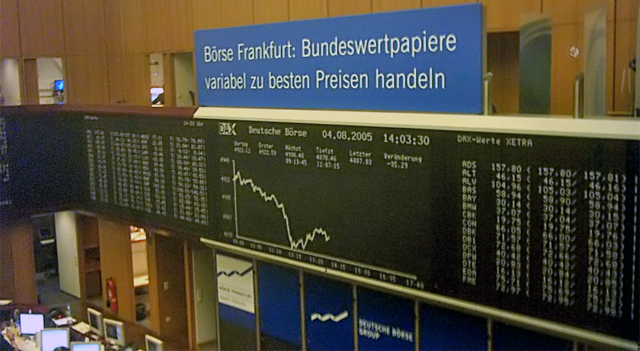
European equities tumbled on Tuesday, marking their steepest two-day decline since April, as intensifying tensions in the Middle East drove investors toward safer assets and heightened volatility across financial markets.
European Central Bank chief economist Philip Lane cautioned that a drawn-out conflict in the region, combined with sustained disruptions to oil and gas supplies, could trigger a “substantial spike” in inflation and a “sharp drop in output” across the euro area, according to an interview with the Financial Times.
Energy markets reacted sharply. European natural gas prices jumped more than 20% after operations were halted at Qatar’s largest liquefied natural gas export facility, compounding supply concerns.
The renewed surge in oil and gas prices has revived memories of the 2022 energy crisis sparked by Russia’s invasion of Ukraine — a shock that sent global energy costs soaring and hit Europe especially hard.
U.S. President Donald Trump indicated that military operations involving Iran could last four to five weeks and added that the United States has the “capability to go far longer than that,” amplifying fears that the conflict could broaden significantly.
Major European indices were firmly in negative territory. Germany’s DAX fell 3.5%, France’s CAC 40 declined 2.9%, and the U.K.’s FTSE 100 dropped 2.6%.
On the macroeconomic front, flash data showed eurozone inflation unexpectedly accelerated in February, even before the latest Middle East escalation began. The harmonized index of consumer prices rose 1.9% year-on-year, up from 1.7% in January and compared with expectations for an unchanged 1.7% reading. December had seen a 2.0% increase.
In the United Kingdom, data from the British Retail Consortium indicated that shop price inflation eased to 1.1% in February from 1.5% the previous month, largely due to declining non-food prices. Economists had anticipated a 1.4% increase.
Banking stocks extended losses from the prior session. Commerzbank (TG:CBK), Deutsche Bank (TG:DBK), BNP Paribas (EU:BNP), and Barclays (LSE:BARC) all posted sharp declines as investors reassessed risk exposure.
International Workplace (LSE:IWG) shares also retreated significantly in London, despite the flexible workspace provider reporting largely stable 2025 earnings and a slight rise in revenue.
Engineering group Smiths Group (LSE:SMIN) fell after announcing a £164 million acquisition of DRC Heat Transfer (DRC), a deal that appeared to weigh on investor sentiment.
Construction firm Kier Group (LSE:KIE) moved lower as well, even though it delivered solid half-year results.
French aerospace and technology company Thales (EU:HO) also slipped, despite posting fourth-quarter figures that exceeded market expectations.
Leave a Reply