European equity markets declined sharply on Monday as global risk sentiment deteriorated following large-scale military strikes by the United States and Israel against Iran over the weekend.
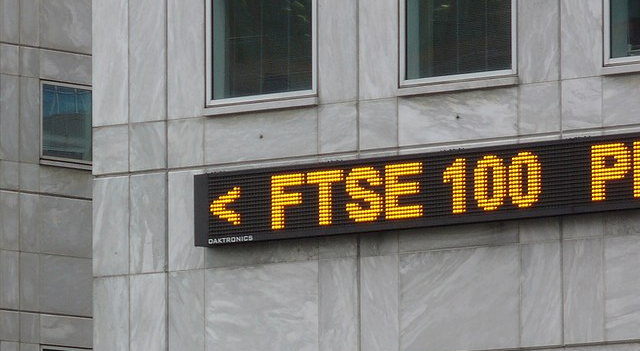
By 08:05 GMT, Germany’s DAX had fallen 2.5%, France’s CAC 40 was down 2.1%, and the UK’s FTSE 100 dropped 0.8%.
Middle East conflict weighs on markets
Stock markets across Asia and Europe traded lower, while U.S. futures signalled further weakness ahead of the Wall Street open after the weekend attacks, which reportedly killed several senior Iranian figures, including Supreme Leader Ayatollah Ali Khamenei.
Iran responded with strikes targeting multiple locations across the Middle East, including U.S. military bases in the region.
There were few indications that tensions would ease soon, with U.S. President Donald Trump stating overnight that joint U.S. and Israeli military operations would continue and could extend for several weeks.
“We will not negotiate with the United States,” Iran’s top security official Ali Larijani said in a post on X on Monday, reinforcing Tehran’s tougher stance after earlier discussions last week about the possibility of a nuclear agreement with Washington.
Rally momentum at risk
The market decline followed a strong run for European equities, which had closed at record highs on Friday after eight consecutive months of gains supported by stronger-than-expected corporate results.
The pan-European STOXX 600 had just recorded its longest monthly winning streak since the 2012–2013 period.
Although the earnings season is nearing its end, several corporate updates remained in focus on Monday, even as the broader market tone shifted more cautious.
Smith & Nephew (LSE:SN.) reported a 15.5% increase in annual profit, reflecting progress in its turnaround strategy, which has delivered cost efficiencies and supported growth across business segments.
Bunzl (LSE:BNZL) posted a 9.8% decline in annual adjusted pretax profit, as weaker trading conditions in its key North American division were compounded by supply-chain disruptions linked to tariffs.
Galp Energia (EU:GALP) highlighted solid operational performance in 2025, supported by strong cash generation and a resilient balance sheet despite softer oil prices.
Economic data in focus
On the macroeconomic front, German retail sales declined more sharply than expected in January, falling 0.9% month on month compared with forecasts for a 0.2% drop, according to data released Monday.
In the UK, house prices rose 0.3% in February, leaving prices 1.0% higher than a year earlier, according to figures from mortgage lender Nationwide Building Society.
Investors are also awaiting the final February reading of the Eurozone manufacturing PMI later in the day, which is expected to confirm that the sector returned to expansion last month.
Oil prices jump
Oil markets rallied strongly on Monday after Iranian retaliatory strikes disrupted shipping activity in the strategically important Strait of Hormuz.
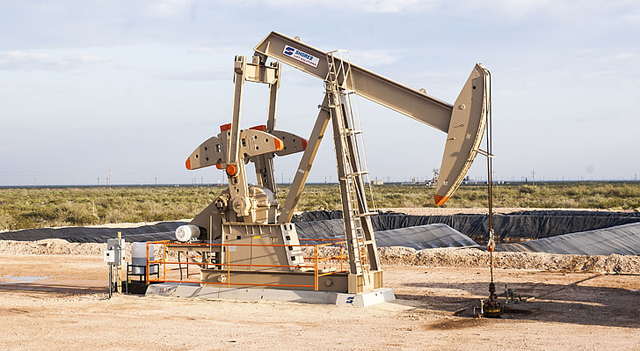
Brent crude futures surged 9.6% to $79.85 per barrel — their highest level since January 2025 — while U.S. West Texas Intermediate futures climbed 9.3% to $73.22 per barrel, the strongest level since June.
The spike followed reports that three oil tankers were damaged while transiting the Strait of Hormuz, a key maritime route linking the Gulf with the Arabian Sea.
On a typical day, shipments equivalent to roughly one-fifth of global oil demand pass through the strait, carrying crude exports from Saudi Arabia, the UAE, Iraq, Iran and Kuwait.
A prolonged disruption or closure of the passage could push oil prices significantly higher and create supply shortages for major importing nations such as China and India.