Category: Top Story

  • European stocks show mixed trend amid earnings and Middle East tensions: DAX, CAC, FTSE100

    European stocks show mixed trend amid earnings and Middle East tensions: DAX, CAC, FTSE100

    European equities traded unevenly on Thursday as investors assessed a wave of corporate earnings while closely monitoring developments in the Middle East conflict. A senior Iranian lawmaker said Tehran has already transferred initial toll revenues from the Strait of Hormuz into the country’s central bank.

    At the same time, reports indicate the Pentagon has told U.S. lawmakers that clearing naval mines allegedly deployed by Iran could take as long as six months.

    Economic signals remain mixed

    On the macroeconomic front, a survey revealed that business activity in the Eurozone unexpectedly fell into contraction territory in April, weighed down by higher energy costs and weaker demand in the services sector.

    In the U.K., government data showed an improvement in public finances. The budget deficit narrowed in March to its lowest level for that month since 2022, according to the Office for National Statistics.

    Public sector net borrowing declined by GBP 1.4 billion to GBP 12.6 billion, marking the lowest March figure in three years.

    Major indices diverge

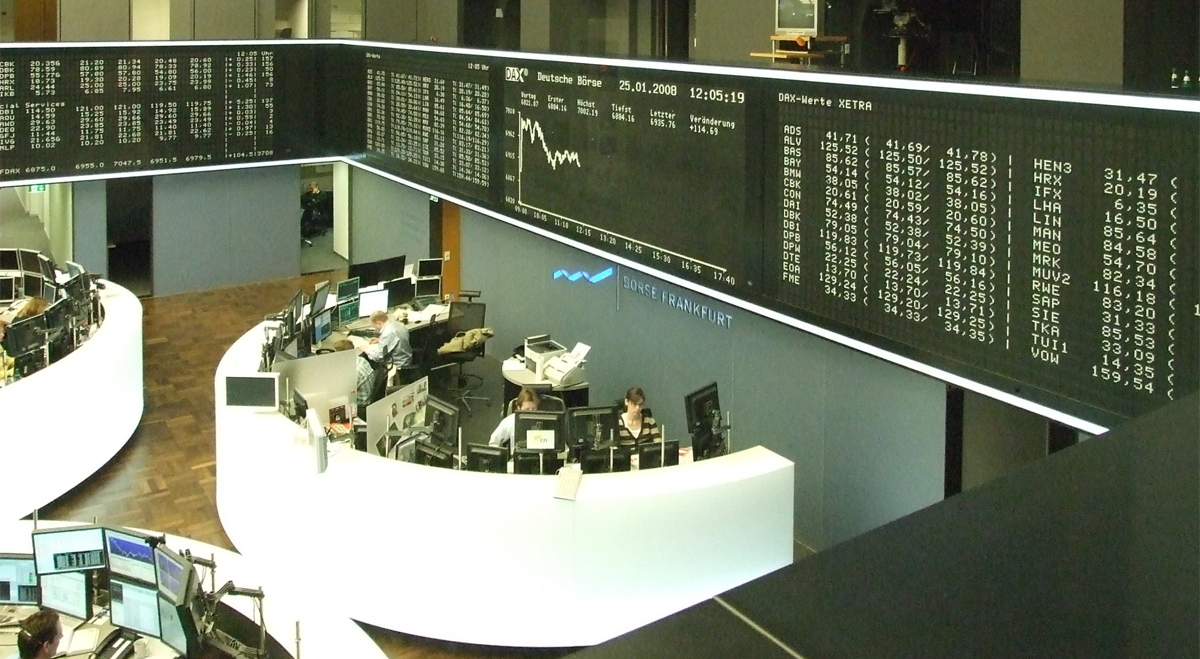
    Among key European benchmarks, France’s CAC 40 rose 0.5%, while Germany’s DAX slipped 0.2% and the U.K.’s FTSE 100 fell 0.6%.

    Company highlights

    WH Smith (LSE:SMWH) dropped 10% after issuing a profit warning, citing a sharp decline in first-half earnings and suspending its dividend amid Middle East uncertainty.

    ASOS (LSE:ASC) gained 2.3% after reporting a narrower first-half loss and reaffirming its full-year outlook.

    J Sainsbury (LSE:SBRY) fell 5.2% after warning that profits could decline this year.

    German automakers BMW (TG:BMW), Mercedes-Benz (TG:MBG), and Volkswagen (TG:VOW3) traded lower despite strong growth in European car registrations in March.

    Renault (EU:RNO) rose 1.5% after reporting first-quarter sales above expectations.

    Safran (EU:SAF) added 1% following better-than-expected first-quarter revenue.

    Orange (EU:ORA) surged 4% after raising its full-year earnings outlook.

    Sanofi (EU:SAN) climbed 3.5% after delivering stronger-than-expected revenue and operating profit in the first quarter.

    Sartorius (EU:DIM) dropped nearly 5% after reporting a decline in underlying net profit.

    Nestlé (BIT:1NESN) jumped 7% after exceeding first-quarter forecasts, supported by strong demand for coffee and pet care products.

    Nokia (NYSE:NOK) surged more than 9% after quarterly profit jumped 54%, driven by strong demand for its AI-related business.

    Heineken (EU:HEIA) fell 2.3% after reporting another decline in beer volumes during the quarter.

    STMicroelectronics (BIT:STMMI) advanced 8.5% after first-quarter revenue beat expectations.

  • European stocks drift lower as Hormuz tensions linger: DAX, CAC, FTSE100

    European stocks drift lower as Hormuz tensions linger: DAX, CAC, FTSE100

    European equities moved modestly lower on Thursday as investors remained cautious amid persistent tensions around the Strait of Hormuz, despite U.S. President Donald Trump extending the Iran ceasefire indefinitely.

    As of 07:05 GMT, the pan-European Stoxx 600 was down 0.4%, Germany’s DAX had slipped 0.5%, and the U.K.’s FTSE 100 declined 0.6%.

    France’s CAC 40 stood out, rising 0.3%, supported by strong gains in L’Oréal (EU:OR), which reported its fastest quarterly growth in two years. The stock jumped more than 8%, even as concerns persisted about the potential impact of the Iran conflict on consumer demand.

    Market participants were also watching for signs of renewed diplomacy between Washington and Tehran. Trump told U.S. media that fresh negotiations are “possible” as early as Friday.

    Earlier in the week, the president said in a social media post that the ceasefire had been extended just hours before its expected expiry, following a request from Pakistan, which has been acting as an intermediary. Trump added that the truce would remain in place “until such time as” Iran delivers a “unified proposal” for peace.

    Still, prospects for talks remained uncertain. Shortly after the announcement, Iran attacked three vessels and seized two near the Strait of Hormuz, in response to an ongoing U.S. blockade of its ports and coastline.

    Concerns over potential supply disruptions through the strait—responsible for roughly 20% of global oil flows—pushed crude prices back above $100 per barrel. Although prices have retreated from the sharp surge seen after the conflict began in late February, they remain elevated compared with pre-war levels.

    Investors are also awaiting Eurozone business activity data later in the day, which could provide insight into how companies are coping with energy-related pressures.

    Earnings deluge

    Some analysts noted that markets may be shifting focus away from the steady stream of geopolitical developments and turning instead toward corporate earnings and increased spending on artificial intelligence infrastructure.

    Shares in Essity (BIT:1ESSI) rose after the group reported quarterly core earnings above expectations, supported by higher volumes that helped offset weaker pricing. The company’s CEO told Reuters it plans to raise prices to counter rising energy costs.

    However, Sainsbury’s (LSE:SBRY) warned that the conflict could dampen consumer spending, weighing on its outlook. Its shares fell more than 5%.

    In contrast, Safran (EU:SAF) edged higher after posting stronger-than-expected first-quarter revenue and reaffirming its 2026 outlook.

    Meanwhile, Sanofi (LSE:SAN) also exceeded forecasts for both profit and revenue in the first quarter, driven by continued demand for its asthma and eczema treatment Dupixent, lifting the stock by over 2%.

  • FTSE 100 today: Stocks open lower as Middle East tensions keep pressure on markets

    FTSE 100 today: Stocks open lower as Middle East tensions keep pressure on markets

    British equities started Thursday on a weaker footing as ongoing geopolitical strain in the Middle East continued to dampen investor sentiment, with little indication of progress toward renewed U.S.-Iran negotiations.

    By 07:11 GMT, the FTSE 100 was down 0.6%. Germany’s DAX fell 0.4%, while France’s CAC 40 edged up 0.4%. Sterling also softened, with GBP/USD slipping 0.1% to 1.3495.

    Tensions remained high after Iran seized several vessels in the Strait of Hormuz earlier in the week. Meanwhile, the United States maintained its naval blockade of Iranian ports and continued targeting Iran-linked shipping in regional waters.

    Traffic through the strait—accounting for around 20% of global oil supply—remained heavily restricted.

    Although U.S. President Donald Trump announced an indefinite extension of the ceasefire, prospects for a diplomatic breakthrough appeared slim.

    Washington has insisted on the full reopening of the Strait of Hormuz as a condition for any agreement, while Iran has refused to enter talks under ongoing blockade conditions, leaving negotiations at a standstill.

    Iranian President Masoud Pezeshkian said Tehran remains willing to engage, but emphasized that “breach of commitments, blockade and threats” are the key barriers to meaningful dialogue, underscoring the country’s position that current conditions rule out genuine negotiations.

    Iranian officials also placed responsibility on Washington for the stalemate, warning that reopening the strait would be “impossible” as long as military and economic pressure continues.

    The standoff has increased uncertainty around how long the ceasefire can hold, even though it has so far extended beyond its initial timeframe.

    Oil prices moved higher amid the disruption. Brent crude climbed 1.5% to $103.42 per barrel, while West Texas Intermediate gained nearly 1.6% to $94.48, supported by constrained supply and reduced shipping activity.

    UK round up

    London Stock Exchange Group (LSE:LSEG) said it expects full-year revenue growth toward the top end of its 6.5%–7.5% guidance after first-quarter income rose 9.8%, surpassing analyst forecasts on strong performance in its data and analytics division.

    CEO David Schwimmer pointed to solid momentum and continued AI deployment, even as the company faces pressure from activist investor Elliott Management to enhance valuation and performance.

    Sainsbury’s (LSE:SBRY) cautioned that the Iran conflict could impact consumer demand and profitability, projecting 2026/27 underlying operating profit in the range of £975 million to £1.08 billion amid elevated uncertainty.

    The retailer, echoing Tesco, said its greater exposure to non-food sales makes it more sensitive to any pullback in discretionary spending, despite a strong start to the year.

    WH Smith (LSE:SMWH) lowered its full-year profit outlook to £90 million–£105 million and suspended its dividend, citing weaker passenger volumes and softer consumer confidence linked to Middle East travel disruption.

    The company warned that airport sales are likely to come under pressure as higher jet fuel costs drive up airfares, while it adopts a cautious stance to conserve cash and reinforce its balance sheet.

    Asos (LSE:ASC) said it is pursuing refunds on £7 million in U.S. tariffs as part of efforts to protect margins during its turnaround, after the levies were deemed unlawful by the Supreme Court.

    The retailer, already dealing with competitive pressures and subdued demand, warned that broader geopolitical risks—including the Iran conflict—could further impact costs and consumer spending.

  • Sainsbury’s Grows Sales and Returns Cash as Grocery Outperforms Market

    Sainsbury’s Grows Sales and Returns Cash as Grocery Outperforms Market

    J Sainsbury (LSE:SBRY) reported full-year retail sales excluding fuel of £30 billion, up 4.3%, with grocery sales increasing 5.2% and volume growth ahead of the wider market for the sixth consecutive year. The company continued to emphasise its value-focused strategy through initiatives such as Aldi Price Match and Nectar-driven discounts, while also investing in store upgrades, digital capabilities, and a 5% pay increase for staff despite ongoing cost inflation.

    Profit Pressures Offset by Strong Cash Generation

    Retail underlying operating profit declined slightly by 1.1% to £1,025 million, as higher costs and price investment offset the benefits of increased sales volumes. However, statutory profit after tax rose sharply by 55.3% to £393 million, supported by reduced losses from discontinued financial services and lower restructuring charges. Strong working capital management helped generate £574 million in retail free cash flow, enabling the company to return more than £800 million to shareholders through dividends and share buybacks.

    Strategic Progress and Capital Returns

    Sainsbury’s continued to execute its Next Level strategy, delivering structural cost savings and committing over £5 billion of investment into British and Irish farming. The group also completed the disposal of its banking division, returning part of the proceeds via a special dividend and additional buybacks. Looking ahead, it plans to return a further £100 million alongside a new £200 million core buyback programme. Management reaffirmed its medium-term targets, including £1 billion in cost savings and at least £1.6 billion in retail free cash flow over the three years to 2026/27, while maintaining confidence in continued grocery outperformance despite geopolitical uncertainty.

    Outlook Balanced by Valuation and Market Risks

    The company’s outlook is supported by solid financial performance and ongoing strategic initiatives aimed at enhancing shareholder returns. However, technical indicators suggest a degree of caution, and valuation metrics point to potential overvaluation. While a strong earnings update and active share buyback programme provide support, regulatory costs and competitive market pressures remain key risks.

    More about J Sainsbury plc

    J Sainsbury plc is one of the UK’s leading food and general merchandise retailers, operating a network of supermarkets, convenience stores, and the Argos chain. The company focuses on grocery, fresh food, and everyday essentials, alongside non-food products, competing on value, quality, and customer service. Its Nectar loyalty programme plays a central role in driving customer engagement and market share within the highly competitive UK retail sector.

  • Domino’s Pizza Group Reports Strong Q1 Growth and Reaffirms 2026 Outlook

    Domino’s Pizza Group Reports Strong Q1 Growth and Reaffirms 2026 Outlook

    Domino’s Pizza Group (LSE:DOM) delivered a solid performance in the first quarter of 2026, with total system sales increasing 5.8% and like-for-like sales rising 4.5% compared with the same period last year. Order volumes also moved higher, with total orders up 2.3% and like-for-like orders growing 0.9%, supported by the successful rollout of its new CHICK ‘N’ DIP product range.

    Resilient Trading and Strategic Focus

    Management pointed to resilient trading conditions despite a difficult macroeconomic environment, highlighting that key input costs are hedged through 2026 and partially into 2027, helping to limit short-term cost pressures. The board reiterated its full-year earnings guidance, while the CEO underlined continued efforts to strengthen the core business, enhance operational performance, and build momentum through product innovation, including the recently introduced Italianos thin-crust pizza range.

    Financial Outlook and Key Risks

    While the group continues to generate positive cash flow, its outlook is weighed down by declining profitability and balance sheet concerns, including high debt levels and persistently negative equity. On the other hand, valuation remains relatively attractive, with a low price-to-earnings ratio and a strong dividend yield providing support. Technical indicators are mixed, offering no clear signal of sustained market momentum.

    More about Domino’s Pizza

    Domino’s Pizza Group PLC operates in the quick-service restaurant sector as the master franchisee for the Domino’s brand across the UK and selected European markets. The company specialises in pizza delivery and takeaway services, regularly introducing new menu items to drive demand and reinforce its core offering.

  • Foxtons Faces Sales Decline but Leans on Lettings Growth and Cost Discipline in Q1 2026

    Foxtons Faces Sales Decline but Leans on Lettings Growth and Cost Discipline in Q1 2026

    Foxtons (LSE:FOXT) reported group revenue of £39.6m for the first quarter of 2026, representing a 10% decline year on year. Growth in lettings revenue of 5%, alongside a slight increase in financial services, was outweighed by a sharp 35% drop in sales revenue, reflecting a challenging comparison period and softer buyer demand. In response, the company continues to prioritise its lettings-focused strategy, completing two regional acquisitions, reallocating staff toward lettings operations, and implementing at least £3m in annualised cost savings to help preserve margins. It is also positioning itself to benefit from anticipated regulatory changes under the Renters’ Rights Act.

    Lettings Strength Supports Stable Outlook

    Management said trading remains consistent with expectations, with no change to full-year guidance. The performance is underpinned by the relative stability of lettings and financial services, which together now contribute more than two-thirds of total revenue. By leveraging its existing platform to integrate bolt-on acquisitions and enhance efficiency, particularly in a weaker sales environment, Foxtons aims to grow market share while maintaining operational discipline and delivering long-term value.

    Financial Progress Balanced by Market Risks

    Foxtons’ outlook is supported by improving fundamentals, including a return to profitability since 2022, reduced leverage, and positive cash generation. The company also trades on a relatively low price-to-earnings ratio and offers a dividend, making it potentially attractive from a valuation perspective. However, technical indicators suggest weak momentum, with the stock trading below key moving averages and showing negative MACD signals. Additional risks include ongoing sales weakness, cost and margin pressures, and short-term working capital challenges, despite expectations for growth in 2026.

    More about Foxtons

    Foxtons Group plc is a London-focused estate agency and the UK’s largest lettings agency brand, managing more than 32,000 tenancies. The business operates across Lettings, Sales, and Financial Services, with a strategic emphasis on generating recurring, non-cyclical income from lettings. Its operations are supported by technology-driven systems and targeted acquisitions in expanding regional markets such as Birmingham and Milton Keynes.

  • Young & Co.’s Brewery Delivers Strong FY26 Trading and Expands with Cubitt House Acquisition

    Young & Co.’s Brewery Delivers Strong FY26 Trading and Expands with Cubitt House Acquisition

    Young & Co.’s Brewery (LSE:YNGA) reported a solid trading performance for the 52 weeks ended 30 March 2026, with total managed house revenue increasing by 4.6% and like-for-like sales up 4.7%. The company said full-year results are expected to meet its guidance, highlighting the strength of its premium estate despite ongoing cost pressures across the sector and broader economic uncertainty. Management pointed to the resilience of its well-invested pubs as a key factor supporting continued profitable growth.

    Strategic Expansion with Cubitt House Deal

    During the period, the group completed the acquisition of Cubitt House London Pubs, a collection of eight venues, three of which include accommodation, situated in some of London’s most affluent areas. Young’s noted that the acquisition aligns with its disciplined growth strategy and is set to enhance its presence in the capital. The integration of the new sites and teams follows the company’s transition to the Main Market of the London Stock Exchange.

    Financial Position and Market Outlook

    Young & Co.’s Brewery continues to demonstrate a solid financial footing and has taken steps to improve shareholder returns, including share buyback initiatives. However, market indicators point to some downward momentum in the stock, while its relatively high price-to-earnings ratio may raise concerns about valuation. That said, the company’s dividend yield offers an element of support for investors assessing its overall appeal.

    More about Young & Co.’s Brewery

    Young & Co.’s Brewery operates a portfolio of premium managed pubs and pub bedrooms, primarily across London and the South of England. The business focuses on high-quality, well-invested venues in affluent locations, aiming to attract customers through a combination of elevated food, drink, and distinctive hospitality experiences.

  • European Shares Muted as Iran Talks Stall and Ceasefire Extended: DAX, CAC, FTSE100

    European Shares Muted as Iran Talks Stall and Ceasefire Extended: DAX, CAC, FTSE100

    European equity markets traded with limited direction on Wednesday as progress in U.S.-Iran negotiations remained elusive, while President Donald Trump moved to extend the ceasefire unilaterally amid continued tensions in the Strait of Hormuz.

    On the macro front, data showed U.K. inflation picked up in March, reaching its highest level in three months, largely due to rising transport costs, according to figures released by the Office for National Statistics.

    The consumer price index rose 3.3% year-on-year in March, accelerating from 3.0% in February and matching market expectations.

    On a monthly basis, prices increased by 0.7%, up from 0.4% the previous month and slightly above the expected 0.6% rise.

    In early trading, France’s CAC 40 slipped 0.2%, while both the U.K.’s FTSE 100 and Germany’s DAX edged up 0.1%.

    Among individual stocks, TUI AG (TG:TUI1) dropped nearly 3% after the travel operator lowered its full-year underlying profit outlook and withdrew revenue guidance, citing heightened geopolitical uncertainty.

    Deutsche Telekom (TG:DTE) fell more than 3% following reports that the company is exploring a full merger with its U.S. subsidiary, T-Mobile US Inc.

    Swedish appliance manufacturer Electrolux declined close to 2% after announcing plans to cease production in Hungary by the end of the year.

    In France, Ipsen (EU:IPN) gained 1.4% after securing conditional EU approval for Ojemda, marking the first targeted therapy for recurrent or refractory pediatric low-grade glioma.

    Sanofi (EU:SAN) slipped around 1% after the U.S. FDA extended its review of the subcutaneous version of Sarclisa by up to three months.

    Danone (EU:BN) advanced 3.4% as first-quarter sales came in ahead of expectations.

    Reckitt Benckiser (LSE:RKT) fell 5.2% after reporting a year-on-year decline in group net revenue for the first quarter of 2026.

    Akzo Nobel (EU:AKZA) surged 5% after posting stronger-than-expected first-quarter earnings.

    ABB Ltd (TG:ABB) rose 3.5% after upgrading its sales outlook for 2026.

    Bunzl plc (LSE:BNZL) added 3% after reaffirming its 2026 guidance and reporting first-quarter trading in line with expectations.

    Tesco plc (LSE:TSCO) climbed about 1% after unveiling a new phase of its ongoing share buyback programme.

  • European Markets Edge Higher After Ceasefire Extension Announcement: DAX, CAC, FTSE100

    European Markets Edge Higher After Ceasefire Extension Announcement: DAX, CAC, FTSE100

    European equities opened slightly in positive territory on Wednesday, as investors reacted cautiously to Donald Trump’s decision to extend the ceasefire with Iran indefinitely, even as tensions around key energy routes persist.

    By 07:08 GMT, the Stoxx 600 rose 0.3%, while DAX gained 0.4%, CAC 40 added 0.2%, and the FTSE 100 remained broadly flat.

    Trump announced via social media late Tuesday that the ceasefire with Iran would be prolonged just before its scheduled expiration, noting that the extension followed a request from Pakistan, which has often acted as a mediator between Washington and Tehran. He said the truce would remain in place “until such time as” Iranian authorities present a “unified proposal” for peace.

    However, the extension was declared unilaterally, leaving uncertainty over how both Iran and U.S.-ally Israel will respond. Plans for U.S. Vice President JD Vance to travel to Pakistan for further negotiations were also paused after Iranian state media described the talks as a “waste of time because the U.S. prevents reaching any suitable agreement.”

    “While there is still a bit of skepticism and cynicism in the market about Iran, most are of the view that Operation Epic Fury is past its peak, with an agreement of some sort more likely than not,” analysts at Vital Knowledge said, referring to the U.S. campaign in the region.

    At the same time, a U.S. naval blockade of Iranian ports remains in force, and tanker flows through the Strait of Hormuz are still heavily restricted. Disruptions in this critical passage—through which roughly 20% of global oil supply moves—have heightened concerns about energy-driven inflation and the potential for further interest rate increases.

    Those concerns were reinforced by fresh data showing UK inflation climbed to 3.3% in March, driven largely by a sharp rise in fuel costs.

    “[W]ith very little shipping traffic passing through the Strait of Hormuz, our view is that the likes of diesel, other refined products and other commodities, will continue to reman elevated which leaves us cautious on the growth outlook,” said Patrick O’Donnell.

    Brent crude, the global oil benchmark, slipped slightly to around $98 per barrel after earlier spikes following the outbreak of conflict, though it remains well above pre-war levels. Europe is also contending with disruptions to natural gas supply linked to damage at Middle Eastern facilities, particularly in Qatar, keeping energy prices elevated.

    Earnings in Focus

    Alongside geopolitical developments, investors were monitoring a wave of corporate earnings to assess the broader impact of the conflict on businesses.

    ABB (BIT:1ABB) gained more than 5% after raising its full-year sales outlook, citing resilient demand despite ongoing uncertainty.

    AkzoNobel (EU:AKZA) also moved higher after reporting a smaller-than-expected drop in first-quarter core profit, supported by pricing actions and cost control measures.

    Meanwhile, Tele2 (BIT:1TEL) rose after posting 11% growth in underlying core profit and a 3% increase in revenue for the quarter.

  • FTSE 100 Opens Mixed as Iran Tensions and UK Inflation Shape Sentiment

    FTSE 100 Opens Mixed as Iran Tensions and UK Inflation Shape Sentiment

    London stocks began Wednesday’s session on an uneven footing, with investors balancing geopolitical uncertainty in the Middle East against fresh inflation data from the UK. Concerns over oil prices and the outlook for global stability kept market sentiment cautious.

    FTSE 100 slipped 0.2% in early trading, while DAX rose 0.2% and CAC 40 edged 0.1% higher. The pound showed modest strength, with GBP/USD up 0.1% at 1.3515.

    Geopolitical developments remained a key driver. Donald Trump said he would indefinitely extend a ceasefire with Iran while maintaining a naval blockade, casting doubt over the chances of a lasting agreement. Iran has yet to respond formally and has previously indicated it would not enter negotiations while the blockade continues.

    Oil markets reacted to the news, with prices easing slightly following the ceasefire extension. However, uncertainty around future negotiations and potential supply disruptions continued to weigh on sentiment. Traders are closely watching the Strait of Hormuz, a vital corridor responsible for around 20% of global oil flows.

    Writing on Truth Social, Trump said Iran was “losing $500 million a day” and “starving for cash,” and that it wanted the Strait reopened. He added that the United States would “continue the blockade” while remaining ready for further action.

    Trump added that Iran’s government was “seriously fractured”, saying Washington would hold off further attacks while awaiting a unified proposal from Tehran, but warned there could be no deal unless conditions around the blockade changed.

    Shipping activity through the strait has been heavily reduced amid the conflict, helping to support crude prices despite the ceasefire. Trump also said Iran wanted the route reopened to generate revenue but was publicly maintaining a tougher stance to “save face.”

    UK Inflation Rises

    Data from the Office for National Statistics showed UK inflation climbed to 3.3% in March, matching forecasts. The increase was largely driven by higher fuel costs linked to the Middle East tensions.

    Fuel prices recorded their sharpest increase in more than three years, adding to broader cost pressures across transport and food. Economists caution that inflation could continue to rise if energy prices remain elevated.