Category: Top Story

  • Amaroq plans move from AIM to the London Stock Exchange Main Market (AMRQ)

    Amaroq plans move from AIM to the London Stock Exchange Main Market (AMRQ)

    Amaroq Ltd. (LSE:AMRQ) has announced plans to transfer its listing from London’s AIM market to the Main Market of the London Stock Exchange, with its shares expected to join the Financial Conduct Authority’s Equity Shares (Commercial Companies) segment, subject to regulatory approval. The company does not intend to issue new shares or raise additional capital as part of the transition, instead moving its existing AIM-listed shares to the Main Market. Once the transfer is completed, trading in the shares on AIM will cease, a move that could increase Amaroq’s visibility and broaden its appeal to institutional investors.

    The listing change is expected to become effective no earlier than 31 July 2026 and will coincide with the cancellation of the company’s AIM admission. The transition does not require shareholder approval under the applicable regulations. Management said the decision reflects the progress the company has made operationally and supports its long-term growth strategy, with a Main Market listing expected to provide a stronger platform for future expansion. Shareholders have been encouraged to seek professional advice on how the change may affect their holdings and trading arrangements.

    More about Amaroq Ltd.

    Amaroq Ltd. is a mineral exploration and development company focused on gold and strategic metals in southern Greenland. Its flagship asset is the wholly owned Nalunaq Gold Mine, complemented by an extensive exploration portfolio spanning Greenland’s two recognised gold belts. The company is also advancing projects such as Stendalen and the Sava Copper Belt, targeting commodities including copper, nickel, rare earth elements and other critical minerals.

  • Oracle Power raises £500,000 to accelerate gold and energy development plans (ORCP)

    Oracle Power raises £500,000 to accelerate gold and energy development plans (ORCP)

    Oracle Power PLC (LSE:ORCP) has secured £500,000 through a placing of 1.25 billion new ordinary shares at 0.04 pence each. The issue price represents a 20% discount to the previous closing share price but remains well above the level of the company’s last fundraising in August 2025. The proceeds will be used to advance its Australian gold assets, following the award of a mining lease for the Northern Zone Gold Project, while also supporting its energy projects in Pakistan and providing additional working capital. Admission of the new shares to AIM is expected on or around 9 July 2026.

    The fundraising provides additional financial support as Oracle advances towards potential gold production through its partnership with Riversgold Limited and its funding and production partner, while continuing to develop its energy portfolio in Pakistan. The enlarged share capital and updated voting rights also provide greater transparency for shareholders under UK disclosure requirements as the company works to move its gold operations closer to generating revenue.

    Oracle Power’s outlook remains constrained by weak financial performance, with the company continuing to report no revenue, ongoing losses and persistent cash outflows, although its relatively low debt position offers some balance sheet support. Technical indicators remain favourable, with the shares trading above major moving averages, but overbought momentum signals point to the possibility of increased short-term volatility. Valuation remains difficult to assess due to negative earnings and the absence of a dividend.

    More about Oracle Power PLC

    Oracle Power PLC is an AIM-listed international project developer with operations centred in Western Australia and Pakistan. The company is progressing a portfolio of energy projects in Pakistan, including plans for one of the region’s largest green hydrogen production facilities, while also advancing the Northern Zone Gold Project near Kalgoorlie in Western Australia as it seeks to expand its resource development activities.

  • Equity Metals Gains Attention Following Optimo Research Coverage Highlighting Silver Queen Upside

    Equity Metals Gains Attention Following Optimo Research Coverage Highlighting Silver Queen Upside

    As investor interest continues to intensify across the silver exploration sector, Equity Metals Corporation (TSXV:EQTY) (USOTC:EQMEF)(FSE:EGSD) is emerging as a closely watched name following a recent bullish initiation from Optimo Research, which assigns a $0.93 price target based on the company’s growth potential at its flagship Silver Queen project in British Columbia.

    The research coverage underscores growing market recognition of Silver Queen’s scale potential, drawing comparisons with peer projects such as Tonopah West and highlighting the opportunity for both resource expansion and further discovery upside.

    Optimo Research Highlights Strong Upside Case

    The Optimo Research note frames Equity Metals as a company transitioning from early-stage resource definition toward a more advanced exploration and development profile. The $0.93 target price reflects expectations that continued drilling success and de-risking work could materially enhance project valuation over time.

    A key theme of the report is the optionality embedded in Silver Queen, where ongoing drilling success and geological continuity may support meaningful resource growth. The analysis points to the project’s evolving scale potential as a central driver of future value creation.

    View the full research note here

    Steady Resource Growth Supported by Extensive Drilling

    Management has advanced a disciplined and systematic exploration strategy in recent years, completing more than 90,000 metres of drilling since 2020. This work has focused on upgrading historically defined mineralization and integrating legacy drill data into a modern resource model.

    According to Vice President of Exploration Robert McDonald, the primary objective has been to confirm the presence, continuity, and quality of mineralized vein systems while building a stronger, more reliable resource base.

    This sustained drilling effort has laid the groundwork for the company’s next phase of development, where emphasis is increasingly shifting toward de-risking and technical evaluation.

    Transitioning Toward Development and De-Risking

    A key development highlighted in both company commentary and investor analysis is the gradual transition from pure exploration toward de-risking and early engineering work.

    This includes evaluating the mineability of key vein systems and progressing technical studies that could support future production decisions. Such a shift is often viewed positively in the mining lifecycle, as it signals increasing maturity and potential for long-term development.

    Exploration Expansion and New Discovery Potential

    Alongside its resource-focused work on the Number 3 Vein, Equity Metals is also actively advancing multiple greenfield targets. These include Camp West, Senson South, and additional recently drilled zones from its spring program, which included 2,500 metres of drilling across five holes.

    These targets represent important exploration upside beyond the existing resource base, reinforcing the company’s dual-track strategy of both expanding known mineralization and pursuing new discoveries.

    A Strengthening Silver Growth Story

    With silver markets drawing renewed attention and investor sentiment increasingly focused on high-quality exploration leverage, the Optimo Research initiation adds another layer of visibility to Equity Metals’ development story.

    The combination of ongoing resource expansion, emerging discovery potential, and a clear progression toward de-risking work positions Equity Metals as an increasingly relevant name within the junior silver exploration space.

    As exploration and development work continues at Silver Queen, the project remains firmly on the radar of analysts and investors tracking the next generation of silver growth opportunities.

    Visit Equity Metals Corporation for more information

  • U.S. payrolls in focus as futures slip, oil eases and chip stocks extend losses: Dow Jones, S&P, Nasdaq, Wall Street Futures

    U.S. payrolls in focus as futures slip, oil eases and chip stocks extend losses: Dow Jones, S&P, Nasdaq, Wall Street Futures

    U.S. stock futures traded lower on Thursday as investors awaited the release of the June non-farm payrolls report, a key economic indicator that could shape expectations for Federal Reserve policy. Falling oil prices and renewed weakness in semiconductor shares also weighed on market sentiment during the final trading session of the holiday-shortened week.

    Wall Street futures retreat ahead of key data

    As of 07:13 GMT, Dow Jones futures were down 95 points, or 0.2%, while S&P 500 futures fell 22 points, or 0.3%. Nasdaq 100 futures underperformed, dropping 250 points, or 0.8%.

    The previous session saw U.S. markets finish lower after semiconductor stocks came under renewed pressure. Reports that Meta Platforms is exploring ways to commercialise excess AI computing capacity added to concerns that demand for new chips could moderate.

    Federal Reserve Chair Kevin Warsh acknowledged that inflation risks have eased but maintained that it was too early to provide guidance on future interest rate decisions. Softer-than-expected private employment and manufacturing figures also prompted investors to reduce expectations of a near-term rate increase.

    Labour market figures could reshape Fed expectations

    The June non-farm payrolls report is expected to show that the U.S. economy added 114,000 jobs, down from 172,000 in May, while the unemployment rate is forecast to remain at 4.3%.

    Recent payroll reports have consistently exceeded expectations, reinforcing confidence in the labour market. However, weaker private-sector employment data released earlier this week has raised doubts about whether the Federal Reserve will need to tighten monetary policy further this year.

    Crude prices decline as diplomacy continues

    Oil prices continued to move lower after officials reported constructive progress in indirect negotiations between the United States and Iran.

    Although no agreement has yet been reached, comments from Qatar, President Donald Trump and Vice President JD Vance suggested discussions remain active, easing concerns over supply disruptions through the Strait of Hormuz.

    According to Deutsche Bank, “[T]he newsflow helped to bring oil prices down and ease investor concern about inflation.”

    Semiconductor sector under renewed pressure

    Technology shares across Asia weakened after reports suggested OpenAI had significantly improved the efficiency of its AI models, reducing demand for graphics processors, while Meta is evaluating a cloud platform offering spare AI computing capacity.

    The developments weighed on major chipmakers including Samsung Electronics, SK Hynix, Advantest, Tokyo Electron and Taiwan Semiconductor Manufacturing Co.

    U.S. set to introduce voluntary AI standards

    The Financial Times reported that the Trump administration may unveil voluntary guidelines for advanced artificial intelligence models as early as next week.

    The proposed framework would establish common benchmarks for evaluating frontier AI systems before launch, replacing the current case-by-case regulatory approach.

  • European stocks trade cautiously as central bank signals temper optimism: DAX, CAC, FTSE100

    European stocks trade cautiously as central bank signals temper optimism: DAX, CAC, FTSE100

    European equity markets were little changed on Thursday as investors weighed cautious comments from leading central bankers against regional economic data while awaiting the release of a closely watched U.S. employment report.

    The pan-European STOXX 600 hovered around 638.66 points in early trading after ending the previous session at its third-highest closing level on record. The benchmark gained more than 10% over the previous quarter.

    Trading across the region was subdued. Germany’s DAX slipped 0.2%, France’s CAC 40 added 0.3%, London’s FTSE 100 eased 0.1%, while Italy’s FTSE MIB traded broadly flat.

    Europe avoids technology-led sell-off

    Although technology stocks came under renewed pressure across Asian markets overnight, European equities proved relatively resilient.

    The region’s lower exposure to the world’s largest technology companies compared with U.S. and Asian markets helped cushion European indices from the latest weakness in the sector.

    However, that defensive positioning also meant European markets captured less of the powerful artificial intelligence-driven rally that propelled global equities to record highs during the previous quarter.

    Sintra comments reinforce cautious rate outlook

    Investor sentiment remained restrained following comments from policymakers attending the European Central Bank’s annual forum in Sintra, Portugal.

    Federal Reserve officials and ECB President Christine Lagarde indicated that while inflation risks are becoming more balanced, it remains too early to expect a rapid shift towards more accommodative monetary policy.

    Lloyds Bank analysts said, “The ECB has retained a cautious approach as fears of ‘second-round’ effects linger.”

    They added, “The market is pricing for another 25-basis-point hike by September, then an extended hold through to the middle of next year, pushing back against a more inflationary scenario.”

    U.S. jobs report remains the key focus

    Attention has now turned to the U.S. non-farm payrolls report, which is expected to provide fresh direction for global financial markets.

    Economists forecast that around 100,000 jobs were created in June. Investors will scrutinise the figures for clues about the Federal Reserve’s next policy moves and whether expectations for up to two interest rate cuts by the end of the year remain justified.

    Sodexo leads gainers

    Among individual stocks, Sodexo (EU:SW) climbed more than 7% after reporting stronger-than-expected third-quarter revenue and raising its full-year sales guidance.

  • Market Open: Currys Profits, Wizz Air Passenger Growth

    Market Open: Currys Profits, Wizz Air Passenger Growth

    FTSE 100 opens little changed as Currys posts stronger profits and Wizz Air reports passenger growth while Brent crude prices ease.

    Market Overview

    UK markets opened little changed, with the FTSE 100 edging 0.01 per cent lower to 10,477.76, while the Euronext 100 also slipped 0.01 per cent. Germany’s DAX outperformed, rising 0.25 per cent to 25,102.51. Overnight, the Nasdaq closed lower at 26,040.03 and the S&P 500 finished at 7,483.23. Investors weighed dovish interest rate signals against cautious European sentiment, while lower oil prices reflected improving US-Iran talks and expectations of ample crude supply.

    Against sterling, the US dollar, euro and Australian dollar strengthened slightly, while the Swiss franc and Japanese yen weakened. Bitcoin advanced slightly. In commodities, copper and gold traded lower, Brent crude declined as easing geopolitical concerns weighed on prices, and natural gas also moved lower.


    Market Numbers

    FTSE 100: Down (-0.01%), 10,477.76
    Euronext 100: Down (-0.01%), 1,906.08
    DAX: Up (+0.25%), 25,102.51
    NASDAQ: Down, 26,040.03
    S&P 500: Down, 7,483.23


    In the Headlines

    Profit Growth – Currys (LSE:CURY)
    Currys reported higher annual profits and increased shareholder returns, supported by a strong performance from its Nordic operations. The results underline improving operational momentum and provide a positive signal for investors following a period of restructuring.

    Traffic Growth – Wizz Air (LSE:WIZZ)
    Wizz Air reported 27 per cent growth in June passenger numbers and confirmed the rollout of Starlink in-flight Wi-Fi across its fleet. The update highlights continued demand strength alongside investment in customer experience.


    Currencies (vs GBP)

    USD: Up (+0.01%), $1.3278
    CHF: Down (-0.03%), Fr.1.0745
    EUR: Up (+0.01%), €1.1671
    JPY: Down (-0.02%), ¥215.8345
    AUD: Up (+0.01%), $1.9270
    Bitcoin (BTC/GBP): Up, £45,086.66


    Commodities

    Copper: Down
    Gold: Down
    Brent Crude: Down
    Natural Gas: Down

  • FTSE 100 rises as central bank optimism offsets weaker oil prices

    FTSE 100 rises as central bank optimism offsets weaker oil prices

    The FTSE 100 moved higher on Thursday after early losses faded, with investor sentiment supported by dovish comments from leading central bankers at the ECB Forum on Central Banking in Sintra. The more supportive monetary policy outlook helped offset pressure from falling oil prices as optimism grew over progress in talks between the United States and Iran.

    By 07:23 GMT, the FTSE 100 was up 0.14%, while Germany’s DAX gained 0.09% and France’s CAC 40 advanced 0.50%. Sterling strengthened 0.28% against the U.S. dollar to 1.3314.

    Central bank comments lift market sentiment

    Comments from policymakers helped improve investor confidence after senior officials signalled that interest rates may remain on hold.

    Federal Reserve Governor Kevin Warsh, European Central Bank President Christine Lagarde and Bank of England Governor Andrew Bailey all adopted a more accommodative tone during a panel discussion in Sintra. Jefferies strategist Mohit Kumar described Bailey as “probably the most clear,” arguing the UK is experiencing a “soft patch” where higher mortgage rates have “effectively tightened” monetary policy without the need for further interest rate increases.

    Lagarde also pointed to the sharp fall in energy prices, noting oil “was at $120 a few weeks ago and is now close to $70.”

    Jefferies said the discussion “supports our view of no (further) hikes this year from the Fed, ECB or BoE.”

    Oil prices fall as Iran talks make progress

    Energy markets remained under pressure after fresh signs of diplomatic progress between Washington and Tehran.

    Iran’s Deputy Foreign Minister Kazem Gharibabadi criticised a U.S.-led regional security summit in Bahrain, writing on X that “Hormuz is defined under Iran’s command, not CENTCOM” and that a military summit “cannot establish legal order and security for the Persian Gulf.”

    Meanwhile, Qatar and Pakistan said in a joint statement that “positive progress was made” during indirect talks in Doha between U.S. and Iranian officials, with further negotiations expected after the funeral processions for Iran’s former Supreme Leader.

    U.S. President Donald Trump told reporters that “the denuclearization of Iran is moving along well” and described the Doha discussions as “very good.” Vice President JD Vance also said “talks are going well,” while noting that negotiations over Iran’s nuclear programme were still at an early stage.

    Brent crude declined 1.23% to $70.69 a barrel, while WTI crude fell 1.3% to $67.69. Gold futures slipped 0.20% to $4,074.67 an ounce, although spot gold rose 0.76% to $4,062.08.

    Chip stocks pressured by Meta AI plans

    Jefferies also noted that semiconductor shares came under pressure after reports that Meta plans to monetise excess artificial intelligence computing capacity through a cloud offering.

    The development weighed on Asian technology stocks overnight, with South Korea’s KOSPI among the weakest-performing major indices.

    Currys gains after strong annual results

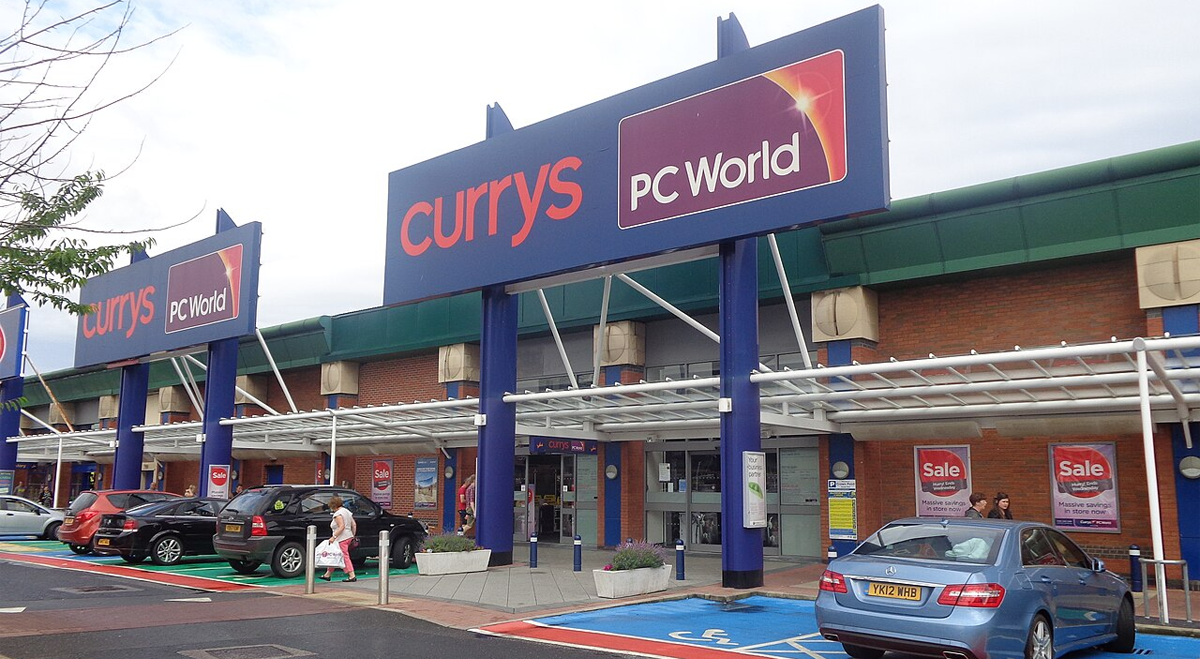
    Among UK-listed companies, Currys (LSE:CURY) traded higher after reporting an 18% increase in annual profit and saying trading had started strongly in the new financial year, supported by sales growth across both its UK and Nordic businesses.

  • Barratt Redrow appoints EY as new external auditor following competitive tender (BTRW)

    Barratt Redrow appoints EY as new external auditor following competitive tender (BTRW)

    Barratt Redrow plc (LSE:BTRW) has appointed Ernst & Young LLP (EY) as its next external auditor after completing a formal competitive tender process overseen by the company’s Audit and Risk Committee. Subject to shareholder approval at the 2027 Annual General Meeting, EY will assume the role from the financial year ending 2 July 2028.

    Auditor transition follows UK governance requirements

    The appointment forms part of the UK’s mandatory audit tendering and auditor rotation requirements, which require listed companies to periodically review and refresh their external audit arrangements.

    Deloitte LLP, which has served as Barratt Redrow’s external auditor since 2007 and was reappointed following a tender in 2017, will remain in place for the 2026 and 2027 financial years. This phased transition is intended to provide continuity before EY formally takes over the audit engagement.

    Strong fundamentals offset by weaker technical picture

    Barratt Redrow continues to benefit from a strong balance sheet, healthy revenue growth and an attractive valuation, supported by a price-to-earnings ratio of 13.2 and a dividend yield of 6.68%.

    However, these strengths are tempered by weaker technical indicators, with the shares trading below key long-term moving averages and momentum signals indicating an oversold market. Recent deterioration in cash flow also remains a factor for investors to monitor.

    More about Barratt Redrow

    Barratt Redrow plc is one of the UK’s largest residential property developers, building and selling new homes across England, Scotland and Wales. The company develops a broad range of housing projects, from affordable homes to premium residential developments, serving first-time buyers, families and existing homeowners.

    Through its nationwide land portfolio and large-scale development pipeline, Barratt Redrow plays a significant role in supporting UK housing supply while focusing on quality construction, sustainability and long-term shareholder returns.

  • Currys grows profits and shareholder returns as Nordics deliver strong performance (CURY)

    Currys grows profits and shareholder returns as Nordics deliver strong performance (CURY)

    Currys (LSE:CURY) delivered a strong financial performance for the year ended 2 May 2026, with group revenue increasing 6% to £9.25 billion, supported by 4% like-for-like sales growth. Adjusted profit before tax rose 18% to £191 million, while adjusted EBIT increased 13% to £255 million.

    The retailer also generated free cash flow of £157 million and finished the year with a net cash position of £176 million, despite increasing shareholder distributions and making higher pension contributions.

    UK and Nordics businesses both improve profitability

    In the UK and Ireland, like-for-like sales rose 3% as Currys continued to gain market share despite a challenging retail environment. Adjusted EBIT for the division increased to £158 million, helped by continued growth in higher-margin services, consumer credit and iD Mobile subscriptions.

    The Nordics business delivered an even stronger performance, with like-for-like revenue increasing 6% and adjusted EBIT climbing 26% on a constant currency basis to £97 million. Improving consumer confidence, tighter cost control and greater operating leverage all contributed to stronger profitability and margin expansion.

    Higher dividends and buyback backed by strong cash generation

    Currys has doubled its full-year dividend to 3.0p per share and announced a new £50 million share buyback programme, reflecting confidence in its financial position and cash generation.

    The company’s capital allocation framework targets a year-end net cash balance of at least £100 million while continuing to grow shareholder returns. Management also reiterated its objective of achieving adjusted EBIT margins of at least 3% in both the UK & Ireland and Nordic operations, while keeping annual capital expenditure below £100 million and maintaining strong free cash flow.

    Leadership transition and recurring revenue remain key priorities

    Management said trading has started positively in the new financial year and remains comfortable with current market profit expectations.

    Strategically, the company continues to focus on expanding higher-margin recurring revenue streams, including services, credit products and mobile subscriptions, with a target of reaching at least 2.8 million iD Mobile subscribers by the end of the year.

    Currys will also undergo a leadership change in August, when Nordics chief executive Fredrik Tønnesen succeeds as group CEO. He is expected to continue driving growth initiatives, including expanding the company’s B2B business, which has significantly increased its addressable market.

    The group’s improving financial performance, reduced leverage, strong free cash flow and relatively low earnings multiple continue to support its investment outlook. Although technical indicators remain positive, elevated momentum measures suggest the recent share price rally may be becoming stretched.

    More about Currys plc

    Currys plc is one of Europe’s leading retailers of electrical goods and technology products, operating across the UK, Ireland and the Nordic region. The company sells a wide range of consumer electronics, domestic appliances and connected devices through its stores and online platforms.

    Alongside its retail operations, Currys has increasingly focused on growing higher-margin recurring revenue through services, consumer credit, mobile subscriptions and business-to-business technology solutions. This strategy is designed to strengthen customer relationships, improve profitability and diversify earnings beyond traditional product sales.

  • Wizz Air reports 27% June passenger growth and confirms Starlink Wi-Fi rollout (WIZZ)

    Wizz Air reports 27% June passenger growth and confirms Starlink Wi-Fi rollout (WIZZ)

    Wizz Air (LSE:WIZZ) recorded strong traffic growth in June, carrying 7.48 million passengers, a 27.2% increase compared with the same month last year. Capacity expanded by 27.5% to 8.14 million seats, while the load factor edged down slightly to 91.9%, indicating demand remained robust as the airline continued its rapid network expansion.

    Over the 12 months to June, passenger numbers increased 13.8% and capacity rose 14.4%. The airline also reached a new operational milestone by operating 1,200 flights in a single day for the first time, while maintaining strong completion rates and on-time performance.

    Starlink partnership aims to enhance passenger experience

    Wizz Air also announced plans to become the first European low-cost airline to introduce Starlink’s high-speed in-flight internet service across its fleet, with deployment scheduled to begin in early 2027.

    The addition of satellite-based connectivity is expected to strengthen the carrier’s customer offering by providing passengers with fast, low-latency internet access throughout their journey, further differentiating Wizz Air within Europe’s competitive budget airline market.

    Efficiency improves despite higher flying activity

    The airline’s environmental performance continued to improve on a per-passenger basis despite higher overall operations. Total CO2 emissions increased 15.7% year-on-year during June, broadly reflecting the expansion in flying activity.

    However, CO2 emissions per passenger kilometre declined by 3.3% to 49.5 grams, highlighting gains in operational efficiency as newer aircraft and fleet optimisation helped reduce emissions intensity.

    Growth supported by expansion despite near-term challenges

    Wizz Air continues to generate strong operating and free cash flow, supported by sustained traffic growth and an ambitious fleet expansion strategy. While recent technical indicators have improved modestly and the company’s valuation appears relatively undemanding based on earnings multiples, investors remain focused on profitability pressures, leverage and the potential impact of ongoing operational disruption.

    Management has outlined a credible multi-year fleet plan and highlighted improving liquidity, although near-term unit revenue and cost pressures continue to present challenges.

    More about Wizz Air Holdings

    Wizz Air Holdings PLC is one of Europe’s largest ultra-low-cost airlines, operating an extensive network of short-haul routes with a particular focus on Central and Eastern Europe. The carrier targets leisure travellers and those visiting friends and relatives through a low-fare business model built on high aircraft utilisation, efficient operations and dense seating configurations.

    The airline has continued to expand aggressively while investing in fleet modernisation and operational efficiency. Alongside its network growth, Wizz Air regularly reports environmental performance metrics and is investing in new technologies, including Starlink in-flight connectivity, as it seeks to strengthen its competitive position in the European aviation market.