Big Technologies PLC (LSE:BIG) has secured a series of new contracts across Lithuania, Latvia, and Pierce County in Washington State, alongside a fresh agreement in Prince Edward Island, Canada. These wins are expected to contribute to annual recurring revenue from 2026 onward, helping diversify the company’s customer base and extend its international presence. The firm has also entered a strategic partnership with Recovery Monitoring Solutions to expand the Buddi product suite in the United States. In addition, Big Technologies has launched AlcoBreath, a compliance-focused alcohol monitoring device that recently received FCC approval, opening the door to a significant new market. With a solid balance sheet and ongoing strategic execution, management remains confident in delivering on full-year revenue and EBITDA targets, laying a foundation for continued growth.
Despite its operational progress, Big Technologies faces near-term market pressures. Technical indicators point to a bearish trend, and the valuation appears challenging. Although recent corporate developments support a positive long-term narrative, ongoing legal risks remain an important consideration for investors.
More about Big Technologies PLC
Big Technologies is a leading provider of remote personal monitoring solutions, best known for its ‘Buddi’ brand. The company integrates advanced hardware with sophisticated software to deliver secure, reliable monitoring systems for the criminal justice sector and other applications. Its subscription-based, SaaS-style platform is designed for scalability and flexibility, enabling deployment across a wide range of geographies and use cases.
Cloudbreak Discovery PLC (LSE:CDL) has carried out its inaugural site assessment at the Crofton Gold Project in Western Australia, an area where earlier work has uncovered notable gold and silver grades. During the visit, the team collected 54 samples across multiple target zones to guide the design of upcoming exploration campaigns. The project is characterised by widespread quartz veining, a feature often associated with meaningful gold and silver mineralisation. A structured exploration programme is scheduled to begin in early 2026, incorporating soil and rock-chip sampling as well as detailed geological mapping. With gold and silver prices at elevated levels, the initiative could strengthen Cloudbreak’s asset base and enhance its overall exploration potential.
Cloudbreak Discovery PLC continues to face steep financial challenges, including a lack of revenue and ongoing losses that weigh on performance. Although technical indicators suggest pockets of short-term momentum, broader long-term signals remain unfavourable and the company’s valuation is constrained by a negative price-to-earnings ratio. Strategic restructuring steps offer some encouragement, but these have yet to translate into stronger financial outcomes, leaving the stock firmly in high-risk territory.
More about Cloudbreak Discovery PLC
Cloudbreak Discovery PLC is an exploration-focused resources company specialising in gold, precious metals, and base metals. Its operations are centred in Western Australia, where it aims to generate near-term cash flow and build shareholder value through a diversified pipeline of mineral projects. The company employs a generative, multi-asset approach designed to capture opportunities across the commodity cycle while advancing high-potential exploration targets.
Sunrise Resources (LSE:SRES) has extended the option period tied to the proposed $800,000 sale of its Hazen Project in Nevada. The prospective buyer, a major US-based company, is continuing its evaluation of the asset. The Hazen Project contains a high-quality glassy pumice deposit that satisfies ASTM requirements for natural pozzolan and also offers potential as a lightweight aggregate, giving it strategic value for concrete markets across the region.
Despite this positive corporate development, Sunrise Resources faces ongoing headwinds. The company continues to struggle with profitability and cash generation, and technical indicators point to persistent bearish momentum. Its valuation also remains pressured, reflected in a negative price-to-earnings ratio. While the Hazen Project progress adds a degree of optimism, sustained improvements in financial performance will be needed to shift investor sentiment.
More about Sunrise Resources
Sunrise Resources Plc is engaged in the exploration and development of mineral projects, with a particular emphasis on natural pozzolan — a cement and fly ash substitute used in concrete production. The company targets regional markets in northern California, Reno, and northern Nevada, and benefits from transport access via nearby rail infrastructure.
Unilever (LSE:ULVR) has officially separated its ice cream division, which will now operate independently as The Magnum Ice Cream Company N.V. (TMICC). TMICC shares are set to debut on major stock exchanges, marking a pivotal step in Unilever’s broader restructuring strategy. To preserve comparability in its share price following the split, Unilever is also undertaking a share consolidation, with the newly adjusted shares expected to begin trading imminently. These actions reflect the company’s intention to streamline its portfolio, sharpen operational focus, and strengthen its overall financial profile.
Market sentiment around Unilever is shaped by the combination of robust financial performance and value-enhancing corporate moves, tempered by weaker technical trends and a relatively high valuation. While the demerger is anticipated to improve Unilever’s competitive positioning, lingering concerns around market momentum remain part of the near-term outlook.
More about Unilever
Unilever is a global consumer goods group with a broad portfolio spanning food and beverages, household cleaning products, and personal care brands. The company maintains a strong international presence and emphasises sustainability, product innovation, and long-term value creation across its operations.
Mears Group PLC (LSE:MER) says trading momentum remained strong throughout the second half, positioning the company to deliver adjusted profit before tax for the year ending 31 December 2025 at the upper end of market expectations. The performance underscores the resilience of Mears’ operations and reinforces its standing within the housing services sector, suggesting continued financial strength for investors and partners alike.
Analysts note that Mears continues to demonstrate healthy profitability and steady growth, though its elevated leverage remains a point of caution. Even so, the company’s shares appear attractively valued, supported by a low price-to-earnings ratio and a notably high dividend yield. Its latest acquisition is viewed as strategically sound, broadening future growth opportunities, while technical signals point to stable trading conditions.
More about Mears Group Plc
Mears Group PLC is a major UK provider of services across the Affordable Housing sector, overseeing the management and maintenance of roughly 450,000 homes. The company primarily collaborates with Central and Local Government through long-term partnerships, delivering property management, maintenance, and comprehensive housing solutions aimed at addressing affordability challenges. With a workforce of more than 5,000 people nationwide, Mears focuses on sustainable outcomes, innovation, and reliable long-term financial performance.
Poolbeg Pharma (LSE:POLB) has revealed that it will serve as the principal industry partner in the RISE programme, an ambitious initiative led by The University of Manchester and The Christie NHS Foundation Trust to study Cytokine Release Syndrome (CRS) triggered by cancer immunotherapies. Backed by a £3.4 million Medical Research Council grant, the programme incorporates the POLB 001 TOPICAL trial and is designed to improve both the safety profile and clinical use of next-generation cancer immunotherapies. The collaboration — which includes major partners such as Johnson & Johnson — underscores the rising urgency to better manage CRS, a key challenge limiting the wider rollout of these transformative treatments.
More about Poolbeg Pharma Ltd.
Poolbeg Pharma plc is a clinical-stage biopharmaceutical company aiming to reshape the cancer immunotherapy landscape. Its lead programme, POLB 001, is being developed to reduce or prevent Cytokine Release Syndrome (CRS), a dangerous immune overreaction, with the goal of enabling cancer immunotherapies to be administered more safely and more widely. The company is also advancing an oral encapsulated GLP-1 therapy intended to offer a more patient-friendly approach to obesity treatment while addressing substantial market demand and critical unmet medical needs.
Spain’s forex market is mature, tightly regulated, and well served by global brokers. Whether you’re just starting or optimizing your trading setup, picking a safe, well‑regulated, competitively priced broker is the most impactful decision you’ll make.
This guide covers:
How forex & CFD trading is regulated in Spain (CNMV, ESMA, MiFID II)
What to look for in a broker (platforms, spreads, safety, tools)
A curated list of top brokers that accept residents of Spain
How to verify authorizations on the CNMV register
Practical FAQs, risk management tips, and a due‑diligence checklist
Risk warning: CFDs are complex instruments and carry a high risk of rapid loss due to leverage. A significant share of retail accounts lose money with CFD providers. Assess whether you understand how CFDs work and whether you can afford the high risk of loss.
1) Is Forex Trading Legal in Spain? Regulation 101
Yes. Residents of Spain can legally trade forex and CFDs through brokers that comply with EU MiFID II and the supervisory framework of the Comisión Nacional del Mercado de Valores (CNMV), Spain’s securities regulator. Many international brokers serve Spanish clients under EU passporting or local authorization and must follow ESMA product intervention rules (leverage caps, standardized risk warnings, margin close‑out rules).
Key guardrails Spanish retail traders should know:
Leverage limits: Typically 1:30 on major FX and 1:20 on minors/exotics for retail clients.
Investor compensation: Eligible retail clients may benefit from statutory investor‑compensation arrangements in the event of firm default.
Advertising & conduct: Spain enforces strict standards on retail marketing for CFDs; brokers must display clear loss‑rate disclosures and comply with conduct rules.
Tip: Always cross‑check a firm on the CNMV public register and review recent CNMV warnings for clones or unauthorized entities before you fund an account.
2) How We Picked the Best Forex Brokers in Spain (2025 Methodology)
We evaluated brokers on the following criteria and selected those available to Spain‑based clients:
Regulatory safety: Presence of top‑tier licenses and Spain eligibility under EU rules.
Education & research: In‑platform analytics, tutorials, and Spanish‑language resources where available.
Service & funding: Localized support hours, payment methods, and withdrawal reliability.
3) Best Forex Brokers in Spain for 2025 (Shortlist)
Note: Availability, account types, and pricing can vary by jurisdiction and client classification (retail vs professional). Verify current terms on the broker’s website and on the CNMV register.
Q1) Do I need a locally authorized CNMV broker? Not necessarily. EU‑authorized brokers can serve Spanish residents under passporting; still verify the serving entity in the CNMV register and the protections that apply.
Q2) What leverage can I get as a retail client? Generally 1:30 on major FX and 1:20 on minors/exotics. Professional classification may allow higher, but standards and risks increase substantially.
Q3) What’s covered by investor compensation? Statutory schemes may cover eligible claims related to firm default (not market losses). Review the specific entity’s arrangements.
Q4) Which platform should I choose—MT4/MT5, proprietary or TradingView?
MT4/MT5: Best for EAs and third‑party indicators.
Proprietary: Often stronger research, news, and seamless UX.
TradingView integration: Excellent charting and social ideas. Test with a demo to match features to your style.
10) A 10‑Point Due‑Diligence Checklist (Copy & Use)
Verify the broker’s legal entity on the CNMV register.
Confirm client money segregation and top‑tier regulation.
Review order types (GSLOs, partial close, OCO, advanced stops).
Assess research & education (Spanish content if needed).
Inspect withdrawal timelines & methods for Spain.
Read the firm’s retail loss‑rate disclosure.
Recheck for any CNMV warnings or clone alerts.
11) Conclusion: Picking the Right Broker in Spain
For 2025, Spain‑based traders are well‑served by a set of high‑trust, feature‑rich brokers. If you want:
Best all‑rounder & research: IG
Beginner‑friendly with education: XTB, eToro (social)
Lowest spreads for MT4/MT5: FP Markets (verify your entity’s pricing)
Multi‑asset powerhouse: Interactive Brokers
Platform choice & options: AvaTrade
Regardless of your choice, your results will hinge on risk control, cost discipline, and ongoing learning. Start small, validate your edge, and only scale when performance and process are consistent.
Risk warning: CFDs are complex instruments and carry a high risk of rapid loss due to leverage. A significant share of retail accounts lose money with CFD providers. Assess whether you understand how CFDs work and whether you can afford the high risk of loss.
U.S. stock futures hovered near the flatline early Friday, suggesting another cautious session as investors await a key inflation update that could shape expectations for the Federal Reserve’s upcoming policy meeting.
With the release of consumer price data—the Fed’s preferred gauge—scheduled shortly after the opening bell, traders appear hesitant to take decisive positions. The numbers, included in the personal income and spending report, are expected to show headline inflation rising 0.3% in September and core prices up 0.2%, matching prior forecasts.
“A higher-than-expected reading could give the Fed pause for thought about a pre-Christmas cut, while an in line or lower number would likely give markets further confidence about such a move,” said Russ Mould, investment director at AJ Bell.
However, because the report covers September due to delays caused by the government shutdown, analysts believe the figures may have a limited immediate impact on policy outlooks.
The CME FedWatch Tool shows traders assigning an 87.2% probability of a 25 basis point rate cut at next week’s meeting.
Attention will also turn to the University of Michigan’s preliminary December consumer sentiment index, which is projected to tick up to 52.0 from November’s 51.0.
On Thursday, U.S. equities offered little direction, drifting around breakeven before closing mixed. The Nasdaq gained 0.2%, the S&P 500 added 0.1%, and the Dow slipped 0.1%.
The sideways action followed a volatile start to the week: stocks dipped Monday, then clawed back ground during uneven trading on Tuesday and Wednesday. Renewed optimism for another rate cut helped stabilize sentiment.
Markets also shrugged off a surprise Labor Department report showing initial jobless claims fell sharply to 191,000, the lowest level since September 2022. Economists had expected an uptick to 220,000.
“Initial claims can be subject to big swings at this time of the year, so we won’t read much into one week’s number,” said Nancy Vanden Houten, Lead U.S. Economist at Oxford Economics. She noted that filings remain “consistent with a relatively low pace of job losses despite recent layoff announcements.”
Sector performance was uneven Thursday. Computer hardware stocks staged a strong rebound, with the NYSE Arca index advancing 3.0% after a decline the previous day. Broker/dealer shares also moved higher, climbing 1.8%. Meanwhile, homebuilder stocks lagged, dragging the Philadelphia Housing Index down 1.6%.
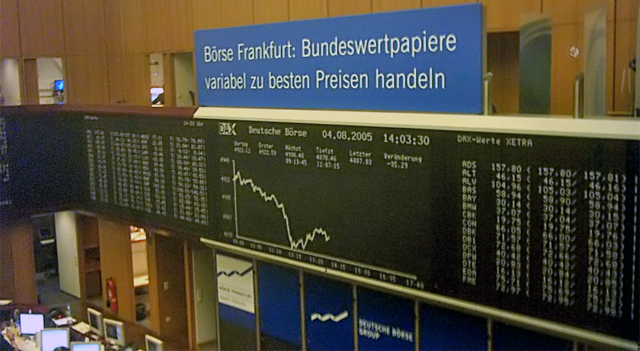
European equities pushed higher for a fourth straight session on Friday, buoyed by stronger-than-expected German industrial data that signaled improving domestic demand.
Germany’s federal statistics office reported that factory orders increased 1.5% in October, outpacing economists’ expectations for a modest 0.3% rise. Although the gain slowed from September’s upwardly revised 2.0% jump, it still marked a solid monthly performance. Year over year, orders were down 0.7%, improving from September’s 3.4% decline.
Eurozone data also offered a positive surprise. Revised figures from Eurostat showed that the currency bloc’s economy expanded faster than initially reported in the third quarter, supported by firmer government spending and investment. GDP rose 0.3% quarter-on-quarter, compared with a 0.1% increase in the previous quarter and an earlier estimate of 0.2%.
Investors now turn their attention to key U.S. inflation readings due later Friday, which may influence the Federal Reserve’s policy decision in the coming week.
By late morning, the DAX in Germany climbed 0.9%, the CAC 40 in France added 0.3%, and the FTSE 100 in the U.K. edged up 0.1%.
In corporate news, Ocado (LSE:OCDO) rallied sharply after announcing it will receive a $350 million one-off cash payment from Kroger, following the U.S. retailer’s decision to close three automated fulfillment centers and pull back on a planned site in Charlotte, North Carolina.
Airbus (EU:AIR) also traded higher in Paris after revealing it delivered 72 aircraft in November.
Meanwhile, Swiss Re (TG:SR9) slumped, with shares under pressure after the reinsurer outlined its financial targets for 2026.
Tesla (NASDAQ:TSLA) rolled out a new budget-friendly version of its Model 3 sedan in Europe on Friday, months after the variant first became available to U.S. buyers, according to updated pricing on the company’s website.
The automaker said the new Model 3 Standard aims to boost demand across Europe, where Tesla faces intensifying competition from lower-priced electric vehicles offered by both European and Chinese rivals.
The launch follows the debut of a reduced-price Model Y in the region in October, part of Tesla’s broader effort to retain its position in an increasingly crowded EV market.
Pricing for the Model 3 Standard starts at €37,970 ($44,299.60) in Germany, 330,056 Norwegian kroner ($32,698) in Norway, and 449,990 Swedish kronor ($47,820) in Sweden.