Blog

  • Marks & Spencer CTO Josie Smith Exits After Cyberattack Fallout

    Marks & Spencer CTO Josie Smith Exits After Cyberattack Fallout

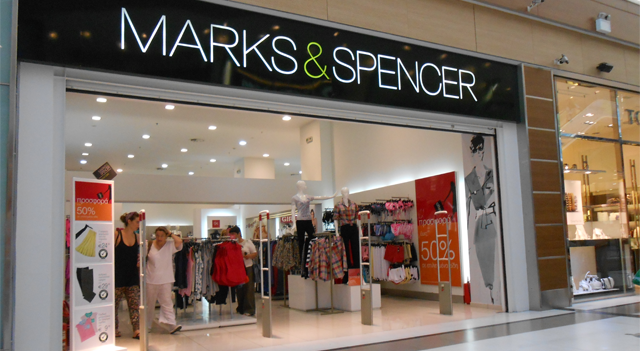
    Marks & Spencer (LSE:MKS) said on Tuesday that its Chief Technology Officer, Josie Smith, has stepped down from the business.

    Her departure comes less than a year after a major cyberattack in April that caused significant disruption to the British clothing and food group’s online operations. The incident had a material financial impact, with the company estimating lost profits of around £300 million ($404 million).

    “Josie Smith, Chief Technology Officer (CTO), has decided to leave M&S. We thank Josie for her significant contributions, and wish her well for the future,” an M&S spokesperson said, confirming an earlier report by Sky News.

  • Ajax Resources Accelerates South American Growth: Drills Turning at Eureka and Strategic Moves in Brazil

    Ajax Resources Accelerates South American Growth: Drills Turning at Eureka and Strategic Moves in Brazil

    In a period of rapid operational expansion, Ajax Resources (AQSE:AJAX) is making significant strides across its South American portfolio. Following a landmark year of acquisitions, the company has officially commenced its maiden drilling program at the historic Eureka Gold and Copper Project in Argentina, while simultaneously laying the groundwork for a “quantum leap” in Brazil.

    In a recent sit-down on The Watchlist, Ajax CEO Ippolito Ingo Cattaneo outlined a roadmap that transitions the company from an explorer into a developer with near-term production potential.

    Unlocking 400 Years of History at Eureka

    The spotlight is currently on the Eureka Project in the Jujuy Province of Argentina. Despite a 400-year history of production, the site has remarkably never been subjected to modern drilling.

    Ajax is currently executing an initial 1,500-meter program, the first phase of a planned 5,500-meter campaign. The ultimate goal is to validate historical, non-compliant studies that suggested significant copper mineralization.

    • Target: Publishing a JORC-compliant Maiden Mineral Resource Estimate (MRE) by the first half of 2026.
    • Potential: Historical data has assessed up to 62 million tonnes of copper at 1% (roughly 600,000 tonnes of copper).

    “It’s one of the best times to be drilling a gold and copper project,” Ingo-Cattaneo noted, highlighting the company’s strong funding position and the favourable mining climate in the Jujuy province.

    A “Quantum Leap” in Brazil: The Pereira Velho Project

    While work intensifies in Argentina, Ajax has shifted its growth trajectory through the acquisition of the Pereira Velho Gold Project in Alagoas State, Brazil.

    This deal is more than just an asset acquisition; it is a strategic partnership with Appian Capital Advisory, one of the world’s premier private equity groups in the mining sector. By taking their consideration in equity, Appian will become one of Ajax’s largest shareholders, a major vote of confidence in the junior miner’s management.

    “Pereira represents a quantum leap in our company’s development,” said Ingo-Cattaneo. “We are looking to replicate the success of the nearby Serrote mine, which Appian developed and sold for $420 million in 2025.”

    The immediate objective at Pereira Velho is to upgrade the current in-house estimate of 110,000 ounces to a JORC-compliant 350,000 ounces, targeting a fast-track to open-pit production.

    Expanding the Pipeline: Leon and Beyond

    Ajax is also maintaining momentum at the Leon Project in Salta, Argentina. This copper-silver asset comes with over $20 million in historical expenditure and 10,000 meters of previous drilling.

    The company has secured an option on highly favorable terms ($100,000 in shares for the option, with a $3 million final payment in four years). Ingo-Cattaneo views Leon as another near-term production story, with a goal to expand the current 6.6 million-tonne resource to a 10 million-tonne milestone.

    The Road Ahead

    With gold reaching new historical peaks and copper demand surging for the global energy transition, Ajax Resources finds itself at a critical value inflection point.

    By targeting under-explored assets with rich historical data and partnering with industry giants like Appian, Ajax is moving quickly to prove up its resources. For shareholders, the next 12 months will be defined by a steady flow of drill results and the transition toward formal resource estimates across two of South America’s most mining-friendly jurisdictions.

    For more information on the current drill programs and project updates, visit ajaxresources.com.

  • FTSE 100: Shares Slide Further on Trump Tariff Warnings and Soft UK Jobs Data; Sterling Holds Firm

    FTSE 100: Shares Slide Further on Trump Tariff Warnings and Soft UK Jobs Data; Sterling Holds Firm

    UK stocks remained under pressure on Tuesday, extending recent losses as fresh tariff threats from U.S. President Donald Trump linked to Greenland weighed on risk appetite, while domestic labour market data added to the negative tone, showing unemployment stuck at elevated levels in November and a slowdown in pay growth.

    By 10:09 GMT, the FTSE 100 was down 1.4%. Sterling, however, strengthened, with GBP/USD up 0.4% at 1.34. Elsewhere in Europe, Germany’s DAX fell 1.6% and France’s CAC 40 slipped 1.3%.

    FTSE 100 round-up

    Shares in RAPT Therapeutics Inc (NASDAQ:RAPT) soared 63.6% after GSK plc (LSE:GSK) said it plans to acquire the company for $58 per share in an all-cash deal that values RAPT at $2.2 billion. The transaction gives GSK access to RAPT’s food allergy pipeline, led by the anti-IgE antibody ozureprubart, which is in Phase IIb development for the prevention of reactions to multiple food allergens including peanut, milk, egg, cashew and walnut.

    In contrast, CPP Group Plc (LSE:CPP) slumped 43.8% after the group said it is reviewing strategic options that include cancelling its AIM listing and moving to a private company structure. The board pointed to difficulties facing smaller listed companies, including “persistent undervaluation, limited liquidity, and the ongoing costs and administrative burden” associated with a public listing.

    Wise PLC (LSE:WISE) jumped more than 13% after the money transfer group beat quarterly revenue expectations and upgraded its profit margin outlook. Wise reported underlying income of £424.4 million for the third quarter of fiscal 2026, up 21% year on year and above the £412 million analyst consensus.

    QinetiQ Group PLC (LSE:QQ.) said it remains on course to meet full-year targets, guiding for an operating margin of around 11% and earnings per share growth of 15% to 20%, after reporting more than £3 billion of orders year to date.

    Big Yellow Group PLC (LSE:BYG) posted third-quarter revenue of £52.3 million, up from £51 million a year earlier, as higher net achieved rents offset lower occupancy during a seasonally weaker period. Like-for-like store revenue increased to £51.9 million from £51 million.

    Shares in Informa PLC (LSE:INF) traded higher after the company lifted its 2025 adjusted earnings guidance to around 55.5p per share, implying underlying growth of 10–15%. Informa also announced a new £200 million share buyback and said it expects full-year revenue of about £4 billion.

    Ibstock PLC (LSE:IBST) dropped 7% after its full-year 2025 update signalled a sharper-than-expected downgrade to future earnings, despite results for the year broadly matching guidance, with adjusted EBITDA expected to be around £71 million.

    Kier Group PLC (LSE:KIE) said first-half trading was in line with board expectations, leaving full-year FY26 guidance unchanged, supported by consistent project delivery and tighter cash management.

    Finally, DFS Furniture PLC (LSE:DFS) rallied 6.8% after upgrading its full-year profit outlook above market expectations. The retailer now expects underlying profit before tax and brand amortisation of £43–50 million, compared with current consensus forecasts of around £41 million.

  • Gold Breaks Above $4,700/oz to New Peak as Greenland Uncertainty Fuels Safe-Haven Buying

    Gold Breaks Above $4,700/oz to New Peak as Greenland Uncertainty Fuels Safe-Haven Buying

    Gold prices surged to fresh record highs during Asian trading on Tuesday, pushing beyond a key psychological level as ongoing uncertainty surrounding U.S. demands over Greenland kept investors firmly in risk-off mode and boosted demand for safe-haven assets.

    Both gold and silver had already climbed to unprecedented levels earlier in the week after U.S. President Donald Trump said European countries could face tariffs unless they relinquish Greenland. While silver saw some profit-taking in the latest session, gold continued to attract strong buying interest.

    Spot gold rose 0.4% to $4,696.07 an ounce, while February gold futures gained 0.5% to $4,701.96 an ounce by 00:04 ET (05:04 GMT). Intraday, spot prices briefly touched a new record of $4,701.78 an ounce.

    Bullion rallies as Trump–Greenland dispute rattles markets

    Gold remained well supported as uncertainty over Trump’s intentions regarding Greenland reinforced demand for defensive assets.

    The geopolitical unease also weighed on the U.S. dollar, providing additional support for precious metals. On Monday, Trump reiterated his claims over Greenland and, in an interview with NBC News, stopped short of ruling out the use of military force to secure the island.

    Market anxiety intensified earlier this year after the United States launched an incursion into Venezuela and captured President Nicolas Maduro. Trump is now set to attend the World Economic Forum in Davos, Switzerland, where he is expected to meet with several European leaders.

    “When US foreign policy tilts toward a transactional, unpredictable approach that bypasses multilateral frameworks, it risks undermining policy credibility and encourages diversification away from the USD,” analysts at OCBC wrote.
    “In such an environment, precious metals like gold are supported not by extended conflict itself, but by a sustained backdrop of geopolitical uncertainty and policy unpredictability.”

    Silver retreats from highs; platinum also softens

    Heightened global uncertainty has prompted investors to trim exposure to speculative assets and rotate further into physical stores of value such as gold — a shift that helped drive a broad rally across metals toward the end of 2025.

    Silver and platinum had also benefited from that move, but both saw some profit-taking on Tuesday. Spot silver slipped 0.1% to $94.2890 an ounce after hitting a record in the previous session, while spot platinum declined 0.6% to $2,361.47 an ounce.

    Industrial metals were likewise influenced by the demand for tangible assets. Benchmark copper futures on the London Metal Exchange eased 0.4% to $12,927.58 a tonne, though prices remained close to recent all-time highs.

  • U.S. Futures Weaken as Greenland Tariff Tensions Loom; Netflix Results Ahead: Dow Jones, S&P, Nasdaq, Wall Street

    U.S. Futures Weaken as Greenland Tariff Tensions Loom; Netflix Results Ahead: Dow Jones, S&P, Nasdaq, Wall Street

    Futures tied to the main U.S. equity benchmarks edged lower as investors assessed the risk of new American tariffs targeting several European countries over Greenland. President Donald Trump said discussions on Greenland would take place during his attendance at a major economic forum in Switzerland, while European governments consider how to respond to his demand that the territory come under U.S. ownership. In the U.S., markets are also bracing for a potential Supreme Court decision on the legality of Trump’s tariff measures. Meanwhile, Netflix (NASDAQ:NFLX) is set to release its latest earnings.

    Futures point to losses

    U.S. stock futures were under pressure on Tuesday, signalling a weak start to a shortened trading week shaped by geopolitical uncertainty.

    By 03:07 ET, Dow futures were down 677 points, or 1.4%, S&P 500 futures had fallen 102 points, or 1.5%, and Nasdaq 100 futures were lower by 449 points, or 1.8%.

    Wall Street was closed on Monday for Martin Luther King Jr. Day, but global markets have started the week on the back foot. Sentiment has been dented by Trump’s warning that tariffs could be imposed on multiple European nations unless the U.S. is allowed to take control of Greenland. Trump has said the duties would start at 10% and could rise to as much as 25% in June if his demands regarding the semi-autonomous Danish territory are not met.

    Analysts at Capital Economics warned that, if enacted and sustained, the tariffs could shave “something between” 0.2% and 0.5% off euro zone GDP, with Germany likely to bear a significant share of the impact.

    “In practice though, we doubt that they will be implemented as advertised. We also think the [European Union] will be cautious in any retaliation in an effort to avoid further escalation,” the analysts said.

    Trump flags Greenland talks in Davos

    Trump said he plans to hold talks on Greenland during his visit this week to the World Economic Forum in Davos, Switzerland.

    Posting on social media, Trump said he had a “very good” call with NATO Secretary General Mark Rutte. The president, who is scheduled to address business and political leaders in Davos on Wednesday, added that he would meet with “various parties” during the trip, without naming them.

    Reiterating his stance, Trump wrote: “As I expressed to everyone, very plainly, Greenland is imperative for National and World Security. There can be no going back — On that, everyone agrees!”

    European governments are reportedly debating their response, including the possibility of imposing steep tariffs on €93 billion worth of U.S. goods. France has also called on the EU to consider deploying an anti-coercion tool that could extend to restrictions on investment or banking activity.

    Such measures have been described as a potential EU “bazooka”, raising the risk of a serious rift between Brussels and Washington after a trade agreement was reached last summer. The situation has also revived questions about the future cohesion of NATO.

    Supreme Court ruling in focus

    Hovering in the background is a long-anticipated Supreme Court ruling on the legality of Trump’s sweeping import tariffs on a range of countries.

    Trump has justified the measures under the 1977 International Emergency Economic Powers Act (IEEPA), which grants the president broad authority over international economic transactions during a national emergency. However, justices voiced notable scepticism during hearings late last year, prompting markets to expect a possible ruling against the administration.

    Media reports suggest a decision could be issued as soon as Tuesday. Even so, U.S. Trade Representative Jamieson Greer told the New York Times that officials are preparing alternative duties that would “start the next day” should the court strike down the current tariffs.

    Gold sets fresh record

    Gold prices climbed to new record highs on Tuesday, as uncertainty surrounding U.S. demands over Greenland kept investors cautious and supported demand for safe-haven assets.

    Both gold and silver hit all-time highs earlier in the week following Trump’s latest tariff threats. While silver saw some profit-taking on Tuesday, gold remained well supported, helped by a weaker U.S. dollar.

    Spot gold rose 1.0% to $4,724.83 an ounce, while gold futures jumped 3.0% to $4,730.50 an ounce by 03:49 ET.

    Netflix earnings awaited

    On the earnings front, Netflix is due to report its quarterly results after the close of U.S. trading on Tuesday.

    Bloomberg consensus estimates point to earnings per share of $0.55 on revenue of $11.96 billion. However, investor attention may focus more on any commentary surrounding Netflix’s interest in Warner Bros. Discovery (NASDAQ:WBD), which has also attracted a competing bid from Paramount Skydance.

    The contest for Warner Bros. Discovery is expected to stretch over several months and could face regulatory scrutiny in both the U.S. and Europe. Netflix sees the group’s assets — including HBO Max and franchises such as “Harry Potter” and “Friends” — as a potential growth driver, even as it faces pressure to demonstrate returns from heavy investment in advertising and video games, despite hits like “Stranger Things” and its expansion into live sports.
  • European Equities Extend Decline as Tariff Threats Continue to Sap Confidence: DAX, CAC, FTSE100

    European Equities Extend Decline as Tariff Threats Continue to Sap Confidence: DAX, CAC, FTSE100

    European shares moved lower again on Tuesday, deepening the sell-off seen in the previous session as investors remained uneasy about the potential economic fallout from new trade tariffs.

    By 08:05 GMT, Germany’s DAX was down 0.9%, France’s CAC 40 slipped 0.8% and the UK’s FTSE 100 fell 0.8%.

    Tariff concerns cloud growth outlook

    Regional markets slid sharply on Monday after US President Donald Trump threatened to escalate tariffs against several European allies unless the United States is allowed to buy Greenland, the autonomous territory of Denmark.

    That cautious mood looked set to persist on Tuesday as US markets reopened after a public holiday and were expected to come under renewed pressure. Trump said late on Monday that he would meet a number of officials at the World Economic Forum in Davos, Switzerland, to discuss the issue, while restating his stance on Greenland, saying that “Greenland is imperative for National and World Security. There can be no going back.”

    European leaders have broadly dismissed Trump’s demands and are reportedly preparing countermeasures should tariffs be imposed. An emergency meeting of EU leaders is scheduled for Thursday, raising the risk of a wider transatlantic trade dispute.

    Adding to the cautious tone, Citigroup on Tuesday downgraded European equities, citing heightened uncertainty around the earnings outlook.

    Slower UK wage growth fuels rate-cut expectations

    UK economic data released Tuesday pointed to easing inflationary pressure. The unemployment rate remained elevated in November, while wage growth cooled, reinforcing expectations that the Bank of England could continue cutting interest rates this year.

    The jobless rate held at 5.1% in the three months to November, unchanged from the previous period and the highest level since early 2021. Meanwhile, average earnings excluding bonuses rose 4.5% year on year, down slightly from 4.6% previously.

    The Bank of England lowered its key rate by 25 basis points to 3.75% in December and is next due to meet in early February.

    In Germany, producer prices declined largely in line with forecasts in December, falling 2.5% year on year, according to data from the federal statistics office.

    UK pharma names in focus

    On the corporate front, UK pharmaceutical companies drew attention. GSK (LSE:GSK) said it had agreed to acquire RAPT Therapeutics (NASDAQ:RAPT), a California-based clinical-stage biopharmaceutical firm, in a deal valuing the target’s equity at about $2.2 billion.

    Separately, AstraZeneca (LSE:AZN) announced plans to delist from Nasdaq and move to a direct listing of its ordinary shares and debt on the New York Stock Exchange, effective after the close of trading on January 30.

    Oil steadies after volatile trade

    Oil prices were relatively subdued on Tuesday, consolidating after sharp swings in the previous session triggered by Trump’s renewed tariff threats toward Europe.

    Brent crude futures slipped 0.5% to $63.63 a barrel, while US West Texas Intermediate fell 0.6% to $58.97.

    Beyond geopolitical tensions, attention is turning to supply dynamics, with a closely watched monthly report from the International Energy Agency due on Wednesday. The IEA has repeatedly warned of a potential supply surplus emerging in 2026.

    The report follows last week’s outlook from the Organization of the Petroleum Exporting Countries, which struck a more optimistic tone on oil demand for 2026 and 2027.

  • Renault Lifts 2025 Sales Volumes by 3% as Clio and Sandero Drive Passenger Car Demand

    Renault Lifts 2025 Sales Volumes by 3% as Clio and Sandero Drive Passenger Car Demand

    Renault Group (EU:RNO) said on Tuesday that vehicle sales volumes increased 3.2% in 2025, supported by robust demand for passenger cars that helped counter a sharp slowdown in European van sales.

    The group sold a total of 2.34 million vehicles during the year. While growth in Europe was limited to 0.5%, sales in international markets rose 11.7%, with particularly strong contributions from regions including South Korea, Morocco and Latin America. Renault, which remains heavily exposed to Europe, benefited from stronger momentum overseas as global auto demand improved in 2025, even as the industry continued to grapple with excess capacity and shifting tariff policies.

    European performance was held back by a 21% fall in van volumes, reflecting softer market conditions and a deliberate adjustment to the company’s product mix. In contrast, passenger car sales climbed 5.9%, outperforming the wider market, driven by sustained demand for Renault’s top-selling Clio and Sandero city cars.

    Renault has largely avoided the impact of tariffs because the bulk of its international sales come from markets where it manufactures locally, Ivan Segal, the brand’s global sales and operations director, told journalists.
    “Our growth is driven by strong local production and content,” he said.

    Electrified vehicles were another area of strength, with hybrid sales rising 35% year on year and electric vehicle volumes jumping 77% compared with the previous 12 months.

    Looking ahead, Renault cautioned that delivering strong growth in Europe this year could prove difficult.
    “We don’t expect a rebound in the European market,” Segal said.

    Renault is scheduled to publish its 2025 financial results on February 19.

  • Informa Shares Gain After 2025 EPS Upgrade and Announcement of £200m Buyback

    Informa Shares Gain After 2025 EPS Upgrade and Announcement of £200m Buyback

    Informa Plc (LSE:INF) shares moved higher on Tuesday after the group released an unscheduled trading update that lifted its 2025 earnings outlook and unveiled a new £200 million share repurchase programme.

    The company now forecasts adjusted earnings per share of about 55.5p for 2025, representing underlying growth of between 10% and 15% year on year. This marks a modest increase from its previous guidance of 54.9p and broadly aligns with market expectations of around 55.45p. Full-year revenue is projected at roughly £4 billion, implying underlying growth of 6.25%, or around 8% when excluding AI-licensing contracts at Taylor & Francis. Adjusted free cash flow is expected to reach £860 million, compared with £812 million in 2024.

    Looking ahead to 2026, Informa flagged several headwinds, including the roll-off of biennial events, which is expected to reduce revenue by around £70 million and EBITA by £35 million. The move to a biennial schedule for Waste Expo from 2027 is also set to weigh on revenues by approximately £15 million. These impacts could be partly offset by additional AI-licensing agreements at Taylor & Francis, which have the potential to contribute £30–35 million in revenue and around £25 million in EBITA, while adverse foreign exchange movements are expected to be a further drag.

    For 2026, the group guided to underlying revenue growth of about 6%, excluding AI-licensing contracts and the UAE partnership, which now operates as a separate company based in Dubai. Events revenue is forecast to increase by 7%, with double-digit EPS growth anticipated when stripping out the effects of AI deals, biennial events and currency movements.

    Forward bookings for 2026 remain robust, with £1.5 billion of revenue already secured. Informa completed a £350 million share buyback during 2025 and has now launched a further programme of at least £200 million, equivalent to around 1.7% of its market capitalisation. The dividend for 2025 has been set at 22p, up 10% on the prior year and in line with previous guidance.

    The update reiterates guidance provided at the company’s year-end capital markets day and recent field trips, pointing to a potential sixth consecutive year of double-digit underlying growth, even as current consensus forecasts for 2026 EPS of 58.4p sit slightly above the company’s latest outlook.

  • CPPGroup Shares Sink as Board Weighs Potential AIM Exit

    CPPGroup Shares Sink as Board Weighs Potential AIM Exit

    Shares in CPP Group Plc (LSE:CPP) slumped 43.8% after the company revealed it is reviewing options that include cancelling its listing on AIM and moving to a private ownership structure.

    The UK-based assistance provider said its board is “actively pursuing and carefully assessing” a range of strategic alternatives, among them a possible delisting from London’s AIM market. The company pointed to the difficulties facing smaller quoted businesses, including “persistent undervaluation, limited liquidity, and the ongoing costs and administrative burden” associated with maintaining a public market listing.

    According to the board, the advantages of remaining quoted “may no longer justify these costs” given the group’s current scale. Management added that capital and management time could be better directed toward expanding its core InsurTech platform, Blink Parametric.

    CPPGroup stressed that no decision has yet been taken. Any proposal to delist would be subject to shareholder approval, requiring the support of at least 75% of votes cast at a general meeting.

    Despite the sharp share price reaction, the company said trading in the second half of 2025 remains in line with management expectations. As at 31 December 2025, CPPGroup held £5.6 million in cash and is scheduled to receive a further £5.1 million in deferred consideration from past disposals over the next two years.

    The group also announced that Brian Barter has been appointed Executive Director with immediate effect. Barter joined the business as chief executive of Blink Parametric in June 2025, having previously held senior roles at Accenture and Bank of Ireland, as well as serving as managing director at BoatyardX.

  • AstraZeneca to Switch US Listing From Nasdaq to NYSE as It Simplifies Share Structure

    AstraZeneca to Switch US Listing From Nasdaq to NYSE as It Simplifies Share Structure

    AstraZeneca (LSE:AZN) said on Tuesday that it plans to withdraw its American Depositary Shares and debt securities from Nasdaq and move to a direct listing on the New York Stock Exchange.

    The change is scheduled to take effect after the close of trading on January 30, 2026, with AstraZeneca’s shares expected to begin trading on the NYSE from February 2. The group will continue to trade under its existing “AZN” ticker symbol following the transition.

    As part of the new, harmonised structure, AstraZeneca will move away from its current American Depositary Share format, under which each ADS represents two ordinary shares. Instead, the company will list its $0.25 ordinary shares directly in the United States.

    The company said the move is intended to streamline its share structure and simplify trading across its global markets.