Blog

  • Arkadian opens new access at Clogau mine to advance gold exploration

    Arkadian opens new access at Clogau mine to advance gold exploration

    Arkadian Strategic Metals (LSE:AKN) has completed the installation of ladders and platforms at its Clogau-St David’s Gold Mine in north Wales, creating staged access between the Tyn y Cornel Level and the historic Jack Williams stope.

    The newly established route will enable the company to carry out detailed geological inspections, mapping and systematic sampling across the westernmost historically worked section of the Main Lode. Arkadian identified the area as an important exploration target following drilling conducted in 2020 and 2021 and subsequent three-dimensional geological modelling.

    Existing workings provide cost-effective exploration route

    Rather than immediately developing new underground crosscuts, Arkadian intends to use the existing mine infrastructure to investigate the continuity of the geology and assess gold mineralisation within the Main Vein around the Jack Williams workings.

    The programme is designed to provide additional geological information before the company decides whether more extensive underground development is justified in the area.

    Results from the Jack Williams work will be considered alongside an ongoing mineralogical review of Level 5 at Lower Llechfraith. The combined information will feed into a broader technical assessment covering the Clogau mine.

    Arkadian plans to use this assessment to prioritise underground exploration targets and determine where future work and development should be concentrated.

    Financial position remains a key consideration

    While continued progress at Clogau provides evidence of project execution, Arkadian’s broader outlook remains constrained by its financial performance. The company currently generates no revenue and continues to report losses and cash outflows.

    Longer-term technical indicators also remain weak. With the company loss-making and no stated dividend, its valuation case continues to depend heavily on exploration progress and the potential of its underlying mineral assets.

    More about Arkadian Strategic Metals Plc

    Arkadian Strategic Metals Plc is an AIM-listed mining and exploration company focused on strategic metals and gold, with Welsh gold forming an important part of its portfolio.

    The company owns 100% of the Clogau-St David’s, Dolgellau and Gwynfynydd gold projects in Wales. Its wider portfolio also includes interests in critical metals, graphite, oil and rare earths projects located across Greenland, England and Sweden.

  • Nexteq’s Densitron secures strategic EV display contract as it enters automotive market

    Nexteq’s Densitron secures strategic EV display contract as it enters automotive market

    Nexteq’s (LSE:NXQ) Densitron business has secured a strategic design contract with a new customer in the automotive electronics industry, marking the technology group’s entry into the automotive and transportation market.

    Under the agreement, Densitron will develop customised display and human-machine interface solutions for a new electric delivery vehicle platform. The programme requires bespoke engineering work and further refinement of product specifications ahead of the planned production phase.

    Manufacturing is expected to begin during the second half of fiscal 2026. Nexteq anticipates volumes will increase significantly over the following three years as the electric vehicle platform is rolled out more widely.

    Automotive deal broadens Nexteq’s market exposure

    The contract represents an important expansion for Nexteq beyond its established industrial markets, providing the group with exposure to the automotive and transportation sector.

    Management said the project demonstrates Densitron’s ability to provide higher-value technology solutions tailored to individual customer requirements. It also reinforces the brand’s position as an outsourcing partner for businesses seeking specialist display, engineering and human-machine interface expertise.

    The new relationship could provide an additional source of revenue growth as production volumes increase, while potentially establishing a longer-term partnership with the automotive electronics customer.

    Nexteq enters this new market with a strong balance sheet and relatively low debt levels. However, the investment picture continues to reflect pressure from tighter margins and weaker or more volatile cash generation.

    From a technical perspective, the shares remain below important moving averages despite indicators suggesting oversold conditions. Meanwhile, the valuation is supported by a relatively high dividend yield, although the earnings multiple remains moderate.

    More about Nexteq plc

    Nexteq plc is a technology solutions provider focused on selected industrial markets, helping electronic equipment manufacturers outsource the design, development and supply of technology components that are not considered core to their operations.

    The group operates through its Quixant and Densitron brands, combining expertise across electronic hardware, software, displays and mechanical engineering. Nexteq operates across six countries and serves more than 500 customers worldwide, with Taiwan playing an important role in its manufacturing and supply chain operations.

  • Wall Street Futures Rise as Oil Sell-Off Eases Inflation Concerns: Dow Jones, S&P, Nasdaq

    Wall Street Futures Rise as Oil Sell-Off Eases Inflation Concerns: Dow Jones, S&P, Nasdaq

    U.S. stock futures moved higher on Tuesday, pointing to a positive start on Wall Street after the major averages finished the previous session mostly lower.

    A renewed decline in crude oil prices helped improve market sentiment, with traders reassessing the potential impact of Washington’s latest economic measures against Iran. Oil had already fallen by more than 2% on Monday, ending a six-session winning streak, before U.S. crude futures extended the retreat by more than 3% on Tuesday.

    The sharp reversal in energy prices has also helped bring Treasury yields down from recent highs, providing additional support for equity valuations.

    Washington Unveils New Iran Sanctions Campaign

    The latest move in oil followed the U.S. Treasury Department’s announcement of “Operation Economic Outcast,” which it described as an unprecedented, government-wide economic campaign targeting Iran and its “enablers.”

    The U.S. imposed sanctions on nearly 60 entities, individuals and vessels that authorities said “enable the Iranian regime’s recklessness.”

    However, the measures stopped short of immediately applying secondary sanctions to countries maintaining commercial relationships with Iran. That appeared to reassure commodity markets, which had been preparing for potentially tougher action capable of disrupting global oil flows.

    With crude prices retreating, Treasury yields also continued to ease, helping strengthen the case for an initially positive session on Wall Street.

    Nvidia and Inflation Data Remain Key Market Tests

    Investors may nevertheless be reluctant to make aggressive moves ahead of several major events later this week.

    Nvidia (NASDAQ:NVDA) is due to release its second-quarter results after Wednesday’s closing bell, making the report an important test of investor confidence in artificial intelligence and semiconductor spending.

    Closely watched U.S. inflation figures are also approaching, while attention will turn to the Jackson Hole economic symposium and Federal Reserve Chair Kevin Warsh’s remarks on Friday.

    These events could influence expectations for monetary policy and determine whether the recent improvement in risk appetite can be sustained.

    Technology Weakness Weighs on Monday’s Session

    Wall Street endured a mixed session on Monday, with stocks recovering from their early lows but generally remaining under pressure.

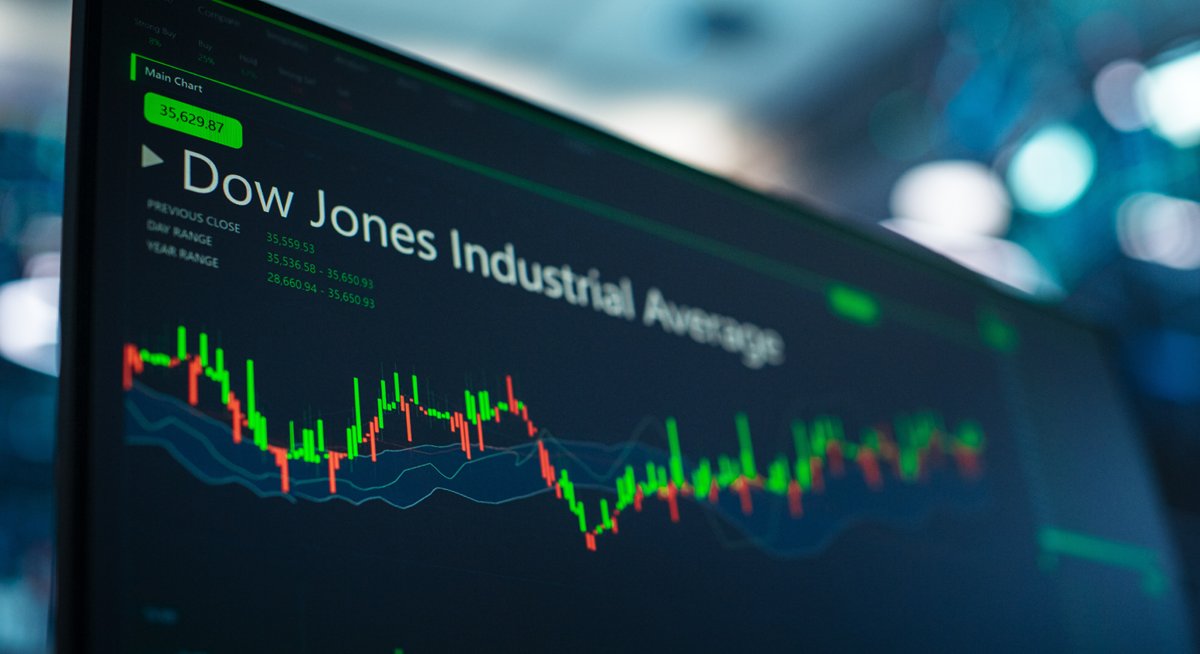
    The Nasdaq fell 200.26 points, or 0.8%, to 25,980.19, leaving the technology-heavy index at its lowest closing level in three weeks.

    The S&P 500 declined 21.51 points, or 0.3%, to 7,652.86.

    The Dow Jones Industrial Average bucked the broader trend, advancing 140.15 points, or 0.3%, to 53,417.16 as gains in Visa (NYSE:V), Walmart (NYSE:WMT) and Disney (NYSE:DIS) provided support.

    Nvidia Slides Ahead of Quarterly Results

    Technology shares were responsible for much of Monday’s weakness, with semiconductor stocks suffering particularly heavy selling.

    The Philadelphia Semiconductor Index dropped 2.7%, while Nvidia (NASDAQ:NVDA) lost 2.9% as investors positioned themselves ahead of the AI chipmaker’s earnings announcement.

    Computer hardware and networking stocks also came under pressure. Energy shares weakened alongside crude oil, although overall market activity remained relatively subdued as traders waited for the week’s major catalysts.

    Investors Look to Warsh for Clues on Fed Strategy

    Federal Reserve Chair Kevin Warsh’s Jackson Hole appearance on Friday is expected to attract significant attention as markets assess the outlook for inflation and interest rates.

    “[Fed Chair Kevin] Warsh is scheduled to deliver keynote remarks on Friday, and markets will be looking for greater clarity on both his assessment of inflation and the broader “regime change” he has advocated at the Fed,” said Daniela Hathorn, Senior Market Analyst at Capital.com.

    She added, “He has been reluctant to provide conventional forward guidance, meaning the speech may focus more heavily on the Fed’s reaction function and longer-term philosophy than explicitly signaling what policymakers will do in September.”

    With few major U.S. economic releases immediately available, some investors may remain cautious until Wednesday’s consumer inflation figures provide a clearer picture of price pressures.

    For now, the combination of falling crude prices, lower Treasury yields and stronger futures is creating a more constructive backdrop for Wall Street, although Nvidia, inflation and Jackson Hole could determine the market’s next major move.

  • European Stocks Edge Higher as U.S. Treasury Yields Retreat: DAX, CAC, FTSE100

    European Stocks Edge Higher as U.S. Treasury Yields Retreat: DAX, CAC, FTSE100

    European equities moved modestly higher on Tuesday as U.S. Treasury yields pulled back from recent peaks, easing some of the pressure that higher borrowing costs have placed on global stock markets.

    Bond yields declined following reports that the U.S. Treasury could draw on its nearly $1 trillion General Account to help finance its recently announced bond buyback programme. The prospect of using existing cash reserves provided some relief to debt markets and supported sentiment across European equities.

    Iran Sanctions Prove Less Severe Than Feared

    Investors also responded positively to a U.S. sanctions package targeting Iran that was less aggressive than some market participants had anticipated.

    Washington warned countries against continuing business with Iran, threatening secondary sanctions against those that fail to comply. However, the Treasury Department stopped short of immediately imposing penalties.

    The absence of more severe measures helped reduce concerns that the latest sanctions campaign could cause an immediate disruption to crude oil supplies.

    Against this backdrop, Germany’s DAX Index gained 0.8%, France’s CAC 40 advanced 0.3% and the UK’s FTSE 100 rose 0.1%.

    German Economy Expands Faster Than Initially Estimated

    Economic data also provided some encouragement after Destatis reported that Germany’s economy performed better than previously estimated during the second quarter, supported by resilient exports despite ongoing geopolitical uncertainty.

    Gross domestic product increased 0.3% quarter-on-quarter, revised higher from the preliminary estimate of 0.2%. The economy had expanded by 0.4% during the first quarter.

    On an annual basis, German GDP growth accelerated to 1.0% in the second quarter from 0.7% during the previous three months.

    The figures provided further support to European markets by suggesting that the region’s largest economy maintained momentum despite challenging global conditions.

    Technology Stocks Gain Ahead of Nvidia and Marvell Earnings

    Technology shares were among the stronger performers, with ASML Holding (EU:ASML) and Infineon Technologies (TG:IFX) advancing as investors prepared for important semiconductor earnings later this week.

    Attention is particularly focused on Nvidia (NASDAQ:NVDA), whose results are expected to provide fresh insight into demand for artificial intelligence infrastructure and semiconductor spending.

    Marvell Technology (NASDAQ:MRVL) is also due to report this week, adding to a busy period for the chip industry and potentially providing further indications of demand across data centres and AI-related markets.

    The combination of lower U.S. Treasury yields, reduced concerns surrounding Iran sanctions and encouraging German economic data helped European equities maintain a modestly positive tone during Tuesday’s session.

  • Gold Retreats From Three-Month Peak as Markets Look to U.S. Inflation and Warsh

    Gold Retreats From Three-Month Peak as Markets Look to U.S. Inflation and Warsh

    Gold prices moved lower on Tuesday after briefly reaching their highest level in more than three months, with investors taking some profits while awaiting U.S. inflation data and Federal Reserve Chair Kevin Warsh’s speech for fresh signals on monetary policy.

    At 01:00 ET (05:00 GMT), XAU/USD declined 0.3% to $4,688.96 an ounce. Gold futures, meanwhile, were up 1.0% at $4,746.09. XAG/USD gained 0.8% to $69.51 an ounce, while XPT/USD advanced 0.5% to $1,889.32. The U.S. Dollar Index was broadly steady at 98.98.

    The modest pullback comes after gold extended its recent rally to a more-than-three-month high, supported by renewed concerns over U.S. fiscal policy and the longer-term outlook for the dollar.

    U.S. Treasury Strategy Revives Debasement Concerns

    Gold’s recent momentum accelerated after the U.S. Treasury announced last week that it planned to at least double purchases of longer-dated government debt in an effort to contain elevated yields.

    The announcement pushed Treasury yields lower and weakened the dollar, improving the affordability of gold for buyers using other currencies. At the same time, the intervention raised fresh questions about U.S. government finances and whether attempts to directly influence borrowing costs could undermine confidence in the dollar.

    Treasury Secretary Scott Bessent has indicated that purchases of longer-dated debt could be expanded further, although he provided no new indication of additional action on Monday. He has also said the administration is preparing a fiscal initiative designed to address high government borrowing costs.

    The developments have revived interest in the so-called debasement trade, a theme that helped gold surge roughly 65% during 2025.

    Under this strategy, investors turn to assets such as gold as protection against the possibility that expansionary fiscal policies and easier financial conditions could gradually erode the purchasing power of the dollar.

    Markets are now looking towards upcoming U.S. inflation figures and Warsh’s first speech at Jackson Hole. Softer inflation could reinforce expectations of a more accommodative Federal Reserve, potentially benefiting gold, while a hawkish message from Warsh could challenge the rally because the precious metal does not offer a yield.

    Geopolitical and Trade Risks Add to Gold’s Appeal

    International trade and geopolitical tensions are providing another reason for investors to consider gold as a portfolio diversifier.

    Washington has threatened economic penalties against countries that continue trading with Iran as part of its campaign to isolate Tehran. Separately, trade tensions between the U.S. and Canada have escalated following unsuccessful negotiations, with Washington imposing 50% tariffs on certain Canadian goods and threatening equivalent duties on Canadian cars, trucks and automotive components from January 2027.

    The combination of fiscal uncertainty, geopolitical risk, trade friction and questions surrounding monetary policy has strengthened attention on gold’s traditional role as an alternative store of value.

    Tony Sycamore, senior market analyst at IG, said recent price action suggests gold has likely established a floor around its late-June low near $3,942.

    According to Sycamore, the initial rally in August was partly driven by optimism that diplomatic progress in the Middle East could lower oil prices and reduce pressure on central banks to raise interest rates.

    Those expectations did not materialise, but gold continued to climb as Treasury intervention brought the debasement trade back into focus and provided the market with a fresh catalyst.

    Sycamore noted that gold has broken through trendline resistance around $4,420 and moved above its 200-day moving average near $4,515, strengthening the technical outlook. He expects declines to attract buying interest as traders turn their attention towards the next major resistance zone between $4,900 and $5,000.

  • Oil Prices Slide to One-Week Low as Iran Sanctions Ease Immediate Supply Fears

    Oil Prices Slide to One-Week Low as Iran Sanctions Ease Immediate Supply Fears

    Oil prices fell to their lowest levels in around a week on Tuesday as investors concluded that Washington’s latest economic measures against Iran posed less of an immediate threat to global crude supplies than a renewed military escalation.

    Brent crude futures declined 35 cents, or 0.38%, to $91.82 a barrel by 0810 GMT, while U.S. West Texas Intermediate crude dropped 41 cents, or 0.48%, to $84.60.

    The decline took Brent to its weakest level since August 19, while WTI touched its lowest point since August 17.

    Ole Hansen, head of commodity strategy at Saxo Bank, said the increased emphasis on economic pressure rather than military action in the U.S.-Israeli conflict with Iran had reduced some of the anxiety surrounding oil supplies. The U.S. sanctions announcement was also less aggressive than markets had anticipated.

    Iran has threatened retaliation after the Trump administration outlined an expanded sanctions campaign intended to restrict Tehran’s economic lifelines. Iranian officials have expressed confidence that the country’s major trading partners will resist pressure from Washington.

    The U.S. has warned other countries to reduce commercial dealings with Iran or risk secondary sanctions. However, the Treasury Department did not immediately impose penalties as part of the announcement.

    Treasury Secretary Scott Bessent also declined to identify which countries could ultimately face measures or when penalties might be introduced, indicating instead that governments would be given time to comply with Washington’s demands.

    Shift Towards Economic Pressure Calms Oil Markets

    Although U.S. Defense Secretary Pete Hegseth said on Monday that Washington was not ruling out military force against Iran, the greater focus on economic coercion has reduced immediate concerns over further disruption to Middle Eastern oil production and exports.

    The change in strategy has encouraged traders to remove some of the geopolitical premium that had accumulated in crude prices during periods of heightened military tension.

    Physical supply risks remain significant, however, particularly around the Strait of Hormuz, where shipping activity has been heavily disrupted by the conflict.

    Hormuz Shipping Disruption Keeps Risk Premium in Place

    “Iran still retains the ability to respond by disrupting shipping, which continues to keep a residual premium in the oil price,” said Tim Waterer, chief market analyst at KCM.

    Maritime risks were highlighted again on Tuesday after an oil tanker was struck by an unidentified projectile and disabled roughly nine nautical miles, or 16.7 kilometres, northeast of Ash Shishah in Oman, according to the United Kingdom Maritime Trade Operations.

    Traffic through the Strait of Hormuz also remained exceptionally low. Shipping data showed that just two tankers passed through the waterway on Monday, representing the lowest daily number of commodity vessels since early May. Both tankers were travelling into the Gulf.

    The strait has become a central concern for energy markets since the U.S.-Israeli conflict with Iran began on February 28. Before the war, approximately one-fifth of global oil consumption typically passed through the strategically important route.

    Disruption to those flows has forced some countries to draw down commercial and strategic petroleum inventories to compensate for reduced supplies.

    Russian Refinery Operations Suspended After Drone Strike

    Another potential supply issue emerged in Russia, where the Novoshakhtinsk refinery in the southern Rostov region was damaged by a Ukrainian drone overnight.

    The regional governor said operations at the facility were suspended following the attack.

    Despite continuing risks to physical supplies in both the Middle East and Russia, Tuesday’s price action indicates that traders currently view Washington’s economic campaign against Iran as less threatening to global crude flows than a further escalation of military activity.

  • Bitcoin Breaks $80,000 as U.S. Fiscal Concerns Fuel Dollar Weakness

    Bitcoin Breaks $80,000 as U.S. Fiscal Concerns Fuel Dollar Weakness

    Bitcoin (COIN:BTCUSD) climbed above $80,000 on Tuesday, reaching its highest level in more than three months as mounting concerns over U.S. fiscal policy put pressure on the dollar and encouraged investors to move into cryptocurrencies and other alternative assets.

    The world’s largest cryptocurrency rose 4.7% to $80,760.8 by 01:57 ET (05:57 GMT), after briefly reaching $81,220.4, its strongest level in three months.

    The advance leaves Bitcoin on course to rise in eight of the past nine sessions, extending a sharp recovery over the previous week. The move has also been amplified by short-covering as higher prices forced traders betting against Bitcoin to close their positions.

    Treasury Buyback Plans Drive ‘Debasement Trade’

    The latest cryptocurrency rally has been closely linked to renewed concerns about the U.S. fiscal position and the potential longer-term implications for the dollar.

    Sentiment shifted last week when the U.S. Treasury announced plans to roughly double the pace of its bond buybacks as part of efforts to contain the recent surge in yields.

    The move raised concerns that greater Treasury intervention in debt markets could ultimately weigh on the dollar, encouraging investors to pursue the so-called “debasement trade.”

    “The Treasury’s buyback announcement has shifted the market narrative from higher yields to USD debasement – fuelling a weaker USD, stronger gold and higher breakevens. While QE comparisons are overdone, rising policy uncertainty and questions around Fed independence are weighing on the USD,” OCBC analysts said in a note.

    That backdrop has increased demand for assets such as gold and cryptocurrencies, which some investors regard as potential protection against instability in sovereign debt and currency markets.

    Bitcoin has been a major beneficiary of the shift, with its previously weak year-to-date performance also attracting investors seeking exposure following the earlier decline.

    Short Squeeze Adds Momentum to Bitcoin Rebound

    Bitcoin’s rapid recovery has inflicted substantial losses on traders positioned for further declines.

    Data from Coinglass showed that more than $457 million of Bitcoin short positions were liquidated during the previous 24 hours.

    The latest short squeeze follows heavy liquidations last week, when Bitcoin’s abrupt recovery eliminated billions of dollars in bearish positions.

    Similar activity was recorded elsewhere in the cryptocurrency market, with Coinglass reporting that $112.3 million of Ether short positions were liquidated over the same 24-hour period.

    Solana Leads Gains Across Altcoins

    Bitcoin’s rally helped lift the wider cryptocurrency market on Tuesday, with several major altcoins posting strong gains.

    Ether advanced 2.2% to $2,510.0, while XRP also increased by 2.2%.

    Solana outperformed with a 7.6% surge, while Cardano climbed 3.3% and BNB gained 2.3%.

    Memecoins delivered a more mixed performance. Dogecoin advanced 1.3%, while $TRUMP declined 1.5%.

    The broader move higher reflects renewed momentum across digital assets as dollar weakness, U.S. fiscal concerns and the liquidation of bearish positions combine to strengthen cryptocurrency market sentiment.

  • Wall Street Futures Rise as Iran Sanctions, Nvidia Earnings and Bitcoin Rally Take Focus: Dow Jones, S&P, Nasdaq

    Wall Street Futures Rise as Iran Sanctions, Nvidia Earnings and Bitcoin Rally Take Focus: Dow Jones, S&P, Nasdaq

    U.S. stock futures advanced on Tuesday as investors prepared for a busy stretch of corporate and economic news, with Nvidia (NASDAQ:NVDA) earnings and upcoming inflation figures among the main events in focus. Meanwhile, Washington unveiled a broader economic campaign against Iran and Bitcoin (COIN:BTCUSD) extended its rally beyond $80,000.

    Oil prices moved lower as traders assessed the likely impact of the new Iran measures on global supplies, while Intuit (NASDAQ:INTU) is scheduled to release its latest results after the closing bell.

    Nvidia Earnings Loom as U.S. Futures Advance

    Wall Street was positioned for a firmer start, with Dow futures gaining 89 points, or 0.2%, by 03:08 ET (07:08 GMT). S&P 500 futures rose 20 points, or 0.3%, while Nasdaq 100 futures climbed 165 points, or 0.6%.

    The move followed losses for the major U.S. averages in the previous session. Weakness among companies exposed to the artificial intelligence theme, including semiconductor manufacturers and chip equipment businesses, outweighed gains in financials and consumer staples.

    Nvidia’s upcoming quarterly results are now set to take centre stage, given the chipmaker’s importance as a gauge of investment and demand across the AI industry. Investors are also awaiting inflation figures later this week for further indications of the direction of U.S. monetary policy.

    Trade relations between Washington and Ottawa have provided another source of uncertainty. Efforts to prevent proposed 50% U.S. tariffs on a wide range of Canadian products failed to produce an agreement, prompting Canada to threaten matching retaliatory measures.

    Vital Knowledge analysts noted that the tariffs are still several weeks away from taking effect, leaving room for further negotiations. Planned U.S. duties on Canadian automotive, truck and steel exports have meanwhile been delayed until January 2027.

    Washington Steps Up Economic Campaign Against Iran

    Iran remained a major geopolitical focus after U.S. Treasury Secretary Scott Bessent announced a fresh sanctions initiative on Monday designed to increase Tehran’s financial isolation.

    Bessent described the strategy as an “economic onslaught against Iran’s financial connections” globally, saying it would target Tehran’s “enablers” and make it harder for the country to maintain access to international financial channels.

    President Donald Trump is also asking other governments to make “specific requests to cease their interactions” with Iran as Washington intensifies its economic campaign following the start of the conflict in late February.

    The measures have not yet been implemented, but countries have been given a timetable to wind down activities involving Iran.

    Bessent warned that “any entity that facilitates money laundering on behalf of Iran” would lose access to the U.S. dollar system, adding that “the clock has just started ticking.”

    Oil Prices Slip as Markets Assess Sanctions Impact

    Oil traders appeared relatively unfazed by the latest measures, with Brent crude futures falling 0.6% to $91.58 a barrel on Tuesday.

    Both Brent and U.S. West Texas Intermediate crude had declined by more than 2% in the previous session. WTI subsequently moved towards a one-week low, with profit-taking following its recent multi-week rally adding to the pressure.

    “Oil prices drifted lower yesterday despite renewed U.S. plans to tighten economic pressure on Iran,” ING analysts said.

    “[T]raders [are] treating the U.S. effort to nudge partners away from Iranian trade as marginal rather than market-moving.”

    A key question is how aggressively Washington will pursue secondary sanctions against countries continuing to buy Iranian energy. ING noted that China is the largest purchaser of Iranian energy, raising doubts over whether the U.S. would risk destabilising its fragile trade truce with Beijing.

    Intuit Results Put AI Competition in Spotlight

    Intuit (NASDAQ:INTU) will be another focus for investors when the software company reports after Tuesday’s market close.

    In May, Intuit reduced its annual revenue forecast for TurboTax and announced plans to shrink its workforce by 17%, equivalent to roughly 3,000 positions.

    The measures were viewed as an attempt to streamline the company and redirect resources towards its own artificial intelligence products. However, they also raised concerns about the competitive threat posed by increasingly capable general-purpose AI systems.

    Large language models can already replicate some functions traditionally provided by tax preparation software, despite not having access to Intuit’s proprietary financial data, potentially increasing competitive pressure on TurboTax over time.

    Bitcoin Extends Rally Beyond $80,000

    Bitcoin (COIN:BTCUSD) continued its sharp advance on Tuesday, reaching its highest level in more than three months amid strong demand for spot Bitcoin exchange-traded funds and continued risk appetite.

    The cryptocurrency rose 4.0% to $80,415.7 by 03:48 ET, having earlier touched $81,220.4.

    Bitcoin is on course to record gains in eight of the past nine sessions, with short-covering providing additional momentum as the rally forces bearish traders to close positions.

    Concerns over U.S. public finances have also helped drive interest in the cryptocurrency. Those worries intensified after the Treasury announced plans last week to roughly double the pace of bond buybacks as part of efforts to contain rising government borrowing costs.


  • Market Open: Gulf Keystone Resilience, Volex Outlook

    Market Open: Gulf Keystone Resilience, Volex Outlook

    FTSE 100 opens flat as Volex raises its profit outlook, Gulf Keystone remains resilient and Brent crude edges higher amid Iran focus.

    Market Overview

    The FTSE 100 opened broadly unchanged, at 10,854.57, while the Euronext 100 gained 0.03 per cent and Germany’s DAX rose 0.23 per cent. European equities found support as concerns over the immediate impact of expanded US sanctions against Iran eased. Overnight in the US, the Nasdaq closed lower at 25,980.19 and the S&P 500 declined to 7,652.86.

    Commodity markets were mixed, with copper lower while gold, Brent crude and natural gas edged higher. Bitcoin rose against sterling. The US dollar was unchanged versus the pound, while the Swiss franc, euro and Japanese yen weakened marginally and the Australian dollar strengthened slightly. Oil markets remained focused on Iran and the Strait of Hormuz, although investors viewed the latest US economic pressure as posing less immediate risk to physical supply.


    Market Numbers

    FTSE 100: Up (0.001%), 10,854.57
    Euronext 100: Up (0.03%), 1,933.47
    DAX: Up (0.23%), 26,167.89
    NASDAQ: Down, 25,980.19
    S&P 500: Down, 7,652.86


    In the Headlines

    Production resilience – Gulf Keystone Petroleum (LSE:GKP)
    The Kurdistan-focused oil and gas producer maintained financial resilience despite production disruption at its Shaikan Field, with operations subsequently resuming and output recovering. The company also declared a further interim dividend, highlighting its liquidity and ability to support shareholder returns.

    Profit outlook raised – Volex (LSE:VLX)
    The specialist power and data transmission manufacturer raised its FY2027 profit expectations after strong trading across its end-markets, led by demand from data centre customers. Improved operating leverage means the board now expects underlying operating profit to exceed current market expectations.


    Currencies (vs GBP)

    USD: Unchanged (0.00%), $1.3638
    CHF: Down (0.00%), Fr.1.0941
    EUR: Down (0.01%), €1.1688
    JPY: Down (0.01%), ¥217.014
    AUD: Up (0.00%), $1.9062
    Bitcoin (BTC/GBP): Up, £58.681.23


    Commodities

    Copper: Down
    Gold: Up
    Brent Crude: Up
    Natural Gas: Up

  • European Natural Gas Rally Pauses as Iran ‘D-Day’ Measures Fail to Disrupt Supply

    European Natural Gas Rally Pauses as Iran ‘D-Day’ Measures Fail to Disrupt Supply

    European natural gas prices were little changed on Tuesday, holding close to five-month highs as traders reassessed geopolitical risks after Washington’s latest sanctions against Iran stopped short of causing an immediate disruption to energy supplies.

    Benchmark Dutch front-month gas futures and comparable British wholesale contracts traded broadly flat, consolidating after a strong weekly advance of around 7% that had lifted regional prices to their highest levels since mid-March.

    The pause followed a sharp overnight reversal in crude oil markets as energy traders reduced some of the geopolitical risk premium built into prices. The Trump administration’s heavily promoted “economic D-Day” against Iran ultimately delivered measures that were more familiar in scope than markets had initially feared.

    Investors had entered the week preparing for the possibility of new supply constraints after US officials threatened secondary sanctions against countries and companies continuing to trade with Tehran.

    The measures announced by Washington, however, largely strengthened existing restrictions affecting Iranian shipping and technology rather than introducing unexpected maritime blockades or immediate vessel seizures in the Persian Gulf.

    Hormuz Risks Continue to Support European Gas Prices

    Brent crude surrendered earlier gains to trade around $91.50 a barrel, reducing concerns about an immediate additional cost shock spreading through global energy markets.

    Risks surrounding the Strait of Hormuz have not disappeared, however. Continuing disruption to physical transit through the strategically important waterway is maintaining a geopolitical premium in European wholesale gas prices.

    The unresolved situation means traders remain sensitive to any development that could affect liquefied natural gas flows or other energy shipments passing through the Gulf.

    As a result, Tuesday’s relatively subdued trading does not necessarily indicate that supply concerns have eased significantly. Instead, the market appears to be consolidating after its recent rally while assessing the likelihood of further escalation.

    European Gas Storage Remains a Concern Ahead of Autumn

    Beyond geopolitical developments, Europe continues to face a relatively fragile supply position as the autumn heating season approaches.

    Figures from Gas Infrastructure Europe show that underground storage facilities across the European Union are only slightly above 60% full.

    Higher summer electricity demand, partly driven by increased air-conditioning use, has complicated efforts to rebuild inventories. At the same time, disruption affecting Qatari LNG shipments has further constrained the seasonal storage replenishment process.

    With inventories below more comfortable levels and uncertainty surrounding LNG flows through the Middle East, European gas markets remain vulnerable to renewed volatility even after Tuesday’s pause in the recent price rally.