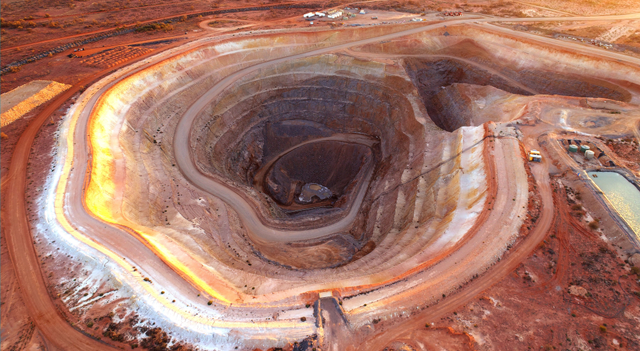
Great Southern Copper (LSE:GSCU) has reported encouraging partial assay results from step-out diamond drill hole CNG25-DD042 at the Cerro Negro prospect in Chile, confirming that the Mostaza copper-silver system extends approximately 300–400 metres south of the historic mine workings. The drill hole intersected several mineralised intervals, including 21.8 metres grading 1.04% copper and 52.26 g/t silver, highlighted by a higher-grade section of 1.6 metres returning 6.55% copper and 319.75 g/t silver. The results also identified breccia zones enriched with lead, zinc and silver, reinforcing the interpretation of a structurally complex, stacked mineral deposit.
The latest drilling suggests the mineralised system is becoming thicker and more continuous further south, extending the defined copper-silver trend to more than 400 metres along strike. The system also remains open both at depth and beneath shallow cover. These findings will guide a fully funded Phase IV drilling campaign, which will focus on in-fill drilling aimed at linking Lens 2 mineralisation between the historic Mostaza mine and recent drill holes. Additional step-out drilling is planned to test the wider two-kilometre Mostaza Fault Zone, highlighting the broader growth potential of the project.
The company’s outlook remains influenced by early-stage financial characteristics typical of exploration firms. Great Southern Copper is currently pre-revenue, with widening losses and continued negative free cash flow, although it reports no debt on its balance sheet. Technical indicators are mixed to weak, with the share price trading below the 20-day moving average and momentum indicators relatively subdued. Valuation metrics are also limited due to the absence of earnings and dividend yield data.
More about Great Southern Copper PLC
Great Southern Copper is a London-listed exploration company focused on identifying and advancing copper, gold, and silver deposits in Chile. Its main activities centre on the Especularita Project, which includes the Cerro Negro prospect and the historic Mostaza mine area. The company is targeting structurally controlled, near-surface mineral systems that benefit from proximity to established mining infrastructure.
Catenai PLC (LSE:CTAI), the AIM-listed digital media and technology services group, focuses on delivering customised digital systems for organisations across corporate, government, and education sectors. Through its expertise in project management and technology integration, the company also backs emerging platforms that broaden its footprint in rapidly expanding digital solutions markets.
The company announced that portfolio firm Alludium Ltd has officially launched its no-code AI Agent Operating System to the public. The platform allows individuals and teams to create and collaborate with custom AI agents without requiring programming skills. With the commercial release, 100 million share warrants are scheduled to be issued to Alludium’s founders as previously planned. The platform’s rollout, supported by integrated Stripe-based billing and investor engagement initiatives, represents a strategic step for Catenai as it expands into AI-powered automation tools aimed at organisations.
Alludium’s technology is designed to extend personal AI agent functionality into team and enterprise workflows, enabling automation across commonly used software tools and potentially accelerating adoption of AI agents in business environments. Catenai’s leadership described the launch as the delivery of a key objective set at the time of its initial investment, highlighting confidence in Alludium’s future growth and the platform’s importance within Catenai’s evolving technology portfolio.
Despite these developments, the company’s outlook remains pressured by continued losses and substantial cash burn. While revenue trends have improved and the balance sheet shows no debt and positive equity, technical indicators remain largely weak to neutral. Valuation metrics are also difficult to justify given negative earnings and the absence of a dividend yield.
More about Catenae Innovation Plc
Catenai PLC is an AIM-listed provider of digital media and technology services, specialising in project management and systems integration. Its experienced IT team has delivered digital platforms for organisations across corporate, government, and educational sectors, positioning the company as a developer of tailored technology and digital transformation solutions.
Chrysalis Investments (LSE:CHRY) has reduced its outstanding borrowing under a £60 million financing facility with Barclays following a borrowing base adjustment linked to movements in the share price of portfolio company Klarna. The investment fund has now repaid £42.8 million of the facility, including a recent payment of £32.8 million that ensures compliance with loan-to-value requirements while lowering the balance due ahead of the facility’s September 2026 maturity.
As of 6 March 2026, Chrysalis reported available liquidity of approximately £76.7 million. This consists of £30.7 million in cash and cash equivalents alongside £46 million in listed holdings in Klarna and Wise. The update highlights the company’s efforts to strengthen its balance sheet, reduce financial risk, and maintain flexibility as it moves toward fully repaying the Barclays facility later this year.
The company’s outlook remains mixed. While recent profitability has improved and leverage remains relatively low, financial quality is weighed down by negative operating and free cash flow recorded in 2025 and historically high volatility. Technical indicators point to supportive momentum, and the relatively low price-to-earnings ratio contributes to a more favourable valuation profile.
More about Chrysalis Investments Limited
Chrysalis Investments Limited is a UK-listed alternative investment fund that focuses on growth-stage companies. Its portfolio includes significant fintech holdings such as Klarna and Wise. The fund is advised by Chrysalis Investment Partners LLP and managed by G10 Capital Limited, with a strategy centred on investing in both listed and private high-growth technology businesses.
Kendrick Resources (LSE:KEN) has launched Phase II drilling at the Teufelskuppe and Keishohe rare earth carbonatite complexes within Namibia’s Bonya project, advancing efforts to define a formal resource base. The programme will test all eight identified intrusions at Teufelskuppe alongside several mineralised zones at Keishohe, with the objective of converting historic high-grade exploration results into maiden JORC-compliant mineral resource estimates. The work builds on peer-reviewed channel sampling that indicates strong grades and favourable mineralogical characteristics.
Alongside drilling, the company is undertaking a range of supporting technical studies, including the creation of a digital elevation model, detailed petrological analysis, and bulk sampling. These activities are intended to evaluate breccia-hosted mineralisation and assess the potential for ore sorting, helping to guide future mine planning and metallurgical strategies. By incorporating drilling and trenching data inherited from the 2018 exploration campaign and leveraging the high proportion of fluorocarbonate-hosted rare earths, Kendrick aims to position Bonya as a promising light rare earth project while reducing development risk and strengthening long-term value prospects.
The company’s overall outlook remains constrained by weak financial performance, with no current revenue, ongoing losses, negative cash flow, and a notable decline in equity and assets during 2024. Technical indicators, however, show some supportive signals, including a strong upward trend relative to moving averages and a positive MACD reading, though overbought momentum levels suggest possible short-term volatility. Valuation metrics are also limited by negative earnings and the absence of dividend support.
More about Kendrick Resources PLC
Kendrick Resources PLC is a London-listed mineral exploration and development company focused on rare earth elements and other critical minerals. The company is expanding its asset base through acquisitions, including a 70% interest in prospective exploration licences in Namibia covering the Bonya rare earth project, which targets carbonatite-hosted deposits aligned with increasing demand from clean energy technologies.
Ondine Biomedical (LSE:OBI), which develops non-antibiotic antimicrobial treatments activated by light, said its pivotal Phase 3 LANTERN trial evaluating nasal photodisinfection for the prevention of surgical site infections is close to completion. The study has now enrolled about 93% of its target participants across clinical centres in the United States and Canada, while data integrity, monitoring processes, and endpoint review procedures remain largely on schedule. The trial, involving more than 5,000 patients, represents a major component of the company’s pathway toward U.S. regulatory approval, with top-line results anticipated in spring 2026. Positive findings could reinforce Ondine’s role in infection prevention as healthcare systems confront increasing antibiotic resistance and a significant burden of hospital-acquired infections.
Despite these developments, the company faces notable financial headwinds. While revenue growth has been strong, Ondine has yet to reach profitability or generate consistent positive cash flow. Technical indicators currently point to negative market momentum, and valuation measures remain challenging, contributing to a cautious overall outlook.
More about Ondine Biomedical, Inc.
Ondine Biomedical Inc. is a Canadian life sciences company focused on light-activated antimicrobial technology known as photodisinfection, designed to prevent and treat infections, including those caused by multidrug-resistant pathogens. Its CE-marked nasal photodisinfection system, sold as Steriwave outside the United States, has been approved in several countries and is undergoing clinical evaluation in the U.S. The company is also developing additional applications targeting conditions such as chronic sinusitis, ventilator-associated pneumonia, and burn infections.
Angus Energy (LSE:ANGS) has broadened its gas hedging programme, securing additional contracts spanning April 2026 to June 2027 that cover 7.745 million therms at an average price of 101 pence per therm. A portion of the near-term volumes has been locked in at higher pricing levels. Including previously arranged hedges, the company now has a total of 12.9 million therms protected at the same average price, equating to roughly 44% of its expected gas production during the period.
Management said the expanded hedging position provides greater certainty over revenues, helping to support operating costs and stabilise cash flow generation. At the same time, approximately half of projected production remains unhedged, leaving the company positioned to benefit should UK gas prices strengthen. The board believes this balance between price protection and market exposure improves financial resilience while maintaining the potential to enhance long-term shareholder returns.
The company’s broader outlook reflects ongoing pressures on financial performance, including weaker revenue trends and reduced profitability. Technical indicators point to largely neutral trading momentum, and valuation measures remain challenging given negative earnings. However, the group notes that strategic initiatives and operational improvements may provide a foundation for future growth.
More about Angus Energy
Angus Energy plc is a UK AIM-listed independent oil and gas company and one of the country’s leading onshore gas producers. The group owns a 100% interest in the Saltfleetby Gas Field, holds majority stakes in the Brockham and Lidsey conventional oil fields, and maintains a 25% interest in the Balcombe licence. Angus Energy operates all of its assets while pursuing opportunities for growth and international expansion.
In early February, the Reserve Bank of Australia became the first major central bank to reverse course, raising rates by 25 basis points to 3.85% as inflation picked up sharply in the second half of the year, climbing from 2.1% year-on-year to 3.8%, above the RBA’s 2–3% target range.
Starting with the US, oil has already risen from $55 to $80 per barrel, an increase of $25, implying approximately 50 basis points of additional inflationary pressure. According to analysis by The Kobeissi Letter, that alone could push the CPI from around 2.4% to approximately 2.9%.
With oil at around $95 per barrel, inflation could approach 3.2%, while levels close to $110 would imply something closer to 3.5%. In a more extreme scenario, oil at $130 could push inflation to 3.9%, and prices near $150 could raise it to around 4.3%, assuming the same relationship holds.
Even if the Fed doesn’t raise rates again, it will likely delay cutting them — and recent moves in the S&P 500, Nasdaq, and Russell 2000 suggest markets are already starting to anticipate that.
As for Europe, unlike the U.S., the region has fewer energy reserves and isn’t a major energy exporter, so the impact could be stronger. Add to that the fact that inflation in the eurozone had already started accelerating — February data showed headline inflation at 0.4% month-over-month (seasonally adjusted) and 1.9% year-over-year, while core came in at 0.4% m/m and 2.4% y/y — and it’s clear why European equity markets have been noticeably weaker.
In China’s case, the country has built massive strategic oil reserves. Even if imports were completely cut off, it could likely rely on its reserves for several months. It also has alternative supply routes and partners, including Russia. For natural gas, China could sustain itself for just over a month using reserves alone, again with alternative suppliers.
The problem is that if a military conflict drags on, persistently high oil and gas prices could slow the global economy, which in turn would reduce demand for Chinese exports, still one of the main drivers of the country’s GDP growth.
Roquefort Therapeutics Plc (LSE:ROQ) has announced a proposed acquisition of the exclusive worldwide licence to AO-252, a novel precision oncology asset that could significantly expand the company’s pipeline of targeted cancer therapies.
The announcement comes as the company prepares to rebrand as Coil Therapeutics, with Dr Sotirios Stergiopoulos set to assume the role of incoming chairman. The move reflects a strategic focus on innovative oncology assets aimed at addressing major unmet needs in cancer treatment.
Speaking on The Watchlist, Dr Stergiopoulos outlined the scientific rationale behind AO-252 and the potential opportunity it represents within the rapidly evolving precision oncology landscape.
A Novel Target in Precision Oncology
Precision oncology continues to gain momentum across the biotechnology sector as researchers seek treatments tailored to the biological drivers of disease rather than using broad, non-specific therapies.
According to Dr Stergiopoulos, AO-252 represents a particularly differentiated opportunity because it targets a previously underexplored biological mechanism.
The asset is designed to enhance protein–protein interactions, a strategy that can influence several critical pathways involved in cancer progression. Unlike many oncology therapies that focus on a single mechanism, AO-252 appears to operate across multiple biological processes.
These include:
DNA damage repair pathways
Mitotic inhibition
Immune system modulation
Dr Stergiopoulos explained that this multi-mechanism approach may give AO-252 a unique therapeutic profile compared with existing oncology drugs.
Another potentially important feature is the compound’s ability to cross the blood–brain barrier, achieving exposure levels in the brain comparable to those in the rest of the body. This characteristic could allow the therapy to target cancers that metastasise to the brain, a significant clinical challenge in oncology.
Potential Across Multiple Tumour Types
While early development has focused on specific tumour types, the broader therapeutic potential of AO-252 could be substantial.
Initial clinical development began with three key indications:
Triple-negative breast cancer
Ovarian cancer
Endometrial cancer
However, emerging data suggests the therapy may have activity across multiple solid tumours, expanding its possible application.
Dr Stergiopoulos highlighted particular promise in areas such as:
Ovarian cancer
Prostate cancer
Gastric cancer
Solid tumours that metastasise to the brain
Based on current estimates and comparable therapies in development, the combined market opportunity for these indications could exceed $20 billion, with the potential to grow significantly if the drug proves effective across a broader range of cancers.
He also noted that AO-252’s favourable safety profile could make it suitable for combination therapy, which may further expand its commercial potential within the global oncology market.
Encouraging Early Clinical Signals
AO-252 is currently being evaluated in a Phase 1 clinical trial, designed primarily to determine the optimal dosing strategy through a dose-escalation study.
The trial initially focused on the three original tumour indications but was expanded in October 2025 to include all solid tumours, enabling researchers to gather broader clinical insights.
According to Dr Stergiopoulos, early signals from the study have been encouraging.
In one patient cohort receiving 80 mg twice daily, three out of four patients demonstrated tumour regression signals, translating to a clinical benefit rate of approximately 75%.
Notably:
One ovarian cancer patient experienced a 30% reduction in tumour size and remained on treatment for eight months.
An endometrial cancer patient also showed greater than 30% tumour reduction, remaining in the trial for more than four to six months.
Importantly, the therapy has so far shown no significant safety issues, which investigators view as a strong indicator of its potential viability as both a standalone and combination therapy.
Key Milestones Ahead
The ongoing Phase 1 trial continues to focus on identifying the maximum tolerated dose while monitoring early efficacy signals.
As the study progresses, investors and industry observers will be watching closely for:
Final dose-escalation results
Expansion cohort data across multiple tumour types
Additional safety and efficacy readouts
If positive trends continue, AO-252 could represent a significant addition to the oncology pipeline being developed by Roquefort Therapeutics Plc, and a central component of the strategy as the company transitions to its Coil Therapeutics identity.
With precision oncology remaining one of the most dynamic areas of drug development, assets such as AO-252 highlight the growing emphasis on targeted, mechanism-driven therapies designed to improve outcomes for cancer patients worldwide.
Oil prices pulled back from earlier highs on Monday after reports suggested that G7 nations could coordinate a release of strategic petroleum reserves to ease supply pressures stemming from the conflict involving Iran.
By 05:17 ET (09:17 GMT), Brent crude was trading at $106.58 per barrel, while West Texas Intermediate (WTI) futures were at $103.78 per barrel.
Earlier in the day, Brent futures for May delivery had surged more than 30% to reach $119.50 per barrel. WTI futures also climbed by as much as 30%, touching an intraday peak of $119.43 per barrel. Both benchmarks reached levels last seen in mid-2022.
G7 considers coordinated reserve release as Iran war intensifies
According to a report from the Financial Times, G7 finance ministers are set to discuss a potential coordinated release of emergency petroleum reserves during a crisis meeting scheduled for Monday.
The report said that the move would be carried out in coordination with the International Energy Agency, with three G7 members — including the United States — already expressing support for the plan.
In a separate development, Bloomberg reported that Saudi oil producers had begun offering crude on spot markets, an uncommon step aimed at filling a possible supply gap.
The war involving the U.S., Israel and Iran intensified over the weekend after airstrikes struck Iranian oil infrastructure for the first time since hostilities began in early March. Monday marked the tenth straight day of fighting.
Iran was reportedly responding by targeting oil infrastructure in neighboring Middle Eastern countries.
Tehran also launched attacks on vessels traveling through the Strait of Hormuz, a vital maritime route that carries around 20% of global oil consumption. Disruptions in the strait have been a central concern for energy markets, with the waterway now effectively closed to tanker traffic.
Since the conflict erupted, oil prices have surged more than 25%, pushing fuel costs higher across global markets.
“Tail risks from a sustained Hormuz stoppage remain in play, shifting the potential energy shock closer in scale to the 2022 Russia‐Ukraine episode,” OCBC analysts wrote in a research note.
“In a moderately severe scenario – partial flows resuming under military escort – Brent could stay near USD100/bbl through mid‐year before cooling toward a well‐supplied 2026 equilibrium.”
Major oil producers in the Middle East, including the United Arab Emirates and Kuwait, have begun curbing output as storage facilities fill up amid widespread supply disruptions.
Trump acknowledges near-term oil spike as gasoline prices rise
U.S. President Donald Trump acknowledged the recent jump in oil prices on Sunday evening, suggesting that crude could remain elevated in the short term.
“Short term oil prices, which will drop rapidly when the destruction of the Iran nuclear threat is over, is a very small price to pay for U.S.A., and World, Safety and Peace,” Trump wrote in a social media post.
Last week Trump dismissed concerns about rising gasoline prices in the United States linked to the Iran conflict, telling Reuters that the military campaign against Tehran was his top priority.
U.S. gasoline futures climbed more than 10% on Monday, rising well above $3.00 per gallon and approaching levels last recorded in mid-2022.
Oil markets were only modestly reassured by Trump’s earlier pledge to support maritime insurance coverage and potentially deploy naval protection for ships navigating the Strait of Hormuz.
Gold prices declined on Monday but bounced back from deeper intraday losses as escalating tensions in the conflict involving the U.S., Israel and Iran lifted both oil prices and the U.S. dollar.
Despite the drop, bullion stayed comfortably above the $5,000-per-ounce threshold as geopolitical uncertainty continued to drive demand for safe-haven assets.
By 05:20 ET (09:20 GMT), spot gold was down 1% at $5,117.23 per ounce, while gold futures slipped 0.7% to $5,124.66 per ounce. Earlier in the trading session, spot prices had briefly fallen to $5,015.23 per ounce before rebounding.
Gold holds above $5,000 as Iran conflict fuels safe-haven demand
The precious metal has attracted increased demand since the outbreak of the U.S.-Israel conflict with Iran. However, its upward momentum has been restrained by concerns that the inflationary impact of the war could push major central banks toward a more hawkish policy stance.
Over the past week, the U.S. dollar has outperformed gold, while oil has led gains across the commodities complex as traders anticipate possible disruptions to global crude supply linked to the conflict.
Both the dollar and oil surged Monday following U.S. and Israeli attacks on Iranian oil infrastructure, a development viewed by markets as a potential escalation of the war. The U.S. dollar index rose 0.6%, while Brent crude rallied sharply — climbing as much as 30% and moving beyond the $100-per-barrel level.
Oil later pared some of its gains after the Financial Times reported that G7 countries were discussing the potential release of emergency petroleum reserves to counter supply shortages.
Separately, Bloomberg reported that Saudi oil producers had begun offering cargoes on the spot market, a relatively uncommon move.
During the weekend, Iran was also reported to have targeted vessels in the Strait of Hormuz, effectively obstructing a critical shipping route that carries around 20% of the world’s oil supply.
Gold had already declined by roughly 2% last week as prices fluctuated between the $5,000-per-ounce level and the record high close to $5,600 reached in late January. Since then, the metal has seen sharp volatility amid heightened speculative activity and growing uncertainty over the future direction of interest rates.
A significantly weaker-than-expected U.S. nonfarm payrolls report released on Friday briefly fueled expectations of lower interest rates, although attention has since shifted toward the inflationary implications of rising oil prices.
Silver rebounds after dipping below $80
Other precious metals also traded lower Monday, with silver briefly dropping below $80 per ounce during early trading.
However, spot silver regained most of its losses and was down 0.6% at $83.8025 per ounce.
Platinum also edged lower, with spot prices falling 0.6% to $83.8060 per ounce, although the metal recovered from its earlier session lows.
Like gold, both silver and platinum have experienced significant volatility since the sharp market decline in late January. Nevertheless, their safe-haven appeal and expectations for stronger industrial demand have helped keep both metals in positive territory for the year.
Among industrial metals, copper futures declined 0.4% to $12,817.0 per ton.