Blog

  • Futures retreat as Iran conflict stokes fears of an oil-driven shock — what’s moving markets: Dow Jones, S&P, Nasdaq, Wall Street

    Futures retreat as Iran conflict stokes fears of an oil-driven shock — what’s moving markets: Dow Jones, S&P, Nasdaq, Wall Street

    U.S. equity futures were trading lower early Monday as the conflict involving Iran entered its second week, intensifying concerns that a surge in oil prices could spark a fresh inflation shock for the global economy. Crude has climbed above $100 per barrel, raising worries about renewed price pressures worldwide. Gold edged lower as the U.S. dollar strengthened, while fresh data showed Chinese consumer inflation increased more than expected in February.

    Futures move lower

    U.S. stock futures declined Monday as investors continued to track the escalating hostilities linked to Iran, which have driven oil prices sharply higher.

    By 03:51 ET, Dow futures had fallen 783 points, or 1.7%, S&P 500 futures were down 100 points, or 1.5%, and Nasdaq 100 futures had dropped 399 points, or 1.6%.

    Wall Street’s key indexes had already ended the previous week with losses exceeding 0.9%, as the intensifying Middle East conflict raised fears about potential damage to the global economy.

    Alongside the ongoing military campaign by U.S. and Israeli forces targeting Iran, investors were also reacting to a weaker-than-anticipated February nonfarm payrolls report. The data renewed concerns that the U.S. labor market may be showing signs of strain.

    “February’s overwhelmingly disappointing NFP report has left a bitter aftertaste to a week already wrecked by geopolitical conflict,” Lukman Otunuga, Senior Market Analyst at FXTM, told Investing.com.

    Markets are unlikely to see a break from headline-driven volatility in the near term.

    Investors will be closely watching key economic releases later this week. The U.S. consumer price index is due Wednesday and will provide a fresh look at inflation trends. On Friday, the personal consumption expenditures price index, the Federal Reserve’s preferred inflation gauge, will be published along with new data on job openings. Both releases will cover January.

    Oil climbs above $100 per barrel

    Brent crude, the global oil benchmark, surged above $100 per barrel as energy markets reopened amid renewed fears that the conflict with Iran could disrupt supplies flowing through the strategic Strait of Hormuz.

    By 04:33 ET, Brent futures had jumped 16% to $107.15 per barrel.

    Since the initial strikes more than a week ago, financial markets have grown increasingly uneasy about the possibility that tanker traffic through the strait — located just south of Iran — could remain largely halted. The narrow waterway is a vital artery for global energy trade, with roughly one-fifth of the world’s oil supply passing through it, much of it destined for Asian markets.

    Growing safety concerns for crews and difficulties obtaining insurance coverage for voyages through the region have left many vessels stranded on both sides of the strait. Container shipping firms have also begun diverting routes away from the area. Analysts at ING noted that upstream oil production is increasingly being curtailed as crude-exporting countries run up against storage limits.

    Meanwhile, Mojtaba Khamenei has been named Iran’s next Supreme Leader — a decision that appears unlikely to pave the way for a ceasefire in the expanding conflict. The son of Ali Khamenei, who was killed in airstrikes at the outset of the war on February 28, Mojtaba Khamenei has been described as an “unacceptable” choice by U.S. President Donald Trump.

    “The combination of these production shut-ins and no signs of de-escalation in the war means the market is having to aggressively price in a prolonged supply disruption. The bottom line is that, as long as we don’t see oil moving through the Strait of Hormuz, oil prices will only move higher,” the ING analysts warned.

    Oil’s rally eased somewhat after reports indicated that Saudi Arabia may increase crude supply to global markets. The Financial Times also reported that G7 finance ministers plan to discuss the potential release of emergency petroleum reserves during a crisis meeting scheduled for Monday.

    Oil surge rekindles inflation fears

    Highlighting the economic significance of energy costs, International Monetary Fund Managing Director Kristalina Georgieva warned that a sustained 10% rise in oil prices could push global headline inflation up by roughly 0.4 percentage points.

    Speaking at an event in Japan, Georgieva urged policymakers to “Think of the unthinkable and prepare for it.”

    She argued that governments should prioritize strengthening institutions and advancing regulatory frameworks that support economic expansion.

    The risk of renewed inflation — which had cooled after the sharp spike following the pandemic — presents a complicated challenge for the Federal Reserve. Policymakers already face signs of softness in the labor market, and rising energy prices could further complicate their policy outlook as Americans begin to see higher gasoline prices.

    In response, investors have increasingly bet that the Fed could keep interest rates unchanged for longer than previously anticipated. Bond yields have moved slightly higher, while the U.S. dollar has strengthened.

    Gold slips

    Gold prices declined but stayed above their session lows as the conflict involving the U.S., Israel and Iran drove flows into the U.S. dollar, making bullion more expensive for international buyers.

    Even with the pullback, gold remained comfortably above the $5,000-per-ounce level, as geopolitical uncertainty continued to support demand for safe-haven assets.

    Spot gold fell 1.6% to $5,090.21 per ounce by 04:46 ET, while gold futures dropped 1.2% to $5,096.40 per ounce.

    The metal had already lost roughly 2% last week, fluctuating between $5,000 per ounce and the record high near $5,600 reached in late January. Since then, gold prices have experienced sharp swings amid increased speculative trading and ongoing uncertainty over the outlook for interest rates.

    Chinese inflation data

    China’s consumer inflation rose more than expected in February, supported by stronger spending during the Lunar New Year holiday, while producer prices continued to decline — though at a slower pace than economists had forecast.

    Official figures released Monday showed the consumer price index (CPI) climbed 1.3% year-on-year in February, marking the fastest growth since February 2023. The reading exceeded forecasts of 0.9% and represented a sharp acceleration from the 0.2% increase recorded the previous month.

    The rise in consumer inflation was largely driven by increased spending during the Lunar New Year celebrations in early February. This year, authorities in Beijing extended the holiday period to a record nine days.

    Chinese consumers boosted spending on domestic travel, dining and various discretionary goods during the festive period, contributing to the rise in prices.

    However, analysts at ANZ noted that excluding the seasonal effect, inflation in China remains uneven, leaving room for Beijing to consider additional monetary easing measures.

  • European stocks decline as oil surges amid escalating Iran conflict: DAX, CAC, FTSE100

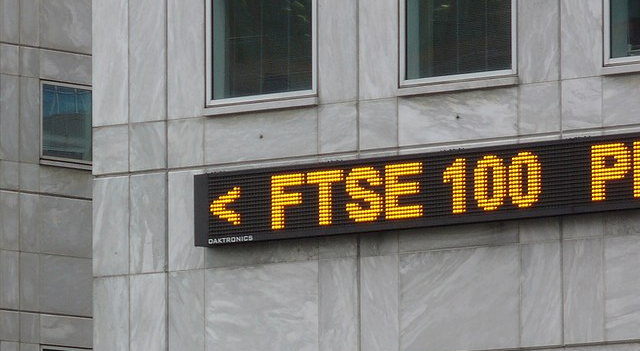
    European stocks decline as oil surges amid escalating Iran conflict: DAX, CAC, FTSE100

    European equity markets opened the week sharply lower on Monday as oil prices spiked, with escalating tensions in the Middle East raising concerns about disruptions to global energy supplies.

    At 08:05 GMT, Germany’s DAX index was down 2.1%, France’s CAC 40 had fallen 2.4%, and the UK’s FTSE 100 slipped 1.6%.

    Crude jumps as Middle East tensions intensify

    The situation in the Middle East worsened over the weekend as the United States and Israel launched additional airstrikes across Iran, targeting several locations including oil storage facilities.

    At the same time, major regional producers — Kuwait, Iran and the United Arab Emirates — have reduced output, while tanker movements through the Strait of Hormuz have nearly stopped since hostilities began roughly a week ago. The narrow waterway typically carries about one-fifth of global oil shipments.

    These developments have driven crude prices above $110 per barrel, levels not seen since Russia’s invasion of Ukraine in 2022. If the conflict persists, analysts warn that prices could potentially approach record levels around $150 per barrel.

    Brent crude futures jumped 15% to $106.55 per barrel, while U.S. West Texas Intermediate futures climbed 12% to $101.92 per barrel.

    No end in sight

    Oil prices had already been rising last week, although not as dramatically, as many investors initially believed the conflict might remain short-lived and that global oversupply would eventually push crude prices lower.

    However, several reports indicate that Iran has appointed Mojtaba Khamenei, son of the assassinated Ayatollah Ali Khamenei, as the country’s new Supreme Leader on Sunday. The move suggests the leadership is unlikely to soften its stance in the near term.

    U.S. President Donald Trump has already stated that he views Mojtaba Khamenei as an “unacceptable” choice, raising the prospect of further escalation.

    Trump also addressed the surge in oil prices, saying that short-term increases were a “small price to pay” for eliminating Iran’s nuclear threat. Rising global energy prices are already beginning to affect fuel costs at gas stations across the United States.

    Concerns about global economic conditions

    Beyond geopolitical developments, the European corporate calendar is quiet on Monday with no major earnings releases scheduled, following what has generally been a relatively solid quarter.

    On the economic front, data released earlier showed that German factory orders plunged 11.1% in January — a much steeper drop than the 4.2% decline economists had expected and a sharp reversal from the 6.4% increase recorded the previous month.

    German industrial production also declined by 0.5% in January, following a 1.0% fall in the preceding month.

    Meanwhile, worries about the broader global economy intensified late last week after data revealed the U.S. economy unexpectedly shed jobs in February and the unemployment rate rose to 4.4%. The figures could indicate weakening labor market conditions, potentially placing the Federal Reserve in a difficult position as it balances slowing growth against the inflationary impact of higher oil prices.

  • FTSE 100 Drops as Oil Surges Above $100 and Pound Holds Near $1.33

    FTSE 100 Drops as Oil Surges Above $100 and Pound Holds Near $1.33

    UK equities opened the week lower on Monday as rising geopolitical tensions in the Middle East pushed oil prices above $100 per barrel, weighing on investor sentiment across global markets. European equities also declined while the pound traded near $1.33 against the US dollar.

    As of 08:36 GMT, the FTSE 100 had fallen about 1.6%. The British pound weakened by roughly 0.8% against the dollar to $1.3306. Elsewhere in Europe, Germany’s DAX dropped around 2.3%, while France’s CAC 40 declined about 2.6%.

    Energy markets were a key driver of the negative sentiment. Brent crude futures climbed to approximately $104.31 by 08:41 GMT as investors reacted to the escalating conflict in the Middle East, raising concerns over potential disruptions to global oil supply.

    Experts weigh in

    Analysts at Jefferies noted that recent attention in financial markets has centred on European and UK interest rate expectations. Current market pricing suggests more than 1.5 rate hikes from the European Central Bank and fewer than one interest rate cut from the Bank of England in 2026.

    According to the firm, recent moves in short-term interest rate markets appear largely driven by position adjustments rather than a shift in inflation expectations.

    Jefferies maintains its base-case view that the ECB will keep policy unchanged this year. Even with oil prices climbing, analysts believe central banks are unlikely to react unless crude remains above $100 for a prolonged period and begins generating broader inflationary pressures.

    If oil prices fall back below $80 within roughly three months, the firm does not expect any meaningful impact on ECB policy decisions.

    UK round-up

    M&C Saatchi (LSE:SAA) said Monday that chief executive Zaid Al-Qassab will step down from his role and leave the board on 31 March 2026 by mutual agreement with the company.

    Current non-executive chair Dame Heather Rabbatts will take on the role of interim executive chair while the company conducts a formal search for a permanent CEO. During the transition period, she will work with senior leadership and an operating board formed from the company’s executive team to continue executing its growth strategy.

    Separately, GSK plc (LSE:GSK) announced a licensing agreement with Italian pharmaceutical group Alfasigma S.p.A., granting it worldwide exclusive rights to develop, manufacture and commercialise linerixibat.

    Linerixibat is an investigational ileal bile acid transporter (IBAT) inhibitor being studied for the treatment of cholestatic pruritus in patients with primary biliary cholangitis. The therapy is currently under regulatory review in multiple regions including the United States, European Union, United Kingdom, China and Canada.

    The drug has received Orphan Drug Designation in the US, EU and Japan, and has also been granted priority review in China for the treatment of cholestatic pruritus associated with primary biliary cholangitis.

  • GSK Licenses Global Rights to Linerixibat to Alfasigma in $300m Deal

    GSK Licenses Global Rights to Linerixibat to Alfasigma in $300m Deal

    GSK plc (LSE:GSK) has agreed to grant Alfasigma S.p.A. worldwide exclusive rights to develop, manufacture and commercialise linerixibat, an investigational therapy being studied for cholestatic pruritus in patients with primary biliary cholangitis (PBC).

    Linerixibat is an ileal bile acid transporter (IBAT) inhibitor currently undergoing regulatory review across several markets, including the United States, the European Union, the United Kingdom, China and Canada. The treatment has received Orphan Drug Designation in the US, EU and Japan, while regulators in China have granted it priority review status for the same indication.

    Under the terms of the agreement, GSK will receive an upfront payment of $300m from the Italian pharmaceutical company, with an additional $100m payable upon approval from the US Food and Drug Administration. The FDA’s target decision date under the Prescription Drug User Fee Act (PDUFA) is set for 24 March.

    GSK may also receive a further $20m following approvals in the EU and UK, along with up to $270m in additional milestone payments tied to sales performance. In addition, the company will receive tiered double-digit royalties on global net sales of the drug.

    Tony Wood, GSK’s Chief Scientific Officer, said the agreement enables the company to concentrate resources on treatments targeting chronic liver diseases such as chronic hepatitis B, metabolic dysfunction-associated steatohepatitis (MASH) and alcohol-related liver disease (ALD), conditions that collectively account for around two million deaths each year.

    Regulatory submissions for linerixibat are supported by data from the Phase III GLISTEN trial, which met its primary and key secondary endpoints. The study demonstrated a rapid and sustained reduction in cholestatic pruritus, as well as improvements in sleep disruption related to itching, compared with placebo.

    The drug’s safety profile was reported to be consistent with earlier clinical studies and with the expected mechanism of IBAT inhibition. Linerixibat has not yet been approved for use in any market.

  • KEFI Advances Tulu Kapi Gold Project With Key Contracts and Financing Progress

    KEFI Advances Tulu Kapi Gold Project With Key Contracts and Financing Progress

    KEFI Gold and Copper (LSE:KEFI) has announced further progress toward developing the Tulu Kapi gold project in Ethiopia, including the award of an engineering, supply and labour hire contract to Lycopodium.

    The company said the appointment supports its development timetable, which targets first gold production in early 2028 and full-scale output by mid-2028. KEFI also confirmed that major project agreements, including loan facilities, have been finalised and are largely executed, with the remaining documentation expected to be completed in the coming weeks.

    Funding progress has also advanced, with commitments secured for approximately US$310m of the project’s US$330m development budget. The company said this level of support demonstrates strong backing from project partners and financiers as the project moves closer to the construction phase.

    KEFI highlighted coordinated progress across several key partners involved in the development. Ethiopian Electric Power Company is responsible for grid connection, while the Ethiopian Roads Authority is developing new access routes. Lycopodium will oversee the process plant and infrastructure, Dashen is managing resettlement housing, and BCM is handling bulk earthworks and mining activities.

    With the financing and construction arrangements nearing completion, the company said the Tulu Kapi project is transitioning from the planning stage into implementation. This shift is expected to reduce funding risks and strengthen KEFI’s strategy to bring the long-planned Ethiopian gold asset into production.

    Despite these operational milestones, the company’s outlook remains constrained by its financial profile as an early-stage developer, including no current revenue, ongoing losses and continued cash burn. Technical indicators are relatively supportive, with the share price trading above key moving averages and a positive MACD reading, although valuation metrics remain limited due to negative earnings and the absence of a dividend yield.

    More about KEFI Gold and Copper

    KEFI Gold and Copper plc is a mining exploration and development company focused on gold and copper assets in emerging markets. Its primary project is the Tulu Kapi gold development in Ethiopia, which is being advanced through its subsidiary Tulu Kapi Gold Mines S.C. The company works with a consortium of international and local contractors, financiers and government stakeholders to develop and operate large-scale precious metals projects.

  • Clarkson Raises Dividend Despite Lower Profits as Order Book and Cash Position Strengthen

    Clarkson Raises Dividend Despite Lower Profits as Order Book and Cash Position Strengthen

    Clarkson PLC (LSE:CKN) reported a decline in underlying profit before tax for 2025 to £90.6m, down from £115.3m in the previous year, while revenue edged lower to £631.4m. The company attributed the softer performance to a challenging operating environment marked by geopolitical tensions, tariffs and sanctions that weighed on activity during the first half of the year.

    Despite the reduction in earnings, Clarkson increased its full-year dividend by 3% to 112p, extending its record of annual dividend growth to 23 consecutive years. The group also highlighted strong cash generation, with free cash resources rising to £232.0m by the end of the period.

    Management noted that trading conditions improved during the second half of 2025 and that this momentum has continued into early 2026. The company is supported by a larger forward order book valued at US$244m, alongside stronger spot market activity compared with the same period a year earlier.

    Clarkson also announced that long-serving chief financial officer and chief operating officer Jeff Woyda plans to retire in 2026. The board has begun a search for a successor while emphasising that the company’s diversified operations, strong balance sheet and continued investment in talent and technology position it to manage ongoing macroeconomic and geopolitical uncertainty.

    From an investment perspective, Clarkson continues to demonstrate solid financial performance, supported by steady revenues and profits and a robust balance sheet. Technical indicators suggest a positive trend in the share price, though elevated levels may indicate potential near-term overbought conditions. The company’s valuation appears balanced, with a reasonable price-to-earnings ratio and an attractive dividend yield. Insider share purchases have also helped reinforce investor confidence.

    More about Clarkson

    Clarkson PLC is a FTSE 250 company and a global provider of integrated services and investment banking capabilities for the shipping and offshore sectors. Founded in 1852, the group offers shipbroking, market research, logistics support and capital markets advisory to clients worldwide.

    The company operates through more than 60 offices across 25 countries and employs over 2,250 people across four business divisions. Acting as a key intermediary in global seaborne trade and commodity markets, Clarkson continues to invest in digital platforms and data-driven tools while leveraging its cash-generative model and strong balance sheet to support long-term growth.

  • Phoenix Copper Dismisses Chairman and CFO After Probe Into Undisclosed Payments

    Phoenix Copper Dismisses Chairman and CFO After Probe Into Undisclosed Payments

    Phoenix Copper (LSE:PXC) has removed executive chairman Marcus Edwards-Jones and chief financial officer Richard Wilkins following an internal investigation that uncovered undisclosed related-party transactions and unauthorised payments.

    The inquiry found that approximately US$1.77m in payments were made between 2016 and 2025 to Lloyd Edwards-Jones S.A.S., a company owned and directed by Edwards-Jones, without the knowledge or approval of the board. The investigation also concluded that Wilkins shared in the proceeds. According to the company, these payments should have been disclosed as related-party transactions under market regulations but were not.

    In addition, the investigation identified about £0.61m in further unauthorised payments connected to bond financing arrangements, some of which were made despite explicit instructions from the board not to proceed. Phoenix Copper said it intends to pursue recovery of the funds involved, and both former executives have indicated their willingness to cooperate with the process.

    To stabilise governance following the findings, independent non-executive director and audit committee chair Catherine Evans has been appointed interim non-executive chair. She is working alongside the chief executive, interim CFO, advisory board and external advisers to strengthen oversight and maintain relationships with stakeholders. The company is also outsourcing its company secretarial services and has informed its auditor, Crowe UK LLP, of the historical transactions. At present, management expects additional related-party disclosures to be required rather than restatements of previous financial statements.

    The governance developments come as the company continues to face funding pressures. Phoenix Copper said its current cash resources are expected to cover obligations only until the end of the second quarter of 2026 unless new financing is secured. The company is in discussions to amend a short-term loan facility with Riverfort Global Opportunities and renegotiate terms with Indigo Capital, and plans to update shareholders once these negotiations are concluded.

    The group’s outlook remains constrained by weak financial performance, including the absence of revenue, widening losses and increasing cash burn, which heightens the risk of further funding requirements and potential shareholder dilution. Technical indicators are mixed but generally weak, with the share price trading below key moving averages, while valuation metrics remain limited due to negative earnings and the lack of a dividend.

    More about Phoenix Copper

    Phoenix Copper is an AIM-listed exploration and emerging mining company focused on base and precious metals projects in the United States. Its flagship asset is the Empire Mine in Idaho’s historic Alder Creek mining district, where the company holds an 80% interest and has significantly expanded the open-pit copper, gold and silver resource through drilling since 2017.

    The Empire underground mine beneath the proposed open pit has a long history of high-grade production including copper, gold, silver, zinc and tungsten, and the company published its first mineral reserve statement for the open-pit project in 2024. Phoenix Copper also controls several additional historic mines in the district, the Red Star silver-lead discovery, the Navarre Creek gold exploration project, and two cobalt properties within the Idaho Cobalt Belt. The company is listed on AIM in London and also trades on the OTCQX market in New York.

  • Ferrexpo Restarts Production in Ukraine While Swiss Banking Issue Emerges

    Ferrexpo Restarts Production in Ukraine While Swiss Banking Issue Emerges

    Ferrexpo (LSE:FXPO) has resumed production at its Ferrexpo Poltava Mining (FPM) operation in Ukraine after a temporary halt in January, supported by improved availability and pricing of both domestic and imported electricity.

    Currently, one pellet production line is back in operation, and the company has restarted exports of its premium iron ore pellets to customers across Eastern and Central Europe. Ferrexpo is utilising its own rail wagon fleet to support logistics, demonstrating continued operational resilience despite ongoing infrastructure and energy challenges linked to the regional environment.

    Separately, the company disclosed that its Swiss trading subsidiary, Ferrexpo AG, holds approximately US$3 million in deposits with MBaer Merchant Bank, which recently had its banking licence revoked and has entered liquidation. Ferrexpo said it currently expects to recover the full amount of the deposit.

    While the issue is not expected to materially affect operations in Ukraine, the company noted that difficulties in establishing alternative cross-border banking arrangements for Ferrexpo AG could create risks if not resolved promptly.

    From an outlook perspective, Ferrexpo continues to face financial pressures stemming from declining revenue and profitability. However, technical indicators for the stock suggest stronger momentum in the market. Valuation remains challenging due to negative earnings. Recent corporate developments highlight both the operational challenges facing the company and its ability to maintain production and exports in a difficult environment.

    More about Ferrexpo

    Ferrexpo is a Swiss-headquartered iron ore producer with major mining and processing operations in Ukraine and a primary listing on the London Stock Exchange under the ticker FXPO. The company supplies high-grade iron ore pellets to steelmakers around the world, positioning its products as a higher-efficiency and lower-carbon feedstock for modern steel production. Ferrexpo has more than 50 years of operational history in the iron ore sector.

  • Helix Exploration Secures First Helium Transport Trailer as Supply Shortage Intensifies

    Helix Exploration Secures First Helium Transport Trailer as Supply Shortage Intensifies

    Helix Exploration (LSE:HEX) has leased its first high-pressure jumbo tube trailer, establishing dedicated capacity to transport compressed helium from its Rudyard Helium Project as the company moves closer to operational readiness.

    The trailer will enable the company to begin handling helium logistics as production approaches, and Helix intends to expand its fleet in the coming months to align with expected output growth and customer delivery commitments.

    The development comes at a time of tightening global helium supply. A significant shortage has emerged following the shutdown of all three helium plants in Qatar and the closure of the Strait of Hormuz, events that have driven spot prices sharply higher and raised concerns for industries reliant on helium, including semiconductor manufacturing and other advanced technologies.

    By advancing the Rudyard project as an independent helium source in the United States, Helix aims to provide supply that is not tied to LNG processing or vulnerable to geopolitical shipping disruptions. The company believes this could position the project as a strategic domestic supply option for U.S. industrial and technology sectors.

    More about Helix Exploration Plc

    Helix Exploration Plc is a helium exploration and development company focused on the Montana Helium Fairway in northern Montana. Its flagship asset, the Rudyard Helium Project, targets helium and nitrogen gas within the Souris and Red River geological formations. The company aims to bring a domestic helium supply to market by leveraging existing infrastructure and relatively low-cost processing methods, supporting U.S. industry with a dedicated helium source.

  • Cordel Extends Genesee & Wyoming Contract With Expansion Into Canadian Rail Network

    Cordel Extends Genesee & Wyoming Contract With Expansion Into Canadian Rail Network

    Cordel Group PLC (LSE:CRDL) has secured an extension to its agreement with Genesee & Wyoming Inc. that expands the deployment of its rail analytics technology into the customer’s Canadian operations.

    Under the upgraded contract, Cordel’s systems will now cover seven regional subdivisions within Genesee & Wyoming’s Canadian division, marking the company’s first deployment with this customer in Canada. To date, more than 1,000 miles of rail corridor data have already been collected and will be processed through Cordel’s artificial intelligence platform.

    The captured data is expected to be analysed and delivered within approximately two months, with the results integrated into Genesee & Wyoming’s enterprise-wide Cordel Connect system. The expansion highlights the scalability of Cordel’s analytics platform and supports management’s confidence in achieving its full-year targets.

    Despite continued commercial progress and strong revenue growth, the company’s outlook remains constrained by weak profitability and lower-quality cash flow. Technical indicators also remain negative, with the share price trading below major moving averages. Valuation metrics provide limited support due to the company’s loss-making profile and the absence of dividend yield data.

    More about Cordel Group PLC

    Cordel Group PLC is an artificial intelligence platform provider specialising in transport corridor analytics for the global rail industry. The company develops integrated hardware and software solutions that capture and analyse large datasets from rail networks, using LiDAR sensors and advanced AI algorithms to monitor infrastructure, improve operational efficiency and support maintenance planning for freight and passenger rail operators worldwide.