
Blog

  • FTSE 100 Hits New Milestone on Strong Earnings and Trade Optimism

    FTSE 100 Hits New Milestone on Strong Earnings and Trade Optimism

    British stocks rose on Thursday, driven by better-than-expected earnings from U.K. companies and positive developments in EU-U.S. trade talks. By 11:29 GMT, the FTSE 100 index climbed about 1% to 9,147.90, while the British pound dipped 0.2% to $1.35.

    European Markets and Trade Developments

    Germany’s DAX gained 0.6%, whereas France’s CAC 40 slipped 0.1%. Meanwhile, reports indicate the EU and U.S. are nearing a trade agreement to set tariffs on European imports at 15%, with exemptions on aircraft, spirits, and medical devices. The European Commission emphasized its priority to finalize the deal and prevent the scheduled 30% U.S. tariffs in August.

    During Indian Prime Minister Narendra Modi’s visit, Britain and India signed a free trade agreement aimed at reducing tariffs on textiles, whisky, and cars, boosting business opportunities. U.K. Prime Minister Keir Starmer highlighted the importance of building deeper global partnerships in this new era.

    Corporate Earnings Boost Market

    • Reckitt Benckiser (LSE:RKT) shares soared nearly 10% after raising its full-year revenue outlook, fueled by 1.9% like-for-like sales growth, beating forecasts despite weaker demand in North America and Europe.
    • Vodafone Group (LSE:VOD) shares rose over 3% following a 3.9% revenue increase to €9.4 billion, supported by the Three U.K. consolidation and growth in Africa.
    • ITV PLC (LSE:ITV) climbed more than 8% after reporting stronger-than-expected advertising revenue and solid studio division growth.
    • Lloyds Banking Group (LSE:LLOY) shares gained on a 16% beat in second-quarter pre-tax profit, aided by impairment releases and lower remediation costs.
    • BT Group (LSE:BT.A) shares increased 5%, with first-quarter operating profit meeting expectations and naming Virgin Media O2’s CFO as finance chief.
    • Centrica (LSE:CNA) shares rose after better-than-expected EBIT and a 22% interim dividend increase.
    • Relx PLC (LSE:REL) reported 7% revenue growth and 10% earnings per share growth, lifting shares over 1%.
    • Howden Joinery (LSE:HWDN) shares surged 9.9% after stronger-than-expected half-year sales growth.

    Mixed Results

    • Wizz Air (LSE:WIZZ) shares fell following weaker-than-expected first-quarter results and cautious revenue outlook, with €1.43 billion revenue slightly below estimates.
    • Discoverie Group (LSE:DSCV) shares declined 2.9% after reporting 3% first-quarter sales growth in line with expectations but maintaining cautious full-year earnings guidance.

    This content is for informational purposes only and does not constitute financial, investment, or other professional advice. It should not be considered a recommendation to buy or sell any securities or financial instruments. All investments involve risk, including the potential loss of principal. Past performance is not indicative of future results. You should conduct your own research and consult with a qualified financial advisor before making any investment decisions.


  • TMGM Joins NBA Spotlight as Brooklyn Nets Sponsor

    TMGM Joins NBA Spotlight as Brooklyn Nets Sponsor

    In a bold move that bridges Wall Street and the hardwood, Australian-based CFDs broker TMGM has announced a multiyear sponsorship deal with the NBA’s Brooklyn Nets, marking a significant step in its global brand expansion.

    The partnership, set to kick off with the 2025–26 NBA season, will see TMGM’s branding featured courtside and across digital platforms at Barclays Center, the Nets’ home arena. While TMGM is not licensed to operate in the United States, the firm is leveraging the NBA’s international reach—particularly in Asia—to amplify its presence in key growth markets.

    The announcement comes ahead of the Nets’ preseason tour in Macau this October, where they’ll face off against the Phoenix Suns in a pair of exhibition games. The timing aligns with TMGM’s strategic push into the Far East, Africa, and Latin America, regions where the broker has been actively expanding its footprint.

    Nick Yang, TMGM’s Chief Commercial Officer, described the partnership as “a fusion of performance and precision,” adding that the collaboration aims to promote financial literacy and create dynamic touchpoints between elite sports and global trading.

    Catherine Carlson, Executive Vice President of Global Partnerships at BSE Global, echoed the sentiment: “TMGM shares our vision for global engagement and innovation. Together, we’re crafting a sponsorship model that goes beyond branding—it’s about cultural relevance and meaningful connection.”

    TMGM, headquartered in Sydney and regulated by the Vanuatu Financial Services Commission, offers trading across forex, indices, commodities, and equities. The firm has built a reputation for speed, transparency, and trader-focused tools, and now seeks to align its brand with the discipline and ambition embodied by the Brooklyn Nets.

    The deal mirrors similar moves by other brokers, including Plus500’s sponsorship of the Chicago Bulls, as financial firms increasingly tap into the NBA’s global appeal to reach new audiences.

    TMGM is positioning itself as a tech-savvy, globally regulated broker with a strong emphasis on execution speed, product diversity, and strategic branding. While it may not yet rival the educational depth of some competitors, its infrastructure and global partnerships make it a compelling choice for traders seeking performance and reach.

  • Reckitt shares surge after Dettol maker raises annual revenue forecast following strong Q2 sales

    Reckitt shares surge after Dettol maker raises annual revenue forecast following strong Q2 sales

    Shares of Reckitt (LSE:RKT) climbed nearly 10% on Thursday after the U.K.-based consumer goods firm boosted its full-year revenue guidance, following a second-quarter sales performance that surpassed expectations. The company’s solid growth in emerging markets helped counterbalance softer demand in North America and Europe.

    The producer of well-known brands like Lysol and Dettol reported a 1.9% increase in like-for-like net revenue for the quarter, slightly above analysts’ forecast of 1.7%.

    Robust sales in China, India, and Latin America offset weaker trends in developed economies. North America and Europe saw slower performance, impacted by cautious consumer sentiment and a planned shelf reset for its Mucinex cold and flu product due to reformulation.

    “We delivered excellent growth in emerging markets and navigated a challenging consumer environment in our developed markets,” said CEO Kris Licht.

    At 07:55 GMT, Reckitt’s shares were trading up 9.7% at 5,528p, reaching their highest point since early 2024, and were on track for their largest single-day increase in over 20 years.

    Operating profit for the first half of 2025 hit £1.71 billion ($2.32 billion), exceeding the consensus estimate of £1.66 billion.

    Looking ahead, Reckitt raised its core like-for-like revenue growth forecast for 2025 to above 4%, up from the previous range of 3% to 4%. For the entire group, it now expects like-for-like revenue growth between 3% and 4%, tightening its earlier guidance of 2% to 4%.

    Jefferies analyst David Hayes commented, “This is a quality print we think. The group beat on organic sales in Q2 is led by the Core operation (which is the focus). Emerging market momentum is now well established, with good growth even in tougher markets for many peers (China and LatAm).”

    The company’s board also announced an interim dividend of 84.4 pence per share, up from 80.4 pence a year ago, along with a £1 billion share buyback plan scheduled over the next 12 months.

    This content is for informational purposes only and does not constitute financial, investment, or other professional advice. It should not be considered a recommendation to buy or sell any securities or financial instruments. All investments involve risk, including the potential loss of principal. Past performance is not indicative of future results. You should conduct your own research and consult with a qualified financial advisor before making any investment decisions.

  • CVS Group announces 5.4% revenue increase in FY25 trading update

    CVS Group announces 5.4% revenue increase in FY25 trading update

    CVS Group Plc (LSE:CVSG) revealed on Thursday that its revenue for continuing operations grew by approximately 5.4% to £673.2 million in the fiscal year 2025 trading update.

    The veterinary services provider reported a like-for-like sales increase of around 0.2%, with stronger performance noted in the fourth quarter. The company anticipates its adjusted EBITDA margin will rise to roughly 20%, with adjusted EBITDA reaching about £134 million.

    CVS Group also announced a delay in its preliminary full-year results publication, now scheduled for October 7, pushed back from the original September 25 date. This postponement allows more clarity on the Competition and Markets Authority’s (CMA) provisional ruling, expected in September 2025.

    During the fiscal year, CVS Group expanded its footprint in Australia, completing seven acquisitions that added 15 sites for a total spend of £29.2 million. Following the period end, two further deals were closed, growing the Australian portfolio to 30 practices across 45 locations. The company intends to continue making acquisitions in Australia throughout fiscal year 2026.

    In contrast, merger and acquisition activity in the UK remains on hold pending the CMA’s market investigation outcome.

    Earlier, in April 2025, CVS Group divested its Crematoria business for an initial cash consideration of £42 million, equating to 10 times adjusted EBITDA.

    The company expects its leverage ratio to drop to approximately 1.2 times by June 30, down from 1.66 times a year earlier, with committed but undrawn bank facilities exceeding £200 million.

    CVS Group has reaffirmed its commitment to invest between £30 million and £50 million annually—£33 million was invested in FY25 compared to £42 million in FY24—and to pursue over £50 million in overseas acquisitions, aiming to maintain leverage below 2.0 times.

    This content is for informational purposes only and does not constitute financial, investment, or other professional advice. It should not be considered a recommendation to buy or sell any securities or financial instruments. All investments involve risk, including the potential loss of principal. Past performance is not indicative of future results. You should conduct your own research and consult with a qualified financial advisor before making any investment decisions.

  • RELX posts solid H1 2025 performance with 7% rise in revenue

    RELX posts solid H1 2025 performance with 7% rise in revenue

    Relx PLC (LSE:REL), the international leader in information analytics and decision-making solutions, announced on Thursday robust financial results for the first half of 2025, recording an underlying revenue increase of 7% to £4,741 million.

    The adjusted operating profit grew by 9% on an underlying basis, reaching £1,652 million, while adjusted earnings per share rose 10% at constant currency to 63.5p.

    RELX declared an interim dividend of 19.5p, up 7% from last year’s 18.2p, scheduled for payment on September 11, with an ex-dividend date of August 7.

    The company reported maintaining a strong balance sheet, with a net debt to EBITDA ratio of 2.2x, and achieved full (100%) adjusted cash flow conversion throughout the period.

    In the first half, RELX completed three acquisitions totaling £262 million and has repurchased £1,000 million of its announced £1,500 million share buyback plan. Since July 1, an additional £75 million has been bought back, with £425 million remaining to be deployed by year-end.

    CEO Erik Engstrom highlighted the performance: “RELX delivered strong revenue and profit growth in the first half of 2025, in line with full year 2024 but with a higher quality growth profile: Risk with continued strong growth, Scientific, Technical & Medical with continued good growth and developing momentum, Legal with a further step up in growth, and Exhibitions now established at strong ongoing growth.”

    The company confirmed its full-year guidance, anticipating “another year of strong underlying growth in revenue and adjusted operating profit, as well as strong growth in adjusted earnings per share on a constant currency basis.”

    RELX’s operating margin improved to 34.8% from 34.1% a year ago, a result the company attributes to its focus on continuous process innovation that keeps cost increases below revenue gains.

    Reported operating profit was £1,490 million, slightly higher than £1,431 million from the first half of 2024. Reported earnings per share were 52.9p, compared to 52.6p in the previous year.

    The company pointed out that its “improving long-term growth trajectory continues to be driven across the group by the ongoing shift in business mix towards higher growth analytics and decision tools that deliver enhanced value to our customers.”

    This content is for informational purposes only and does not constitute financial, investment, or other professional advice. It should not be considered a recommendation to buy or sell any securities or financial instruments. All investments involve risk, including the potential loss of principal. Past performance is not indicative of future results. You should conduct your own research and consult with a qualified financial advisor before making any investment decisions.
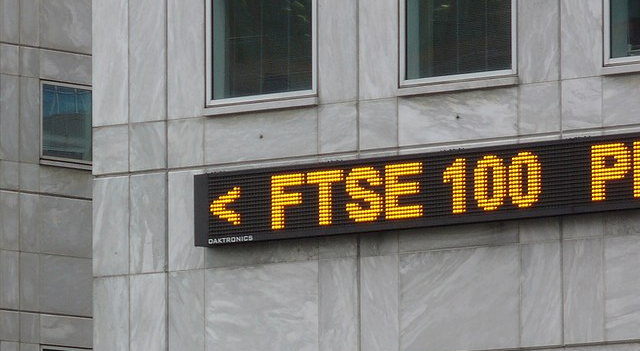
  • DAX, CAC, FTSE100, European equities climb on trade deal hopes; earnings updates and ECB meeting in focus

    DAX, CAC, FTSE100, European equities climb on trade deal hopes; earnings updates and ECB meeting in focus

    European stock markets gained momentum Thursday amid rising optimism over a potential trade agreement between the U.S. and the European Union. Investors also digested fresh corporate earnings reports ahead of a key European Central Bank policy meeting.

    By 08:30 GMT, Germany’s DAX index had advanced 1.1%, France’s CAC 40 rose 0.4%, and the U.K.’s FTSE 100 increased 0.8%.

    Trade deal optimism fuels markets

    Global market sentiment received a lift earlier this week following the U.S.-Japan trade deal announcement, raising expectations that Washington may soon finalize a similar pact with the EU, a significant trading partner.

    According to the Financial Times on Wednesday, the EU and U.S. are close to an agreement that would set tariffs on European imports at 15%, with both sides exempting certain products such as aircraft, spirits, and medical devices from tariffs.

    The EU is simultaneously preparing a retaliatory tariff package potentially worth €93 billion ($109 billion), with rates up to 30%, should no deal be reached by August 1, the report stated.

    The European Commission emphasized on Wednesday its priority remains to secure a negotiated settlement with the U.S. to avoid the 30% tariffs expected to take effect in early August.

    Corporate earnings highlight regional challenges

    Back in Europe, quarterly earnings continued to command attention, revealing mixed performances among major firms.

    Deutsche Bank (TG:DBK) reaffirmed its full-year outlook after posting better-than-expected Q2 profits, supported by steady revenue growth across client businesses despite a volatile market environment.

    French energy giant TotalEnergies (EU:TTE) reported a 23% drop in Q2 earnings, marking its weakest quarter in four years, as increased upstream output failed to compensate for lower returns from oil, gas, and refined products.

    Mining heavyweight Anglo American (LSE:AAL) disclosed a 13% decline in copper output and a 26% drop in rough diamond production for the first half of the year amid subdued demand.

    STMicroelectronics (NYSE:STM) posted a $97 million net loss for Q2 2025, citing heavy restructuring expenses as a significant drag.

    Italian luxury brand Moncler (BIT:MONC) saw a slight decline in Q2 sales, affected by reduced tourist activity despite strong domestic demand in key U.S. and Chinese markets.

    French bank BNP Paribas (EU:BNP) confirmed its outlook after a revenue increase in Q2, expecting growth acceleration in H2 driven by its Commercial and Personal Banking division.

    Nestlé (TG:NESR) reported better-than-expected first-half organic sales growth and announced a strategic review of its vitamins segment, potentially leading to divestments.

    Across the Atlantic, Alphabet (NASDAQ:GOOGL), Google’s parent company, delivered strong earnings after Wednesday’s market close, while Tesla (NASDAQ:TSLA) CEO Elon Musk warned of “a few rough quarters” after the electric vehicle maker reported a disappointing Q2.

    German consumer confidence dips

    On the economic front, German consumer sentiment is projected to weaken further in August, marking a second straight monthly decline. The GfK consumer confidence index unexpectedly dropped to -21.5 from -20.3 in July.

    Additionally, new car sales across Europe fell more than 5% in June, according to the European Automobile Manufacturers Association on Thursday.

    These indicators set the stage for the European Central Bank’s meeting later in the day, where policymakers are widely expected to hold the deposit rate steady at 2%, following a 25 basis point cut last month — the eighth reduction in 12 months.

    Oil prices gain on U.S. inventory drop

    Oil prices climbed on Wednesday after data revealed a steep decline in U.S. crude inventories, while investors awaited further updates on trade negotiations to gauge their impact on the global economy.

    At 04:30 ET, Brent crude futures rose 0.6% to $68.94 per barrel, and U.S. West Texas Intermediate futures increased 0.8% to $65.77 per barrel.

    Both benchmarks had fallen over the previous four sessions amid concerns that escalating trade tensions could hurt energy demand.

    The Energy Information Administration reported a 3.17 million-barrel drawdown in U.S. crude stockpiles last week, significantly exceeding forecasts of a 1.6 million-barrel decline.

    With commercial crude stocks approximately 9% below the five-year seasonal average at around 419 million barrels, this sharp decrease signals a tightening supply landscape.

    This content is for informational purposes only and does not constitute financial, investment, or other professional advice. It should not be considered a recommendation to buy or sell any securities or financial instruments. All investments involve risk, including the potential loss of principal. Past performance is not indicative of future results. You should conduct your own research and consult with a qualified financial advisor before making any investment decisions.

  • Oil Prices Climb Amid Steep U.S. Inventory Drop; Trade Deal Developments in Spotlight

    Oil Prices Climb Amid Steep U.S. Inventory Drop; Trade Deal Developments in Spotlight

    Oil prices edged up in Asian markets on Thursday, buoyed by data revealing a significant drop in U.S. crude inventories, while investors remained cautiously attentive to the progress of trade negotiations ahead of President Donald Trump’s looming deadline.

    By 22:18 ET (02:18 GMT), September Brent crude futures had risen 0.3% to $68.69 per barrel, with West Texas Intermediate (WTI) contracts also up 0.3% at $65.45 per barrel.

    Both benchmarks have experienced declines over the past four sessions, as concerns grow over the potential impact of tariffs set to take effect on August 1, which could dampen energy demand.

    U.S. Crude Stocks Show Sharp Decline, EIA Reports

    According to the Energy Information Administration (EIA) on Wednesday, U.S. crude inventories plunged last week as refinery output increased and exports stayed strong, providing upward momentum for oil prices.

    Crude supplies shrank by 3.17 million barrels in the week ending July 19, significantly surpassing the anticipated 1.6 million-barrel reduction forecasted by analysts.

    With commercial inventories now roughly 9% below the five-year seasonal average, hovering near 419 million barrels, the data indicates tightening supply conditions in the market.

    Gasoline inventories also dropped by 1.7 million barrels, more than the expected decline of 900,000 barrels, while distillate stocks climbed by 2.9 million barrels as seasonal restocking continued.

    Following the report, oil prices gained ground, supported by signs of constrained supply and sustained demand in the U.S.

    Trade Talks Take Center Stage Following U.S.-Japan Agreement

    President Trump announced a new trade agreement with Japan on Wednesday that set tariffs on Japanese imports at 15%, down from a previously proposed 25%.

    Under the deal, Japan committed to invest $550 billion in the U.S. economy and opened its markets to a range of American exports, including automobiles, farm products, and energy resources.

    This agreement marks the most substantial in a series of trade deals the White House has negotiated ahead of the August 1 tariff deadline, fueling optimism that other countries may reach similarly favorable terms.

    Nevertheless, investors remain cautious, closely watching developments with the European Union, especially after the bloc signaled it may retaliate against U.S. tariffs.

    This content is for informational purposes only and does not constitute financial, investment, or other professional advice. It should not be considered a recommendation to buy or sell any securities or financial instruments. All investments involve risk, including the potential loss of principal. Past performance is not indicative of future results. You should conduct your own research and consult with a qualified financial advisor before making any investment decisions.

  • Gold Prices Slide Further as U.S.-Japan Trade Deal and AI Rally Dampen Safe Haven Demand

    Gold Prices Slide Further as U.S.-Japan Trade Deal and AI Rally Dampen Safe Haven Demand

    Gold prices continued to decline in Asian markets on Thursday, extending losses from earlier in the week as renewed optimism from a U.S.-Japan trade agreement and strong technology sector earnings encouraged investors to take on more risk, reducing the appeal of traditional safe havens like gold.

    After climbing to over a one-month high earlier this week, gold gave back most of its gains on Wednesday and Thursday amid improving market sentiment. Spot gold dropped 0.3% to $3,378.93 per ounce, while gold futures slipped 0.4% to $3,384.60 per ounce by 01:50 ET (05:50 GMT).

    Despite this pullback, gold has remained mostly confined within a $200 trading range throughout 2025, struggling to regain the record levels above $3,500 per ounce reached in April. However, demand for the precious metal remains relatively steady, supported by ongoing uncertainties in the U.S. economy.

    Risk Appetite Rises on Trade Deal and AI Optimism, Weighing on Precious Metals

    The surge in investor confidence, sparked largely by the newly announced trade deal between the U.S. and Japan, has pressured prices across gold and other precious metals. Under the agreement, Japanese exports will face a 15% U.S. tariff—a notable reduction from the 25% initially proposed by the Trump administration.

    This breakthrough has heightened expectations that Washington may finalize additional trade agreements before the August 1 deadline for imposing higher tariffs on several major economies. Reports also indicate that the European Union is considering a similar 15% tariff trade pact, with India’s deal reportedly close to completion.

    Spot platinum fell 0.4% to $1,416.99 per ounce, and silver dropped 0.6% to $39.06 per ounce, both retreating from earlier weekly gains.

    Investor confidence also received a boost from strong earnings reports in the tech sector. Alphabet (NASDAQ: GOOGL), Google’s parent company, exceeded expectations in its Q2 results, driven by growing demand for artificial intelligence (AI) technologies.

    AI optimism was further fueled by President Trump’s signing of three executive orders on Wednesday aimed at accelerating the industry’s growth in the U.S. Combined with trade deal optimism, this helped push Wall Street to record highs on Wednesday.

    Industrial metals also gained momentum amid improved risk sentiment. On the London Metal Exchange, benchmark copper futures rose 0.1% to $9,942.75 per ton, while COMEX copper futures increased 0.7% to $5.88 per pound, both holding onto solid weekly gains.

    China’s Gold Purchases Decline More Slowly Amid Safe Haven Demand

    China’s gold consumption dipped 3.5% year-on-year in the first half of 2025, a slower decline compared to the 5.6% drop recorded during the same period last year, according to data from China’s state-backed Gold Association.

    The reduced demand was primarily driven by weaker jewelry sales, as higher bullion prices deterred some consumers. However, this was partially offset by strong institutional buying, as ongoing trade tensions and economic uncertainties prompted investors to increase bullion purchases.

    China remains one of the world’s largest gold consumers, with the People’s Bank of China also reportedly increasing its gold reserves in recent months.

    This content is for informational purposes only and does not constitute financial, investment, or other professional advice. It should not be considered a recommendation to buy or sell any securities or financial instruments. All investments involve risk, including the potential loss of principal. Past performance is not indicative of future results. You should conduct your own research and consult with a qualified financial advisor before making any investment decisions.

  • Dollar nudges upward while euro dips ahead of ECB decision

    Dollar nudges upward while euro dips ahead of ECB decision

    On Thursday, the U.S. dollar inched higher but remained near recent lows, whereas the euro eased as investors awaited the upcoming European Central Bank policy announcement.

    At 04:40 ET (08:40 GMT), the Dollar Index, which measures the greenback against six major currencies, edged up 0.1% to 97.002, hovering close to its lowest level in two weeks.

    Over the past week, the index has declined nearly 1.5%, as the dollar struggled to gain traction despite positive developments like the U.S.-Japan trade agreement and talks of a potential deal between the U.S. and the European Union.

    Is a short-term dollar rebound on the horizon?

    Analysts from ING noted in a report, “If the greenback is indeed due a short-term recovery (we still think it is), then that will need to be triggered by data rather than tariff news. But this week has been quiet on data, and that has seemingly allowed some rebuilding of USD shorts.”

    Upcoming economic releases include new home sales, S&P Global purchasing managers’ indices, and weekly jobless claims.

    “Initial claims have been on a five-week downward trend and continuing claims have plateaued since mid-June. With only eight days until the U.S. jobs report, another strong print today can drive nonfarm payrolls expectations a bit higher,” ING added.

    They also highlighted, “Markets still price in 16bp of easing for September, which is the contract where we see the greatest potential for a hawkish repricing driving some dollar recovery.”

    Market participants are also closely watching the Federal Reserve, especially as U.S. President Donald Trump — a vocal critic of Fed Chair Jerome Powell — is scheduled to visit the central bank later Thursday.

    It remains unclear if Trump, who has frequently criticized Powell for not cutting interest rates aggressively enough, will meet with the Fed chief.

    Euro weakens ahead of ECB meeting

    In Europe, EUR/USD slipped 0.1% to 1.1767, with the euro near its highest level in almost four years as investors prepared for the ECB’s latest policy session.

    The ECB is widely expected to keep interest rates unchanged after cutting them eight consecutive times, as officials await developments in the trade negotiations between the European Commission and the United States.

    ING analysts commented, “If the ECB is feeling confident that a trade deal is coming, the risks of a dovish surprise are indeed lower. However, the currency discussion remains a wildcard that poses downside risks for the euro.”

    Meanwhile, GBP/USD declined 0.2% to 1.3549, after a 0.4% gain the previous day.

    The UK government has already secured a trade agreement with the Trump administration, and with inflation remaining high, the UK’s base interest rate is expected to stay among the highest in major economies.

    Yen continues rally

    Elsewhere, USD/JPY fell 0.2% to 146.24, extending the yen’s gains for the fourth day in a row following news of a comprehensive trade deal between Washington and Tokyo that includes a 15% tariff on imported Japanese goods — reduced from an earlier proposal of 25%.

    AUD/USD rose 0.2% to 0.6615, while USD/CNY dipped 0.1% to 7.1522, reflecting the broader optimism sparked by the Japan trade agreement across the region.

    This content is for informational purposes only and does not constitute financial, investment, or other professional advice. It should not be considered a recommendation to buy or sell any securities or financial instruments. All investments involve risk, including the potential loss of principal. Past performance is not indicative of future results. You should conduct your own research and consult with a qualified financial advisor before making any investment decisions.

  • Dow Jones, S&P, Nasdaq, U.S. Futures Steady as Alphabet and Tesla Earnings Take Center Stage Amid Trade Talks

    Dow Jones, S&P, Nasdaq, U.S. Futures Steady as Alphabet and Tesla Earnings Take Center Stage Amid Trade Talks

    U.S. stock futures showed little movement Thursday as investors digested rumors of potential trade agreements alongside quarterly earnings from major companies. Alphabet (NASDAQ:GOOGL) posted strong revenue growth driven by its search and cloud divisions, with the tech giant planning hefty capital investments this year to fuel its artificial intelligence ambitions. Meanwhile, Tesla (NASDAQ:TSLA) shares declined following disappointing auto sales that pressured its net income. Market participants also awaited key U.S. business activity data and the European Central Bank’s upcoming interest rate announcement.

    Mixed Movements in Futures

    By 3:35 a.m. ET, Dow futures were down 152 points (-0.3%), S&P 500 futures were unchanged, and Nasdaq 100 futures had edged up 51 points (+0.2%). After a strong rally on Wednesday, with the S&P 500 hitting its 12th record close this year and the Nasdaq Composite surpassing 21,000 for the first time, investors remain cautious.

    The gains followed reports in the Financial Times that the U.S. and European Union were advancing toward a trade deal setting a 15% tariff floor on goods imported from the bloc. This came shortly after President Donald Trump announced a trade agreement with Japan, which also included a 15% import tariff for the U.S.

    Analysts noted that these developments have helped alleviate persistent worries around Trump’s tariff policies as the August 1 deadline for elevated “reciprocal” tariffs approaches.

    With about 25% of S&P 500 companies having reported Q2 earnings, results have generally exceeded expectations: 67% beat revenue estimates and 88% surpassed EPS forecasts.

    Alphabet’s Revenue Climbs

    Alphabet and Tesla led the batch of earnings released Wednesday after market close. Alphabet posted a 14% year-over-year jump in Q2 revenue to a record $96.4 billion, buoyed by strong performance in search and cloud computing.

    However, the company’s heavy investment in AI tempered profitability. Alphabet is integrating AI into its search platform to compete with emerging rivals like OpenAI and Perplexity, while also leveraging AI to boost ad campaign effectiveness.

    Advertising revenue grew 10.4% to $71.3 billion, and the core search segment expanded 11.7%. The cloud division delivered an impressive 32% sales increase to $13.6 billion.

    Investors are watching closely to see how Alphabet will capitalize on its substantial AI spending. The company projects capital expenditures to rise 13% this year to about $85 billion, up from $52.5 billion in 2024.

    Alphabet’s shares climbed over 2% in after-hours trading.

    Tesla Warns of “Rough Quarters” Ahead

    Tesla continues to focus on automation, aiming to develop self-driving cars and robotics as new revenue streams amid softening vehicle demand.

    CEO Elon Musk acknowledged looming headwinds from the impending expiration of a federal EV tax credit. Speaking to analysts, he said, “I’m not saying we will, but we could — you know, Q4, Q1, maybe Q2, but once you get to autonomy at scale in the second half of next year, certainly by the end of next year, I think I’d be surprised if Tesla’s economics are not very compelling.”

    In an interview with the Wall Street Journal, Musk emphasized Tesla remains in the “early stages” of autonomous driving development.

    Tesla’s overall revenue declined 12% to $22.5 billion, with net income falling to $1.17 billion from $1.4 billion a year prior. Shares dropped more than 4% in extended trading.

    Focus on U.S. Economic Data and ECB Policy

    Markets await the release of preliminary U.S. manufacturing and services purchasing managers’ indexes (PMIs) for July. Economists forecast a slight dip in manufacturing PMI to 52.7 from 52.9, while services PMI is expected to edge up to 53.0.

    Readings above 50 signal expansion.

    Despite uncertainty around Trump’s tariff measures, the U.S. economy shows resilience. The stock market has reached record levels, retail sales have beaten forecasts, and consumer sentiment has improved. Inflation fears tied to tariffs have not yet materialized, though analysts warn potential impacts could arise in coming months.

    The European Central Bank is set to announce its next rate decision on July 24, with consensus pointing to a hold at 2%.

    Following a 25-basis-point cut in June — the eighth reduction this year amid slowing inflation and weak eurozone growth — the ECB signaled a likely pause in July due to tariff-related uncertainties.

    As Erste Group analysts noted, “[T]he ECB’s next steps will be heavily influenced by developments in the tariff dispute and its impact on growth expectations.”

    On Wednesday, the Financial Times reported that an EU-U.S. trade deal would include a 15% tariff on European imports but also a mutual waiver of levies on certain products like spirits, medical devices, and aircraft. However, if no agreement is reached by August 1, the EU is prepared to enact retaliatory duties totaling up to €93 billion.

    This content is for informational purposes only and does not constitute financial, investment, or other professional advice. It should not be considered a recommendation to buy or sell any securities or financial instruments. All investments involve risk, including the potential loss of principal. Past performance is not indicative of future results. You should conduct your own research and consult with a qualified financial advisor before making any investment decisions.