Blog

  • Dow Jones, S&P, Nasdaq, Wall Street Futures, U.S. stocks poised for a rebound at Wednesday’s open

    Dow Jones, S&P, Nasdaq, Wall Street Futures, U.S. stocks poised for a rebound at Wednesday’s open

    U.S. equity futures were pointing slightly higher on Wednesday, suggesting that markets could recover some ground after Tuesday’s decline.

    Nvidia (NASDAQ:NVDA) was helping lift sentiment in early trading, with shares up 0.7% premarket after CEO Jensen Huang told CNBC’s Squawk Box that demand for artificial intelligence computing has increased “substantially” over the past six months. The upbeat comments added to optimism for the broader tech sector, which has been a key driver of the market’s recent gains.

    However, overall activity is expected to remain muted as investors await the release of the Federal Reserve’s September meeting minutes later in the day. The report could provide new insights into policymakers’ outlook after the central bank cut interest rates by a quarter point last month.

    On Tuesday, Wall Street paused its recent rally, with the Nasdaq and S&P 500 retreating from Monday’s record highs. The Nasdaq fell 153.30 points (0.7%) to 22,788.36, the S&P 500 slipped 25.69 points (0.4%) to 6,714.59, and the Dow Jones Industrial Average dipped 91.99 points (0.2%) to 46,602.98.

    Analysts said the decline reflected profit-taking after a strong stretch that saw the S&P 500 rise for seven consecutive sessions. Weakness in Oracle (NYSE:ORCL) also weighed on sentiment, with the stock dropping 2.5% following a report from The Information that raised concerns about the profitability of its AI initiatives.

    Ongoing uncertainty surrounding the U.S. government shutdown also contributed to cautious trading. Lawmakers remain deadlocked over a temporary funding bill, as Democrats push to include an extension of enhanced Obamacare tax credits.

    The shutdown has delayed several major economic reports, including last week’s nonfarm payrolls data, leaving investors with less clarity on the economy’s direction. Despite the data gap, markets still expect the Fed to implement another quarter-point rate cut later this month.

    Remarks from Fed Chair Jerome Powell and other policymakers this week — along with today’s meeting minutes — could help clarify how far the central bank is prepared to go in easing policy.

    Among sectors, housing stocks saw some of the steepest losses Tuesday, with the Philadelphia Housing Sector Index dropping 3.0% to its lowest close in nearly two months. Semiconductor shares also retreated, sending the Philadelphia Semiconductor Index down 2.1% after hitting a record high a day earlier.

    Elsewhere, computer hardware, gold, and airline stocks fell sharply, while utilities offered some relative strength amid the broader market pullback.

    This content is for informational purposes only and does not constitute financial, investment, or other professional advice. It should not be considered a recommendation to buy or sell any securities or financial instruments. All investments involve risk, including the potential loss of principal. Past performance is not indicative of future results. You should conduct your own research and consult with a qualified financial advisor before making any investment decisions.

  • Barclays Shares Climb as FCA Outlines Motor Finance Redress Plan

    Barclays Shares Climb as FCA Outlines Motor Finance Redress Plan

    Shares of Barclays PLC (LSE:BARC) rose 1.2% on Wednesday after the UK Financial Conduct Authority (FCA) announced a proposed industry-wide compensation scheme for motor finance customers, suggesting a relatively limited financial exposure for the bank.

    The FCA said on Tuesday that it is consulting on a redress program aimed at compensating customers who were treated unfairly between 2007 and 2024, due to insufficient disclosure of commission arrangements in vehicle finance agreements.

    According to the regulator, the total industry payout could amount to £8.2 billion, assuming 85% of eligible consumers participate in the scheme. The average compensation per affected agreement is estimated at about £700.

    The scheme would apply to regulated motor finance agreements arranged between April 2007 and November 2024, where a commission was paid by the lender to a broker, the FCA added.

    “We have updated our motor finance impact model which implies total required provisioning at LLOY (c.£850m), SAN UK (c.£350m), BIRG (c.£210m), BARC (c.£80m), CBG (c.£170m),” wrote RBC analysts in a note, suggesting Barclays’ potential exposure could be modest compared to peers.

    The proposed scheme stems from an August 1, 2025 Supreme Court ruling, which determined that a lender acted unfairly by paying undisclosed commissions to brokers and failing to reveal contractual relationships that could influence loan terms.

    In its review of 32 million finance agreements, the FCA uncovered widespread shortcomings in how lenders and brokers disclosed commission structures and their financial ties.

    The regulator plans to finalize the rules by early 2026, with the scheme set to launch concurrently, allowing customers to begin receiving compensation later that year. The consultation period for the proposal will remain open until November 18, 2025.

    This content is for informational purposes only and does not constitute financial, investment, or other professional advice. It should not be considered a recommendation to buy or sell any securities or financial instruments. All investments involve risk, including the potential loss of principal. Past performance is not indicative of future results. You should conduct your own research and consult with a qualified financial advisor before making any investment decisions.

  • Dow Jones, S&P, Nasdaq, Wall Street Futures, Gold Surges Past $4,000 as Traders Eye Fed Minutes and AI Headlines

    Dow Jones, S&P, Nasdaq, Wall Street Futures, Gold Surges Past $4,000 as Traders Eye Fed Minutes and AI Headlines

    U.S. stock futures steadied on Wednesday after a sharp selloff in the previous session, as investors weighed conflicting news surrounding artificial intelligence (AI) developments against an increasingly uncertain economic outlook. Persistent unease over the economy and an ongoing U.S. government shutdown helped propel gold prices above $4,000 per ounce for the first time in history. Attention now turns to the Federal Reserve’s meeting minutes, while reports suggest Nvidia (NASDAQ:NVDA) is among the investors participating in xAI’s $20 billion fundraising round.

    Futures Edge Higher After Selloff

    Futures on major U.S. indexes pointed to modest gains early Wednesday. By 03:48 ET, S&P 500 futures rose 8 points (0.1%), Nasdaq 100 futures gained 38 points (0.2%), and Dow futures were up 60 points (0.1%).

    The recovery comes after Wall Street pulled back from record levels on Tuesday — the S&P 500 fell 0.4%, the Nasdaq Composite dropped 0.7%, and the Dow Jones Industrial Average slipped 0.2%.

    A key drag was a decline in Oracle (NYSE:ORCL) shares, which reversed recent gains amid concerns about its AI cloud business margins. A report from The Information suggested that profit pressures from heavy AI-related spending were more severe than expected.

    Despite this, optimism around AI remained strong. AMD (NASDAQ:AMD) extended gains after announcing a partnership with OpenAI, IBM (NYSE:IBM) advanced on news of a collaboration with Anthropic, and Dell (NYSE:DELL) rose after boosting its long-term forecast.

    With government data releases delayed due to the federal shutdown, traders have turned to private indicators to assess economic conditions. One such reading — a New York Fed survey — showed weakening business expectations and growing inflation concerns, dampening sentiment earlier in the week.

    Gold Breaks $4,000 Barrier Amid Global Uncertainty

    Gold prices soared past the $4,000 per ounce mark for the first time ever, as investors and central banks sought safety in the precious metal amid political instability and economic strain.

    Bullion has gained more than 50% year-to-date, marking one of its strongest rallies in decades and positioning 2025 as its best year since 1979.

    Analysts pointed to the U.S. government shutdown and waning confidence in other traditional havens — including the U.S. dollar and Treasury bonds — as key drivers behind gold’s momentum. Expectations of further Federal Reserve rate cuts and fiscal concerns have also boosted the metal’s appeal.

    The Japanese yen, another safe-haven asset, weakened following the election of a dovish new leader of Japan’s ruling Liberal Democratic Party. Meanwhile, the surprise resignation of France’s prime minister earlier this week added to political uncertainty, giving gold additional support.

    Analysts at ING said that exchange-traded funds have been increasing their gold holdings in anticipation of further Fed rate cuts. They also noted that central banks — particularly the People’s Bank of China — continue to buy gold aggressively, extending their accumulation streak for an 11th consecutive month in September despite record prices.

    Fed Minutes in Focus

    Investors are now awaiting the release of the Federal Open Market Committee (FOMC) minutes later Wednesday, which will provide insight into the September policy meeting.

    At that meeting, the Fed cut interest rates by 25 basis points, restarting a rate reduction cycle that had been paused since December. Policymakers signaled that additional cuts could be announced at upcoming meetings in October and December, emphasizing the need to support the slowing U.S. labor market even as inflation remains elevated.

    “The Fed minutes in aggregate should echo the incrementally dovish shift in bias” from the September statement and “probably reflect deep divisions too, as some officials push for a fairly aggressive rate cutting campaign while others prefer to limit the easing to 1-2 reductions given persistent inflation challenges and an employment situation that remains decent on an absolute basis,” analysts at Vital Knowledge said.

    Several Fed officials are expected to speak this week, though analysts suggest that, with limited new data available, their comments are unlikely to meaningfully alter market expectations for the rate path.

    Nvidia Invests in xAI’s $20 Billion Funding Round

    According to Bloomberg News, Elon Musk’s AI startup xAI has raised its capital target to $20 billion, with Nvidia among the participants. The funding — a mix of equity and debt — is intended to help xAI acquire more Nvidia processors for its upcoming Colossus 2 data center in Memphis.

    Nvidia plans to invest up to $2 billion in equity as part of the round, Bloomberg reported. The move supports Nvidia’s broader strategy of deepening partnerships with AI-focused clients, following its recent $100 billion commitment to OpenAI.

    Earlier reports suggested xAI had aimed to raise $10 billion, with a valuation near $200 billion as of September — making it one of the world’s most valuable startups, behind OpenAI.

    ABB Sells Robotics Unit to SoftBank

    In other corporate news, ABB announced plans to sell its robotics division to SoftBank Group Corp. for $5.38 billion, abandoning earlier intentions to spin off the business.

    The deal, expected to close between mid and late 2026, will generate about $5.3 billion in cash, which ABB said will be allocated according to its “long-term capital allocation principles.” These include potential acquisitions, organic growth investments, and shareholder returns.

    SoftBank CEO Masayoshi Son said the acquisition supports the conglomerate’s vision for “physical AI”, blending robotics and artificial intelligence capabilities. Under Son’s leadership, SoftBank has ramped up its investment in AI and automation technologies over the past two years.

    This content is for informational purposes only and does not constitute financial, investment, or other professional advice. It should not be considered a recommendation to buy or sell any securities or financial instruments. All investments involve risk, including the potential loss of principal. Past performance is not indicative of future results. You should conduct your own research and consult with a qualified financial advisor before making any investment decisions.

  • Euro and Yen Extend Losses Against U.S. Dollar Amid Political Uncertainty

    Euro and Yen Extend Losses Against U.S. Dollar Amid Political Uncertainty

    The euro and the yen weakened for a third consecutive session on Wednesday, pressured by mounting political instability in France and expectations of looser fiscal policies in Japan.

    Analysts said that expansive economic plans in Japan and France’s ongoing struggle to curb its widening fiscal deficit are pushing up the risk premium on government bonds — a trend that continues to weigh on both currencies.

    Equity markets slipped and the U.S. dollar gained ground, while a prolonged U.S. government shutdown sent gold prices soaring past $4,000 per ounce for the first time.

    Safe-Haven Demand Lifts the Dollar

    The greenback also benefited from a flight to safety, as investors sought refuge amid political and fiscal uncertainty. Betting site Polymarket placed the odds of the U.S. government shutdown ending within the next week at only 26%.

    The dollar index, which tracks the currency’s value against six major peers, climbed 0.30% to 98.91 — its strongest level since August 5 — after President Donald Trump threatened mass dismissals of federal employees amid the budget standoff.

    Market participants continue to debate whether the Federal Reserve will move aggressively with rate cuts. Traders are pricing in around 110 basis points of easing by the end of 2026, unchanged from a week earlier, and expect a 92% probability of a 25 basis-point cut later this month.

    Kansas City Federal Reserve Bank President Jeff Schmid signaled on Monday that he remains reluctant to push rates lower.

    “With stock indexes near all-time highs, gold prices rallying higher, and corporate bond credit spreads very tight, the case for monetary policy being overly restrictive still looks rather flimsy,” said Thierry Wizman, global forex and rates strategist at Macquarie Group.

    The euro touched a six-week low of $1.1607, last trading 0.38% lower at $1.1613.

    “While we see risk of the greenback facing potential headwinds next year if Fed independence is questioned, we currently see scope for short-covering in favour of the U.S. dollar based on the high amount of Fed easing that is already in the price, and given the backdrop of geopolitical tensions,” said Jane Foley, senior forex strategist at Rabobank.

    France’s Political Risks and Japan’s Policy Shift

    Analysts cautioned that the possibility of snap elections in France could add pressure on both the euro and French government bonds, especially if populist parties make significant gains — potentially hindering progress on structural reforms and deficit reduction. Prime Minister Sebastien Lecornu was scheduled to speak at 0730 GMT on Wednesday.

    Meanwhile, the U.S. dollar advanced to ¥152.46, its strongest since mid-February, before easing slightly to ¥152.40, still up 0.35% on the day.

    In Japan, markets are assessing the implications of Sanae Takaichi’s surprise victory in the ruling party’s leadership race. The protégé of the late Shinzo Abe is expected to adopt a similarly expansionary fiscal approach — a move that could stimulate equities but weaken the yen.

    The New Zealand dollar slumped as much as 1% to $0.5739 after the Reserve Bank of New Zealand cut rates by a larger-than-expected 50 basis points and hinted at further easing amid deteriorating economic data.

    “There’s a good chance it can fall below 57 cents,” said Joseph Capurso, head of FX, international and geoeconomics research at the Commonwealth Bank of Australia.

    The offshore yuan also edged lower, trading at 7.1506 per dollar, about 0.1% weaker than the previous session.

    This content is for informational purposes only and does not constitute financial, investment, or other professional advice. It should not be considered a recommendation to buy or sell any securities or financial instruments. All investments involve risk, including the potential loss of principal. Past performance is not indicative of future results. You should conduct your own research and consult with a qualified financial advisor before making any investment decisions.

  • Oil Prices Climb 1% as Oversupply Concerns Fade Following OPEC+ Output Decision

    Oil Prices Climb 1% as Oversupply Concerns Fade Following OPEC+ Output Decision

    Oil prices edged about 1% higher on Wednesday as investor sentiment improved after OPEC+ agreed to limit next month’s production increase, easing fears of an oversupplied market.

    By 0715 GMT, Brent crude futures were up 63 cents, or 0.96%, at $66.08 per barrel, while U.S. West Texas Intermediate (WTI) gained 66 cents, or 1.07%, to $62.39. The two benchmarks ended Tuesday’s session little changed as traders balanced worries over a potential supply glut against the smaller-than-anticipated rise in November output announced by the Organization of the Petroleum Exporting Countries (OPEC) and its allies.

    “The market is in price limbo, with one side bent towards a possible supply glut and the other believing the ramp-up will not be as fast as anticipated,” said Emril Jamil, senior analyst at LSEG Oil Research.

    Jamil added that prices are currently supported as traders maintain long positions—bets that prices will continue to rise—amid ongoing efforts to restrict the flow of Russian crude.

    Over the weekend, OPEC+ agreed to increase production by just 137,000 barrels per day, the smallest rise among several options under consideration.

    “Until the physical market shows signs of softening via rising inventories, investors are likely to discount the impact of the production increases,” ANZ analysts said on Wednesday.

    However, the upside for prices remains limited as concerns over Russian supply disruptions have eased. Crude shipments from Russia have stayed near a 16-month high over the past four weeks, ANZ analysts added.

    Investors are now awaiting the U.S. Energy Information Administration (EIA)’s weekly inventory report, due later Wednesday. Preliminary data from the American Petroleum Institute (API) showed U.S. crude stocks rose by 2.78 million barrels in the week ending October 3, while gasoline and distillate inventories declined, according to market sources.

    Meanwhile, the EIA said on Tuesday that U.S. oil production is on track to hit a new record this year—an increase larger than previously forecast.

    This content is for informational purposes only and does not constitute financial, investment, or other professional advice. It should not be considered a recommendation to buy or sell any securities or financial instruments. All investments involve risk, including the potential loss of principal. Past performance is not indicative of future results. You should conduct your own research and consult with a qualified financial advisor before making any investment decisions.
  • Gold Soars Past $4,000 to Record High Amid Global Political and Economic Turmoil

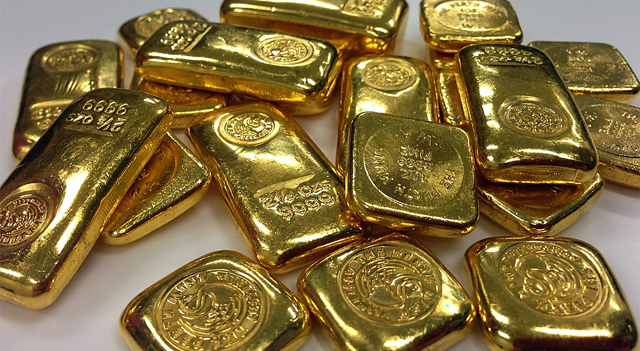
    Gold Soars Past $4,000 to Record High Amid Global Political and Economic Turmoil

    Gold prices surged to an all-time high during Asian trading on Wednesday, breaking above the $4,000 per ounce mark for the first time as investors flocked to safe-haven assets amid escalating political and economic instability.

    Expectations of further U.S. Federal Reserve interest rate cuts also provided strong support for the metal, with markets now focused on a series of speeches from Fed officials scheduled throughout the week. Spot gold rose 0.6% to a record $4,010.84/oz, while December gold futures climbed 0.7% to $4,033.27/oz, extending Tuesday’s move past the $4,000 threshold.

    “For the moment, markets are still pricing in a 25bp cut this month, which should benefit the precious metal. The political turmoil in France and Japan is adding to fiscal concerns and contributing to the rally in gold,” ANZ analysts said in a note.

    “Concerns about an overvaluation in equity markets also appear to be triggering a shift into gold-backed ETFs to diversify risk,” ANZ analysts said, adding that the ongoing uncertainty surrounding the U.S. economy would likely keep demand for bullion strong.

    Safe-Haven Demand Fuels Gold Rally

    Investor appetite for gold has been reinforced by growing unease over the U.S. economy, as the federal government shutdown looks set to stretch into a second week. The political standoff in Congress over a funding bill continues, with little progress despite President Donald Trump’s mediation efforts.

    While previous shutdowns have had limited economic fallout, White House officials have cautioned that this episode could prove more disruptive.

    Tensions in France also added to global risk aversion after Prime Minister Sebastien Lecornu resigned just hours after unveiling his cabinet over the weekend, deepening the country’s political crisis.

    In Japan, market uncertainty intensified following the election of Sanae Takaichi—a known fiscal dove—as leader of the ruling party. Takaichi is expected to oppose Bank of Japan rate hikes and favor expanded fiscal spending and tax incentives. Investors, however, have raised questions about how her administration will finance these policies, particularly as sentiment toward Japanese government bonds weakens.

    Focus Turns to the Fed

    The ongoing U.S. government shutdown has delayed the release of key economic data, pushing attention toward private labor market reports, which recently showed slowing job growth and reinforced expectations of further monetary easing by the Fed.

    The minutes from the Fed’s September meeting, set for release on Wednesday, are expected to provide greater insight into the recent 25 basis point rate cut. According to CME FedWatch, markets are pricing in nearly a 100% probability of another 25 bp cut later this month. Several Fed officials are also due to speak in the coming days, including Chair Jerome Powell on Thursday.

    Broader Metals Mixed

    In broader metals trading, precious metals extended their rally, with spot platinum jumping 2.1% to $1,661.36/oz and spot silver gaining 1.4% to $48.4985/oz, both reaching their highest levels in more than a decade.

    Copper, however, slipped after strong recent gains. Benchmark LME copper eased 0.2% to $10,713.45 per ton, while COMEX copper fell 0.1% to $5.0878 per pound. Prices remained supported by concerns over potential supply shortages following a prolonged production halt at Indonesia’s Grasberg mine, where a fatal accident in September disrupted operations.

    This content is for informational purposes only and does not constitute financial, investment, or other professional advice. It should not be considered a recommendation to buy or sell any securities or financial instruments. All investments involve risk, including the potential loss of principal. Past performance is not indicative of future results. You should conduct your own research and consult with a qualified financial advisor before making any investment decisions.

  • DAX, CAC, FTSE100, European Stocks Edge Higher as Banks and Energy Lead Gains; Tech and Autos Weigh

    DAX, CAC, FTSE100, European Stocks Edge Higher as Banks and Energy Lead Gains; Tech and Autos Weigh

    European equities saw modest gains on Wednesday, lifted by strength in banking and energy shares, while losses in technology and automobile stocks limited the upside.

    By 0712 GMT, the pan-European STOXX 600 was up 0.2% at 570.4 points. Regional markets were mixed, though Italy’s benchmark index outperformed with a 0.5% rise.

    Banks led the advance, climbing 0.7%, supported by gains in Lloyds Banking Group (LSE:LLOY), Société Générale (EU:GLE), and BPER Banca (BIT:BPE). Oil and gas stocks also added 0.4%, following a rise in crude prices that boosted sector sentiment.

    The automotive sector was a drag on the index after BMW (TG:BMW) tumbled 5.3%. The carmaker slashed its 2025 earnings forecast, citing changes in U.S. tariff assumptions and weaker-than-expected growth in China. The broader autos index fell 1.5%, with Mercedes-Benz (TG:MBG) sliding 3.1%.

    Technology stocks also weighed on sentiment, down 1.1%, after U.S. lawmakers urged broader export restrictions on semiconductor manufacturing equipment to China. Dutch chip suppliers ASML (EU:ASML) and ASM International (EU:ASM) led the sector’s declines.

    Investors are also monitoring developments in France, where mounting political pressure on President Emmanuel Macron to resign or call a snap election has fueled uncertainty. Despite the turmoil, French blue-chip stocks were up 0.2% in early trade.

    This content is for informational purposes only and does not constitute financial, investment, or other professional advice. It should not be considered a recommendation to buy or sell any securities or financial instruments. All investments involve risk, including the potential loss of principal. Past performance is not indicative of future results. You should conduct your own research and consult with a qualified financial advisor before making any investment decisions.

  • FTSE 100 Rises as Pound Slips; Unite, Serica, and Greencore in the Spotlight

    FTSE 100 Rises as Pound Slips; Unite, Serica, and Greencore in the Spotlight

    UK equities edged higher on Wednesday, while the pound weakened against the dollar, slipping below the $1.34 mark amid a series of corporate updates from major London-listed firms including Unite Group, Serica Energy, and Greencore.

    As of 0716 GMT, the FTSE 100 was up 0.2%, with the British pound down 0.2% to just above $1.33. On the continent, Germany’s DAX traded flat, while France’s CAC 40 gained 0.2%.

    Marston’s Expects Profit to Beat Forecasts After Another Strong Year

    Marston’s PLC (LSE:MARS) reported strong annual results for the 52 weeks ending September 27, noting that underlying profit before tax is set to come in above market expectations. The pub operator—whose portfolio spans more than 1,300 locations—delivered its second consecutive year of substantial profit growth, following a 65% jump in fiscal 2024.

    Unite Group Reiterates Full-Year Guidance

    Unite Group PLC (LSE:UTG) reaffirmed its full-year adjusted earnings per share guidance of 47.5p to 48.25p, supported by 4% rental growth for the 2025–26 academic year. The UK’s largest developer and operator of purpose-built student accommodation also reported stable property valuations and continued progress in its acquisition of Empiric Student Property plc.

    Serica Energy Warns of Lower Output Due to Triton FPSO Shutdown

    Serica Energy PLC (LSE:SQZ) said that production at the Triton FPSO, operated by Dana Petroleum, has been offline since September 30 due to an issue with the flare system. The company expects production to resume soon but cautioned that output will remain “severely limited” until the problem is resolved. As a result, Serica now anticipates production will fall short of its earlier guidance of 29,000–32,000 barrels of oil equivalent per day.

    Greencore Raises FY25 Profit Guidance After Robust Fourth Quarter

    Greencore Group PLC (LSE:GNC) lifted its full-year operating profit forecast for fiscal 2025 to £125 million, up from its prior range of £118–121 million, following a strong fourth-quarter performance. The convenience food manufacturer recorded 8% revenue growth in Q4—slightly below Q3’s 9.9%, but consistent with its full-year average. Greencore credited the performance to new business wins, product innovation, and favorable weather, marking the second time this year it has upgraded guidance.

    This content is for informational purposes only and does not constitute financial, investment, or other professional advice. It should not be considered a recommendation to buy or sell any securities or financial instruments. All investments involve risk, including the potential loss of principal. Past performance is not indicative of future results. You should conduct your own research and consult with a qualified financial advisor before making any investment decisions.
  • Lloyds Banking Group Assesses FCA Motor Finance Redress Scheme Impact

    Lloyds Banking Group Assesses FCA Motor Finance Redress Scheme Impact

    Lloyds Banking Group (LSE:LLOY) is reviewing the potential financial implications of the Financial Conduct Authority’s (FCA) recent consultation on an industry-wide redress scheme for motor finance. The bank is evaluating how the proposed framework may affect its existing provisions and overall financial outlook, with plans to update the market once the full impact becomes clearer. The review signals possible consequences for Lloyds’ financial performance and could influence its future capital planning and stakeholder relations.

    Lloyds’ outlook remains supported by strong technical indicators and a fair valuation, underpinned by bullish market momentum and an attractive dividend yield. However, the company continues to face challenges related to declining profitability and pressure on cash flow generation, which will require close management to sustain long-term financial stability.

    About Lloyds Banking Group

    Lloyds Banking Group is one of the UK’s largest financial services institutions, offering a comprehensive range of banking and financial products to retail and commercial customers. The group operates through well-known brands including Lloyds Bank, Halifax, Bank of Scotland, and Scottish Widows. Its core business segments span personal and business banking, insurance, and wealth management, serving millions of customers across the UK and playing a key role in supporting the broader UK economy.

    This content is for informational purposes only and does not constitute financial, investment, or other professional advice. It should not be considered a recommendation to buy or sell any securities or financial instruments. All investments involve risk, including the potential loss of principal. Past performance is not indicative of future results. You should conduct your own research and consult with a qualified financial advisor before making any investment decisions.

  • Pantheon Resources Successfully Completes Fracture Stimulation at Dubhe-1 Well

    Pantheon Resources Successfully Completes Fracture Stimulation at Dubhe-1 Well

    Pantheon Resources (LSE:PANR) has announced the successful completion of hydraulic fracture stimulation on the Dubhe-1 well, part of its Kodiak and Ahpun oil and gas developments on Alaska’s North Slope. The operation, which included 25 stimulation stages conducted over eight days, was completed safely and without incidents—marking a key milestone in the company’s ongoing development program. The Dubhe-1 well is now being prepared for clean-up and production testing, with additional operational updates expected as the testing phase progresses. This successful operation strengthens Pantheon’s technical credentials and boosts confidence in achieving its future production and development objectives.

    While the company continues to make progress operationally, Pantheon’s outlook remains constrained by financial challenges, including negative profitability and cash flow pressures. Nonetheless, recent positive project developments and ongoing strategic initiatives offer potential upside and suggest an improving outlook over the medium term.

    About Pantheon Resources

    Pantheon Resources plc is an AIM-listed oil and gas company focused on the exploration and development of its 100%-owned Ahpun and Kodiak fields, located on State of Alaska land on the North Slope, onshore USA. The company’s independently certified best estimate of contingent recoverable resources stands at approximately 1.6 billion barrels of Alaska North Slope (ANS) crude and 6.6 trillion cubic feet of associated natural gas. Leveraging its proximity to existing infrastructure, Pantheon aims to unlock significant value from its resource base, with a strategic objective of achieving sustainable market recognition of roughly $5 per barrel of recoverable resources by the end of 2028.

    This content is for informational purposes only and does not constitute financial, investment, or other professional advice. It should not be considered a recommendation to buy or sell any securities or financial instruments. All investments involve risk, including the potential loss of principal. Past performance is not indicative of future results. You should conduct your own research and consult with a qualified financial advisor before making any investment decisions.