Blog

  • Market Update: S&P 500 Ends at New Record Despite Chip Stock Weakness

    Market Update: S&P 500 Ends at New Record Despite Chip Stock Weakness

    The S&P 500 reached a new record closing high on Tuesday, though gains were limited as investors weighed a busy slate of earnings reports and a pullback in semiconductor stocks.

    By the close at 4:00 p.m. ET, the Dow Jones Industrial Average was up 170 points (0.40%), the S&P 500 edged higher by 0.03% to a record close of 6,307.67, and the Nasdaq Composite fell 0.4% as tech stocks, especially chipmakers, lost ground.

    Chip Stocks Weaken After AI Project Scaled Down

    Semiconductor giants like NVIDIA, Broadcom, and AMD declined after The Wall Street Journal reported that SoftBank and OpenAI have significantly scaled back their ambitious $500 billion Stargate AI project.

    Originally launched with a planned $100 billion initial investment, the project has now been reduced to a smaller single data center, cooling optimism about the rapid expansion of U.S. AI infrastructure and dragging down the broader tech sector.

    Texas Instruments is set to report earnings after the market close.

    Earnings Season Heats Up

    This week marks a peak in the earnings calendar, with more than 85% of S&P 500 companies expected to report. So far, about 12% have released results, with 86% beating earnings expectations and 67% reporting better-than-expected revenue—factors that helped propel the S&P 500 and Nasdaq to record levels in the previous session.

    Notable Stock Moves

    • Coca-Cola shares dipped nearly 1%, despite strong Q2 earnings, as tariff-related headwinds weighed on sentiment. The company reaffirmed guidance at the high end of its forecast.
    • General Motors fell sharply after reporting a significant year-over-year drop in second-quarter profits, citing weakness in its key North American market.
    • Northrop Grumman rose after raising its full-year profit outlook, supported by steady demand for its defense systems and aircraft amid rising geopolitical tensions.
    • Philip Morris slipped as Q2 revenue missed expectations, despite continued strength in its smoke-free product lines.
    • D.R. Horton gained strongly after beating expectations with fiscal Q3 earnings and delivering 23,160 homes, above the top end of its guidance.
    • Intuitive Surgical is expected to post results after the bell.

    Spotlight on Tesla and Alphabet

    All eyes are on Tesla and Alphabet, the first of the “Magnificent Seven” tech leaders to report this earnings season. Both are due to announce Q2 results on Wednesday.

    Tesla is under pressure after California data showed a 21.1% drop in Q2 registrations. Investors are also watching for any early signs of how Trump’s proposed tariffs may be affecting corporate profits.

    Tariff Worries and Rate Uncertainty Weigh on Markets

    Despite a series of recent record highs, market momentum has slowed amid growing concerns about trade tariffs and uncertainty around future interest rate moves.

    President Trump has announced new tariffs—ranging from 20% to 50%—on goods from key U.S. trading partners, set to begin August 1. Additional duties include a 50% tariff on copper and a potential 200% tariff on pharmaceutical imports.

    These proposed measures have raised fears of renewed inflation, with the Federal Reserve expected to keep interest rates unchanged at its meeting next week. The Fed has cited tariffs as a major reason for maintaining its current stance.

    Fed Chair Jerome Powell is scheduled to speak at a conference in Washington, D.C., later Tuesday, though it’s unclear whether he’ll address monetary policy due to the Fed’s pre-meeting blackout period.

    This content is for informational purposes only and does not constitute financial, investment, or other professional advice. It should not be considered a recommendation to buy or sell any securities or financial instruments. All investments involve risk, including the potential loss of principal. Past performance is not indicative of future results. You should conduct your own research and consult with a qualified financial advisor before making any investment decisions.


  • JPMorgan: Rising Dollar-Equity Correlation May Undermine Diversification Benefits

    JPMorgan: Rising Dollar-Equity Correlation May Undermine Diversification Benefits

    JPMorgan Chase (NYSE: JPM) analysts are observing a shift in the relationship between the U.S. dollar and global equity markets, suggesting the dollar may no longer offer the same level of diversification benefits for investment portfolios.

    In a recent client note, the bank highlighted a modest but increasing correlation between weekly returns of the U.S. Dollar Index and the MSCI World Local Index.

    On a correlation scale from -1 to +1, a positive value indicates that two assets tend to move in the same direction. Historically, the dollar and equities have typically shown negative correlations, particularly in the post-pandemic period. However, according to the team led by strategist Nikolaos Panigirtzoglou, that relationship has shifted closer to zero this year.

    “This movement toward zero or slightly positive correlation appears to reflect a return to normal rather than a structural shift in market behavior,” the analysts wrote, noting that similar periods of positive correlation have occurred sporadically since the 1980s.

    Although this trend may suggest that the dollar is currently providing less diversification relative to equities, JPMorgan emphasized that both the direction and the magnitude of the correlation matter. At near-zero or mildly positive levels, the impact on the volatility of an unhedged U.S. equity portfolio remains limited.

    In theory, this reduced diversification could eventually weigh on the dollar. However, the analysts noted there is little historical evidence that changes in dollar-equity correlations have significantly affected the dollar’s overall performance.

    “One possible explanation is that the decision to hedge currency risk in an equity portfolio is complex,” they wrote. “Unless the correlation becomes persistently and meaningfully positive—such as in the 0.2 to 0.4 range seen from the mid-1980s to 2007—currency hedging is unlikely to provide a substantial or lasting reduction in overall portfolio volatility.”

    This content is for informational purposes only and does not constitute financial, investment, or other professional advice. It should not be considered a recommendation to buy or sell any securities or financial instruments. All investments involve risk, including the potential loss of principal. Past performance is not indicative of future results. You should conduct your own research and consult with a qualified financial advisor before making any investment decisions.

  • ATFX Hits $862.2 Billion in Q2 Trading Volume, Cementing Global Leadership

    ATFX Hits $862.2 Billion in Q2 Trading Volume, Cementing Global Leadership

    ATFX has reported a record-breaking $862.2 billion in trading volume for the second quarter of 2025, marking a new milestone in its global growth trajectory and reinforcing its position among the world’s top-performing brokers.

    The figures, confirmed by the latest Finance Magnates Intelligence Report, extend ATFX’s streak of 20 consecutive quarters ranked in the global Top 10 by trading volume. The surge reflects the broker’s expanding market share, deep liquidity, and commitment to delivering institutional-grade execution across asset classes.

    Cross-Asset Momentum Fuels Growth

    ATFX’s Q2 performance was driven by strong activity across key product categories:

    • Precious Metals: Gold and silver trading rose 23.1% year-over-year and 15.2% quarter-over-quarter, as investors sought safe-haven assets amid persistent market volatility.
    • Forex: Currency pair trading climbed 10.14% from Q1, underscoring the appeal of ATFX’s multi-asset platform in navigating global FX dynamics.
    • Equities: Stock trading volumes skyrocketed—up 106.14% year-over-year and 54.22% from Q1—highlighting a shift in trader appetite toward equities and ATFX’s growing role in supporting diversified strategies.

    A Consistent Upward Trajectory

    The Q2 results build on ATFX’s previous quarterly achievements, including $776.5 billion in Q1 and $643 billion in Q4 2024. This sustained momentum reflects the broker’s agility in adapting to market conditions and its investment in platform performance and client support.

    Global Footprint and Regulatory Strength

    Operating in 24 locations and holding nine regulatory licenses—including from the FCA (UK), ASIC (Australia), CySEC (Cyprus), SCA (UAE), and SFC (Hong Kong)—ATFX continues to expand its global reach while maintaining strict compliance standards.

    The company’s leadership attributes its success to a client-first approach, robust technology infrastructure, and a commitment to innovation. “We’re not just growing—we’re evolving with our clients,” said a spokesperson. “This milestone is a reflection of our shared ambition and the trust our traders place in us.”

    As ATFX pushes forward with product development and market expansion, its Q2 performance sets a high bar for the industry and signals continued momentum in the quarters ahead.

  • Hantec Markets Appoints Tim Hughes and Vivek Mehta to Lead Strategy and Tech

    Hantec Markets Appoints Tim Hughes and Vivek Mehta to Lead Strategy and Tech

    Global multi-regulated broker Hantec Markets has announced two high-profile appointments to its senior leadership team, reinforcing its strategic and technological capabilities amid continued expansion.

    Tim Hughes, former UK CEO of TigerWit, joins as Chief Strategy Officer (CSO), while Vivek Mehta, previously Head of Technology at INFINOX, steps in as Chief Technology Officer (CTO). Both executives will be based in Dubai, a growing hub for Hantec’s regional operations.

    Hughes brings over two decades of experience in retail trading, including a long tenure at IG Group and a pivotal role in TigerWit’s market entry strategy. His appointment signals Hantec’s intent to deepen its presence in competitive markets through tailored solutions and strategic alliances.

    “We’re focused on sustainable growth and delivering quality trading experiences to informed clients,” Hughes said. “This industry demands agility, and we intend to lead with ideas that matter.”

    Mehta, who also held senior roles at AximTrade, will oversee the broker’s technology roadmap, including the expansion of proprietary trading tools. “While MetaTrader remains central to our offering, we see real value in custom-built modules that enhance performance and user experience,” he noted.

    The leadership reshuffle also includes the promotion of Norayr Djerrahian to Chief Commercial Officer (CCO), replacing Hayel Abu-Hamdan, who departed earlier this year to join HFM. Djerrahian will spearhead commercial strategy across Latin America and other emerging markets.

    The appointments come as Hantec Markets continues to evolve its offerings, including 24/7 crypto CFD trading and the launch of prop trading services—moves that reflect its commitment to innovation and client-centric growth.

  • Mitrade Taps Into Football Frenzy with Argentine Sponsorship Across APAC

    Mitrade Taps Into Football Frenzy with Argentine Sponsorship Across APAC

    Taipei, July 22, 2025 — As football mania grips Southeast Asia and Australia, global trading platform Mitrade has announced its official partnership with the Argentine Football Association (AFA), becoming the regional CFD sponsor in a move that blends sport and finance.

    Launched under the banner “Rise with Champions,” the campaign reflects Mitrade’s strategic push to connect with retail investors through shared passions. With Argentina’s national team jerseys outselling traditional football giants across APAC, the timing couldn’t be better.

    “This partnership reflects our commitment to connecting with communities through shared passions,” said Kevin Lai, Vice President of Mitrade Group. “Football, like financial markets, demands analytical thinking, quick decision-making, and strategic insight—qualities our users value deeply.”

    The collaboration comes amid Argentina’s growing regional presence, including a sold-out friendly in Jakarta that drew 60,000 fans and surging support from Australian followers inspired by Lionel Messi’s World Cup triumph.

    Mitrade, which boasts over 5 million users and 44 industry awards, offers contracts for difference (CFDs) across forex, indices, commodities, ETFs, and shares—all via a mobile-first platform. The company says the AFA partnership will support its mission to make trading more intuitive and accessible, while also promoting financial literacy in emerging markets.

    With football and fintech converging, Mitrade’s latest move signals a new playbook for engaging APAC’s digitally savvy, sport-loving investor base.

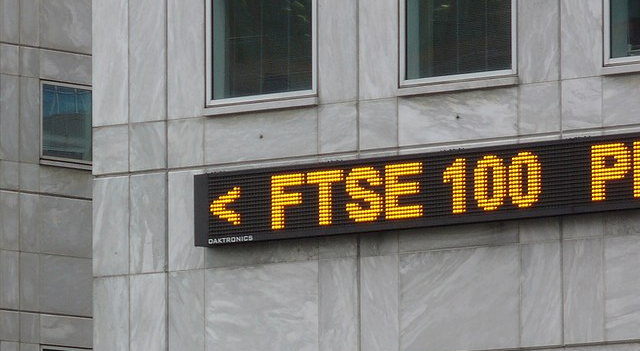
  • FTSE 100 Dips as Pound Slides; Centrica Gains on Nuclear Plant Stake; Compass Group Shares Climb

    FTSE 100 Dips as Pound Slides; Centrica Gains on Nuclear Plant Stake; Compass Group Shares Climb

    British equities slipped on Tuesday but remained above the 9,000 level, while the pound also weakened slightly. The market focus in the U.K. was on the government’s green light for the Sizewell C nuclear power project.

    By 12:30 GMT, the FTSE 100 index had declined by 1%, with the British pound falling nearly 1% against the U.S. dollar, trading at around 1.34.

    In Europe, Germany’s DAX dropped 1.2%, and France’s CAC 40 fell 0.9%.

    UK Government Borrowing Surpasses Expectations

    New data revealed that public sector borrowing in the U.K. was higher than anticipated for June, mainly due to rising inflation pushing up debt servicing costs. The Office for National Statistics (ONS) reported a borrowing figure of £20.7 billion ($27.9 billion) last month.

    Government Approves £38 Billion Sizewell C Nuclear Facility

    The U.K. government has authorized construction of the Sizewell C nuclear power station in Suffolk, a massive infrastructure investment valued at £38 billion ($51 billion). The government will hold a 44.9% share, making it the largest stakeholder. Canada’s La Caisse pension fund will own 20%, Centrica PLC (LSE:CNA) controls 15%, and Amber Infrastructure holds 7.6%.

    Following the announcement, Centrica shares jumped more than 4%.

    The project enjoys backing from both domestic and international investors, with La Caisse representing a key foreign stakeholder in the U.K. energy sector.

    Compass Group Shares Advance After Upgraded Outlook

    Shares in Compass Group (LSE:CPG) rose over 4% after the food services company increased its full-year profit forecast and revealed plans to acquire Vermaat Group for €1.5 billion, expanding its footprint in Europe.

    The company posted an 8.6% organic revenue increase for Q3 ending June 2025, beating analyst predictions of 7.7% and accelerating from the previous quarter’s 7.7% growth.

    Kier Group Shares Drop on CEO Departure Announcement

    Kier Group’s (LSE:KIE) stock declined more than 5% after CEO Andrew Davies announced he will step down at October’s end. The company also released a trading update indicating revenue and profits are expected to meet board targets.

    Stuart Togwell, Kier’s current Group Managing Director of Construction, will succeed Davies.

    Sanofi to Acquire Vaccine Developer Vicebio for up to $1.6 Billion

    French pharma giant Sanofi (EU:SAN) has agreed to buy UK-based vaccine developer Vicebio in a deal valued at up to $1.6 billion. The initial payment is $1.15 billion, with additional contingent payments of up to $450 million based on regulatory and development milestones.

    Greencore Group PLC ADR Shares Surge on Strong Q3 Revenue

    Greencore Group’s (LSE:GNC) shares jumped over 10% following a robust Q3 report showing revenue growth accelerated to 9.9%, up from 6.6% in the year’s first half. The boost was attributed to new contracts and favorable summer weather, with inflation recovery contributing 3.1% to growth.

    Even excluding new contract gains, underlying volume rose 1.9%, outperforming the broader grocery market’s 0.7% expansion.

    Mitie Group PLC Reports 10.1% Revenue Growth in Q1 FY26

    Mitie Group (LSE:MTO) announced a 10.1% year-over-year revenue increase in Q1 fiscal 2026 to £1.28 billion, driven by 8% organic growth. The facilities management segment rose 7.3%, while the higher-margin Facilities Transformation division grew 12.8%.

    The company remains on track with cost-saving initiatives to counter National Insurance pressures.

    Admiral Group Plc Shares Fall as FCA Highlights Claims Issues

    Admiral Group (LSE:ADM) shares slipped after the UK Financial Conduct Authority criticized the motor insurance sector’s claims handling, attributing rising premiums mainly to increased external costs rather than insurer profits.

    Argentex Group PLC Interim CEO Steps Down; Company Prepares for Administration

    Argentex Group (LSE:AGFX) confirmed that Interim CEO Tim Rudman resigned and the board has decided to appoint administrators for the company and some subsidiaries.

    ME Group International PLC Shares Edge Higher on Record First-Half Profits

    ME Group International (LSE:MEGP) shares rose slightly after reporting record first-half profits through April 30, 2025. Pre-tax profit climbed 13.3% to £34 million, revenue increased 2.3% (4.7% constant currency), and EBITDA improved 3.9% to £53.2 million, with a margin gain to 34.6%.

    This content is for informational purposes only and does not constitute financial, investment, or other professional advice. It should not be considered a recommendation to buy or sell any securities or financial instruments. All investments involve risk, including the potential loss of principal. Past performance is not indicative of future results. You should conduct your own research and consult with a qualified financial advisor before making any investment decisions.
  • Dow Jones, S&P, Nasdaq Futures Signal a Mostly Steady Start on Wall Street

    Dow Jones, S&P, Nasdaq Futures Signal a Mostly Steady Start on Wall Street

    Futures for the major U.S. stock indexes suggest a largely flat open on Tuesday, as investors appear cautious following a session that closed with modest gains.

    Market participants seem hesitant to take bold positions ahead of the looming August 1 deadline for President Donald Trump’s planned “reciprocal tariffs,” keeping trading activity subdued.

    On Monday, stocks started off with gains and maintained positive momentum for much of the day before slipping back in the final hours of trading.

    Even with the late-session retreat, both the Nasdaq and S&P 500 closed at fresh record highs.

    The Nasdaq increased by 78.52 points, or 0.4%, settling at 20,974.17, while the S&P 500 edged up 8.81 points, or 0.1%, to finish at 6,305.60. In contrast, the Dow Jones Industrial Average dipped slightly by 19.12 points, less than 0.1%, closing at 44,323.07.

    Early optimism was fueled by positive trade outlooks, with Commerce Secretary Howard Lutnick expressing confidence that the U.S. and European Union will reach a trade agreement.

    “These are the two biggest trading partners in the world, talking to each other. We’ll get a deal done,” Lutnick told CBS News over the weekend. “I am confident we’ll get a deal done.”

    Still, Lutnick emphasized that August 1 marks a firm deadline for the implementation of new tariffs.

    “Nothing stops countries from talking to us after August 1st, but they’re going to start paying the tariffs on August 1st,” he said.

    Buying momentum faded throughout Monday as traders turned their attention toward upcoming earnings reports from high-profile companies like Alphabet (NASDAQ:GOOGL), Tesla (NASDAQ:TSLA), and Intel (NASDAQ:INTC).

    On the economic front, the Conference Board released data showing a larger-than-expected decline in its leading economic indicators for June.

    The index fell 0.3% last month, following a revised flat reading in May, compared to economists’ expectations for a 0.2% drop.

    Despite broader market softness, gold stocks rallied strongly, pushing the NYSE Arca Gold Bugs Index up 3.8%, driven by a sharp rise in gold prices.

    Steel shares also gained traction, with the NYSE Arca Steel Index jumping 2.5%.

    Telecommunications and retail sectors saw some gains, while natural gas and biotech stocks experienced notable declines.

    This content is for informational purposes only and does not constitute financial, investment, or other professional advice. It should not be considered a recommendation to buy or sell any securities or financial instruments. All investments involve risk, including the potential loss of principal. Past performance is not indicative of future results. You should conduct your own research and consult with a qualified financial advisor before making any investment decisions.
  • DAX, CAC, FTSE100, European Markets Retreat Amid Trade Concerns and Weak Earnings

    DAX, CAC, FTSE100, European Markets Retreat Amid Trade Concerns and Weak Earnings

    European stocks edged lower on Tuesday as investors remained cautious, weighed down by disappointing corporate results and escalating trade tensions.

    Reports indicate the European Union is gearing up to implement retaliatory actions under its Anti-Coercion Instrument (ACI) in response to U.S. President Donald Trump’s plan to impose a 30% tariff on EU goods starting August 1st.

    Meanwhile, hopes for a temporary trade agreement between the U.S. and India before the August 1 deadline have faded, due to ongoing disputes over critical agricultural and dairy products.

    On the economic front, UK data revealed a sharp increase in the budget deficit for June. Public sector net borrowing surged by GBP 6.6 billion year-over-year to GBP 20.7 billion, exceeding the Office for Budget Responsibility’s forecast of GBP 17.1 billion. This marks the second-largest June borrowing since records began in 1993.

    In market performance, Germany’s DAX Index fell 1.3%, France’s CAC 40 declined 0.9%, and the UK’s FTSE 100 edged down 0.1%.

    Among individual stocks, Dutch paint and coatings firm Akzo Nobel NV slipped after reporting weaker Q2 net profits and sales, impacted by currency headwinds and soft market conditions.

    Swedish engineering company Alfa Laval also declined, missing expectations on second-quarter orders and sales.

    Swiss bank Julius Baer saw shares drop following a sharp profit decrease caused by higher loan loss provisions.

    Fragrance and flavor specialist Givaudan tumbled after reporting a negative free cash flow of CHF 16 million for the first half of 2025.

    German pharmaceutical and lab equipment supplier Sartorius AG fell as well. The company upheld its 2025 guidance but cautioned that its sales and margin outlook excludes potential impacts from tariffs or related adjustments.

    In contrast, Integrum AB shares surged after the company’s independent bid committee recommended shareholders accept the public takeover offer from OsteoCentric Oncology and Bone Anchored Prostheses, LLC.

    This content is for informational purposes only and does not constitute financial, investment, or other professional advice. It should not be considered a recommendation to buy or sell any securities or financial instruments. All investments involve risk, including the potential loss of principal. Past performance is not indicative of future results. You should conduct your own research and consult with a qualified financial advisor before making any investment decisions.

  • Dow Jones, S&P, Nasdaq, Futures flat as earnings season intensifies; market movers to watch

    Dow Jones, S&P, Nasdaq, Futures flat as earnings season intensifies; market movers to watch

    U.S. stock futures showed little movement Tuesday as investors prepared for a fresh wave of earnings reports from major companies. So far, corporate results have generally been positive amid ongoing concerns about tariffs clouding the broader economic outlook. Meanwhile, reports indicate that the ambitious artificial intelligence collaboration between OpenAI and SoftBank is facing challenges in its rollout. Additionally, speculation is mounting over potential mergers and acquisitions in the U.S. freight rail sector.

    Futures hold steady

    On Tuesday morning, U.S. stock futures remained largely unchanged as traders paused ahead of the next batch of earnings announcements. By 03:31 ET, contracts tied to the Dow Jones, S&P 500, and Nasdaq 100 all showed minimal fluctuations.

    The S&P 500 and the tech-focused Nasdaq Composite had both reached record highs in the previous session, supported in part by encouraging company earnings reports.

    Alphabet Inc. (NASDAQ:GOOGL), the Google parent company, saw its shares rise ahead of its scheduled earnings release on Wednesday. Alphabet is among the influential “Magnificent Seven” mega-cap tech firms reporting this week, alongside Tesla (NASDAQ:TSLA), whose shares slipped slightly on Monday.

    Verizon Communications (NYSE:VZ) gained roughly 4% following the company’s announcement raising the lower boundary of its full-year profit growth forecast.

    While earnings season is picking up pace, markets remain focused on developments regarding sweeping U.S. tariffs. With the August 1 deadline for President Donald Trump’s increased “reciprocal” tariffs fast approaching, reports suggest that the White House has yet to make meaningful headway in trade talks with multiple countries.

    How U.S. corporations respond to these potential tariff hikes will be a key theme throughout the current quarter’s earnings season.

    Earnings to watch

    Tuesday’s earnings calendar includes notable reports from homebuilders DR Horton (NYSE:DHI) and PulteGroup (NYSE:PHM), which may provide insights into the health of the U.S. housing market. Higher mortgage rates and economic uncertainty have recently weighed on homebuying, though analysts suggest that possible Federal Reserve rate cuts later this year could spur demand.

    General Motors (NYSE:GM) has already cautioned about a $4 billion to $5 billion annual earnings impact from U.S. tariffs, and investors will be eager to hear the automaker’s outlook on trade.

    Other notable reports before markets open include Coca-Cola (NYSE:KO), Philip Morris International (NYSE:PM), and defense contractors RTX Corp. (NYSE:RTX) and Lockheed Martin (NYSE: LMT). Texas Instruments (NASDAQ:TXN) and Intuitive Surgical (NASDAQ:ISRG) are set to release results after the closing bell.

    After Monday’s market close, NXP Semiconductors (NASDAQ:NXPI) reported a 6% drop in second-quarter revenue, attributed to softness in its communications and infrastructure business, which led to a decline in extended-hours trading.

    OpenAI and SoftBank’s AI venture hits bumps, WSJ says

    A Wall Street Journal report revealed that the $500 billion partnership between OpenAI and SoftBank aimed at rapidly advancing U.S. artificial intelligence projects has struggled to gain momentum.

    Citing sources familiar with the initiative, the WSJ said the project—known as “Stargate”—has significantly scaled back its near-term ambitions. Despite being announced by OpenAI CEO Sam Altman, SoftBank’s Masayoshi Son, and President Trump about six months ago, it has yet to secure a contract for a data center.

    The report notes disagreements between OpenAI and SoftBank over partnership terms, including where to locate data centers.

    Although SoftBank pledged to “immediately” invest $100 billion in January, the plan now involves launching a smaller data center, likely in Ohio, later this year. Both Altman and Son have stated their collaboration is progressing well.

    Vital Knowledge analysts noted that this might be a “tailwind” for Microsoft (NASDAQ:MSFT), suggesting OpenAI could rely on Microsoft’s Azure cloud for a longer period than expected.

    “But it does raise questions about some of the hype that’s formed around the industry, where huge investment figures are cavalierly thrown out and used as justification for ever-expanding valuations when a lot of the numbers are either recycled, double-counted, or vaporware,” the analysts said.

    Freight rail sector deal chatter

    According to Semafor, Berkshire Hathaway-owned BNSF has engaged Goldman Sachs to explore the possibility of acquiring a competing freight rail company.

    It remains unclear whether BNSF is targeting Norfolk Southern (NYSE:NSC) or CSX Corp (NASDAQ:CSX). Meanwhile, Reuters reports that CSX, based in Jacksonville, is in discussions to bring on financial advisors.

    These developments follow reports that Union Pacific (NYSE: UNP), the largest U.S. freight operator, is considering buying Norfolk Southern to create an extensive $200 billion rail network spanning the continental U.S. This would rank among the most significant deals in the sector since Canadian Pacific merged with Kansas City Southern four years ago, with Goldman Sachs playing a key advisory role.

    Analysts warn that any such transaction may face regulatory scrutiny, raising questions about the Trump administration’s stance on major mergers.

    Gold retreats from recent peak

    Gold prices eased slightly on Tuesday, pulling back from a one-month high reached in the previous session due to some profit-taking and a modest U.S. dollar rebound.

    The precious metal’s safe-haven status had been bolstered by reports that the European Union is preparing countermeasures in response to the U.S.’s “reciprocal” tariffs. Washington reportedly seeks tariffs of at least 15% on the EU, while Brussels aims to maintain the current 10% rate.

    Uncertainty about U.S. interest rates and Federal Reserve independence has also supported demand for safe assets. The Fed is widely expected to hold rates steady next week despite President Trump’s calls for immediate cuts.

    Spot gold slipped 0.4% to $3,383.63 an ounce, with futures down 0.3% to $3,395.62 an ounce as of 03:30 ET. On Monday, spot gold jumped 1.4% to nearly $3,400 per ounce.

    This content is for informational purposes only and does not constitute financial, investment, or other professional advice. It should not be considered a recommendation to buy or sell any securities or financial instruments. All investments involve risk, including the potential loss of principal. Past performance is not indicative of future results. You should conduct your own research and consult with a qualified financial advisor before making any investment decisions.

  • Gold Prices Dip Slightly After Recent Peak as Focus Shifts to Tariff Talks

    Gold Prices Dip Slightly After Recent Peak as Focus Shifts to Tariff Talks

    Gold prices eased a bit on Tuesday as investors took some profits following Monday’s rally to a one-month high. Uncertainty around U.S. tariffs and interest rate policies continued to support demand for safe-haven assets.

    At 04:25 ET (08:25 GMT), spot gold declined 0.2% to $3,389.27 per ounce, after surging 1.4% the previous day. Gold futures also slipped 0.2% to $3,401.12 per ounce.

    Growing Concerns Over Imminent U.S. Tariffs

    The market remained jittery as the August 1 deadline for the introduction of U.S. tariffs approached. Investor confidence was shaken by fading prospects of a trade agreement between the European Union and the United States. Reports indicated the EU is preparing retaliatory tariffs in response to U.S. tariff plans that exceeded initial expectations.

    Additionally, the Trump administration signaled little likelihood of extending the tariff deadline. Over the last two weeks, President Donald Trump issued several letters announcing tariffs ranging from 20% to 50% on key U.S. trading partners, prompting worries in the market and threats of countermeasures from affected countries.

    This unresolved trade tension has fueled demand for gold and other precious metals, which have seen sharp price gains recently. However, on Tuesday some investors booked profits, with spot silver slipping 0.4% to $39.165 per ounce and spot platinum falling 0.5% to $1,488.10 per ounce.

    Among industrial metals, benchmark copper futures on the London Metal Exchange inched up 0.1% to $9,879.25 per ton, while COMEX copper futures rose 0.2% to $5.6480 per pound. The 50% U.S. tariff on copper is also set to take effect on August 1.

    Data from the Shanghai Futures Exchange revealed that inventories of base metals increased last week. Copper stocks rose by 3,094 tonnes to 84,556 tonnes as of Friday, aluminium inventories climbed 5,625 tonnes to 108,822 tonnes, and zinc stocks grew 9.3% week-over-week to 54,630 tonnes—the highest since April 18.

    Bernstein Projects Stronger Gold Prices

    Bernstein analysts argued that Wall Street might be underestimating gold’s potential by relying on outdated forecasting techniques. They identified six reliable methods—mostly focused on government and monetary policy factors—and averaged these to forecast gold at $3,700 per ounce by 2026, significantly higher than the current consensus estimate of $3,073.

    Dollar Weakens Amid Fed Speculation

    Gold’s rally on Monday coincided with a slight retreat in the dollar, which paused after two weeks of gains. The dollar remains relatively strong, fueled by expectations that the Federal Reserve will keep interest rates steady at next week’s meeting.

    Market nerves persist, however, due to concerns over the Fed’s independence amid rumors that President Trump may attempt to remove Fed Chair Jerome Powell. Powell has indicated little inclination to lower rates, frustrating the White House and its supporters.

    Powell is scheduled to speak later Tuesday, though it remains uncertain if he will comment on monetary policy given the Fed’s usual media blackout ahead of meetings.

    This content is for informational purposes only and does not constitute financial, investment, or other professional advice. It should not be considered a recommendation to buy or sell any securities or financial instruments. All investments involve risk, including the potential loss of principal. Past performance is not indicative of future results. You should conduct your own research and consult with a qualified financial advisor before making any investment decisions.