Blog

  • Webull Names Walter Bishop Independent Director

    Webull Names Walter Bishop Independent Director

    Webull Corporation (NASDAQ: BULL) has announced the appointment of Walter Bishop as an independent director on its board, effective June 8, 2025 .

    Mr. Bishop brings extensive experience from across the financial sector. His career spans senior leadership roles at Deutsche Bank—including U.S. COO and Chairman of DB Trust Company Delaware’s board and audit committee (1997–2019)—as well as positions at Barclays Bank U.S. (Chief Administrative Officer), Nordbanken U.S. (Deputy General Manager & CFO), and KPMG Peat Marwick (audit manager)

    In his new role, Bishop will serve on Webull’s key oversight bodies: the Audit Committee, Compensation Committee, and the Nominating & Corporate Governance Committee

    Currently, he also holds positions as Lead Independent Director and Audit & Governance Committee Chair at Syntec Optics Holdings, Inc. (NASDAQ: OPTX), plus previous board roles at Highline Management Inc. (2019–2024) and advisory work with Thunder Bridge Capital Acquisition II / Indie Semiconductor

    Mr. Bishop’s academic qualifications include an MBA from St. John’s University and a Bachelor’s in Public Accounting from Baruch College, CUNY

    His addition increases Webull’s board to six members, including two independent directors—a move reinforcing stronger governance and oversight as the fintech firm continues its expansion.

  • Which assets have performed best this year?

    Which assets have performed best this year?

    It feels like the year just started, but we’re already halfway through, meaning it’s time to take stock.

    Let’s start by saying that geopolitical tensions and trade wars remain unresolved, and the Federal Reserve is still not rushing to lower rates. So while there have been some minor developments here and there, the big issues weighing on investors haven’t seen much movement. Despite that, markets didn’t stay down for long.

    After a dip in April, most assets rebounded — except oil, which is down 10% year-to-date. As for equities, the S&P 500 has gained 1.8% since January, while the Nasdaq is up 3.9%. This is not a huge jump but a return to positive territory amid all the uncertainty. Bitcoin price, meanwhile, has surged over 17%. 

    But the kings of 2025 so far have been gold and silver, which rose 26.8% and 25%, respectively. For the former, the rise was mainly driven by massive central bank buying, ongoing trade instability between the U.S. and China, and expectations of Fed rate cuts, especially after recent data on inflation expectations.

    For silver, there is also optimism that U.S.-China negotiations could ease recession fears and revive industrial demand, especially for solar panels, electronics, and autocatalysts. Another tailwind is that the global silver market has been in deficit for five consecutive years due to slow production growth.

    Looking ahead, if the U.S. and China reach a trade deal or the Fed cuts rates, risk assets could get another boost. Otherwise, a correction could follow. Adding to the uncertainty, we’re heading into Q2 earnings season, with analysts predicting 4.9% YoY earnings growth for S&P 500 companies, from the 9.3% forecast back in March. If that holds, it’d be the weakest growth since late 2023. And, given that earnings have long been the market’s lifeblood, this slowdown could throw cold water on the market move.

  • ThinkMarkets Introduces Traders’ Gym: Revolutionizing Strategy Backtesting on Mobile

    ThinkMarkets Introduces Traders’ Gym: Revolutionizing Strategy Backtesting on Mobile

    ThinkMarkets, a global leader in online CFD trading, is enhancing its proprietary platform with the launch of Traders’ Gym, an exclusive backtesting tool, on the ThinkTrader mobile app for iOS and Android. This feature allows traders to test their strategies in real-time, 24/7, whether on the web or mobile. The addition aligns with ThinkMarkets’ commitment to building a powerful and seamless trading platform.

    Nauman Anees, CEO and co-founder of ThinkMarkets, expressed excitement about the launch, highlighting that Traders’ Gym has been a highly requested feature. He emphasized that the tool will enhance the overall trading experience by providing users with charting, signals, multiple order types, real-time backtesting, and market news resources.

    ThinkMarkets, established in 2010, offers access to 4,000 CFD instruments across various markets, including FX, indices, commodities, and equities. The company operates globally with offices in London and Melbourne, along with hubs in Asia-Pacific, Europe, and South Africa.

  • Spectris Shares Surge After $4.4 Billion Takeover Proposal from Advent

    Spectris Shares Surge After $4.4 Billion Takeover Proposal from Advent

    Spectris PLC announced on Monday that it has received a conditional acquisition proposal from private equity firm Advent International LP.

    The London-based company, known for its high-tech instruments, testing equipment, and software, stated that the offer includes 3,735 pence in cash per share, along with a proposed interim dividend of 28 pence per share.

    As news of the bid broke, Spectris shares jumped 66%, reaching 3,392.00 pence in London trading on Monday afternoon. This surge placed the company’s market capitalization at approximately £3.40 billion. Advent’s proposal values Spectris’ equity at over £3.7 billion, translating to an enterprise valuation of £4.4 billion when factoring in debt.

    The proposed dividend would align with Spectris’ current payout schedule. The offer was submitted by Advent International Ltd, acting in an advisory capacity to Advent International LP.

    Spectris’ board stated that if a firm offer materializes, “the board has carefully evaluated the proposal with its advisers and determined that the proposed value is one they would unanimously recommend to shareholders.”

    Advent International has until July 7 to present a definitive offer. Spectris emphasized that there is no guarantee a firm offer will be made.

  • CMC Markets’ Profit Growth Fails to Prevent Share Price Collapse

    CMC Markets’ Profit Growth Fails to Prevent Share Price Collapse

    CMC Markets has reported a strong 33% increase in annual profit, reaching £84.5 million for the fiscal year ending March 31, 2025. However, despite the impressive growth, investors reacted negatively to earnings that fell short of expectations, leading to a staggering 18% drop in its share price.

    Profit Gains vs. Market Reaction

    The London-listed financial services firm saw its net operating income rise by 2% to £340.1 million, slightly exceeding analysts’ forecasts. Earnings per share improved to 22.6 pence, but still missed the projected 24 pence, causing concern among shareholders. While the company’s profit margin expanded to 24.8%, reflecting a significant improvement from the previous year’s 19%, these financial gains were not enough to sustain bullish sentiment in the market.

    CMC Markets had enjoyed an upward trajectory in its stock price since April, fueled by investor optimism about its revenue streams and profitability. However, following the earnings release on June 5, the stock plunged to a two-month low of 230.5 pence, marking a sharp contrast from its recent highs. As of June 9, the stock continued to struggle, trading at 241.5 pence, still down more than 2% for the week.

    Key Drivers Behind the Decline

    Despite positive fundamentals, several factors contributed to the steep sell-off:

    • Missed Earnings Forecasts: Investors were expecting a more substantial earnings beat, particularly after the company’s strong profit growth. Falling short of £90.6 million in expected profit raised concerns about future performance.
    • Market Sentiment & Volatility: The financial services sector has faced heightened volatility, with investors becoming increasingly sensitive to economic indicators and central bank policies.
    • Profit Margins vs. Growth Prospects: Although CMC Markets improved its profit margin, questions remain about whether the growth trajectory can be sustained in the coming quarters.

    Industry Trends & Future Outlook

    CMC Markets operates in a highly competitive industry, where global economic conditions and investor sentiment play a crucial role. As central banks adjust interest rates and inflation continues to be a key focus, trading activity and brokerage revenues remain under scrutiny.

    Looking ahead, analysts will be watching CMC Markets’ performance closely to determine whether this decline represents a short-term correction or a more prolonged trend. The company may need to address investor concerns by demonstrating stronger growth in revenue streams and improved profitability metrics in the next quarterly earnings report.

    The sharp decline in CMC Markets’ share price following its earnings report has several potential implications for its future performance:

    Investor Sentiment & Market Confidence

    • The 18% drop in share price suggests that investors were disappointed with the earnings miss, despite the company’s 33% profit growth. This could lead to lower investor confidence, making it harder for CMC Markets to attract new shareholders or maintain its valuation.
    • If the stock continues to struggle, the company may need to reassure investors through strategic moves such as cost-cutting, expansion into new markets, or stronger revenue growth.

    Financial Strategy Adjustments

    • CMC Markets has been investing in automation and infrastructure, which led to a 17% increase in IT costs. If the market reaction persists, the company may need to reassess its spending to ensure profitability remains strong.
    • The firm has also expanded into decentralized finance (DeFi) and Web 3.0, aiming to diversify its revenue streams. However, these investments require significant infrastructure upgrades, which could pressure short-term financial performance.

    Competitive Positioning

    • The financial services industry is highly competitive, with firms like IG Group and Plus500 vying for market share. If CMC Markets fails to meet profit expectations consistently, it could lose ground to competitors.
    • The company has seen strong growth in international trading revenue, particularly in Australia, where client activity has surged. Maintaining this momentum will be crucial to offset any negative investor sentiment.

    Future Outlook

    • Analysts will closely watch CMC Markets’ next earnings report to see if it can recover from this setback. If the company demonstrates strong revenue growth and improved profitability, the stock could rebound.
    • The firm’s cash reserves and financial investments have increased significantly, which could provide stability during this period of uncertainty.
    • The shift to Web 3.0 and DeFi presents long-term opportunities, but the company must navigate the challenges of integrating new technologies while maintaining profitability.

    For a detailed comparison of CFD brokers, you can check ADVFN Broker Listing.

  • Robinhood Shares Drop After Missing Out on S&P 500 Index Inclusion

    Robinhood Shares Drop After Missing Out on S&P 500 Index Inclusion


    Robinhood shares fell over 3% in premarket trading, landing at $72.44, following the announcement that the company was not included in the S&P 500 Index rebalance. This decision defied widespread speculation that Robinhood might secure a spot in the index, especially after months of strong performance and optimism fueled by analysts. Bank of America had notably cited Robinhood as a top contender for inclusion, further boosting investor expectations.

    The S&P 500 rebalance, a key event organized by S&P Dow Jones Indices, typically drives significant market activity as passive funds adjust their portfolios. While many companies benefit from the increased liquidity and market recognition that inclusion brings, Robinhood missed this opportunity, leaving investors to recalibrate their outlook.

    Robinhood’s exclusion stands in stark contrast to the recent success of Coinbase Global Inc., which saw its shares soar nearly 25% after being added to the index last month. S&P 500 inclusion often attracts interest from index-tracking funds, enhancing a company’s market presence and liquidity. For Robinhood, however, this setback arrives amid an otherwise stellar year, with its stock price doubling in 2025 thanks to a broader market recovery and sustained retail investing enthusiasm.

    Despite last Friday’s 3.3% rally and a weekly gain exceeding 13%, the news of exclusion has dampened investor sentiment. The broader implications for Robinhood include potential limitations on institutional investment and slower momentum for its growth trajectory. These concerns are reflected in the morning’s share price dip and could influence trading dynamics in the near term.

    Robinhood’s journey this year highlights both its potential and its vulnerability. While missing the S&P 500 rebalance is a setback, the company’s ability to double its value within a year underscores its resilience and appeal to retail investors. As market watchers look ahead, Robinhood’s performance and any future opportunities for index inclusion will remain under close scrutiny, shaping expectations for its long-term growth and market position.


  • UK Banks to Pilot AI Tools with Nvidia in FCA’s New Sandbox Program

    UK Banks to Pilot AI Tools with Nvidia in FCA’s New Sandbox Program

    The UK’s Financial Conduct Authority (FCA) has unveiled a partnership with Nvidia (NASDAQ: NVDA) to create a secure testing environment for financial institutions exploring artificial intelligence (AI) applications. This initiative, named the “Supercharged Sandbox,” is designed to foster innovation while addressing regulatory challenges.

    A Platform for AI Innovation

    The program will provide participating banks and financial firms with Nvidia’s advanced computing platforms and AI software, alongside regulatory oversight and technical support. Applications for participation are open, with trials set to commence in October.

    “This collaboration supports firms looking to explore AI but lacking the resources to do so,” said Jessica Rusu, the FCA’s chief data, intelligence, and information officer. “It’s about leveraging AI to benefit markets, consumers, and the economy.”

    While the UK boasts homegrown AI tech firms like Arm Holdings and Graphcore, the FCA’s choice of Nvidia underscores the US company’s dominance in AI infrastructure.

    Navigating AI Challenges in Finance

    Banks have faced hurdles in adopting AI, including concerns over data security, fraud risks, and compliance. The sandbox aims to alleviate these challenges by offering a controlled environment to test AI applications, particularly for institutions in the early stages of AI exploration.

    Dr. Jochen Papenbrock, Nvidia’s EMEA head of financial technology, noted, “AI is transforming finance by automating processes, enhancing data analysis, and improving decision-making.”

    The sandbox expands upon digital infrastructure from NayaOne, with computational resources tailored for AI innovation. It complements an existing live testing service for firms with more mature AI projects.

    Nvidia’s Role in AI Revolution

    Nvidia’s partnership with the FCA highlights its leadership in the AI sector. The company reported record revenue of $44 billion in Q1 2025, driven largely by surging demand for AI infrastructure.

    “AI inference token generation has increased tenfold in a year,” said Nvidia CEO Jensen Huang. “As AI agents become mainstream, demand for AI computing will accelerate.”

    Supporting Economic Growth

    The sandbox aligns with UK government goals to stimulate economic growth through technology. It also integrates with the FCA’s broader AI regulatory framework, which emphasizes using existing rules rather than creating new, AI-specific regulations.

    By addressing risks and fostering innovation, the FCA’s initiative marks a significant step forward in integrating AI into the financial sector while ensuring safety and compliance.

  • Empire Metals Achieves High-Purity Titanium Production Milestone

    Empire Metals Achieves High-Purity Titanium Production Milestone

    Empire Metals Ltd (AIM:EEE, OTCQB:EPMLF) has announced the successful production of a high-purity titanium dioxide (TiO₂) product, achieving an impressive assay result of 99.25% TiO₂.

    This breakthrough is part of ongoing efforts to optimize the technical design of the Pitfield project. The high-grade product was developed using concentrates derived from Pitfield through conventional beneficiation, leaching, and refining processes. The final product exhibited undetectable or extremely low impurity levels.

    “We have achieved an extraordinary outcome from our recent product development testwork, delivering a high-grade, high-purity TiO₂ product ideal for titanium sponge metal or premium TiO₂ pigment production,” said managing director Shaun Bunn.

    He praised the technical team’s rapid progress, emphasizing that this milestone showcases the efficiency of their processing methods and the significant potential value of the product.

    Empire is now advancing its product development and testing, leveraging around 70 tonnes of bulk sample material collected earlier this year.

    “We are poised to scale up testwork significantly, creating a variety of product samples for potential downstream end-users,” Bunn added.

    Follow Empire Metals on ADVFN Share Chat  

  • European markets decline as Asia rallies ahead of US-China talks

    European markets decline as Asia rallies ahead of US-China talks

    European stocks opened lower on Monday, influenced by cautious investor sentiment ahead of critical trade talks between the US and China. While European indices saw declines, particularly the FTSE 100 and DAX 40, Asian markets performed strongly with positive gains. The meeting in London aims to address ongoing trade tensions, with optimism expressed by analysts and officials. Additionally, significant movements in individual stocks and commodities were also reported.

    European stocks opened rather hesitantly on Monday, despite a notably positive trade environment in Asia. Investors seem to be cautious as they await the expected trade discussions between the United States and China. The FTSE 100 index slightly dipped, losing 3.04 points to settle at 8,834.87. Meanwhile, the FTSE 250 saw a bit of a decline, down 19.09 points, or 0.1%, at 21,138.19. The AIM All-Share, on the other hand, posted a modest gain, increasing 4.24 points, or 0.6%, to 761.12.

    Looking at some other indices: the Cboe UK 100 edged up, now at 879.15, and the Cboe UK 250 also increased by 0.1%, reaching 18,634.23. The Cboe Small Companies index climbed 0.2%, resting at 16,934.02. In European trading, the CAC 40 in Paris dipped 0.2%, while Germany’s DAX 40 suffered a 0.6% decline. This economic climate in Europe definitely contrasts with the buoyancy seen in Asia and New York at the end of last week.

    Asian markets presented a different picture. In Tokyo, for instance, the Nikkei 225 surged by 0.9%. Over in China, the Shanghai Composite gained 0.4%, while Hong Kong’s Hang Seng Index jumped by 1.4%. As for New York’s performance last Friday, the Dow Jones Industrial Average was up by 1.1%, the S&P 500 gained 1.0%, and the Nasdaq Composite rose 1.2%.

    Analysts from ING commented on the overall market sentiment. They described it as a “glass-half-full view of the world right now,” adding that today’s trade talks between the US and China should maintain a calm risk environment. In currency trading early Monday, sterling strengthened against the dollar, moving up to USD 1.3565 from USD 1.3522 at Friday’s close. The euro climbed to USD 1.1426, while the dollar slipped against the yen to JPY 144.19.

    Today marks a key moment as US and Chinese officials gather in London for trade negotiations following previous discussions in Geneva last month. Treasury Secretary Scott Bessent, Commerce Secretary Howard Lutnick, and Trade Representative Jamieson Greer are heading the US team, as confirmed by President Donald Trump on Friday. Chinese Vice Premier He Lifeng will also lead the negotiations for China, as announced by the foreign ministry over the weekend.

    Reports indicate that the meeting has high expectations. Trump asserted on his Truth Social platform that “the meeting should go very well.” Analysts at ING also expressed their optimism, noting that both parties likely would not engage in talks if they were unable to reach an agreement. As for US Treasury yields, the 10-year experienced a slight increase to 4.49%, while the 30-year also ticked up to 4.97% this morning.

    In China, new consumer price data paints a mixed picture. The consumer price index showed a decrease for four consecutive months, now down 0.1% year-on-year for May. Though this aligned with April’s decline, it fared better than the 0.2% dip projected by economists in a Bloomberg survey.

    In the FTSE 100, there were some notable movers. M&G shares rallied by 1.6%, becoming the best performer early on after UBS upgraded it to ‘buy’. Conversely, WPP’s shares dropped by 2.0% on news that CEO Mark Read will depart at year’s end. Meanwhile, Dunelm experienced a 4.0% decline after RBC lowered its recommendation. However, Alphawave shares soared by 22% after Qualcomm announced a USD 2.4 billion takeover bid, representing a significant premium over previous prices.

    Also making headlines was Revolution Beauty, which saw its shares climb by 19%. The company confirmed that Frasers Group is one of several parties interested in a potential acquisition, although it stressed that a formal offer is not guaranteed. Reports last weekend detailed Frasers’ interest but with no assurance of an offer. In other markets, a barrel of Brent crude oil edged down to USD 66.08, while gold slightly decreased to USD 3,324.44 an ounce.


  • Silver Futures Prices Reach Record High of Rs 1,06,065 per Kg

    Silver Futures Prices Reach Record High of Rs 1,06,065 per Kg

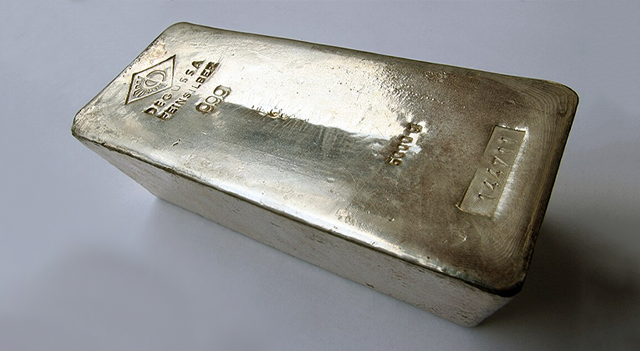
    On June 6, silver futures reached a record high of Rs 1,06,065 per kg on the MCX, driven by global demand and safe-haven buying amid market uncertainties. After peaking, prices settled at Rs 1,05,849, still showing significant gains. Analysts note that ongoing market instability keeps interest in precious metals strong, with international prices also rising.

    Silver futures prices soared to a record high of Rs 1,06,065 per kilogram on the Multi Commodity Exchange (MCX) on Friday, June 6, reflecting robust global trends and significant safe-haven demand. Early trading saw the futures contracts for delivery in July jump to this new high, though later in the day, it dipped slightly to Rs 1,05,849 per kg, up by Rs 1,406 or 1.35 percent, with an open interest of 20,949 lots.

    According to market analysts, the ongoing instability in broader financial markets is bolstering interest in precious metals like gold and silver. Rahul Kalantri, the Vice President of Commodities at Mehta Equities Ltd, noted that “silver continued its strong upward momentum,” pointing out that silver prices have also surged to USD 36 per ounce, marking the highest level since February 2012.

    Indeed, the global market reflected this trend, with silver trading at USD 36.15 per ounce in New York, up by 1.41 percent. This development underscores investors’ persistent shift toward valuable assets as they seek refuge amid economic uncertainties. As investors monitor these fluctuations, the movement of silver prices could signal broader trends in global commodity markets moving forward.