
Blog

  • U.S. futures edge lower amid tariff uncertainty; Nvidia results loom large: Dow Jones, S&P, Nasdaq, Wall Street

    U.S. futures edge lower amid tariff uncertainty; Nvidia results loom large: Dow Jones, S&P, Nasdaq, Wall Street

    U.S. stock futures moved modestly lower on Monday as investors assessed renewed trade policy uncertainty following the Supreme Court’s rejection of President Donald Trump’s emergency tariffs, while attention turned toward upcoming earnings from AI heavyweight Nvidia later this week.

    As of 05:50 ET, Dow Jones futures were down 110 points, or 0.2%, S&P 500 futures declined 16 points, or 0.2%, and Nasdaq 100 futures fell 100 points, or 0.4%.

    Wall Street’s main indices finished last week higher, supported by optimism after the court ruling and relief that geopolitical tensions had not escalated into U.S. military action against Iran.

    Trump raises tariffs to 15% following court decision

    Over the weekend, Trump announced plans to increase a temporary universal import tariff to 15%, up from an initially proposed 10%, shortly after the Supreme Court ruled that he had exceeded his authority by invoking emergency powers to impose sweeping trade duties.

    The president labeled the decision a “disgrace” and quickly turned to provisions under the 1974 Trade Act to introduce global tariffs of 15% for up to 150 days, aiming to address what he described as “international payment problems.”

    “The Supreme Court’s decision to strike down President Trump’s use of IEEPA tariffs removes one legal channel but does not signal the end of the tariff regime,” said Lale Akoner, global market analyst at eToro. “In our view, markets were already pricing in a restructuring of trade policy, specifically the removal of IEEPA tariffs and a shift toward a more formalised 15% framework. This ruling accelerates that transition rather than derailing it.”

    “The near-term risk is uncertainty: shifting legal foundations could dampen activity temporarily. However, if the outcome is a more predictable tariff structure, equities may ultimately benefit.”

    Reports indicated that several countries which had reached trade agreements with Washington over the past year are now seeking clarification or renegotiation in light of the latest policy changes.

    The European Commission — the executive arm of the European Union and chief trade negotiator for its 27 member states — urged the United States to respect the terms of a 2025 agreement and requested “full clarity” on how tariff policy will evolve after the ruling.

    Against this backdrop, investors are also watching remarks expected Monday from Federal Reserve Governor Christopher Waller.

    Waller, scheduled to speak in Washington on the economic outlook, was among two policymakers who opposed the Federal Reserve’s January decision to keep interest rates unchanged within a 3.5% to 3.75% range.

    Durable goods orders and factory orders data are also due later in the session.

    Nvidia earnings take center stage

    Market focus this week is increasingly shifting toward results from artificial intelligence leader Nvidia (NASDAQ:NVDA), widely viewed as a bellwether for global AI demand.

    The chipmaker, whose processors power much of today’s AI infrastructure, is set to release fiscal fourth-quarter earnings on Wednesday. Investing.com forecasts expect earnings per share of $1.52 on revenue of $65.56 billion.

    That compares with EPS of $0.89 and revenue of $39.33 billion reported a year earlier.

    The earnings arrive amid growing debate about the sustainability of the AI boom and its broader impact on technology markets. Software and logistics stocks have recently come under pressure due to concerns about AI-driven disruption, with weakness spreading across multiple sectors.

    Oil retreats after last week’s rally

    Oil prices declined on Monday, giving back part of last week’s strong gains as traders evaluated prospects for a third round of nuclear negotiations between the United States and Iran alongside ongoing uncertainty tied to U.S. trade policy.

    Brent crude futures fell 0.7% to $70.83 per barrel, while U.S. West Texas Intermediate crude futures dropped 0.7% to $66.05 per barrel.

    Both benchmarks had surged nearly 6% last week amid fears of a potential U.S.-Iran conflict and an unexpected drawdown in U.S. crude inventories.

    Washington and Tehran are now expected to hold a third round of nuclear talks on Thursday in Geneva, raising hopes that diplomacy could reduce the risk of disruptions to Middle Eastern oil supplies.

    Iran remains a major producer within the Organization of the Petroleum Exporting Countries (OPEC) and holds some of the world’s largest proven crude reserves.
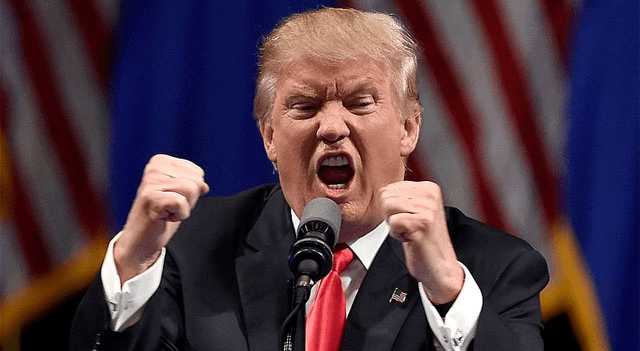

  • Trade wars are far from over

    Trade wars are far from over

    Friday’s Supreme Court ruling that the tariffs imposed under Trump’s IEEPA authority were illegal gave the S&P 500 and Nasdaq a boost. Bitcoin price also climbed on hopes that removing a key inflationary factor would prompt the Fed to cut rates sooner.

    The problem is that while the Supreme Court’s decision complicates the imposition of tariffs, there are alternative tools beyond the IEEPA. For example, Section 122 of the Trade Act of 1974 allows tariffs of up to 15% for 150 days in the event of an economic crisis, although only Congress can extend them, and Trump already used it on Saturday.

    There is also Section 201, which protects U.S. industries from foreign competition; Section 301, which allows the U.S. Trade Representative to impose unlimited tariffs on countries with unfair practices, reviewed every four years; Section 338 of the Tariff Act of 1930, which allows tariffs of up to 50% or even total import bans against countries that discriminate against the US; and Section 232 of the Trade Expansion Act of 1962, Trump’s favorite, which allows unlimited tariffs if there is a “threat to national security.”

    In the meantime, as companies passed more tariff costs to consumers, December PCE showed monthly inflation accelerating to 0.4% and year-on-year inflation at 2.9%, with core inflation rising to 3%. If this trend continues, the Fed could even consider raising interest rates, as suggested by the latest meeting minutes.

    It also appears that, to prevent Trump from diverting Fed policy from employment and inflation data, rumors are spreading that Jerome Powell is working to strengthen the Fed’s independence, using strategies to win favor with Congress and encouraging dissent within committees, which could make it difficult for his successor to control the agenda.

    If Powell succeeds, and tariffs remain while companies keep passing costs to consumers, the market could finish the year disappointed with the Fed’s stance, weighing on overall sentiment.

  • Pernod Ricard Shares Slide After Deutsche Bank Downgrade to “Sell” Following Strong Rally

    Pernod Ricard Shares Slide After Deutsche Bank Downgrade to “Sell” Following Strong Rally

    Pernod Ricard (EU:RI) shares dropped more than 3% on Monday after Deutsche Bank lowered its recommendation on the stock to “sell” from “hold,” arguing that this year’s sharp rally has moved ahead of underlying business fundamentals.

    The downgrade follows the company’s recent first-half fiscal 2026 results, which showed organic sales declining 5.9% and EBIT down 7.5%, broadly matching market expectations.

    Deutsche Bank analyst Mitch Collett said the valuation now looks stretched, noting that Pernod trades at roughly 15.2x calendar 2026 earnings — only a 14% discount to European beverage peers. In his view, that gap does not sufficiently reflect the company’s leverage level of 3.8x net debt to EBITDA and an uncertain growth outlook.

    According to the bank, the stock’s roughly 20% gain year to date appears largely driven by positioning effects, particularly the unwinding of heavy short interest, rather than a meaningful improvement in operating performance.

    Two main risks support the downgrade. The first is leverage. Management has pledged to reduce net debt/EBITDA to below 3x by fiscal 2029, but achieving that goal depends on earnings recovery, ongoing asset disposals and strict capital discipline over several years, leaving limited room for setbacks in key markets such as China or the United States.

    The second concern relates to expectations for a second-half rebound. Consensus forecasts imply around 1.2% organic sales growth, which Deutsche Bank believes relies more on favorable timing effects around Chinese New Year and easier comparisons than on a genuine recovery in demand. Management itself described the outlook for China as largely technical.

    Collett also suggested that a deeper reset in profitability and shareholder returns may be required before the shares can sustain a meaningful re-rating.

    The company continues to maintain its €4.70 per share dividend, though without growth, while free cash flow coverage remains tight. Gross margins are still under pressure from tariffs and higher costs for aged inventory despite a 10% reduction in structural expenses.

    Jefferies, meanwhile, retains a “buy” rating with a €110 price target, pointing to the valuation discount and confidence in the company’s efficiency programme. However, that more optimistic view depends on belief in Pernod’s medium-term growth target of 3%–6%, a scenario Deutsche Bank does not currently support at prevailing share prices.

    Potential upside risks include a restocking cycle in the U.S. market or policy stimulus measures in China. Until clearer signs of sustained revenue growth emerge, Deutsche Bank believes the recent rebound in the shares may have largely run its course.

  • Connecting Excellence Group Expands to U.S. with OTCQB Listing.

    Connecting Excellence Group Expands to U.S. with OTCQB Listing.

    Connecting Excellence Group PLC (AQSE:XCE) is taking its next step in international expansion, with shares now trading on the OTCQB in the United States under the ticker USOTC:XCELF. The move builds on the company’s existing London listing and signals a clear ambition: broaden access to U.S. investors while scaling a dual-engine business model that blends executive recruitment with a long-term Bitcoin treasury strategy.

    Speaking on The Watch List, CEO Scott Ellam outlined how the company generates revenue, its growth drivers, and why leadership believes the OTCQB listing is a pivotal milestone.

    A Profitable Executive Search Core

    At the heart of Connecting Excellence Group is its flagship operating subsidiary, Spencer Riley, an international executive recruitment firm that has operated profitably since 2014.

    The firm specializes in placing senior-level professionals, from Vice Presidents and Directors to Partner-level executives, across key global markets, including:

    • United States
    • United Kingdom
    • Europe
    • Middle East

    Clients include major business advisory firms, global logistics companies, AI and data intelligence businesses, and life sciences organizations.

    Revenue is generated through executive placements, creating a cash-flowing operational foundation. Importantly, this revenue stream is described as uncorrelated to the company’s Bitcoin holdings, providing diversification within the overall strategy.

    A Bitcoin Treasury Strategy

    While recruitment drives core income, surplus cash and capital raised in public markets are directed toward building a Bitcoin treasury.

    Connecting Excellence began accumulating Bitcoin in 2021 as a private company and has continued the strategy following its public listing. After raising £3.3 million in an oversubscribed IPO on the Aquis market in the UK, the company deployed capital into additional Bitcoin purchases and introduced “XCE Bitcoin Bonds.”

    Management’s stated long-term objective is to increase Bitcoin per share over time, aligning treasury growth with shareholder value creation.

    Growth Through Talent Acquisition

    Connecting Excellence Group’s leadership views recruitment as both a revenue engine and a strategic advantage.

    As a publicly listed company with a Bitcoin treasury, Connecting Excellence Group can offer performance-based share options to attract high-performing recruitment professionals from competitors. In executive search, revenue growth is directly linked to billing talent, making recruitment of recruiters a core growth lever.

    This “talent acquisition strategy” is designed to compound operational revenue while the treasury strategy compounds digital asset holdings.

    Why the OTCQB Listing Matters

    More than 30% of Connecting Excellence Groups operational revenues are generated from the United States and broader North American markets. Listing on the OTCQB provides:

    • Easier access for U.S. retail investors
    • Exposure to U.S. institutional capital
    • Potentially improved liquidity and trading volume

    Management has indicated plans to engage directly with U.S. institutional investors to build awareness and drive active trading, rather than allowing the U.S. listing to function merely as a secondary quote.

    Leadership Built for Capital Markets Execution

    Connecting Excellence Groups has assembled a board with significant capital markets and digital asset experience:

    • Sam Roberts – Credited as the first person in Britain to lead a pension fund allocation to Bitcoin.
    • Richard Byworth – Founder of Switzerland’s largest Bitcoin-denominated hedge fund of the past decade, holding 5,000 Bitcoin; previously led convertible bonds, futures, and derivatives trading at Nomura.
    • Vijay Selvam – Former Goldman Sachs Head of Governance and author of Principles of Bitcoin; currently affiliated with a NASDAQ-listed digital asset exchange.
    • Angus Gladish (CFO) – Experienced in preparing companies for main market listings.

    This combination reflects Connecting Excellence Group’s hybrid model: operational recruitment expertise paired with capital markets and digital asset sophistication.

    Long-Term Conviction

    CEO Scott Ellam emphasized that the strategy is rooted in long-term conviction. He began personally accumulating Bitcoin in 2021, including through market drawdowns, and has continued building holdings through multiple cycles.

    That consistency, according to Ellam, helped attract experienced capital markets professionals who share a multi-decade outlook for balance sheet growth and eventual main market aspirations.

    Looking Ahead

    With an established recruitment business, a growing Bitcoin treasury, and expanded U.S. investor access via OTCQB, Connecting Excellence Group is positioning itself as a differentiated small-cap opportunity.

    The company’s roadmap includes:

    • Scaling executive recruitment revenues
    • Increasing Bitcoin per share
    • Growing liquidity and U.S. investor participation
    • Preparing for potential future main market listings

    As trading begins under ticker OTCQB:XCELF, U.S. investors will now have direct access to a company aiming to blend traditional executive search profitability with a long-term digital asset treasury strategy.

    For more information, investors can visit the company’s website at https://xce.io/.

  • Renault Moves to Take Full Control of Flexis Electric Van Joint Venture

    Renault Moves to Take Full Control of Flexis Electric Van Joint Venture

    Renault (EU:RNO) announced Monday that it has agreed to buy out Volvo AB’s 45% interest and CMA-CGM’s 10% stake in the Flexis electric van joint venture, taking full ownership of the business for an undisclosed consideration.

    The French automaker said it has entered into a binding agreement with both Volvo AB and CMA-CGM that will allow Renault to assume complete control of Flexis and lead the project through its next development phase, including the rollout of a new lineup of fully electric light commercial vehicles.

    The transaction remains subject to regulatory approvals and is expected to be finalized by the end of the first half of 2026. Renault added that production of the new electric vans is still scheduled to begin before the end of this year.

    In a separate statement, Swedish truck manufacturer Volvo AB said it will continue to participate in the initiative as a partner and investor via Renault Trucks and plans to distribute vehicles developed under the Flexis programme starting in 2027. Volvo noted that the deal is not expected to have a material effect on its financial results.

  • Gold Advances as Trade Tensions Spur Safe-Haven Demand; Russia Trims Reserves

    Gold Advances as Trade Tensions Spur Safe-Haven Demand; Russia Trims Reserves

    Gold prices extended their upward momentum for a fourth consecutive session on Monday, building on last week’s rally as renewed concerns over U.S. trade tariffs and a softer U.S. dollar increased demand for safe-haven assets.

    At 04:45 ET (09:45 GMT), spot gold rose 0.8% to $5,145.81 per ounce, while U.S. gold futures climbed 1.7% to $5,166.81 per ounce.

    The precious metal had already gained more than 1% last week amid heightened geopolitical tensions between the United States and Iran, which encouraged investors to shift toward defensive assets.

    New tariff measures unsettle markets

    President Donald Trump announced late last week that global import tariffs would be introduced under Section 122 of U.S. trade law, initially at 10% before being increased to the maximum allowed level of 15% for a 150-day period. The move followed a U.S. Supreme Court decision that struck down a broader tariff framework previously implemented by the administration.

    The announcement pressured risk-sensitive markets and prompted flows into traditional safe havens such as gold and U.S. government bonds. Uncertainty surrounding how long the tariffs will remain in effect, as well as potential legal and congressional challenges, contributed to heightened market volatility.

    Investors also evaluated recent U.S. macroeconomic data. Gross domestic product expanded at an annualized rate of 1.4% in the fourth quarter, signaling slower economic momentum compared with earlier in the year.

    Meanwhile, the Personal Consumption Expenditures price index — the Federal Reserve’s preferred measure of inflation — rose 2.9% year over year in December, with core inflation hovering around 3.0%, remaining above the central bank’s 2% target.

    The combination of moderating growth and persistent inflation reinforced gold’s role both as a hedge against uncertainty and a long-term store of value.

    Russia reduces gold holdings

    Russia reported Friday that its central bank reduced gold reserves in January, marking the first monthly decline since October.

    Data released by the Bank of Russia showed holdings falling by approximately 300,000 ounces to 74.5 million ounces after bullion prices reached record highs during the month.

    Silver rises while other metals show mixed performance

    Elsewhere, metals markets showed mixed movements.

    Silver gained 4.9% to $86.35 per ounce, while platinum slipped 0.5% to $2,165.50 per ounce.

    Copper futures on the London Metal Exchange edged 0.4% higher to $12,976.04 per ton, while U.S. copper futures dipped 0.1% to $5.8933 per pound.

    ING analysts said, “The ruling does not affect sector specific tariffs imposed on national security grounds, including measures on aluminium, steel and copper products.” They added, “Still, LME metals moved higher as the decision reduced immediate risks to global trade flows and industrial demand. However, the upside may remain capped, given that some sector specific tariffs remain in place and the administration could pursue alternative trade measures.”

  • Oil Prices Decline as Tariff Uncertainty Weighs on Demand Outlook and Iran Talks Approach

    Oil Prices Decline as Tariff Uncertainty Weighs on Demand Outlook and Iran Talks Approach

    Oil prices moved lower by more than 1% on Monday as investors assessed the impact of renewed U.S. trade tensions alongside expectations for a fresh round of nuclear negotiations between Washington and Tehran, which could ease geopolitical risks.

    Brent crude futures fell 73 cents, or 1%, to $71.03 per barrel by 08:49 GMT, while U.S. West Texas Intermediate crude dropped 75 cents, or 1.1%, to $65.73 per barrel.

    “With the next, and possibly last, round of the Iranian nuclear talks not until Thursday, focus is on the U.S. Supreme Court’s decision to strike down import tariffs and the subsequent reaction from the government,” said Tamas Varga, associate analyst at PVM Oil.

    The U.S. Customs and Border Protection agency said it will stop collecting tariffs introduced under the International Emergency Economic Powers Act starting at 12:01 a.m. EST (05:01 GMT) on Tuesday. However, President Donald Trump announced Saturday that a temporary tariff on imports from all countries would be raised from 10% to 15% — the highest level permitted under the statute — after the Supreme Court invalidated his earlier tariff programme.

    “The tariff news over the weekend has resulted in some risk aversion flows this morning, which can be viewed in the price of gold and U.S. equity futures and this is weighing on the crude oil price,” said IG Markets analyst Tony Sycamore.

    Attention also turned to diplomatic developments after Oman’s Foreign Minister Badr Albusaidi confirmed that Iran and the United States will meet in Geneva on Thursday for a third round of nuclear negotiations. Concerns over a potential military escalation had driven Brent and WTI prices more than 5% higher last week.

    A senior Iranian official told Reuters that Tehran is willing to consider concessions on its nuclear programme in exchange for sanctions relief and formal recognition of its right to enrich uranium.

    “This morning’s weakness is a defensive move, and needless to say, with the uncertainty surrounding a U.S. military intervention in Iran, the ongoing Russian-Ukrainian war and now the U.S. Supreme Court’s decision, oil price direction is not (clear), but volatility is guaranteed,” Varga added.

    Goldman Sachs said it expects the global oil market to remain oversupplied in 2026, assuming Iranian exports are not disrupted. The bank nevertheless lifted its fourth-quarter 2026 forecasts by $6, projecting Brent at $60 per barrel and WTI at $56, citing lower inventories across OECD economies.

  • Bitcoin Drops Toward $65K as Whale Selling Accelerates and Trade Tensions Weigh on Sentiment

    Bitcoin Drops Toward $65K as Whale Selling Accelerates and Trade Tensions Weigh on Sentiment

    Bitcoin (COIN:BTCUSD) slipped below the $65,000 mark during Asian trading on Monday, extending recent losses as large investors continued to offload holdings while uncertainty surrounding U.S. trade policy further reduced appetite for risk assets.

    The world’s largest cryptocurrency fell 4% to $65,296.8 as of 06:30 GMT, after touching a 24-hour low of $64,384.2. Prices moved closer to levels seen in early February, when Bitcoin briefly traded below $60,000.

    Broader cryptocurrency markets also weakened, with Ether facing renewed pressure after reports that founder Vitalik Buterin had reduced part of his position.

    Whale activity adds selling pressure

    On-chain figures from CryptoQuant showed increased transfers of Bitcoin from large private wallets — commonly known as “whales” — to major crypto exchanges, a trend often interpreted as a precursor to selling.

    Whales, which typically include early adopters, institutional investors and crypto-focused funds holding significant balances, can have an outsized effect on short-term price movements when funds are moved onto trading platforms.

    Such transfers usually signal potential liquidation and can weigh on prices by increasing immediately tradable supply. At the same time, buying demand appeared muted across exchanges, suggesting investor sentiment remains fragile following sharp declines earlier in the year.

    Market caution intensified after renewed turbulence in U.S. trade policy. Last week, the U.S. Supreme Court invalidated much of President Donald Trump’s tariff program, ruling that he exceeded his authority when imposing duties on key trading partners.

    Trump later announced a temporary global tariff of 10% for 150 days before raising the rate to 15%, the maximum permitted under the statute — a move that unsettled financial markets.

    The escalation pressured equities and other risk-sensitive assets across Asian markets, as investors worried that rising trade barriers could slow global economic activity and tighten liquidity conditions, both typically negative for cryptocurrencies.

    Altcoins decline as Ether faces renewed selling

    Other major tokens also traded lower, with Ether under particular pressure following reports of additional sales linked to Buterin.

    Ether dropped nearly 5% to $1,878.63, approaching early-February lows. Over the weekend, Buterin was reported to have sold at least 1,694 Ether worth about $3.3 million. While relatively small compared with his total holdings, the transaction fueled concerns about further whale-driven selling in the market.

    Among other altcoins, XRP, Solana, Cardano and BNB declined between 3% and 8%.

    In the memecoin segment, Dogecoin fell 2.9%, while $TRUMP dropped 3.4%.

    Economic data reinforces cautious outlook

    U.S. economic data released Friday added to the cautious tone. Gross domestic product expanded at an annualized rate of 1.4% in the fourth quarter, highlighting slowing growth momentum, while the personal consumption expenditures price index remained elevated at 2.9% year over year.

    Persistent inflation alongside moderating economic growth has complicated expectations for Federal Reserve rate cuts, reducing confidence that monetary easing will arrive in the near term.

  • Markets Watch: Trump Signals 15% Global Tariffs, Waller Speech Ahead, Oil Prices Pull Back: Dow Jones, S&P, Nasdaq, Wall Street Futures

    Markets Watch: Trump Signals 15% Global Tariffs, Waller Speech Ahead, Oil Prices Pull Back: Dow Jones, S&P, Nasdaq, Wall Street Futures

    U.S. stock futures moved modestly lower on Monday as investors continued to assess the implications of the Supreme Court’s decision to overturn President Donald Trump’s emergency tariff measures. In response, Trump announced plans for temporary global tariffs of 15%, adding fresh uncertainty to the outlook for international trade and financial markets.

    Futures point to softer open

    Equity futures suggested a weaker start to trading as markets digested the administration’s latest tariff response following last week’s court ruling.

    As of 03:08 ET, Dow Jones futures were down 224 points, or 0.5%, S&P 500 futures had fallen 40 points, or 0.6%, and Nasdaq 100 futures declined 185 points, or 0.7%.

    Wall Street’s major indices had closed the previous week higher after the Supreme Court ruled that the administration’s use of a 1977 emergency powers law did not authorize sweeping tariffs. Even so, uncertainty remains over the broader consequences of the decision, including whether companies affected by the duties may be entitled to refunds.

    ING analysts said, “Friday’s Supreme Court ruling sent a strong signal about the limits of presidential power.”

    They added that the ruling is unlikely to deter Trump’s broader trade agenda, leaving markets unsure about the next steps.

    “Uncertainty is back,” they noted.

    Trump proposes temporary global tariffs

    Trump, who described the ruling as a “disgrace,” moved quickly to invoke provisions of the 1974 Trade Act to introduce global tariffs of 15% for up to 150 days, aimed at addressing what he called “international payment problems.”

    An earlier White House statement had suggested tariffs would initially be set at 10%, but the rate was raised over the weekend.

    Congress — whose constitutional authority over trade played a central role in the court’s decision — could extend the so-called Section 122 tariffs for an additional 150 days. Analysts at ING noted that Trump could also allow the tariffs to expire, declare a new emergency, and restart the process, potentially creating a “de facto perpetual tariff instrument.”

    Meanwhile, U.S. Customs and Border Protection said it will stop collecting tariffs invalidated by the ruling starting at 12:01 a.m. EST (05:01 GMT) on Tuesday, though it has not clarified whether importers will receive refunds.

    Trading partners seek answers

    Major U.S. trading partners are now evaluating how the ruling may affect recently negotiated trade agreements.

    The European Commission called on Washington to respect a 2025 agreement and requested “full clarity” on future tariff policy. In a statement, it warned the current environment is “not conducive to delivering ‘fair, balanced, and mutually beneficial’” transatlantic trade and investment, adding, “A deal is a deal.”

    China said it is conducting a “full assessment” of the decision and urged the United States to abandon “unilateral tariff measures.”

    “Cooperation between China and the United States is beneficial to both sides, but fighting is harmful,” China’s Commerce Ministry said.

    Waller remarks in focus

    Investors will also be watching comments from Federal Reserve Governor Christopher Waller, who is scheduled to speak in Washington about the economic outlook.

    Waller was among the policymakers who dissented from the Fed’s January decision to keep interest rates unchanged at 3.5%–3.75%, arguing that borrowing costs should be reduced amid concerns about potential weakening in the labor market.

    Markets continue to expect rate cuts later this year, though timing remains uncertain. Any remarks from Waller on inflation, employment trends, or the economic impact of tariffs could draw close attention.

    Oil prices retreat

    Oil prices fell sharply, giving back part of last week’s rally as investors weighed renewed trade uncertainty alongside the prospect of further U.S.–Iran nuclear negotiations.

    Brent crude futures dropped 1.3% to $70.39 per barrel, while U.S. West Texas Intermediate crude fell 1.4% to $65.55 per barrel.

    Both benchmarks had gained nearly 6% last week amid concerns about a possible U.S.–Iran conflict and an unexpected decline in U.S. crude inventories.

    A third round of nuclear talks between Washington and Tehran is expected Thursday in Geneva, raising hopes that a diplomatic breakthrough could reduce the risk of disruptions to global oil supplies. Iran remains a key producer within OPEC and holds some of the world’s largest proven crude reserves.

  • European Stocks Edge Lower as Trade Uncertainty Dampens Risk Appetite: DAX, CAC, FTSE100

    European Stocks Edge Lower as Trade Uncertainty Dampens Risk Appetite: DAX, CAC, FTSE100

    European equity markets moved modestly lower on Monday as renewed uncertainty surrounding U.S. trade tariffs weakened investor risk appetite at the start of the week.

    At 08:02 GMT, Germany’s DAX fell 0.6%, France’s CAC 40 declined 0.2% and the UK’s FTSE 100 slipped 0.1%.

    Tariff uncertainty weighs on sentiment

    Global markets, including Europe’s main indices, had rallied late last week after the U.S. Supreme Court struck down most of the tariffs introduced by President Donald Trump last year, ruling that the emergency legislation used did not grant authority to impose them.

    Over the weekend, however, Trump announced new global tariffs under a different legal framework, initially proposing a 10% levy before raising it to 15%. The measures could remain in place for up to five months while the administration works toward a longer-term solution.

    The perception that trade policy decisions are shifting rapidly has unsettled investors.

    “If it shakes the whole equilibrium which people in trade have got used to…it is going to bring about disruptions,” European Central Bank President Christine Lagarde said Sunday on CBS’s “Face the Nation”. “You want to know the rules of the road before you get in the car. It’s the same with trade. It’s the same with investment.”

    Confidence indicators remain supportive

    Despite the cautious start to the week, European sentiment had been improving recently, helping lift the pan-European STOXX 600 index to a record high last week. Stronger-than-expected corporate earnings and economic indicators pointing toward gradual regional recovery supported the advance.

    Figures released Friday showed eurozone business activity expanded faster than expected this month, with manufacturing returning to growth for the first time since October.

    “It might be premature, but this could be the turning point for the manufacturing sector as the headline PMI increased to growth territory,” said Cyrus de la Rubia, chief economist at Hamburg Commercial Bank.

    Germany’s Ifo business climate survey, due later Monday, is expected to show a further improvement in confidence within Europe’s largest economy.

    Earnings focus turns to Nvidia and European corporates

    Investors are also preparing for a busy earnings week. European companies set to report include HSBC (LSE:HSBA), Deutsche Telekom (TG:DTE), Iberdrola (BIT:1IBE) and Schneider Electric (EU:SU). However, the most closely watched release will come from U.S. chipmaker Nvidia (NASDAQ:NVDA), scheduled to publish results on Wednesday.

    Among company updates, PostNL (EU:PNL) reduced its annual dividend by 43% and warned that free cash flow could turn negative again in 2026 after reporting a €25 million free cash flow loss for the year, compared with a €12 million surplus previously, despite a 2.2% rise in revenue to €3.32 billion.

    Meanwhile, Barcelona-based dermatology specialist Almirall (USOTC:LBTSF) said sales of its eczema biologic Ebglyss tripled during its second year in the European market, helping push annual revenue beyond €1 billion for the first time.

    Separately, Rolls-Royce (LSE:RR.) is reportedly seeking UK government financial backing for the £3 billion development of a new aircraft engine as it looks to re-enter the short-haul aviation market, according to a Financial Times report published Monday.

    Oil prices retreat ahead of nuclear talks

    Oil prices declined sharply on Monday, reversing part of last week’s gains as markets assessed the prospect of renewed U.S.-Iran nuclear negotiations alongside ongoing trade uncertainty.

    Brent crude futures fell 1.3% to $70.39 per barrel, while U.S. West Texas Intermediate futures dropped 1.4% to $65.55 per barrel.

    Both benchmarks had climbed nearly 6% last week amid concerns over a potential U.S.-Iran confrontation and an unexpected drawdown in U.S. crude inventories.

    A third round of nuclear talks between the United States and Iran is expected to take place Thursday in Geneva, raising hopes of a diplomatic outcome that could ease concerns about disruptions to Middle Eastern oil supplies.

    Iran remains a key producer within the Organization of the Petroleum Exporting Countries (OPEC) and holds some of the world’s largest proven crude oil reserves.