Blog

  • Netceed completes recapitalisation and names Rajeev Suri as chairman

    Netceed completes recapitalisation and names Rajeev Suri as chairman

    Netceed, a global provider of supply chain solutions for broadband, data centre and energy infrastructure, said it has successfully completed a financial recapitalisation that materially strengthens and deleverages the group’s balance sheet. The transaction leaves Netceed with a more resilient capital structure to support its strategic ambitions, including accelerating international expansion and deepening partnerships across broadband, AI infrastructure and energy infrastructure.

    The recapitalisation, which received unanimous approval from lenders, results in ownership transferring to a group of institutional investors including Pemberton, Blue Owl manager and Hayfin, while also significantly improving liquidity.

    Netceed said it continues to make progress with customers globally, citing recent project wins with Wyre in EMEA and Surf Internet and Lyte Fiber in the United States. The company said it is now well positioned to deliver sustainable long-term growth.

    Alongside the completion of the recapitalisation, Netceed announced the appointment of Rajeev Suri as chairman. Suri brings extensive experience leading and overseeing large global businesses through periods of growth, transformation and industry disruption across the telecommunications and technology sectors. He currently serves as chairman of Digicel Group and M-KOPA, and as a director of Stryker and Singtel. His previous roles include chief executive of Inmarsat from 2021 to 2023 and chief executive of Nokia from 2014 to 2020, following his tenure as CEO of Nokia Siemens Networks from 2009 to 2014.

    During his time at Nokia Siemens Networks, Suri led a major turnaround, reshaping the business into a highly profitable operation and laying the groundwork for Nokia’s next phase of development. At Nokia, he oversaw the acquisition and integration of Alcatel-Lucent, expanding the group’s scale and portfolio, strengthening its patent licensing business and driving diversification into cloud, software and enterprise markets. As CEO of Inmarsat, he delivered record financial results, accelerated the rollout of new technologies and positioned the company at the forefront of industry consolidation ahead of its acquisition by Viasat.

    Alper Turken, CEO of Netceed, said: “This is a significant milestone for Netceed. With the right capital structure in place, we have a strong foundation from which to deliver more for our customers and realize our vision of establishing Netceed as the leading infrastructure-centric supply chain management platform globally. I am also delighted with Rajeev’s appointment as Chairman. Netceed has great potential for long-term growth and Rajeev will work closely alongside management to drive sustainable value for our stakeholders.”

    Rajeev Suri, Chairman of Netceed, said: “Netceed is an exceptional business, and I am excited to be joining at this important moment. I look forward to supporting the Company as it builds its global leadership in delivering supply chain solutions for broadband, AI infrastructure and energy infrastructure.”

    About Netceed

    Netceed is a global provider of infrastructure-focused supply chain solutions that support the critical networks underpinning modern society. Operating at global scale with strong local expertise, the company delivers end-to-end services across broadband, AI infrastructure and energy infrastructure. Its offering spans planning and sourcing through to pre-integrated deployments, including pre-terminated PoPs, integrated active cabinets and automated street cabinets. Netceed serves more than 19,000 customers worldwide, helping them reduce risk, accelerate network build-outs and operate at scale.

  • European luxury shares advance as Kering update lifts sentiment across the sector

    European luxury shares advance as Kering update lifts sentiment across the sector

    European luxury stocks moved higher on Tuesday, supported by signs that trading at sector heavyweight Kering (EU:KER) held up better than expected in the fourth quarter, easing some concerns around the pace of its turnaround.

    Shares in fellow luxury names such as Salvatore Ferragamo (BIT:SFER) and Burberry (LSE:BRBY) were up more than 2% by mid-morning in Europe. Rival group LVMH, the diversified luxury conglomerate spanning fashion, wines and spirits, also edged higher, gaining around 0.8%.

    Kering itself led the gains, with its shares jumping more than 10%, extending a strong rally that began after the company announced the appointment of Luca de Meo as chief executive last June.

    The former Renault boss has been brought in to drive a broad restructuring of the group. Since taking the helm, de Meo has focused on reducing debt, streamlining governance and sharpening the portfolio. In October, Kering agreed a €4bn deal to sell its beauty business and certain brand licences to L’Oréal.

    In the fourth quarter — de Meo’s first full period as CEO — Kering reported a 3% decline in currency-adjusted sales year on year. That result compared favourably with a 5% drop expected by analysts, according to Visible Alpha forecasts cited by Reuters.

    Addressing analysts and investors, de Meo reiterated his ambition to return Kering to growth in 2026 and to improve margins across all of the group’s brands.

    Investor focus is now shifting to late February, when Gucci’s new creative director, Demna, is due to present his first collection at a Milan show. The performance of Gucci remains critical for Kering, as the brand accounts for a substantial share of the group’s profits.

    Gucci’s revenue fell 10% in the quarter, marking the tenth consecutive quarterly decline. However, the drop was less severe than many in the market had anticipated, Reuters noted, helping to underpin the positive reaction across the luxury sector.

  • Oil Slips as Markets Balance Geopolitical Risk Against Ample Supply

    Oil Slips as Markets Balance Geopolitical Risk Against Ample Supply

    Oil prices moved modestly lower on Tuesday as traders continued to assess the risk of supply disruptions tied to heightened U.S.–Iran tensions, while broader market fundamentals pointed to sufficient global supply.

    Brent crude futures fell 24 cents, or 0.35%, to $68.80 a barrel by 10:02 GMT. U.S. West Texas Intermediate declined 30 cents, or 0.47%, to $64.06.

    “The market remains focused on the tensions between Iran and the U.S., but without clear evidence of supply disruptions, prices are likely to drift lower,” said Tamas Varga, an oil analyst at PVM.

    “The market is range-bound — an oversupplied market colliding with geopolitics,” he added.

    Oil prices had climbed more than 1% on Monday after the U.S. Department of Transportation’s Maritime Administration advised U.S.-flagged commercial vessels to avoid Iranian territorial waters where possible and to refuse boarding requests from Iranian forces.

    Roughly 20% of global oil consumption passes through the Strait of Hormuz, the narrow chokepoint between Oman and Iran, making any escalation in the region a material threat to global energy flows.

    Iran and fellow OPEC producers Saudi Arabia, the United Arab Emirates, Kuwait and Iraq ship most of their crude exports through the strait, largely to Asian markets.

    The advisory was issued despite comments last week from Iran’s top diplomat, who said nuclear talks with the United States, mediated by Oman, had got off to a “good start” and were set to continue.

    Goldman Sachs analysts wrote on Tuesday that geopolitical uncertainty continues to underpin prices, noting increased oil volumes on vessels as buyers seek to secure supplies amid elevated risk.

    “While the Oman talks struck a cautiously constructive tone, lingering uncertainty around escalation risks, potential sanctions tightening or supply disruptions in the Strait of Hormuz has preserved a modest risk premium,” said Tony Sycamore, an analyst at IG.

    Separately, the European Union has proposed widening sanctions on Russia to cover ports in Georgia and Indonesia that handle Russian oil, according to a document seen by Reuters. The proposal would mark the first time the bloc targets ports in third countries.

    The move is part of broader efforts to clamp down further on Russian oil exports, a key source of revenue for Moscow as the war in Ukraine continues.

    Meanwhile, traders said Indian Oil Corp purchased six million barrels of crude from West Africa and the Middle East, as India scaled back purchases of Russian oil while pursuing a trade agreement with Washington that both sides aim to finalise in March.

  • Bitcoin Slips Back Below $70,000 as Markets Brace for Key U.S. Data

    Bitcoin Slips Back Below $70,000 as Markets Brace for Key U.S. Data

    Bitcoin (COIN:BTCUSD) fell under the $70,000 threshold during Asian trading on Tuesday, struggling once again to extend its recent rebound from lows near $60,000 as traders turned more defensive ahead of upcoming U.S. employment and inflation reports.

    The largest cryptocurrency by market value was down 2.2% at $69,392.7 as of 05:58 GMT.

    Bitcoin trapped in a narrow range

    In recent days, Bitcoin has largely oscillated between $68,000 and $72,000, following a volatile period last week when prices sank to roughly $60,000—levels not seen since October 2024—before a relief rally pushed the token back above $70,000.

    That sell-off was exacerbated by liquidation-driven pressure, with leveraged positions being unwound rapidly during sharp market declines.

    Attention has now shifted to U.S. macroeconomic releases that could reset expectations around Federal Reserve policy. Monthly U.S. jobs data, postponed due to a brief government shutdown, is scheduled for release on Wednesday.

    Later in the week, Friday’s U.S. Consumer Price Index (CPI) figures will offer fresh insight into inflation trends and could influence market expectations around interest-rate cuts.

    Investors are also watching developments at the Federal Reserve closely after President Donald Trump nominated Kevin Warsh as the next Fed chair. Traders are assessing how a potentially more hawkish leadership approach could affect liquidity conditions and risk-sensitive assets, including Bitcoin.

    South Korean exchange mishap raises regulatory alarms

    Separately, South Korean cryptocurrency exchange Bithumb mistakenly distributed approximately $44 billion worth of bitcoin to users during a promotional campaign, reigniting calls for tighter oversight of digital asset platforms.

    The incident occurred on Friday when the exchange accidentally credited accounts with 620,000 bitcoins instead of modest cash rewards. The error triggered a brief bout of selling before it was identified, and 99.7% of the misplaced coins were ultimately recovered.

    Lee Chan-jin, governor of the Financial Supervisory Service, said the episode exposed structural vulnerabilities in virtual asset systems and underscored the need for stronger supervisory frameworks and updated legislation to bring cryptocurrencies under firmer regulatory control.

    Altcoins also weaken

    Most major alternative cryptocurrencies also traded lower.

    Ethereum slid 2% to $2,052.92, while XRP fell 1% to $1.43.

    Solana declined 1.6%, and both Cardano and Polygon dropped 2.5%. Among meme-themed tokens, Dogecoin lost 1.8%.

  • Tech Shares Rebound as Earnings Accelerate; U.S. Retail Sales in Focus: Dow Jones, S&P, Nasdaq, Wall Street Futures

    Tech Shares Rebound as Earnings Accelerate; U.S. Retail Sales in Focus: Dow Jones, S&P, Nasdaq, Wall Street Futures

    U.S. equity futures were little changed on Tuesday, as markets weighed a recent rebound in technology stocks against a heavy flow of corporate earnings and closely watched U.S. economic data due later in the week. Results are expected from several large companies, including CVS Health (NYSE:CVS) and Coca-Cola (NYSE:KO). Elsewhere, Japan’s Nikkei climbed to a fresh record high, while gold prices edged lower.

    Futures pause after tech-driven rally

    Stock futures in the United States hovered near unchanged levels, pointing to a cautious start to trading after technology shares led gains in the previous session.

    At 03:04 ET, futures on the Dow Jones Industrial Average and the S&P 500 were broadly flat, while Nasdaq 100 futures slipped by 18 points, or 0.1%.

    Wall Street’s main indices advanced on Monday, extending gains from the end of last week as investor appetite returned to technology names benefiting from the rapid expansion of artificial intelligence and data-centre infrastructure.

    Sentiment was further boosted by a CNBC report that OpenAI chief executive Sam Altman told employees that ChatGPT had resumed growth. The update strengthened confidence in a company seen as a key hub in the AI ecosystem. Analysts at Vital Knowledge said optimism around OpenAI also prompted DA Davidson to upgrade its view on Oracle (NYSE:ORCL), which has a $300bn data-centre agreement with the ChatGPT developer.

    By the close, the Nasdaq Composite had risen 0.9%, leaving it just shy of record territory, while the S&P 500 also finished close to all-time highs.

    Earnings season gathers momentum

    A busy earnings calendar is set to drive markets on Tuesday, as investors look for fresh insight into corporate performance at the start of 2026.

    Before the opening bell, reports are due from Marriott International (NASDAQ:MAR), Spotify (NYSE:SPOT), CVS Health and Coca-Cola. Gilead Sciences (NASDAQ:GILD) is scheduled to publish its results after the market close.

    In after-hours trading, shares of Onsemi (NASDAQ:ON) fell after the semiconductor group posted weaker-than-expected fourth-quarter revenue, citing a lingering inventory overhang. Customers continue to draw down chip stockpiles built up during earlier supply-chain disruptions.

    Onsemi also pointed to headwinds for its silicon carbide business from slowing electric vehicle demand and intensifying competition from China. Its midpoint sales outlook for the current quarter came in below Wall Street expectations.

    U.S. retail sales in the spotlight

    On the macro side, attention is turning to December U.S. retail sales data.

    Consumer spending accounts for more than two-thirds of U.S. economic output and was a major contributor to the 4.4% annualised GDP growth recorded in the third quarter.

    Core retail sales, which exclude autos, fuel, building materials and food services and closely track the consumer component of GDP, are expected to rise by 0.3% in December, slowing from a 0.5% increase in November.

    Some analysts have flagged a cooling labour market as a potential drag on spending, although Federal Reserve officials described employment conditions as “stabilizing” in January. Analysts at ING said the data should still point to “reasonably healthy” growth and support the view that “the U.S. consumer is alive and well.”

    Nikkei hits record on “Takaichi trade”

    Asian equities extended gains on Tuesday, led by Japan, where the Nikkei index reached a new all-time high as investors embraced the so-called “Takaichi trade” following Prime Minister Sanae Takaichi’s decisive election victory over the weekend.

    Markets expect Takaichi’s policy agenda to favour growth, investment and corporate profitability, reinforcing optimism around pro-business reforms, fiscal support and measures aimed at boosting innovation and strategic industries.

    Gold eases as caution prevails

    Gold prices slipped on Tuesday, giving back some of Monday’s gains as markets remained cautious ahead of several key U.S. economic releases.

    Silver and platinum also edged lower. Precious metals have seen sharp swings over the past week as profit-taking and stretched positioning pulled prices back from record highs.

    Safe-haven demand for gold was further tempered by mixed signals in U.S.-Iran relations. While both sides reported progress in weekend talks on Iran’s nuclear programme, Washington nevertheless issued a warning to U.S.-flagged vessels transiting the Strait of Hormuz.

  • European Shares Trade Mixed as Earnings Season Rolls On; BP Halts Buybacks: DAX, CAC, FTSE100

    European Shares Trade Mixed as Earnings Season Rolls On; BP Halts Buybacks: DAX, CAC, FTSE100

    European equity markets were mixed on Tuesday, with investors sifting through a fresh wave of quarterly results from some of the region’s largest corporates, set against a backdrop of improving global risk appetite.

    By 08:05 GMT, Germany’s DAX was down 0.2% and the UK’s FTSE 100 had slipped 0.2%, while France’s CAC 40 was outperforming, up 0.3%.

    Global risk appetite improves

    Confidence has firmed across global equity markets, supported by a rebound in technology and artificial intelligence-related stocks following last week’s sell-off.

    U.S. markets extended their rally for a second consecutive session, with the Dow Jones Industrial Average reaching a new all-time high. In Asia, Japan’s Nikkei 225 closed at a record level after Prime Minister Sanae Takaichi secured a landslide victory in the Lower House.

    European indices have also started the year positively, with the DAX and CAC 40 both up more than 2% year to date and the FTSE 100 gaining over 4%, helped by generally supportive corporate earnings.

    Earnings updates dominate

    The flow of company results continued on Tuesday as the reporting season gathered pace.

    Philips (EU:PHIA) delivered a better-than-expected fourth quarter, reporting sales of €5.10bn as the Dutch health technology group benefited from broad-based demand despite the impact of higher tariffs.

    Kering (EU:KER) said fourth-quarter sales fell by slightly less than anticipated, as new chief executive Luca de Meo worked to stabilise the luxury group in his first quarter at the helm.

    AstraZeneca (LSE:AZN) forecast growth in both revenue and profit for 2026, citing continued demand for its cancer therapies and newer medicines as it expands further in the United States and China.

    Barclays (LSE:BARC) reported a 12% rise in annual profit and set out new performance targets through to 2028, as the lender focuses on its core UK market and increased use of technologies such as AI to reduce costs.

    On the downside, BP (LSE:BP.) announced it would suspend share buybacks and redirect surplus cash toward strengthening its balance sheet. The move followed a fourth-quarter loss of $3.4bn, compared with a $1.2bn profit in the previous quarter.

    UK political uncertainty in focus

    The European economic calendar was relatively light, with the main data point showing France’s unemployment rate rising to 7.9% in the fourth quarter from 7.7% in the prior three months.

    Investor attention in the UK is likely to remain fixed on domestic politics, as Prime Minister Keir Starmer faces mounting pressure amid ongoing controversy surrounding the appointment of Peter Mandelson as ambassador to the United States.

    Anas Sarwar, leader of the Scottish Labour Party, called on the prime minister to resign on Monday, a request Starmer rejected, following renewed scrutiny of Mandelson’s links to the late US sex offender Jeffrey Epstein.

    According to Ruth Gregory, deputy chief UK economist at Capital Markets, any replacement of Starmer and/or Chancellor Rachel Reeves could initially push gilt yields higher and weaken sterling. Over the longer term, she said “the most likely longer-lasting influence is a loosening in fiscal policy that leads to higher gilt yields than otherwise and a weaker pound than otherwise.”

    Oil edges lower as geopolitical risks persist

    Oil prices eased slightly on Tuesday, although tensions between the United States and Iran remained elevated, keeping concerns about potential supply disruptions from the Middle East firmly in place.

    Brent crude futures slipped 0.3% to $68.86 a barrel, while U.S. West Texas Intermediate crude fell 0.3% to $64.18 a barrel. Both benchmarks had gained more than 1% on Monday after the U.S. Department of Transportation’s Maritime Administration advised U.S.-flagged vessels to keep their distance from Iranian waters when transiting the Strait of Hormuz and the Gulf of Oman.

    Roughly one-fifth of the world’s oil consumption passes through the Strait of Hormuz between Oman and Iran, making any escalation in the region a significant risk to global energy supplies.

    The warning came despite signs of progress in recent weekend talks between Washington and Tehran, with both sides agreeing to continue discussions over Iran’s nuclear programme.

  • Michelin Shares Drift Lower After Weak Goodyear Results Weigh on Sector Sentiment

    Michelin Shares Drift Lower After Weak Goodyear Results Weigh on Sector Sentiment

    Michelin (EU:ML) came under mild pressure early on Tuesday, following disappointing fourth-quarter earnings and a cautious volume outlook from Goodyear Tire and Rubber Co (NASDAQ:GT). The update from the US peer dampened sentiment across the global tyre sector.

    By mid-morning European trading, Michelin shares were down around 0.3%. In contrast, Italy’s Pirelli (BIT:PIRC) edged up 0.4%, while Germany’s Continental (TG:CON) gained 0.2%.

    In a sector note, analysts at Citigroup said Michelin is the “most exposed” of the European tyre makers to the US market and “have sizeable exposure to the still weak U.S. truck market, albeit more diversified across regions versus Goodyear.”

    “Hence any negative read to Michelin we think should not take shares more that 2% lower today,” the Citi analysts added. They also noted that Pirelli has the lowest exposure among the group, partly because it lacks exposure to the US truck segment.

    In US premarket trading, Goodyear shares fell more than 8% after the company reported fourth-quarter earnings per share of $0.39, missing Bloomberg consensus expectations of $0.49.

    According to analysts at Wolfe Research, Goodyear’s implied outlook for the current quarter reflects expectations that global tyre volumes will decline by 10% year on year due to an “industry inventory build-up and adverse weather.”

    They added that while Goodyear did not issue detailed guidance for its 2026 fiscal year or quantify expected volumes, its broader assumptions suggest the group “would need to be able to bring its volumes back to flat year-on-year for 2026 or announce new deep cost savings” for segment operating income to match 2025 levels and for this year’s free cash flow “to be just above breakeven.”

  • Kering Shares Jump 11% as Q4 Gucci Performance Beats Expectations

    Kering Shares Jump 11% as Q4 Gucci Performance Beats Expectations

    Kering SA (EU:KER) reported fourth-quarter results that came in ahead of analyst forecasts, driving the shares more than 11% higher as the luxury group set out plans to return to growth in 2026 following a difficult year for its core Gucci brand.

    The owner of Gucci, Saint Laurent and Bottega Veneta generated fourth-quarter revenue of €3.91bn, representing a 3% decline on a comparable basis. While still negative, this marked an improvement from the 5% like-for-like contraction recorded in the third quarter.

    Gucci’s comparable sales were down 10% in the period, unchanged from the prior quarter and ending a run of eight consecutive quarters of worsening trends. The brand delivered €1.62bn in revenue for the quarter. For the full year, Gucci sales reached €5.99bn, a 19% decline on a comparable basis.

    Morgan Stanley analysts said the figures were “slightly better than expected,” noting that Gucci’s full-year operating profit came in around 8% above consensus forecasts. The bank also estimated that group earnings before interest and tax were roughly 3% ahead of expectations on a pro-forma basis.

    “Kering enters 2026 with a clear objective: to return to growth and improve margins this year,” the company said.

    Performance across the rest of the portfolio was mixed but showed signs of stabilisation. Saint Laurent delivered flat comparable growth in the fourth quarter, with revenue of €735m, recovering from declines earlier in the year. Bottega Veneta recorded its strongest quarterly sales on record, with comparable revenue up 3% to €467m, while full-year like-for-like sales rose 3% to €1.71bn.

    For 2025 as a whole, Kering reported total revenue of €14.68bn, down 10% on a comparable basis. Recurring operating income fell 33% to €1.63bn, reducing the operating margin to 11.10% from 14.50% a year earlier. Recurring net income from continuing operations declined 56% to €530m, and after restructuring costs the group posted a net loss of €30m, compared with a €1.03bn profit in 2024.

    Geographically, trends improved across several key regions. In Western Europe, fourth-quarter comparable sales declined 7%, an improvement from a 14% fall in the previous quarter. North America returned to growth, rising 2% after three quarters of declines, while Asia-Pacific excluding Japan recorded a 6% drop, narrowing from an 11% decline in the third quarter.

    Kering ended the year with net debt of €8bn, down from €10.5bn previously. Free cash flow from operations totalled €4.4bn, or €2.3bn excluding real estate transactions.

    The board proposed an ordinary dividend of €3 per share, alongside an exceptional €1 dividend linked to the planned sale of Kering Beauté to L’Oréal, which is expected to complete in the first half of 2026.

  • BP Shares Slide After Q4 Loss Triggers Buyback Suspension and Strategic Reset

    BP Shares Slide After Q4 Loss Triggers Buyback Suspension and Strategic Reset

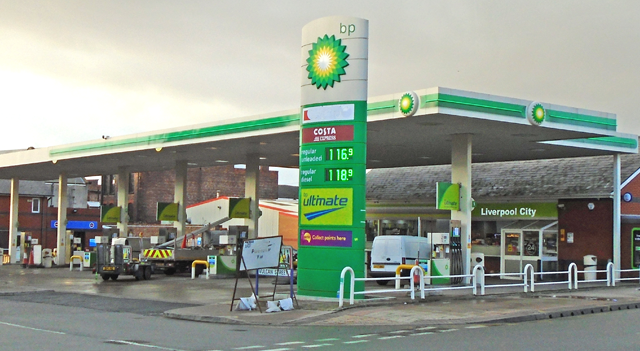
    BP Plc (LSE:BP.) saw its shares fall more than 4% after reporting a fourth-quarter loss of $3.4bn and announcing the suspension of its share buyback programme, marking a significant shift in capital allocation strategy. The result compares with a $1.2bn profit in the previous quarter and was driven by $4.3bn of adjusting items, largely impairments across the group’s gas and low-carbon businesses.

    Underlying replacement cost profit, BP’s preferred earnings metric excluding one-off items, declined to $1.5bn from $2.2bn in the third quarter and came in below market expectations. For the full year 2025, underlying profit fell to $7.5bn from $8.9bn in 2024, reflecting a weaker oil price environment, a less favourable upstream mix and lower refinery throughput due to increased maintenance activity.

    The group also took sizeable writedowns across its renewables portfolio, with impairments linked to solar, biogas and offshore wind assets contributing to total charges of more than $5bn for the year. These losses have added pressure on interim chief executive Carol Howle, who is moving to re-prioritise cash flow generation and balance-sheet repair ahead of incoming CEO Meg O’Neill’s arrival in April.

    Howle said BP is taking “decisive action” to strengthen the business, pointing to the execution of a $20bn asset disposal programme and the decision to halt buybacks. Going forward, all surplus cash will be directed toward debt reduction, replacing earlier guidance that 30–40% of operating cash flow would be returned to shareholders. Net debt stood at around $22bn at year-end, supported by more than $3bn of divestment proceeds during the quarter.

    Progress on portfolio simplification continued, with expected proceeds from completed and announced disposals now exceeding $11bn. A key transaction is the planned $6bn sale of a 65% stake in Castrol, after which BP will retain a 35% holding.

    Operationally, the company reported record upstream plant reliability of 96.1% for 2025 and completed seven major projects during the year. Fourth-quarter upstream production averaged 2.34 million barrels of oil equivalent per day, slightly below the prior quarter but helped by a higher proportion of oil-weighted output. BP also highlighted encouraging exploration momentum, including the Bumerangue discovery offshore Brazil.

    Despite the quarterly loss and buyback suspension, BP maintained its dividend at 8.32 cents per share and reaffirmed its commitment to annual dividend growth of at least 4%. Capital expenditure for 2026 will be set at the lower end of the $13–13.5bn guidance range, while the company increased its structural cost-reduction target to $5.5–6.5bn by the end of 2027.

    Analysts acknowledged the strategic reset but cautioned that the move could leave BP lagging peers that continue to return higher levels of cash to shareholders. RBC Capital Markets reiterated its “sector perform” rating, describing the buyback suspension as appropriate given the balance-sheet position, while noting that BP now offers a materially lower distribution yield relative to competitors.

  • British Land Lands Long-Term Pre-Let at Broadgate Office Scheme

    British Land Lands Long-Term Pre-Let at Broadgate Office Scheme

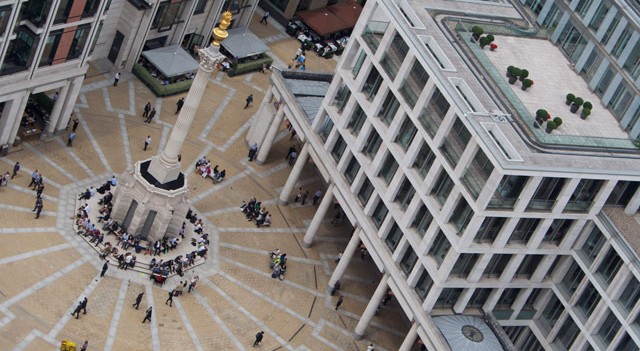
    British Land (LSE:BLND) has agreed a major pre-letting at its Broadgate campus in the City of London, with international law firm Herbert Smith Freehills Kramer committing to a 21-year lease for 238,000 square feet at 1 Appold Street. The agreement represents a significant milestone for the development, securing around 60% of the building’s office space ahead of completion.

    The lease includes expansion rights that could increase the firm’s footprint to as much as 360,000 square feet, alongside a dedicated entrance at 8 Exchange Square. Herbert Smith Freehills Kramer is already a major occupier at Broadgate, where it currently uses 270,000 square feet at Exchange House as its headquarters.

    The redevelopment of 1 Appold Street will be delivered by Skanska and is scheduled for completion in the first quarter of 2029. The scheme will offer sustainability-led office accommodation with terraces, around 48,000 square feet of leisure space and strong transport connectivity, including direct links to Liverpool Street station and the Elizabeth Line.

    Kelly Cleveland, Head of Real Estate and Investment at British Land, said the deal reflects the growing appeal of Broadgate, citing its mix of global occupiers, strong transport connections, high sustainability standards and high-quality public realm. The company added that the transaction underlines continued demand for premium office space in central London, set against a backdrop of limited new supply.