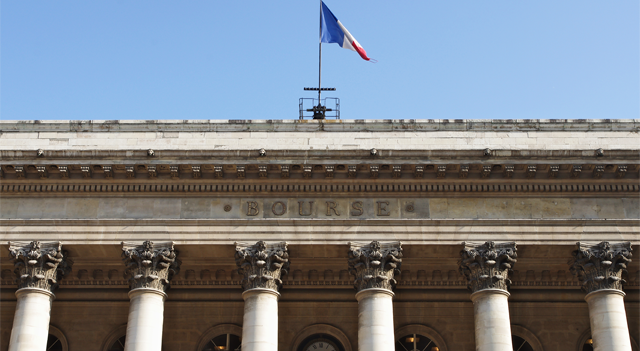
European equity markets moved higher on Tuesday despite the continued surge in global oil prices, supported in part by reports that U.S. President Donald Trump may be prepared to end the war in Iran even if the Strait of Hormuz remains largely closed.
The pan-European Stoxx 600 gained 0.4%, while Germany’s DAX added 0.3%. The FTSE 100 in the United Kingdom climbed 0.5%, and France’s CAC 40 rose 0.6%.
According to a report from the Wall Street Journal, Trump is open to bringing the military campaign in Iran—now running for more than a month—to a close even if Tehran continues to control the Strait of Hormuz, a key shipping route that normally carries about one-fifth of global oil supply. The waterway’s effective closure in recent weeks has pushed oil prices sharply higher and increased fears of a potential global economic slowdown.
Brent crude, the international benchmark, was trading above $115 per barrel, compared with around $70 per barrel before the conflict began.
The report said Trump and his advisers believe that a full operation to reopen the strait would extend the conflict well beyond the administration’s preferred four-to-six-week timeline. Instead, the strategy has focused on damaging Iran’s naval capabilities and missile stockpiles before gradually reducing military engagement while applying diplomatic pressure on Tehran. If those efforts fail, Washington may encourage European and Gulf allies to take responsibility for restoring access to the strait, according to administration officials cited by the newspaper.
At the same time, the economic consequences of the expanding Middle East conflict—initially sparked by a joint U.S.–Israeli offensive against Iran and now involving multiple regional actors—were reflected in the latest eurozone inflation figures released Tuesday.
Data showed that consumer prices across the 21 countries using the euro rose 2.5% year-on-year in March, up from 1.9% in February, when the broader escalation of the conflict had not yet fully taken hold. Economists had expected inflation to come in slightly higher at 2.6%.
Even so, the figure remains above the European Central Bank’s 2% inflation target. In recent days, ECB officials have indicated that interest rate increases could be considered if price pressures continue to rise as a result of the geopolitical shock triggered by the late-February U.S.–Israeli assault on Iran.
Energy prices have been one of the most visible economic effects of the conflict, with Eurozone energy costs jumping 4.9% this month amid soaring oil and natural gas prices.
Leave a Reply