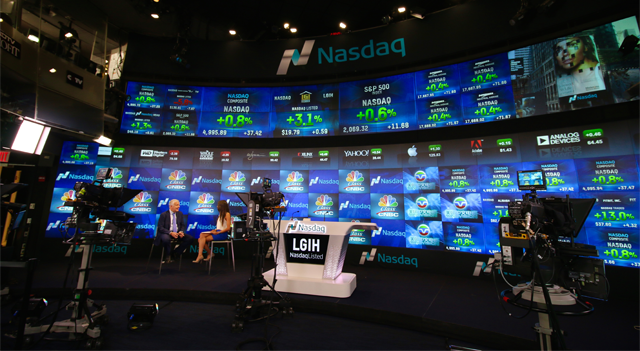
U.S. equity futures traded higher early Wednesday as investors responded to signs that Washington may be preparing to step away from the ongoing conflict with Iran. Oil prices also dropped below $100 per barrel, though they remain significantly above pre-war levels. In corporate news, Nike (NYSE:NKE) shares fell in after-hours trading following its earnings release, as continued weakness in China weighed on results.
Futures move higher
U.S. stock futures pointed to gains ahead of the open, with markets encouraged by indications that the United States could soon wind down its military campaign in Iran, now entering its second month.
As of 03:25 ET, Dow futures had climbed 270 points, or 0.6%, S&P 500 futures were up 43 points, or 0.7%, and Nasdaq 100 futures had advanced 227 points, or 1.0%.
Wall Street’s major indexes closed higher on Tuesday, supported by rising expectations that the U.S. may soon pull back from its joint operations with Israel against Iran, a conflict that has expanded and raised concerns about broader instability across the Middle East.
Those expectations gained traction after a Wall Street Journal report said U.S. President Donald Trump told advisers he would consider ending the war even if tanker traffic through the Strait of Hormuz remains largely restricted. Analysts at Vital Knowledge said Trump’s later comments to reporters and posts on social media appeared to reinforce the report.
Trump also repeated that negotiations with Iran are progressing, although officials in Tehran have frequently disputed that claim. Still, Iran acknowledged that communications are ongoing between the two sides, while the country’s president said Iran has the “necessary will” to end the war if it receives assurances that further attacks will not occur.
“Risk sentiment has been stabilizing as equities recover and bond spreads ease. Amid the mixed messaging, there were already signs that U.S. President Trump was looking for a way out; markets pounced on headlines that the Iranian president was willing to end the conflict, albeit sticking to Iran’s demands,” ING analysts wrote in a note.
Oil slips following Trump remarks
Oil prices fell below the $100 threshold on Wednesday, reflecting a degree of easing anxiety in energy markets.
Brent crude, the international oil benchmark, dropped 4.2% to $99.60 per barrel for the June contract. After the war broke out in late February, Brent had surged to nearly $120 per barrel, compared with roughly $70 prior to the conflict.
The earlier surge was largely driven by disruptions around the Strait of Hormuz, the strategic shipping lane along Iran’s southern coast that normally handles about 20% of global oil shipments. Persistent threats from Iranian drone and missile strikes significantly reduced tanker traffic, heightening fears of supply disruptions.
The spike in energy costs also fueled concerns that inflation could accelerate, potentially forcing central banks to keep interest rates elevated. Government bond yields rose on those expectations, adding pressure on equity markets.
Speaking to reporters at the White House on Tuesday, Trump said the United States would be “leaving very soon,” adding that the administration’s goal of eliminating Iran’s nuclear threat had been “attained” and that a formal agreement was not required to end the conflict.
However, Trump has yet to outline what steps Washington plans to take regarding the Strait of Hormuz. On Tuesday he said U.S. allies should “take” responsibility for the waterway.
Gold extends gains
Gold prices advanced again in European trading, marking a fourth consecutive session of gains.
Spot gold rose back above $4,700 per ounce. The precious metal gained 3.5% on Tuesday as the U.S. dollar weakened, though it still dropped more than 11% during March, its worst monthly performance since October 2008.
Expectations for persistently high interest rates had weighed on gold, which does not generate yield, for much of the previous month. Those concerns eased somewhat after Federal Reserve Chair Jerome Powell said this week that long-term U.S. inflation expectations remain stable and policy is “in a good place to wait and see.”
ING analysts said gold remains exposed to risks from tighter liquidity conditions and a stronger dollar, but added that “so far pullbacks have been met with buying rather than a loss of confidence.”
Investors are also awaiting upcoming U.S. economic releases, particularly Friday’s nonfarm payrolls report, for further signals about monetary policy and currency trends.
Nike earnings disappoint investors
Separately, Nike (NYSE:NKE) reported quarterly earnings that topped expectations on both revenue and profit, but its results highlighted continued challenges in the Greater China market and declining gross margins.
The athleticwear company’s shares slipped in extended trading.
Nike’s results come as investors look for evidence that CEO Elliott Hill’s turnaround plan is gaining traction. The company has been grappling with slowing revenue in China, margin pressure linked to tariffs and intensifying competition from brands such as Anta and Li Ning in China, Switzerland’s On, and Deckers’ Hoka.
Nike reported earnings of $0.35 per share on revenue of $11.28 billion for its fiscal third quarter. Analysts had forecast $0.30 per share on revenue of $11.23 billion.
Revenue from Greater China, which accounts for roughly 15% of Nike’s total global sales, fell 7% year over year to $1.62 billion, marking the seventh consecutive quarterly decline.
Microsoft in talks over data center power project
In other corporate developments, Microsoft Corporation (NASDAQ:MSFT) is reportedly in exclusive negotiations with Chevron Corp (NYSE:CVX) and Engine No. 1 regarding the development of a large energy complex in West Texas to supply electricity to a data center campus, according to Bloomberg News.
The proposed natural gas-powered facility could cost about $7 billion and initially produce 2,500 megawatts of power, people familiar with the discussions told Bloomberg.
The talks come as Microsoft and other AI-focused technology giants rapidly expand computing infrastructure to meet growing demand for artificial intelligence applications, making reliable power supply a critical part of their strategy.
Microsoft is expected to spend as much as $146 billion on AI-related capital expenditures during its fiscal year 2026.
Leave a Reply