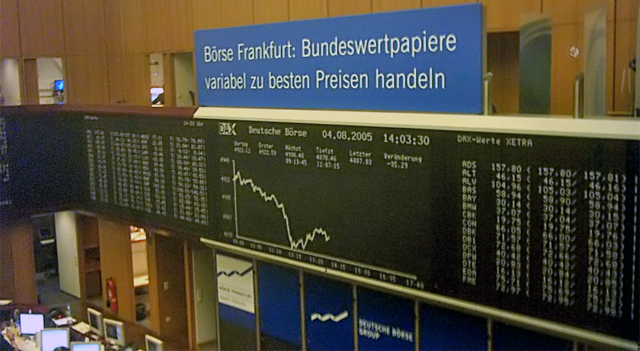
European equity markets opened slightly firmer on Friday, taking cues from gains on Wall Street after Benjamin Netanyahu indicated a willingness to pursue talks with Lebanon.
As of 07:13 GMT, the Stoxx Europe 600 was up 0.2%, while Germany’s DAX rose 0.4%. The FTSE 100 added 0.1%, and France’s CAC 40 hovered around flat.
The remarks helped lift sentiment around a potential extension of the U.S.-Iran ceasefire ahead of possible talks between Washington and Tehran over the weekend. However, the situation remains uncertain. Iran’s foreign minister warned that the country would not take part in discussions in Pakistan if Israeli strikes against Hezbollah-linked targets in Lebanon continue.
Israel confirmed further military action on Friday, while Netanyahu stated there is “no ceasefire” in Lebanon, underscoring the fragile nature of the truce.
Meanwhile, tanker traffic through the Strait of Hormuz remains severely disrupted. According to reports, flows through the key waterway are still operating at less than 10% of normal levels, despite the ceasefire. Iran has reportedly instructed vessels to remain within its territorial waters when transiting the strait, which is critical for global oil supply.
The disruption is particularly significant for Asian economies that rely heavily on crude shipments passing through the region, while Europe depends on natural gas from Persian Gulf producers, some of which have been affected by recent Iranian actions.
In Saudi Arabia, attacks on energy infrastructure have reduced oil production capacity by around 600,000 barrels per day and cut throughput on the East-West Pipeline by approximately 700,000 barrels per day, further tightening supply conditions.
These factors have supported oil prices. Brent crude was last up 1.4% at $97.24 per barrel, while U.S. West Texas Intermediate gained a similar amount to $99.25. Although the temporary ceasefire has put oil on track for its largest weekly decline since June 2025, prices remain elevated compared with levels prior to the escalation in late February.
Rising energy costs have heightened concerns about inflation, potentially prompting tighter monetary policy from central banks such as the European Central Bank. Bond markets have been volatile as investors assess how geopolitical developments could shape the outlook for interest rates, with knock-on effects for equities.
Further clarity may come later in the day with the release of U.S. inflation data for March. Economists expect a sharp increase in headline inflation, largely driven by higher fuel prices following the recent energy shock.
“Markets aren’t being provided with clear direction at the moment. There is a strong sense that the ceasefire is fragile, with ongoing Israeli attacks in Lebanon proving a key friction in U.S.-Iran negotiations,” analysts at ING said in a note.
In corporate news, Sodexo (EU:SW) lowered its full-year sales and profit guidance, while AO World (LSE:AO.) said it expects annual profit to reach the upper end of its forecast range.
Leave a Reply