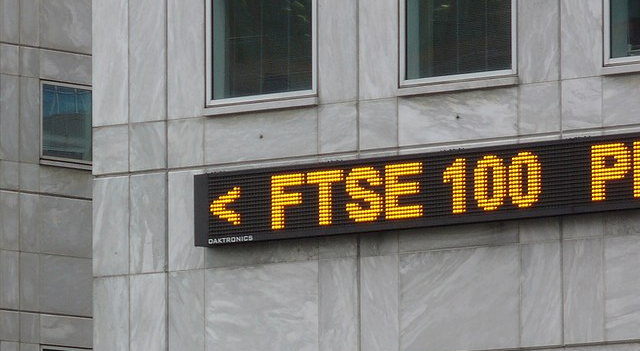
European equities opened lower on Wednesday as investors reacted to surging global bond yields and continued geopolitical uncertainty surrounding tensions between the United States and Iran, overshadowing softer-than-expected UK inflation data.
The FTSE 100 declined 0.50% in early trading, while Germany’s DAX fell 0.28% and France’s CAC 40 slipped 0.10%. Sterling weakened 0.05% against the U.S. dollar to 1.3388 as of 07:15 GMT.
Bond market pressure dominates sentiment
Global bond markets remained the primary driver of investor sentiment. The yield on the 30-year U.S. Treasury eased slightly to 5.17% but stayed close to its highest level since 2007 after a sharp rise over recent weeks. Meanwhile, the benchmark 10-year Treasury yield traded near 4.66%, marking a 16-month high.
UK inflation cools more than expected
UK inflation data offered some relief for markets after the Office for National Statistics reported that consumer price inflation slowed to 2.8% year-on-year in April, below economist expectations of 3% and down from 3.3% in March.
Core inflation eased to 2.5% from 3.1%, while services inflation — closely monitored by the Bank of England — dropped sharply to 3.2% from 4.5%.
Following the release, investors reduced expectations for further Bank of England rate increases, with interest-rate futures implying around 52 basis points of tightening by December, down from approximately 60 basis points the previous day.
However, analysts warned that underlying inflationary pressures remain elevated. Producer price inflation accelerated to 4% in April, significantly above expectations of 2.8% and up from 3% in March, driven by a 7.7% increase in input costs linked to supply disruptions arising from Middle East tensions.
“The drop in CPI inflation… feels like the lull before the storm,” Capital Economics Ltd said, forecasting inflation could climb toward 4% by early 2027.
Iran tensions remain in focus
Geopolitical concerns continued to weigh on markets after U.S. President Donald Trump said he had been close to authorising additional strikes on Iran before delaying action following requests from Gulf allies to allow further negotiations.
Trump stated that a “full, large scale assault” could still be launched “on a moment’s notice.”
Iran’s deputy foreign minister reiterated Tehran’s demands for sanctions relief, the release of frozen assets and an end to the U.S. naval blockade as conditions for any agreement, while Iranian officials warned any renewed military action would trigger a stronger response.
Andrew Bailey, governor of the Bank of England, was due to appear before the Treasury Committee later on Wednesday to discuss last month’s interest-rate cut and the potential economic impact of the Iran conflict.
UK corporate and political developments
Marks and Spencer Group plc (LSE:MKS) reported a 24% decline in annual profit, citing the impact of a seven-week suspension of online clothing orders following last year’s cyberattack.
Meanwhile, UK Chancellor Rachel Reeves unveiled reforms designed to accelerate approval processes for major energy and infrastructure projects by allowing parliament to fast-track decisions and reduce delays caused by judicial reviews.
Leave a Reply