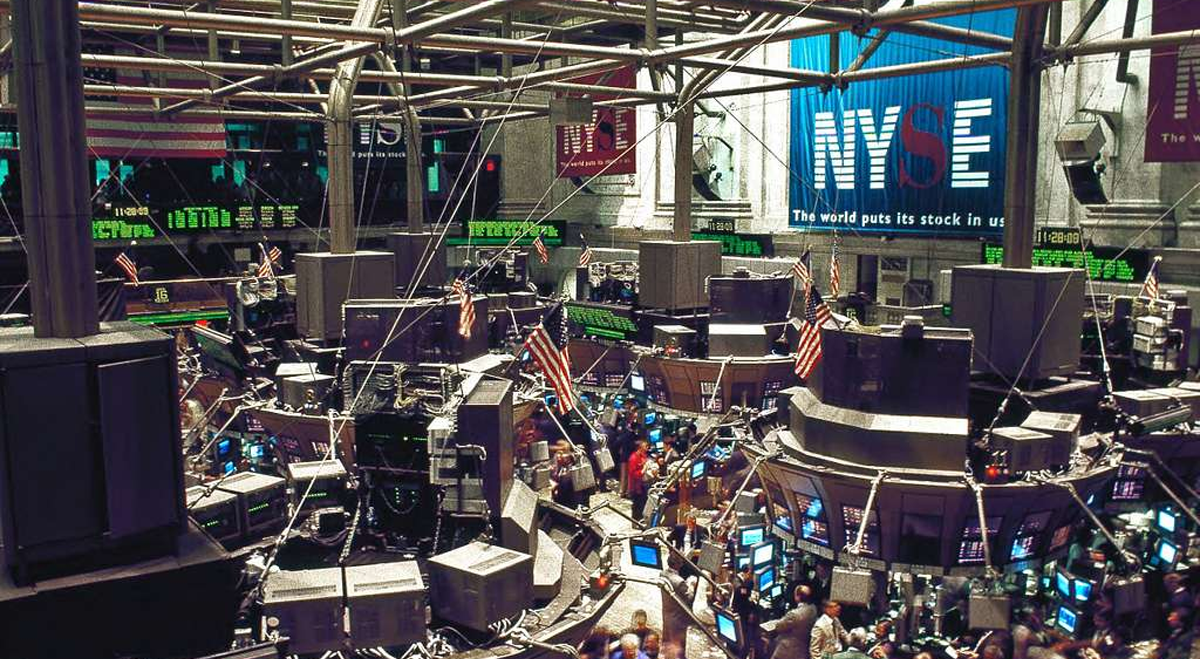
U.S. equity futures traded in positive territory early Monday, indicating a potentially stronger open on Wall Street, although escalating military tensions between the United States and Iran continued to cast a shadow over hopes for a broader diplomatic settlement.
At the same time, crude oil prices moved higher, remaining well above levels seen before the conflict began, while investors assessed reports suggesting U.S. President Donald Trump is seeking amendments to a proposed agreement aimed at easing regional tensions. In the technology sector, Nvidia (NASDAQ:NVDA) introduced a new processor platform designed specifically for Windows-based computers.
Futures Point to Further Gains on Wall Street
As of 03:23 ET, futures tied to the Dow Jones Industrial Average were up 54 points, or 0.1%. S&P 500 futures gained 20 points, or 0.3%, while Nasdaq 100 futures rose 135 points, equivalent to 0.4%.
The positive sentiment followed another strong finish for U.S. equities last week, with major benchmarks reaching fresh record closing highs. Technology shares continued to lead the market higher, helped in part by Dell’s decision to raise its full-year revenue and earnings outlook, which boosted confidence across the broader tech sector.
Investor optimism has also been supported by expectations that Washington and Tehran could eventually reach a diplomatic agreement, reducing fears that prolonged hostilities might trigger an energy-driven economic slowdown coupled with persistent inflation.
Fresh Military Escalation Challenges Diplomatic Momentum
Despite ongoing negotiations, the latest developments in the Middle East served as a reminder that a lasting agreement remains uncertain.
According to Associated Press reports, U.S. forces carried out strikes on Iranian radar and drone-control facilities after Iran allegedly shot down an American drone over the weekend. Tehran later confirmed additional retaliatory attacks, while Kuwait reported intercepting incoming drones and missiles.
Elsewhere, Israel has reportedly expanded military operations in parts of southern Lebanon following drone attacks linked to Hezbollah.
President Donald Trump has repeatedly stated that he believes Iran is interested in securing a deal, although discussions continue to focus on several unresolved issues, particularly Tehran’s nuclear programme.
Reports indicate that Trump is reviewing a proposed memorandum of understanding that would extend the current ceasefire arrangement, support the resumption of maritime traffic through the Strait of Hormuz and establish a framework for future talks concerning Iran’s nuclear activities.
However, Iran’s chief negotiator signalled over the weekend that Tehran would reject any agreement that fails to protect what it views as its sovereign rights.
Oil Markets Remain Sensitive to Hormuz Developments
Brent crude futures extended their gains, climbing 3.1% to $93.92 per barrel by 03:56 ET.
Although expectations of a diplomatic breakthrough have prevented oil prices from revisiting recent highs above $100 per barrel, prices remain substantially elevated compared with pre-conflict levels.
Market analysts note that even if an agreement is reached, shipping operations through the Strait of Hormuz may require considerable time to normalise. As a result, geopolitical risk continues to be reflected in oil prices.
The strategic waterway plays a crucial role in global energy markets, carrying a significant share of worldwide oil and natural gas exports. Any disruption to traffic through the corridor has major implications for global supply chains and energy costs.
Inflation Concerns Continue to Influence Market Expectations
The conflict’s impact has extended beyond energy markets, shaping broader economic expectations.
Higher oil prices have increased concerns that inflation could remain elevated, potentially forcing central banks to maintain restrictive monetary policies for longer than previously anticipated. Investors are therefore balancing expectations of economic resilience against the risk of tighter financial conditions.
Such concerns could affect demand for risk-oriented assets, including equities, if interest rates remain elevated or move higher.
ISM Manufacturing Survey in Focus
Attention later in the session will turn to the latest U.S. manufacturing data from the Institute for Supply Management.
Economists expect the ISM manufacturing purchasing managers’ index to rise to 53.3 in May from 52.7 in April. Any reading above 50 indicates expansion in manufacturing activity.
Investors will also examine the report’s prices-paid component, forecast to increase to 85.3 from 84.6, for additional clues about inflationary trends within the industrial sector.
Nvidia Expands AI Ambitions With New Windows Processor
Nvidia (NASDAQ:NVDA) unveiled a new processor architecture aimed at bringing advanced artificial intelligence capabilities directly to Windows PCs.
Chief Executive Jensen Huang introduced the RTX Spark family of “superchips” during his keynote presentation at the COMPUTEX technology exhibition in Taiwan.
The platform incorporates Nvidia’s N1X processor, developed in partnership with Microsoft and designed alongside Taiwanese semiconductor company MediaTek. The chips are built on Arm-based technology.
Huang said the processors are intended primarily for running AI agents and artificial intelligence workloads locally on personal devices. He also noted that Nvidia worked closely with Microsoft to optimise the software environment supporting the new hardware.
The announcement represents another milestone in Nvidia’s strategy to broaden the reach of its AI technologies beyond data centres and cloud infrastructure, bringing high-performance artificial intelligence capabilities directly to consumers and business users through personal computers.
Leave a Reply