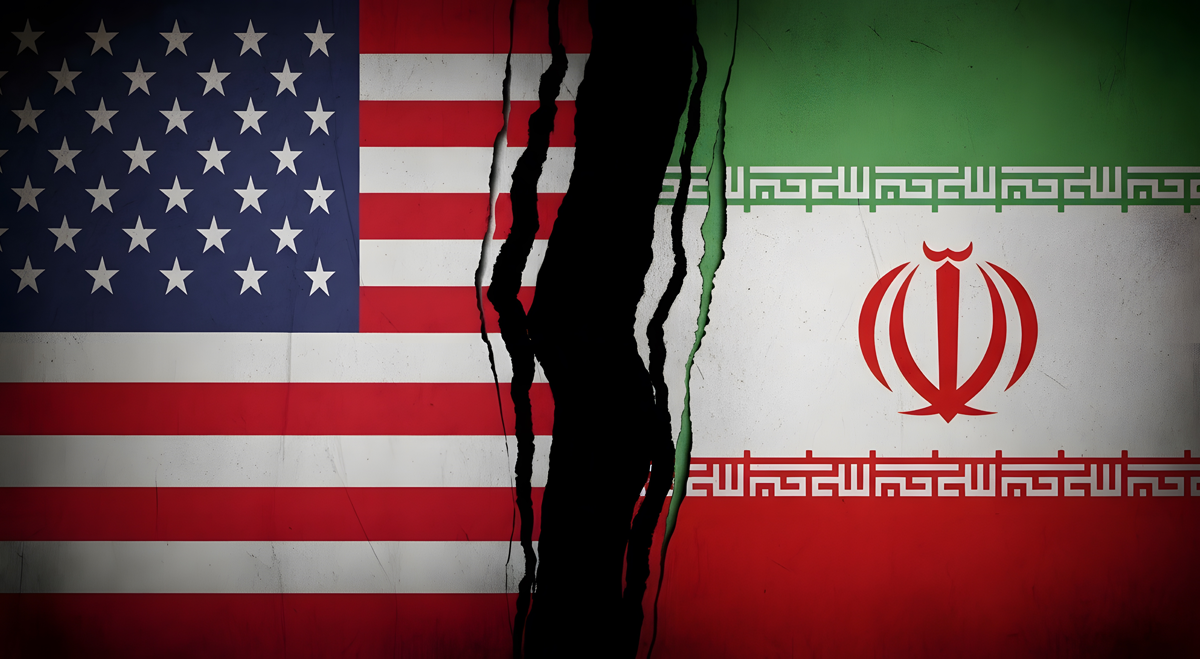
Investors are navigating a combination of geopolitical uncertainty, corporate developments and central bank policy expectations, with U.S. equity futures showing modest gains after a sharp sell-off on Wall Street. Fresh military exchanges between the United States and Iran remain a major market concern, while Oracle (NYSE:ORCL) faces investor scrutiny after outlining substantial funding requirements for its artificial intelligence expansion. Meanwhile, attention in Europe is firmly on the European Central Bank and its expected interest-rate announcement.
U.S. Futures Attempt to Recover After Wall Street Sell-Off
U.S. stock index futures traded higher on Thursday, indicating that markets may attempt to recover some of the losses recorded during the previous session as investors assessed inflation risks and geopolitical developments.
At 03:13 ET (07:13 GMT), futures linked to the Dow Jones Industrial Average were up 215 points, or 0.4%. S&P 500 futures climbed 38 points, or 0.5%, while Nasdaq 100 futures advanced 230 points, equivalent to 0.8%.
The prior session was marked by heavy selling pressure. The Dow suffered its steepest decline since October, falling 1.9%, while the Nasdaq Composite dropped 2%. The benchmark S&P 500 lost 1.6%, ending the day at its lowest level in five weeks.
Market sentiment deteriorated after President Donald Trump warned that Iran would “pay the price!!!” for delaying peace negotiations with Washington. Investors also reacted to renewed military action between the two countries and continuing clashes involving Iran-backed Hezbollah forces in Lebanon.
At the same time, inflation concerns intensified after U.S. consumer price data accelerated to the strongest pace seen in years, highlighting the inflationary impact of higher energy costs linked to the conflict. Investors are now awaiting producer price figures scheduled for release later on Thursday.
“With signs of a near-term resolution fading, investors grew more concerned about the stagflationary scenarios again, with bonds and equities selling off on both sides of the Atlantic,” analysts at Deutsche Bank said.
Questions surrounding the economics of artificial intelligence investments also remained in focus. Shares of Super Micro Computer fell sharply after the company joined a growing list of AI-related businesses seeking significant amounts of new capital, fuelling concerns that some firms may face increasing challenges in financing the infrastructure needed to support future AI growth.
Military Escalation Continues Between Washington and Tehran
The conflict between the United States and Iran intensified further as both countries carried out additional strikes for a second consecutive day.
President Donald Trump warned that more military action could follow if Tehran failed to immediately agree to a peace settlement. According to U.S. Central Command (CENTCOM), American forces targeted several Iranian military installations overnight, describing the operations as “self-defense” after a U.S. helicopter was shot down in the Strait of Hormuz.
CENTCOM later confirmed that the latest phase of its military campaign against Iran had concluded.
Media reports indicated that Iran responded with attacks against several U.S. military positions and allied facilities across the Gulf region. Explosions were reportedly heard in Kuwait, Bahrain and Jordan, although independent verification of the reports was not immediately available.
Oil Prices Reverse Earlier Gains
Crude oil prices moved lower after initially rallying on the latest military developments, as traders assessed reports suggesting that diplomatic engagement between Washington and Tehran had not completely broken down.
CNN, citing a diplomatic source, reported that discussions between the two sides continued overnight despite the ongoing conflict.
By 03:30 ET, Brent crude futures for August delivery were down 0.6% at $92.59 per barrel, while West Texas Intermediate crude futures fell 0.5% to $89.58 per barrel.
Both benchmarks had risen by more than 2% during Asian trading before surrendering those gains. Investors also monitored claims from Tehran that vessel traffic through the Strait of Hormuz had been halted, an assertion later rejected by U.S. military officials.
Oil prices had closed nearly 2% higher in the previous session.
Oracle Shares Decline Despite Earnings Beat
Oracle (NYSE:ORCL) reported quarterly revenue and earnings that exceeded analyst expectations and also increased its forecast for annual adjusted earnings per share.
However, the stock moved lower in after-hours trading after management disclosed plans to secure approximately $40 billion in financing during fiscal 2027.
“[T]his is an OK release with continued robust growth in backlog, and the cash performance wasn’t as bad as feared (thanks to lower capex). But the company is still facing a period of heavy cash outflows as it builds the infrastructure needed to fulfill its backlog, and this will require more debt and equity,” analysts at Vital Knowledge said in a note.
The company has increasingly focused on cloud infrastructure and data centres designed to support artificial intelligence workloads, while continuing to generate substantial income from its core software businesses. Nevertheless, investors remain concerned about the scale of borrowing required to fund Oracle’s ambitious AI-related expansion plans.
ECB Expected to Tighten Policy
In Europe, market participants are awaiting the outcome of the European Central Bank’s latest policy meeting, with a 25-basis-point interest-rate increase widely anticipated.
If approved, the move would lift the ECB’s deposit rate to 2.25% from 2.0%, marking the central bank’s first rate hike in almost three years.
Inflation across the eurozone has climbed above 3%, exceeding the ECB’s 2% target and strengthening the case for tighter monetary policy even as economic growth slows.
Policymakers, however, face the challenge of balancing inflation risks against signs of weakening economic activity across the region.
“On the activity side, we have already seen a weak batch of German factory orders data for April today, and the risk is that eurozone manufacturing activity data now starts to deteriorate after hoarding/inventory building earlier this year around the uncertainty of the Gulf conflict,” analysts at ING said in a note.
Leave a Reply