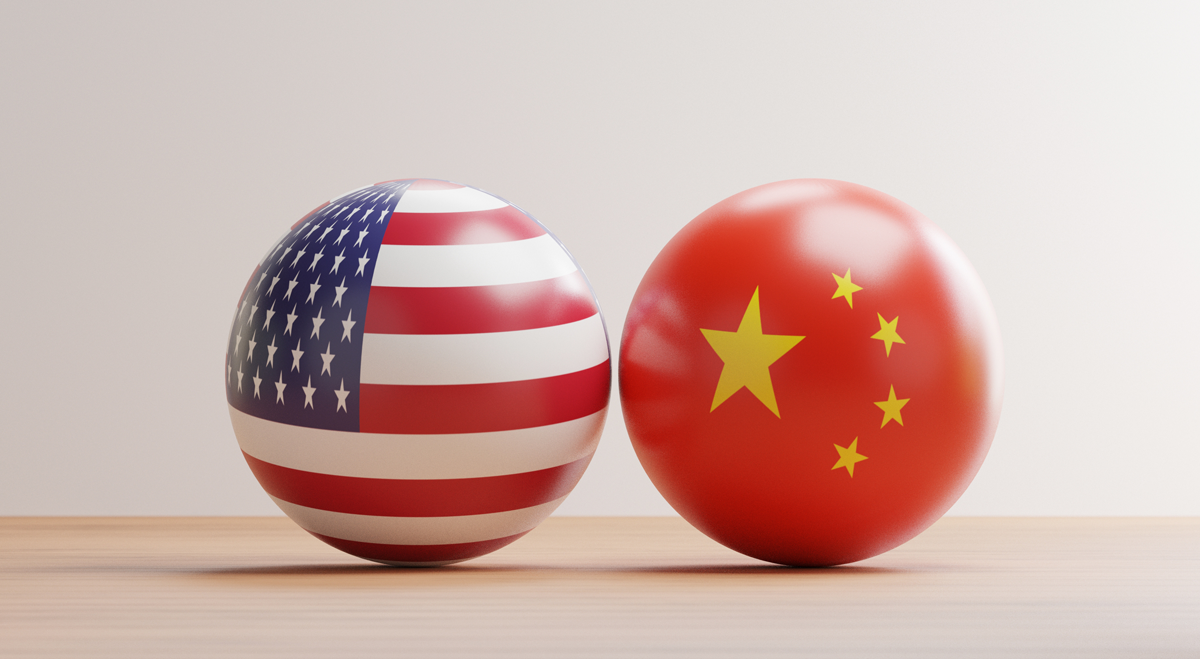
Escalating tensions between Washington and Beijing over artificial intelligence could derail efforts to establish international AI safety standards, analysts warn, as governments become increasingly concerned about the security implications of more advanced AI systems.
The latest dispute centres on allegations that Chinese AI company Moonshot improperly relied on technology developed by U.S.-based Anthropic, further intensifying the technological rivalry between the world’s two largest economies.
Sanctions Threaten Planned AI Dialogue
The United States is considering sanctions against Moonshot while simultaneously investigating whether Chinese firms have gained access to advanced American chips in breach of export controls.
Analysts believe these developments could undermine planned diplomatic discussions on AI governance and increase the likelihood of retaliatory measures from Beijing.
Paul Triolo warned that “Depending on the number of Chinese companies targeted, (and) the nature of the punitive actions taken… the retaliation has the potential to scuttle both the AI dialogue and the September 24 meeting between Presidents Trump and Xi.”
Open AI Models Present New Security Challenges
Security experts are paying increasing attention to open-weight AI models, which can be freely modified after release.
Recent cybersecurity incidents have highlighted both the benefits and risks of these systems, prompting renewed calls for stronger international oversight.
Yoshua Bengio said, “The logical thing to do is to find a good evaluation of these models, share the models that are not too dangerous, and not share those above the threshold of risk.”
Researchers Push for Global Standards
Many AI specialists argue that advanced models should undergo more rigorous independent testing before public release.
Kristy Loke said, “In an ideal world, the two countries will come together to work on safer models… agree to build common standards around pre-release testing and set red lines for the most advanced open models.”
U.S. Officials Remain Divided
The debate has also exposed differing views within the United States over how aggressively Chinese AI companies should be restricted.
David Sacks argued that leading American developers “want the government to eliminate their open-source competition,” while insisting that the “Kimi Panic needs to stop.”
He concluded, “As long as we don’t sabotage ourselves with unnecessary rules, the U.S. will continue to win.”
Leave a Reply