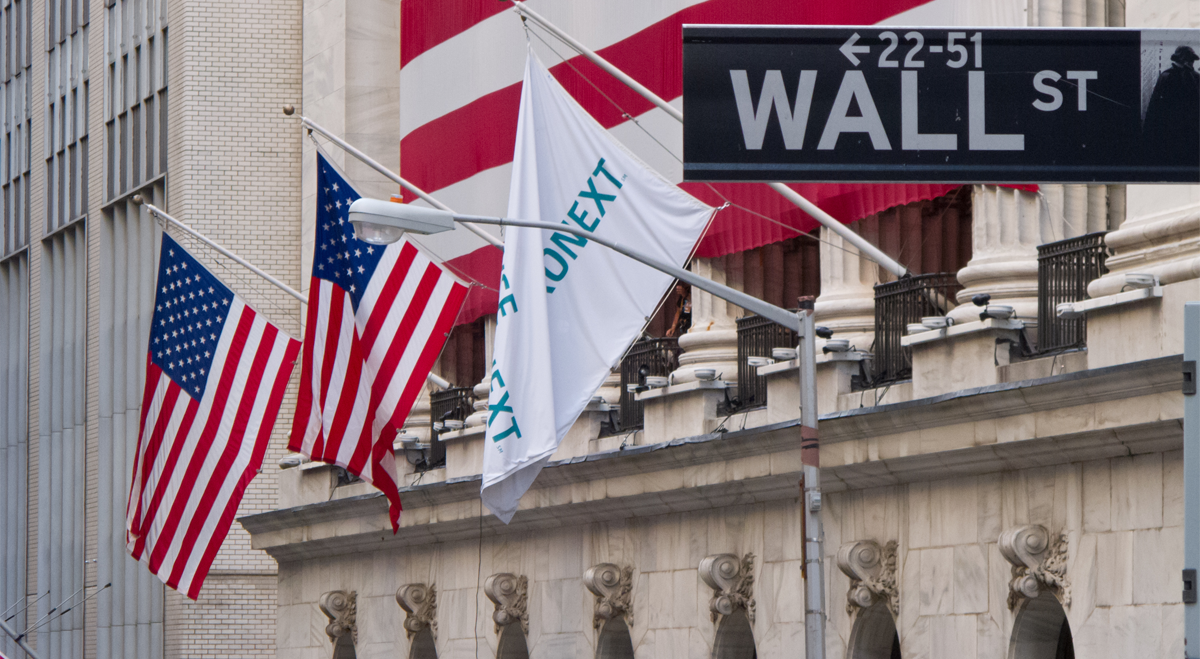
Investors entered the new week with expectations for an imminent Federal Reserve rate increase fading, leaving U.S. stock futures mixed as attention shifts towards major retail earnings and another round of economic indicators.
Walmart (NYSE:WMT), Home Depot (NYSE:HD) and Lowe’s (NYSE:LOW) are among the prominent retailers due to report in the coming days, potentially providing fresh evidence about the health of U.S. consumer spending.
Away from Wall Street earnings, investors are assessing reports that Anthropic (NASDAQ:ANTP) could generate as much as $200 billion in annual revenue by 2028 as the artificial intelligence company considers a potential IPO. Geopolitical risk also remains prominent after commercial shipping through the Strait of Hormuz slowed dramatically over the weekend.
Fed tightening expectations retreat
U.S. futures showed no clear direction early Monday. At 03:08 ET (07:08 GMT), Dow futures had fallen 26 points, or 0.1%, while S&P 500 futures were 15 points, or 0.2%, higher. Nasdaq 100 futures gained 160 points, equivalent to 0.5%.
The moves followed declines for the major Wall Street averages in the previous session, when unexpectedly weak U.S. retail sales added to evidence of cooling economic conditions.
Applied Materials (NASDAQ:AMAT) contributed to the pressure after an optimistic outlook still fell short of demanding investor expectations. Its shares dropped more than 5%, with the disappointment spilling over into other stocks associated with the artificial intelligence investment cycle.
Deutsche Bank analysts identified signs that markets could be entering a summer lull, noting that the VIX volatility index fell to a 2026 low on Friday. They nevertheless highlighted “challenging August crosswinds playing out in bond markets.”
“Expectations for an imminent Fed rate hike have been pulled back, but this has been accompanied by a significant U.S. curve steepening, with the backdrop of higher oil prices, elevated fiscal deficits, and demand for capital from the AI investment boom putting upward pressure on yields,” the analysts wrote.
Bond investors will receive further signals this week from the minutes of the Federal Reserve’s July policy meeting and preliminary August business activity data.
Corporate results could prove equally important for equities. Alongside Home Depot, investors are preparing for earnings from Target, Lowe’s and Walmart as they assess whether U.S. households are becoming more cautious with their spending.
Anthropic’s potential IPO faces ambitious growth assumptions
Anthropic (NASDAQ:ANTP) expects annual revenue to reach approximately $190 billion to $200 billion by 2028, Reuters reported, citing people familiar with the AI developer’s finances.
Those projections are attracting attention as bankers and investors attempt to determine an appropriate valuation ahead of a possible initial public offering.
The forecast is more than four times Anthropic’s $47 billion revenue run rate disclosed in May, meaning any valuation based on the projection would incorporate substantial expectations for continued expansion.
According to Reuters, bankers and investors are using enterprise value-to-revenue multiples based on financial forecasts extending two years into the future.
Revenue multiples are frequently applied to rapidly growing software companies before their profitability reaches maturity. Looking two years ahead is less conventional, however, reflecting both Anthropic’s rapid expansion and the difficulty of valuing an AI developer facing enormous spending requirements for computing capacity, model development and talent.
Strait of Hormuz traffic virtually stops
Geopolitical tensions remain another important variable for global markets after commercial shipping activity through the Strait of Hormuz fell sharply during the weekend.
Kpler data cited by Reuters showed only five commodity vessels transited the waterway on Saturday, followed by none on Sunday. The previous weekend had recorded 31 crossings.
The slowdown followed attacks on three vessels operated by Abu Dhabi National Oil Company last week, which were reported by the United Arab Emirates.
Prospects for an immediate diplomatic solution have also deteriorated after the U.S. suggested its naval blockade of Iranian ports could continue indefinitely.
The scale of the disruption is particularly significant given the strait’s importance to global energy supplies. Before the U.S. and Israel launched their assault against Iran in late February, more than 130 vessels were crossing the route every day.
Brent crude futures were last 0.1% lower at $88.45 a barrel.
Chinese factories feel pressure from weaker domestic demand
China delivered another softer economic signal on Monday as industrial production growth slowed to 4.5% year-on-year in July.
The figure missed expectations for a 5% increase and represented a slowdown from June’s 5.3% growth rate, according to the National Bureau of Statistics.
Domestic conditions remain challenging for manufacturers. China’s official manufacturing PMI slipped into contraction territory in July, while consumer demand continued to show limited momentum.
Export demand remains a source of resilience, particularly for higher-technology Chinese goods, helping to cushion the broader slowdown in factory output.
Producers are nevertheless facing additional pressure from higher costs caused by disruption across international energy and shipping markets.
Nvidia could deepen AI infrastructure role with SB Energy investment
Nvidia (NASDAQ:NVDA) is considering an investment of up to $3 billion in SB Energy, according to The Information, which cited people familiar with the discussions.
The SoftBank Group-backed company is developing a planned data centre campus in Ohio for OpenAI, and Nvidia’s potential investment would further expand the chipmaker’s involvement in the infrastructure supporting the AI industry.
Separate negotiations between Nvidia, OpenAI and SB Energy reportedly involve the possibility of around $100 billion in credit support from Nvidia for the Ohio project.
Such an arrangement would illustrate how Nvidia’s role in the AI boom is expanding beyond supplying advanced processors and into financing the enormous computing infrastructure required to develop and operate artificial intelligence systems.
No final agreement has been reached, and the terms under discussion could still change. Nvidia is scheduled to report its latest quarterly earnings next week.
Leave a Reply