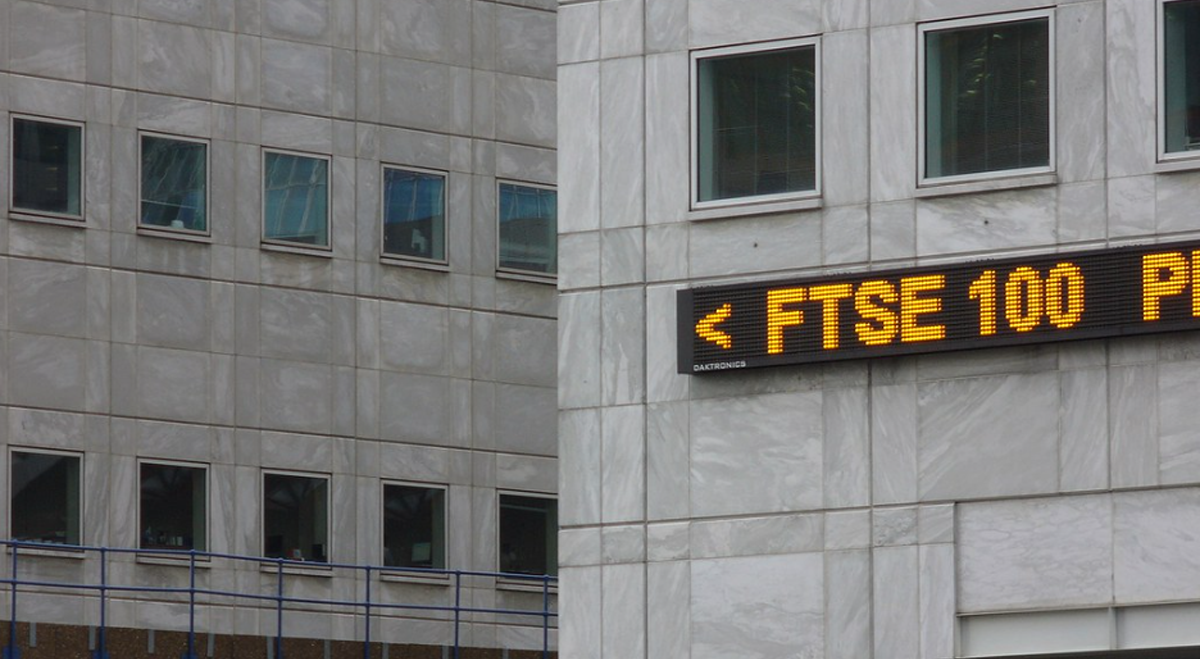
The FTSE 100 moved higher on Tuesday, outperforming other major European markets as gains in energy and consumer stocks helped London equities withstand escalating tensions surrounding the Strait of Hormuz.
The FTSE 100 advanced 0.16% as of 03:30 ET (07:30 GMT), while Germany’s DAX declined 0.48% and France’s CAC 40 slipped 0.18%. Sterling weakened 0.13% against the US dollar to 1.3526.
London’s relative strength came despite another escalation in the Iran conflict after a vessel travelling through the Strait of Hormuz was struck by an unidentified projectile.
BP and Shell Gain as Oil Prices Firm
Energy companies were among the strongest performers in London. Centrica (LSE:CAN) climbed 2.2%, BP (LSE:BP.) gained 2.1% and Shell (LSE:SHEL) advanced 1.5% as crude prices moved higher.
The UK Maritime Trade Operations said on Tuesday that a vessel travelling outbound through the Strait of Hormuz had been hit by an unknown projectile earlier in the session. The incident damaged the engine room and resulted in one crew casualty, while the remaining crew were receiving assistance from the Omani Coast Guard.
Elsewhere on the FTSE 100, hospitality group Whitbread (LSE:WTB) rose 1.9%, while Marks & Spencer (LSE:MKS) added 1.6%.
Strait of Hormuz Shipping Remains Severely Disrupted
Tuesday’s vessel strike represented the clearest escalation in the region during the session, while commercial shipping through the strategically important waterway remained heavily restricted.
According to Kpler tracking data published on Tuesday, six commodity vessels passed through the strait on Monday, compared with a 10-day average of 11. No very large crude carriers or LNG tankers made the crossing.
The disruption remains particularly significant for global energy markets because of the Strait of Hormuz’s importance as a transit route for oil and liquefied natural gas.
Iran Warns of ‘Fully Offensive’ Military Posture
The latest incident followed another deterioration in diplomatic signals on Monday.
A senior Iranian official told Reuters that Tehran would move to a “fully offensive” military posture, warning that Iranian entities should be prepared for further escalation in the Strait of Hormuz.
The official also said Iran would carry out a “timely and precise” military attack aimed at breaking the US naval blockade if diplomatic efforts failed.
Those comments came as a 60-day memorandum of understanding signed on 17 June to begin negotiations towards a permanent end to the conflict expired without an agreement. Washington explicitly ruled out extending the arrangement.
During a Fox News telephone interview on Monday, Trump said Iran “should put up the white flag of surrender” and warned Oman of military retaliation if Muscat interfered with US positions around the waterway.
Asked separately in the Oval Office whether Washington would extend the memorandum, Trump replied “no.”
Earlier on Monday, Trump wrote on Truth Social that “The number one Goal is, and always will be, that Iran cannot have, in any way, shape, or form, a Nuclear Weapon.”
UK Payrolled Employment Falls by 94,000
Investors were also assessing fresh UK labour-market figures published by HMRC and the Office for National Statistics on Tuesday.
Payrolled employment declined by 94,000 year on year in July to 30.3 million, representing a fall of 0.3%.
Median monthly pay increased 4.2% to £2,642. Health and social work recorded the strongest sectoral pay growth at 5.3%, while education registered the weakest increase at 3.3%.
No ministerial comments accompanied the release.
Oil Gains While Gold Moves Lower
Energy prices edged higher as traders monitored the disruption in the Strait of Hormuz. Brent crude futures rose 0.10% to $90.96 per barrel, while WTI crude gained 0.35% to $84.04.
Gold moved lower despite the heightened geopolitical uncertainty. December gold futures fell 0.32% to $4,458.90 an ounce, while spot gold declined 0.31% to $4,402.89.
The combination of stronger energy shares and modestly higher crude prices helped the FTSE 100 outperform continental European markets, even as investors faced renewed uncertainty over shipping through one of the world’s most important energy corridors.
Leave a Reply