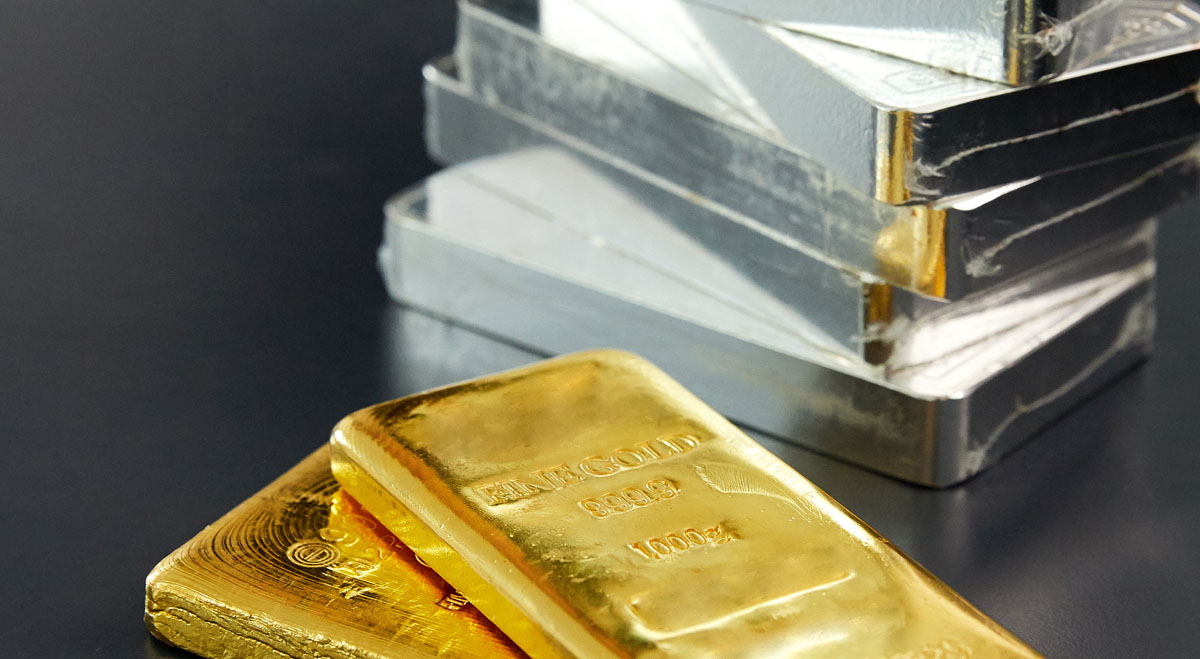
UBS has set a silver price forecast of $80 per ounce for September 2027 as the bank expects the metal to remain correlated with gold while industrial and investment demand contribute to its longer-term outlook.
The forecast compares with a silver spot price of $66.50 as of September 18.
“Silver continues to track gold closely, with the gold-silver correlation near multi-year highs,” UBS strategist Dominic Schnider said.
The bank’s analysis indicates that silver’s recent price behaviour has been influenced more by its relationship with gold than by its industrial characteristics alone. Schnider described the metal as trading primarily as “a higher-beta version of gold.”
Silver Price Targets Rise Through 2027
UBS expects silver to reach $70 per ounce by December 2026 before increasing to $75 in both March and June 2027.
Its forecast then rises to $80 by September 2027.
The bank identified monetary policy as one potential source of near-term pressure. A more hawkish Federal Reserve and additional interest-rate increases could weigh on silver, according to Schnider.
UBS nevertheless expects its assumptions for higher gold prices, combined with investment and industrial demand, to provide support over a longer timeframe.
The forecasts remain subject to market conditions and do not represent guaranteed future price levels.
Data Centres and AI Add to Industrial Demand Outlook
Industrial applications are another component of UBS’s silver analysis.
Schnider said consumption “remains structurally supportive despite substitution and thrifting in solar applications.”
Solar manufacturers have been seeking to reduce silver usage as higher prices increase input costs. UBS expects other sources of industrial consumption, including data centres, AI infrastructure, electricity-grid investment and electric vehicles, to offset some of this effect.
Actual demand will depend on future investment, manufacturing activity and the rate at which industries substitute silver with alternative materials.
Byproduct Production Limits Supply Response
On the supply side, UBS noted that silver is commonly produced as a byproduct of mining for lead, zinc, copper and gold.
This means higher silver prices do not necessarily result in a rapid increase in mine supply because production decisions can depend on the economics of other metals.
Schnider also sees “limited scope for a sustained rise in the gold-silver ratio above 70x.”
The bank expects fiscal concerns, uncertainty over the U.S. dollar’s long-term purchasing power and the possibility of less restrictive monetary policy over time to contribute to investment demand.
UBS identified a more restrictive monetary-policy environment, weaker global growth and a larger decline in industrial consumption as risks to its forecasts.
Schnider nevertheless said “the balance of risks remains tilted toward higher silver prices over the medium term.”
The assessment reflects UBS’s current commodity-market outlook. Changes in monetary policy, the U.S. dollar, gold prices, industrial activity or silver supply could result in prices differing materially from the bank’s projections.
Leave a Reply