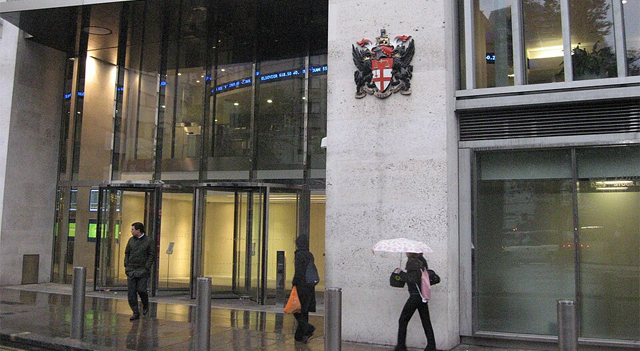
The FTSE 100 traded lower on Wednesday as global government bond yields rose and mining shares declined alongside metals prices.
The UK benchmark was down 0.36% as of 07:21 GMT. Elsewhere in Europe, Germany’s DAX fell 0.83%, while France’s CAC 40 declined 0.61%. Sterling was 0.25% lower against the US dollar at $1.3245.
Mining, financial and utility stocks were among the main decliners in London.
Metals prices moved lower, with gold futures down 0.75% and spot gold declining 0.82%. Silver fell 1.31%, platinum lost 2% and copper was down 0.36%.
Utility stocks also declined as bond yields increased.
US 10-Year Treasury Yield Nears 5.32%
The US 10-year Treasury yield traded near 5.32%, up from around 5.27% at Tuesday’s London close, while the 30-year yield was near 5.69%.
Market attention is also focused on the Federal Reserve’s September meeting minutes, UK gilt tenders and a $39 billion US 10-year Treasury auction.
ING strategists said, “we doubt rates will calmly settle at current levels.”
Oil Prices Rise as Middle East Developments Remain in Focus
Brent crude futures rose 0.72% to $101.29 a barrel, while WTI gained 0.57% to $89.91.
Comments surrounding the Strait of Hormuz remained in focus. Former Iranian diplomat Abbas Khamayar told Al Jazeera that Hormuz is “closed in a serious sense.”
Separately, the IRGC’s Yadollah Javani told IRNA that foreign fleets were “more than 1,000km” away. The claim had not been independently verified in the supplied report.
Oman said 10 crew members were evacuated from the On Peace tanker after it was struck off Limah on Tuesday.
US Vice President JD Vance told Reuters that Iran would need to make a “meaningful” reduction in enrichment, adding, “We’re not going to trade words for actions.”
Earlier, US President Donald Trump said the war would end “the nice way or the not-so-nice way” and claimed shipments through Hormuz were at levels comparable with those before the war.
ING’s Warren Patterson described the oil market as facing a “clear tug-of-war” between improving Gulf supply and continuing risks to flows.
Leave a Reply