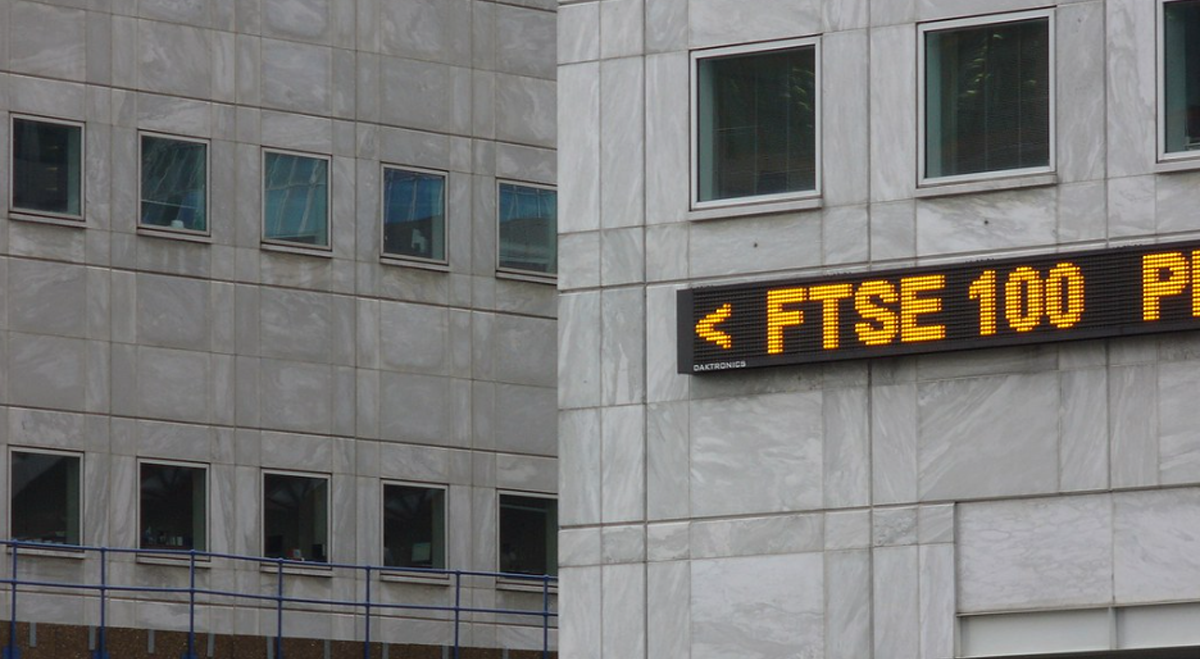
UK equities declined on Tuesday as political unrest in France and continued uncertainty surrounding the US-Iran conflict weighed on European markets, despite signs of easing pressure in Britain’s labour market.
The FTSE 100 fell 0.36%, while Germany’s DAX declined 0.80% and France’s CAC 40 lost 0.43%. Sterling strengthened 0.30% against the US dollar to $1.3346 as of 07:31 GMT.
UK employment figures presented a mixed picture ahead of Wednesday’s inflation report. The unemployment rate fell to 4.7% in the three months to August, below economists’ expectations of 4.9%.
However, job vacancies declined to 691,000, their lowest level since 2014 excluding the pandemic period. Annual growth in total pay slowed to 3.7% from 3.9%, suggesting a moderation in wage pressures.
The figures provide additional information for the Bank of England as it assesses labour market conditions and the outlook for inflation.
Geopolitical developments remained a significant influence on market sentiment. US President Donald Trump said Washington continued to apply economic and military pressure on Iran, while uncertainty persisted over the prospects for negotiations.
Speaking at the Global Security Forum in Doha, US envoy Tom Barrack questioned the effectiveness of previous American interventions in the region but said Washington had no intention of withdrawing.
Meanwhile, Iranian media reported that Pakistani army chief Field Marshal Asim Munir was expected in Tehran on Tuesday, following a visit by Russian Foreign Minister Sergey Lavrov.
Iran’s Revolutionary Guards also claimed to have shot down a US MQ-9 drone over the Strait of Hormuz. The claim, reported by Iranian state broadcaster IRIB, had not been independently confirmed by US authorities in the information available.
Concerns about the financial consequences of the conflict also continued. Five Democratic senators, led by Elizabeth Warren, requested further disclosure of US military spending, with reported costs reaching $43.6 billion through 3 September, excluding damage to military bases.
Separately, an Iranian Revolutionary Guards spokesman threatened undersea communications cables in the Strait of Hormuz, adding to concerns about regional infrastructure.
In Europe, French authorities introduced partial curfews in several cities following nationwide unrest over the weekend.
Paris imposed restrictions on public gatherings from 8 pm, alongside an overnight curfew between 11 pm and 6 am in areas surrounding Place de la République and Les Halles.
Oil prices advanced amid the continuing geopolitical uncertainty. Brent crude futures rose nearly 1% to $110.59 a barrel, while US West Texas Intermediate gained 0.85% to $99.39.
Precious metals moved in the opposite direction, with gold futures declining 0.26% to $4,150 an ounce and spot gold falling 0.24% to $4,130.22.
UK Corporate Updates
Wickes (LSE:WIX) reported a 4% increase in third-quarter like-for-like sales, supported by demand from price-conscious consumers. The home improvement retailer said customers continued to favour lower-priced products despite modest price inflation.
Anglo American (LSE:AAL) recorded a 5% decline in third-quarter copper production, reflecting disruption from record snowfall in Chile. The mining group maintained its 2026 copper production guidance while increasing its diamond output forecast.
Bunzl (LSE:BNZL) reported 3.7% growth in third-quarter underlying revenue, supported by its North American operations. The distribution group also reaffirmed its full-year outlook.
Investors will now be monitoring Wednesday’s UK inflation figures for further indications of the Bank of England’s potential monetary policy direction.
Developments in the Middle East, oil price movements and the situation in France are also likely to remain important influences on European market sentiment.
Leave a Reply