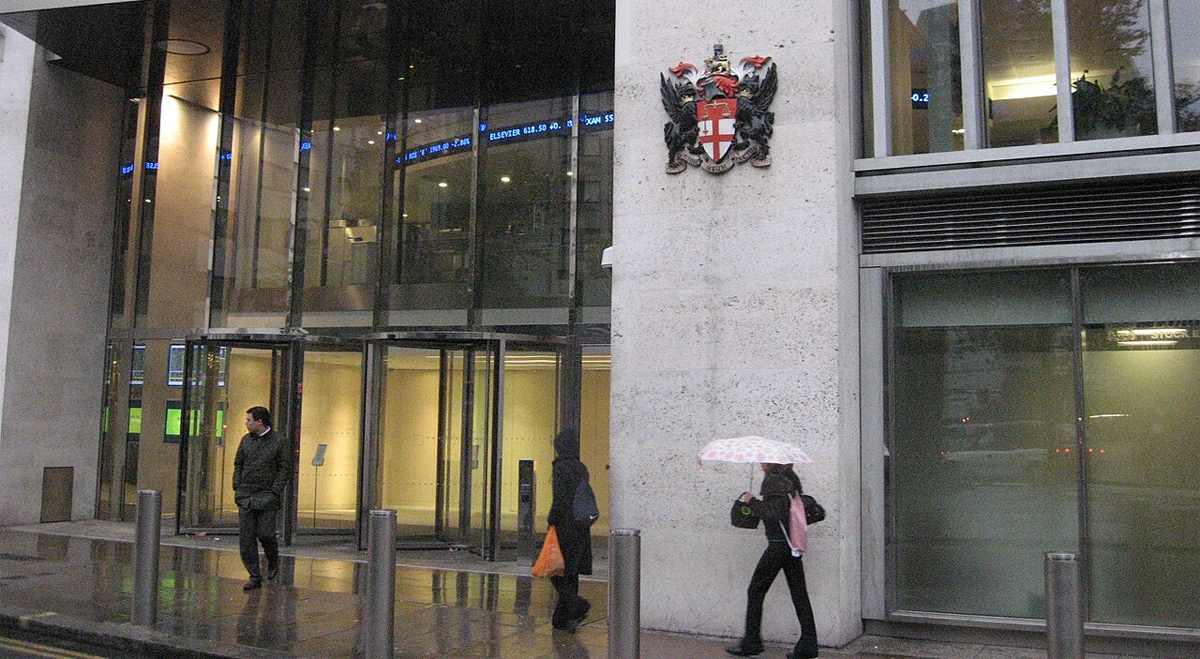
The FTSE 100 traded lower on Wednesday after UK inflation accelerated more than expected in September, adding to uncertainty over the Bank of England’s interest rate outlook. Oil prices also advanced amid continuing tensions in the Middle East and concerns about energy supplies.
The FTSE 100 declined 0.24% as of 07:18 GMT, while European equity markets showed mixed movements. Germany’s DAX fell 0.16%, while France’s CAC 40 gained 0.10%.
Sterling weakened 0.02% against the US dollar to $1.3379.
Figures released by the Office for National Statistics showed that UK consumer price inflation increased to 3.5% in September, compared with 3.1% in August.
The annual reading exceeded economists’ expectations of 3.4% and represented the highest inflation rate since October 2025.
On a monthly basis, consumer prices rose 0.4%, compared with forecasts for a 0.3% increase.
Core inflation, which excludes certain volatile components, was in line with expectations at 2.8%.
Fuel prices contributed to the inflation backdrop, with petrol averaging 169.5 pence per litre, its highest level since August 2022.
The figures were released ahead of the UK Government’s Budget, scheduled for 28 October, and added to market discussions about the potential direction of monetary policy.
Higher inflation has raised questions about whether the Bank of England may need to increase interest rates to contain price pressures.
Geopolitical developments also remained a focus for financial markets, particularly diplomatic efforts involving the United States and Iran and the implications for international shipping routes.
US Secretary of State Marco Rubio said several countries were participating in diplomatic discussions concerning Iran, with mediation efforts continuing.
Rubio indicated that any agreement would ultimately require a decision by President Donald Trump. He also described reaching an agreement as extremely difficult and said economic pressure would continue until Iran stopped targeting shipping in the Strait of Hormuz.
Iranian Foreign Minister Abbas Araghchi said the strait would remain closed until Washington accepted Tehran’s conditions. Indirect negotiations were continuing through Pakistan and Qatar.
Trump separately indicated that he expected the conflict to conclude quickly and suggested that oil prices would decline substantially following its resolution.
In the UK, Prime Minister Andy Burnham told parliament that a suspected plot involving RAF Fairford was almost certainly directed by Iran’s Revolutionary Guard. Police had re-arrested two men in connection with the matter.
Energy markets reflected continuing uncertainty surrounding regional shipping routes and potential disruptions to oil infrastructure.
Brent crude futures increased 1.12% to $110.01 per barrel, with traders monitoring risks to Red Sea shipping and reported threats involving Saudi Arabian oil facilities.
US crude futures also advanced, rising 1.04% to $98.84 per barrel.
Precious metals moved in the opposite direction, with gold futures declining 0.24% to $4,132.55 an ounce.
Spot gold fell 0.25% to $4,115.23 an ounce.
The combination of higher UK inflation, uncertainty over interest rates and developments in the Middle East provided the backdrop for Wednesday’s trading session, as investors assessed economic data alongside geopolitical risks.
Leave a Reply