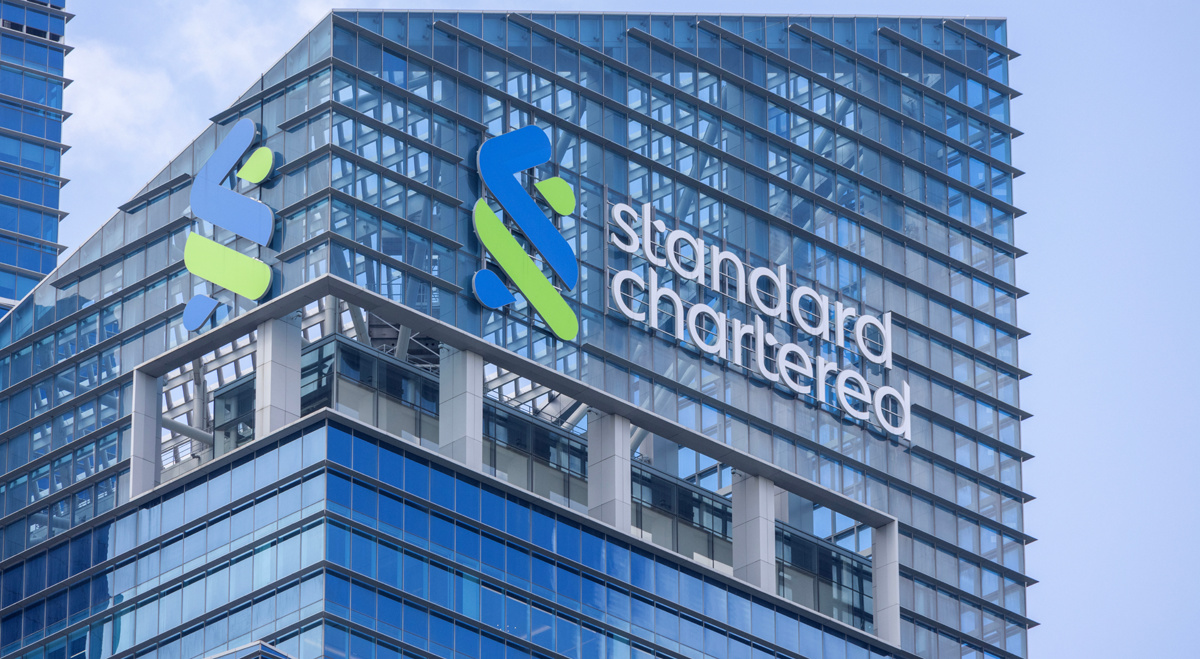
Standard Chartered plc (LSE:STAN) shares declined 1.0% to 1,989.5p during Tuesday’s trading session, as selling pressure across UK banking stocks coincided with investor attention turning to the company’s third-quarter earnings announcement scheduled for Wednesday, 28 October 2026.
The decline followed quarterly results from HSBC Holdings (LSE:HSBA), whose shares fell after revenue missed analyst expectations. The market reaction contributed to broader weakness among London-listed financial stocks, including Standard Chartered.
Investors were also assessing the potential impact of interest rates, UK banking taxation and recent analyst commentary ahead of Standard Chartered’s own financial update.
The bank’s ongoing $1.3 billion share buyback programme and wealth management activities remain among the factors relevant to its financial outlook.
How Did HSBC’s Results Affect Standard Chartered Shares?
HSBC’s third-quarter earnings announcement was a significant development for the UK banking sector on Tuesday.
The bank reported pretax profit of $9.6 billion, an increase of 32% year on year and broadly in line with analyst expectations. However, revenue of $18.6 billion fell below forecasts of approximately $19 billion.
HSBC’s wealth management revenue was unchanged at $2.7 billion, following growth of 15% and 23% in the first two quarters of 2026, respectively.
The revenue shortfall contributed to a decline in HSBC’s Hong Kong-listed shares of approximately 6%.
Standard Chartered, which also has substantial exposure to Asian banking and wealth management markets, traded lower during the same session.
Although HSBC’s results do not directly determine Standard Chartered’s financial performance, the two banks share exposure to several regional markets and banking activities.
As a result, HSBC’s earnings announcement provided investors with additional information to consider ahead of Standard Chartered’s quarterly results.
Why Are Investors Focused on Standard Chartered’s Upcoming Earnings?
Standard Chartered is scheduled to publish its third-quarter 2026 results on Wednesday morning, 28 October.
The announcement will provide updated information on the bank’s revenue, profitability, lending activity and capital position.
Investors will also be able to assess developments in net interest income and wealth management, two areas relevant to the bank’s financial performance.
The timing of HSBC’s results, one day before Standard Chartered’s scheduled announcement, has placed additional attention on the forthcoming figures.
HSBC’s revenue shortfall has also highlighted the distinction between profit growth and underlying revenue performance.
However, Standard Chartered’s quarterly results have not yet been released, and HSBC’s performance does not establish whether Standard Chartered will report a similar outcome.
The company’s own financial disclosures will provide a clearer basis for assessing its third-quarter trading performance.
What Did UBS Say About Standard Chartered’s Outlook?
UBS recently reduced its price target for Standard Chartered’s London-listed shares while maintaining a Neutral investment rating.
The bank identified narrowing net interest margins and the possibility of higher UK banking surcharge taxes as factors relevant to Standard Chartered’s near-term outlook.
Net interest margin measures the difference between interest income earned on assets and interest paid on funding, relative to average interest-earning assets.
Changes in this measure can affect profitability even when lending volumes increase.
UBS also acknowledged potential support from accelerating loan growth and the bank’s valuation.
The revised price target added to the information investors were assessing ahead of the third-quarter earnings announcement.
The source material did not specify the previous or revised UBS price target.
How Are Interest Rates Affecting the Banking Sector?
Interest rate developments remain an important consideration for Standard Chartered and other internationally active banks.
The yield on the benchmark 10-year US Treasury note had recently stabilised around 5.11%, after reaching approximately 5.34%.
Higher bond yields can affect the valuation of fixed-income assets, funding costs and broader financial market conditions.
For banks, the effect depends on the composition of their assets and liabilities, interest rate sensitivity and funding arrangements.
Standard Chartered’s exposure to Asian and international markets means its financial performance is influenced by monetary conditions across multiple jurisdictions.
Investors are also monitoring the Federal Reserve’s two-day monetary policy meeting, which begins on Tuesday.
The meeting may provide further information on the direction of US interest rates and the central bank’s assessment of inflation and economic activity.
Is the UK Autumn Budget Adding to Pressure on Bank Shares?
The UK Autumn Budget, scheduled for Wednesday, 28 October, is another event attracting attention across the banking sector.
Market participants are assessing the possibility of changes to taxes applied to UK banks, including the banking surcharge.
Additional taxation could affect the after-tax earnings of banks with relevant UK operations, depending on the measures introduced.
Banking industry representatives have argued against increases in sector-specific taxes, citing potential implications for lending and competitiveness.
No new measures had been confirmed in the source material ahead of the Budget.
The uncertainty surrounding potential policy changes has coincided with broader weakness in London-listed financial shares.
Why Is the FTSE 100 Also Trading Lower?
The FTSE 100 declined approximately 1% during Tuesday’s session, with banking stocks among the contributors to the index’s performance.
HSBC’s share price decline was a factor in the broader market movement.
Investors were also assessing energy-related inflation pressures, developments in bond markets and the forthcoming UK Budget.
The Federal Reserve’s monetary policy meeting added another scheduled event to the week’s financial calendar.
These developments contributed to a wider decline in UK equities, rather than selling being confined to Standard Chartered.
The bank’s 1% share price fall therefore occurred against a backdrop of broader market weakness.
What Role Could Wealth Management Play in Standard Chartered’s Results?
Wealth management is an important business area for Standard Chartered, particularly given its presence across Asian markets.
The bank’s recent wealth management momentum has been identified as one of the factors supporting its broader operating outlook.
HSBC’s third-quarter results brought renewed attention to the sector after its wealth management revenue remained flat year on year.
However, differences in business mix, customer activity and regional exposure mean the two banks may report different outcomes.
Standard Chartered’s forthcoming results will provide further information on its own wealth management performance, including any developments in revenue and customer activity.
The source material did not provide updated third-quarter wealth management figures for Standard Chartered.
How Does Standard Chartered’s $1.3 Billion Buyback Fit Into Its Outlook?
Standard Chartered has an ongoing $1.3 billion share buyback programme.
Share repurchases are one mechanism through which banks return capital to shareholders, subject to their financial position and regulatory capital requirements.
The programme remains relevant to investors assessing Standard Chartered’s capital allocation strategy.
The bank’s upcoming results may also provide additional information on its capital position and the progress of shareholder distributions.
However, the existence of a buyback does not prevent share prices from declining in response to earnings developments or changes in market conditions.
Investors will be assessing the programme alongside profitability, capital ratios and management’s outlook.
What Will Investors Be Watching in Wednesday’s Results?
Standard Chartered’s third-quarter earnings announcement will provide the next company-specific financial update.
Particular areas of attention include revenue growth, net interest margins, wealth management performance and credit conditions.
The bank’s capital position and ongoing shareholder distributions will also be relevant.
Investors may compare the results with HSBC’s recently reported figures, although differences between the banks’ operations and regional exposures will remain important.
Management commentary on lending growth, interest rates and future profitability could also provide further context for the bank’s outlook.
For now, Standard Chartered’s share price movement reflects trading ahead of its scheduled results and a session of broader weakness across UK financial stocks.
More About Standard Chartered
Standard Chartered plc (LSE:STAN) is an international banking group headquartered in London, with operations concentrated across Asia, Africa and the Middle East.
The company provides corporate and investment banking, wealth management and retail banking services to individual and institutional customers.
Its financial performance is influenced by lending activity, interest rates, wealth management revenue, credit conditions and regulatory capital requirements.
Standard Chartered is scheduled to publish its third-quarter 2026 results on 28 October.
The bank’s shares declined approximately 1% to 1,989.5p during Tuesday’s session, ahead of the announcement and amid broader selling pressure across UK banking stocks.
Leave a Reply