Author: Fiona Craig

  • European Gas Prices Fall as ECB Warns of Faster Inflation Transmission

    European Gas Prices Fall as ECB Warns of Faster Inflation Transmission

    European and British wholesale natural gas prices declined on Monday as reports of alternative energy shipping routes eased concerns about supply disruptions in the Persian Gulf.

    The benchmark Dutch front-month Title Transfer Facility (TTF) contract fell 2.5% to €77.55 per megawatt-hour (MWh), extending its decline from the previous week.

    In Britain, the equivalent National Balancing Point (NBP) wholesale gas contract dropped 2.91% to 192.36 pence per therm, approaching its lowest levels in several weeks.

    The declines followed reports that liquefied natural gas (LNG) tankers and crude oil carriers were increasingly using alternative routes to transport energy supplies from the Gulf.

    ECB Identifies Faster Impact on Consumer Inflation

    Despite Monday’s decline in wholesale prices, the European Central Bank (ECB) warned that changes in gas prices could now affect eurozone consumer inflation more quickly than in previous years.

    In an Economic Bulletin published on Monday, the ECB reported that wholesale gas price movements are reflected in consumer gas inflation within one to three months in more than half of eurozone countries.

    The proportion of countries where transmission takes between 13 and 24 months has fallen from approximately 40% in 2022 to around 5%.

    The ECB attributed the faster transmission to changes in European energy markets, including greater price flexibility and shorter-term contracts introduced following the energy crisis.

    However, the central bank found that electricity prices have become less sensitive to movements in natural gas prices.

    The expansion of renewable electricity generation has reduced the role of gas in determining electricity production costs, limiting the impact of wholesale gas price fluctuations on electricity inflation.

    Inflation and Interest Rate Outlook

    European wholesale gas prices remain more than 140% above their levels a year earlier, reflecting the effects of the conflict involving Iran and continuing supply disruptions.

    Eurozone headline inflation is above 3%, exceeding the ECB’s 2% target. Some economists expect inflation to approach 4% by the end of the year.

    The findings have added to market attention surrounding the ECB’s interest rate outlook following two rate increases in recent months.

    Investors are assessing whether further monetary tightening may be required to address inflationary pressures, although no additional rate decision has been announced.

    Alternative Supply Routes Ease Immediate Concerns

    Energy traders have reported an increase in LNG and crude oil shipments using alternative routes around Persian Gulf transport bottlenecks.

    These arrangements include greater use of overland pipeline capacity, redirected maritime traffic and expanded ship-to-ship transfers off the coast of Oman.

    The alternative routes have reduced some immediate concerns about a complete interruption of transit through the Strait of Hormuz.

    Together with declining crude oil futures, the developments contributed to lower European wholesale gas prices on Monday.

    Nevertheless, regional supply conditions remain uncertain, and the ECB’s analysis indicates that future wholesale gas price increases could reach consumers more rapidly than in the past.

  • Europe Faces Q4 Jet Fuel Deficit as South Korean Shipments Reach Four-Year High

    Europe Faces Q4 Jet Fuel Deficit as South Korean Shipments Reach Four-Year High

    Europe is expected to face a substantial jet fuel supply deficit in the fourth quarter of 2026, despite increasing imports from alternative suppliers, including South Korea, as disruptions to Middle Eastern supplies continue to affect the market.

    According to consultancy Energy Aspects, Europe’s jet fuel deficit is forecast to reach 510,000 barrels per day (bpd) during the fourth quarter. The United States and Asia-Pacific are expected to record surpluses of 18,000 bpd and 419,000 bpd, respectively.

    A similar supply imbalance is expected during the third quarter.

    Europe has increased jet fuel imports from Nigeria, the United States and Canada since the outbreak of the Iran conflict more than six months ago. The disruption to Middle Eastern supplies has affected approximately half of Europe’s jet fuel imports.

    The continent remains exposed to further supply interruptions as tensions in the region continue.

    South Korean Exports to Europe Increase

    South Korea has emerged as a significant additional supplier, with shipments to Europe reaching their highest level in almost four years.

    Data from commodities intelligence firm Kpler showed that European imports of South Korean jet fuel averaged 129,000 bpd so far in September, the highest level since October 2022.

    Data from LSEG indicated similar shipment volumes.

    James Noel-Beswick, head of commodities at Sparta Commodities, expects European jet fuel imports to continue as the region faces a persistent supply shortfall.

    Jet fuel belongs to the middle distillates category, alongside diesel and gas oil. European diesel prices reached a record high during the week, exceeding levels in Asian markets.

    According to Noel-Beswick, the widening price difference between European and Asian fuel benchmarks has made shipments to Europe more commercially attractive.

    European Inventories Fall as Asian Refinery Output Rises

    Europe’s increased reliance on imports coincides with declining inventories.

    Independently held stocks at the Amsterdam-Rotterdam-Antwerp (ARA) refining and storage hub fell to their lowest level in seven years during the week ending 10 September.

    Asian suppliers typically increase jet fuel shipments to Europe when regional price differences make exports commercially viable.

    Kpler data showed that average monthly Asian jet fuel exports to Europe totalled 1.5 million barrels last year.

    South Korea has increased its fuel production, supported by higher refinery processing rates.

    Government figures showed that South Korean jet fuel output reached almost 13.89 million barrels in July, its highest level in seven years. Exports also climbed to a three-and-a-half-year high.

    Provisional data indicated that the country’s crude oil refining throughput reached 2.7 million bpd in July, an increase of 16% from June.

    Traders expect August refining activity to exceed July’s level, although the final figures were not provided.

    The additional supply from South Korea is helping Europe diversify its jet fuel imports, but the projected fourth-quarter deficit indicates that the region remains dependent on continued shipments from international suppliers.

  • Eurozone Bond Yields Decline as Investors Await ECB Officials’ Remarks

    Eurozone Bond Yields Decline as Investors Await ECB Officials’ Remarks

    Eurozone government bond yields fell on Monday as declining oil prices and political developments in Germany influenced debt markets ahead of scheduled remarks from senior European Central Bank officials.

    Germany’s two-year Schatz yield edged down to 3.232%, while the benchmark 10-year Bund yield declined to 3.479%, retreating from the multi-month highs reached earlier in September.

    Longer-dated German government bonds also advanced, with the 30-year yield falling for a fourth consecutive session to 3.817%, its lowest level in nearly two weeks.

    Bond yields move inversely to prices, meaning the declines reflected rising prices for German government debt.

    Lower Oil Prices Ease Inflation Concerns

    Crude oil prices retreated during Monday’s session following reports that larger-than-expected volumes of Persian Gulf oil were reaching international markets through overland pipelines and alternative shipping routes.

    The developments reduced some concerns about disruptions to energy supplies in the Middle East.

    Lower crude prices also contributed to an easing in near-term eurozone inflation expectations, supporting demand for longer-dated government bonds following several weeks of selling pressure.

    However, the outlook for energy prices remains uncertain, with developments in the region continuing to influence inflation expectations and bond markets.

    German Political Developments in Focus

    Investors also assessed the outcome of a German state election in which Chancellor Friedrich Merz’s conservative party recorded its weakest performance since 1949.

    The result raised questions among market participants about the governing coalition’s ability to implement economic reforms and manage fiscal policy.

    The source analysis attributed part of Monday’s demand for German government bonds to investors seeking relatively secure assets amid the political uncertainty.

    The resulting buying interest provided additional support for Bund prices, contributing to the decline in yields.

    ECB Interest Rate Outlook Remains Central

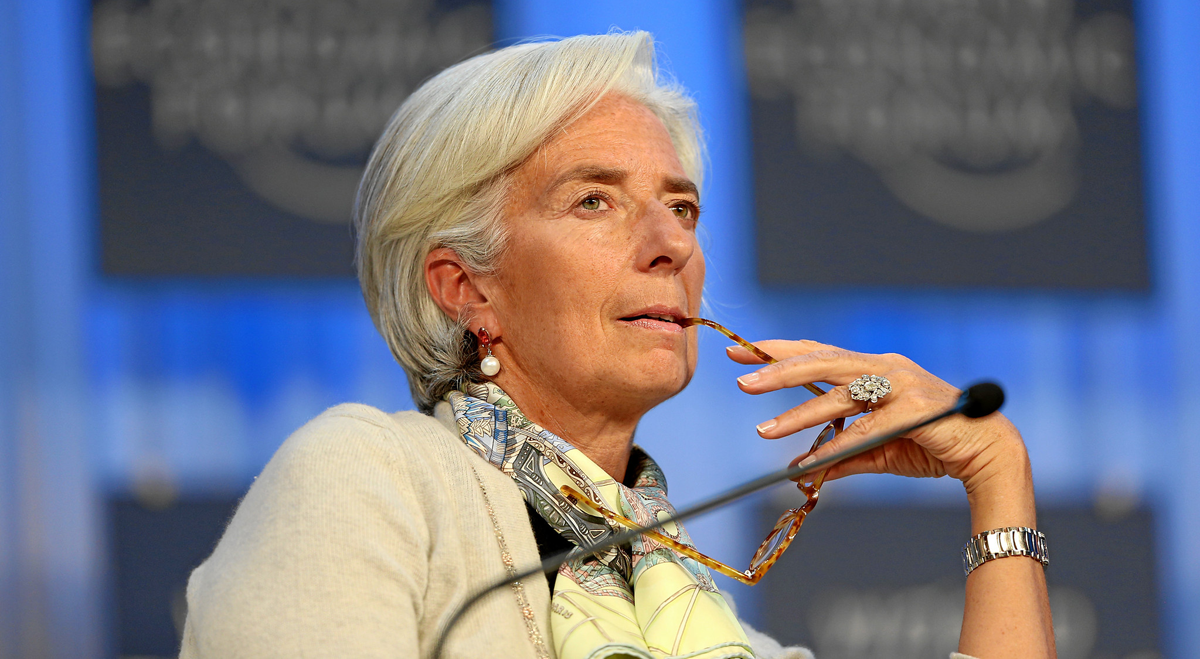
    Attention was also focused on scheduled public appearances by ECB President Christine Lagarde and Executive Board member Piero Cipollone later in the day.

    Investors were looking for indications of the central bank’s next policy steps following its decision two weeks earlier to raise interest rates to 2.50%.

    The central question for bond markets is whether policymakers consider the current level of interest rates sufficient to address inflationary pressures associated with higher energy costs or believe further increases may be necessary.

    According to the source report, interest rate futures were pricing in another ECB rate increase as early as next month.

    The upcoming remarks from Lagarde and Cipollone could therefore influence market expectations for the timing of any further policy changes, although no additional rate decision has been announced.

  • European Stocks Recover as Oil Prices Ease, With German Politics and ECB Policy in Focus: DAX, CAC, FTSE100

    European Stocks Recover as Oil Prices Ease, With German Politics and ECB Policy in Focus: DAX, CAC, FTSE100

    European equities advanced on Monday as a decline in crude oil prices supported a recovery from the previous session’s losses, while investors assessed political developments in Germany and the outlook for European Central Bank interest rates.

    The pan-European STOXX 600 rose 0.5%, following a decline on Friday that erased its gains for the week. The index finished the previous week down 0.33%, marking its third consecutive weekly decline.

    Friday’s sell-off followed Saudi Aramco’s suspension of European crude allocations after strikes on its East-West pipeline, which added to concerns about energy supplies.

    On Monday, crude oil futures fell approximately 1.7% as indications emerged that supplies were being redirected around maritime bottlenecks in the Middle East.

    Lower oil prices provided some relief for European equities, although uncertainty surrounding energy supplies remained.

    France’s CAC 40 and Italy’s FTSE MIB each gained 0.5%, while London’s FTSE 100 advanced 0.1%.

    Germany’s DAX rose 0.6% after falling almost 2% on Friday.

    German Election Result Draws Investor Attention

    German political developments remained in focus after Chancellor Friedrich Merz’s conservative party recorded its weakest performance in a state election since 1949.

    The result raised questions among market observers about the governing coalition’s political position and its ability to advance planned economic reforms.

    Deutsche Bank analysts said the immediate market implications concerned the broader political environment rather than an imminent change in government policy.

    “For markets, the immediate implication is not a change in national policy, but a further weakening of Germany’s political centre and another reminder that the forces driving political polarisation across Europe remain alive and well,” Deutsche Bank analysts said.

    Despite the election result, German equities participated in Monday’s broader European market recovery.

    ECB Interest Rate Outlook Remains in Focus

    Investors were also awaiting scheduled public appearances by European Central Bank President Christine Lagarde and Executive Board member Piero Cipollone later in the day.

    Their remarks were expected to attract attention following the ECB’s decision two weeks earlier to raise interest rates to 2.50%.

    With eurozone inflation remaining above the central bank’s target, market participants were looking for indications of whether policymakers considered the latest increase a response to energy-related inflation pressures or part of a longer period of restrictive monetary policy.

    The distinction could influence expectations for borrowing costs and sovereign bond yields, as well as the valuation of European equities.

    Monday’s gains therefore came against a backdrop of continuing uncertainty over energy supplies, German politics and the ECB’s future policy decisions.

  • ECB Warns Higher Gas Prices Could Feed Into Eurozone Inflation More Quickly

    ECB Warns Higher Gas Prices Could Feed Into Eurozone Inflation More Quickly

    Rising natural gas prices could affect eurozone consumer inflation more rapidly than in the past, although their impact on electricity prices may be reduced by the growing contribution of renewable energy, according to a European Central Bank (ECB) Economic Bulletin.

    European wholesale natural gas prices have increased by more than 140% compared with a year earlier. The conflict involving Iran has constrained global supplies, while low European gas inventories have increased the risk of further price rises.

    The ECB said changes in European gas markets following Russia’s invasion of Ukraine in 2022 have accelerated the transmission of wholesale price movements to household energy bills.

    Greater price flexibility and increased use of shorter-term contracts mean retail gas prices can respond more quickly to changes in wholesale markets.

    Gas Price Changes Reach Consumers Faster

    A survey conducted by European Union central banks found that wholesale gas price changes are now reflected in consumer gas inflation within one to three months in more than half of eurozone countries.

    In approximately one-tenth of countries, the transmission takes four to six months. In around one-third, the process takes between seven and 12 months.

    The proportion of countries reporting a slower transmission period of 13 to 24 months has declined substantially compared with 2022.

    The ECB stated: “Specifically, the share of countries reporting a slow transfer within a period of 13 to 24 months has fallen from around 40% to around 5% by 2022,”

    The findings indicate that wholesale gas price increases could influence household energy costs and headline inflation sooner than during previous energy market disruptions.

    Implications for Inflation and Interest Rates

    The ECB’s assessment comes as eurozone inflation is already above 3%, exceeding the central bank’s 2% target.

    Some economists expect inflation to reach 4% by the end of the year, potentially adding pressure on the ECB to consider further interest rate increases following its actions over the preceding two months.

    However, the report distinguishes between the impact of higher gas prices on household gas bills and their effect on electricity costs.

    The expansion of renewable electricity generation has reduced the role of natural gas in determining electricity production costs, limiting the extent to which wholesale gas price movements feed through to electricity inflation.

    “These developments suggest that changes in wholesale gas prices may be reflected in HICP gas inflation more rapidly than in the past, but to a lesser extent in HICP electricity inflation,” the ECB said, referring to the Harmonised Index of Consumer Prices.

    The analysis suggests that the inflationary consequences of the latest gas price increases will depend partly on national retail pricing arrangements and the changing composition of Europe’s electricity supply.

  • MedPal AI: From Zero to £35m Annualised Revenue as Growth Accelerates

    MedPal AI: From Zero to £35m Annualised Revenue as Growth Accelerates

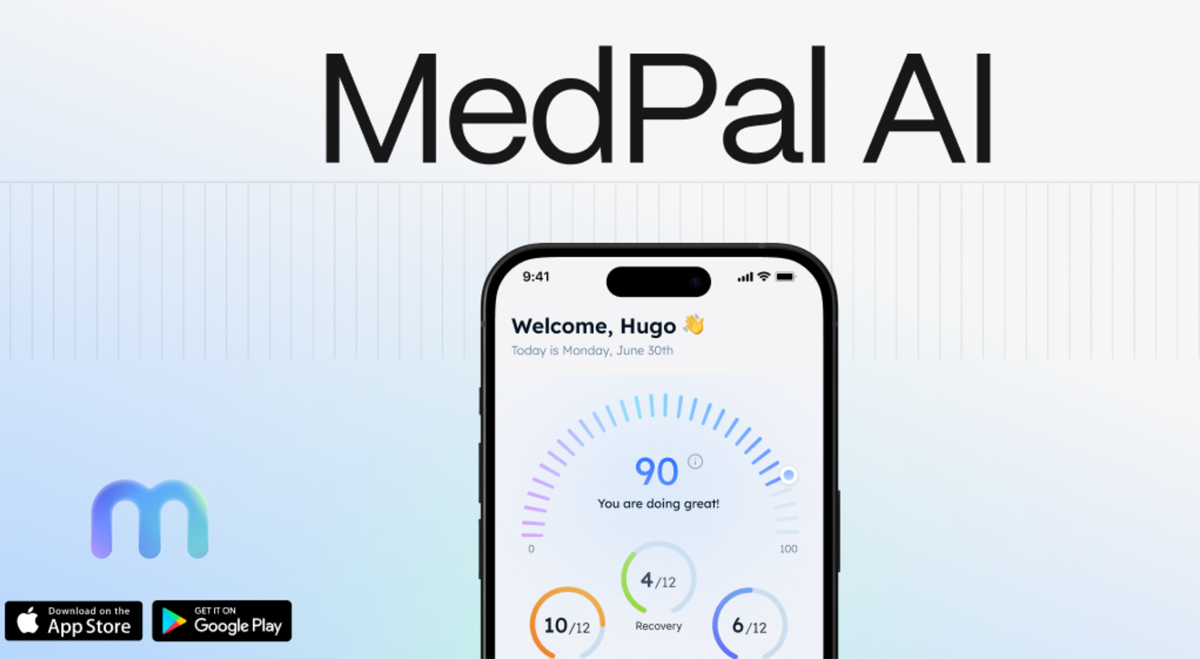
    MedPal AI is scaling at remarkable speed, with September trading showing further acceleration and the Group now running at more than £35 million of annualised revenue just eleven months after starting from zero.

    The latest trading update from MedPal AI plc (LSE:MPAL) provides another clear indication of the pace at which the AI-native digital health and pharmacy group is building its business.

    The headline number is striking: based on trading between 1 and 19 September, MedPal’s annualised revenue run rate has climbed to more than £35 million, up from approximately £28 million in August and £8.6 million in July. The company is careful to point out that these are annualised figures based on monthly trading rather than forecasts.

    For investors, however, the direction of travel is difficult to ignore.

    New Health continues to drive the acceleration

    The key growth engine is New Health, MedPal’s dedicated GLP-1 weight-management clinic.

    New Health generated more than £1.5 million of revenue in the first 19 days of September, from more than 12,000 orders. That represents a daily trading rate approximately 35% higher than August, while August itself delivered revenue growth of more than 800% compared with July.

    The customer numbers are expanding just as quickly.

    New Health has now acquired more than 25,000 customers since marketing began in July, compared with more than 16,000 reported just two weeks earlier.

    That rapid customer acquisition is already translating into significant operational scale.

    On 15 September, New Health recorded its biggest trading day to date, dispensing 2,000 orders and generating approximately £300,000 of revenue in a single day.

    For a business that only began trading in June, the progression is significant.

    The repeat-order opportunity

    Perhaps one of the more interesting elements of the update is what could happen as the rapidly acquired customer base matures.

    MedPal says 27% of first-time customers have already placed a second order, despite the majority of New Health customers having joined during the second half of August or in September and therefore still being on their first month’s medication.

    That gives the company an increasingly valuable second layer of potential growth: new customer acquisition alongside repeat purchasing from the existing customer base.

    Importantly, repeat orders do not carry the same customer acquisition cost as the initial sale, meaning the company expects margins to widen as the customer base matures.

    This is potentially an important part of the investment story as MedPal moves from rapid customer acquisition towards building a recurring customer relationship.

    £5m raise to fund the growth

    MedPal has also announced a £5 million placing at 5p per share, predominantly supported by existing shareholders alongside institutional and other investors.

    The key point is where that capital is going.

    Approximately £4 million of the £4.7 million net proceeds will be used to fund medication stock and working capital, allowing the Group to purchase medication ahead of receiving NHS payments, supplier rebates and VAT reclaims.

    A further approximately £700,000 will be invested in expanding the GLP-1 pick-and-pack operation at the company’s Sarus Court facility.

    That investment is expected to increase capacity to 14,000 orders per day, equivalent to approximately £2 million of orders per day, with the expanded line expected to be operational by the end of October.

    In other words, MedPal is putting capital behind infrastructure designed to accommodate further growth.

    A business beginning to scale

    There is another potentially important development in the background.

    MedPal has opened discussions with UK clearing banks regarding a working-capital facility secured against its receivables. The discussions remain at an early stage, but if successful, the company expects such a facility could reduce the need for further equity to fund its working-capital cycle as the business expands.

    That would represent an important evolution for a company currently growing so rapidly that working capital itself has become a constraint.

    CEO and founder Jason Drummond summed up the situation by saying that growth at this pace needs to be funded and that the placing allows MedPal to accelerate rather than pace its growth according to available cash.

    The bigger picture

    MedPal’s story is increasingly about more than a single fast-growing digital pharmacy.

    The Group’s annualised revenue now comprises approximately £29 million from New Health, £5.6 million from NHS prescriptions and £0.8 million from eMARx, according to the latest update.

    That combination gives MedPal exposure to digital pharmacy, healthcare services, NHS prescriptions, GLP-1 weight management and its developing health technology platform.

    The numbers also demonstrate just how quickly the business has moved.

    From zero to an annualised revenue run rate above £35 million in eleven months is a dramatic rate of expansion. The next question for investors is whether MedPal can convert that rapid top-line growth into a progressively more profitable and cash-generative business as customer numbers mature, repeat orders increase and operational capacity expands.

    For now, the latest update suggests that MedPal is still accelerating rather than slowing down.

    With more than 25,000 New Health customers, record daily order volumes, early evidence of repeat purchasing, a £5 million injection of growth capital and capacity expansion underway, the company enters the final quarter of 2026 with its operating platform being built around a business that is scaling at pace.

    For investors watching the rapidly evolving UK digital-health market, MedPal’s latest figures put the company firmly on the radar.

  • Market Open: Anglo Asian Mining, Iofina Results

    Market Open: Anglo Asian Mining, Iofina Results

    FTSE 100 and European stocks rise as Anglo Asian Mining and Iofina report results. Brent crude falls amid Middle East diplomatic developments.

    Market Overview

    The FTSE 100 opened 0.47 per cent higher at 10,709.21, as investors assessed developments in Middle East diplomacy and easing oil prices. European equities also advanced, with the Euronext 100 gaining 0.72 per cent and Germany’s DAX rising 0.68 per cent. In the US, the Nasdaq closed higher at 26,522.55, while the S&P 500 advanced to 7,650.50.

    Commodity markets showed mixed movements, with copper advancing while gold, Brent crude and natural gas declined. Oil prices remained sensitive to Middle East developments, including diplomatic efforts involving Iran and reports of a Houthi attack on Saudi Arabia. Against sterling, the US dollar, Swiss franc, euro and Australian dollar strengthened, while the Japanese yen weakened. Bitcoin also moved higher.


    Market Numbers

    FTSE 100: Up (+0.47%), 10,709.21

    Euronext 100: Up (+0.72%), 1,894.71

    DAX: Up (+0.68%), 25,476.04

    NASDAQ: Up, 26,522.55

    S&P 500: Up, 7,650.50


    In the Headlines

    Record Copper Production – Anglo Asian Mining (LSE:AAZ)
    Anglo Asian Mining reported first-half revenue of $141.2 million as copper production reached a record 8,840 tonnes. The results highlight the mining group’s transition towards copper-focused operations and increased production capacity.

    Earnings Growth – Iofina (LSE:IOF)
    Iodine producer Iofina reported a 7 per cent increase in first-half revenue to $31.3 million, while adjusted EBITDA more than doubled. The results indicate improved operating profitability alongside revenue growth.


    Currencies (vs GBP)

    USD: Up (+0.09%), $1.3378

    CHF: Unchanged (0.00%), Fr.1.1014

    EUR: Up (+0.07%), €1.1657

    JPY: Down (-0.04%), ¥210.2995

    AUD: Up (+0.16%), $1.8771

    Bitcoin (BTC/GBP): Up, £60,948.57


    Commodities

    Copper: Up

    Gold: Down

    Brent Crude: Down

    Natural Gas: Down

  • FTSE 100 Rises 0.43% as Oil Prices Decline Amid US-Iran Diplomatic Developments

    FTSE 100 Rises 0.43% as Oil Prices Decline Amid US-Iran Diplomatic Developments

    The FTSE 100 rose 0.43% on Monday as oil prices declined amid developments surrounding potential diplomatic efforts to de-escalate the conflict between the United States and Iran.

    As of 07:15 GMT, Germany’s DAX had gained 0.72%, while France’s CAC 40 advanced 0.70%. Sterling fell 0.16% against the US dollar to $1.3373.

    Brent crude futures for November delivery declined 2% to $101.77 a barrel, while November West Texas Intermediate futures fell 2.13% to $94.03.

    The movements came as investors assessed developments involving Iran and the United States, including conflicting reports on shipping activity through the Strait of Hormuz.

    Iran’s Revolutionary Guards spokesperson Hossein Mohebbi said the United States “has been defeated in this war” and had failed to reopen the Strait of Hormuz, according to comments reported by local media.

    Mohebbi also warned that further US military action would prompt Iran to deploy additional weapons capabilities.

    Separately, Iranian lawmakers submitted legislation proposing withdrawal from the Nuclear Non-Proliferation Treaty, according to state-owned Press TV.

    US envoy to the United Nations Mike Waltz indicated on social media platform X that negotiations remained possible if Iran returned to discussions in good faith.

    Shipping data continued to present differing assessments of activity through the Strait of Hormuz.

    Reuters counted 12 commodity vessels transiting the waterway over the weekend, compared with 35 during the preceding weekend.

    The UK Maritime Trade Operations organisation reported independent tracking figures showing single-digit vessel movements in both directions, while figures linked to the US Navy indicated more than 30 transits per day.

    Jefferies strategist Mohit Kumar identified Thursday’s scheduled meeting between US President Donald Trump and Chinese President Xi Jinping as an event for investors to monitor.

    Kumar also suggested that early October could provide an opportunity for an interim arrangement between Washington and Tehran, although no agreement has been announced.

    Elsewhere in Europe, investors continued to assess fiscal and political developments.

    The Euro Stoxx index declined 1.4% on Friday, while French 10-year government bond yields increased by 14 basis points amid concerns about the country’s budget deficit, according to Jefferies.

    The investment bank also noted that German Chancellor Friedrich Merz’s party had recorded its worst result in a state election.

    In commodities, gold prices declined alongside oil. December gold futures fell 0.76% to $4,390.65 an ounce, while spot gold decreased 0.57% to $4,351.36.

    UK Corporate News

    Elixirr International (LSE:ELIX) reported a 25% increase in first-half revenue to £89.0 million, supported by growth in artificial intelligence-related services.

    AI-related revenue rose 185% to £8.1 million, while adjusted EBITDA increased 29% to £27.6 million.

    The consultancy maintained its outlook for full-year revenue and adjusted EBITDA, which it expects to be broadly in line with company-compiled market expectations.

  • JD Sports Enters Mexico Through Franchise Partnership With Grupo Axo

    JD Sports Enters Mexico Through Franchise Partnership With Grupo Axo

    JD Sports (LSE:JD) has announced its entry into the Mexican market through a long-term franchise partnership with fashion retailer Grupo Axo.

    Under the agreement, Grupo Axo will operate JD-branded stores and e-commerce activities in Mexico using the British sportswear retailer’s brand and intellectual property.

    The partnership will incorporate JD Sports’ own-brand and exclusive product ranges across footwear, clothing and accessories.

    Grupo Axo will operate more than 140 JD premises in Mexico through its existing sneaker retail network. The partners also plan to expand the store portfolio at selected locations over time.

    The agreement establishes a franchise-based operating structure for JD Sports in Mexico, with Grupo Axo responsible for local retail and online operations.

    JD Sports Chief Executive Régis Schultz commented on the company’s plans for the market.

    “We see a significant opportunity to lead the category in Mexico,” said CEO Régis Schultz.

    The partnership represents an expansion of JD Sports’ international retail operations through a local franchise partner. The company has not disclosed financial terms, investment commitments or a timetable for additional store openings.

  • Elixirr H1 Revenue Rises 25% to £89 Million as AI-Related Revenue Reaches £8.1 Million

    Elixirr H1 Revenue Rises 25% to £89 Million as AI-Related Revenue Reaches £8.1 Million

    Elixirr International (LSE:ELIX) reported a 25% increase in revenue to £89.0 million for the first half of 2026, supported by growth in artificial intelligence-related services and its broader consulting operations.

    The consultancy said AI-related revenue rose 185% to £8.1 million from £2.8 million in the corresponding period last year. Organic revenue growth at constant currency was 5%.

    Adjusted EBITDA increased 29% to £27.6 million, while the adjusted EBITDA margin expanded to 31.0% from 30.0% a year earlier.

    Adjusted profit before tax rose 25% to £25.1 million, and adjusted diluted earnings per share increased 18% to 34.2 pence.

    The company reported an increase in revenue from its existing client relationships, with 35 clients generating more than £1 million each during the period, compared with 31 a year earlier.

    Cross-selling revenue increased 27% to £19 million, reflecting additional services provided to existing customers.

    Chief Executive Stephen Newton said businesses are increasingly moving from evaluating the potential applications of artificial intelligence towards implementing the technology within their operations.

    He also highlighted the company’s investment in consulting, AI, data and technology capabilities over the past six years.

    “The scale of the opportunity ahead is significant. Industry research estimates that agentic AI alone could create up to $200 billion of new demand for technology services over the next five years. We have spent the last six years deliberately building our consulting, AI, data and technology capabilities to benefit from this shift,” he said.

    The industry demand estimate cited by Newton relates specifically to agentic AI technology services and represents a forecast rather than contracted business for Elixirr.

    The company continues to develop its AI-related consulting and technology services alongside its existing advisory operations.

    Looking ahead, Elixirr expects total adjusted EBITDA for FY 26 will be in line with market expectations and revenue will be broadly in line.

    The outlook follows first-half growth across revenue, adjusted earnings and AI-related services, with the company maintaining its existing full-year financial expectations.