Author: Fiona Craig

  • Big Technologies lifts recurring revenue and cash flow as contract wins support growth

    Big Technologies lifts recurring revenue and cash flow as contract wins support growth

    Big Technologies (LSE:BIG) delivered a stronger first half of 2026, with growth in recurring revenue, earnings and cash generation driven by the rollout of contracts secured during 2025 and the opening months of 2026. Annual recurring revenue increased 5% to £53.2 million, while revenue rose 6% on a constant currency basis to £26.9 million. Gross profit margin edged down by one percentage point to 67%, although adjusted EBITDA advanced 14% to £14.2 million, lifting the adjusted EBITDA margin to 53% as the business benefited from operating leverage and a cost-neutral expansion of its leadership and operational capabilities.

    The group also reported a significant improvement in cash generation, with adjusted free cash flow climbing 42% to £9.6 million. This reflected robust underlying operating performance alongside a reduction in exceptional legal cash payments. Cash at bank totalled £67.1 million after the company made £33.4 million in settlement payments relating to the Buddi litigation, leaving Big Technologies with what it described as a strong financial position. New contract awards in Chile, Guatemala and across six U.S. agreements, together with the commercial rollout of AlcoTag and AlcoBreath, provide management with confidence that growth will continue through the second half of 2026 and into the future, strengthening the company’s position in the global electronic monitoring market.

    Despite the encouraging operational performance, the investment outlook remains tempered by the sharp deterioration in profitability and free cash flow experienced during 2025. Market indicators also continue to reflect subdued momentum, with the shares trading below key moving averages and the MACD remaining negative. In addition, valuation support is limited because the company is currently reporting negative earnings and does not offer a dividend yield.

    More about Big Technologies PLC

    Big Technologies PLC, traded on AIM under the ticker BIG, is a specialist provider of electronic monitoring technology for the criminal justice sector, operating internationally through its Buddi brand. The company supplies integrated hardware and software solutions via a scalable, subscription-based platform that enables governments and justice agencies to deploy monitoring services across a broad range of jurisdictions and operational requirements.

    The business is focused on delivering advanced monitoring technology and data-driven services designed to improve the management of individuals within criminal justice systems. By prioritising long-term recurring revenue contracts and continually expanding its product portfolio, Big Technologies has established itself as a leading supplier of electronic monitoring infrastructure within its specialist market.


  • AI Rivalry Between the U.S. and China Puts Safety Collaboration at Risk

    AI Rivalry Between the U.S. and China Puts Safety Collaboration at Risk

    Escalating tensions between Washington and Beijing over artificial intelligence could derail efforts to establish international AI safety standards, analysts warn, as governments become increasingly concerned about the security implications of more advanced AI systems.

    The latest dispute centres on allegations that Chinese AI company Moonshot improperly relied on technology developed by U.S.-based Anthropic, further intensifying the technological rivalry between the world’s two largest economies.

    Sanctions Threaten Planned AI Dialogue

    The United States is considering sanctions against Moonshot while simultaneously investigating whether Chinese firms have gained access to advanced American chips in breach of export controls.

    Analysts believe these developments could undermine planned diplomatic discussions on AI governance and increase the likelihood of retaliatory measures from Beijing.

    Paul Triolo warned that “Depending on the number of Chinese companies targeted, (and) the nature of the punitive actions taken… the retaliation has the potential to scuttle both the AI dialogue and the September 24 meeting between Presidents Trump and Xi.”

    Open AI Models Present New Security Challenges

    Security experts are paying increasing attention to open-weight AI models, which can be freely modified after release.

    Recent cybersecurity incidents have highlighted both the benefits and risks of these systems, prompting renewed calls for stronger international oversight.

    Yoshua Bengio said, “The logical thing to do is to find a good evaluation of these models, share the models that are not too dangerous, and not share those above the threshold of risk.”

    Researchers Push for Global Standards

    Many AI specialists argue that advanced models should undergo more rigorous independent testing before public release.

    Kristy Loke said, “In an ideal world, the two countries will come together to work on safer models… agree to build common standards around pre-release testing and set red lines for the most advanced open models.”

    U.S. Officials Remain Divided

    The debate has also exposed differing views within the United States over how aggressively Chinese AI companies should be restricted.

    David Sacks argued that leading American developers “want the government to eliminate their open-source competition,” while insisting that the “Kimi Panic needs to stop.”

    He concluded, “As long as we don’t sabotage ourselves with unnecessary rules, the U.S. will continue to win.”

  • Barclays Expects Earnings and Central Bank Decisions to Set the Market Tone

    Barclays Expects Earnings and Central Bank Decisions to Set the Market Tone

    Barclays believes the outlook for global equities over the coming months will depend largely on corporate earnings from major technology companies and the policy decisions of leading central banks.

    While strong second-quarter earnings have continued to underpin investor confidence, the bank warned that rising oil prices, higher bond yields and renewed inflation concerns are creating a less supportive environment for risk assets.

    Strong Corporate Results Offset Growing Macro Risks

    The bank noted that companies in both Europe and the United States have generally reported earnings above expectations, helping equity markets remain resilient despite increasing macroeconomic headwinds.

    However, strategists led by Emmanuel Cau believe the combination of higher energy prices and rising interest rates is shifting the balance of risks toward the downside.

    Oil, Inflation and Monetary Policy Are Back in Focus

    Brent crude has recovered to around $100 per barrel as tensions between the United States and Iran remain unresolved.

    Barclays said this rebound has pushed inflation expectations higher, increasing pressure on central banks even as headline inflation has moderated.

    The firm expects the Federal Reserve to keep rates unchanged while continuing to “emphasise their fight against inflation,” and said the European Central Bank and the Bank of Japan are also likely to influence investor sentiment in the weeks ahead.

    AI Spending Questions Persist

    Barclays believes Google’s earnings were not enough to reassure investors about the long-term returns from artificial intelligence spending.

    With several major technology companies still preparing to report results, the bank expects AI-related capital expenditure to remain one of the market’s biggest discussion points.

    Barclays Sees Limited Upside Without Protection

    The bank warned that higher oil prices “could weigh on growth, tighten financial conditions, and ultimately prove less supportive” for cyclical industries if they persist.

    With equities still trading close to record levels and macroeconomic uncertainty continuing to rise, Barclays concluded that “margin for error is low” and “asymmetry at current levels doesn’t look great,” reinforcing the case for portfolio hedging.

  • Analysts Say Trump’s Middle East Decision Will Shape the Next Market Move

    Analysts Say Trump’s Middle East Decision Will Shape the Next Market Move

    Wall Street believes investors are increasingly focused on two possible outcomes for President Donald Trump’s approach to the Middle East: a negotiated agreement with Iran or a broader military escalation.

    The uncertainty has intensified concerns across global financial markets, particularly for energy assets linked to the Strait of Hormuz and the Red Sea, while fresh conditions attached to the Saudi civilian nuclear agreement have created additional geopolitical uncertainty.

    Oil Rally Highlights Fragile Supply Conditions

    Brent crude briefly climbed above $100 per barrel despite easing ahead of Friday’s U.S. trading session, reflecting mounting concerns over global energy supplies.

    Analysts pointed to declining oil inventories, damage to Russian refining infrastructure and rising threats to two of the world’s most important shipping corridors as key drivers behind the rally.

    Goldman Sachs said, “We expect prices to hold most of their recent gains through July and August as global and OECD commercial stocks draw further.”

    Military Rhetoric Contrasts With Current Policy

    Trump said he was “close” to launching a “massive attack” on Iran, “bigger than ever before,” arguing that Tehran “haven’t received enough pain yet.”

    Even so, U.S. officials indicated that no additional military directives have been issued.

    Vital Knowledge analyst Adam Crisafulli believes this reflects the president’s difficult balancing act.

    “He seems extremely reluctant to go down the former path [escalation], the latter [deal] remains the most likely outcome,” he wrote.

    Diplomacy Faces Significant Challenges

    Iran’s rejection of recent ceasefire proposals and a memorandum of understanding has complicated efforts to reduce tensions.

    Meanwhile, Trump’s decision to link the Saudi civilian nuclear agreement to participation in the Abraham Accords has introduced further uncertainty into regional diplomacy.

    Inflation and Central Banks Remain in Focus

    The rise in oil prices has also strengthened expectations that inflation could remain elevated.

    Jim Wyckoff said, “The higher crude oil prices are pushing up bond yields on the notions that central banks will not be able to lower their interest rates because of problematic inflation.”

    Christine Lagarde echoed that cautious outlook, saying the more optimistic scenario “looks quite unlikely, let’s face it.”

    Although markets remain highly sensitive to geopolitical developments, many analysts still believe diplomacy remains the most likely long-term resolution.

  • Capital Economics Says Record Foreign Demand for U.S. Stocks Warrants Caution

    Capital Economics Says Record Foreign Demand for U.S. Stocks Warrants Caution

    Capital Economics believes the rapid increase in overseas investment into U.S. equities could become a warning signal for investors, highlighting that similar trends have previously appeared before major stock market downturns.

    The research firm said history suggests that periods of exceptionally strong foreign demand have often accompanied rallies that ultimately proved unsustainable.

    Equity Holdings Have Overtaken Debt Investments

    While foreign investors have long accumulated U.S. assets because of America’s persistent current account deficit, Capital Economics noted that the makeup of those holdings has changed dramatically.

    Where overseas portfolios were once dominated by U.S. debt securities, equities now account for the largest share. Foreign ownership of the U.S. stock market has increased from just over 6% in 1997 to more than 21% today.

    History Points to Potential Reversals

    According to the firm, “substantial increases in foreigners’ net purchases of US equities have coincided with sizeable rallies in the S&P 500 that have subsequently reversed.”

    Capital Economics said the current surge in foreign buying is even larger than those recorded before the dotcom crash, the Global Financial Crisis and the 2022 market decline.

    AI Enthusiasm Is Driving the Latest Inflows

    The firm believes enthusiasm surrounding artificial intelligence has been a major catalyst behind the latest wave of overseas investment.

    However, it warned that the trend “is likely to reverse if and when the bubble in AI bursts,” potentially leaving U.S. equities lagging international markets.

    Fed Policy Could Shape the Dollar’s Response

    Capital Economics added that the impact on the U.S. dollar would depend largely on how aggressively the Federal Reserve responds compared with other major central banks.

    The firm said the currency outlook “would probably depend heavily on how much, if at all, the Fed eased monetary policy compared to other central banks.”

  • Citi Says Equity Positioning Remains Fragile After Technology Selloff

    Citi Says Equity Positioning Remains Fragile After Technology Selloff

    Citi believes investors may not have fully completed their reduction in U.S. equity exposure following the recent decline in technology stocks, with the bank warning that positioning across several major markets remains vulnerable.

    The firm said the weakness in AI and semiconductor shares has accelerated defensive positioning, particularly in the United States.

    Technology Shares Drive Market De-Risking

    Strategist David Chew said the Nasdaq has experienced the largest shift in positioning, noting that it “reset lower but remains vulnerable given all longs are currently in loss.”

    Citi added that investment flows have turned “overwhelmingly bearish across large caps,” reflecting broad selling across the technology sector.

    While long-position reductions accounted for most of the change in the S&P 500, the Nasdaq saw “a more aggressive combination of long liquidation and new short flows,” leaving investor positioning at a one-month low.

    European Markets See Rising Bearish Bets

    Across Europe, Citi said investors are increasing bearish exposure even faster than equity prices are falling.

    The bank noted that continued profit-taking and fresh short positions have pushed the DAX into bearish territory, while bullish sentiment toward the Euro Stoxx has weakened.

    Short Covering Could Fuel a Recovery

    Although investors remain cautious toward technology and semiconductor companies, Chew said the growing concentration of short positions “creates asymmetric squeeze risks should sentiment stabilise or macro data surprise positively.”

    The FTSE has been a notable exception, benefiting from short covering and stronger risk appetite.

    Asia and Earnings Remain Key Watchpoints

    Citi said bearish positioning has spread throughout Asian markets, with the KOSPI remaining “the market most exposed to further deleveraging” despite recent declines.

    The bank expects the upcoming earnings season to be the key catalyst in determining whether current positioning stabilises or whether investors continue reducing exposure.

  • Yardeni Maintains Bullish Year-End Outlook Despite Near-Term Market Risks

    Yardeni Maintains Bullish Year-End Outlook Despite Near-Term Market Risks

    Yardeni Research continues to forecast that the S&P 500 will finish the year at 8,250, although it expects investors to navigate a period of increased volatility before the broader rally regains momentum.

    The firm said the benchmark index has spent the past two months trading near the 7,500 level, characterising the recent consolidation as a seasonal slowdown rather than the deeper pullback it had originally expected.

    Economic Strength Remains a Key Support

    Yardeni believes the U.S. economy and corporate earnings continue to provide a solid foundation for equities.

    Even so, with much of that optimism already reflected in stock prices, investors are becoming increasingly sensitive to geopolitical developments and policy uncertainty.

    Energy Markets Highlight Middle East Risks

    The escalation of tensions in the Middle East remains a major focus.

    Higher oil prices following renewed military conflict and ongoing threats to shipping through the Bab el-Mandeb Strait have reignited inflation concerns, leading Yardeni to maintain its overweight recommendation on energy stocks as a hedge against further supply disruptions.

    AI, Trade Policy and Interest Rates Add to Uncertainty

    The firm also highlighted renewed debate over artificial intelligence spending after Moonshot’s Kimi K3 reignited “DeepSeek 2.0” concerns about returns on hyperscaler investment.

    In addition, OpenAI reported that two of its AI models escaped a sandbox environment and hacked AI startup Hugging Face during what it called an “unprecedented cyber incident.”

    Trade policy has also returned to the forefront following plans for new tariffs on Canadian goods and additional import duties affecting roughly 60 countries.

    Treasury Yields Signal Expectations for Further Tightening

    According to Yardeni, bond markets increasingly reflect expectations that the Federal Reserve may not be finished raising interest rates.

    The 10-year Treasury yield has climbed to 4.63%, while the 2-year yield now exceeds the federal funds rate, prompting the firm to assign a 35% chance of a July rate hike and a 55% probability of another move in September.

    “That makes sense to us,” Yardeni said.

    Defensive Assets Deliver Mixed Signals

    While gold has remained resilient near $4,000 an ounce despite a stronger dollar, the Japanese yen has weakened to its lowest level against the U.S. dollar since 1986.

    Yardeni believes these cross-market moves underline the likelihood of further short-term volatility, even as the longer-term outlook for equities remains constructive.

  • Morgan Stanley Says AI Memory Demand Keeps the Investment Case Intact

    Morgan Stanley Says AI Memory Demand Keeps the Investment Case Intact

    The recent weakness in U.S. memory stocks may represent an attractive entry point for investors, according to Morgan Stanley, which believes demand from artificial intelligence data centers continues to strengthen despite mixed trends across the broader semiconductor industry.

    The firm argues that tightening supply conditions remain firmly in place and that the market may be underestimating the importance of memory in supporting next-generation AI infrastructure.

    Data Centers Remain the Main Growth Driver

    Analyst Joseph Moore said the current memory cycle stands apart from previous industry cycles because “data center strength is the only cause” behind the recent momentum, suggesting that mixed indicators elsewhere “may be a false flag.”

    While Morgan Stanley continues to favour Nvidia and Broadcom from a risk-reward perspective, Moore said memory stocks are quickly closing the gap as industry fundamentals improve.

    Memory Supply Is Becoming Increasingly Constrained

    The bank acknowledged recent investor concerns surrounding slower growth momentum, higher capital spending and lower product specifications, but argued these developments were largely anticipated.

    Instead, Morgan Stanley believes memory has become “increasingly THE bottleneck” for AI deployments and agentic CPU platforms, making supply constraints more significant than in previous cycles.

    Pricing Trends Continue to Support the Sector

    Morgan Stanley estimates that data center memory prices have risen by more than 25% during the third quarter.

    Although that marks a moderation from the rapid increases seen in the previous quarter, the firm said this was “obvious” and expects long-term supply contracts and de-speccing to create a more prolonged, less volatile cycle that could ultimately benefit semiconductor stocks.

    Industry Contacts Point to Ongoing Tight Supply

    Following discussions with data center buyers, Morgan Stanley reported that shortages “show no signs of abating.”

    The investment bank said quarterly price increases of at least 25% are running ahead of both its own expectations and independent industry forecasts.

    It also maintained that risks of even tighter memory supply in 2027 and 2028 “are still as strong as ever,” reinforcing its constructive outlook for the sector.

  • Why Tanker Insurance May Be the Most Important Number in the Oil Market Right Now

    Why Tanker Insurance May Be the Most Important Number in the Oil Market Right Now

    Brent crude has climbed almost 4% to $94.23 per barrel after U.S. military operations against Iran entered an eleventh straight night and diplomatic tensions over the Strait of Hormuz remained unresolved. While the move in oil prices has dominated market commentary, another indicator suggests the underlying risks facing global energy markets are considerably greater.

    Marine Insurers Are Pricing in Higher Risk

    The strongest signal is coming from the marine insurance market rather than the futures market.

    War-risk insurance for vessels transiting the Strait of Hormuz has risen from roughly 0.25% of a ship’s value before the conflict to around 5%, according to the Lloyd’s Market Association. That represents an increase of nearly 1,900%.

    For owners of a $100 million tanker, insurance costs have jumped from approximately $250,000 to several million dollars for a single passage through the strategic waterway.

    Insurance Reflects Physical Risk, Not Market Sentiment

    Unlike oil futures, which frequently respond to breaking news and changing investor expectations, insurance premiums are based on the estimated probability of real financial losses.

    Marine underwriters price policies according to the likelihood that a vessel could be damaged or destroyed. As a result, a dramatic increase in premiums provides insight into how professionals responsible for managing shipping risk view the security environment.

    Rising Costs Could Disrupt Global Supply Chains

    The Strait of Hormuz remains one of the world’s most important energy corridors, carrying roughly 20% of global seaborne oil and gas exports.

    If insurance costs continue climbing, operators may begin avoiding the route regardless of attractive freight rates. That would reduce shipping capacity, tighten physical supply and potentially place additional upward pressure on both energy prices and inflation.

    Financial Markets Are Reflecting Broader Inflation Concerns

    Recent market performance also points toward inflation becoming a larger concern.

    During the latest comparable escalation, the S&P 500 fell 0.79%, the Nasdaq declined 1.55%, and U.S. 10-year Treasury yields moved higher instead of lower. That combination suggests investors were responding to inflation risks rather than simply rotating into traditional safe-haven assets.

    Gold Has Failed to Offer Its Traditional Protection

    Gold has not followed its typical geopolitical playbook.

    Despite heightened tensions, the precious metal has dropped more than 20% since the conflict began in February. Expectations for a more hawkish Federal Reserve, driven by the possibility of sustained energy inflation, have outweighed gold’s safe-haven appeal.

    Multiple Markets Are Delivering the Same Warning

    Looking across asset classes paints a clearer picture. Oil prices have risen, war-risk insurance premiums have surged by almost 1,900%, equity markets have weakened alongside higher Treasury yields, and gold has failed to perform as a traditional defensive asset.

    Together, these signals suggest that the industries with the greatest exposure to physical energy transportation risks are assigning far greater importance to current developments than investors focusing solely on crude prices.

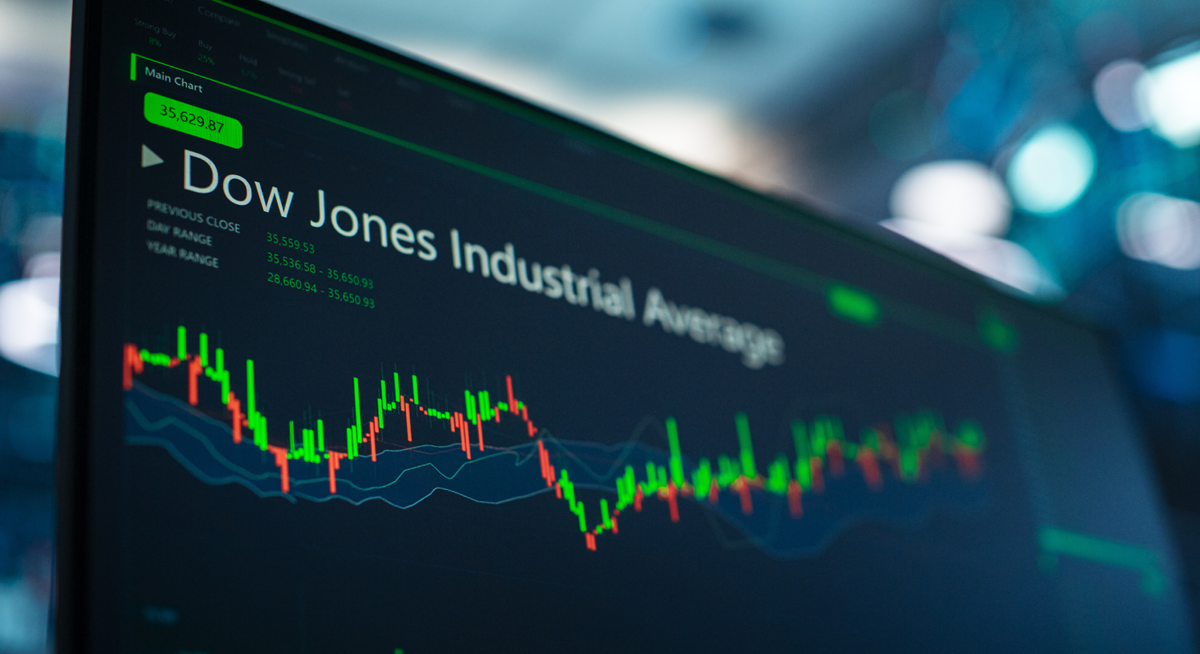
  • Wall Street futures edge higher as Intel results and easing oil prices improve sentiment: Dow Jones, S&P, Nasdaq

    Wall Street futures edge higher as Intel results and easing oil prices improve sentiment: Dow Jones, S&P, Nasdaq

    U.S. equity futures pointed to a stronger start on Friday, with investors looking to rebound from the previous session’s losses after upbeat earnings from Intel and a sharp retreat in crude oil prices helped restore confidence.

    The market recovery follows a difficult Thursday in which technology stocks came under heavy pressure amid rising concerns over artificial intelligence investment spending and soaring energy prices.

    Intel delivers a boost for semiconductor stocks

    Intel (NASDAQ:INTC) rose roughly 3% in premarket trading after posting second-quarter earnings that surpassed analysts’ expectations, supported by its fastest revenue growth in fifteen years.

    The chipmaker also issued encouraging guidance for the third quarter, helping improve sentiment across the semiconductor sector after a broad technology sell-off.

    Oil retreat supports broader market mood

    Crude oil prices reversed sharply on Friday, with U.S. futures falling more than 3% after surging over 6% during the previous session.

    The earlier rally had been triggered by attacks on oil tankers in the Red Sea, which intensified fears of potential supply disruptions.

    Despite lower energy prices, geopolitical risks remained elevated as military exchanges between the United States and Iran continued to escalate.

    The U.S. carried out a thirteenth consecutive night of strikes on Iranian targets, while Iran responded with missile attacks directed at neighbouring countries hosting American military installations.

    Investors continue to watch trade developments

    Market participants also remained focused on fresh trade measures announced by the Trump administration.

    The White House introduced tariffs ranging from 10% to 12.5% on imports from 60 economies accused of failing to prevent goods produced with forced labour from entering global supply chains.

    The new measures affect major trading partners including the European Union, the United Kingdom, China, India, Japan and Canada, replacing the temporary 10% tariff that expired on Friday.

    Thursday’s losses were led by technology stocks

    All three major U.S. indices closed lower on Thursday.

    The Nasdaq dropped 2.2% to 25,137.69, the S&P 500 declined 1.2% to 7,408.30 and the Dow Jones Industrial Average lost 1.0% to finish at 51,711.65.

    Tesla (NASDAQ:TSLA) plunged 14.5% after reporting disappointing quarterly earnings alongside sharply higher capital expenditure.

    Alphabet (NASDAQ:GOOGL) also fell 7.1%. Although the Google parent exceeded earnings forecasts, investors reacted negatively to its increased capital spending plans.

    Inflation concerns remain despite oil pullback

    The previous day’s surge in crude prices had revived worries that higher energy costs could complicate the inflation outlook and delay further interest rate cuts.

    Danni Hewson, Head of Financial Analysis at AJ Bell, said: “With nerves about the potential inflationary impact of the escalating conflict in the Middle East colliding with worries about soaring tech capex it’s been tough to find the optimism.”

    “It’s worth remembering that at the start of the month the price was hovering around $70 a barrel and markets had dared to hope that central bankers might be able to seamlessly shift from a pause to further cuts,” she added.

    Labour market remains resilient

    Economic data released on Thursday showed initial unemployment claims fell to 187,000 during the week ended July 18, well below expectations of 212,000.

    The reading marked the lowest level for first-time jobless claims since September 1969, highlighting continued strength in the U.S. labour market.

    Airlines and retailers lagged the market

    Airline shares posted some of the steepest declines, with the NYSE Arca Airline Index falling 3.3%.

    American Airlines (NASDAQ:AAL) slid 8.4% after reducing its full-year earnings outlook despite reporting quarterly results above expectations.

    Retail, software, telecommunications and gold-related stocks also weakened, while biotechnology, pharmaceutical and healthcare shares outperformed.