Author: Fiona Craig

  • Dollar edges up after Powell speech, euro slips

    Dollar edges up after Powell speech, euro slips

    The U.S. dollar gained ground Wednesday following cautious remarks from Federal Reserve Chair Jerome Powell regarding further monetary easing, while the euro struggled to benefit from positive news on Ukraine.

    At 03:50 ET (07:50 GMT), the Dollar Index, which tracks the greenback against six major currencies, rose 0.2% to 97.080, recovering slightly after earlier declines.

    Powell signals caution

    In a speech to Rhode Island’s Greater Providence Chamber of Commerce on Tuesday, Powell emphasized the Federal Reserve’s “challenging situation,” noting the dual risks of faster-than-expected inflation and weak job growth raising concerns about labor market health.

    He offered little clarity on the timing of future interest rate cuts, warning that moving too quickly could reignite inflation, while easing too slowly might unnecessarily push unemployment higher. The Fed reduced rates earlier this month for the first time in 2025, and markets currently anticipate quarter-point cuts at the remaining two Fed meetings this year.

    “Fed Chair Jerome Powell broadly reiterated his cautious view yesterday, signalling there is some balance between downside employment risks and upside inflation risks. The result is still a more hawkish tone by the chair relative to the FOMC consensus, as expressed by the median Dot Plot,” analysts at ING noted.

    Later in the session, housing data may provide additional insight, though it is unlikely to shift sentiment significantly. “We retain a moderate bearish bias on the dollar this week, although a quiet day for data and Fedspeak today (only Mary Daly is due to speak) means we could see FX volatility ease further and the dollar hover close to the current level in most G10 crosses,” ING added.

    Euro reacts cautiously to Trump comments

    In Europe, the euro slipped 0.2% against the dollar to 1.1794, failing to gain despite upbeat remarks from U.S. President Donald Trump on Ukraine. Trump said via his Truth Social platform that he believes Ukraine can reclaim all territory lost to Russia since the invasion, after meeting Ukrainian President Volodymyr Zelenskiy on the sidelines of the U.N. General Assembly.

    He had previously indicated that both Kyiv and Moscow might need to cede land to end the conflict. “With time, patience, and the financial support of Europe and, in particular, NATO, the original Borders from where this War started, is very much an option,” Trump wrote in his post.

    “While that is a significant change of tone, markets have been treating Trump’s comments on the matter with caution due to a lack of progress in peace negotiations so far,” said ING. “If anything, there are downside risks for the euro and even more for higher-beta European currencies as Trump told EU allies to shoot down Russian planes violating NATO airspace.”

    GBP/USD moved 0.3% lower to 1.3487, returning toward last week’s two-week low.

    Other currency movements

    Elsewhere, USD/JPY increased 0.3% to 148.10. The Bank of Japan kept policy unchanged last week, but hawkish signals have sparked speculation about earlier rate hikes. USD/CNY gained 0.1% to 7.1193, while AUD/USD rose 0.4% to 0.6620 following Australia’s CPI report for August, which showed a 3.0% year-over-year increase, slightly above forecasts of 2.9%.

    The Reserve Bank of Australia had cut rates in its previous meeting and indicated the potential for further reductions if economic data supported it. However, Wednesday’s CPI print, reaching the top of the RBA’s target range, reignited concerns about the bank’s next moves.

    This content is for informational purposes only and does not constitute financial, investment, or other professional advice. It should not be considered a recommendation to buy or sell any securities or financial instruments. All investments involve risk, including the potential loss of principal. Past performance is not indicative of future results. You should conduct your own research and consult with a qualified financial advisor before making any investment decisions.

  • Oil Holds Steady as U.S. Crude Draws Provide Support

    Oil Holds Steady as U.S. Crude Draws Provide Support

    Oil prices remained mostly steady on Wednesday after industry data indicated a drop in U.S. crude inventories last week, contributing to market expectations of tighter supply conditions.

    Brent futures inched up 3 cents to $67.66 per barrel by 06:30 GMT, while U.S. West Texas Intermediate (WTI) crude gained 5 cents to reach $63.46. Both benchmarks had climbed over $1 a barrel on Tuesday following a stalled deal to resume oil exports from Iraq’s Kurdistan, which halted pipeline shipments to Turkey despite ongoing hopes for an agreement, as two major producers requested debt repayment guarantees.

    The proposed accord between Iraq’s federal government, the Kurdish regional authorities, and oil companies would allow roughly 230,000 barrels per day to flow again. Pipeline operations have been halted since March 2023.

    “Prices are expected to remain supported but range-bound in the near term,” said Emril Jamil, a senior analyst for oil at the LSEG.

    Jamil noted that while continuing supply disruptions from Russia are bolstering prices, further increases are limited by uncertainties surrounding U.S. Federal Reserve interest rate decisions.

    Data from the American Petroleum Institute (API) indicated that U.S. crude and gasoline inventories fell last week, while distillate stockpiles rose, according to market sources referencing the API figures. Crude inventories dropped by 3.82 million barrels in the week ending September 19, gasoline supplies fell by 1.05 million barrels, and distillate stocks increased by 518,000 barrels.

    Official energy reports from the U.S. government are expected later Wednesday, likely showing gains in both crude and gasoline inventories, with a probable decline in distillates.

    Signs of tightening supply are also evident elsewhere. Reuters reported that Chevron, a major U.S. oil company, will only be able to export roughly half of the 240,000 barrels per day of crude it produces in partnership with Venezuela.

    Although the company received authorization to operate in the sanctioned country in July, new regulations mean a smaller portion of Venezuela’s heavy, high-sulfur crude will reach the U.S. market.

    This content is for informational purposes only and does not constitute financial, investment, or other professional advice. It should not be considered a recommendation to buy or sell any securities or financial instruments. All investments involve risk, including the potential loss of principal. Past performance is not indicative of future results. You should conduct your own research and consult with a qualified financial advisor before making any investment decisions.

  • Gold Holds Near Record Levels Amid Powell Remarks and Soft Economic Data

    Gold Holds Near Record Levels Amid Powell Remarks and Soft Economic Data

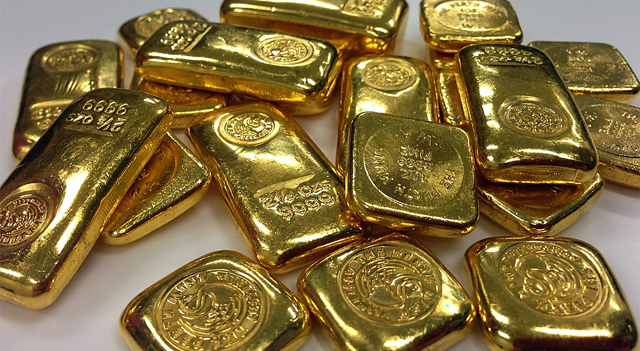
    Gold prices remained steady in Asian trading on Wednesday, hovering close to recent record highs following comments from U.S. Federal Reserve Chair Jerome Powell, which raised concerns about economic growth, inflation, and interest rate policy.

    Investor interest in safe-haven assets such as gold and other precious metals increased, while ongoing weakness in the dollar continued to support demand for metals. Caution was further heightened by upcoming key economic releases and disappointing U.S. purchasing managers index (PMI) data.

    Spot gold inched up 0.3% to $3,776.20 an ounce, while gold futures slipped 0.2% to $3,808.50 an ounce as of 01:39 ET (05:39 GMT).

    Powell Signals Economic Risks and Rate Uncertainty

    Spot gold reached a record $3,791.1 per ounce on Tuesday and held near that level after a strong rally over the past week.

    Fed Chair Powell on Tuesday highlighted growing uncertainty over the U.S. economic outlook, noting that there is no “risk-free path” for cutting interest rates while attempting to control inflation and support jobs.

    He also acknowledged that the labor market had weakened sharply in recent months, while inflation remained persistent, complicating the central bank’s efforts to ease monetary policy.

    Powell’s remarks came just a week after the Fed reduced rates by 25 basis points, as anticipated, and indicated further potential easing. Gold prices had surged following the rate cut, as lower yields make non-interest-bearing assets like metals more appealing.

    Markets are largely betting on at least two more 25-basis-point cuts this year, according to CME FedWatch data. Additional signs of U.S. economic softness could prompt further monetary easing, with the dollar hovering near three-year lows.

    September PMI readings showed that both manufacturing and services activity expanded less than expected, as businesses grappled with higher trade tariffs, sticky inflation, and slow consumer spending.

    Other Metals See Gains

    Other precious metals also advanced Wednesday, with spot platinum up 0.6% at $1,485.41 per ounce and spot silver rising 0.5% to $44.2495 per ounce.

    Among industrial metals, London Metal Exchange copper futures edged up 0.1% to $9,999.95 per ton, while COMEX copper futures rose slightly to $4.6430 per pound.

    Upcoming U.S. Data in Focus

    Investors are awaiting more U.S. economic data, including the final reading for second-quarter GDP growth on Thursday, expected to confirm stronger-than-anticipated growth.

    Attention will also be on the PCE price index—Fed Chair Powell’s preferred inflation gauge—due Friday. Analysts expect inflation to remain sticky in August, which could intensify uncertainty over the Fed’s interest rate plans. Several Fed officials are also scheduled to speak in the coming days, adding further potential market-moving commentary.

    This content is for informational purposes only and does not constitute financial, investment, or other professional advice. It should not be considered a recommendation to buy or sell any securities or financial instruments. All investments involve risk, including the potential loss of principal. Past performance is not indicative of future results. You should conduct your own research and consult with a qualified financial advisor before making any investment decisions.

  • Can Hermes’ Growth and Burberry’s Turnaround Drive Luxury Stocks in Q3?

    Can Hermes’ Growth and Burberry’s Turnaround Drive Luxury Stocks in Q3?

    Luxury equities are showing early signs of recovery heading into the third quarter, helped by easier year-ago comparisons in China and steadier performance during July and August, according to RBC Capital Markets.

    Analysts expect Hermes (EU:RMS) to achieve 10% organic revenue growth, while Burberry’s (LSE:BRBY) retail like-for-like (LFL) sales are anticipated to turn slightly positive. The focus now is whether this momentum can extend into Q4, when comparisons become more difficult.

    For Hermes, RBC forecasts revenues of €3.9 billion, representing 10% organic growth, with Leather Goods up 14%, Ready-to-Wear rising 6%, and Other Hermes increasing 13%. Growth is projected across regions, with Europe and the Americas each gaining 11% and Asia rising 8%.

    Analysts led by Piral Dadhania noted that Hermes remains “underindexed to tourism,” which could help cushion the impact of weaker travel-related spending.

    Burberry’s second quarter is expected to generate retail revenues of £425 million, reflecting a 1% LFL increase, while wholesale sales are projected to decline 14%. RBC anticipates a first-half gross margin of 66.5% and adjusted EBIT of £10 million. The brokerage expects slight improvement in Greater China due to onshoring of spending, stable trends in the Americas, and softer performance in Europe, the Middle East, and Japan.

    The analysts highlighted Hermes’ defensiveness and Burberry’s “well underpinned turnaround credentials” as appealing attributes within the sector.

    Other luxury groups show mixed trajectories. RBC expects LVMH (EU:MC) to report group revenues of €17.95 billion, down 1% organically, with its Fashion & Leather division falling 5% amid continued weakness in Japan and softer demand in the U.S. and Europe.

    Kering (EU:KER) is projected to experience steeper declines, with group revenues down 10% organically, driven by Gucci’s 17% drop. Moncler (BIT:MONC) is also expected to fall slightly, with revenues down 1% at constant FX, reflecting weaker retail LFL sales. By contrast, Richemont’s (BIT:1CFR) Jewellery Maison is forecast to grow 9% on a constant FX basis.

    “We continue to view defensiveness at Hermes, relative underperformance at LVMH and well underpinned turnaround credentials at Burberry as attractive in luxury,” the analysts wrote.

    While the sector remains in a cyclical downturn, share price movements are increasingly tied to expected revenue growth inflections in 2026 rather than short-term earnings revisions. RBC’s forecasts remain slightly below consensus for Hermes and Burberry, with EBIT estimates reduced by 3% and 7%, respectively. Nevertheless, both stocks are rated Outperform, with price targets of €2,300 for Hermes and 1,400 pence for Burberry.

    The central question is whether the third-quarter gains are temporary or indicate a more sustained recovery. RBC notes that seasonal and gift-related demand, along with U.S. tariff-driven pricing, could provide partial support through the end of the year.

    This content is for informational purposes only and does not constitute financial, investment, or other professional advice. It should not be considered a recommendation to buy or sell any securities or financial instruments. All investments involve risk, including the potential loss of principal. Past performance is not indicative of future results. You should conduct your own research and consult with a qualified financial advisor before making any investment decisions.

  • DAX, CAC, FTSE100, European Stocks Dip Slightly Ahead of German Ifo Survey

    DAX, CAC, FTSE100, European Stocks Dip Slightly Ahead of German Ifo Survey

    European equities edged lower Wednesday, following overnight declines on Wall Street amid rising concerns over valuations and uncertainty about the future trajectory of U.S. interest rates.

    At 07:05 GMT, Germany’s DAX fell 0.2%, France’s CAC 40 slipped 0.1%, and the U.K.’s FTSE 100 eased 0.1%.

    Wall Street Losses Weigh on Sentiment

    Investor sentiment was dampened overnight after U.S. Federal Reserve Chair Jerome Powell warned of mounting economic risks and uncertainty around interest rates. Speaking at Rhode Island’s Greater Providence Chamber of Commerce on Tuesday, Powell described the Fed’s position as “challenging,” citing the simultaneous risks of faster-than-expected inflation and weak job growth raising questions about labor market health.

    Earlier this month, the Fed cut rates for the first time this year, but Powell gave little guidance on the timing of any further monetary easing. He also noted that “equity prices are fairly highly valued,” as U.S. benchmark indices recently reached all-time highs.

    With the S&P 500 up more than 13% year-to-date and Germany’s DAX over 18% higher, analysts warn of the potential for a sharp pullback.

    Focus on German Ifo Business Climate

    In Europe, eurozone flash PMIs released Tuesday showed business activity growing at the fastest pace in 16 months for September. However, the data also highlighted a divergence between the bloc’s largest economies: Germany saw acceleration, while France was held back by political uncertainty.

    Later Wednesday, the German Ifo business climate index is expected to confirm an improvement in sentiment.

    Corporate Highlights

    JD Sports Fashion (LSE:JD.) reported a 13.5% fall in first-half profit, largely due to weak U.S. operations. The U.K.-based retailer maintained its full-year guidance but flagged caution over the trading environment.

    Ferrari (BIT:RACE) posted a first-half EBITDA margin of 26.6%, up 20 basis points from a year earlier, as productivity gains offset higher staff and digital investment costs.

    Oil Prices Gain on Inventory Decline

    Crude futures rose Wednesday as a drop in U.S. inventories eased concerns about softening demand. At 03:05 ET, Brent crude advanced 0.1% to $67.72 a barrel, while West Texas Intermediate climbed 0.1% to $63.48 a barrel.

    Both benchmarks gained over $1 on Tuesday after a delay in resuming exports from Iraq’s Kurdistan reduced worries about additional supply entering global markets. Data from the American Petroleum Institute showed U.S. crude stocks fell by 3.82 million barrels, while gasoline inventories dropped by 1.05 million barrels in the week ending September 19. Official U.S. government energy data is expected later Wednesday.

    This content is for informational purposes only and does not constitute financial, investment, or other professional advice. It should not be considered a recommendation to buy or sell any securities or financial instruments. All investments involve risk, including the potential loss of principal. Past performance is not indicative of future results. You should conduct your own research and consult with a qualified financial advisor before making any investment decisions.

  • Trump’s Ukraine Remarks Boost European Defense Stocks

    Trump’s Ukraine Remarks Boost European Defense Stocks

    Shares in European defense companies rose Wednesday after U.S. President Donald Trump signaled stronger support for Ukraine’s efforts to reclaim lost territories.

    Trump expressed optimism that Ukraine could recover all regions taken by Russia, including Crimea as well as parts of Donetsk and Luhansk, with backing from NATO and the European Union. This represents a notable shift from his previous, more cautious statements regarding territorial issues.

    At 08:20 GMT, shares of Saab (BIT:1SAAB), Hensoldt (BIT1HENS), Renk Group (TG:R3NK), Leonardo (BIT:LDO), Thales (EU:HO), Rheinmetall (TG:RHM), Dassault Aviation (EU:AM), QinetiQ (LSE:QQ.), and BAE Systems (LSE:BA.) were up between 1.6% and 4.7%.

    The European aerospace and defense index increased 0.8%, contrasting with a 0.45% decline in the broader STOXX 600 index.

    Trump also criticized Russia’s military capabilities, calling them a “paper tiger,” and highlighted NATO’s critical role in deterring further aggression. European leaders, including French President Emmanuel Macron, welcomed the comments as an opportunity to increase pressure on Russia amid ongoing economic and military challenges.

    This content is for informational purposes only and does not constitute financial, investment, or other professional advice. It should not be considered a recommendation to buy or sell any securities or financial instruments. All investments involve risk, including the potential loss of principal. Past performance is not indicative of future results. You should conduct your own research and consult with a qualified financial advisor before making any investment decisions.

  • Ferrari Group Sees Margin Improvement in H1 as Revenue Exceeds Forecast

    Ferrari Group Sees Margin Improvement in H1 as Revenue Exceeds Forecast

    Ferrari NV (BIT:RACE) reported a first-half 2025 EBITDA margin of 26.6%, up 20 basis points from the same period last year, with productivity gains helping to offset higher costs from staff and digital investments.

    Adjusted EBITDA increased 4.4% to €47.7 million, in line with Jefferies’ expectations. Revenue rose 3.8% to €179.6 million, slightly above the €179.2 million forecast, driven by 4% organic growth. Growth was supported by Europe and other regions, while Asia faced headwinds from weakness in China, despite stronger performance in Korea, Japan, and Thailand.

    Management confirmed full-year 2025 guidance, targeting revenue growth of 4.7%—matching 2024 levels—and maintaining an EBITDA margin of 26.5% or higher. The company anticipates faster growth in the second half, bolstered by planned new openings in Southeast Asia.

    Ferrari Group, which listed on Euronext Amsterdam in February, is trading approximately 6% below its listing price, according to Jefferies. The brokerage set a price target of €10.5, reflecting a 20% discount to its €13.0 fair value estimate, and valuing the company at 8.2 times forecast 2025 EV/EBITDA, compared with 9.5 times for peers.

    In 2024, Ferrari Group posted revenue of €348.8 million and adjusted EBITDA of €92.4 million, achieving a margin of 26.5%. Total shipments exceeded €190 billion, with Europe accounting for 58% of revenue, Asia 17%, North America and Brazil 14%, and other regions 11%.

    Jefferies highlighted potential risks, including a weaker luxury market, customer concentration, cost inflation, concentrated end-market exposure, and possible pricing pressure from major clients.

    This content is for informational purposes only and does not constitute financial, investment, or other professional advice. It should not be considered a recommendation to buy or sell any securities or financial instruments. All investments involve risk, including the potential loss of principal. Past performance is not indicative of future results. You should conduct your own research and consult with a qualified financial advisor before making any investment decisions.

  • Atos Secures €326 Million Cybersecurity Contract with European Commission

    Atos Secures €326 Million Cybersecurity Contract with European Commission

    Atos (EU:ATO), a global leader in AI-driven technology, has been awarded a significant cybersecurity contract by the European Commission, valued at up to €326 million, the company announced Wednesday.

    The contract falls under Lot 1 (Technical Operations Services) of the European Commission’s CLOUD II Dynamic Purchasing System Mini-Competition 17 for Cybersecurity, making it one of the largest cybersecurity service agreements in Europe.

    As the first provider in the “cascade” mechanism, Atos will have priority in delivering critical cybersecurity services to EU institutions, agencies, and bodies. Managed by the Directorate-General for Digital Services, the contract emphasizes operational support, advisory guidance, and cybersecurity capability development.

    “This award is a strong recognition of Atos’ trusted partnership with the European Commission and our long-standing track record of delivering secure, resilient digital services across Europe,” said Punit Sehgal, Head of Atos Belux, Netherlands & Nordics.

    The framework agreement may last up to 48 months and includes technical operations services such as incident response, digital forensics, threat intelligence, monitoring, malware analysis, and offensive security measures like vulnerability management and penetration testing.

    Atos will act as the lead contractor alongside Leonardo as a consortium partner, combining Atos’ cybersecurity expertise with Leonardo’s capabilities to ensure operational excellence and high resilience standards.

    David Dewulf, Cybersecurity Director at Atos Belux, Netherlands & Nordics, highlighted that the contract extends cybersecurity services Atos has been delivering to European Institutions for many years.

    This content is for informational purposes only and does not constitute financial, investment, or other professional advice. It should not be considered a recommendation to buy or sell any securities or financial instruments. All investments involve risk, including the potential loss of principal. Past performance is not indicative of future results. You should conduct your own research and consult with a qualified financial advisor before making any investment decisions.

  • JD Sports First-Half Profit Falls 13.5%, Full-Year Guidance Maintained

    JD Sports First-Half Profit Falls 13.5%, Full-Year Guidance Maintained

    JD Sports Fashion PLC (LSE:JD.) reported a 13.5% decline in first-half profit, as weaker performance in its U.S. operations weighed on results. The retailer confirmed its full-year outlook but noted continued caution regarding the trading environment.

    For the 12 months, JD Sports expects profit before tax and adjusting items to be in line with market expectations, ranging from £853 million to £914 million ($1.15–$1.23 billion), with the consensus at £878 million.

    First-half profit totaled £351 million for the six months to 2 August, down from £405.6 million a year earlier, consistent with guidance issued last month. Revenue rose 18% to £5.94 billion, with organic sales up 2.7% amid what the company described as “a tough trading environment.”

    JD Sports, which derives nearly 40% of its sales from the U.S. through its JD Sports, Hibbett, DTLR, and Shoe Palace chains, said it expects only a limited impact from U.S. President Donald Trump’s tariffs this year. Like-for-like sales, published last month, fell 2.5% overall, with declines of 3.8% in North America and 3.3% in the U.K.

    “We remain cautious on the trading environment for the second half,” CEO Regis Schultz said.

    The board declared an interim dividend of 0.33 pence, unchanged from the same period last year.

    This content is for informational purposes only and does not constitute financial, investment, or other professional advice. It should not be considered a recommendation to buy or sell any securities or financial instruments. All investments involve risk, including the potential loss of principal. Past performance is not indicative of future results. You should conduct your own research and consult with a qualified financial advisor before making any investment decisions.

  • Gresham House Energy Storage Fund Prioritizes Growth Over Dividends

    Gresham House Energy Storage Fund Prioritizes Growth Over Dividends

    Gresham House Energy Storage Fund plc (LSE:GRID), the UK’s largest investor in utility-scale battery energy storage systems, reported a 76.9% year-on-year increase in underlying portfolio revenues to £31.7 million for H1 2025. Underlying portfolio EBITDA surged 97.6% to £20.5 million compared with the same period in 2024.

    The fund confirmed it will prioritize reinvesting cash flow into growth rather than paying dividends over the next two years, with only minimal dividend distributions planned. GRID expects a small dividend of 0.11p per share in November 2025 and at least 0.25p per share in 2026. More meaningful dividend increases are anticipated from 2027 onwards, following the completion of its expansion initiatives. Net Asset Value (NAV) fell slightly by 1.5% to 107.71p per share during the period.

    “This half-year period has been a critical step in delivering against the three-year strategic plan we set out in November 2024,” said John Leggate CBE, Chair of Gresham House Energy Storage Fund. “The Board believes that the growth opportunities we see represent the best future total return for investors.”

    GRID has reached a milestone as the first and only Gigawatt-scale operational portfolio in Great Britain, with 1,072MW/1,701MWh of operational capacity. The company completed 330MWh of initial augmentations, increasing the portfolio’s average duration to 1.6 hours, with a further 350MWh augmentation program currently underway.

    Long-term contracted revenues are in place, with 88% of the operational portfolio secured through revenue floor contracts alongside two-year revenue tolls with Octopus Energy. Post-period, GRID completed a key refinancing, unlocking capital to support further growth.

    “We are very pleased with the progress made so far in 2025 and delivering on the initial steps of our Three-year Plan. We’re also delighted to be the first BESS investor to have passed the symbolic 1GW milestone for operational projects,” said Ben Guest, Fund Manager.

    The company plans to double installed battery capacity over the next two years from 1.7GWh to 3.5GWh, with total installed capacity expected to increase 65% from 1.1GW to 1.8GW. Once construction spending is complete and the portfolio reaches 1.8GW, GRID estimates it could generate excess cash flows of approximately 10p per share at current merchant revenue levels.

    This content is for informational purposes only and does not constitute financial, investment, or other professional advice. It should not be considered a recommendation to buy or sell any securities or financial instruments. All investments involve risk, including the potential loss of principal. Past performance is not indicative of future results. You should conduct your own research and consult with a qualified financial advisor before making any investment decisions.