Author: Fiona Craig

  • James Cropper refinances debt facilities to improve financial flexibility (CRPR)

    James Cropper refinances debt facilities to improve financial flexibility (CRPR)

    James Cropper plc (LSE:CRPR) has completed a refinancing of its borrowing facilities, putting in place a more flexible funding structure to support its medium-term strategic objectives. The revised arrangements are intended to strengthen cash flow management, improve balance sheet flexibility and provide additional support for both ongoing operations and future growth investments.

    New funding facilities enhance liquidity

    A key element of the refinancing is the introduction of a committed invoice discounting facility worth up to £15 million for a minimum of three years. The facility is expected to provide greater flexibility in managing working capital while improving liquidity.

    Alongside the new funding line, the company will use existing cash resources together with the facility to make a £7.1 million partial repayment of its UK bank loan. The remaining balance will now be repaid through smaller quarterly instalments extending to March 2030.

    Debt maturity extended and pension commitments reshaped

    James Cropper has also secured a 12-month extension to the maturity of its U.S. bank loan, pushing the final repayment of $3.2 million back to December 2027. The extension increases the group’s available liquidity over the next two years.

    At the same time, the company has agreed to make a one-off £0.6 million payment into its defined benefit pension schemes while reducing scheduled pension contributions by £0.35 million through to September 2027. It also plans to bring forward the next triennial actuarial valuation of the schemes to March 2027, reflecting a proactive approach to managing its long-term pension obligations.

    Management said net debt stood at less than one times adjusted EBITDA as of 28 March 2026 and expects the revised financing arrangements to improve capital efficiency while lowering cash financing costs.

    Refinancing supports long-term growth strategy

    By extending loan maturities, securing committed working capital funding and restructuring pension contributions, James Cropper has significantly improved its financial flexibility. The stronger funding platform is expected to support investment across its advanced materials and sustainable paper and packaging businesses while reinforcing confidence in the group’s liquidity position and balance sheet strength.

    Although the company’s outlook continues to benefit from positive corporate developments and encouraging technical momentum, ongoing profitability challenges and valuation concerns linked to negative earnings remain factors for investors to monitor.

    More about James Cropper

    James Cropper plc is a UK-based manufacturer of advanced materials and specialist paper products, operating through its Advanced Materials and Paper & Packaging divisions. The company serves industries including aerospace, defence and clean energy, while also supplying premium creative papers and moulded fibre packaging designed to support the shift towards a circular economy.

    Headquartered in Burneside, the group also operates manufacturing facilities in Crewe, Launceston and Schenectady in the United States. Drawing on more than 180 years of materials science expertise, James Cropper develops customised, high-performance products for customers with demanding technical and design requirements.

    Its Advanced Materials division specialises in nonwoven materials and electrochemical coatings for high-performance industrial applications, while the Paper & Packaging business focuses on recycled fibre technologies and premium sustainable packaging solutions. This combination positions the company in attractive niche markets where innovation and value-added manufacturing remain key competitive strengths.

  • Eco Animal Health launches proprietary poultry vaccine across the EU (EAH)

    Eco Animal Health launches proprietary poultry vaccine across the EU (EAH)

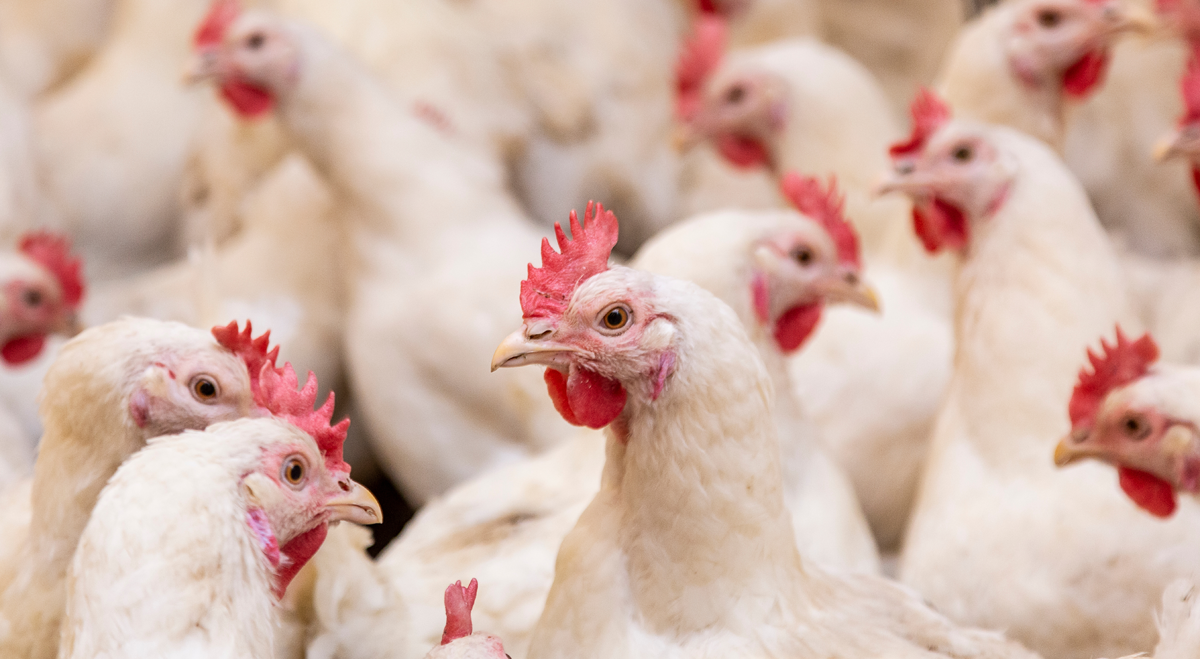
    Eco Animal Health (LSE:EAH) has introduced ECOVAXXIN MS across the European Union, marking the commercial debut of the first vaccine developed through the company’s own research and development programme. The vaccine is designed to protect future layer and breeder chickens from four weeks of age against Mycoplasma synoviae, helping to reduce air-sac and foot-pad lesions while limiting egg production losses that can range from 5% to 10% in affected flocks.

    Commercial rollout backed by established distribution network

    The company is leveraging the sales infrastructure created for its flagship Aivlosin brand, together with strategic distribution partners, to support the rollout across key European poultry markets representing more than 220 million layer birds each year. Eco Animal Health believes the launch will provide significant health benefits for poultry producers while expanding its presence in the growing vaccine market. The group is also seeking regulatory approvals in the United States, Latin America and Asia as part of its international expansion strategy.

    Proprietary R&D pipeline reaches commercial milestone

    The launch of ECOVAXXIN MS represents an important milestone for Eco Animal Health, demonstrating its ability to bring internally developed innovations from the research stage to commercial markets. The addition of a proprietary vaccine broadens the company’s portfolio beyond its established antibiotic products, supporting greater revenue diversification while addressing increasing demand for effective disease prevention solutions in commercial livestock production.

    Although the company continues to build momentum through product development and positive corporate progress, its relatively high valuation and uneven financial performance suggest investors will be looking for continued execution to justify future growth expectations.

    More about Eco Animal Health

    Eco Animal Health Group is a UK-based animal health company specialising in the development and commercialisation of veterinary pharmaceuticals for the poultry and pig industries. Operating in more than 70 countries and employing over 200 people, the company is best known for its patented antibiotic Aivlosin, which is used to treat respiratory and intestinal diseases in livestock.

    Alongside its established medicines portfolio, Eco Animal Health has continued to invest in a proprietary research and development pipeline focused on vaccines and other animal health technologies. The business combines in-house innovation with an established commercial network and strategic distribution partnerships to bring new products to market.

    The company’s growth strategy centres on expanding its presence in major livestock markets across Europe while pursuing approvals for new products in the United States, Latin America and Asia. Through this approach, Eco Animal Health aims to strengthen its position as a specialist provider of disease management solutions for commercial livestock producers.

  • Corcel PLC’s KON-16 Project Positioned as a Potential Transformational Growth Catalyst

    Corcel PLC’s KON-16 Project Positioned as a Potential Transformational Growth Catalyst

    As global energy demand continues to rise, investors are increasingly focused on companies capable of unlocking meaningful value through targeted, high-impact exploration. For Corcel PLC (LSE:CRCL), one asset stands out in this regard: the KON-16 licence in Angola’s onshore Kwanza Basin.

    Speaking on The Watchlist, Corcel PLC Chief Executive Officer Scott Gilbert outlined why KON-16 is becoming a key part of the company’s portfolio and why it could represent a significant catalyst for future growth.

    A High-Impact Opportunity in a Proven Basin

    A key advantage of KON-16 is that Corcel operates the asset directly, giving the company full control over operational timing and development strategy.

    The company recently completed a major 2D seismic programme, acquiring 326 line kilometres of data. This work has helped identify a series of prospects across the block and is guiding preparations for an upcoming exploration well.

    The planned well is described as a high-impact exploration target, designed to evaluate both post-salt and pre-salt formations—geological settings that can carry significant hydrocarbon potential.

    Gilbert highlighted the economic appeal of the project, noting that the cost of drilling an onshore well in KON-16 could potentially unlock reserves comparable to those typically associated with far more expensive offshore developments.

    Momentum Built on Execution

    Since its early development phase, Corcel has focused on building value through disciplined execution and steady milestone delivery.

    When the company began developing its portfolio, its assets required significant groundwork. Through seismic acquisition and ongoing technical evaluation, Corcel has advanced KON-16 from early-stage potential into a defined exploration opportunity.

    This progression has contributed to the company’s broader growth, with Corcel now establishing itself as a more visible player in the market.

    Should the upcoming well deliver successful results, management believes KON-16 could become a transformational asset for the company.

    Revitalising Angola’s Onshore Kwanza Basin

    Beyond its individual potential, KON-16 is located in the historic onshore Kwanza Basin—an area of major significance in Angola’s oil history, where hydrocarbons were first discovered.

    Although the basin has seen limited exploration activity in recent decades, Corcel is playing a role in revitalising interest in this frontier region.

    With modern seismic data, underexplored geology, and operator control, KON-16 represents part of a broader effort to re-establish the basin as a meaningful exploration province.

    Multiple Catalysts Ahead

    While KON-16 is a central focus, Corcel’s strategy extends beyond a single asset.

    The company is also actively pursuing the acquisition of producing assets in its areas of operation, including opportunities in Latin America. These potential deals could provide near-term production and cash flow while complementing its exploration-led growth strategy.

    As a result, investors can expect a series of potential catalysts in the months ahead, including progress toward drilling at KON-16 and updates on acquisition activity.

    A Strategy Focused on Growth

    With a clear exploration plan, advancing technical work, and multiple strategic pathways for expansion, Corcel PLC is positioning itself for a potentially pivotal phase of growth.

    KON-16 stands at the centre of this strategy, offering high-impact exploration upside with relatively efficient onshore development economics.

    As the company moves toward drilling and continues pursuing broader portfolio expansion, KON-16 remains a key asset to watch in Corcel’s evolving energy story.

    For more information visit – https://www.corcelplc.com/

  • Gold steadies as investors look to Warsh for fresh policy signals

    Gold steadies as investors look to Warsh for fresh policy signals

    Precious metals pause after historic quarterly decline

    Gold prices traded in a narrow range on Wednesday after posting their weakest quarterly performance in 13 years, as investors weighed persistent interest rate concerns ahead of comments from Federal Reserve Chair Kevin Warsh.

    Market participants are hoping Warsh’s speech later in the day will provide additional insight into the outlook for U.S. inflation, monetary policy and future interest rate decisions.

    The precious metal has struggled in recent weeks as stronger expectations for further Federal Reserve tightening boosted demand for the U.S. dollar. The currency has also benefited from confidence that the United States, as one of the world’s largest energy exporters, is less exposed to the economic fallout from the conflict involving Iran.

    Spot gold rose 0.4% to $4,023.23 an ounce by 08:08 ET (12:08 GMT), while gold futures held broadly steady at $4,036.95 an ounce. During early trading, spot prices briefly dipped below the psychologically important $4,000 level.

    “Gold took another punch to the guts overnight […],” said David Morrison, Senior Market Analyst at Trade Nation.

    “The rebound in the U.S. dollar after a week-long consolidation didn’t help gold’s cause. And as things stand, it will take something quite big to take the wind out of the sails of the dollar’s rally.”

    Hawkish Fed expectations weigh on bullion

    Gold lost roughly 14% during the second quarter, marking its weakest quarterly showing since 2013.

    Although prices initially weakened after fighting broke out between the United States, Israel and Iran, selling accelerated during June as inflation concerns resurfaced and investors adjusted to a more hawkish Federal Reserve outlook.

    Minutes from the Fed’s June meeting revealed growing support among policymakers for at least one additional interest rate increase this year. That marked a sharp departure from expectations earlier in 2026, when markets anticipated the beginning of an easing cycle.

    Higher oil prices following the outbreak of the conflict—partly driven by disruptions around the Strait of Hormuz, a vital shipping route for global crude oil and liquefied natural gas—also reinforced inflation concerns. Since Washington and Tehran signed a temporary peace agreement last month, crude prices have retreated toward levels seen before the conflict.

    Despite the decline in oil prices, CME FedWatch data continue to indicate that investors expect at least one Federal Reserve rate hike before year-end.

    Higher borrowing costs generally reduce the attractiveness of gold because the metal does not generate interest income.

    Silver and platinum post mixed moves

    Performance across the broader precious metals complex remained mixed following steep quarterly losses.

    Spot silver slipped 0.5% to $58.2900 per ounce, while spot platinum edged 0.2% higher to $1,556.49 per ounce.

    Markets await Warsh’s debut on the global stage

    Investors will also focus on Kevin Warsh’s appearance at the European Central Bank’s annual forum in Sintra, Portugal.

    The event marks his first major public engagement since leading his inaugural Federal Reserve policy meeting in June.

    Although Warsh is not expected to provide explicit guidance on future policy decisions after advocating for more limited central bank communication, investors will closely examine his remarks for clues about inflation, economic growth and the path of interest rates.

    “[T]wo weeks ago, Mr Warsh made it clear that the Federal Reserve was focused on tackling inflation and driving it back down to the Fed’s 2% target. That looks likely to require a rate hike or two,” Morrison said.

    Attention will also turn to the release of U.S. private-sector payroll figures later on Wednesday, ahead of Thursday’s closely watched June employment report.

  • Oil prices rise as Iran-US deadlock keeps supply risks in focus

    Oil prices rise as Iran-US deadlock keeps supply risks in focus

    Crude gains amid diplomatic uncertainty

    Oil prices moved higher on Wednesday as investors weighed the possibility that stalled negotiations between Iran and the United States could delay a lasting peace agreement and prolong uncertainty over energy supplies from the Middle East.

    Brent crude added 14 cents, or 0.19%, to $73.09 a barrel by 06:44 GMT, while US West Texas Intermediate (WTI) crude rose 11 cents, or 0.16%, to $69.61 a barrel.

    Hormuz developments remain crucial

    Vandana Hari, founder of Vanda Insights, said conditions in the Strait of Hormuz continue to improve but remain inconsistent.

    “Hormuz continues to reopen but it’s patchy, unpredictable, and not fully transparent,” she said.

    “Unless there is a fresh understanding between Washington and Tehran, the market may wait and watch for sustained peace and quiet before crude resumes bearish momentum.”

    Diplomatic efforts continued in Doha after White House envoy Steve Witkoff and Jared Kushner, son-in-law of US President Donald Trump, arrived for what officials described as “high level” discussions.

    However, Iran and Qatar confirmed that Iranian representatives would only meet with international mediators rather than directly with US officials.

    Oil market watches inventories and supply outlook

    The oil market continues to recover after a volatile second quarter, when Brent recorded its steepest quarterly decline since 2008 and WTI posted its largest quarterly loss since 2020.

    A Reuters survey showed analysts lowered their 2026 oil price forecasts for the first time since the Iran conflict began, reflecting improving shipping conditions through the Strait of Hormuz.

    US Vice President JD Vance also sought to reassure markets, saying Iran would not be allowed to impose charges on ships using the strategic waterway.

    “This is not going to end in a place where the Iranians are collecting tolls on ships going through the Strait of Hormuz,” Vance said.

    Meanwhile, industry data indicated US crude inventories declined by 6.1 million barrels last week, while gasoline inventories also fell. Investors are now awaiting official inventory figures from the Energy Information Administration.

  • Citi turns bearish on bitcoin and ether as ETF demand fades

    Citi turns bearish on bitcoin and ether as ETF demand fades

    Lower price targets reflect weaker market sentiment

    Citigroup has sharply reduced its 12-month outlook for bitcoin (COIN:BTCUSD) and ether (COIN:ETHUSD), pointing to declining investor demand, persistent ETF outflows and slower-than-expected progress on US cryptocurrency regulation.

    The bank cut its bitcoin price target to $82,000 from $112,000, while lowering its ether forecast to $2,240 from $3,175.

    Crypto prices remain under pressure

    Bitcoin recently traded at $58,864.27, marking its lowest level since September 2024 after retreating roughly 50% from its record high of $126,223.18 reached last October.

    Ether also continued to weaken, falling to $1,585.63, its lowest price since April 2025.

    According to Citi, cryptocurrencies have struggled throughout the year as investors shifted capital elsewhere amid volatile markets, sustained ETF withdrawals and heightened interest in major IPOs.

    Both bitcoin and ether remain below their long-term moving averages, reinforcing the current bearish technical picture.

    ETF flows and regulation cloud the outlook

    Citi’s downside scenario assumes recessionary conditions and continued ETF outflows, leading to projected prices of $53,000 for bitcoin and $1,094 for ether over the next year.

    The brokerage said it has reduced its assumption for net ETF inflows over the next 12 months from $10 billion to zero.

    “ETF flows, an important driver of prices, have turned negative recently,” Citi said, noting that bitcoin ETFs have recorded approximately $3.3 billion in net outflows so far this year.

    The bank added that slow legislative progress in Washington and concerns that digital asset treasury companies could increase bitcoin sales have further weakened sentiment, while investors continue rotating into artificial intelligence-related assets.

  • US futures slip as markets await Warsh speech, manufacturing data and Qatar talks: Dow Jones, S&P, Nasdaq, Wall Street

    US futures slip as markets await Warsh speech, manufacturing data and Qatar talks: Dow Jones, S&P, Nasdaq, Wall Street

    Investors turn cautious at the start of the second half

    US equity futures traded lower on Wednesday as investors prepared for a busy day of economic events, including comments from Federal Reserve Chair Kevin Warsh, fresh manufacturing data and diplomatic developments involving the US and Iran.

    At 03:16 ET, Dow Jones futures were down 202 points, or 0.4%, while S&P 500 futures declined 33 points and Nasdaq 100 futures fell 195 points, representing losses of 0.4% and 0.6%, respectively.

    Wall Street finished Tuesday’s session in positive territory, with technology stocks leading gains after a volatile second quarter. The Philadelphia Semiconductor Index also posted another strong advance, completing its best quarterly performance since its launch in the early 1990s.

    Labour market strength keeps rate hike expectations alive

    Recent US economic data painted a mixed picture.

    Job openings for May exceeded forecasts, while housing and consumer confidence indicators weakened. Combined with hawkish remarks from Cleveland Fed President Beth Hammack, the stronger labour market data reinforced expectations that the Federal Reserve could still raise interest rates as early as July.

    Markets await policy clues from Kevin Warsh

    Attention will centre on Kevin Warsh’s appearance at the ECB Forum on Central Banking in Sintra later today.

    Since taking over from Jerome Powell, Warsh has suggested the Federal Reserve could reduce its reliance on forward guidance and reassess the way it communicates monetary policy.

    Investors will also be listening closely for his assessment of inflation and economic growth, particularly after easing oil prices reduced some concerns over energy-driven inflation following the preliminary US-Iran agreement.

    Geopolitics and manufacturing data remain in focus

    Diplomatic talks involving US and Iranian representatives in Qatar are also being monitored closely, although officials have confirmed that no direct high-level negotiations are currently scheduled.

    Meanwhile, economists expect the ISM Manufacturing PMI to edge down slightly to 53.8 in June from 54.0 in May, while the ADP employment report will provide another snapshot of the US labour market ahead of Thursday’s official payrolls release.

    Nike disappoints despite earnings beat

    Nike (NYSE:NKE) shares declined in premarket trading after the company warned that its turnaround remains in its early stages.

    Although quarterly revenue exceeded expectations, continued weakness in China weighed on overall performance.

    Chief Executive Elliott Hill told investors that results “aren’t there yet,” adding that the company is not “living up to our full potential.”

  • European stocks trade mixed as investors await eurozone inflation and central bank signals: DAX, CAC, FTSE100

    European stocks trade mixed as investors await eurozone inflation and central bank signals: DAX, CAC, FTSE100

    Markets pause ahead of key economic events

    European equity markets opened mixed on Wednesday as investors awaited the release of the eurozone’s latest inflation figures and a closely watched panel discussion featuring some of the world’s leading central bankers, including newly appointed Federal Reserve Chair Kevin Warsh.

    The pan-European STOXX 600 slipped 0.2% in early trading after reaching a record high on Tuesday. Germany’s DAX gained 0.2%, while France’s CAC 40 fell 0.3% and London’s FTSE 100 declined 0.2%. Spain’s IBEX 35 and Italy’s FTSE MIB both traded 0.3% lower.

    Inflation data expected to influence policy outlook

    Markets are focused on the eurozone’s preliminary inflation reading for June, with economists expecting annual headline inflation to slow to 3.0% from 3.2% in May.

    Investors will assess whether price pressures are continuing to ease following the European Central Bank’s recent interest rate increases, introduced in response to the sharp rise in energy prices triggered by the outbreak of the US-Iran conflict.

    Although crude oil prices have largely returned to levels seen before the conflict and shipping traffic through the Strait of Hormuz has improved, geopolitical developments remain a source of uncertainty.

    Reports from the Wall Street Journal suggested that US President Donald Trump recently considered resuming large-scale military action against Iran before deciding to continue diplomatic negotiations. Representatives from both countries are expected to participate in mediated talks in Doha.

    Sintra forum takes centre stage

    Attention will also turn to the ECB Forum on Central Banking in Sintra, Portugal, where senior policymakers from the world’s leading central banks are due to discuss the global economic outlook.

    The event will feature the first international appearance by Federal Reserve Chair Kevin Warsh since succeeding Jerome Powell in May.

    Investors look for clues on future interest rates

    Markets will closely examine Warsh’s remarks for further insight into the direction of US monetary policy.

    Although he was appointed by President Trump, who has repeatedly argued in favour of lower interest rates, Warsh has recently adopted a more hawkish tone, warning about the risk of persistent structural inflation.

    Investors will also analyse comments from European Central Bank President Christine Lagarde, Bank of England Governor Andrew Bailey and Bank of Canada Governor Tiff Macklem for indications of when major central banks may begin easing monetary policy as the impact of the energy crisis continues to fade.

  • Eurozone bond yields edge higher ahead of inflation data and Lagarde speech

    Eurozone bond yields edge higher ahead of inflation data and Lagarde speech

    Bond markets remain cautious before key economic events

    Eurozone government bond yields moved modestly higher on Wednesday as investors adopted a cautious stance ahead of the release of preliminary June inflation data and a closely watched speech by European Central Bank President Christine Lagarde at the ECB Forum in Sintra.

    Germany’s benchmark 10-year Bund yield rose to 2.9%, reflecting the broader pause across global sovereign debt markets. Benchmark yields in France, Italy and Spain also remained confined to narrow trading ranges as investors refrained from taking significant positions before the day’s key events.

    Inflation data expected to shape ECB expectations

    Attention is centred on the euro area’s preliminary inflation figures for June, with headline consumer price inflation expected to ease to 3.0% year-on-year from 3.2% in May.

    A lower-than-expected reading would likely support bond markets after fixed-income investors endured a sharp sell-off during the previous quarter as the ECB raised interest rates aggressively to counter energy-driven inflation.

    Although oil prices have retreated to levels seen before the recent conflict and shipping through the Strait of Hormuz has largely stabilised, policymakers continue to view underlying inflationary pressures as persistent.

    Markets await guidance from Christine Lagarde

    Investors are now looking to Christine Lagarde’s appearance at the ECB Forum on Central Banking in Sintra for further clues on the future direction of monetary policy.

    Bond markets will closely analyse her comments for any indication that the ECB is moving closer to an interest rate easing cycle or, alternatively, whether restrictive monetary policy may need to remain in place for longer to ensure inflation expectations remain anchored.

    Global events continue to influence bond markets

    Adding to market caution, newly appointed Federal Reserve Chair Kevin Warsh is due to deliver his first international speech later today.

    Following his recent shift towards a more hawkish policy stance, investors will be watching for comments that could influence global bond markets, as tighter US monetary policy often places upward pressure on European sovereign yields.

    Meanwhile, geopolitical developments also remained in focus. Reports that US President Donald Trump has postponed plans for large-scale military action against Iran in favour of continuing diplomatic discussions in Doha helped limit demand for traditional safe-haven government bonds, leaving yields broadly stable during the morning session.

  • Renault shares rise after carmaker reaffirms full-year guidance (RNO)

    Renault shares rise after carmaker reaffirms full-year guidance (RNO)

    Outlook maintained ahead of first-half results

    Renault (EU:RNO) shares moved higher on Wednesday after the French carmaker reaffirmed its full-year financial guidance during a pre-close briefing with investors ahead of its first-half results later this month, offering reassurance after a difficult year for the stock.

    The shares climbed by as much as 3% in early Paris trading before easing to gains of around 1.7%.

    Management remains confident despite market challenges

    Renault reiterated its target of achieving a 5.5% operating margin for the full year and maintained its forecast of €1 billion in free cash flow. The company is continuing to execute its long-term strategy under newly appointed Chief Executive François Provost, with plans to sell more than two million Renault-branded vehicles annually by 2030.

    Jefferies analysts, led by Philippe Houchois, said the pre-close update “defied the odds by confirming a full-year guidance that sits above consensus.” The brokerage left its own forecasts unchanged, projecting full-year EBIT of €2.76 billion, equivalent to a 4.8% operating margin, alongside free cash flow of €986 million.

    Analysts remain cautious on the second half

    Despite the reaffirmed guidance, Jefferies continues to take a cautious view of the second half of the year, noting that Renault’s expectation for stronger margins later in the year leaves “risk to the downside given competitive market conditions.”

    The bank estimates first-half adjusted EBIT of approximately €1.32 billion, representing a 4.6% operating margin, while forecasting free cash flow to remain close to breakeven.

    Renault is scheduled to publish its first-half financial results on 30 July.

    Shares continue to recover from a difficult period

    Renault’s shares have been under pressure since mid-2025, when the company issued a profit warning, highlighted weaker demand across the European automotive market and announced a change in chief executive.

    The group subsequently reported a 15% decline in operating profit for 2025, with its operating margin falling to 6.3% from a record 7.6% a year earlier, before guiding for a further reduction to around 5.5% in 2026.