Author: Fiona Craig

  • Neo Energy Metals Expects 2025 Results Imminently as Trading Suspension Nears End

    Neo Energy Metals Expects 2025 Results Imminently as Trading Suspension Nears End

    Neo Energy Metals plc (LSE:NEO) has sought to reassure shareholders that its delayed Annual Financial Report for the year ended 30 September 2025 is close to completion. The company said publication is now expected in the week commencing 16 February 2026, following confirmation from its external auditors.

    Trading in the company’s shares was temporarily suspended on the London Stock Exchange due to the short delay in finalising the accounts. Management expects the suspension to be lifted once the report is released, subject to standard exchange processes, and estimates the overall disruption to listing and trading will be limited to around two weeks. The company added that it is taking steps to strengthen internal controls to prevent similar delays in future, underlining a focus on improving governance and maintaining investor confidence.

    More about Neo Energy Metals plc

    Neo Energy Metals plc is a uranium development and mining company listed on the main market of the London Stock Exchange and South Africa’s A2X Markets. Through its South African subsidiaries, the group is assembling a sizeable uranium and gold portfolio, including 100% interests in the Beisa North and Beisa South Uranium and Gold Projects and the Beatrix 4 mine and processing complex in the Witwatersrand Basin. These assets together represent a SAMREC-compliant resource of 117 million pounds of U₃O₈ and more than 5 million ounces of gold. The company also holds up to a 70% interest in the advanced Henkries Uranium Project and a 100% stake in Henkries South, extending its uranium-bearing paleo-channel strike length to 46km in South Africa’s Northern Cape, and is led by a board with extensive experience in Southern African uranium and mineral development.

  • Property Franchise Group Encouraged by FCA Findings on Pure Protection Market

    Property Franchise Group Encouraged by FCA Findings on Pure Protection Market

    The Property Franchise Group PLC (LSE:TPFG) has responded positively to the Financial Conduct Authority’s interim review of the UK pure protection market, which concluded that product distribution is generally functioning effectively and delivering favourable outcomes for consumers. The regulator highlighted strong claims acceptance rates, low complaint levels, and indicated that no significant market-wide intervention is expected.

    The group noted that the FCA’s comments on pricing practices and panel structures align closely with the approach already taken within its Financial Services division. TPFG also pointed to the regulator’s identification of a substantial “protection gap” and the added regulatory clarity provided by the report as reinforcing its confidence in the long-term opportunity to expand its involvement in helping customers access protection products.

    From a performance perspective, the company continues to be supported by solid revenue growth and profitability, alongside constructive corporate developments and management confidence. While technical indicators suggest the potential for some short-term share price headwinds, valuation measures imply the stock is currently fairly priced.

    More about The Property Franchise Group PLC

    The Property Franchise Group PLC is the UK’s largest multi-brand property franchisor, operating a network of more than 1,946 outlets delivering residential property services, complemented by an established Financial Services arm. Founded in 1986, the AIM-listed group now owns 18 high-street and hybrid brands nationwide and participates in two major mortgage networks through its brokers Brook Financial (MAB) and The Mortgage Genie (Primis). Headquartered in Bournemouth, TPFG joined the AIM 100 index in July 2024.

  • Ondine’s Photodisinfection Technology Earns UK Award as NHS Uptake Expands

    Ondine’s Photodisinfection Technology Earns UK Award as NHS Uptake Expands

    Ondine Biomedical Inc. (LSE:OBI) has seen its Steriwave nasal photodisinfection technology recognised in the UK after a joint project with Mid Yorkshire Teaching NHS Trust won the Excellence in Healthcare Partnership Award. The local evaluation focused on orthopaedic surgery and reported a 71% reduction in surgical site infections in hip procedures, with no infections recorded in knee surgeries over the assessment period, alongside measurable cost savings.

    The award win, together with the partnership’s shortlisting for the HSJ Partnership Awards, highlights increasing NHS interest in non-antibiotic approaches to infection prevention as concerns around antimicrobial resistance continue to grow. The results support broader deployment of Steriwave across English hospitals through Ondine’s distribution agreement with Mölnlycke Health Care, reinforcing its role as an alternative to traditional antibiotic-based protocols.

    Despite the operational and clinical momentum, the company’s overall outlook remains challenged by financial pressures. Strong revenue growth has yet to translate into profitability or sustained positive cash flow, while technical indicators continue to point to negative share price momentum. Valuation metrics also remain unattractive, reflecting the early-stage and loss-making nature of the business.

    More about Ondine Biomedical, Inc.

    Ondine Biomedical Inc. is a Canadian life sciences company specialising in light-activated antimicrobial therapies, known as photodisinfection, for the prevention and treatment of infections, including those caused by multidrug-resistant organisms. Its proprietary Steriwave nasal photodisinfection system is approved in several international markets and is under clinical evaluation in the US, with a broader development pipeline targeting areas such as chronic sinusitis, ventilator-associated pneumonia, and burn-related infections.

  • Phoenix Spree Deutschland Sees Portfolio Uplift and Record Condo Sales, Targets Capital Return in 2026

    Phoenix Spree Deutschland Sees Portfolio Uplift and Record Condo Sales, Targets Capital Return in 2026

    Phoenix Spree Deutschland Limited (LSE:PSDL) reported a return to valuation growth across its Berlin residential portfolio in 2025, with like-for-like values per square metre rising 1.5% to €540.1m. The improvement reflects stabilisation within the Private Rented Sector portfolio, alongside stronger value gains from the company’s condominium assets.

    The group’s condominium strategy delivered a record year, with 122 units notarised for €36m, exceeding its 2025 target by 20%. Sales were achieved at an average 3.9% premium to book value, with vacant units performing particularly strongly. All 40 homes in the existing condominium sales pool are now being marketed. Following the completion of a full debt refinancing in late 2025, Phoenix Spree plans to expand its condominium pipeline further in 2026 by adding 11 additional properties and widening its broker network to support transaction volumes.

    Looking ahead, the company intends to return capital to shareholders through compulsory share redemptions, funded by ongoing asset disposals. This approach highlights a continued strategic shift away from long-term rental ownership toward portfolio realisation and cash returns. While recent free cash flow has been positive, the overall outlook remains constrained by several years of losses, uneven revenues, and a gradually weakening balance sheet. Share price technicals show a mild upward trend with neutral momentum, but valuation remains difficult to assess due to the absence of meaningful earnings and dividend metrics.

    More about Phoenix Spree Deutschland Ltd

    Phoenix Spree Deutschland Limited is a UK-listed investment company focused on residential real estate in Berlin. The group invests primarily in multifamily rental buildings and condominiums, seeking to create value through active asset management, targeted capital expenditure, and the selective conversion and sale of units as condominiums to benefit from strong owner-occupier demand in a supply-constrained market.

  • Derwent London Sells Tottenham Court Road Property Above Book Value to Back New Developments

    Derwent London Sells Tottenham Court Road Property Above Book Value to Back New Developments

    Derwent London plc (LSE:DLN) has agreed the disposal of its freehold asset at 80–85 Tottenham Court Road, W1, for £32.6 million, exceeding its June 2025 book value. The price equates to around £755 per square foot, with completion scheduled for June 2026.

    The 43,300 sq ft mixed-use building includes 28,300 sq ft of office accommodation arranged over six floors, alongside four ground-floor retail units that together generate £1.7 million of annual income. The buyer is a newly formed value-add joint venture between Purestone Capital and BPS London. Chief executive Paul Williams commented that the transaction highlights continued investor demand for smaller value-add opportunities and demonstrates the group’s disciplined approach to capital recycling.

    Sale proceeds are expected to be redeployed into higher-return opportunities, including major development schemes at Holden House in W1 and Greencoat & Gordon House in SW1. These investments align with Derwent London’s strategy of driving rental growth across prime central London locations. While the company’s share price technicals remain weak, its strong balance sheet, supportive valuation, and active portfolio management underpin a cautiously positive outlook.

    More about Derwent London plc REIT

    Derwent London plc is the largest London-focused office REIT, with a predominantly central London portfolio valued at £5.2 billion as of 30 June 2025. The group specialises in acquiring off-market assets in West End and City Borders locations and creating value through redevelopment, refurbishment, asset management, and capital recycling. Known for design-led regeneration projects such as 25 Baker Street and 1 Soho Place, Derwent London operates with modest leverage, targets net zero carbon status by 2030, and supports local communities through its long-established Central London Community Fund.

  • Tungsten West Raises £41m to Accelerate Hemerdon Mine Restart

    Tungsten West Raises £41m to Accelerate Hemerdon Mine Restart

    Tungsten West Plc (LSE:TUN) has raised approximately £41.37m in gross proceeds through an oversubscribed equity fundraising, combining a placing with institutional investors and a substantial direct subscription from a well-known international investor. The shares were issued at 18 pence each, a slight premium to the 30-day VWAP but still below the company’s most recent closing price.

    The fundraising included £351,522 of participation from directors and significant backing from major shareholder Lansdowne. Proceeds are expected to strengthen the balance sheet, broaden the institutional shareholder base, and support progress toward securing project debt financing. Despite the successful raise, the company continues to face financial headwinds, including ongoing losses, cash outflows, and an expected move into negative equity in FY2025 as debt increases.

    The new capital will be directed toward restarting and accelerating the recommissioning of the Hemerdon tungsten and tin mine in Devon, with management aiming to bring the asset back into production against a backdrop of strong tungsten and tin prices. Technical indicators point to a solid upward trend in the shares, although overbought conditions suggest some near-term risk. Valuation remains difficult to gauge given the lack of profitability and the absence of dividend support.

    More about Tungsten West Plc

    Tungsten West Plc is an AIM-listed mining company focused on restarting operations at the Hemerdon tungsten and tin mine in the UK. The company’s strategy is centered on bringing this strategically important asset back into production and positioning the business to benefit from demand for critical minerals.

  • Oil Declines Over 1% as U.S.-Iran Diplomatic Talks Ease Supply Risk Concerns

    Oil Declines Over 1% as U.S.-Iran Diplomatic Talks Ease Supply Risk Concerns

    Oil prices moved lower by more than 1% on Thursday but continued to trade near recent multi-month highs after the United States and Iran agreed to hold diplomatic negotiations in Oman on Friday, easing immediate fears of supply disruptions.

    Brent crude futures dropped 86 cents, or 1.2%, to $68.6 per barrel at 1036 GMT. U.S. West Texas Intermediate crude fell 82 cents, or about 1.3%, to $64.32 per barrel.

    Despite the decline, Brent prices remained roughly $3 below the five-month high reached late in January, when geopolitical supply concerns helped drive prices higher.

    UBS analyst Giovanni Staunovo said oil markets continue to be heavily influenced by developments in the Middle East, with traders closely monitoring the planned discussions in Oman.

    The talks come as the United States expands its military footprint in the region, while regional nations attempt to avoid tensions escalating into a broader conflict.

    Approximately 20% of global oil consumption flows through the Strait of Hormuz, which sits between Oman and Iran. Major OPEC producers — including Saudi Arabia, the United Arab Emirates, Kuwait and Iraq — depend on the route for most of their crude exports, alongside Iran.

    PVM Oil Associates analyst John Evans suggested market pricing ahead of Friday’s meeting will likely remain influenced by expectations for a diplomatic resolution.

    “However, there will be no comfort as such in prices, for one untoward remark or a breakdown in talks and the Brent price will soon be banging on the door of $70 a barrel and looking at year-to-date highs,” he said.

    Heightened price swings have encouraged traders to hedge exposure to oil this year, with January seeing record trading activity in WTI Midland contracts in Houston. The surge has been driven by concerns over Middle East supply risks as well as increasing shipments of Venezuelan crude toward the U.S. Gulf Coast.

    Analysts added that gains in the U.S. dollar and ongoing volatility across precious metals markets also weighed on commodities and broader risk appetite during Thursday’s session.

  • Silver Drops 16%, Erasing Recent Recovery as Selling Pressure Returns

    Silver Drops 16%, Erasing Recent Recovery as Selling Pressure Returns

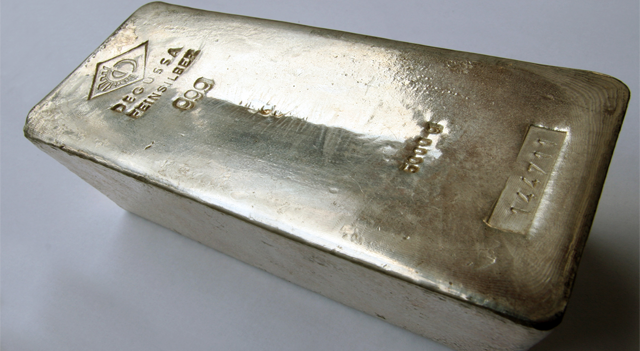
    Silver prices plunged during Asian trading on Thursday, leading losses across the precious metals complex as fresh selling activity wiped out much of the metal’s recent rebound.

    Spot silver fell by as much as 16.7% to $73.5565 per ounce, moving back toward levels seen during last week’s sharp decline. Silver futures for March delivery also dropped heavily, falling more than 10% to $73.383 per ounce.

    The sharp decline occurred quickly during Asian market hours and coincided with a modest rise in the U.S. dollar.

    “Even as prices of precious metals are now less elevated following the correction, sensitivity to the USD, yield repricing, and uncertainty around Fed policy under new leadership remains high. While positioning has likely reset to some extent, confidence may not have fully restored, pointing to a potential period of choppier, two-way trading,” Christopher Wong, FX strategist at OCBC said in a mailed comment.

    Despite the sharp fall, Wong characterised the recent pullback in precious metals as “a normalisation phase rather than a trend reversal,” stressing that key demand fundamentals remain supportive. He pointed to sustained central bank demand for gold and ongoing industrial demand for silver as underlying drivers of longer-term strength.

    “While higher beta and sentiment-driven flows can amplify short-term volatility, medium-term fundamentals remain supported by demand from solar PV, grid modernisation and electrification themes, which should help cushion downside once positioning and sentiment stabilise,” Wong said.

    A stronger U.S. dollar has been a major factor weighing on precious metals in recent days, as the currency rebounded from nearly four-year lows. The move followed expectations that Kevin Warsh, nominated by U.S. President Donald Trump to lead the Federal Reserve, may adopt a less dovish policy stance than markets had anticipated.

    This shift in expectations has continued to pressure metal prices in recent sessions.

    Currency markets have remained supportive of the dollar ahead of key European central bank meetings scheduled for Thursday and the upcoming U.S. nonfarm payrolls report expected next week. The employment data, originally due on Friday, was postponed until February 11 following a partial U.S. government shutdown earlier in the week.

  • Bitcoin Drops Toward $70,000 as Tech Rout and Weak Liquidity Pressure Risk Markets

    Bitcoin Drops Toward $70,000 as Tech Rout and Weak Liquidity Pressure Risk Markets

    Bitcoin (COIN:BTCUSD) declined sharply on Thursday, sliding below the $71,000 level as fragile market liquidity and heavy losses in global technology shares weighed on high-risk assets.

    The world’s largest cryptocurrency was down 7.6% to $70,427.1 at 00:28 ET (05:28 GMT), its lowest level since early November 2024. Earlier in the session, bitcoin fell to an intraday low of $70,129.6.

    The digital asset has now fallen in seven of the last eight trading sessions and has retreated more than 40% from its all-time high near $126,000 reached in October.

    Liquidity squeeze and tech sector weakness drive selling

    Market activity suggested that reduced trading liquidity amplified volatility, accelerating forced liquidations as bitcoin broke through key technical support levels.

    The latest downturn followed a broad sell-off in global technology stocks overnight, triggered by investor concerns about the rising costs and pace of artificial intelligence investment among major tech companies.

    Losses in U.S. technology stocks spread into Asian markets and extended into cryptocurrency markets, which have increasingly shown strong correlation with growth-oriented equities during periods of market turbulence.

    Selling intensified as leveraged traders unwound positions, particularly in derivatives markets. Bitcoin’s fall below the $75,000 threshold triggered widespread stop-loss activity, further accelerating declines.

    According to crypto analytics firm CoinGlass, roughly $770 million in cryptocurrency positions were liquidated over the past 24 hours.

    Macroeconomic conditions also contributed to the sell-off. A stronger U.S. dollar and rising global bond yields reduced demand for speculative assets.

    Even traditional safe-haven commodities faced pressure, highlighting fragile liquidity conditions across financial markets. Silver prices plunged during Asian trading, erasing recent gains, while gold also moved lower.

    Investor sentiment toward digital assets has weakened following weeks of volatile trading and multiple unsuccessful attempts to sustain upward price momentum.

    Altcoins decline alongside bitcoin

    Most alternative cryptocurrencies also recorded notable losses during Thursday’s downturn.

    Ethereum, the second-largest cryptocurrency by market capitalisation, dropped 7.4% to $2,098.92. XRP, ranked third globally, fell 10% to $1.42.

    Solana declined 6%, Cardano fell 5%, and Polygon lost 3.2%.

    Among meme-based cryptocurrencies, Dogecoin dropped 6%, while the $TRUMP token declined 3.5%.

  • AI Investment Plans at Alphabet, Amazon Earnings and Central Bank Decisions Shape Market Direction: Dow Jones, S&P, Nasdaq, Wall Street Futures

    AI Investment Plans at Alphabet, Amazon Earnings and Central Bank Decisions Shape Market Direction: Dow Jones, S&P, Nasdaq, Wall Street Futures

    U.S. equity futures signalled a mixed opening for Wall Street as investors weighed major technology earnings, ongoing weakness in software stocks and upcoming monetary policy decisions in Europe. Alphabet (NASDAQ:GOOG) drew strong attention after indicating it may significantly increase spending to accelerate its artificial intelligence ambitions. Market focus is also turning toward results from Amazon (NASDAQ:AMZN), due after the closing bell. Meanwhile, precious metals prices declined as currency strength pressured commodities.

    U.S. futures point to uncertain open

    As of early trading, futures tied to the Dow Jones Industrial Average were modestly lower, while S&P 500 and Nasdaq 100 futures posted slight gains.

    Major U.S. indices finished the previous session without a clear direction as investors searched for signs that recent losses in software stocks could stabilise. Companies linked to AI-related hardware also experienced selling pressure.

    Technology shares, long viewed as key beneficiaries of the artificial intelligence boom, have recently faced concerns that the rapid evolution of AI could disrupt parts of the sector. A software sector index has recorded one of its weakest relative performances against the S&P 500 since the early 2000s.

    Analysts have suggested the sector is becoming increasingly polarised, with some companies expected to emerge as major AI beneficiaries while others could struggle to adapt.

    Alphabet ramps up AI investment strategy

    Alphabet appears to be strengthening its position in the global artificial intelligence competition following strong quarterly results from its Google business.

    Previously seen as trailing OpenAI, the developer behind ChatGPT, Alphabet is now showing early signs of generating measurable returns from its substantial AI spending. Unlike OpenAI, which continues to operate at a loss, Alphabet is demonstrating revenue growth linked to its AI initiatives.

    “Overall, we’re seeing our AI investments and infrastructure drive revenue and growth across the board,” CEO Sundar Pichai said.

    Alphabet’s Gemini AI platform recorded 750 million monthly active users during the December quarter, closing the gap with ChatGPT, which reported more than 800 million users in October.

    Company executives signalled that capital expenditure could potentially double this year, reaching between $175 billion and $185 billion, as Alphabet accelerates expansion of advanced data centres and semiconductor infrastructure supporting AI development. Although some investors initially expressed concern over the scale of spending, strong performance in Google’s cloud segment and other divisions helped reassure markets.

    Alphabet shares moved slightly lower in extended trading but recovered from earlier declines.

    Amazon earnings expected to highlight AI progress

    Attention is shifting to Amazon, which has also made artificial intelligence a central element of its long-term growth strategy.

    Amazon Web Services remains a major contributor to revenue, but investors are closely watching the company’s progress in AI development. Some market participants have viewed Amazon as trailing certain competitors in AI innovation, which has affected sentiment around the stock. Despite its role as one of the technology giants that have supported years of equity market gains, Amazon’s share price has slipped slightly over the past year.

    However, Amazon previously reported revenue gains linked to AI services and announced plans to rapidly expand its global data centre infrastructure.

    For the critical holiday quarter, analysts expect AWS net sales to grow by approximately 21%, excluding currency effects. Total revenue is forecast to reach around $211.49 billion, with earnings per share estimated at $1.96.

    Central bank policy decisions in focus

    Outside corporate developments, investors are closely monitoring monetary policy decisions in Europe. The European Central Bank is widely expected to leave interest rates unchanged at 2%, marking a fifth consecutive meeting without adjustments. However, the recent drop in eurozone inflation may increase pressure on policymakers.

    Latest data showed eurozone consumer inflation slowed to 1.7% year-on-year in January, falling below the ECB’s 2% target.

    Economists at Deutsche Bank noted that while rates are expected to remain unchanged through 2026, risks continue to point toward “further easing given the expected undershoot of the inflation target.”

    They also highlighted that recent euro strength against the U.S. dollar reinforces this risk, although the argument for additional rate cuts “has not been proven yet.”

    The Bank of England is similarly expected to hold its benchmark rate at 3.75%, with analysts citing persistent inflation pressures despite signs of a moderating labour market.

    Precious metals retreat as dollar strengthens

    Gold prices declined after reversing earlier gains, while silver dropped sharply following a brief recovery earlier in the week.

    Weakness across metals resumed as the U.S. dollar strengthened ahead of European central bank announcements, placing downward pressure on commodity prices.

    Silver experienced the steepest declines among precious metals, with spot prices falling significantly during Asian trading. The drop followed heavy selling in Chinese futures markets, which spilled over into global spot markets and erased much of the recent rebound.

    “Even as prices of precious metals are now less elevated following the correction, sensitivity to the [dollar], yield repricing, and uncertainty around Fed policy under new leadership remains high. While positioning has likely reset to some extent, confidence may not have fully restored, pointing to a potential period of choppier, two-way trading,” Christopher Wong, FX strategist at OCBC said.