Author: Fiona Craig

  • Diageo Lowers Dividend and Outlook Amid Weaker U.S. and China Demand

    Diageo Lowers Dividend and Outlook Amid Weaker U.S. and China Demand

    Diageo (LSE:DGE) reported first-half fiscal 2026 net sales of $10.5 billion, representing a 4% decline year on year, as organic net sales dropped 2.8% due to softer consumer demand in North America and continued weakness in Chinese white spirits. Growth across Europe, Latin America and Africa provided some offset, but operating profit still fell 1.2%, reflecting an unfavourable product mix and tariff pressures. Free cash flow decreased to $1.5 billion, prompting management to revise full-year expectations to a 2–3% fall in organic net sales and flat to low single-digit growth in organic operating profit.

    The company is placing greater emphasis on balance sheet resilience and financial flexibility, introducing a rebased dividend policy targeting a 30–50% payout ratio alongside a minimum annual dividend floor of 50 cents per share. An interim dividend of 20 cents was declared. Diageo also anticipates roughly $2.3 billion in proceeds from the agreed disposal of its holdings in East African Breweries and its Kenyan spirits operations. Meanwhile, the Accelerate cost-efficiency programme continues under new CEO Sir Dave Lewis, who is steering strategy toward improved competitiveness, broader portfolio strength and more customer-focused execution.

    Diageo’s outlook reflects supportive corporate developments and an attractive dividend yield, though pressures on profit margins, reduced cash flow stability and bearish technical indicators continue to weigh on overall sentiment.

    More about Diageo

    Diageo is a global beverage alcohol company known for its portfolio of premium spirits, beer and ready-to-drink brands. The group operates across key categories including whisky, vodka, rum and regional white spirits, supported by a diversified geographic presence spanning North America, Europe, Latin America, Africa and Asia-Pacific markets.

  • First Tin Strengthens Financial Position and Expands Resource Base as Key Projects Progress

    First Tin Strengthens Financial Position and Expands Resource Base as Key Projects Progress

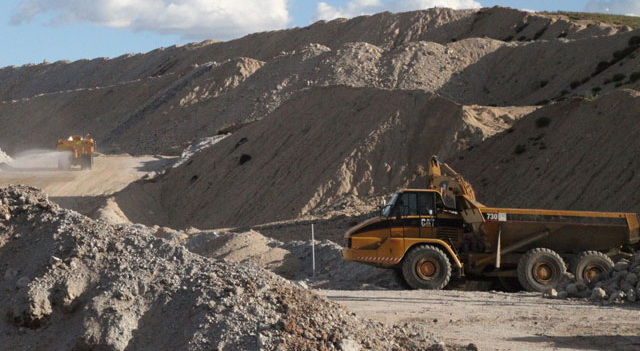
    First Tin (LSE:1SN) reported interim results for the six months ended 31 December 2025, highlighting a stronger financial position following a £6.3 million equity raise. Cash balances increased to £9.03 million, while net assets rose to £50.27 million, and the company’s comprehensive loss narrowed to near breakeven. Management said the additional funding will support final permitting, engineering work and an enhanced Definitive Feasibility Study at its flagship Taronga project in Australia as the company advances toward the construction phase.

    At Taronga, submission of the Environmental Impact Statement and a smooth public consultation period marked an important regulatory milestone. Ongoing infill and extension drilling is contributing to an updated Mineral Resource Estimate expected to extend the project’s mine life and strengthen project economics, with potential by-product credits emerging from silver and copper mineralisation. In Germany, a significant resource upgrade at the Gottesberg deposit has lifted total contained tin resources across the group to 367,600 tonnes, positioning First Tin as the largest holder of undeveloped tin resources within the OECD and enhancing its strategic relevance amid tightening global supply and rising tin prices.

    The company is also advancing permitting activities at the Tellerhäuser project through a fast-tracked Life of Mine Plan while continuing technical optimisation of processing methods and mine design across its portfolio. Management noted that expanding resources in stable jurisdictions, improving project economics and favourable demand trends for critical metals are strengthening First Tin’s attractiveness to potential financiers and industrial customers seeking secure and responsible tin supply.

    The company’s overall assessment remains constrained by weak financial performance, including the absence of revenue generation, ongoing losses and continued cash outflows. These factors are partly balanced by a debt-free balance sheet and a solid equity base. Technical indicators remain supportive but may appear stretched, while valuation remains difficult to assess given continuing losses and the lack of dividend visibility.

    More about First Tin Plc

    First Tin PLC is a tin development company focused on advancing low-capex projects in Australia and Germany, with the goal of becoming a reliable and ethical supplier of traceable tin sourced from low political-risk, conflict-free jurisdictions. Its portfolio includes the Taronga project in New South Wales alongside German assets such as Gottesberg and Tellerhäuser, targeting growing structural demand for tin driven by electrification and decarbonisation trends.

  • AFC Energy Advances Hydrogen Commercialisation Following £27.5m Capital Raise

    AFC Energy Advances Hydrogen Commercialisation Following £27.5m Capital Raise

    AFC Energy (LSE:AFC) released its FY25 results outlining a strategic shift toward commercial rollout of its fuel cell generators and ammonia cracking technology, supported by an oversubscribed £27.5 million fundraising. The company increased investment in research and development during the year, while reporting a wider post-tax loss of £22.2 million. AFC Energy closed the period with £25.3 million in cash and investments and has since obtained regulatory approval to begin early hydrogen sales from its Dunsfold pilot facility.

    Operational progress included several deployments of 30kW generators through the Speedy Hydrogen Solutions joint venture and the introduction of the Hy-5 ammonia cracker. These initiatives are designed to deliver low-carbon hydrogen at a targeted cost of £10 per kilogram, positioning the company to compete among the UK’s lowest-cost suppliers. After the reporting period, AFC Energy launched its LC30 generator, signed new joint development agreements with both an S&P 500 partner and Komatsu, and entered a manufacturing partnership with Volex. Management indicated that 2026 is expected to mark the transition from pipeline development to firm commercial orders and more consistent revenue expansion.

    The company is now focused on securing pre-orders for the LC30 and Hy-5 platforms, building out a Fuel-as-a-Service offering, and expanding distribution channels across North America, Europe and through its Saudi Arabian partner Tamgo. A simplified organisational structure, continued patent development and an emphasis on commercial execution are intended to reinforce AFC Energy’s position within the developing low-carbon hydrogen and off-grid energy markets.

    AFC Energy’s investment outlook remains influenced by ongoing profitability and cash flow pressures. Technical indicators suggest improving market momentum, although valuation metrics — including a negative P/E ratio and absence of dividend yield — continue to weigh on overall sentiment.

    More about AFC Energy

    AFC Energy is a UK-listed developer of ammonia-based low-carbon hydrogen production and hydrogen-to-power technologies designed to replace diesel generation in off-grid environments. Its modular ammonia crackers and fuel cell systems aim to enable decentralised, scalable hydrogen supply for industrial and hard-to-abate sectors without dependence on government subsidies.

  • Hiscox Reports Record 2025 Performance and Expands Shareholder Returns

    Hiscox Reports Record 2025 Performance and Expands Shareholder Returns

    Hiscox (LSE:HSX) announced a third straight year of record financial performance in 2025, with insurance contract written premiums increasing 5.9% to $4.98 billion and profit before tax climbing to $732.7 million. The insurer achieved its strongest combined ratio in ten years at 87.8%, alongside record underwriting and investment income. Robust capital generation enabled a 20% rise in the final dividend and the launch of a new $300 million share repurchase programme, lifting total announced capital returns over the past three years to more than $1.1 billion.

    Retail operations delivered solid momentum, with premiums rising 6.3% at constant currency as Hiscox broadened its reach into adjacent specialist markets. The company expanded into Italy through a bolt-on broker acquisition and accelerated product rollouts, particularly targeting emerging professional sectors and technology-related risks. Management highlighted that its ongoing multi-year transformation programme contributed a $29 million profit uplift in 2025 and remains on course to generate $200 million in annual benefits from 2028, supporting faster retail expansion and strengthening Hiscox’s position as a focused specialty insurer.

    The company’s stock assessment reflects attractive valuation metrics and supportive corporate developments, notably the newly announced share buyback. While operating performance remains steady, cash flow pressures persist. Technical signals currently indicate a bearish trend, though valuation levels may imply potential upside if fundamentals continue to improve.

    More about Hiscox

    Hiscox Ltd is a Bermuda-based global specialty insurer listed on the London Stock Exchange. The group specialises in complex and niche risks, combining catastrophe-exposed underwriting with more stable local specialty insurance activities across its retail, London Market and reinsurance divisions. Hiscox serves both commercial and personal clients across the United States, the United Kingdom, Europe and other international markets.

  • Bargain buying could help Wall Street stage an early rebound: Dow Jones, S&P, Nasdaq, Futures

    Bargain buying could help Wall Street stage an early rebound: Dow Jones, S&P, Nasdaq, Futures

    U.S. stock index futures pointed modestly higher on Tuesday, suggesting markets may attempt to recover after the sharp losses recorded in the previous trading session.

    Investors may be tempted to step back into equities at lower valuations following Monday’s sell-off, which pushed the Dow to its weakest closing level in a month.

    Still, any recovery could remain tentative as ongoing uncertainty surrounding trade tariffs continues to weigh on market sentiment.

    Market participants may also avoid making aggressive bets ahead of quarterly earnings from artificial intelligence heavyweight Nvidia (NASDAQ:NVDA), due after Wednesday’s closing bell.

    “Investors have plenty to worry about, and Nvidia’s results on Wednesday have the potential to make or break the market depending on what it says about AI,” said Dan Coatsworth, head of markets at AJ Bell.

    He added, “The market has this year shown widespread concerns about all things linked to AI, from excessive spending to business models being disrupted, so Nvidia needs to retain its uber-bullish stance if it wants to avoid stirring the pot of worry for investors.”

    After posting solid gains last week, equities retreated sharply on Monday, with all three major U.S. benchmarks ending the session significantly lower and the Dow recording its lowest close in roughly a month.

    Although stocks rebounded somewhat from intraday lows, losses remained substantial. The Dow dropped 821.91 points, or 1.7%, to 48,804.06, the Nasdaq declined 258.80 points, or 1.1%, to 22,627.27, and the S&P 500 fell 71.76 points, or 1.0%, to 6,837.75.

    The downturn followed renewed trade uncertainty after the U.S. Supreme Court last Friday invalidated most of President Donald Trump’s sweeping global tariff measures.

    In a Truth Social post on Saturday, Trump said he would raise worldwide tariffs to the “fully allowed” and “legally tested” 15 percent level, up from the 10 percent rate announced shortly after the ruling.

    “During the next short number of months, the Trump Administration will determine and issue the new and legally permissible Tariffs, which will continue our extraordinarily successful process of Making America Great Again – GREATER THAN EVER BEFORE!!!” Trump said.

    While a White House fact sheet acknowledged the president may impose tariffs for only 150 days without congressional approval, Trump later asserted that he would not need to seek authorization from Congress.

    He also warned that any country attempting to “play games” would face a “much higher Tariff, and worse, than that which they just recently agreed to.”

    Meanwhile, the European Commission called for “full clarity” regarding Washington’s next steps following the court decision.

    In a statement, the Commission said the current situation was “not conducive” to delivering “fair, balanced, and mutually beneficial” transatlantic trade and investment relations outlined in the EU-U.S. Joint Statement of August 2025.

    “A deal is a deal,” the European Commission said. “As the United States’ largest trading partner, the EU expects the U.S. to honour its commitments set out in the Joint Statement – just as the EU stands by its commitments.”

    Market sentiment was further pressured by a steep decline in IBM Corp. (NYSE:IBM), whose shares plunged 13.2%.

    The technology company came under pressure after Anthropic’s Claude introduced COBOL capabilities, targeting a programming language widely used in enterprise data processing — a key area of IBM’s business.

    Financial stocks were among the worst performers, with the KBW Bank Index tumbling 4.4% and the NYSE Arca Securities Broker/Dealer Index falling 3.4%.

    Software companies also faced heavy selling pressure, reflected by a 3.9% drop in the Dow Jones U.S. Software Index.

    Airline, computer hardware, and networking shares also declined notably, while gold-related stocks moved higher, supported by a strong rise in the price of the precious metal.

  • European stocks trade sideways amid trade uncertainty and AI disruption worries: DAX, CAC, FTSE100

    European stocks trade sideways amid trade uncertainty and AI disruption worries: DAX, CAC, FTSE100

    European equities showed muted movement on Tuesday as renewed trade tensions and ongoing concerns about artificial intelligence-driven disruption kept investor sentiment cautious.

    With markets also monitoring geopolitical risks related to Iran, tariff developments and the broader economic outlook, investors are now looking ahead to U.S. President Donald Trump’s State of the Union address to Congress for further direction.

    Germany’s DAX Index slipped 0.1%, while the U.K.’s FTSE 100 Index edged up 0.1% and France’s CAC 40 Index gained 0.2%.

    Banking stocks came under pressure, with Commerzbank (TG:CBK), Deutsche Bank (TG:DBK) and BNP Paribas (EU:BNP) declining between 1% and 2% amid concerns about the potential long-term impact of AI on employment, consumer trends, economic growth, corporate earnings and equity markets.

    Automakers, meanwhile, posted broad gains. Shares of BMW (TG:BMW), Mercedes Benz (TG:MBG), Volkswagen (TG:VOW3) and Renault (EU:RNO) each rose more than 1%, even after new data showed European car sales declined year-on-year in January for the first time since June.

    Spanish telecommunications group Telefonica (BIT:1TEF) advanced nearly 2% after reporting accelerating core profit growth in the fourth quarter.

    France-based vouchers and employee benefits provider Edenred (EU:EDEN) jumped around 7% after delivering core profit results for 2025 that exceeded expectations.

    Shares of Belgian chemicals company Solvay (EU:SOLB) climbed 3.4% after the group reported fourth-quarter adjusted earnings ahead of analyst forecasts.

  • Oil advances toward multi-month highs as US-Iran tensions support prices

    Oil advances toward multi-month highs as US-Iran tensions support prices

    Oil prices moved higher on Tuesday, approaching levels last seen nearly seven months ago as traders monitored rising geopolitical risks ahead of another round of nuclear negotiations between the United States and Iran.

    Brent crude futures added 48 cents, or 0.7%, to $71.97 per barrel by 0658 GMT, while U.S. West Texas Intermediate crude gained 45 cents, also 0.7%, to $66.76 per barrel.

    Brent is currently trading at its strongest level since July 31, while WTI has reached its highest level since August 1.

    “At this stage, geopolitics is clearly doing most of the heavy lifting for oil prices, with the current firmness largely driven by anticipation rather than actual supply loss,” said Phillip Nova senior market analyst Priyanka Sachdeva.

    “The risk of possible military escalation in the Middle East is gaining traction, and thus, traders appear to hedge against worst-case scenarios.”

    A third round of nuclear talks between Iran and the United States is scheduled to take place in Geneva on Thursday, Oman’s Foreign Minister Badr Albusaidi confirmed on Sunday.

    Washington continues to press Tehran to abandon its nuclear ambitions, while Iran has firmly rejected the demand and insists it is not pursuing nuclear weapons.

    Amid mounting concerns over a potential military confrontation, the U.S. State Department has begun withdrawing non-essential staff and family members from the American embassy in Beirut, according to a senior official on Monday.

    U.S. President Donald Trump warned in a social media post that it would be a “very bad day” for Iran if negotiations fail to produce an agreement.

    “In the near-term, geopolitical factors related to the U.S.-Iran conflict are likely to be the primary driver for oil prices,” said OANDA senior market analyst Kelvin Wong.

    “For now, WTI crude oil is evolving in a short-term bullish dynamic, holding above its 20-day moving average, acting as a key short-term support at $63.90/barrel.”

    Trade developments also remained a key focus. Trump cautioned countries on Monday against backing away from recently negotiated trade agreements after the Supreme Court struck down his emergency tariffs, warning that significantly higher duties could be imposed under alternative trade legislation.

    “U.S. President Donald Trump created uncertainty for global growth and fuel demand with a new round of tariff hikes,” UOB Bank analysts said in a client note.

    Trump said on Saturday that a temporary tariff on imports into the United States from all countries would be increased to 15% from 10%, the maximum level permitted under existing law.

  • Gold eases after recent rally as stronger dollar and tariff concerns weigh

    Gold eases after recent rally as stronger dollar and tariff concerns weigh

    Gold prices edged lower on Tuesday, pulling back from a three-week high and ending a four-session winning streak as investors took profits while the U.S. dollar strengthened amid renewed uncertainty surrounding American trade tariffs.

    At 04:30 ET (09:30 GMT), spot gold declined 1.1% to $5,170.51 per ounce after earlier reaching its strongest level since late January. U.S. gold futures also moved lower, falling 0.7% to $5,190.44 per ounce.

    The precious metal had surged 2.5% in the previous session as concerns over U.S. trade policy resurfaced. Silver followed a similar pattern, retreating nearly 2% to $86.55 per ounce on Tuesday after posting gains across the prior four sessions.

    Firmer dollar pressures bullion prices

    The U.S. Dollar Index rose 0.1% on Tuesday, recovering after a roughly 0.5% decline earlier and ending Monday broadly unchanged. A stronger dollar typically weighs on gold demand by increasing the metal’s cost for buyers using other currencies.

    Last week, the U.S. Supreme Court invalidated President Donald Trump’s earlier sweeping tariff measures, prompting the administration to quickly introduce new duties of up to 15%, reviving concerns about escalating global trade tensions.

    Trump warned on Monday that countries that “play games” with U.S. trade agreements would face higher tariffs, signalling the potential for further action despite ongoing legal challenges.

    Geopolitical developments also remained in focus. The United States and Iran are expected to hold a third round of nuclear negotiations in Geneva on Thursday, while military tensions and regional pressures continue to linger.

    UBS reiterates bullish view, targets $6,200 per ounce

    Despite Tuesday’s pullback, UBS maintained a constructive outlook for gold, projecting prices could rise to $6,200 per ounce in the months ahead, arguing that the fundamental drivers supporting the rally remain intact.

    From a geopolitical standpoint, the bank expects elevated uncertainty to persist. Increased U.S. military activity in the Middle East and a tightening timeline for a nuclear agreement with Iran raise the likelihood of further market volatility. UBS noted that although geopolitical shocks often have short-lived impacts on broader markets, they frequently trigger sharp volatility spikes — conditions that typically increase demand for hedging assets such as gold.

    Macroeconomic trends are also viewed as supportive. UBS expects the Federal Reserve to continue easing monetary policy, forecasting two 25-basis-point rate cuts by the end of September. A softer U.S. dollar and declining real yields would further strengthen gold’s appeal, particularly if inflation continues to moderate and the Fed adopts a more dovish stance later this year.

  • Bitcoin drops under $63k as risk sentiment weakens; losses deepen from October peak

    Bitcoin drops under $63k as risk sentiment weakens; losses deepen from October peak

    Bitcoin (COIN:BTCUSD) declined again on Tuesday, extending its recent downturn and leaving the cryptocurrency trading roughly 50% below its record high reached in October, as uncertainty surrounding U.S. trade policy continued to weigh on investor risk appetite.

    The wider cryptocurrency market also remained under pressure, with both institutional and retail participants trimming positions. Escalating geopolitical tensions tied to Iran, combined with a technology-led selloff on Wall Street driven by artificial intelligence concerns, further dampened sentiment across digital assets.

    Bitcoin fell close to 4% to $63,131.3 at 01:13 ET (06:13 GMT), after earlier slipping to an intraday low of $62,758.2.

    Bitcoin retreats sharply from record levels amid tariff worries

    Following the latest decline, Bitcoin is now trading about 50% below its early-October peak of $126,272.

    The world’s largest cryptocurrency has struggled to regain momentum since then, as tighter U.S. regulatory developments and continued accumulation by major corporate holder Strategy have failed to stabilise market confidence.

    Strategy announced on Monday that it had purchased an additional 592 Bitcoin. The company is currently facing sizeable unrealised losses, with Bitcoin trading below its average acquisition price of $76,020.

    Blockchain data from CryptoQuant and Coinglass indicated that large holders — commonly referred to as “whales” — have continued transferring significant quantities of Bitcoin to exchanges, signalling potential further selling activity.

    At the same time, buying interest appears limited. Glassnode data showed institutional investors recorded a fifth consecutive week of outflows from spot Bitcoin exchange-traded funds as of Monday, highlighting ongoing institutional selling pressure.

    Trade policy uncertainty adds pressure as new tariffs begin

    Bitcoin’s latest weakness has largely been attributed to uncertainty surrounding U.S. trade policy after the Supreme Court struck down much of President Donald Trump’s tariff framework.

    Trump responded by proposing universal tariffs of 15% under an alternative legal structure, although the measures initially took effect at a 10% rate starting at midnight Tuesday.

    The president now faces increased legal scrutiny over future tariff actions but has shown little sign of retreating from his trade agenda. He also warned that countries attempting to renegotiate recently agreed trade deals with the United States could face higher tariffs, cautioning partners not to “play games.”

    Although cryptocurrencies are not directly impacted by trade measures, they tend to move in line with broader shifts in market sentiment given their speculative nature. The uncertainty surrounding U.S. tariffs has therefore contributed to rising risk aversion across global markets.

    Crypto market today: altcoins remain under pressure

    Most alternative cryptocurrencies followed Bitcoin lower on Tuesday, with the sector showing limited signs of recovery after weeks of declines.

    Ether, the second-largest cryptocurrency by market value, fell 2.8% to $1,826.75, remaining close to levels last seen in early February.

    XRP and BNB dropped 2.6% and 1.4%, respectively, while Cardano and Solana declined 3.3% and 2.8%.

    Among meme tokens, Dogecoin slid 3.6%, while $TRUMP edged down 0.9%.

  • Markets watch AI disruption risks and new Trump tariffs as earnings season gathers pace: Dow Jones, S&P, Nasdaq, Wall Street Futures

    Markets watch AI disruption risks and new Trump tariffs as earnings season gathers pace: Dow Jones, S&P, Nasdaq, Wall Street Futures

    U.S. equity futures traded in a narrow range on Tuesday as investors balanced concerns about artificial intelligence–related disruption with anticipation ahead of a busy slate of corporate earnings. Market sentiment was also influenced by the rollout of President Donald Trump’s new 10% global tariff regime following a Supreme Court ruling that overturned earlier emergency trade measures. Separately, Paramount Skydance (NASDAQ:PSKY) has reportedly increased its bid for Warner Bros Discovery (NASDAQ:WBD), while Home Depot (NYSE:HD) is set to publish its latest quarterly results.

    Futures hold near unchanged levels

    Futures linked to major U.S. benchmarks remained close to flat as traders prepared for upcoming earnings announcements, including results from AI leader Nvidia (NASDAQ:NVDA).

    At 03:03 ET, Dow futures were higher by 47 points, or 0.1%, S&P 500 futures rose 10 points, or 0.1%, and Nasdaq 100 futures advanced 38 points, or 0.2%.

    Wall Street’s primary indices declined in the previous session amid persistent anxiety over how rapidly advancing AI technologies could reshape multiple industries. Some analysts pointed to a recent Citrini Research report outlining a severe hypothetical scenario in which widespread AI adoption could trigger large-scale white-collar job losses, weaken consumer demand, increase credit defaults and ultimately push the economy into recession.

    Citrini stressed that the analysis represented a “scenario, not a prediction,” though markets remained unsettled amid broader concerns about heavy spending by mega-cap technology firms on AI infrastructure.

    “As has been the case for weeks, AI is clearly a net negative for the equity market as hyperscalers get weighed down [free cash flow] fears while disruption worries eviscerate software and several other sectors,” analysts at Vital Knowledge said in a note.

    Trump’s global tariffs begin

    President Trump’s latest round of global tariffs came into force at midnight Tuesday at a 10% rate, following a Supreme Court ruling last week that struck down his previously imposed “reciprocal” duties.

    The tariff level was communicated through the U.S. Customs and Border Protection messaging system and remains below the 15% rate Trump signalled after the court decision, which found his use of emergency economic powers to implement sweeping global surcharges unlawful.

    Trump initially introduced a universal 10% tariff after the ruling before warning that the rate could rise to 15%. Bloomberg News reported that the White House is preparing a formal order to implement that increase.

    The tariffs, introduced under Section 122 of the Trade Act of 1974, will remain in place for 150 days, after which Congress will determine whether they should continue.

    Uncertainty persists around trade agreements negotiated prior to the court ruling. Responding to reports that some countries may reconsider existing arrangements, Trump cautioned partners via social media not to “play games.”

    Paramount reportedly sweetens offer for Warner Bros Discovery

    Paramount Skydance (NASDAQ:PSKY) has submitted a revised and improved proposal for Warner Bros Discovery (NASDAQ:WBD), according to Reuters, as it attempts to persuade the media group to abandon its agreement with Netflix (NASDAQ:NFLX).

    Reuters, citing a source familiar with the discussions, reported that the updated bid improves on Paramount’s earlier $30-per-share proposal, which valued Warner Bros at approximately $108.4 billion. Warner Bros previously argued the offer undervalued the company and granted Paramount a seven-day deadline — ending February 23 — to submit a revised bid.

    Netflix has separately agreed a deal worth $27.75 per share in cash, valuing the relevant Warner studios and streaming assets at roughly $82.7 billion.

    Variety reported that Warner Bros is expected to review Paramount’s latest proposal while continuing to seek shareholder backing for the Netflix agreement.

    Central to the takeover battle is control of Warner Bros’ valuable intellectual property portfolio, including franchises such as “Game of Thrones” and “Harry Potter.”

    Home Depot earnings in focus

    Home Depot (NYSE:HD) is scheduled to release quarterly earnings before the opening bell on Tuesday.

    The home-improvement retailer previously issued cautious forecasts for fiscal 2026, pointing to modest comparable sales growth and profit expectations amid subdued demand for large-ticket renovation products.

    During a December investor day, chief financial officer Richard McPhail warned that consumer caution tied to cost-of-living pressures is expected to persist, noting there has not yet been “a catalyst or an inflection in housing activity.”

    Elevated home prices and slower hiring trends have contributed to uneven housing demand in the U.S., despite signs that interest rates and mortgage costs may be stabilising.

    Home Depot expects comparable-store sales growth ranging from flat to 2% in fiscal 2026, while adjusted earnings per share are projected to increase between flat and 4%, both below LSEG forecasts cited by Reuters.

    Oil prices hover near multi-month highs

    Oil prices moved slightly higher, trading close to seven-month highs ahead of another round of nuclear negotiations between the United States and Iran later this week.

    Brent crude futures rose 0.2% to $71.28 per barrel, while U.S. West Texas Intermediate crude gained 0.3% to $66.51 per barrel. Both benchmarks remain near levels last seen in early August 2025.

    The United States and Iran are scheduled to hold a third round of nuclear talks in Geneva on Thursday, amid growing concerns about potential military escalation as Washington pushes for an end to Iran’s nuclear programme.