Author: Fiona Craig

  • Oil Prices Slip as Global Market Rout and Strong Dollar Weigh on Sentiment

    Oil Prices Slip as Global Market Rout and Strong Dollar Weigh on Sentiment

    Oil prices moved slightly lower on Wednesday, pressured by a broader selloff in global financial markets and a stronger U.S. dollar, while traders evaluated the latest supply developments.

    By 07:06 GMT, Brent crude futures were down 6 cents, or 0.09%, at $64.38 per barrel after hitting a near two-week low in the previous session. U.S. West Texas Intermediate (WTI) crude slipped 7 cents, or 0.12%, to $60.49 per barrel.

    “The risk-off tone across markets saw investors exit energy markets,” ANZ analysts wrote in a Wednesday note.

    Asian equities tumbled sharply, and volatility reached its highest level since April following a tech-driven selloff on Wall Street, which renewed concerns about inflated valuations.

    The U.S. dollar index — which tracks the greenback against six major peers — remained firm at a three-month high, supported by divisions among Federal Reserve officials that signaled low odds of an interest rate cut in December.

    A stronger dollar typically weighs on oil demand by making dollar-priced crude more expensive for buyers using other currencies. “Crude oil is trading lower … as risk sentiment shifted sharply negative, boosting the safe haven U.S. dollar, both of which weighed on the crude oil price,” said Tony Sycamore, market analyst at IG.

    Additional pressure came after data from the American Petroleum Institute showed a rise in U.S. crude inventories for the week ended October 31.

    On the supply side, the Organization of the Petroleum Exporting Countries and its allies (OPEC+) agreed on Sunday to raise production by 137,000 barrels per day in December. The group also decided to halt further output hikes in the first quarter of 2026. However, the pause was “unlikely to offer meaningful support to November and December prices,” according to LSEG analysts.

    OPEC’s own output rose by just 30,000 barrels per day in October, well below the planned 330,000 bpd increase, as gains were offset by declines in Nigeria, Libya, and Venezuela.

    Meanwhile, Western sanctions on Russia and Iran are driving record volumes of oil into floating storage, preventing an oversupply from building up in global markets, the CEO of Switzerland-based trader Gunvor Group said Wednesday.

  • Gold Prices Recover as Market Volatility Fuels Safe-Haven Demand; Traders Eye U.S. Payroll Data

    Gold Prices Recover as Market Volatility Fuels Safe-Haven Demand; Traders Eye U.S. Payroll Data

    Gold prices climbed in Asian trading on Wednesday, recovering from the previous session’s sharp losses as renewed risk aversion across global markets boosted demand for safe-haven assets. Investors are now awaiting key U.S. labor market data for further clues on the Federal Reserve’s policy outlook.

    By 00:47 ET (05:47 GMT), spot gold rose 0.9% to $3,966.56 per ounce, while U.S. gold futures gained 0.3% to $3,974.10. The yellow metal had fallen nearly 2% on Tuesday, hitting a one-week low.

    Investor Anxiety Lifts Gold

    Gold’s rebound came as investors grew increasingly uneasy about the possibility of a correction in global equity markets. Concerns were stoked after the CEOs of Morgan Stanley and Goldman Sachs warned of potential “bubble-like” dynamics in the recent tech-led rally and hinted at the risk of a sharp market pullback.

    Their comments triggered heavy selling on Wall Street overnight, with losses spilling into Asian trading hours and prompting a flight to safety. The shift in sentiment reignited demand for gold, long seen as a hedge against volatility and market stress.

    However, the broader outlook for bullion remains constrained by diminished expectations for additional U.S. interest rate cuts this year. Market participants have largely priced out the possibility of a December cut after Fed Chair Jerome Powell suggested last week that policymakers may pause further easing.

    A strong U.S. dollar — holding near a three-month high — continues to cap gold’s gains, making the metal more expensive for international buyers. Meanwhile, the recent easing of U.S.-China trade tensions has reduced safe-haven inflows, tempering upward momentum in gold prices.

    Focus Turns to U.S. Jobs Data

    Attention is now shifting to the ADP National Employment Report due later on Wednesday, which could offer insight into the strength of the labor market and guide expectations for the Fed’s next moves. With official U.S. data releases delayed by the ongoing government shutdown, the private payroll report is expected to carry extra weight among investors.

    Other Metals Edge Higher

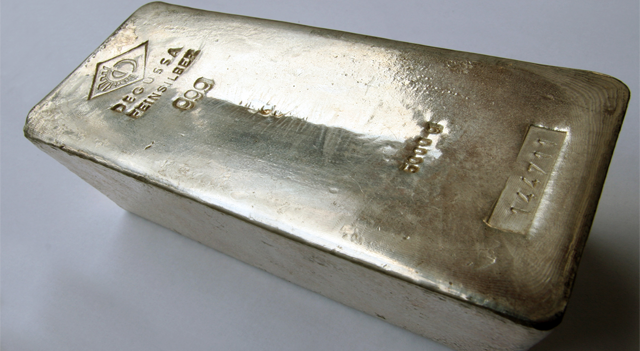
    Broader metals markets also gained modestly as a softer U.S. dollar lent support. Silver futures advanced 0.4% to $47.49 per ounce, while platinum futures rose 0.2% to $1,542.75 per ounce.

    On the industrial side, benchmark copper futures on the London Metal Exchange increased 0.4% to $10,698.20 a ton, and U.S. copper futures climbed 0.9% to $4.97 per pound, aided by improved risk sentiment in commodity markets.

  • Dollar Eases Slightly Ahead of Key ADP Report

    Dollar Eases Slightly Ahead of Key ADP Report

    The U.S. dollar edged lower on Wednesday but stayed close to recent multi-month highs, supported by safe-haven demand and waning expectations for additional near-term Federal Reserve rate cuts.

    At 04:25 ET (09:25 GMT), the Dollar Index — which measures the greenback against six major peers — slipped 0.1% to 100.002 after reaching its strongest level since April 1 during Tuesday’s session.

    Markets Eye ADP Payrolls Data

    The dollar gained ground earlier in the week as investors sought safety amid a technology-led sell-off on Wall Street, driven by mounting concerns over stretched equity valuations. The greenback had already been trending higher after the Fed’s latest rate cut, which Chair Jerome Powell indicated could be the last for this year.

    “A more defensive mood has gripped global markets and FX this week,” analysts at ING wrote in a note. “FX markets are reflecting this nervousness, with high beta currencies under pressure and the dollar generally bid.”

    Investor uncertainty has been compounded by the ongoing U.S. government shutdown, which has severely disrupted the release of official macroeconomic data. As a result, attention is firmly on the private ADP employment report due later today.

    “An on-consensus reading today probably keeps the dollar supported, given that it would maintain doubts about whether the Fed cuts again in December,” ING added.

    Euro Edges Higher on Strong German Data

    The euro ticked higher, with EUR/USD up 0.1% to 1.1488, after hitting a three-month low on Tuesday.
    Germany’s industrial orders climbed 1.1% in September — surpassing forecasts — while the country’s services sector recorded its fastest expansion in over two years. The final HCOB Germany services PMI rose to 54.6 in October from 51.5 in September, remaining well within growth territory.

    “EUR/USD has some support at 1.1450 and let’s see what the ADP data has to offer today,” said ING.

    The British pound also saw modest gains, with GBP/USD rising 0.2% to 1.3041. However, the pair remained near a seven-month low after UK finance minister Rachel Reeves hinted on Tuesday at broad-based tax increases in the upcoming budget.

    Yen Strengthens After BoJ Minutes Signal Possible Rate Hike

    In Asia, the Japanese yen edged higher, with USD/JPY down 0.1% to 153.54, following the release of minutes from the Bank of Japan’s September meeting. The minutes revealed that policymakers had discussed the possibility of raising interest rates in the coming months.

    Several officials noted that conditions were “falling into place” for a potential rate increase, while two members voted for an immediate hike — the same stance they took in October. Although the BOJ left rates unchanged in both its September and October meetings, the central bank reaffirmed that it expects to tighten policy as inflation and growth continue to strengthen.

    Elsewhere, USD/CNY dipped 0.1% to 7.1254 after data from a private survey showed China’s services sector expanded slightly faster than expected in October. The Australian dollar traded flat, with AUD/USD steady at 0.6492 despite softer-than-forecast PMI figures for the month.

  • Dow Jones, S&P, Nasdaq, Wall Street Futures, Market Update: High Valuations Under Scrutiny, AMD Earnings, Novo Nordisk Outlook, and Bitcoin’s Drop

    Dow Jones, S&P, Nasdaq, Wall Street Futures, Market Update: High Valuations Under Scrutiny, AMD Earnings, Novo Nordisk Outlook, and Bitcoin’s Drop

    U.S. stock futures were little changed on Wednesday, stabilizing after a sharp sell-off in the previous session as investors continued to question lofty equity valuations. Market sentiment remained fragile ahead of key political and corporate developments, including a Supreme Court hearing on President Donald Trump’s use of emergency powers to impose sweeping tariffs.

    Futures Struggle for Direction

    By 02:39 ET, Dow futures rose 29 points (0.1%), while S&P 500 futures fell 13 points (0.2%) and Nasdaq 100 futures dropped 89 points (0.4%). The prior session’s declines were led by profit-taking in artificial intelligence–linked stocks that have driven much of this year’s market rally.

    “[S]tocks suffered broad selling […] as sentiment soured on tech at a time when investors don’t have much appetite to rotate into other parts of the market,” analysts at Vital Knowledge said, adding that the move was “very much driven by ’vibes’ […] instead of actual news.”

    The weakness rippled through Asian markets, with Japan’s Nikkei 225 retreating from record highs and South Korea’s KOSPI tumbling as much as 6% before paring losses. “The risk mood has darkened a little this week, with some sizeable corrections emerging in some equity markets,” noted ING analysts Chris Turner and Francesco Pesole.

    Market visibility has been further clouded by a lack of official U.S. economic data due to the ongoing federal government shutdown. Investors are instead turning to alternative indicators such as today’s private-sector employment report from ADP for clues on labor market conditions.

    Supreme Court Takes Up Trump Tariff Case

    The U.S. Supreme Court will hear oral arguments Wednesday on whether President Trump exceeded his authority in using emergency economic powers to impose tariffs on several countries. The case follows lower court rulings that found the president had gone beyond his legal limits under the 1977 International Emergency Economic Powers Act (IEEPA).

    Trump has defended his actions, arguing that a $1.2 trillion trade deficit and opioid-related deaths constitute national emergencies. A ruling against the tariffs could strip Trump of a key economic lever he has used in trade negotiations. Treasury Secretary Scott Bessent, however, expressed confidence that the court will uphold the duties, adding that other tariff mechanisms remain available if needed.

    AMD Results: Growth Meets Valuation Fears

    Shares of Advanced Micro Devices (NASDAQ:AMD) slipped in after-hours trading as investors weighed solid quarterly results against mounting concerns over tech valuations.

    AMD reported revenue of $9.25 billion for the September quarter, topping forecasts, with earnings of $1.96 billion, or $1.20 per share. Data center revenue — which includes sales of AI chips — jumped 22% to $4.3 billion. For the current quarter, the company expects revenue of about $9.6 billion, plus or minus $300 million.

    CEO Lisa Su said the company is seeing “unprecedented growth opportunities” driven by the global adoption of artificial intelligence. Still, profitability came under pressure, with a 14% decline in data center income as AMD ramped up production capacity to meet demand.

    Novo Nordisk Lowers Profit Outlook

    Novo Nordisk (NYSE:NVO) trimmed its full-year profit and sales forecasts, marking an early challenge for new CEO Mike Doustdar. The company now expects operating profit growth of 4%–7% at constant exchange rates, compared with previous guidance of 4%–10%.

    Doustdar attributed the revision to “lower growth expectations” for its GLP-1 treatments used in diabetes and weight management. He added that Novo aims to “accelerate on all fronts” to remain competitive in what he described as a “dynamic” and “competitive” market.

    The update comes as Novo faces pressure from Eli Lilly and a growing number of compounded drug alternatives. Despite once becoming Europe’s most valuable company on the strength of its obesity drug Wegovy, Novo’s shares have fallen 50% so far this year.

    Bitcoin Slides Below $100,000

    Bitcoin (COIN:BTCUSD) fell on Wednesday, briefly dipping below the key $100,000 level amid the wider retreat in risk assets. The cryptocurrency traded down 2.2% at $101,770 by 03:55 ET after hitting an intraday low of $99,010 — its weakest level since mid-June.

    The decline pushed Bitcoin into bear market territory, having dropped more than 20% from its October peak of $126,186. Broader cryptocurrency markets also extended losses, pressured by data from CoinGlass showing over $1.27 billion in leveraged positions were liquidated earlier this week — most of them long bets on Bitcoin’s continued rally.

  • DAX, CAC, FTSE100, European Stocks Slip as Global Selloff Deepens; Novo Nordisk to Cut 9,000 Jobs

    DAX, CAC, FTSE100, European Stocks Slip as Global Selloff Deepens; Novo Nordisk to Cut 9,000 Jobs

    European markets opened lower on Wednesday, mirroring weakness in global equities amid ongoing volatility and a wave of corporate earnings reports.

    At 08:15 GMT, Germany’s DAX was down 0.6%, France’s CAC 40 fell 0.4%, and the UK’s FTSE 100 edged 0.2% lower.

    Technology Sector Drag

    European stocks tracked losses in the U.S. and Asia, where investor caution over elevated valuations in AI and technology shares triggered widespread selling. The tech-heavy NASDAQ Composite lost 2% on Tuesday, while Japan’s Nikkei 225 dropped more than 2% and South Korea’s KOSPI plunged as much as 6% before partially recovering. The selloff intensified after executives from Morgan Stanley (NYSE:MS) and Goldman Sachs (NYSE:GS) raised doubts about the sustainability of current tech valuations.

    Novo Nordisk Announces Major Job Cuts

    Earnings season remained in full swing across Europe.

    Novo Nordisk (NYSE:NVO), the maker of Wegovy, cut its full-year profit outlook as part of a major restructuring effort aimed at regaining momentum in the increasingly competitive obesity drug market. The Danish pharmaceutical giant said it plans to eliminate roughly 9,000 positions globally to simplify operations and channel more investment toward its core diabetes and obesity franchises.

    In the auto sector, BMW (TG:BMW) lifted its third-quarter profit margin after trimming research and development costs for electric vehicles, betting that its next-generation all-electric lineup will drive growth, particularly in China.

    German healthcare group Fresenius (BIT:1FME) raised its full-year EBIT guidance following a strong third quarter, supported by solid pharmaceutical sales and sustained performance from its hospital network, Fresenius Helios.

    Meanwhile, Siemens Healthineers (BIT:1SHL) cut its fiscal 2026 earnings forecast, citing tariff pressures and currency headwinds, although it still expects revenue to rise 5–6%.

    Marks & Spencer (LSE:MKS) posted a steep decline in first-half profit after a cyberattack earlier this year disrupted its online business for several weeks, severely impacting margins.

    German Industrial Orders Rebound

    Earlier data showed that German industrial orders rose 1.1% in September compared with the previous month, recovering from August’s 0.4% decline. Later in the day, investors will digest eurozone services activity data, though analysts expect little influence on the European Central Bank’s stance, with interest rates likely to remain steady in the coming months.

    Oil Prices Stabilize After U.S. Inventory Surge

    Crude oil prices steadied after falling sharply in the previous session, as a large build in U.S. inventories renewed concerns about softening demand.

    Brent crude futures slipped 0.1% to $64.40 a barrel, while U.S. West Texas Intermediate futures also edged down 0.1% to $60.50.

    According to data from the American Petroleum Institute, U.S. oil stocks rose by 6.5 million barrels in the week ending November 1, far exceeding expectations for a 2.4 million-barrel decline. The increase has raised fears of weakening fuel consumption—particularly as the ongoing U.S. government shutdown continues to disrupt air travel nationwide.

  • Marks & Spencer Reports H1 Results: Cyber Incident Costs Offset by Insurance and Recovery Efforts

    Marks & Spencer Reports H1 Results: Cyber Incident Costs Offset by Insurance and Recovery Efforts

    Marks & Spencer (LSE:MKS) reported its half-year results for the 26 weeks ended 28 September 2025, highlighting the financial impact of a major cyber incident and the company’s ongoing recovery and resilience initiatives. The retailer said it has received £100 million in insurance proceeds to partially offset cyber-related costs and has made cyber resilience a key element of its transformation strategy.

    Adjusted profit before tax came in at £184.1 million, down 55.4% year on year, reflecting the one-off disruption caused by the cyberattack. Statutory profit before tax was £3.4 million. Group revenue rose 22.1% to £8.0 billion, supported by the first-time consolidation of Ocado Retail. The board declared an interim dividend of 1.2p per share, up from 1.0p.

    Cyber Response and System Restoration

    M&S said its “immediate response” to the incident included taking some systems offline “to protect customers, suppliers and the business.” Operations Director Sacha Berendji led the restoration programme, focusing on critical trading and customer-facing systems. The company confirmed that its online platform was fully restored in August.

    Delivery of a new Fashion, Home & Beauty planning system has been accelerated, and further investments are being made in personalisation and loyalty initiatives. Adjusting items linked to the cyberattack totalled £101.6 million, while £100 million in insurance recoveries were recognised centrally.

    The impact varied across divisions. In Food, M&S cited increased markdowns and waste due to manual stock allocation during recovery. In Fashion, Home & Beauty, the disruption was caused by a temporary pause in online operations from late April to early June, followed by a gradual recovery over the summer and additional stock management costs. M&S said these effects are now easing as systems return to normal.

    Segment Performance

    Food sales rose 7.8% to £4,531.9 million, delivering an adjusted operating profit of £89.1 million and a 2.0% margin. Fashion, Home & Beauty sales dropped 16.4% to £1,697.6 million, producing an adjusted operating profit of £46.1 million and a 2.7% margin. International sales fell 11.6% to £255.8 million, but adjusted operating profit improved to £13.3 million, a 5.2% margin.

    Ocado Retail reported an operating loss before adjusting items of £3.1 million. Management noted early signs of stabilising demand in clothing and home as online trading recovered, while new store openings continued to outperform expectations. In Food, M&S highlighted an expanding customer base and an active pipeline of new and refurbished stores.

    Balance Sheet and Outlook

    M&S said it entered the second half of the year with a “strong balance sheet,” reporting net funds of £176.1 million excluding lease liabilities and total cash and liquidity exceeding £1.6 billion. Free cash flow from operations reached £2.53 billion. The interim dividend was raised to 1.2p per share in line with company policy.

    The group reaffirmed its focus on cost control, supply chain investment, and technology simplification as part of its broader transformation programme. Management described the cyberattack as a one-off event that weighed on first-half earnings but emphasized that operations are now regaining momentum as systems and trading platforms are restored.

    M&S said it is accelerating technology upgrades to simplify infrastructure and strengthen resilience, while continuing to invest selectively in value, product availability, and digital growth across both physical stores and online channels.

  • Magnum Ice Cream Targets December 8 IPO Following U.S. Shutdown Disruption

    Magnum Ice Cream Targets December 8 IPO Following U.S. Shutdown Disruption

    Magnum Ice Cream has scheduled December 8 as the launch date for its long-awaited initial public offering, after the spinoff of Unilever’s (LSE:ULVR) ice cream division was postponed amid the recent U.S. government shutdown.

    The UK-based company said late Tuesday that it has identified an alternative path to move forward with its listing despite the continued suspension of normal operations at the U.S. Securities and Exchange Commission, which had delayed approval of Magnum Ice Cream Company’s registration statement.

    Magnum Ice Cream, which includes iconic brands such as Ben & Jerry’s and its own flagship Magnum line, confirmed that it intends to list its shares simultaneously on Euronext Amsterdam, the New York Stock Exchange, and the London Stock Exchange on December 8.

  • Drax Secures Low-Carbon Dispatchable CfD Contract with UK Government

    Drax Secures Low-Carbon Dispatchable CfD Contract with UK Government

    Drax Group plc (LSE:DRX) announced on Wednesday that it has finalized a new agreement with the UK Government to continue operating the Drax Power Station beyond March 2027.

    The contract, signed with the Low Carbon Contracts Company (LCCC), applies to all four of the plant’s biomass units and will run from April 2027 through March 2031. It sets a strike price of £109.90/MWh (2012, real), with terms largely consistent with those outlined in the Heads of Terms signed in February 2025. The strike price was adjusted downward from the earlier indicative level, reflecting favorable exchange rate movements that are expected to reduce the overall cost of biomass fuel.

    According to Drax, this change “will have no material impact on expectations for Adjusted EBITDA,” which remain unchanged.

    Under the terms of the contract, Drax Power Station will sell around 6TWh of electricity per year, benchmarked against a season-ahead reference price. The plant will optimize generation by increasing output during periods of high demand and scaling back during low-demand intervals, supporting flexibility and strengthening the UK’s energy security.

    The agreement also permits additional merchant generation beyond the 6TWh baseline, as well as participation in system support and ancillary services markets.

    “We are pleased to have agreed this new contract with the UK Government, which will support UK energy security into the 2030s and deliver a net saving for consumers compared to alternative sources of dispatchable generation,” said Drax Group CEO Will Gardiner.

    The deal introduces stricter sustainability standards for biomass, requiring all fuel used at the facility to be fully traceable and verified through enhanced monitoring, reporting, and independent auditing across the supply chain.

    An independent analysis by Baringa projects that the agreement could save up to £3.1 billion over its four-year duration while ensuring that Drax Power Station continues to deliver reliable electricity to millions of UK homes and businesses, regardless of weather conditions.

  • VH Global Energy Infrastructure Completes Solar and Battery Project in Australia

    VH Global Energy Infrastructure Completes Solar and Battery Project in Australia

    VH Global Energy Infrastructure PLC (LSE:ENRG) has announced the successful commissioning of its hybrid solar and battery storage project in New South Wales, Australia. The milestone marks the completion of the company’s Australian renewable energy program, which now totals 37MW of solar generation and 60MWh of battery storage capacity across seven sites. This achievement strengthens VH Global Energy Infrastructure’s presence in the clean energy sector and underscores its ongoing commitment to advancing the global energy transition and supporting sustainable development objectives.

    More about VH Global Energy Infrastructure PLC

    VH Global Energy Infrastructure PLC is an investment company focused on renewable energy and sustainable infrastructure. The firm develops and manages solar and energy storage projects designed to facilitate the transition toward cleaner, more resilient energy systems. Through strategic investments and partnerships, VH Global Energy Infrastructure aims to deliver long-term value while contributing to global sustainability goals.

  • J D Wetherspoon Reports Solid Sales Growth Despite Industry Pressures

    J D Wetherspoon Reports Solid Sales Growth Despite Industry Pressures

    J D Wetherspoon (LSE:JDW) recorded a 3.7% increase in like-for-like sales over the first 14 weeks of the current financial year, outperforming the broader pub industry. The company opened four new pubs during the period and plans to expand further, targeting a total of 15 new openings this year while also growing its franchise operations. Although sales momentum remains strong, management remains cautious amid potential challenges from economic policy shifts and rising labour costs, which continue to widen the pricing gap between pubs and supermarkets.

    The company’s outlook reflects steady post-pandemic recovery and ongoing operational resilience. With a fair valuation, reasonable P/E ratio, and modest dividend yield, J D Wetherspoon remains well-positioned within the sector, though weaker short-term technical momentum tempers overall optimism.

    More about J D Wetherspoon plc

    J D Wetherspoon plc operates a broad network of pubs across the UK and Ireland, known for providing quality food and beverages at affordable prices. The company emphasizes distinctive pub designs, well-maintained venues, and exceptional customer service delivered by trained and friendly staff, supporting its long-standing reputation in the hospitality industry.