Author: Fiona Craig

  • Gold Retreats as Dollar Gains and Investors Reassess Federal Reserve Rate Path

    Gold Retreats as Dollar Gains and Investors Reassess Federal Reserve Rate Path

    Gold prices moved lower on Tuesday as a firmer US dollar and expectations of further Federal Reserve interest rate increases weighed on the precious metal.

    At 04:43 ET (08:43 GMT), spot gold declined 0.5% to $4,320.19 an ounce, while gold futures fell 0.7% to $4,355.90 an ounce.

    Investors were weighing the impact of last week’s Fed rate increase alongside changes in oil prices and developments in the Middle East.

    Stronger Dollar Weighs on Bullion

    The US dollar index edged higher to 100.50, adding pressure to gold prices.

    The index measures the dollar against a basket of other currencies. When the dollar strengthens, gold becomes more expensive for buyers using other currencies, potentially reducing demand.

    Gold also faces pressure when interest rates rise because it does not pay interest. Higher yields on competing assets can increase the opportunity cost of holding bullion.

    Market participants are therefore closely monitoring the Federal Reserve’s next policy decisions following last week’s rate increase.

    Oil Price Movements Influence Inflation Expectations

    The sharp decline in oil prices over recent sessions has helped ease some concerns about inflation, providing a degree of support for gold.

    However, crude prices subsequently rebounded, leaving Brent futures trading above $100 a barrel.

    Investors are monitoring possible diplomatic discussions between the United States and Iran during this week’s United Nations General Assembly in New York.

    At the same time, fighting in Yemen between Iran-backed Houthi militants and Saudi-backed forces has raised concerns about shipping through the Bab el-Mandeb Strait.

    The waterway is an important route for Saudi crude shipments, and disruptions could affect energy supplies and contribute to inflationary pressures.

    Deutsche Bank Notes Reduced Expectations for Rapid Rate Hikes

    The recent decline in oil prices has prompted investors to reconsider the expected pace of further Federal Reserve tightening.

    Deutsche Bank analysts said:

    “For now the momentum is on the more positive side though and with inflation fears subsiding again, that meant investors dialled back the likelihood of rapid rate hikes, even if plenty are still priced in for the month ahead.”

    The Fed has indicated that further interest rate increases may be necessary before the end of the year to address inflationary pressures associated with energy costs.

    Expectations of prolonged monetary tightening remain a potential headwind for gold, as higher interest rates can make interest-bearing investments more attractive relative to bullion.

    Fed Officials’ Remarks Remain in Focus

    Investors are awaiting further comments from Federal Reserve officials this week for indications of the central bank’s approach to inflation and interest rates.

    St. Louis Fed President Alberto Musalem told Reuters on Monday that policymakers may need to raise rates promptly to prevent inflation from remaining substantially above the central bank’s 2% target.

    His comments followed last week’s rate increase and reinforced market attention on the possibility of additional tightening.

    The dollar’s advance, together with uncertainty over future borrowing costs and energy prices, contributed to gold’s decline during Tuesday’s early trading.

  • Brent Climbs Above $101 as US-Iran Talks and Middle East Supply Risks Remain in Focus

    Brent Climbs Above $101 as US-Iran Talks and Middle East Supply Risks Remain in Focus

    Oil prices advanced on Tuesday, ending a four-session losing streak as traders assessed the prospect of diplomatic talks between Washington and Tehran alongside developments affecting crude exports from Saudi Arabia.

    At 04:18 ET (08:18 GMT), November Brent futures rose 1.3% to $101.59 a barrel. US West Texas Intermediate (WTI) crude gained 0.7% to $96.45 a barrel.

    The increase followed Monday’s decline, when Brent fell 3.4% and WTI dropped 4.5%. Both benchmarks closed at their lowest levels since 9 September.

    Crude Recovers as Investors Reassess Geopolitical Risks

    Oil futures regained some of the previous session’s losses as continuing tensions in the Middle East kept supply disruption risks in focus.

    ING analysts said:

    “Crude oil prices recovered this morning, clawing back some of yesterday’s losses as persistent Middle East tensions continued to support risk premiums.”

    US President Donald Trump has indicated that he would be willing to meet Iranian President Masoud Pezeshkian during the United Nations General Assembly in New York this week.

    Iran has also reportedly communicated conditions for restarting negotiations through intermediaries.

    The developments have raised the possibility of renewed diplomatic engagement, although the supplied report does not confirm that talks have been arranged or that an agreement is imminent.

    Oil markets continue to assess whether diplomacy could reduce regional tensions and improve the security of energy shipments.

    Saudi Oil Exports Through Hormuz Rise

    Reports of higher Saudi crude shipments have helped ease some immediate concerns about regional oil availability.

    Saudi Arabia has reportedly increased exports through the Strait of Hormuz following disruptions to its main east-west pipeline.

    Satellite information cited by Reuters showed that Saudi oil shipments through the waterway averaged approximately 2.9 million barrels per day over the preceding six days, significantly above August levels.

    The increase indicates that more crude has been moving through Hormuz despite the continuing conflict.

    However, the route remains vulnerable to further disruption, leaving shipping conditions an important consideration for oil traders.

    Yemen Fighting Adds to Maritime Supply Risks

    The conflict in Yemen has created additional concerns about the security of oil transportation.

    Iran-aligned Houthi forces have been fighting Saudi-backed groups for strategically important territory, including areas overlooking the Bab el-Mandeb Strait.

    The narrow passage links the Red Sea with the Gulf of Aden and provides access to international shipping routes.

    Saudi Arabia has relied on Bab el-Mandeb to transport crude to global markets following severe disruption to traffic through the Strait of Hormuz.

    Further fighting around the waterway could affect the country’s export arrangements and increase shipping risks.

    Libyan Output Drops After Pipeline Closure

    Production at Libya’s Sharara oil field has fallen sharply after an armed group blocked a pipeline connecting the site to the Zawiya export terminal.

    According to ING analysts, output has declined to approximately 127,000 barrels per day from around 340,000 barrels per day.

    The reduction represents another disruption to international crude supplies at a time when Middle East shipping conditions remain uncertain.

    The supplied report does not indicate when the pipeline might reopen or when production could return to its previous level.

    Russian Diesel Export Restrictions May Be Extended

    Russia is considering extending restrictions on most diesel exports, according to Bloomberg News.

    The potential extension comes as Ukrainian attacks on Russian energy infrastructure reduce refinery activity.

    Diesel prices have reached record levels in the United States and Europe, according to the supplied report, amid export constraints affecting major suppliers including Russia, Saudi Arabia and the United Arab Emirates.

    A prolonged Russian export ban could further restrict international diesel availability.

    The developments highlight the continuing influence of refinery operations, export policies and regional conflicts on refined fuel markets.

  • Wall Street Futures Little Changed as Markets Await Trump’s UN Speech and Alibaba Launches AI Processor: Dow Jones, S&P, Nasdaq

    Wall Street Futures Little Changed as Markets Await Trump’s UN Speech and Alibaba Launches AI Processor: Dow Jones, S&P, Nasdaq

    US stock index futures were broadly flat on Tuesday as investors paused following a technology-led rally and turned their attention to developments in the Middle East, the Federal Reserve’s interest rate outlook and a new artificial intelligence processor from Alibaba.

    At 03:09 ET (07:09 GMT), Dow Jones futures slipped 25 points, equivalent to 0.1%. S&P 500 and Nasdaq 100 futures were little changed.

    The S&P 500 had posted its strongest daily performance since August on Monday, supported by renewed enthusiasm for artificial intelligence companies. Investors were also monitoring oil prices after reports of possible US-Iran diplomatic engagement.

    AI Stocks Lead Previous Session’s Gains

    Wall Street’s main indices advanced on Monday, with the S&P 500 recording its largest one-day gain since August.

    Meta Platforms (NASDAQ:META) contributed to the rally after introducing a new AI model that increased investor interest in autonomous AI agents and their potential use by consumers.

    Shares in Meta rose alongside semiconductor manufacturers Advanced Micro Devices (NASDAQ:AMD) and Intel (NASDAQ:INTC). Both companies produce processors used in computing systems supporting AI applications.

    The rally followed a period of concern about AI safety, while investors also assessed whether diplomatic developments at the United Nations could reduce tensions in the Middle East.

    The benchmark 10-year US Treasury yield edged lower as bond prices increased.

    Trump’s UN Address Puts Middle East Conflict in Focus

    President Donald Trump is scheduled to address the United Nations General Assembly in New York, where world leaders are discussing the Middle East conflict, the war in Ukraine and AI safety.

    US Ambassador to the United Nations Mike Waltz said Trump would:

    “highlight how he has and his administration have confronted complex problems head-on around the world”

    Waltz also indicated that the president would discuss preventing Iran from acquiring a nuclear weapon.

    The address comes amid a conflict between the United States and Iran that began in late February, according to the supplied report.

    Fighting in Yemen between Iran-backed Houthi militants and Saudi-aligned forces has added to concerns about regional energy transportation.

    The Bab el-Mandeb Strait has become an important route for Saudi oil shipments following severe disruption to traffic through the Strait of Hormuz.

    The report states that the United States has declined Saudi Arabia’s requests to participate in military operations against the Houthis. American forces remain involved in protecting regional military facilities and supporting shipping through Hormuz.

    Trump has warned Iran’s leadership of further consequences if a settlement is not reached. Tehran has said it would retaliate against additional attacks.

    Despite the hostile exchanges, media reports indicate that Trump is open to meeting Iranian President Masoud Pezeshkian during the UN gathering.

    No meeting or agreement has been confirmed in the supplied material.

    Brent crude futures remained above $100 a barrel, rising 1% to $101.36 at the time of the report.

    Musalem Says Further Fed Tightening May Be Needed

    St. Louis Federal Reserve President Alberto Musalem said another interest rate increase may be required to contain inflation, particularly as energy prices continue to contribute to price pressures.

    Speaking to Reuters on Monday, Musalem suggested that the central bank should act promptly rather than delay a necessary policy response.

    He said:

    “Persistent demand and recurring supply forces are continuing to contribute to keeping inflation risks elevated, and I judge that without further policy restraint on inflation it is more likely to be substantially above our 2% target in 18 months than at target.”

    Musalem did not identify a specific interest rate level that he believes would be sufficient to control inflation.

    He is not currently a voting member of the Federal Open Market Committee.

    The Fed raised borrowing costs by 25 basis points last week. Policymakers’ updated projections and comments from Fed Chair Kevin Warsh indicated that another increase could follow before the end of the year.

    Investors are weighing the implications of additional rate increases for corporate borrowing costs, economic activity and stock market valuations.

    Alibaba Announces New Chip and Data Centre Expansion

    Alibaba Group (NYSE:BABA) unveiled its Zhenwu V900 artificial intelligence accelerator on Tuesday and outlined plans to increase data centre capacity in the coming years.

    Chief Executive Eddie Wu introduced the processor at Alibaba’s annual Apsara Conference in Hangzhou.

    The company described the V900 as China’s most powerful AI chip, a claim that was not independently verified in the supplied report.

    Alibaba said the processor delivers three times the performance of its predecessor, the Zhenwu M890.

    Wu stated:

    “The Zhenwu V900 is the most powerful AI chip in China today, delivering three times the performance of its predecessor, the Zhenwu M890.”

    According to the company, the chip can operate in clusters of up to 500,000 units for training advanced AI models.

    The launch accompanies Alibaba’s planned expansion of its computing infrastructure.

    The company did not provide chip pricing, production figures or a detailed timetable for its data centre expansion in the supplied announcement.

    Paramount Settles State Challenge to Warner Bros Discovery Deal

    Paramount Skydance (NASDAQ:PSKY) reached a settlement on Monday with California and 11 other states over their legal challenge to its proposed $110 billion acquisition of Warner Bros Discovery (NASDAQ:WBD).

    The agreement resolves the states’ attempt to block the transaction, although other closing requirements may remain.

    California Attorney General Rob Bonta said the settlement includes commitments covering domestic film production and editorial independence.

    Paramount must increase annual spending on US film production by at least $300 million.

    Following completion of the acquisition, the company must produce 30 films annually for the first two years and 32 films annually for the subsequent three years.

    At least four films each year must be independent productions, while no less than 20% of annual output must comprise blockbuster films.

    Paramount must also establish a news editorial independence board intended to safeguard editorial autonomy at CBS and CNN.

    The settlement establishes these commitments as part of the resolution of the states’ legal challenge.

  • European Natural Gas Prices Rebound 1.6% From Two-Week Lows as Investors Monitor US-Iran Talks

    European Natural Gas Prices Rebound 1.6% From Two-Week Lows as Investors Monitor US-Iran Talks

    European and British wholesale natural gas futures rose on Tuesday, recovering part of the previous session’s losses as traders reassessed the prospects for diplomatic discussions between the United States and Iran.

    The benchmark Dutch front-month TTF contract increased 1.6% to approximately €78.80 per megawatt-hour (MWh), moving away from a near two-week low reached on Monday.

    In Britain, the equivalent NBP wholesale gas contract also gained 1.6%, reaching around 195.40 pence per therm.

    Both contracts had fallen by more than 7% on Monday, recording their largest single-session declines in almost two months.

    Dutch and British Gas Futures Recover

    European natural gas prices rebounded on Tuesday following a substantial decline at the beginning of the week.

    The Dutch TTF front-month contract rose 1.6% to approximately €78.80/MWh, while the British NBP contract advanced by the same percentage to around 195.40 pence per therm.

    The recovery followed losses exceeding 7% for both benchmarks on Monday, when prices recorded their steepest daily falls in nearly two months.

    The earlier decline came after comments from US President Donald Trump raised the possibility of direct discussions with Iranian President Masoud Pezeshkian during the United Nations General Assembly in New York.

    Tuesday’s increase indicated that traders were reassessing the immediate implications of those diplomatic developments.

    US-Iran Diplomatic Prospects Influence Gas Markets

    Trump indicated that he was open to bilateral discussions with Pezeshkian, who is attending the United Nations General Assembly this week.

    The comments prompted a decline in energy prices on Monday as traders considered the possibility that renewed negotiations could reduce tensions in the Middle East.

    The conflict has continued for seven months, creating concerns about energy shipments through the Strait of Hormuz and other transport routes in the Persian Gulf.

    The prospect of diplomatic engagement reduced some of the additional costs associated with supply disruption risks.

    However, the supplied report does not confirm that direct talks have been arranged or that an agreement is imminent.

    Gas prices recovered on Tuesday as market participants reassessed those uncertainties.

    Supply Constraints Remain a Concern

    Despite the possibility of renewed diplomatic contact, physical energy flows through key transport routes in the Persian Gulf remain severely constrained, according to the supplied report.

    Restrictions affecting these routes continue to create uncertainty over the availability and transportation of energy supplies.

    The Strait of Hormuz remains particularly important because of its role in international oil and gas shipments.

    Any improvement in diplomatic relations could influence market expectations, but the effect on physical supply would depend on subsequent developments.

    The recovery in European gas futures reflects the continuing uncertainty surrounding the conflict and the outlook for energy transportation.

    Brent Crude Declines as Alternative Shipping Routes Expand

    Brent crude futures edged lower on Tuesday after falling approximately 3% in the previous session.

    The decline followed reports that energy companies and maritime operators were using alternative arrangements to transport oil from the region.

    These included overland pipelines and ship-to-ship loading operations off Oman, intended to bypass transport restrictions in the Persian Gulf.

    The arrangements may help maintain some energy shipments despite difficulties affecting established routes.

    Lower crude prices provided a contrasting influence to the modest rebound in European gas futures.

    The effectiveness of alternative transport arrangements will remain relevant to the outlook for regional energy supplies.

    ECB Warns of Faster Inflation Impact From Gas Price Increases

    The European Central Bank highlighted the potential inflationary consequences of higher wholesale gas prices in its Economic Bulletin.

    According to the ECB, changes in European energy markets since 2022 have accelerated the transmission of wholesale gas price increases to retail prices in many eurozone economies.

    The central bank indicated that wholesale gas price surges can affect retail inflation within one to three months in more than half of euro area countries.

    This means that renewed increases in wholesale gas prices could feed into consumer inflation relatively quickly.

    The findings underline the relevance of energy market developments to inflation expectations and the outlook for European monetary policy.

    Outlook

    European and British natural gas prices recovered 1.6% on Tuesday after declining by more than 7% in the previous session.

    The rebound came as traders reassessed the possibility of direct US-Iran discussions against continuing constraints on energy transportation through the Persian Gulf.

    Alternative shipping arrangements and lower crude prices may help alleviate some supply concerns, although the outcome of diplomatic efforts remains uncertain.

    Further developments in the Middle East, physical energy flows and wholesale gas prices will remain important for European energy markets and inflation expectations.

  • Market Open: Kingfisher Upgrades Guidance, MAB Revenue Rises

    Market Open: Kingfisher Upgrades Guidance, MAB Revenue Rises

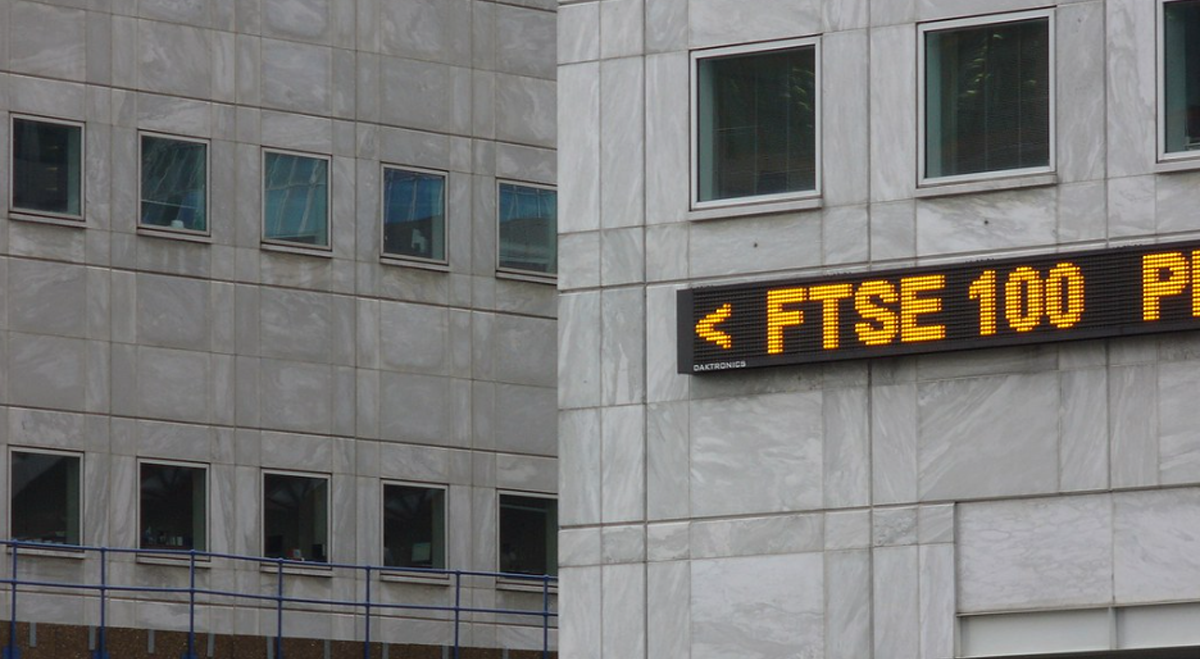
    FTSE 100 edges higher as Kingfisher upgrades guidance and Mortgage Advice Bureau reports revenue growth. Brent crude rises while gold falls.

    Market Overview

    The FTSE 100 opened 0.05 per cent higher at 10,744.28, as investors assessed UK borrowing figures and mounting pressure ahead of the Budget. In Europe, the Euronext 100 edged up 0.02 per cent to 1,898.92, while Germany’s DAX declined 0.17 per cent to 25,532.33. On Wall Street, the Nasdaq closed higher at 27,122.09, while the S&P 500 advanced to 7,764.70. European markets remained mixed as investors monitored diplomatic developments at the United Nations and their implications for energy markets.

    Commodity markets showed mixed performance, with copper and Brent crude advancing, while gold declined and natural gas edged higher. Oil markets remained focused on potential US-Iran talks and Saudi supply flows, amid uncertainty surrounding Middle East developments. Bitcoin weakened against sterling. In currency markets, the US dollar and euro strengthened against the pound, while the Swiss franc, Japanese yen and Australian dollar declined.


    Market Numbers

    FTSE 100: Higher (+0.05%), 10,744.28

    Euronext 100: Higher (+0.02%), 1,898.92

    DAX: Lower (-0.17%), 25,532.33

    NASDAQ: Higher, 27,122.09

    S&P 500: Higher, 7,764.70


    In the Headlines

    Profit Growth and Guidance Upgrade – Kingfisher (LSE:KGF)
    Home improvement retailer Kingfisher reported a 9.9 per cent increase in first-half adjusted pre-tax profit to £404 million, supported by improved gross margins, higher customer transactions and cost control. The group upgraded its full-year profit and free cash flow guidance, providing investors with an improved outlook for the remainder of the financial year.

    Revenue Growth – Mortgage Advice Bureau (LSE:MAB1)
    Mortgage Advice Bureau reported an 8.6 per cent increase in first-half revenue to £161 million, with mortgage completions reaching £16.5 billion. The results highlight growth in the group’s mortgage distribution activities as investors assess conditions in the UK housing and lending markets.


    Currencies (vs GBP)

    USD: Higher (+0.01%), $1.337

    CHF: Lower (-0.04%), Fr.1.0971

    EUR: Higher (+0.03%), €1.1666

    JPY: Lower (-0.25%), ¥210.89

    AUD: Lower (-0.01%), $1.8797

    Bitcoin (BTC/GBP): Lower, £63,748.81


    Commodities

    Copper: Higher

    Gold: Lower

    Brent Crude: Higher

    Natural Gas: Higher

  • European Shares Edge Higher as Oil Prices Ease and Investors Monitor French Debt Risks: DAX, CAC, FTSE100

    European Shares Edge Higher as Oil Prices Ease and Investors Monitor French Debt Risks: DAX, CAC, FTSE100

    European equities posted modest gains on Tuesday as declining oil prices and the prospect of renewed diplomatic discussions between the United States and Iran supported market sentiment. Concerns over France’s public finances continued to weigh on the outlook for European assets.

    The pan-European STOXX 600 rose 0.15%, extending its advance to a second consecutive session after gaining 1% on Monday. The previous session marked the index’s largest daily increase since 2 July.

    Germany’s DAX, the UK’s FTSE 100 and Spain’s IBEX 35 were broadly unchanged.

    Brent crude futures edged lower following a 3% decline in the previous session, while investors monitored developments surrounding the United Nations General Assembly and a rise in the cost of insuring French government debt against default.

    STOXX 600 Extends Gains for Second Session

    The STOXX 600 advanced 0.15% on Tuesday, building on Monday’s 1% increase.

    The earlier gain was the benchmark’s largest single-session rise since 2 July.

    Other major European indices showed little movement, with Germany’s DAX, London’s FTSE 100 and Spain’s IBEX 35 trading broadly flat.

    The modest advance coincided with a further decline in oil prices, which can reduce input costs for some businesses.

    However, the impact of lower energy prices varies by industry, with energy producers potentially facing weaker revenues while energy-intensive companies may benefit from reduced costs.

    Brent Crude Extends Decline

    Brent crude futures edged lower on Tuesday after falling approximately 3% in the previous session.

    The decline followed reports of alternative arrangements for transporting oil from the Persian Gulf, including pipeline routes and transfers between vessels.

    These arrangements could help maintain shipments despite disruption risks associated with the Middle East conflict.

    Oil markets also responded to indications of possible diplomatic engagement between Washington and Tehran.

    US President Donald Trump said he was open to direct discussions with Iranian President Masoud Pezeshkian, who was travelling to New York for the United Nations General Assembly.

    The comments raised the possibility of further diplomatic contact, although the supplied report does not confirm that a meeting has been arranged or that an agreement is imminent.

    Middle East Diplomacy Remains in Focus

    Investors are monitoring diplomatic developments as world leaders gather in New York for the United Nations General Assembly.

    The possibility of talks between the United States and Iran has drawn attention because of the conflict’s implications for energy production and shipping.

    Reports that companies are using alternative transport arrangements in the Persian Gulf have also contributed to the easing of immediate supply concerns.

    The decline in crude prices suggests that some of the additional cost associated with geopolitical uncertainty has diminished.

    Nevertheless, the durability of the move will depend on subsequent developments in the conflict, shipping conditions and diplomatic negotiations.

    French Sovereign Debt Concerns Persist

    France remained a focus for investors despite the broader improvement in European equity markets.

    The cost of insuring French government debt against default, measured through credit default swaps (CDS), rose on Monday to its highest level since March 2020, according to Reuters.

    The increase reflected concerns over France’s fiscal outlook and political difficulties surrounding efforts to address its budget deficit.

    French government bonds, known as OATs, have underperformed comparable sovereign debt from several other major developed economies this year, according to the supplied report.

    Higher CDS spreads indicate an increase in the market price of protection against sovereign default. They do not, by themselves, establish that a default will occur.

    The developments have added to investor scrutiny of French government borrowing costs and the country’s longer-term fiscal position.

    Central Bank Policy Influences Market Expectations

    Monetary policy remained another consideration for European investors.

    The Federal Reserve raised interest rates the previous week, while European Central Bank President Christine Lagarde has reiterated that future policy decisions will depend on economic data.

    Investors are assessing the implications of interest rates remaining elevated alongside the outlook for corporate earnings.

    Higher government bond yields can affect equity valuations by increasing the returns available on lower-risk assets and raising financing costs for companies.

    The effect on individual markets will depend on the path of inflation, economic growth and future central bank decisions.

    Outlook

    European equities recorded a second consecutive session of gains as oil prices continued to decline and investors assessed the possibility of renewed US-Iran diplomatic engagement.

    The STOXX 600 advanced 0.15%, although several major national indices remained broadly unchanged.

    French fiscal concerns provided a contrasting influence, with sovereign default insurance costs reaching their highest level since March 2020.

    Developments in the Middle East, energy prices, French public finances and central bank policy will remain important factors for European markets as the final quarter approaches.

  • Eurozone Bond Yields Rise as Investors Assess French Debt Risks and Lower Oil Prices

    Eurozone Bond Yields Rise as Investors Assess French Debt Risks and Lower Oil Prices

    Eurozone government bond yields moved higher on Tuesday as investors assessed concerns over France’s public finances alongside an easing of energy market pressures linked to the Middle East conflict.

    Germany’s two-year government bond yield held broadly steady at 3.229%, while the benchmark 10-year Bund yield increased to 3.479%, recovering from its lowest level in more than a week.

    French government bonds remained a focus after the cost of insuring the country’s sovereign debt against default reached its highest level since March 2020. France’s 10-year bond yield rose to 4.502%, widening its spread over the equivalent German benchmark.

    Oil prices declined amid reports of alternative shipping arrangements in the Persian Gulf and indications of possible US-Iran diplomatic discussions. Investors were also awaiting comments from European Central Bank officials, including President Christine Lagarde.

    German Bond Yields Recover From Recent Lows

    Germany’s two-year Schatz yield was little changed at approximately 3.229% after a rally in short-dated government bonds over recent sessions.

    The benchmark 10-year Bund yield rose to 3.479%, moving away from its lowest level in more than a week.

    The increase in longer-term yields coincided with a tentative recovery in broader risk assets and an easing of concerns about energy supply disruptions.

    Bond yields move inversely to prices, meaning the increase in yields indicates a decline in the market value of the corresponding securities.

    Trading remained sensitive to developments in energy markets, sovereign debt and expectations for European Central Bank monetary policy.

    French Sovereign Debt Insurance Costs Reach Highest Level Since 2020

    The cost of insuring French government debt against default rose on Monday to its highest level since March 2020, according to the supplied market report.

    The increase in credit default swap (CDS) spreads indicated that investors were demanding greater compensation for exposure to French sovereign credit risk.

    Concerns centred on France’s fiscal outlook, persistent budget deficits and political uncertainty.

    Official projections cited in the report indicate that France’s public debt is expected to reach 119.3% of gross domestic product in 2026 and increase further to 121.7% in 2027.

    These figures are forecasts rather than confirmed debt outcomes.

    Investors have also been assessing the implications of credit rating downgrades and difficulties in securing parliamentary agreement on fiscal measures.

    French 10-Year Yield Climbs to 4.502%

    The yield on France’s benchmark 10-year government bond, known as an OAT, rose to 4.502% on Tuesday, recovering from a one-week low.

    The movement widened the yield difference between French and German 10-year government bonds.

    French 10-year yields have increased by more than 90 basis points since the beginning of 2026, according to the report, exceeding the increases recorded in comparable German and US government bonds.

    The relative rise in French yields reflects the additional compensation investors have demanded for holding the country’s debt.

    French government bonds have consequently underperformed comparable sovereign securities in the markets covered by the report.

    The higher borrowing costs come as France faces projections of a rising debt-to-GDP ratio.

    French Equities Lag Broader European Market

    France’s CAC 40 was broadly unchanged during Tuesday’s session.

    The index was also approximately flat for the year to date, compared with a gain of nearly 7% for the STOXX 600.

    The difference in performance provides additional context for investor concerns surrounding the French market, although equity returns are influenced by a range of factors beyond sovereign debt developments.

    The divergence between the two indices comes as investors continue to monitor France’s fiscal position and political outlook.

    Lower Oil Prices Ease Energy Market Concerns

    Brent crude futures extended their decline amid reports that shipping companies were using alternative pipeline and ship-to-ship arrangements to transport oil from the Persian Gulf.

    Comments from US President Donald Trump indicating openness to discussions with Iranian President Masoud Pezeshkian at the United Nations General Assembly also contributed to attention on possible diplomatic developments.

    Lower oil prices can reduce some of the immediate pressure on inflation expectations, although their broader impact depends on the duration and scale of the decline.

    Energy market developments remain relevant to European bond markets because changes in oil prices can affect inflation expectations and the outlook for monetary policy.

    ECB Commentary in Focus

    Investors were awaiting scheduled remarks from senior European Central Bank officials, including President Christine Lagarde.

    The market report identified the ECB’s recent interest rate increase to 2.50% as a key consideration for traders assessing the next stage of monetary policy.

    Investors were looking for indications of whether policymakers consider the current rate sufficient to contain medium-term inflation or see a need for further tightening.

    Persistent fiscal deficits in major eurozone economies were also among the factors under consideration.

    The direction of future interest rates remains dependent on inflation, economic activity and subsequent ECB decisions.

    Outlook

    Eurozone bond markets face competing influences from easing energy prices, monetary policy expectations and concerns about sovereign debt.

    French government bonds remain under scrutiny as investors assess projected increases in public debt and the country’s ability to address its fiscal deficit.

    German bond yields have recovered from recent lows, while the widening spread between French and German securities highlights differences in how investors are pricing sovereign risk.

    Further developments in oil markets, French fiscal policy and ECB communications will remain relevant to trading conditions.

  • Luxury Brands Face Slowing Demand as Milan and Paris Fashion Weeks Begin

    Luxury Brands Face Slowing Demand as Milan and Paris Fashion Weeks Begin

    Luxury fashion groups are preparing to present their latest collections in Milan and Paris against a backdrop of weaker consumer demand, pressure on profit margins and concerns about the impact of the Middle East conflict on spending.

    Investors are questioning the sector’s growth prospects as a sustained recovery remains uncertain. Higher inflation associated with the conflict is adding pressure to household budgets, while demand for some luxury products, including high-end handbags, had already weakened.

    Shares in Kering (EU:KER), the owner of Gucci, have surrendered the gains recorded since chief executive Luca de Meo took charge a year ago. LVMH (E:MC), the world’s largest luxury group, has fallen 37% since the beginning of 2026.

    Fashion weeks offer brands an opportunity to introduce new designs and attract customers, but the events also represent substantial investments at a time when companies face growing pressure to improve their financial performance.

    Luxury Sector Recovery Remains Uncertain

    Executives and industry advisers expect difficult trading conditions to persist as luxury brands contend with changing consumer behaviour and economic uncertainty.

    Diego della Valle, chairman of Tod’s, told reporters in Milan on Friday:

    “I believe this year and next year will likely be a holding period while the market stabilises and becomes more predictable again.”

    The comments reflect concerns that a recovery in luxury spending may take longer than previously anticipated.

    The Middle East conflict has added another source of uncertainty, with its inflationary effects putting additional pressure on consumers’ purchasing power.

    For luxury companies, the challenge is to maintain sales and profitability while continuing to invest in products, marketing and customer relationships.

    Fashion Shows Face Greater Financial Scrutiny

    Major luxury houses are under pressure to demonstrate that spending on fashion shows can translate into stronger demand.

    Industry experts estimate that staging a major runway presentation can cost as much as €10 million.

    The expense comes as companies invest in new collections and creative strategies to attract shoppers whose enthusiasm for certain luxury categories has diminished.

    Milan and Paris Fashion Weeks will provide an opportunity to assess how brands are responding through their latest designs and product positioning.

    However, the commercial impact of these collections will depend on customer demand after the presentations.

    Middle-Class Spending Declines as Competition Intensifies

    Research by Bain and other consultancies indicates that middle-class consumers have reduced their spending on luxury products.

    As a result, brands are competing more intensely for wealthy customers, increasing investment in stores, personalised services and exclusive experiences despite declining sales in parts of the sector.

    Federico Bazzani, a partner at Deloitte Advisory, told Reuters:

    “There is strong polarisation among brands: fewer than half are growing, while the rest are losing ground.”

    He said companies must reconsider how they justify their pricing.

    “Brands face a choice: either invest in innovation, customer experience and cultural relevance to justify their price positioning, or revise their pricing and accept lower margins.”

    The comments highlight the different approaches available to luxury groups as they respond to weaker demand.

    Pricing Strategies Come Under Pressure

    Luxury brands have increased prices substantially in recent years, but industry advisers say even wealthy customers are becoming more sensitive to whether products offer value for money.

    David Watts, a London-based luxury business adviser, said companies face difficult choices over pricing and production.

    “They don’t want to reduce prices because that says we were overcharging you, and it loses them margin, but they don’t want to reduce production because that’s going to hit revenue.”

    Lower prices could reduce profit margins and affect perceptions of exclusivity, while cutting production could limit sales.

    Companies must therefore balance their pricing strategies with efforts to attract customers through product development and service improvements.

    Prada (TG:PRP), which opens Milan Fashion Week with its runway show on Tuesday, has recently redesigned its flagship store in Milan to include private spaces for its highest-spending customers.

    The investment reflects the wider industry’s efforts to develop more personalised shopping experiences.

    Consumer Preferences Shift Towards Experiences and Wellbeing

    Some industry executives believe changing spending priorities could delay a recovery in traditional luxury categories.

    Renzo Rosso, chairman of OTB, the owner of Diesel, said at a conference in Milan on Monday:

    “Consumers are changing.”

    He noted that shoppers are increasingly directing spending towards wellness, health and longevity, as well as hotels and restaurants.

    These preferences could intensify competition for discretionary spending, particularly if consumers choose experiences over fashion accessories.

    Rosso does not expect an imminent recovery in the luxury sector.

    His assessment adds to concerns that the industry’s challenges extend beyond the immediate effects of inflation and geopolitical uncertainty.

    Milan and Paris Fashion Weeks Put New Collections in Focus

    Prada is scheduled to open Milan Fashion Week on Tuesday.

    Gucci, Dolce & Gabbana and Giorgio Armani will also present their latest collections during the week.

    Paris Fashion Week begins on 28 September, with Dior (EU:CDI) and Louis Vuitton, both part of LVMH, among the major brands scheduled to show.

    Chanel will present its spring/summer 2027 collection on 5 October.

    The company has outperformed some competitors, supported by new designs from creative director Matthieu Blazy, according to the supplied report.

    The forthcoming presentations will offer an indication of how luxury houses are adapting their collections and marketing strategies to changing consumer preferences.

    Outlook

    The luxury industry faces a combination of weaker demand, pressure on pricing and uncertainty surrounding the economic consequences of the Middle East conflict.

    Research indicating reduced spending among middle-class consumers suggests that competition for wealthy customers could remain intense.

    Brands are responding through investment in new collections, flagship stores and exclusive experiences, while some executives expect the market to require additional time to stabilise.

    Milan and Paris Fashion Weeks will provide a platform for these strategies, although their effect on sales and profitability will become clearer only as the new collections reach customers.


  • FTSE 100 Edges Higher as UK Borrowing Reaches £18.3 Billion in August

    FTSE 100 Edges Higher as UK Borrowing Reaches £18.3 Billion in August

    The FTSE 100 edged higher on Tuesday as investors assessed UK public borrowing figures, developments in the Middle East and a series of corporate earnings announcements.

    The London benchmark was up 0.12% at 07:10 GMT, while Germany’s DAX declined 0.09% and France’s CAC 40 gained 0.04%. Sterling was unchanged against the US dollar at $1.3367.

    Figures from the Office for National Statistics (ONS) showed that UK public sector borrowing reached £18.3 billion in August, exceeding the Office for Budget Responsibility’s (OBR) forecast by £3.5 billion.

    Oil prices advanced amid continuing Middle East tensions, while gold declined. In UK company news, Kingfisher raised its full-year guidance, Smiths Group reported operating profit ahead of forecasts, and M&C Saatchi recorded a decline in first-half operating profit.

    UK Borrowing Exceeds OBR Forecast

    UK public sector borrowing reached £18.3 billion in August, according to figures reported by the ONS.

    The figure was £3.5 billion above the OBR’s forecast and represented the highest borrowing recorded for August outside the pandemic period.

    Debt interest payments reached £8.8 billion for the month, while cumulative borrowing for the financial year to August totalled £77.3 billion.

    That was £8.1 billion above the OBR’s March projection.

    The figures added to scrutiny of the UK’s public finances ahead of the forthcoming Budget.

    KPMG’s September outlook estimated that the Chancellor’s fiscal headroom had narrowed to approximately £12 billion from £23.6 billion at the spring forecast. The estimate reflects KPMG’s assessment rather than an official update to the OBR’s forecasts.

    European Stocks Trade Mixed

    European equity markets showed limited movement during the early session.

    Germany’s DAX fell 0.09%, while France’s CAC 40 increased 0.04%.

    The FTSE 100 gained 0.12%, with investors weighing the UK borrowing figures against company-specific developments and international market conditions.

    Sterling was unchanged against the US dollar at $1.3367 at the time of the report.

    Middle East Developments Remain in Focus

    Investors continued to monitor diplomatic developments surrounding Iran as representatives gathered in New York for the United Nations General Assembly.

    Iranian Foreign Minister Abbas Araghchi criticised international institutions ahead of potential discussions with US officials.

    US envoy Mike Waltz indicated that Washington remained open to negotiations with Iran, subject to conditions concerning its participation.

    Iranian President Masoud Pezeshkian also referred to previous agreements that, he said, had not been honoured.

    Separately, G7 foreign ministers called on Iran to end military support for Houthi forces in Yemen, warning about the potential for further regional escalation.

    French President Emmanuel Macron said that discussions with US President Donald Trump had included efforts to reduce tensions in energy markets and maintain freedom of navigation through the Strait of Hormuz.

    The diplomatic developments remained relevant to energy markets because of concerns about potential disruption to oil shipments through the region.

    Oil Prices Rise While Gold Declines

    Oil prices advanced during the session amid continuing uncertainty surrounding Middle East developments.

    Brent crude increased 1.4% to $101.62 a barrel, while West Texas Intermediate (WTI) rose 1% to $93.27.

    Precious metals moved lower, with gold futures declining 0.64% to $4,355.67 an ounce.

    Spot gold fell 0.55% to $4,320.35 an ounce.

    The movements came as investors assessed geopolitical developments alongside the latest economic data.

    UK Company News

    M&C Saatchi Reports Decline in Operating Profit

    M&C Saatchi (LSE:SAA) reported a 31.7% decline in first-half operating profit.

    The advertising group recorded a statutory pre-tax loss, reflecting restructuring costs and weaker revenue from its Middle East operations.

    Smiths Group Operating Profit Exceeds Forecasts

    Smiths Group (LSE:SMIN) reported full-year operating profit ahead of analyst expectations.

    The industrial engineering company also announced that it had launched a process to divest a legacy US asbestos liability associated with its John Crane business.

    The proposed disposal has not yet been completed.

    Kingfisher Upgrades Full-Year Guidance

    Kingfisher (LSE:KGF) raised its full-year guidance following its interim results.

    Growth at Screwfix and in Poland and Iberia supported the home improvement retailer’s performance, although B&Q and Brico Dépôt France reported lower sales.

    The company also reported improved profitability and cash generation during the first half.

    Market Outlook

    UK investors are assessing the implications of higher-than-forecast government borrowing ahead of the Budget, alongside developments in international energy markets.

    The FTSE 100 recorded a modest gain in early trading, while European indices were mixed.

    Corporate earnings remain another focus, with updates from Kingfisher, Smiths Group and M&C Saatchi highlighting differing trading conditions across the retail, industrial engineering and advertising sectors.

    Oil prices and further diplomatic developments in the Middle East could also influence market movements during the session.

  • Cranswick Shares Rise as Berenberg Upgrades Rating and Raises Price Target to 6,080p

    Cranswick Shares Rise as Berenberg Upgrades Rating and Raises Price Target to 6,080p

    Cranswick (LSE:CWK) shares advanced on Tuesday after Berenberg upgraded the food producer to “buy” from “hold” and increased its price target to 6,080 pence from 5,770 pence, citing planned investment in poultry production and its expectations for UK meat demand.

    The shares rose 1.4% to 5,170 pence, their highest level in more than a week, while the FTSE 250 gained 1.18% in the latest available session.

    The broker’s revised assessment followed an investor visit to Cranswick’s poultry facility in Eye, Suffolk, on 15 September.

    Berenberg highlighted the company’s planned capacity expansion and potential for further investment, although it noted that the timing of a proposed second poultry-processing facility remains uncertain.

    Berenberg Raises Price Target to 6,080 Pence

    Berenberg increased its price target for Cranswick to 6,080 pence from 5,770 pence and upgraded its investment rating from “hold” to “buy”.

    The change followed a visit to the company’s Eye poultry-processing facility with investors on 15 September.

    According to Berenberg, the visit demonstrated Cranswick’s position in the poultry market and the potential benefits of additional production capacity.

    The broker cited the company’s investment programme and its expectations for demand growth as factors supporting its revised outlook.

    This was Berenberg’s first rating change for Cranswick in the past 12 months. The broker had previously assigned a “hold” rating and a 5,770-pence price target in November 2025.

    Shares Reach Highest Level in More Than a Week

    Cranswick shares increased 1.4% to 5,170 pence following the upgrade.

    The price represented the stock’s highest level in more than a week.

    The broader FTSE 250 index was up 1.18% during the latest available session.

    The share price movement followed Berenberg’s revised rating and price target, although broader market conditions may also have influenced trading.

    The broker’s new price target represents its assessment of the shares rather than a guaranteed future valuation.

    Eye Poultry Facility Operating at 95% Capacity

    Cranswick’s Eye facility in Suffolk currently processes approximately 1.6 million birds per week.

    The plant is operating at around 95% of its existing capacity.

    The company plans to invest a further £56 million to expand weekly processing capacity to 2 million birds.

    The expansion is expected to be completed by April 2027, followed by a ramp-up period of approximately 12 to 18 months.

    The investment would increase the facility’s processing capacity by 400,000 birds per week once fully implemented.

    The timing of the additional production contribution will depend on completion of the expansion and the subsequent operational ramp-up.

    Poultry and Pork Demand Expected to Increase

    Berenberg expects UK poultry demand to grow by approximately 3% to 4% annually.

    The broker also forecasts annual growth of 1% to 2% in pork demand.

    It said constraints on industry supply could provide opportunities for Cranswick to increase production volumes.

    Berenberg expects the company’s capital investment programme to support volume growth of at least the mid- to high-single-digit range.

    These figures represent the broker’s forecasts and are subject to changes in consumer demand, industry supply and operating conditions.

    The planned expansion at Eye is one of the investments identified by Berenberg as a potential contributor to future production growth.

    Proposed £200 Million Grimsby Facility Remains Subject to Planning

    Berenberg also highlighted Cranswick’s potential development of a second poultry-processing facility near Grimsby.

    The proposed project would involve an investment of approximately £200 million.

    Cranswick has submitted a planning application for the facility, but the timing of the development remains uncertain.

    Berenberg has therefore excluded any contribution from the proposed plant from its financial forecasts.

    The project could provide additional processing capacity if it proceeds, although its development remains dependent on the relevant approvals and investment decisions.

    No construction timetable or expected operational start date was provided in the supplied report.

    Valuation and Earnings Expectations

    Berenberg said Cranswick’s shares were trading at approximately 15.7 times expected FY2027 earnings.

    That compares with a valuation of around 19 times earnings two years earlier.

    The broker linked its revised assessment to Cranswick’s investment programme and the potential for additional production volumes.

    It also identified the company’s returns profile as a factor in its expectations for future earnings growth.

    The valuation multiples and earnings outlook are based on Berenberg’s estimates rather than confirmed future results.

    Outlook

    Cranswick’s planned £56 million expansion at Eye is expected to increase processing capacity from approximately 1.6 million to 2 million birds per week, with completion targeted for April 2027.

    The company anticipates a further 12- to 18-month period to ramp up the expanded facility.

    Berenberg expects growth in UK poultry and pork demand to support the company’s investment plans, while its forecasts exclude the proposed £200 million Grimsby facility because of uncertainty over timing.

    Following its review, the broker raised its price target to 6,080 pence and upgraded its rating to “buy”, with future performance dependent on demand conditions, capacity expansion and the execution of Cranswick’s investment programme.