Category: Market News

  • Tertiary Minerals Reports 121 Metres at 78 g/t Silver Equivalent at Mushima North

    Tertiary Minerals Reports 121 Metres at 78 g/t Silver Equivalent at Mushima North

    Tertiary Minerals (LSE:TYM) reported a 121-metre intersection grading 78 grams per tonne silver equivalent from a depth of four metres at the Discovery Zone of its Mushima North Project in Zambia.

    The company described the result as its best silver-copper intersection to date at the Discovery Zone. The drill hole ended in mineralisation.

    Results were reported for 13 additional reverse circulation drill holes, all of which intersected near-surface silver-copper-zinc mineralisation. Several of the holes ended within mineralised zones, indicating that the mineralisation remains open at depth at those locations.

    The latest drilling also returned the highest individual silver assay reported at the project to date, at 471 grams per tonne, alongside multiple copper intervals grading more than 1% over several metres.

    Results to Support Mineral Resource Work

    Tertiary Minerals said the latest results provide additional data relating to its existing near-surface Exploration Target of between 15 million and 30 million tonnes grading 40 to 60 grams per tonne silver equivalent at Target A1.

    An Exploration Target is not a Mineral Resource Estimate, and the company is continuing drilling and evaluation work aimed at determining whether a formal resource can be established.

    Management said the results support its evaluation of the Discovery Zone as a potential bulk-tonnage, open-pit silver project. The mineralisation also contains bismuth, antimony and cobalt, which the company is assessing as potential by-products.

    Additional laboratory assay results remain outstanding and are expected to contribute to the company’s planned Mineral Resource estimation work.

    Tertiary Minerals’ Mushima North Project

    Tertiary Minerals is a mineral exploration company focused on silver, copper and zinc projects.

    Its Mushima North Project in Zambia targets polymetallic mineralisation and is located in the country’s Iron-Oxide-Copper-Gold belt, near the historic Kalengwa copper-silver mine.

    Reverse circulation drilling at the Discovery Zone is being used to further evaluate the scale and grade of mineralisation and provide data for planned Mineral Resource estimation work.

  • BRCK Group Maintains Full-Year Outlook as Design & Install Trading Offsets Distribution Pressure

    BRCK Group Maintains Full-Year Outlook as Design & Install Trading Offsets Distribution Pressure

    BRCK Group PLC (LSE:BRCK) said trading during the first five months of its current financial year remained in line with the guidance issued in July, with the board maintaining its expectations for the full year.

    The construction products and services group said near-term market conditions remained challenging, with activity in the UK housebuilding sector subdued. Macroeconomic uncertainty is also limiting visibility over the timing of a recovery in new building activity, according to the company.

    These conditions have affected BRCK’s Distribution division, which is exposed to demand from housebuilding as well as the repair, maintenance and improvement market.

    Design & Install Division Starts Year Ahead of Distribution

    BRCK said its Design & Install division has started the financial year with higher activity, supported by faster approvals from the Building Safety Regulator for cladding remediation projects.

    The performance of the division has helped offset the market pressures affecting Distribution, with the group’s diversified operations providing exposure to different areas of construction activity.

    The board has left its full-year expectations unchanged based on trading during the first five months.

    BRCK plans to publish a trading update covering the six months ending 30 September 2026 towards the end of October.

    BRCK Group Operations

    BRCK Group is a UK-based distributor and provider of specialist products and services to the construction industry.

    The group operates through its Distribution and Design & Install divisions. Distribution is exposed to housebuilding and repair, maintenance and improvement demand, while Design & Install undertakes specialist projects including cladding remediation work.

  • Personal Group H1 Revenue Rises 10% as Adjusted EBITDA Increases 22%

    Personal Group H1 Revenue Rises 10% as Adjusted EBITDA Increases 22%

    Personal Group Holdings (LSE:PGH) reported a 10% increase in group revenue to £25.7 million for the first half of 2026, while adjusted EBITDA rose 22% to £6.7 million.

    The workforce benefits and health insurance provider said more than 90% of group revenue was recurring. Profit before tax increased 21% to £4.6 million, while basic earnings per share rose 28% to 12.3 pence.

    Return on tangible equity was 29.6%. Personal Group remained debt-free at the end of the period and reported cash of £29.4 million.

    Insurance Sales Reach £8.1 Million

    New annualised insurance sales reached a record £8.1 million during the period. Insurance revenue increased 11% to £19.4 million, while annualised premium income rose to £42.4 million.

    The company attributed the performance to factors including higher average premiums and increased penetration among existing clients.

    Revenue from Personal Group’s benefits and reward operations increased 9% to £5.7 million. The company also reported additional customers for its Hapi platform and new partnerships, expanding the number of employees potentially covered by its services.

    Personal Group Raises Interim Dividend

    The board increased the interim dividend by 10% to 9.0 pence per share.

    Management said investments in sales processes, partnerships and digital platforms are beginning to generate operating leverage. The company also reported continued recurring revenue growth and customer retention during the period.

    Personal Group provides workforce benefits and health insurance services in the UK. Its operations include hospital, recovery and death benefit insurance plans, the Hapi employee benefits platform and pay and reward consultancy through its Innecto business.

    The group serves around 1.25 million employees. Its Hapi platform is sold directly to employers and also supports Sage’s employee benefits offering for small and medium-sized businesses.

  • Haydale Advances Graphene Thermal Fluid for Data-Centre Cooling

    Haydale Advances Graphene Thermal Fluid for Data-Centre Cooling

    Haydale (LSE:HAYD) has progressed commercialisation of its patented Super-Efficient Thermal Transfer Fluid, a graphene-based additive intended for use with glycol coolants in data-centre cooling systems.

    The company said the additive increases the thermal conductivity of inhibited glycol by approximately 28%, bringing its thermal performance in line with pure water while retaining the freeze and corrosion protection provided by glycol-based coolants.

    Haydale has entered into supply-chain and route-to-market agreements with Liquitherm and Levidian. The company also said it is in advanced discussions with data-centre operators representing approximately 200 MW of capacity.

    Haydale Reports Live-Silicon Testing Results

    According to Haydale, testing involving live silicon demonstrated thermal performance equivalent to water without observed fouling or viscosity issues.

    The company believes the thermal fluid could allow data-centre operators to increase compute density and reduce energy requirements associated with cooling as rack power and thermal loads increase. These potential benefits remain dependent on deployment and performance in commercial applications.

    Haydale said its Ammanford facility currently has capacity to treat approximately two million litres of coolant annually, which the company estimates is equivalent to coolant requirements for around 2 GW of data-centre capacity.

    Haydale Focuses on Graphene-Based Products

    Haydale is an AIM-quoted advanced materials company developing graphene-enabled products. Following a restructuring in late 2024, the group adopted a product-focused strategy that includes its JustHeat underfloor heating platform and Super-Efficient Thermal Transfer Fluid.

    The company works with commercial partners to develop applications based on its graphene functionalisation technology. Its HDPlas process is used to support production of functionalised graphene materials, with data-centre thermal management among the industrial applications being targeted by the group.

  • ValiRx Cuts Interim Loss as Cash Rises to £970,564 Following Fundraising

    ValiRx Cuts Interim Loss as Cash Rises to £970,564 Following Fundraising

    ValiRx (LSE:VAL) reported a reduced interim loss and lower administrative expenses for the first half of 2026 as the life sciences company implemented cost reductions and refocused its development portfolio.

    The company said its lean operating strategy was fully implemented during the period, reducing administrative costs and generating additional annual savings. ValiRx also repositioned Inaphaea BioLabs to focus more closely on supporting its internal development pipeline, alongside the introduction of a stricter process for selecting assets.

    Cash at the end of the period stood at £970,564, more than double the prior-year level. The balance was supported by a £1.155 million fundraising completed in June at an issue price of 0.2 pence per share.

    ValiRx Advances Development Portfolio

    During the period, ValiRx took further evaluation and licensing steps relating to an oral RNA helicase inhibitor and progressed intellectual property work covering formulations of oncolytic peptides.

    The company also reported progress on its Digital Twin collaboration and continued expanding its biobank and academic partnerships.

    ValiRx established an animal health subsidiary and secured a European patent covering its Cytolytix nanoparticle technology. The company is also evaluating the potential commercialisation of anonymised datasets for artificial intelligence applications.

    Management is seeking to develop additional revenue sources and use a combination of dilutive and non-dilutive funding to support the company’s activities.

    ValiRx Operations

    ValiRx is a London-listed life sciences company focused on early-stage cancer therapeutics and women’s health. Its operations include Inaphaea BioLabs and the newly established ValiRx Animal Health subsidiary.

    The company uses internal and partnered research capabilities to develop pre-clinical drug candidates, with its business model including the potential out-licensing of selected assets for further clinical development and commercialisation.

  • EKF Diagnostics H1 Revenue Holds at £25 Million as Adjusted EBITDA Rises 2.4%

    EKF Diagnostics H1 Revenue Holds at £25 Million as Adjusted EBITDA Rises 2.4%

    EKF Diagnostics (LSE:EKF) reported revenue of £25.0 million for the six months ended 30 June 2026, broadly unchanged from the prior-year period, while adjusted EBITDA increased 2.4% to £5.9 million.

    The diagnostics group reported a gross margin of 53.0%, with the improvement attributed to product mix and increased sales of β-HB products.

    Cash generated from operations remained positive during the period, while the group’s cash balance increased to £16.0 million. EKF also continued its share buyback programme, which reduced the number of shares in issue and contributed to higher earnings per share.

    Life Sciences Revenue Supported by β-HB Sales

    EKF said its Life Sciences division performed ahead of its expectations, supported by growth in β-HB sales and contract manufacturing.

    In the Point-of-Care division, revenue was affected by the timing of customer orders and temporary production constraints. The company said those production issues have since been resolved.

    EKF reported a committed order book for the second half of the year and reaffirmed its full-year guidance for revenue and EBITDA growth in line with market consensus.

    During the period, the company also added digital capabilities through its acquisition of BEEP Insights and exited its Elkhart site earlier than planned.

    EKF Diagnostics Operations

    EKF Diagnostics is an AIM-listed diagnostics company headquartered in Penarth, near Cardiff. Its Point-of-Care operations include analysers used in haematology and diabetes, while its Life Sciences business provides specialist enzyme manufacturing and custom products for diagnostic, food and industrial applications.

    The company operates four manufacturing sites across the US and Germany and sells its products in more than 120 countries.

  • ImmuPharma Reports £1.1 Million Operating Loss as P140 and Kapiglucagon Programmes Advance

    ImmuPharma Reports £1.1 Million Operating Loss as P140 and Kapiglucagon Programmes Advance

    ImmuPharma (LSE:IMM) reported an operating loss of £1.1 million for the six months ended 30 June 2026, broadly in line with the prior-year period, as the drug development company continued work on its P140 and Kapiglucagon programmes.

    The overall loss for the period was £4.7 million, reflecting a non-cash finance loss associated with the revaluation of a derivative asset.

    Cash at the end of the period stood at £0.7 million. During the period, ImmuPharma completed a £6.47 million equity fundraising involving Lanstead Capital and retail investors. The company expects the financing to extend its funding runway into the second half of 2028.

    ImmuPharma Progresses P140 Programme

    ImmuPharma continued work on the intellectual property portfolio covering its P140 autoimmune technology platform during the period.

    The company incorporated additional experimental data into an international Patent Cooperation Treaty filing and continued to refine its Type M precision medicine approach, which is intended to identify patient populations that may respond to P140.

    ImmuPharma also continued partnering discussions relating to P140, with support from its U.S. licensee Avion Pharmaceuticals.

    Kapiglucagon Moves Into Active Development

    The company also progressed Kapiglucagon from planning into active development, with regulatory, manufacturing and bioanalytical workstreams underway.

    These activities are intended to support IND-enabling studies and the subsequent progression of Kapiglucagon towards first-in-human clinical trials.

    ImmuPharma is a London-listed drug discovery and development company focused on autoimmune and metabolic diseases. Its development portfolio includes the P140 autoimmune technology platform and Kapiglucagon.

  • Kier Group FY26 Revenue Rises 7.5% as Order Book Reaches £11.9 Billion

    Kier Group FY26 Revenue Rises 7.5% as Order Book Reaches £11.9 Billion

    Kier Group (LSE:KIE) reported a 7.5% increase in revenue to £4.39 billion for the year ended 30 June 2026, while adjusted operating profit rose 6.7% to £169.8 million.

    The UK infrastructure and construction group reported an adjusted operating margin of 3.9%, unchanged from the level implied by the reported figures. Average net cash was £10.7 million during the year, while year-end net cash reached £232 million.

    Operating free cash flow was £206 million. Kier increased its full-year dividend by 8% and is also carrying out a £25 million share buyback.

    The group’s order book increased 8% to £11.9 billion. Kier said more than 95% of its expected revenue for the 2027 financial year and more than 70% for FY28 has been secured.

    Contract awards include Hinchingbrooke under the New Hospitals Programme, work on East West Rail and projects involving Greater Manchester stations.

    Kier Updates Medium-Term Financial Targets

    Kier has simplified its divisional structure and identified growth, resilience and performance as its three strategic priorities. The group has also stopped making new investments in Property development.

    As part of its updated medium-term targets, Kier is aiming for mid-single-digit revenue growth, higher margins and average net cash of more than £200 million by FY29. It is also targeting double-digit growth in adjusted earnings per share.

    Kier Group Operations

    Kier operates across UK infrastructure and construction markets, undertaking public and private-sector projects in areas including healthcare, water, defence, energy, education and transport.

    The group participates in a range of frameworks and delivers infrastructure and construction projects across different stages of the project lifecycle.

  • Big Yellow Agrees £36.5 Million Staines Estate Sale as New Stores Open

    Big Yellow Agrees £36.5 Million Staines Estate Sale as New Stores Open

    Big Yellow Group (LSE:BYG) has agreed to sell its industrial estate in Staines, Surrey, for £36.5 million as the self-storage operator continues to expand its store network.

    The company has also received a £2 million retention relating to the earlier sale of its Harrow industrial estate, bringing gross proceeds from the two disposals to £75 million.

    Big Yellow said the transactions are expected to reduce its net debt-to-EBITDA ratio from around 3.7 times towards its target of 3.5 times.

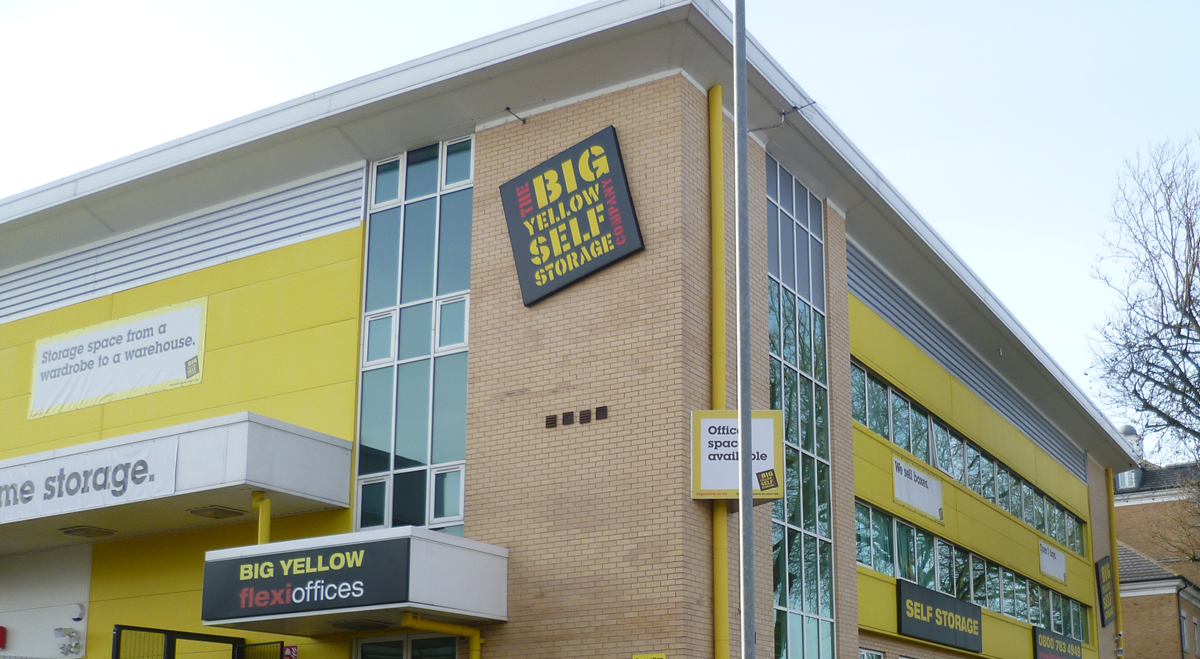
    The disposals come alongside the opening of new self-storage facilities in Epsom and Kentish Town, as well as a relocated store at Staples Corner in London.

    Big Yellow has opened seven new stores since July 2025, which the company said are increasingly contributing to revenue and profitability.

    Management expects the proceeds from the property transactions, together with retained cash flow, to largely fund the group’s capital expenditure during the current and following financial years without materially increasing debt.

    Big Yellow Store Portfolio and Development Pipeline

    Big Yellow operates 115 self-storage stores with a maximum lettable area of 6.9 million square feet. Its development pipeline comprises a further 0.8 million square feet across 10 proposed facilities.

    The group’s portfolio consists primarily of freehold and long-leasehold properties and is concentrated in London and commuter towns.

    Big Yellow is targeting an expansion of its self-storage portfolio to approximately 7.7 million square feet if its proposed development pipeline is completed.

  • A New Index for the New Space Economy

    A New Index for the New Space Economy

    The commercialisation of space is creating a new generation of companies building the infrastructure, connectivity and data services underpinning the New Space economy.

    Seraphim New Space Index has been designed to track listed companies with meaningful exposure to this growing ecosystem. Drawing on Seraphim Space’s specific sector knowledge, the rules-based Index spans areas including satellite communications, Earth observation, launch, defence and emerging in-space infrastructure.

    This index is tracked by Seraphim New Space UCITS ETF. HANetf is the manager and operator of the ETF, while Seraphim Space is responsible for the design of the Index and determines its constituents in accordance with the published methodology.

    A distinctive feature of the Index is its inclusion of Seraphim Space Investment Trust plc (LSE:SSIT), a London-listed investment trust focused predominantly on private, growth-stage SpaceTech businesses. This provides investors with indirect exposure to more than 20 private and pre-IPO companies alongside the Index’s listed holdings, broadening access to the next generation of potential SpaceTech leaders.

    A New Space Economy Worth $1.8 Trillion

    The sector represents a growing area of economic and investment activity.

    The global space economy already exceeds $600 billion annually and is forecast by McKinsey to reach approximately $1.8 trillion by 2035.

    Importantly, around 80% of space activity is now commercially driven, highlighting the fundamental shift taking place from government-led programmes towards businesses delivering communications, connectivity, navigation, intelligence, climate monitoring and critical infrastructure from space.

    At the same time, the economics of accessing space have changed dramatically.

    Launch costs have fallen by approximately ten times, while satellite manufacturing costs have declined by around one hundred times. These technological advances have made it possible for commercial companies to deploy satellite constellations and other space infrastructure at a scale and speed that would previously have been difficult to imagine.

    The result is the emergence of what is increasingly being described as the New Space economy.

    Moving Beyond Traditional Aerospace

    This investment case is increasingly moving beyond the traditional aerospace companies that have historically dominated exposure to the space sector.

    New Space companies are developing commercial business models around recurring revenues, scalable technologies and rapidly expanding markets.

    These businesses are helping to deliver:

    • Direct-to-device connectivity
    • Satellite communications
    • Earth observation
    • AI-enabled intelligence
    • Secure communications
    • Navigation
    • Defence and sovereign capabilities
    • Satellite launch and deployment
    • In-space transportation and logistics
    • Climate and environmental monitoring

    The convergence of these technologies with artificial intelligence could be particularly significant. AI requires enormous quantities of data, while satellites are increasingly becoming an essential source of real-time information across defence, climate, communications, logistics and intelligence.

    At the same time, governments are increasing defence expenditure and placing greater emphasis on sovereign technological capabilities, creating additional demand for commercially developed SpaceTech infrastructure.

    A Specialist Approach to Identifying SpaceTech Leaders

    The Seraphim New Space Index has been developed specifically around these structural trends.

    Rather than simply weighting companies according to their market capitalisation, the methodology uses a conviction-weighted approach designed to identify businesses that Seraphim Space believes are best positioned to benefit from the continued commercialisation of space. Companies are assessed across a number of factors, including New Space revenue exposure, technology leadership, business quality, growth trajectory, capital efficiency and strategic alignment with major investment themes.

    These include Defence & Resilience, Big Tech in Orbit and the emerging In-Space Economy.

    The approach is informed by over a decade of Seraphim Space’s experience in the sector, across private and public SpaceTech markets.

    Since 2016, Seraphim Space has invested in more than 150 SpaceTech companies across 33 countries. Its portfolio companies have collectively raised more than $12 billion, with ten companies reaching unicorn status and six completing IPOs.

    This breadth of experience gives Seraphim Space a perspective across private and public SpaceTech markets and the wider global SpaceTech ecosystem.

    Companies Building the Commercial Infrastructure of Space

    The index provides exposure across a broad range of SpaceTech subsectors, rather than concentrating on a single technology.

    Representative holdings include Seraphim Space Investment Trust (SSIT), SpaceX, AST SpaceMobile, Rocket Lab, Firefly Aerospace, HawkEye 360, Planet Labs, BlackSky, Redwire, York Space Systems, Intuitive Machines and Astroscale, among others.

    The universe also includes major technology companies such as Amazon and Alphabet, reflecting the increasingly important role that Big Tech is expected to play in the development of space-based infrastructure.

    The inclusion of companies across communications, Earth observation, launch, intelligence, defence, satellite technology and in-space infrastructure provides exposure to the different layers within a developing commercial ecosystem.

    Defence and Sovereign Capability

    One of the most important drivers behind the growth of New Space is the increasing strategic importance of commercial satellite technology.

    Governments across Europe and beyond are increasingly working with private companies to provide intelligence, surveillance, communications and other critical capabilities.

    ICEYE, an SSIT portfolio company, provides a notable example.

    The company has emerged as one of the global leaders in synthetic aperture radar satellite intelligence, with its technology increasingly being used for defence and sovereign intelligence applications.

    Its €1.7 billion programme with Rheinmetall and the German Armed Forces illustrates the growing role commercial SpaceTech businesses can play in delivering sovereign intelligence, surveillance and defence capabilities.

    This trend is particularly relevant as governments seek to strengthen domestic and European technological capabilities while reducing dependence on legacy infrastructure.

    Big Tech Moves Into Orbit

    Another major theme is the convergence between SpaceTech and the world’s largest technology companies. The involvement of companies such as Amazon and Alphabet demonstrates that space is no longer an isolated technology sector.

    Satellite connectivity, cloud computing, artificial intelligence, Earth observation and global communications are becoming increasingly interconnected. As the cost of deploying space infrastructure continues to fall, the opportunity for technology companies to integrate satellites into broader digital ecosystems is expanding. This may contribute to the development of new commercial activities while supporting existing markets.

    The Emerging In-Space Economy

    Beyond communications and Earth observation, a further opportunity is developing above the Earth’s surface. Companies such as D-Orbit are working on space logistics and orbital transportation, helping to establish the infrastructure required for a future in-space economy.

    The development of satellite servicing, orbital transportation, manufacturing and other in-space activities could eventually create a new layer of economic activity beyond traditional launch and satellite operations. Italy is emerging as an important hub for this development, with D-Orbit having attracted significant investment and secured contracts with the European Space Agency. These developments demonstrate how the commercial space sector is diversifyingbeyond simply putting satellites into orbit.

    Why the Investment Thesis is Changing

    The space industry is undergoing an important transformation. For decades, space was predominantly the domain of governments and a small number of large aerospace contractors. Falling technology costs, private capital and advances in computing have changed that equation. Commercial companies are now building infrastructure that governments, businesses and consumers increasingly depend upon.

    The combination of:

    Artificial intelligence + connectivity + defence + sovereign capability + falling launch costs + cheaper satellites – is creating a range of structural factors contributing to the sector’s development.

    The Seraphim New Space Index seeks to identify and track companies with meaningful exposure to the commercialisation of space through a specialist, conviction-weighted methodology.

    Seraphim’s Long-Term SpaceTech Perspective

    Seraphim Space CEO Mark Boggett believes the transformation could have implications for investors and other market participants over the coming decade.

    He said:

    “Old Space put humans on the Moon. New Space is building the commercial infrastructure of the global economy.”

    He added that the convergence of AI and SpaceTech, alongside rising demand for connectivity, defence and sovereign capability, may be relevant to investors seeking exposure to the next generation of space infrastructure.

    That thesis is increasingly supported by the development of the industry itself.

    From satellite broadband and Earth observation to AI-enabled intelligence, launch systems and orbital logistics, SpaceTech is becoming increasingly embedded in the wider global economy.

    A Broader Consideration for Investors

    The New Space opportunity extends beyond rockets and satellites. It encompasses the infrastructure supporting global communications, the data powering AI systems, intelligence for national security, climate-monitoring technology and the emerging commercial economy in orbit. Companies across these markets demonstrate the breadth of the opportunity, while the involvement of Amazon and Alphabet highlights the increasingly important relationship between space and the wider technology sector. As the industry commercialises, investors are gaining new ways to access companies participating in a global space economy that could approach $1.8 trillion by 2035.