Category: Market News

  • Guardian Metal Expands Strategic Position with Nevada Water and Land Acquisition Near Tempiute Project (GMET)

    Guardian Metal Expands Strategic Position with Nevada Water and Land Acquisition Near Tempiute Project (GMET)

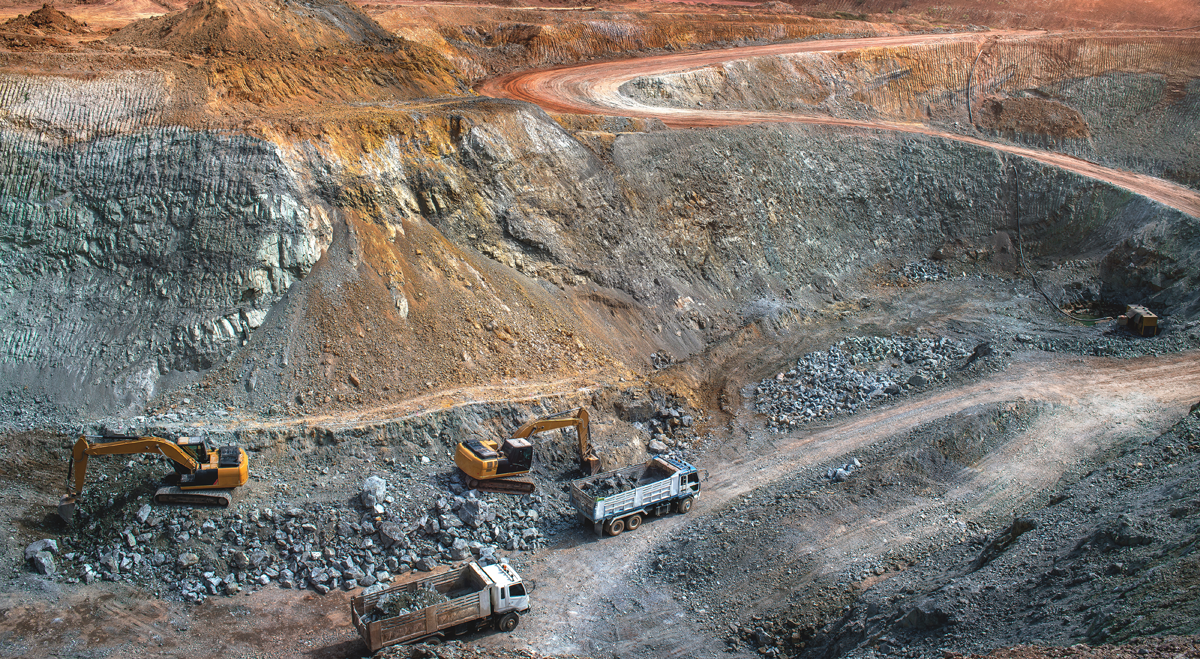
    Guardian Metal Resources (LSE:GMET) has strengthened its development footprint in Nevada through the acquisition of Lincoln Estates Group LLC, securing 841 acres of mixed-use land together with 2,540 acre-feet of annual water rights located less than 10 miles from its Tempiute Tungsten Project. The US$1.3 million all-cash transaction, completed via the company’s U.S. subsidiary, provides control of key land and water assets in close proximity to a historically significant tungsten-producing district.

    Acquisition Supports Tempiute Development Plans

    The company views the purchase as an important step in reducing development risk at Tempiute as it moves the project forward. The newly acquired assets complement infrastructure remaining from the mine’s previous operating period during the 1980s and are expected to support an accelerated development pathway.

    By securing long-term water access and strategically located land along the same transportation corridor as the project, Guardian Metal has enhanced the foundation for future operations. The move also supports the company’s broader objective of helping establish a reliable domestic tungsten supply chain within the United States, serving both industrial and national security requirements.

    Financial and Market Considerations

    Guardian Metal’s investment case continues to be weighed down by limited revenue generation, widening losses and negative free cash flow trends. However, these factors are partly offset by the company’s debt-free balance sheet and financial flexibility.

    Technical indicators present a mixed picture, with the shares trading above key moving averages while momentum signals, including the MACD, remain less supportive. Valuation metrics are also constrained by ongoing losses and the absence of dividend income.

    More About Guardian Metal Resources

    Guardian Metal Resources is a strategic minerals exploration and development company focused on re-establishing domestic tungsten production in the United States and strengthening the country’s supply of critical defence metals. Its flagship assets include the Pilot Mountain and Tempiute tungsten projects in Nevada, one of the world’s leading mining jurisdictions.

    The company has received support from the U.S. government, including a US$6.2 million investment under the Defense Production Act to fund a pre-feasibility study at Pilot Mountain through its American subsidiary. Guardian Metal further expanded its investor reach in March 2026 with a listing on the NYSE American, adding to its existing London and OTCQB market quotations.

  • Savannah Strengthens Community Partnerships as Barroso Lithium Project Advances Toward Key Milestones (SAV)

    Savannah Strengthens Community Partnerships as Barroso Lithium Project Advances Toward Key Milestones (SAV)

    Savannah Resources (LSE:SAV) is reinforcing its position as a future supplier of battery-grade lithium to Europe as development of the Barroso Lithium Project in northern Portugal continues to progress. The company is advancing what is considered Europe’s largest spodumene lithium deposit while seeking to combine environmental responsibility with meaningful economic benefits for local communities, in line with the objectives of the EU Critical Raw Materials Act.

    Community Engagement and Infrastructure Progress

    In its latest project update, Savannah announced the signing of ten memorandums of understanding with local community and recreational organisations. Under these agreements, participating groups will have representation on a Local Advisory and Monitoring Committee and will be eligible to access up to €500,000 annually in community development funding once mining operations commence.

    The company has also expanded engagement with local businesses to explore potential supply-chain opportunities linked to the project. In addition, Savannah welcomed the start of a public consultation process for a proposed 17-kilometre bypass road. The infrastructure project is intended to reroute mine-related traffic away from Boticas, improve transport connections across the region and support the project’s permitting schedule. An environmental decision on the road proposal is anticipated in early Q4 2026.

    Feasibility Study Remains Key Near-Term Catalyst

    Management indicated that ongoing progress in stakeholder relations and supporting infrastructure is helping to build momentum across the project. Attention is now turning to completion of the definitive feasibility study, which remains a major objective before the end of the year.

    The latest initiatives are designed to strengthen community backing, increase regional economic participation and reinforce Savannah’s long-term social licence to operate as Europe seeks to expand domestic sources of critical battery materials.

    Financial and Market Considerations

    Despite operational progress, the company continues to face financial challenges. Savannah currently generates no revenue and remains loss-making, with ongoing cash outflows weighing on its investment profile. However, the balance sheet benefits from low leverage and a substantial equity base.

    From a market perspective, technical indicators continue to suggest an upward trend, although heavily overbought conditions may increase the likelihood of near-term volatility. Valuation metrics remain limited by negative earnings and the absence of a dividend yield.

    More About Savannah Resources

    Savannah Resources is an AIM-listed mineral development company and the sole owner of the Barroso Lithium Project in northern Portugal. Recognised as a Strategic Project under the EU Critical Raw Materials Act and supported by up to €110 million in Portuguese government funding, Barroso is expected to become a significant source of locally produced lithium for Europe’s battery supply chain. At full capacity, the project could provide enough lithium to support the production of approximately 500,000 electric vehicle battery packs each year while maintaining a focus on responsible and low-impact development.

  • Wall Street Futures Hold Steady as Investors Await Fed Decision and Iran Deal Details: Dow Jones, S&P, Nasdaq

    Wall Street Futures Hold Steady as Investors Await Fed Decision and Iran Deal Details: Dow Jones, S&P, Nasdaq

    Markets Pause Following Recent Surge

    U.S. stock futures traded little changed on Tuesday, indicating a muted start to trading after a powerful three-day rally lifted major benchmarks to fresh highs.

    Investors appear to be taking a more cautious approach after Monday’s record close for the Dow Jones Industrial Average, choosing to assess recent gains before extending positions.

    Peace Agreement Developments Continue to Support Sentiment

    Optimism remains tied to progress toward a formal agreement between the United States and Iran aimed at ending more than three months of conflict.

    While the preliminary framework has been welcomed by financial markets, traders are looking for additional details and confirmation before increasing exposure to risk assets.

    According to reports, the arrangement would prolong the current ceasefire by 60 days, providing an opportunity for negotiations on Iran’s nuclear activities and enriched uranium reserves.

    President Donald Trump stated on Truth Social that the agreement is “now complete” and announced the “toll free opening” of the Strait or Hormuz together with the immediate removal of the U.S. blockade of Iranian ports.

    He later clarified that the strategic waterway would reopen after the agreement is formally signed on Friday.

    Focus Shifts Toward the Federal Reserve

    Attention is also turning toward the Federal Reserve’s latest policy decision.

    Although interest rates are expected to remain unchanged, investors are eager to hear from new Fed Chair Kevin Warsh regarding the future direction of monetary policy.

    “Investors will be looking for clues about how Warsh intends to navigate an economy where inflation remains above target, growth is still resilient and AI-related investment continues to generate strong demand,” said Daniela Hathorn, Senior Market Analyst at Capital.com.

    She added, “The fall in oil prices gives policymakers more flexibility, but underlying inflation pressures have not disappeared.”

    Falling Oil Prices Fuel Market Optimism

    The sharp advance in equities on Monday was partly driven by a significant decline in crude oil prices following news of the U.S.-Iran agreement.

    The Nasdaq climbed 3.1%, the S&P 500 gained 1.7%, and the Dow Jones rose 0.9% to reach a new closing record.

    Lower energy prices have eased fears that inflation could accelerate again and force central banks to maintain restrictive monetary policies for longer.

    “Prior to the deal, investors had become increasingly concerned that higher energy costs would feed into broader inflation pressures and potentially force policymakers into additional tightening,” Hathorn said.

    “The sharp decline in oil prices does not eliminate inflation risks altogether, but it does reduce some of the urgency surrounding them. That is particularly relevant this week as the Federal Reserve meets for the first time under new Chair Kevin Warsh.”

    Industrial Output Edges Higher

    Fresh economic data showed that U.S. industrial production increased modestly in May.

    The Federal Reserve reported a 0.1% rise in output following an upwardly revised 0.9% increase in April.

    The figure came in slightly below economists’ expectations for a 0.2% gain.

    Gold and Technology Shares Outperform

    Gold-related equities were among the strongest performers as bullion prices moved higher.

    The NYSE Arca Gold Bugs Index jumped 6.2%, while the Philadelphia Semiconductor Index surged 5.5%.

    Technology, retail, airline and computer hardware stocks also posted notable gains, whereas energy shares lagged due to the continued decline in oil prices.

  • European Stocks Advance as Lower Oil Prices Support Market Sentiment: DAX, CAC, FTSE100

    European Stocks Advance as Lower Oil Prices Support Market Sentiment: DAX, CAC, FTSE100

    Equities Gain Ground as Inflation Concerns Ease

    European stock markets traded higher on Tuesday, supported by a continued decline in oil prices that helped ease concerns over inflation and the potential path of global interest rates.

    Brent crude remained close to $82 per barrel after reports suggested that U.S. President Trump could unveil details of a preliminary agreement aimed at ending the conflict with Iran ahead of Friday.

    While the exact provisions of the agreement have yet to be disclosed, Trump indicated that the Strait of Hormuz could reopen as early as Friday, raising expectations of improved energy flows and lower supply risks.

    Central Bank Meetings Remain in Focus

    Investors also kept a close eye on upcoming policy announcements from the U.S. Federal Reserve and the Bank of England, both of which are expected to provide fresh guidance on monetary policy.

    The prospect of lower energy costs has helped reduce pressure on central banks, although markets remain alert to any signals regarding future interest-rate decisions.

    Major European Indices Move Higher

    Among the region’s leading benchmarks, France’s CAC 40 advanced 0.8%, while the UK’s FTSE 100 gained 0.6%.

    Germany’s DAX also moved higher, rising 0.5% as investors welcomed improving risk sentiment across global markets.

    UniCredit and Commerzbank Extend Gains

    Banking stocks attracted attention after Germany formally rejected UniCredit’s (BIT:UCG) attempt to acquire a stake in Commerzbank (TG:CBK).

    Despite the setback to the proposed transaction, shares of both lenders moved higher during trading as investors assessed the implications of the government’s decision.

    Saab Jumps on French Defence Contract

    Swedish defence and aerospace group Saab (BIT:1SAAB) posted strong gains after securing a contract from France’s defence procurement agency for its anti-tank weapons systems.

    The agreement adds to Saab’s growing order book amid increasing defence spending across Europe.

    Hilton Food and STMicroelectronics Under Pressure

    In London, Hilton Food (LSE:HFG) declined after confirming that Mark Allen will assume the role of group chief executive from July 1.

    Meanwhile, STMicroelectronics (BIT:STMMI) (EU:STMPA) fell after announcing plans to issue $1.5 billion of convertible bonds and redeem $750 million of outstanding convertible notes due in 2027 ahead of maturity.

  • Gold Moves Higher as Investors Monitor Iran Peace Framework and Central Bank Policy Decisions

    Gold Moves Higher as Investors Monitor Iran Peace Framework and Central Bank Policy Decisions

    Precious Metal Gains Amid Falling Oil Prices

    Gold prices traded modestly higher on Tuesday as markets continued to assess the implications of the provisional U.S.-Iran peace agreement and its potential impact on global inflation.

    Spot gold rose 0.9% to $4,345.72 per ounce, while gold futures added 0.3% to $4,366.25 per ounce.

    The move followed a strong rally in the previous session, when bullion climbed more than 2% after Washington and Tehran announced a preliminary deal aimed at ending hostilities and reopening the Strait of Hormuz.

    Lower Crude Prices Help Ease Inflation Pressures

    The prospect of renewed energy shipments through the Strait of Hormuz has pushed oil prices lower, helping to reduce concerns about a prolonged energy-driven inflation shock.

    With crude retreating, investors have become less worried that central banks will be forced to maintain restrictive monetary policies for longer.

    Because gold does not offer a yield, expectations for interest rates remain one of the key drivers of demand for the metal.

    Dollar Softens as Risk Appetite Improves

    Improved market sentiment also weighed on the U.S. dollar.

    Throughout the Middle East conflict, the greenback attracted safe-haven demand, supported by the view that the United States would be less vulnerable to higher oil prices due to its position as a major energy exporter.

    Although the dollar eased slightly on Tuesday, ING analysts argued that the currency’s broader fundamentals remain supportive.

    “The first 36 hours of trading after the US-Iran deal point to a structurally stronger dollar than a few weeks ago. Nearly all weekend losses have already been reversed despite a sharp drop in oil, signaling that FX markets are shifting focus away from crude and back to central banks,” ING said in a research note.

    Markets Await Signals From the Federal Reserve

    Attention is now turning to Wednesday’s Federal Reserve policy announcement.

    While economists broadly expect policymakers to leave interest rates unchanged, investors will be closely watching remarks from Fed Chair Kevin Warsh following the decision.

    ING said the upcoming Fed meeting is “firmly in focus” as traders look for clues about the future path of U.S. monetary policy.

    Bank of Japan and RBA Also in the Spotlight

    Elsewhere, central bank developments continued to influence market sentiment.

    The Bank of Japan raised its benchmark interest rate by 25 basis points to 1.0%, its highest level in more than three decades, as policymakers seek to contain inflation and continue normalizing policy settings.

    Meanwhile, the Reserve Bank of Australia left its benchmark rate unchanged at 4.35%, following three consecutive increases.

  • UK Defence Shares Advance on Expectations of Higher Military Spending

    UK Defence Shares Advance on Expectations of Higher Military Spending

    Shares of BAE Systems (LSE:BA.), Rolls-Royce (LSE:RR.) and Babcock International (LSE:BAB) moved higher on Tuesday, climbing between 2% and 2.5% as investors positioned for increased UK defence expenditure and stronger long-term demand across the sector.

    The gains reflected growing expectations that government spending on military capabilities will continue to rise amid an increasingly uncertain geopolitical environment.

    Defence Budget Review in Focus

    Market attention has turned to Defence Secretary Dan Jarvis, who is expected to reassess the government’s defence investment strategy and may seek additional resources from the Treasury.

    Jarvis took over the role following the resignation of John Healey last week. Healey stepped down after rejecting a proposed funding package, arguing that it would leave the UK’s armed forces without sufficient resources to meet future requirements.

    The former defence secretary opposed a £13.5 billion funding proposal designed to address an estimated £18 billion gap in financing for major military programmes.

    Government Signals Further Spending Increases

    Investor sentiment was further supported by comments from Chancellor Rachel Reeves, who said there would be “a further big uplift in defence spending” as part of the government’s long-term investment plans.

    Prime Minister Keir Starmer has also committed to increasing defence spending to 3% of gross domestic product during the next parliamentary term, with the objective of reaching that level by the end of 2034.

    The pledge is expected to underpin future contract opportunities for leading defence contractors, many of which already have extensive multi-year order books.

    Geopolitical Risks Support Sector Outlook

    Defence stocks also benefited from heightened geopolitical tensions ahead of the G7 leaders’ summit in France, where security concerns involving Russia and Iran are expected to feature prominently on the agenda.

    The conflict involving Iran has now entered its fourth month, while tensions with Russia remain elevated following the seizure of a Russia-linked oil tanker by Britain’s Royal Marines in the English Channel over the weekend.

    Starmer is expected to use the summit to advocate for tougher sanctions against Russia and additional military and energy assistance for Ukraine.

    Defence Remains a Strong Performer Across Europe

    The defence industry has been one of the standout sectors in UK equity markets in recent years, supported by a broad revaluation as Western governments increase military budgets in response to evolving security challenges linked to Russia, China and other geopolitical threats.

    The trend extends across Europe, where defence spending continues to rise sharply. Industry estimates suggest that total European Union defence expenditure will exceed €392 billion this year, compared with €221 billion in 2021.

    The sustained increase in military investment is expected to provide a favourable backdrop for defence companies across the continent, supporting long-term growth prospects for equipment manufacturers, engineering groups and military service providers.

  • Oil Markets Remain Under Pressure as Traders Monitor U.S.-Iran Peace Process

    Oil Markets Remain Under Pressure as Traders Monitor U.S.-Iran Peace Process

    Crude prices moved lower again on Tuesday as investors continued to assess the implications of the emerging U.S.-Iran peace agreement and awaited further information on plans to reopen the Strait of Hormuz.

    At 09:09 GMT, August Brent crude futures were down 2.1% at $81.41 per barrel, while July WTI futures declined 2.4% to $78.83 per barrel.

    Peace Agreement Triggers Sharp Price Correction

    The latest decline follows a near-5% drop in both benchmarks on Monday after the United States and Iran announced a preliminary framework designed to extend the existing ceasefire by 60 days and restore access through the Strait of Hormuz.

    The move has removed a substantial portion of the geopolitical premium that had supported prices during the Gulf conflict, pushing oil benchmarks to their lowest closing levels in three months.

    Markets Await Confirmation of Reopening Schedule

    Investors are now focused on the timeline for implementing the agreement and the speed at which energy exports can resume.

    President Donald Trump has said the Strait of Hormuz should be fully reopened by Friday, when U.S. and Iranian representatives are expected to formalize the agreement during a meeting in Switzerland.

    While the announcement has improved sentiment, analysts caution that operational and logistical challenges could slow the return to normal trading conditions.

    Energy Industry Faces Lingering Challenges

    Questions remain over shipping security, insurance coverage and the ability of delayed cargoes and vessels to re-enter the market efficiently.

    Several banks and research firms have warned that restoring inventories and rebuilding normal trade flows may take considerably longer than expected, even if diplomatic progress continues.

    As a result, energy markets are likely to remain highly sensitive to developments surrounding the agreement.

    OPEC Lowers 2026 Demand Outlook

    Separately, OPEC revised down its forecast for global oil demand growth in 2026 for the second consecutive month.

    The organization now expects demand to increase by roughly 970,000 barrels per day next year, compared with its previous estimate of 1.17 million barrels per day.

    The downgrade reflects expectations for softer consumption growth across key regions.

    Supply Risks Have Not Completely Disappeared

    Although concerns over disruption have eased, analysts note that oil inventories were significantly reduced during the closure of the Strait of Hormuz.

    Any delays to the reopening process or setbacks in diplomatic negotiations could quickly reignite concerns over supply availability and lead to renewed volatility in crude markets.

  • Markets Weigh U.S.-Iran Peace Framework, BOJ Tightening and SpaceX Momentum: Dow Jones, S&P, Nasdaq, Wall Street Futures

    Markets Weigh U.S.-Iran Peace Framework, BOJ Tightening and SpaceX Momentum: Dow Jones, S&P, Nasdaq, Wall Street Futures

    Investors remained focused on a mix of geopolitical, monetary policy and corporate developments on Tuesday, with attention centred on the emerging U.S.-Iran peace framework, the Bank of Japan’s latest rate increase and the continued surge in SpaceX (NASDAQ:SPCX) shares.

    Wall Street Futures Pause After Strong Rally

    U.S. equity futures traded close to unchanged as markets digested Monday’s gains and awaited additional details on the agreement between Washington and Tehran.

    At 07:10 GMT, Dow futures were up 0.1%, S&P 500 futures were flat and Nasdaq 100 futures slipped 0.1%.

    The previous session saw strong gains across major U.S. indices after news of the agreement helped reduce concerns about prolonged instability in the Middle East. The Dow climbed 0.9%, while the S&P 500 and Nasdaq rose 1.7% and 3.1%, respectively.

    “The driver of the equity advance was the Iran deal, not so much because people feel the agreement will be a powerful source of incremental upside itself but instead that by removing it as a potential risk factor, stocks will be able to focus on what are encouraging earnings fundamentals,” analysts at Vital Knowledge said in a note.

    Investors are now preparing for the Federal Reserve’s latest policy decision, with interest rates expected to remain unchanged and markets closely watching guidance from Fed Chair Kevin Warsh.

    Focus Remains on Hormuz Reopening

    President Donald Trump said the Strait of Hormuz should be fully operational by Friday, when U.S. and Iranian officials are expected to formally sign the interim agreement in Switzerland.

    Speaking at the G7 summit in France, Trump stated that the vital shipping route is already “partially opened.”

    “Ships are starting to go out now, and on Friday it will be completely opened,” he said.

    While optimism has improved, reports suggest some officials believe shipping conditions may take longer to normalize.

    The framework agreement is expected to include a 60-day extension of the ceasefire, the reopening of Hormuz and the lifting of the U.S. blockade on Iranian ports. Vice President JD Vance cautioned that “there are a lot of very important details to figure out.”

    Oil Retreats as Supply Fears Ease

    Crude prices extended recent losses as concerns over prolonged supply disruptions continued to ease.

    Brent crude declined 1.3% to $82.12 a barrel after previously rallying above $110 during the height of the conflict. The market remains sensitive to developments in Hormuz, which normally handles around one-fifth of global oil and LNG shipments.

    Although the agreement has improved sentiment, analysts expect energy markets to remain volatile until normal shipping volumes are fully restored.

    BOJ Delivers Another Rate Increase

    The Bank of Japan raised its benchmark interest rate by 25 basis points to 1.0%, marking the highest level in more than three decades.

    The decision reflected ongoing concerns that higher energy costs could continue feeding through to broader inflation.

    “The price pass-through stemming from the rise in crude oil prices has been progressing at a relatively fast pace in business-to-business transactions, which could spread to an increase in consumer prices,” the BOJ said in a statement.

    The central bank also confirmed plans to slow its bond-buying programme in the months ahead.

    SpaceX Approaches $3 Trillion Valuation

    SpaceX (NASDAQ:SPCX) continued its extraordinary post-IPO performance, extending gains after another strong trading session.

    Following the largest stock market debut on record, the company’s market capitalization has rapidly expanded from approximately $2.1 trillion at Friday’s close to nearly $3 trillion.

    The shares gained 19.6% on Monday and added a further 11.2% in after-hours trading, reaching around $213.99.

    The rally has elevated SpaceX into the ranks of the world’s largest publicly traded companies, placing it alongside names such as Alphabet, Apple and Nvidia.

  • European Markets Hold Near Record Levels as Investors Refocus on Economic Risks: DAX, CAC, FTSE100

    European Markets Hold Near Record Levels as Investors Refocus on Economic Risks: DAX, CAC, FTSE100

    European equities traded cautiously higher on Tuesday, with investors pausing after a broad relief rally and turning their attention back to economic fundamentals following the easing of Middle East tensions.

    The pan-European STOXX 600 rose 0.1%, remaining close to the record closing level reached in the previous session.

    Major Indices Post Modest Gains

    Across the region, gains were limited but broadly positive. Germany’s DAX advanced 0.2%, France’s CAC 40 added 0.3%, Italy’s FTSE MIB climbed 0.6% and Spain’s IBEX 35 rose 0.2%.

    In the UK, the FTSE 100 gained 0.2%, although it continued to lag some of its European peers after missing much of Monday’s rally.

    Energy Exposure Weighs on London

    London’s benchmark index remained under pressure from weakness in the energy sector, with heavyweight constituents including Shell (LSE:SHEL) and BP (LSE:BP.) declining alongside oil prices following the recent ceasefire agreement.

    “The FTSE 100’s lukewarm performance was in stark contrast to its European and US counterparts which charged ahead, although gains were tempered a bit in Europe amid considerable unanswered questions about this promised resolution to the Middle East conflict,” said Dan Coatsworth, head of markets at AJ Bell.

    Investors Await Details of U.S.-Iran Agreement

    Market sentiment continued to be supported by hopes that tensions in the Middle East are easing after U.S. President Donald Trump said a preliminary agreement to end the conflict had been signed by the United States and Iran.

    However, investors remain cautious as key details of the arrangement have yet to be disclosed.

    Attention Turns to Inflation and Growth

    The recent market recovery has lifted European equities close to 8% higher for the year, narrowing the performance gap with the S&P 500 in the United States.

    While European markets have recovered losses suffered during the conflict, analysts note that further gains may prove more difficult. Unlike the U.S. and parts of Asia, Europe lacks a large technology sector capable of fully benefiting from the artificial intelligence-driven growth trend that has powered global equity markets higher.

    Market participants are also watching the impact of the European Central Bank’s earlier interest-rate increase, with future gains likely to depend on how well companies can protect margins in an environment of elevated borrowing and operating costs.

    STMicroelectronics Falls After Bond Sale

    Among individual stocks, STMicroelectronics (BIT:STMMI) (EU:STMPA) declined 2.5% after announcing a $1.5 billion convertible bond offering split across two tranches.

  • FTSE 100 Edges Higher as Investors Assess U.S.-Iran Agreement and Geopolitical Developments

    FTSE 100 Edges Higher as Investors Assess U.S.-Iran Agreement and Geopolitical Developments

    UK equities traded modestly higher on Tuesday as investors continued to evaluate the implications of the recently announced U.S.-Iran memorandum of understanding, with sentiment supported by expectations that a formal signing ceremony will take place in Geneva later this week.

    By 07:14 GMT, the FTSE 100 had gained 0.25%, while Germany’s DAX rose 0.23% and France’s CAC 40 advanced 0.33%. Sterling weakened 0.10% against the U.S. dollar to trade at $1.3409.

    Oil Prices Ease as Hormuz Reopening Progresses

    Energy markets remained focused on developments surrounding the Strait of Hormuz, with traders continuing to factor in the gradual restoration of shipping activity through the key waterway.

    Brent crude fell 0.91% to $82.41 per barrel, while WTI crude declined 0.74% to $80.15. Gold prices also moved lower, with spot gold down 0.40% at $4,326.29 per troy ounce as demand for traditional safe-haven assets softened.

    Markets Monitor Next Steps in U.S.-Iran Framework

    Investors remain closely focused on the U.S.-Iran agreement, which was digitally signed by President Trump and Vice President Vance ahead of a planned formal ceremony in Geneva coordinated by Switzerland, Pakistan and Qatar.

    The framework links sanctions relief and Iran’s reintegration into the global economy to verified reductions in its enriched uranium stockpile, acceptance of international inspections and restrictions on support for regional militant groups.

    President Trump said on Monday that commercial vessels are already moving through the Strait of Hormuz and that full clearance of the route is expected by Friday. Vice President Vance also stressed that no funds have been released under the agreement and dismissed reports suggesting otherwise.

    Global Leaders Respond to Agreement

    Speaking at the G7 summit in Evian, French President Macron described the agreement as “a very important step towards peace and for the global economy.”

    Israeli Prime Minister Netanyahu adopted a more cautious position, reiterating that Iran would never be allowed to obtain nuclear weapons “with or without a deal.”

    Meanwhile, Iran’s Foreign Ministry stated that Lebanon remains part of the broader understanding reached under the agreement, a claim that Israeli officials rejected.

    UK Announces Ukraine Nuclear Fuel Support Package

    At the G7 gathering, Prime Minister Starmer unveiled a £210 million package backed by UK Export Finance to support supplies of enriched uranium to Ukrainian nuclear operator Energoatom.

    The agreement is intended to help power Ukraine’s nuclear facilities over the next two years and forms part of broader efforts to strengthen the country’s energy security.

    The UK government is also preparing a fresh sanctions package that would increase the number of sanctioned shadow fleet and Russian LNG vessels to more than 600. Officials said Britain would be the first country to sanction several LNG vessels involved in transporting restricted Russian cargoes.

    Thames Water Rescue Plan Faces Scrutiny

    Back in the UK, attention remained on Thames Water after Environment Minister Emma Reynolds reportedly raised concerns with regulator Ofwat regarding the utility’s proposed £10 billion rescue package.

    The creditors’ proposal is understood to have been viewed as “weak” by the government.

    Thames Water, which serves around 16 million customers and carries close to £20 billion of debt, remains at risk of nationalisation if a market-based restructuring solution cannot be reached. Reynolds is expected to update Parliament on the situation later on Tuesday.