Category: Market News

  • Nasdaq Futures Drop 2.2% as Tech Earnings Deepen AI Spending Fears and Binance Reports Record Crypto Theft: Dow Jones, S&P, Wall Street

    Nasdaq Futures Drop 2.2% as Tech Earnings Deepen AI Spending Fears and Binance Reports Record Crypto Theft: Dow Jones, S&P, Wall Street

    US equity futures pointed to further losses for technology stocks on Friday as investors responded to disappointing corporate forecasts, rising artificial intelligence infrastructure costs and a major security breach at cryptocurrency exchange Binance.

    Nasdaq 100 futures declined 646 points, or 2.2%, by 04:04 ET (08:04 GMT), extending the negative sentiment that had weighed on technology shares during the previous session.

    S&P 500 futures fell 78 points, representing a 1.0% decline, while Dow Jones futures slipped 21 points, or 0.1%.

    Market attention remained focused on the financial implications of aggressive AI investment programmes, alongside earnings announcements from Amazon (NASDAQ:AMZN) and Intel (NASDAQ:INTC).

    A reported $6.3 billion cryptocurrency theft at Binance and the Bank of Japan’s latest monetary policy announcement added to an eventful trading session.

    Technology Selloff Extends as Investors Question AI Spending

    The Nasdaq Composite declined 1.38% on Thursday, with losses concentrated among major technology companies exposed to artificial intelligence investment.

    Alphabet (NASDAQ:GOOG) suffered its largest single-day decline in market value, losing more than $500 billion in capitalisation.

    The selloff followed investor concerns about the company’s commitment to substantial AI infrastructure expenditure at a time when growth in its core search advertising operations had slowed to its weakest pace in five quarters.

    Microsoft (NASDAQ:MSFT) also finished lower as markets examined the financial returns being generated by its AI investments.

    Alphabet, Microsoft and Meta Platforms (NASDAQ:META) have continued pursuing extensive infrastructure expansion, even as investors increasingly question the relationship between spending levels and profitability.

    Microsoft’s completion of a $25 billion bond offering further highlighted the growing importance of debt financing within the technology industry.

    Major companies are increasingly turning to capital markets to help fund data centre construction and related infrastructure, rather than relying exclusively on internally generated cash flow.

    The shift has raised concerns about financing costs, balance sheet exposure and the sustainability of investment programmes.

    As technology shares weakened, demand increased for US Treasury securities, reflecting a move towards assets traditionally considered more defensive.

    Binance Freezes Assets Following $6.3 Billion Cryptocurrency Hack

    Cryptocurrency markets experienced additional volatility after Binance disclosed a cyberattack involving approximately $6.3 billion in stolen digital assets.

    The incident was described as the largest theft in the history of the cryptocurrency industry.

    Binance reported that stablecoin issuers, including Tether and Circle, had frozen approximately half of the stolen assets.

    Analysts raised the possibility that TraderTraitor, a sophisticated hacking group, was responsible for the breach, although this had not been established conclusively.

    The exchange temporarily halted all withdrawals while coordinating with law enforcement agencies and working to address security vulnerabilities.

    Binance said it expected withdrawals to resume by Sunday and committed to covering the losses associated with the attack.

    The company stated that “user funds are safe.”

    The breach has renewed concerns about the operational security of cryptocurrency exchanges as the digital asset industry seeks broader adoption by traditional financial institutions.

    Bitcoin fell 2.6% to approximately $78,001.80, after briefly trading below $77,000 for the first time in more than a month.

    The decline reflected the negative reaction across cryptocurrency markets following the announcement.

    Amazon Shares Fall as Slower Retail Growth Overshadows Cloud Performance

    Amazon (NASDAQ:AMZN) shares dropped more than 6% in premarket trading after the company’s latest financial results highlighted slower expansion in online retail and advertising.

    Online store revenue increased by just 2%, returning to growth levels comparable with those seen after physical retailers reopened following the COVID-19 pandemic.

    Advertising revenue rose 11%, marking its weakest growth since Amazon began disclosing the business separately in 2022.

    The company attributed part of the slowdown to the timing of Prime Day, which was held in the second quarter rather than the third quarter as in the previous year.

    Amazon Web Services delivered a stronger performance, generating approximately $46 billion in revenue during the three months ended September.

    The cloud computing division recorded its fastest growth rate in several years, supported by demand for its services.

    However, the positive contribution from AWS was overshadowed by concerns about Amazon’s investment requirements.

    The company maintained its plan to spend approximately $220 billion on capital expenditure during the year.

    Meanwhile, free cash flow over the preceding twelve months had turned negative, highlighting the financial impact of the group’s investment programme.

    Investors remained concerned about how quickly the expansion of AI infrastructure would translate into stronger cash generation.

    Intel Loses More Than a Quarter of Its Value on Weak Forecast

    Intel (NASDAQ:INTC) shares declined by more than 25% before the US market opened after the company issued a disappointing fourth-quarter financial outlook.

    The chipmaker forecast quarterly revenue of between $15 billion and $16 billion, falling short of the approximately $17 billion expected by analysts, according to Bloomberg-cited estimates.

    Intel also projected adjusted earnings of $0.25 per share, below market expectations.

    The company continued to face challenges from weaker personal computer demand and supply constraints affecting chips used in data centres.

    The global shortage of memory components has placed additional pressure on the PC industry, with strong demand from AI data centres contributing to tighter supplies.

    These shortages have complicated production and purchasing decisions for computer manufacturers, affecting shipments and demand.

    Intel’s outlook reinforced concerns about the wider semiconductor industry at a time when investors were already reassessing the financial implications of rapid AI infrastructure expansion.

    Bank of Japan Leaves Interest Rates Unchanged

    The Bank of Japan maintained its overnight interest rate at 1.25% on Friday, matching market expectations.

    Eight members of its nine-person monetary policy board supported the decision, while Takata Hajime voted for a 25-basis-point increase.

    The outcome reflected the central bank’s continued assessment of domestic inflation and the appropriate pace of monetary policy normalisation.

    Capital Economics interpreted the accompanying statement as evidence that Japanese policymakers had become more confident about overcoming the country’s longstanding difficulties with persistently low inflation.

    The assessment suggested that additional interest rate increases could remain under consideration.

    For investors, the decision provided another indication of the direction of Japanese monetary policy following years of exceptionally accommodative financial conditions.

    Japanese Central Bank Speeds Up ETF Portfolio Reduction

    The Bank of Japan also announced an increase in the pace at which it intends to sell exchange-traded funds accumulated under earlier monetary stimulus programmes.

    The central bank plans annual ETF sales of approximately ¥860 billion, based on book value.

    According to Reuters, the revised programme would shorten the estimated period required to dispose of the holdings to around 43 years.

    The previous estimated timeframe was 112 years.

    The accelerated disposal programme represents a further step towards reducing the central bank’s extensive holdings of financial assets.

    Investors will be monitoring the potential effects of these sales on Japanese equity markets and broader financial conditions.

    Globally, however, attention remains concentrated on the technology sector and the sustainability of substantial AI-related capital expenditure.

    With Nasdaq futures pointing sharply lower, market participants face renewed uncertainty over corporate earnings, financing costs and the financial returns from artificial intelligence investment.


  • European Stocks Decline as Amazon and Intel Earnings Raise Concerns Over AI Infrastructure Spending: DAX, CAC, FTSE100

    European Stocks Decline as Amazon and Intel Earnings Raise Concerns Over AI Infrastructure Spending: DAX, CAC, FTSE100

    European equities moved lower on Friday as disappointing technology earnings from major US companies intensified concerns about the financial cost of artificial intelligence infrastructure investment. Despite the decline, the STOXX 600 remained on course to record its strongest monthly performance since June.

    The pan-European STOXX 600 fell 0.25%, extending a technology-led selloff that began following Alphabet’s (NASDAQ:GOOG) earnings announcement and deepened after financial updates from Amazon (NASDAQ:AMZN) and Intel (NASDAQ:INTC).

    Germany’s DAX declined 0.4%, while France’s CAC 40 slipped 0.1%. London’s FTSE 100 outperformed, gaining 0.3% as its greater exposure to energy and other established industries provided support.

    US Technology Earnings Highlight Rising AI Investment Costs

    Concerns over the financial sustainability of artificial intelligence infrastructure spending intensified following earnings announcements from three major US technology companies.

    Alphabet reported revenue below market expectations and a move into negative free cash flow, raising questions about the impact of its investment programme on cash generation.

    Amazon reported negative free cash flow of $42.4 billion over the preceding 12 months, alongside third-quarter capital expenditure of $77.3 billion, more than double the amount recorded a year earlier.

    The figures highlighted the substantial financial commitments associated with developing data centres and other AI infrastructure.

    Intel added to negative sentiment after forecasting fourth-quarter revenue below analyst expectations, citing weaker demand in the personal computer market.

    Together, the announcements increased investor concerns about the relationship between technology investment, borrowing requirements and future profitability.

    European Semiconductor Stocks Fall More Than 4%

    The selloff spread to European technology companies, particularly businesses exposed to semiconductor manufacturing and equipment demand.

    ASML (EU:ASML), ASM International (EU:ASM), BE Semiconductor (EU:BESI) and Infineon (TG:IFX) each declined by more than 4%.

    The losses reflected concerns that substantial investment in AI infrastructure could place pressure on technology companies’ financial resources while demand for some consumer electronic products remains subdued.

    Higher prices for devices such as personal computers and smartphones have also raised questions about consumer demand.

    Investors are increasingly assessing whether the expected returns from artificial intelligence investment will justify the scale of capital expenditure being undertaken by major technology companies.

    AI Financing Concerns Extend to Global Bond Markets

    The financial implications of AI infrastructure investment are also attracting attention from central banks and credit markets.

    European Central Bank President Christine Lagarde said on Thursday that increased issuance of long-term bonds by major cloud computing companies was contributing to higher long-term borrowing costs globally.

    Large technology companies have been increasing their use of debt financing to support the development of data centres and related infrastructure.

    Barclays was also reported to be seeking credit default protection on more than $10 billion of debt associated with AI infrastructure.

    These developments have heightened scrutiny of financing conditions across the technology sector.

    Higher borrowing costs could affect companies undertaking large investment programmes, particularly if revenue growth or returns from AI infrastructure develop more slowly than anticipated.

    STOXX 600 Remains on Course for Strong October Performance

    Despite Friday’s decline, the STOXX 600 remained approximately 2.2% higher for October, putting the index on track for its strongest monthly performance since June.

    European equities have benefited from their greater exposure to energy, defence and banking companies compared with US markets, where major technology stocks account for a larger share of benchmark indices.

    However, October has been marked by considerable volatility.

    The STOXX 600 fell to 625.5 points on 8 October amid concerns about debt-financed AI investment and rising bond yields.

    The US 10-year Treasury yield had approached 5.36% the previous day, while French government bond yields rose above 5% amid domestic political unrest.

    Higher oil prices also contributed to inflation concerns, with crude reaching a five-month high during the month.

    These developments placed pressure on equity valuations and contributed to the index’s sharpest weekly decline since early September.

    Corporate Earnings Provide Support Despite Market Volatility

    Third-quarter corporate earnings have helped offset some of the pressure from higher borrowing costs and geopolitical uncertainty.

    Although the reporting season began unevenly, including significant share price declines among luxury companies such as Kering, aggregate earnings expectations have improved.

    According to LSEG data, STOXX 600 companies are on course to report third-quarter earnings growth of 23.6%, which would represent the second-strongest quarterly performance since 2022.

    Energy companies have made a substantial contribution, with sector earnings expected to increase 139%.

    Excluding energy, earnings growth is forecast at 9.8%, indicating a more moderate improvement across the remaining sectors.

    The figures highlight the importance of energy producers in supporting European corporate profitability during a period of elevated commodity prices.

    ECB Interest Rate Outlook Adds to Market Uncertainty

    Monetary policy remains another important influence on European equities.

    The European Central Bank maintained its deposit rate at 2.50% on Thursday, with economists interpreting the decision as a cautious pause that left open the possibility of further tightening.

    Financial markets were pricing approximately a two-thirds probability of an interest rate increase in December.

    The ECB also indicated that it had instruments available to respond to disorderly financial market conditions.

    Earlier on Thursday, Lagarde announced plans to step down in February 2027, nine months before the scheduled conclusion of her term.

    Investors will continue to monitor central bank policy, government bond yields and corporate financing conditions alongside developments in technology spending.

    While European equities remain on course for a positive October, concerns over AI investment costs, inflation and borrowing rates could continue to influence market performance.

  • Aquis Stock Exchange Weekly Highlights 26.10.26

    Aquis Stock Exchange Weekly Highlights 26.10.26

    Delta Gold Technologies plc (AQSE:DGQ) expanded its research programmes into quantum sensing and communications at Penn State and the University of Toronto. The Company also raised £1.79m through a direct subscription to fund the expanded programme, with the Company targeting quantum sensing as its nearest-term commercial pathway, including potential applications in GPS-free navigation.

    R. Michael Jones, CEO: “Because our technology sits at the very root of quantum systems, it has potential in communications and networking, quantum sensing including navigation, and quantum computing. Each of these represents an opportunity for new, early IP in large and highly sought-after technology verticals.” Read more Read more

    Reveille Resources PLC (AQSE:REV) announced the appointment of Sofia Bianchi as Strategic Advisor. Ms Bianchi brings extensive mining investment experience and is a Non-Executive Director at Yellow Cake plc, a £1.27bn uranium company. Read more

    Wishbone Gold Plc (AQSE:WSBN) raised £500,000 through a placing. The funds will allow the company to continue its drilling programme at the Red Setter gold-copper project in Western Australia, following the announcement of wide gold and copper zones at shallow depths.

    Richard Poulden, Chairman: “Our recent announcement of wide zones of copper and gold at shallower depths is very significant for Red Setter and this fundraise ensures we are able to continue the drill programme this year. We look forward to releasing more results as soon as they are available.” Read more

    Shepherd Neame Ltd (AQSE:SHEP) announced a £15m investment in a new modern brewery in Faversham, to be self-funded through property sales. The company also reported that like-for-like retail pub sales were up 6.4% in the 17 weeks to 24 October 2026.

    Jonathan Neame, Chief Executive: “This plan is a great opportunity to modernise and evolve our operations, and to create a unique brand home, with brewing at its heart. The new brewery, which will be self-funded, will be adapted to the needs of tomorrow, and will be efficient and cost-effective.” Read more

    Ethtry PLC (AQSE:ETHY) completed 100% ownership of McKean Natural Gas Company in Pennsylvania, consolidating the key gas rights underpinning its US data centre and energy development strategy. Read more

    All Aquis Stock Exchange Announcements

  • UK House Prices Remain Flat in October as Mortgage Rate Expectations Weigh on Demand

    UK House Prices Remain Flat in October as Mortgage Rate Expectations Weigh on Demand

    UK house prices remained broadly unchanged in October 2026, extending a six-month period of weakness as inflation concerns and expectations of higher Bank of England interest rates continued to affect housing market activity, according to the latest Nationwide House Price Index.

    The seasonally adjusted monthly change was effectively zero, compared with a 0.3% decline in September. Annual house price growth slowed to 0.5%, down from 0.8% the previous month and its weakest rate since January 2024.

    The average UK property price stood at £273,566 in October, compared with £274,251 in September and £278,880 in April, leaving prices approximately 1.9% below their spring peak.

    Annual House Price Growth Slows to 0.5%

    Nationwide’s October figures indicate that the UK housing market has struggled to regain momentum following its earlier increase in prices.

    Annual house price inflation declined to 0.5%, compared with 3% in April, reflecting a substantial slowdown over the past six months.

    On a seasonally adjusted basis, prices were unchanged during October, following September’s 0.3% monthly decline.

    The three-month-on-three-month measure showed a 0.2% fall in October, compared with a 0.4% decrease in September.

    The average unadjusted house price declined by £685 between September and October, while remaining £5,314 below the April level.

    The figures suggest that housing market conditions remain subdued, with higher borrowing costs and uncertainty over the economic outlook limiting demand.

    Inflation Concerns Increase Pressure on Mortgage Rates

    Nationwide attributed part of the market weakness to rising energy prices and growing expectations that the Bank of England could increase interest rates.

    Geopolitical tensions in the Middle East have contributed to higher oil and energy costs, raising concerns that inflation could remain elevated for longer than previously anticipated.

    Nationwide Chief Economist Robert Gardner commented:

    “Geopolitical tensions remain high, with the conflict in the Middle East exerting upward pressure on energy prices, fanning inflation concerns,”

    These developments have prompted financial markets to increase expectations of a potential rise in Bank Rate.

    Higher market interest rates have also placed upward pressure on the borrowing costs used by mortgage lenders when setting fixed-rate mortgage products.

    This environment has created additional uncertainty for prospective homebuyers, particularly those considering purchases that require substantial mortgage financing.

    Buyer Enquiries Remain Weak as Household Confidence Declines

    Survey evidence indicates that demand for residential property remains under pressure.

    According to Nationwide, surveyors have continued to report weak levels of new buyer enquiries, suggesting limited near-term improvement in housing market activity.

    Household confidence also weakened during October, with consumers becoming less optimistic about both the wider economy and their personal financial circumstances over the coming year.

    Gardner said:

    “Forward-looking indicators suggest further softness in the near term,”

    The combination of weaker confidence, higher expected borrowing costs and economic uncertainty is likely to remain an important influence on housing market activity in the coming months.

    Employment and Income Growth Offer Longer-Term Support

    Despite the subdued near-term outlook, Nationwide identified several factors that could support a recovery in housing market activity once energy price pressures ease.

    Employment conditions and inflation-adjusted household incomes have remained relatively resilient, providing some support for potential buyers.

    Household debt has also fallen to around its lowest level in two decades relative to disposable income, suggesting that household balance sheets are in a stronger position than during previous periods of financial pressure.

    Nationwide also highlighted improvements in housing affordability over the past two years.

    Although recent increases in market interest rates have reversed some of those gains, income growth has significantly exceeded house price growth over the period.

    This relative improvement in affordability could help support demand when borrowing conditions become more favourable.

    For now, however, the housing market remains sensitive to changes in inflation expectations, mortgage pricing and the Bank of England’s monetary policy outlook.

  • FTSE 100 Rises as Oil Prices Approach Six-Month Highs, Outperforming Weaker European Markets

    FTSE 100 Rises as Oil Prices Approach Six-Month Highs, Outperforming Weaker European Markets

    London’s FTSE 100 advanced on Friday as rising oil prices lifted major energy companies, helping the UK benchmark outperform European markets affected by a selloff in technology shares.

    The FTSE 100 gained 0.3%, putting the index on course for a 1.4% increase during October. In contrast, the pan-European STOXX 600 declined 0.4%, reflecting weakness across technology-related stocks following earnings updates from major US companies.

    London’s relatively high exposure to energy, healthcare and banking stocks provided support, while its limited weighting in semiconductor and technology companies reduced the impact of the broader sector downturn.

    Oil Prices Climb as Middle East Supply Concerns Intensify

    Crude oil prices approached six-month highs on Friday as renewed concerns about potential US military action against Iran raised uncertainty over energy supplies and shipping routes in the Middle East.

    December Brent crude futures increased 2.3% to $117.17 per barrel, while US West Texas Intermediate crude rose 1.8% to $103.80 per barrel.

    The gains followed renewed geopolitical tensions that reduced expectations of an imminent diplomatic resolution to the conflict.

    Concerns over potential disruptions to oil production and transportation contributed to the increase in crude benchmarks, providing support for shares in major energy producers.

    The sustained rise in oil prices has also increased uncertainty over the inflation outlook, with higher energy costs potentially affecting central bank interest rate decisions.

    Shell and BP Shares Advance on Stronger Energy Markets

    Energy companies were among the principal contributors to the FTSE 100’s positive performance.

    Shell PLC (LSE:SHEL) gained nearly 1%, while BP PLC (LSE:BP.) advanced 1.3% following the publication of its third-quarter financial results.

    BP reported underlying replacement cost profit of $8.46 billion, exceeding the $7.33 billion consensus forecast.

    The stronger-than-expected result, alongside rising crude prices, supported investor interest in the company’s shares.

    London-listed energy producers benefited from the broader oil market rally, helping offset weakness elsewhere in European equities.

    Consumer goods group Unilever PLC (LSE:ULVR) also contributed to the FTSE 100’s advance, with its shares rising 1.5%.

    The performance reflected the importance of established energy and defensive companies within the UK benchmark during periods of technology sector volatility.

    European Technology Stocks Decline Following US Earnings

    European equity markets faced pressure as investors assessed earnings announcements from major US technology companies, including Alphabet, Amazon and Intel.

    Concerns focused on the scale of investment in artificial intelligence infrastructure and data centres, particularly the implications for corporate cash flow and financing requirements.

    European semiconductor companies were affected by worries about demand for electronic devices and the sustainability of spending on AI-related infrastructure.

    Shares in ASML Holding (EU:ASML) and STMicroelectronics (BIT:STMMI) contributed to weakness across regional markets.

    The decline highlighted differences between the composition of European stock indices, with technology-heavy markets more exposed to changing investor expectations for the sector.

    By comparison, the FTSE 100’s greater concentration in commodity producers, financial institutions and defensive businesses helped support its performance.

    Bond Markets and Inflation Outlook Remain in Focus

    Developments in European government bond markets added to the divergence between UK and continental equities.

    French government borrowing costs recorded a fifth consecutive monthly increase amid continuing uncertainty surrounding the country’s budget negotiations.

    UK government bond yields, meanwhile, followed broader demand for relatively defensive assets, with gilt market conditions remaining comparatively stable.

    However, the rise in energy prices presents an additional challenge for monetary policymakers.

    With Brent crude trading above $117 per barrel and US oil prices exceeding $100, sustained energy costs could contribute to inflationary pressures across major economies.

    For the Bank of England and other central banks, persistent energy inflation could complicate decisions on further interest rate reductions.

    Investors will continue to monitor geopolitical developments, corporate earnings and changes in commodity prices as markets assess the outlook for inflation and economic growth.

  • BP Reports $8.46 Billion Third-Quarter Profit, Beats Forecasts and Cuts Net Debt to $13.9 Billion

    BP Reports $8.46 Billion Third-Quarter Profit, Beats Forecasts and Cuts Net Debt to $13.9 Billion

    BP plc (LSE:BP.) reported third-quarter underlying replacement cost profit of $8.46 billion, exceeding analyst expectations as stronger oil market conditions supported earnings and cash generation.

    The British energy group delivered profit significantly above the $7.33 billion consensus forecast from a company-compiled analyst poll, compared with $2.2 billion in the corresponding quarter of the previous year.

    BP also reported operating cash flow of $14.8 billion and reduced net debt to $13.9 billion, achieving its debt reduction target a year ahead of schedule.

    Third-Quarter Profit Exceeds Analyst Expectations

    BP recorded underlying replacement cost profit of $8.46 billion for the third quarter of 2026, substantially above the $2.2 billion reported a year earlier.

    The result exceeded the company-compiled analyst consensus of $7.33 billion by approximately $1.13 billion, or 15%.

    Underlying replacement cost profit is BP’s preferred measure of earnings, adjusting for certain items to provide an indication of underlying operating performance.

    The increase in profitability came amid elevated oil prices associated with the ongoing conflict involving the United States, Israel and Iran.

    Higher energy prices have supported earnings across the oil and gas sector, providing major producers with additional cash flow and greater flexibility in capital allocation.

    For BP, the stronger earnings environment contributed to progress against its financial targets.

    Net Debt Falls by $8.4 Billion as Cash Flow Strengthens

    BP generated operating cash flow of $14.8 billion during the quarter, supporting a substantial reduction in outstanding debt.

    Net debt declined by $8.4 billion to $13.9 billion, allowing the company to meet its debt reduction target one year earlier than planned.

    The improvement reflected strong cash generation alongside management’s decision to allocate excess cash towards strengthening the balance sheet.

    Chief Executive Officer Meg O’Neill commented:

    “We have now delivered our net debt and structural cost reductions targets and have line of sight on the remaining two of the four primary financial targets we set ourselves for 2027,”

    The company has therefore achieved two of its four principal financial objectives ahead of the 2027 deadline, with further progress expected towards the remaining targets.

    BP Prioritises Deepwater Horizon Liabilities

    Following the improvement in its financial position, BP announced plans to direct excess cash flow towards settling its remaining obligations associated with the 2010 Deepwater Horizon oil spill.

    The company reported outstanding Deepwater Horizon payables and provisions totalling $5.94 billion.

    BP intends to use additional cash generated from earnings to address these liabilities in full.

    The decision reflects a focus on reducing outstanding financial obligations following the achievement of its net debt target.

    The Deepwater Horizon disaster resulted in extensive environmental damage and significant financial liabilities for BP, with payments continuing more than 15 years after the incident.

    Resolving the remaining obligations would remove a longstanding financial commitment from the group’s balance sheet.

    Stronger Balance Sheet Supports Financial Priorities

    BP’s latest results highlight the impact of stronger commodity prices on profitability and cash generation.

    With its net debt and structural cost reduction targets achieved, management is concentrating on the remaining financial objectives established for 2027.

    The company’s decision to prioritise outstanding Deepwater Horizon liabilities also provides an indication of how it intends to allocate additional cash generated during the current period of elevated energy prices.

    Investors will continue to monitor BP’s ability to sustain cash generation, complete its financial targets and manage capital allocation as oil market conditions evolve.

  • AstraZeneca Reports 7% Rise in Q3 Revenue to $16.2 Billion and Reaffirms FY2026 Guidance

    AstraZeneca Reports 7% Rise in Q3 Revenue to $16.2 Billion and Reaffirms FY2026 Guidance

    AstraZeneca PLC (LSE:AZN) reported a 7% increase in third-quarter revenue to $16.21 billion, supported by growth across its pharmaceutical portfolio, while reaffirming its full-year financial guidance.

    The British pharmaceutical group recorded core earnings per share (EPS) of $2.79 for the three months ended 30 September 2026, representing a 17% increase at actual exchange rates and 19% growth at constant exchange rates.

    For the first nine months of 2026, total revenue increased 8% to $46.88 billion, equivalent to 7% growth at constant exchange rates, while core EPS rose 14% to $8.00.

    The company also highlighted continued progress across its drug development pipeline, including 12 positive Phase III programme readouts during the year to date.

    Third-Quarter Revenue Reaches $16.21 Billion as Earnings Increase

    AstraZeneca generated total revenue of $16.21 billion during the third quarter, up 7% year-on-year at both actual and constant exchange rates.

    Product sales increased 5% to $15.07 billion, while alliance revenue rose 36% to $1.11 billion.

    Reported EPS climbed 23% to $2.02, representing a 26% increase at constant exchange rates.

    For the nine months ended September, product sales reached $43.96 billion, an increase of 7% at actual exchange rates and 5% at constant exchange rates.

    Alliance revenue rose 33% to $2.81 billion, while reported EPS increased 10% to $5.62.

    The company reported double-digit revenue growth at constant exchange rates across Oncology, Respiratory and Immunology, and Rare Disease.

    These gains helped offset pressure from the loss of exclusivity for Farxiga and Brilinta, alongside the effects of volume-based procurement policies in China.

    Core operating profit and core EPS both increased 14% at constant exchange rates during the nine-month period.

    Drug Development Pipeline Delivers 12 Positive Phase III Readouts

    AstraZeneca reported continued progress across its research and development portfolio, with 12 positive Phase III programme readouts during the first nine months of 2026.

    The company also recorded 47 regulatory approvals in major markets since its fourth-quarter 2025 results, including initial approvals for four new medicines: Etcamah, Baxfendy, Klygefa and Amlypave.

    First Phase III data were reported for three new molecular entities: tozorakimab, efzimfotase alfa and sonesitatug vedotin.

    Chief Executive Officer Pascal Soriot commented:

    “In the first nine months we saw strong commercial momentum with total revenue up 7% and Core EPS up 14%, driven by our diverse therapy areas and global presence. We have had approvals for four new medicines and reported 12 positive Phase III programme readouts with a collective peak year revenue potential well in excess of ten billion dollars. Our rich series of upcoming readouts in 2027 has a potential of more than twenty billion dollars.”

    AstraZeneca currently has more than 180 projects in its development pipeline, with additional late-stage clinical results expected during 2027.

    Summit Therapeutics Investment and AI Partnerships Expand Research Portfolio

    In October, AstraZeneca completed a $2 billion equity investment in Summit Therapeutics, securing an interest equivalent to approximately 12% of its outstanding common stock, or 10.6% on a fully diluted basis.

    The companies entered into clinical collaborations to evaluate combinations involving Summit’s cancer treatment ivonescimab and AstraZeneca medicines, including sonesitatug vedotin.

    A further collaboration involving Daiichi Sankyo will investigate Datroway in combination with ivonescimab.

    Separately, AstraZeneca entered into an artificial intelligence-based drug discovery agreement with insitro, targeting treatments for metabolic dysfunction-associated steatohepatitis and cardiomyopathies.

    Under the agreement, insitro will receive $40 million upfront and could earn approximately $1.46 billion in development and commercial milestone payments, alongside potential royalties.

    AstraZeneca also opened a new research and development centre in Kendall Square, Cambridge, Massachusetts, which is expected to accommodate nearly 2,000 researchers and scientists.

    Restructuring Programme Targets $1.5 Billion in Annual Benefits

    AstraZeneca announced a restructuring initiative called Reshaping for Sustainable Growth, designed to redirect resources towards its drug development pipeline and emerging technologies.

    The programme is expected to involve up to $2 billion in one-time restructuring costs over three years.

    Management anticipates annualised pre-tax benefits of approximately $1.5 billion, with the savings intended to be reinvested primarily in research and development.

    The programme is expected to be substantially completed by the end of 2029.

    The company also completed a licensing agreement with Dizal Pharmaceutical in August for Zegfrovy, a treatment approved in the United States and China for certain patients with non-small cell lung cancer.

    AstraZeneca Maintains Full-Year Revenue and Earnings Guidance

    AstraZeneca reaffirmed its financial expectations for 2026, forecasting total revenue growth of a mid-to-high single-digit percentage at constant exchange rates.

    Core EPS is expected to increase by a low double-digit percentage, while the core tax rate is projected to remain between 18% and 22%.

    Based on September exchange rates remaining unchanged for the final three months of 2026, the company expects a low single-digit positive currency impact on reported revenue growth, with core EPS growth broadly similar to its constant-currency performance.

    The Board maintained its existing guidance, supported by commercial growth and progress across its development pipeline.

  • NatWest Reports Flat Third-Quarter Profit of £2.2 Billion and Maintains Full-Year Outlook

    NatWest Reports Flat Third-Quarter Profit of £2.2 Billion and Maintains Full-Year Outlook

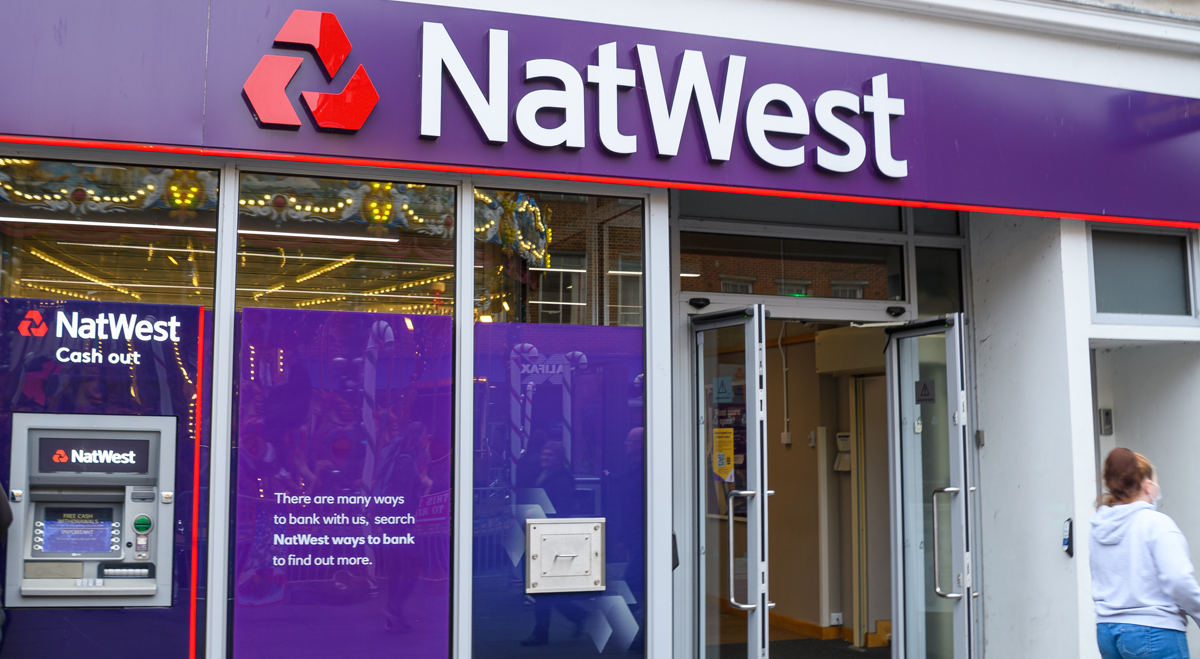
    NatWest Group PLC (LSE:NWG) reported broadly unchanged third-quarter operating profit of £2.2 billion, meeting analyst expectations as growth in lending and deposits helped offset increasing competition and pressure on banking margins.

    The UK banking group maintained its full-year financial targets rather than raising its guidance, reflecting a more challenging operating environment for British lenders.

    The results come as banks face intensifying competition for customer deposits, alongside uncertainty over the outlook for interest income and the wider UK economy.

    Third-Quarter Profit Meets Analyst Expectations

    NatWest recorded pretax operating profit of £2.2 billion for the July-to-September 2026 period, broadly in line with the corresponding quarter last year.

    The result matched the average analyst forecast, supported by continued lending growth and relatively stable deposit margins.

    The bank reported increases in lending, customer deposits and assets under management across its three main customer businesses.

    Chief Executive Officer Paul Thwaite commented:

    “We continue to see broad-based growth in our three customer franchises, with lending, deposits and assets under management all increasing during the quarter”

    Despite the growth in customer activity, NatWest maintained its existing annual performance targets, disappointing expectations among some investors for an upgrade.

    The decision follows similar guidance announcements from HSBC and Lloyds Banking Group, highlighting the pressures facing the UK banking sector.

    Cost Savings Improve Efficiency Ratio

    NatWest reported a year-to-date cost-to-income ratio of 45.7%, representing an improvement of 2.1 percentage points compared with the previous year.

    The reduction was supported by approximately £420 million in gross cost savings as the bank continued efforts to improve operational efficiency.

    These initiatives include workforce reductions and investment in artificial intelligence to automate processes and streamline operations.

    The improvement in the cost-to-income ratio indicates that NatWest has continued to control expenses while expanding its customer activities.

    Maintaining this efficiency progress will remain important as competition places pressure on revenue growth and lending margins.

    Wealth Management Assets Increase Following Acquisition

    NatWest’s wealth management business recorded a £1 billion increase in assets during the third quarter following the acquisition of Evelyn Partners.

    The expansion supports the bank’s efforts to develop its wealth management operations and increase its exposure to fee-generating financial services.

    Growth in assets under management also provides an additional source of business activity alongside traditional lending and deposit services.

    The bank’s broader customer franchises continued to report growth during the quarter, although competitive conditions remain a consideration for future profitability.

    Banking Margin Pressures Remain in Focus

    Competition for savings deposits continues to affect the outlook for UK banks, with lenders balancing the need to retain customer funds against the cost of offering competitive interest rates.

    Analysts have also highlighted the potential for slower growth in net interest income as banking margins come under pressure.

    Jefferies analyst Jonathan Pierce described the latest reporting period as one in which British banks were “tearing off the band aid” by reducing expectations for interest income growth.

    For NatWest, the decision to maintain rather than upgrade its annual guidance suggests a cautious approach despite continued growth in lending, deposits and wealth management assets.

    Investors will be monitoring the bank’s ability to preserve margins, deliver further cost savings and sustain profitability as competitive and economic conditions evolve.

  • Filtronic Secures New GEO Satellite Contract as SpaceX Orders and Defence Demand Support FY2027 Growth

    Filtronic Secures New GEO Satellite Contract as SpaceX Orders and Defence Demand Support FY2027 Growth

    Filtronic plc (LSE:FTC) reported continued order momentum in its 2027 financial year, supported by major satellite communications contracts, expanding defence activity and the development of higher-power radio frequency (RF) technologies.

    In a trading update ahead of its Annual General Meeting, the UK-based RF technology specialist announced its first contract with a US satellite manufacturer operating geostationary Earth orbit (GEO) satellites, alongside progress in medium Earth orbit (MEO) applications.

    The company also highlighted its recently secured $68.1 million (£51.3 million) contract with SpaceX and confirmed that its order book provides substantial revenue visibility for the current financial year and beyond.

    SpaceX Contract Strengthens Satellite Communications Order Book

    Filtronic secured its largest-ever order in early October, receiving a $68.1 million (£51.3 million) contract from SpaceX.

    The agreement covers the supply of Cerus E-band gallium nitride (GaN) solid-state power amplifier units, extending the company’s existing relationship with the satellite communications operator.

    Filtronic also secured two additional contracts with a US-based customer during FY2027, with a combined value of $16.0 million (£11.1 million).

    These agreements involve the design, development and manufacture of prototype units intended for satellite deployment.

    The contracts support Filtronic’s strategy of expanding beyond individual RF components into more sophisticated integrated systems, potentially increasing the value of its contribution to customer programmes.

    New GEO Satellite Contract Follows Development of 200W Amplifier

    Filtronic announced its first contract with a US satellite manufacturer operating GEO satellites in the Ka-band.

    The initial agreement is valued at $0.3 million and covers development activities, with the company anticipating potential follow-on orders as the programme progresses towards production.

    The contract follows completion of Filtronic’s first 200-watt solid-state power amplifier system, designed for applications in MEO and GEO satellite constellations.

    The new system delivers ten times the power of the company’s Cerus 32 gallium arsenide product, representing a significant increase in output capability.

    Filtronic said the development is generating commercial interest and could expand its addressable market by enabling higher-power satellite communications applications.

    The company has also completed its first Digital Intermediate Frequency (Di-Fi) product.

    The technology was recently demonstrated at Plugfest, an industry testing event in Silicon Valley, where it attracted interest from potential customers and industry participants.

    These developments form part of Filtronic’s broader technology roadmap, which aims to increase its involvement in higher-value satellite communications systems.

    Defence Contracts Add £2.1 Million in New Orders

    Filtronic reported further progress in its defence business, securing three contracts with a combined value of £2.1 million.

    The agreements cover next-generation technology for airborne radar systems and extend the company’s participation in existing defence programmes.

    The awards follow growth in defence revenue during FY2026 and support Filtronic’s objective of diversifying its customer base beyond satellite communications.

    Separately, the company secured a £2 million grant from UK Defence Innovation during the first half of FY2027.

    The funding will support development of Filtronic’s chipset technology for ground-based and satellite payload systems.

    The company expects these investments to strengthen its technical capabilities across both the defence and space markets.

    Order Book Supports Full-Year Market Expectations

    Filtronic said its contracted order book provides significant revenue coverage for FY2027, alongside improved visibility for subsequent financial years.

    The combination of major satellite communications contracts, new customer relationships and defence orders is supporting the company’s commercial outlook.

    Development of higher-power amplifiers and integrated RF systems is also expected to create additional opportunities across different satellite orbits and applications.

    The Board reiterated its confidence in delivering financial results in line with market expectations for the current financial year.

  • Predator Oil & Gas Reports Limited Gas Inflow at MOU-6 Well in Morocco as Focus Shifts to Further Exploration

    Predator Oil & Gas Reports Limited Gas Inflow at MOU-6 Well in Morocco as Focus Shifts to Further Exploration

    Predator Oil & Gas Holdings Plc (LSE:PRD) has reported disappointing preliminary testing results from its MOU-6 well in Morocco, where successful perforation of the target formation failed to produce measurable gas inflow.

    The Jersey-based energy company said the results suggest a combination of low rock permeability and low gas saturation at the tested location, although further technical investigations are planned.

    Despite the outcome, Predator believes the additional geological and well data will support its assessment of potential unconventional gas resources across the licence area.

    MOU-6 Testing Indicates Low Permeability and Gas Saturation

    Predator successfully perforated a 19.8-metre gross interval of the TGB-6 Fan formation, between depths of 825.7 and 845.5 metres, using 4.5-inch tubing-conveyed perforating guns.

    Formation pressure measurements recorded 1,195 pounds per square inch at a depth of 813.27 metres, although the reading had not fully stabilised.

    Subsequent nitrogen-lift operations recovered only diesel and brine associated with the well completion fluids, with no formation inflow observed.

    The company identified several possible explanations, including extremely low formation permeability, mechanical blockage caused by collapsed perforation tunnels, or a combination of low permeability and limited gas saturation.

    Predator considers the latter explanation more likely, while severe formation damage is regarded as unlikely.

    Final processed NuTech logs indicated substantially lower calculated permeability, gas saturation and porosity at MOU-6 compared with the MOU-1, MOU-3 and MOU-4 wells.

    The company said these findings were consistent with the observed testing performance.

    Additional Studies to Assess Unconventional Gas Potential

    Predator plans to undertake laboratory and desktop studies using the newly acquired well data to investigate the reasons for the absence of gas inflow.

    The results will also contribute to a planned independent assessment of prospective unconventional gas potential in the areas tested by MOU-1, MOU-3 and MOU-6.

    This work will involve comparisons with producing gas regions in eastern Romania and western Ukraine.

    MOU-6 has been suspended, allowing for the possibility of deepening the well to investigate the TGB-4 interval.

    Shallow gas shows of up to 2.69% were also recorded, with samples collected for compositional analysis.

    The company confirmed that completion of MOU-6 satisfied its remaining work programme obligations under the first extension period of the petroleum agreement.

    Further Exploration Planned Across Moroccan Licence

    Predator has drilled six wells across its Moroccan exploration area, identifying several prospective hydrocarbon plays, primarily within Tertiary formations.

    The company intends to continue evaluating potential unconventional gas opportunities through further well interventions.

    Other priorities include assessing the cost of deepening MOU-5 into the Triassic to investigate potential thermogenic gas and associated helium.

    Predator also plans to examine Jurassic formations in the western part of the licence area for possible gas and oil potential.

    Further drilling and two-dimensional and three-dimensional seismic surveys would be required to evaluate these opportunities.

    The company is seeking a partner capable of supporting the next phase of exploration and providing additional investment.

    Partner Discussions and Trinidad Drilling Become Priorities

    Chief Executive Officer Paul Griffiths acknowledged that the MOU-6 results had fallen short of expectations.

    “We are naturally disappointed that MOU-6 has not delivered in line with pre-drill expectations.”

    However, the company believes the testing results will help improve its interpretation of geological data collected from earlier wells.

    Predator said its immediate emphasis will shift towards negotiations with potential exploration partners.

    Meanwhile, its operating team is preparing to transfer to Trinidad, where drilling preparations are focused on the Snowcap-3 well.

    The company also confirmed completion of the first of two deferred consideration payments relating to its 2025 acquisition of the former Challenger Energy Group’s Trinidad business and assets.