Category: Market Summary

  • FTSE 100 opens firmer as miners and energy stocks advance; sterling rebounds, LSEG gains

    FTSE 100 opens firmer as miners and energy stocks advance; sterling rebounds, LSEG gains

    UK equities moved higher at the start of Wednesday trading, outperforming major European peers that slipped into negative territory. Gains in commodity-related shares helped lift sentiment, while sterling recovered against the dollar after recent pressure linked to political uncertainty.

    Precious metals producers were among the strongest performers as gold prices climbed. Oil majors and banking stocks also added support, pushing the benchmark index upward.

    By 08:42 GMT, the blue-chip FTSE 100 was up modestly, while the pound strengthened 0.2% against the dollar to 1.3687. On the continent, Germany’s DAX fell 0.4%, with France’s CAC 40 also down 0.4%.

    UK round-up

    London Stock Exchange Group plc (LSE:LSEG) advanced in early trading after the Financial Times reported that activist investor Elliott Investment Management L.P. is assembling a “significant” position in the company. According to the report, Elliott has been engaging with management in an effort to enhance the exchange operator’s performance.

    Meanwhile, Barratt Redrow plc (LSE:BTRW), the UK’s largest homebuilder, said first-half completions surpassed market expectations. The group delivered 7,305 homes during the period, a 7% increase on a pro-forma basis year on year, ahead of analyst forecasts of roughly 6,889 units. Despite stronger volumes, profitability came in below consensus projections. The company reiterated its full-year volume guidance but flagged ongoing margin pressures.

  • Flat U.S. retail sales raise caution ahead of Wall Street open: Dow Jones, S&P, Nasdaq, Futures

    Flat U.S. retail sales raise caution ahead of Wall Street open: Dow Jones, S&P, Nasdaq, Futures

    U.S. stock index futures pointed modestly lower on Tuesday, signaling a cautious start to trading as investors reassessed the outlook following two sessions of solid gains.

    Futures slipped after fresh data from the Commerce Department showed that U.S. retail sales unexpectedly stalled in December, raising concerns about the strength of consumer spending heading into the new year.

    The report showed retail sales were essentially unchanged last month, following a 0.6% increase in November. Economists had been expecting a 0.4% rise. Even after excluding autos — where sales at motor vehicle and parts dealers edged slightly lower — sales remained flat, compared with a 0.4% gain the prior month. Ex-auto sales had been forecast to rise 0.3%.

    Meanwhile, separate figures from the Labor Department indicated that U.S. import prices rose marginally in December, matching market expectations.

    Wall Street closed mostly higher on Monday, extending the rally that began late last week. The Dow Jones Industrial Average inched to a fresh record close, while technology shares powered a stronger advance in the Nasdaq.

    By the close, all three major indexes finished in positive territory. The Dow added 20.20 points, less than 0.1%, to end at 50,135.87. The Nasdaq jumped 207.46 points, or 0.9%, to 23,238.67, while the S&P 500 rose 32.52 points, or 0.5%, to 6,964.82.

    Much of the momentum came from a continued rebound in technology stocks, building on Friday’s surge. Software shares were among the leaders, with Oracle (NYSE:ORCL) soaring 9.6% after D.A. Davidson upgraded the stock to Buy from Neutral.

    Despite the recent strength, investors appeared hesitant to make aggressive bets ahead of several high-impact U.S. economic releases scheduled for the days ahead. Particular focus is expected on the Labor Department’s monthly employment report, which was postponed last week due to a brief government shutdown.

    The jobs report is forecast to show payrolls rising by 70,000 in January, following a 50,000 increase in December, while the unemployment rate is expected to remain unchanged at 4.4%.

    Upcoming reports on retail sales and consumer price inflation are also set to draw close scrutiny, given their potential implications for the interest rate outlook.

    “With Jerome Powell nearing the end of his term and Kevin Warsh widely expected to take over as Fed Chair, markets are increasingly sensitive to how data influences rate expectations,” said Daniela Hathorn, Senior Market Analyst at Capital.com. “While leadership changes may affect tone and communication, the data remains the ultimate driver.”

    She added, “As a result, the employment and inflation releases this week will be critical in determining whether markets lean back into expectations of easing — a scenario that could support equities and precious metals — or whether sticky inflation forces continued restraint.”

    Gold-related stocks posted some of the strongest gains in the market on Monday, helped by a sharp rise in bullion prices that lifted the NYSE Arca Gold Bugs Index by 6.1%.

    Networking and software stocks also rallied strongly, with the NYSE Arca Networking Index climbing 4% and the Dow Jones U.S. Software Index advancing 3.3%. Brokerage and semiconductor stocks also performed well, while healthcare and airline shares moved lower.

  • European markets trade cautiously as earnings updates keep investors selective: DAX, CAC, FTSE100

    European markets trade cautiously as earnings updates keep investors selective: DAX, CAC, FTSE100

    European equities were largely subdued on Tuesday, as investors digested a mixed flow of corporate earnings and waited for key U.S. economic data later in the week that could influence expectations for Federal Reserve interest rates.

    France’s CAC 40 edged up 0.1%, while Germany’s DAX slipped 0.1%. The U.K.’s FTSE 100 lagged its peers, down 0.4%.

    Dutch healthcare group Philips (EU:PHIA) stood out on the upside after reporting strong fourth-quarter results and setting ambitious targets for 2026.

    Shares of luxury group Kering (EU:KER), owner of Gucci, also jumped after the company reported an acceleration in sales momentum in the final quarter of 2025.

    Pharmaceuticals group AstraZeneca (LSE:AZN) traded higher after forecasting continued revenue and earnings growth in 2026, supported by strong demand for its cancer treatments.

    In contrast, BP Plc (LSE:BP.) shares came under pressure after the energy major suspended its share buyback programme and reported a wider replacement cost loss for the fourth quarter.

    Travel stocks were weaker as well, with TUI (TG:TUI1), Europe’s largest tour operator, sliding despite posting solid quarterly results and reaffirming its full-year targets.

  • European luxury shares advance as Kering update lifts sentiment across the sector

    European luxury shares advance as Kering update lifts sentiment across the sector

    European luxury stocks moved higher on Tuesday, supported by signs that trading at sector heavyweight Kering (EU:KER) held up better than expected in the fourth quarter, easing some concerns around the pace of its turnaround.

    Shares in fellow luxury names such as Salvatore Ferragamo (BIT:SFER) and Burberry (LSE:BRBY) were up more than 2% by mid-morning in Europe. Rival group LVMH, the diversified luxury conglomerate spanning fashion, wines and spirits, also edged higher, gaining around 0.8%.

    Kering itself led the gains, with its shares jumping more than 10%, extending a strong rally that began after the company announced the appointment of Luca de Meo as chief executive last June.

    The former Renault boss has been brought in to drive a broad restructuring of the group. Since taking the helm, de Meo has focused on reducing debt, streamlining governance and sharpening the portfolio. In October, Kering agreed a €4bn deal to sell its beauty business and certain brand licences to L’Oréal.

    In the fourth quarter — de Meo’s first full period as CEO — Kering reported a 3% decline in currency-adjusted sales year on year. That result compared favourably with a 5% drop expected by analysts, according to Visible Alpha forecasts cited by Reuters.

    Addressing analysts and investors, de Meo reiterated his ambition to return Kering to growth in 2026 and to improve margins across all of the group’s brands.

    Investor focus is now shifting to late February, when Gucci’s new creative director, Demna, is due to present his first collection at a Milan show. The performance of Gucci remains critical for Kering, as the brand accounts for a substantial share of the group’s profits.

    Gucci’s revenue fell 10% in the quarter, marking the tenth consecutive quarterly decline. However, the drop was less severe than many in the market had anticipated, Reuters noted, helping to underpin the positive reaction across the luxury sector.

  • Tech Shares Rebound as Earnings Accelerate; U.S. Retail Sales in Focus: Dow Jones, S&P, Nasdaq, Wall Street Futures

    Tech Shares Rebound as Earnings Accelerate; U.S. Retail Sales in Focus: Dow Jones, S&P, Nasdaq, Wall Street Futures

    U.S. equity futures were little changed on Tuesday, as markets weighed a recent rebound in technology stocks against a heavy flow of corporate earnings and closely watched U.S. economic data due later in the week. Results are expected from several large companies, including CVS Health (NYSE:CVS) and Coca-Cola (NYSE:KO). Elsewhere, Japan’s Nikkei climbed to a fresh record high, while gold prices edged lower.

    Futures pause after tech-driven rally

    Stock futures in the United States hovered near unchanged levels, pointing to a cautious start to trading after technology shares led gains in the previous session.

    At 03:04 ET, futures on the Dow Jones Industrial Average and the S&P 500 were broadly flat, while Nasdaq 100 futures slipped by 18 points, or 0.1%.

    Wall Street’s main indices advanced on Monday, extending gains from the end of last week as investor appetite returned to technology names benefiting from the rapid expansion of artificial intelligence and data-centre infrastructure.

    Sentiment was further boosted by a CNBC report that OpenAI chief executive Sam Altman told employees that ChatGPT had resumed growth. The update strengthened confidence in a company seen as a key hub in the AI ecosystem. Analysts at Vital Knowledge said optimism around OpenAI also prompted DA Davidson to upgrade its view on Oracle (NYSE:ORCL), which has a $300bn data-centre agreement with the ChatGPT developer.

    By the close, the Nasdaq Composite had risen 0.9%, leaving it just shy of record territory, while the S&P 500 also finished close to all-time highs.

    Earnings season gathers momentum

    A busy earnings calendar is set to drive markets on Tuesday, as investors look for fresh insight into corporate performance at the start of 2026.

    Before the opening bell, reports are due from Marriott International (NASDAQ:MAR), Spotify (NYSE:SPOT), CVS Health and Coca-Cola. Gilead Sciences (NASDAQ:GILD) is scheduled to publish its results after the market close.

    In after-hours trading, shares of Onsemi (NASDAQ:ON) fell after the semiconductor group posted weaker-than-expected fourth-quarter revenue, citing a lingering inventory overhang. Customers continue to draw down chip stockpiles built up during earlier supply-chain disruptions.

    Onsemi also pointed to headwinds for its silicon carbide business from slowing electric vehicle demand and intensifying competition from China. Its midpoint sales outlook for the current quarter came in below Wall Street expectations.

    U.S. retail sales in the spotlight

    On the macro side, attention is turning to December U.S. retail sales data.

    Consumer spending accounts for more than two-thirds of U.S. economic output and was a major contributor to the 4.4% annualised GDP growth recorded in the third quarter.

    Core retail sales, which exclude autos, fuel, building materials and food services and closely track the consumer component of GDP, are expected to rise by 0.3% in December, slowing from a 0.5% increase in November.

    Some analysts have flagged a cooling labour market as a potential drag on spending, although Federal Reserve officials described employment conditions as “stabilizing” in January. Analysts at ING said the data should still point to “reasonably healthy” growth and support the view that “the U.S. consumer is alive and well.”

    Nikkei hits record on “Takaichi trade”

    Asian equities extended gains on Tuesday, led by Japan, where the Nikkei index reached a new all-time high as investors embraced the so-called “Takaichi trade” following Prime Minister Sanae Takaichi’s decisive election victory over the weekend.

    Markets expect Takaichi’s policy agenda to favour growth, investment and corporate profitability, reinforcing optimism around pro-business reforms, fiscal support and measures aimed at boosting innovation and strategic industries.

    Gold eases as caution prevails

    Gold prices slipped on Tuesday, giving back some of Monday’s gains as markets remained cautious ahead of several key U.S. economic releases.

    Silver and platinum also edged lower. Precious metals have seen sharp swings over the past week as profit-taking and stretched positioning pulled prices back from record highs.

    Safe-haven demand for gold was further tempered by mixed signals in U.S.-Iran relations. While both sides reported progress in weekend talks on Iran’s nuclear programme, Washington nevertheless issued a warning to U.S.-flagged vessels transiting the Strait of Hormuz.

  • European Shares Trade Mixed as Earnings Season Rolls On; BP Halts Buybacks: DAX, CAC, FTSE100

    European Shares Trade Mixed as Earnings Season Rolls On; BP Halts Buybacks: DAX, CAC, FTSE100

    European equity markets were mixed on Tuesday, with investors sifting through a fresh wave of quarterly results from some of the region’s largest corporates, set against a backdrop of improving global risk appetite.

    By 08:05 GMT, Germany’s DAX was down 0.2% and the UK’s FTSE 100 had slipped 0.2%, while France’s CAC 40 was outperforming, up 0.3%.

    Global risk appetite improves

    Confidence has firmed across global equity markets, supported by a rebound in technology and artificial intelligence-related stocks following last week’s sell-off.

    U.S. markets extended their rally for a second consecutive session, with the Dow Jones Industrial Average reaching a new all-time high. In Asia, Japan’s Nikkei 225 closed at a record level after Prime Minister Sanae Takaichi secured a landslide victory in the Lower House.

    European indices have also started the year positively, with the DAX and CAC 40 both up more than 2% year to date and the FTSE 100 gaining over 4%, helped by generally supportive corporate earnings.

    Earnings updates dominate

    The flow of company results continued on Tuesday as the reporting season gathered pace.

    Philips (EU:PHIA) delivered a better-than-expected fourth quarter, reporting sales of €5.10bn as the Dutch health technology group benefited from broad-based demand despite the impact of higher tariffs.

    Kering (EU:KER) said fourth-quarter sales fell by slightly less than anticipated, as new chief executive Luca de Meo worked to stabilise the luxury group in his first quarter at the helm.

    AstraZeneca (LSE:AZN) forecast growth in both revenue and profit for 2026, citing continued demand for its cancer therapies and newer medicines as it expands further in the United States and China.

    Barclays (LSE:BARC) reported a 12% rise in annual profit and set out new performance targets through to 2028, as the lender focuses on its core UK market and increased use of technologies such as AI to reduce costs.

    On the downside, BP (LSE:BP.) announced it would suspend share buybacks and redirect surplus cash toward strengthening its balance sheet. The move followed a fourth-quarter loss of $3.4bn, compared with a $1.2bn profit in the previous quarter.

    UK political uncertainty in focus

    The European economic calendar was relatively light, with the main data point showing France’s unemployment rate rising to 7.9% in the fourth quarter from 7.7% in the prior three months.

    Investor attention in the UK is likely to remain fixed on domestic politics, as Prime Minister Keir Starmer faces mounting pressure amid ongoing controversy surrounding the appointment of Peter Mandelson as ambassador to the United States.

    Anas Sarwar, leader of the Scottish Labour Party, called on the prime minister to resign on Monday, a request Starmer rejected, following renewed scrutiny of Mandelson’s links to the late US sex offender Jeffrey Epstein.

    According to Ruth Gregory, deputy chief UK economist at Capital Markets, any replacement of Starmer and/or Chancellor Rachel Reeves could initially push gilt yields higher and weaken sterling. Over the longer term, she said “the most likely longer-lasting influence is a loosening in fiscal policy that leads to higher gilt yields than otherwise and a weaker pound than otherwise.”

    Oil edges lower as geopolitical risks persist

    Oil prices eased slightly on Tuesday, although tensions between the United States and Iran remained elevated, keeping concerns about potential supply disruptions from the Middle East firmly in place.

    Brent crude futures slipped 0.3% to $68.86 a barrel, while U.S. West Texas Intermediate crude fell 0.3% to $64.18 a barrel. Both benchmarks had gained more than 1% on Monday after the U.S. Department of Transportation’s Maritime Administration advised U.S.-flagged vessels to keep their distance from Iranian waters when transiting the Strait of Hormuz and the Gulf of Oman.

    Roughly one-fifth of the world’s oil consumption passes through the Strait of Hormuz between Oman and Iran, making any escalation in the region a significant risk to global energy supplies.

    The warning came despite signs of progress in recent weekend talks between Washington and Tehran, with both sides agreeing to continue discussions over Iran’s nuclear programme.

  • Wall Street Braces for Uneven Trading as Investors Await Key Economic Signals: Dow Jones, S&P, Nasdaq, Futures

    Wall Street Braces for Uneven Trading as Investors Await Key Economic Signals: Dow Jones, S&P, Nasdaq, Futures

    U.S. equity futures point to a muted start on Monday, with markets struggling for clear direction after last week’s sharp late-session rebound.

    Traders appear to be stepping back after a volatile stretch that saw technology shares drive a steep selloff midweek, followed by a strong recovery on Friday. With few major U.S. data releases scheduled at the start of the week, activity may remain cautious ahead of several high-profile economic reports due in the days ahead.

    The spotlight is expected to fall on the Labor Department’s monthly employment report, which was postponed last week because of a brief federal government shutdown. Economists forecast that U.S. employers added around 70,000 jobs in January, compared with 50,000 in December, while the unemployment rate is seen holding steady at 4.4%.

    Investors will also be watching upcoming releases on retail sales and consumer price inflation, as both could shape expectations for the future path of interest rates.

    After sliding sharply over multiple sessions, stocks mounted a powerful comeback on Friday. All three major benchmarks posted strong gains, with the Dow Jones Industrial Average finishing above the 50,000 level for the first time.

    The rally pushed indices to fresh intraday highs before some profit-taking into the close. The Dow advanced 1,206.95 points, or 2.5%, to 50,115.67, while the Nasdaq climbed 490.63 points, or 2.2%, to 23,031.21. The S&P 500 rose 133.90 points, or 2.0%, to end at 6,932.30.

    For the week as a whole, the Dow gained 2.5%, while the S&P 500 slipped 0.1% and the Nasdaq fell 1.8%.

    The rebound was largely driven by bargain hunting, with investors stepping in after the recent pullback. Technology stocks had led the earlier decline, dragging the Nasdaq to its lowest closing level in more than two months and briefly pushing the S&P 500 to its weakest intraday level in over a month on Thursday.

    Sentiment also improved after a University of Michigan survey showed U.S. consumer confidence unexpectedly strengthened again in February. The consumer sentiment index rose to 57.3 from 56.4 in January, beating forecasts for a decline to 55.5 and marking its highest reading since August 2025. The gain was led by households with larger equity holdings.

    The broader market rebound came despite a sharp drop in Amazon shares. Amazon (NASDAQ:AMZN) slid 5.6% after reporting slightly weaker-than-expected fourth-quarter earnings and projecting capital spending for 2026 well above analyst estimates.

    Elsewhere, airline stocks staged a strong rally, with the NYSE Arca Airline Index jumping 7.1% to its best close in more than three years. Computer hardware and semiconductor shares also rebounded sharply, lifting the NYSE Arca Computer Hardware Index by 6.8% and the Philadelphia Semiconductor Index by 5.7%.

    A surge in gold prices added further support, pushing the NYSE Arca Gold Bugs Index up 5.5%, while gains across networking, financial and oil services stocks helped fuel broad-based strength across most market sectors.

  • European Shares Advance as Tech Fears Fade and Deal Activity Lifts Sentiment: DAX, CAC, FTSE100

    European Shares Advance as Tech Fears Fade and Deal Activity Lifts Sentiment: DAX, CAC, FTSE100

    European equities traded mostly higher on Monday as concerns around the technology sector subsided and a series of merger-and-acquisition headlines helped buoy investor confidence.

    The macroeconomic calendar was relatively quiet, though the latest KPMG/REC Report on Jobs showed that permanent job placements in the U.K. fell again in January amid subdued demand and employer worries over costs. That said, the rate of decline slowed to its mildest pace in 18 months, offering a small note of reassurance.

    By mid-morning, the U.K.’s FTSE 100 was down 0.2%, while France’s CAC 40 edged up 0.1% and Germany’s DAX gained 0.5%.

    Italy’s banking sector provided notable upside, with UniCredit (BIT:UCG) jumping after posting a record net profit of €10.6 billion for 2025.

    In the technology space, STMicroelectronics (BIT:STMMI) surged after announcing an expanded strategic partnership with Amazon Web Services.

    Deal news also drove sharp moves elsewhere. Shares in InPost (EU:INPST) rallied strongly after a consortium led by Advent, alongside FedEx, agreed to acquire the Polish parcel locker group at €15.60 per share.

    In the healthcare sector, Novo Nordisk (NYSE:NVO) climbed after U.S. telehealth group Hims & Hers said it would withdraw its copycat weight-loss pill from the market.

    Not all stocks joined the rally, however. NatWest (LSE:NWG) shares moved lower after the British lender announced a deal to acquire private equity-backed wealth manager Evelyn Partners.

  • Five Market Drivers to Watch in the Week Ahead

    Five Market Drivers to Watch in the Week Ahead

    The coming week is set to be shaped by high-profile U.S. employment and inflation releases, another round of technology earnings after sharp sector swings, and contrasting political developments in Japan and the UK. Below are the key themes likely to steer markets in the days ahead.

    1. U.S. labour report under the microscope

    The main economic highlight will be the long-awaited release of U.S. January employment data, now scheduled for Wednesday after being delayed by a brief three-day federal government shutdown that ended last week.

    Forecasts suggest the U.S. economy added around 70,000 jobs in January, compared with 50,000 in December. Investors will be closely examining the report for evidence that the labour market is “stabilizing,” a term recently used by Federal Reserve Chair Jerome Powell.

    The Fed cut interest rates several times in 2025 to cushion a softening jobs market affected by tariff-driven uncertainty. Recent signals have been mixed: weekly jobless claims rose more than expected, partly due to severe winter weather, while job openings in December fell to a five-year low. The bulk of that decline occurred in professional and business services, which some analysts see as an early sign of AI-related pressure on white-collar employment.

    2. Inflation figures take centre stage

    Attention will also turn to U.S. inflation data due on Friday. The headline consumer price index for January is expected to ease to 2.5% year on year from 2.7% in December, while the monthly increase is forecast to remain at 0.3%.

    Alongside employment, inflation sits at the heart of the Fed’s dual mandate, meaning both releases could play a decisive role in shaping expectations for monetary policy in 2026. Policymakers kept rates unchanged last month, pointing to a labour market showing signs of stabilisation and inflation that remains subdued, though still above the 2% target.

    The data come after a volatile spell for markets, driven in part by worries over the disruptive potential of artificial intelligence in the software sector. Following a steep sell-off last week, U.S. equities bounced back on Friday.

    Analysts at Capital Economics said they “suspect U.S. economic data this week might help investors’ nerves recover further[.]”

    3. Tech earnings back in focus

    A busy earnings calendar, particularly for technology companies, will also be in the background. Results are due from ON Semiconductor (NASDAQ:ON), Datadog (NASDAQ:DDOG), Spotify (NYSE:SPOT), Cisco (NASDAQ:CSCO) and Applied Materials (NASDAQ:AMAT).

    These updates may offer new insight into an industry adjusting to the rapid rollout of advanced AI tools. Software stocks tumbled last week after AI startup Anthropic launched a new workplace plugin aimed at legal and administrative tasks, raising concerns about potential pressure on demand for traditional software products.

    As a result, investors are likely to focus closely on management commentary around AI adoption, investment and longer-term strategy.

    “[I]nvestors had a lot to think about following the extreme volatility from the last several sessions, including the huge rebound on Friday, which raises the question of whether the swoon (especially in tech) is over?” analysts at Vital Knowledge said.

    “We think the recent market swings are simply the most visible manifestations of large structural changes that have been underway beneath the surface for months, specifically in tech and AI[.]”

    4. Japan’s prime minister strengthens her hand

    Beyond the U.S., Asian markets started the week higher after Japanese Prime Minister Sanae Takaichi secured a commanding victory in a snap election held over the weekend.

    The election came just 110 days after Takaichi became Japan’s first female prime minister, making the outcome particularly significant. Reports indicate her Liberal Democratic Party captured a rare supermajority in the lower house, bolstering her political authority.

    The result appears to open the door to increased public spending and tax cuts, underpinned by what many observers describe as a relatively stable political environment.

    “Takaichi’s decision to leverage her popularity for her party turned out to be successful. The landslide victory will reinforce her responsible but expansionary fiscal spending and a more Japan-focused foreign policy. Risk-on sentiment will dominate the market for now,” said Min Joo Kang, Senior Economist at ING.

    5. Political uncertainty grows in the UK

    While Japan’s leadership emerges strengthened, political risk is rising in the UK. Prime Minister Keir Starmer is facing mounting scrutiny over the appointment of a senior ambassador linked to Jeffrey Epstein.

    Over the weekend, Starmer’s chief of staff Morgan McSweeney resigned, taking responsibility for the decision to appoint Peter Mandelson as the UK’s ambassador to the United States. Newly released U.S. Justice Department files showed Mandelson shared government documents with Epstein, while Mandelson and his now husband received payments from the late American sex offender.

    Markets are watching closely for potential fallout. If Starmer or UK Chancellor Rachel Reeves were replaced, “[t]he most likely longer-lasting influence is a loosening in fiscal policy that leads to higher gilt yields than otherwise and a weaker pound than otherwise,” said Ruth Gregory, Deputy Chief UK Economist at Capital Economics.
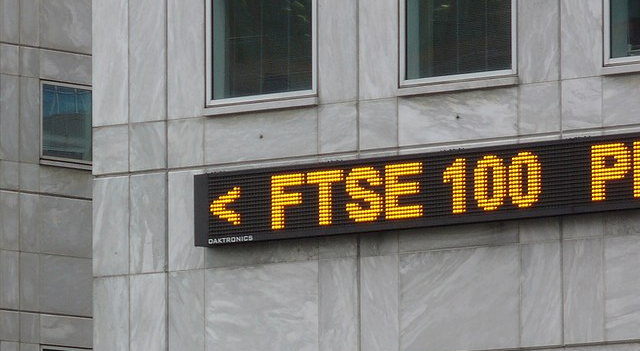

  • European Markets Open Higher in Earnings-Heavy Week, UniCredit in the Spotlight: DAX, CAC, FTSE100

    European Markets Open Higher in Earnings-Heavy Week, UniCredit in the Spotlight: DAX, CAC, FTSE100

    European equities moved modestly higher on Monday, kicking off a packed week that features a fresh round of corporate earnings alongside a series of high-impact economic data releases.

    By 08:05 GMT, Germany’s DAX was up 0.5%, France’s CAC 40 had added 0.1%, and the UK’s FTSE 100 was trading 0.2% higher.

    UniCredit sets the tone for bank earnings

    The European earnings season is gaining momentum, with several large-cap names and major banks due to report in the days ahead. The pan-European Stoxx 600 index is hovering close to record levels, having logged seven positive weeks out of the past eight, as quarterly results have generally been well received.

    UniCredit (BIT:UCG) was a standout, after reporting record net profit of €10.6 billion for 2025, representing a 14% increase year on year. Italy’s second-largest lender also outlined ambitious medium-term goals, targeting €13 billion in net profit by 2028 and committing to €30 billion of shareholder returns over the next three years.

    The bank has deployed several billion euros from its surplus capital to build significant stakes in Germany’s Commerzbank and Greece’s Alpha Bank, stopping short of full acquisitions but positioning itself as a key shareholder in both institutions.

    This week also brings results from Commerzbank (TG:CBK), alongside UK peers Barclays (LSE:BARC) and NatWest Group (LSE:NWG).

    Beyond the banking sector, earnings updates are due from a wide range of blue-chip companies, including Koninklijke Philips (EU:PHIA), AstraZeneca (LSE:AZN), TotalEnergies (EU:TTE), Heineken (EU:HEIA), Mercedes-Benz Group (TG:MBG), Siemens (TG:SIE) and L’Oreal (EU:OR).

    U.S. data in focus

    Away from company results, investors will also be digesting fresh growth figures from both the eurozone and the UK. The main attention, however, is on the United States, where several key economic indicators are due after being delayed by a brief government shutdown.

    January’s nonfarm payrolls report and consumer price index data are scheduled for later in the week, and will be closely watched for insight into the resilience of the U.S. economy. The releases follow the nomination of Kevin Warsh as the next chair of the Federal Reserve, adding further significance to the data.

    Oil prices ease on diplomatic signals

    Oil prices edged lower on Monday after the U.S. and Iran agreed to continue negotiations over Tehran’s nuclear programme, easing concerns about potential supply disruptions in the Middle East.

    Brent crude futures slipped 0.9% to $67.46 a barrel, while U.S. West Texas Intermediate fell by the same margin to $62.98 a barrel. Both benchmarks declined by more than 2% last week, marking their first weekly drop in seven weeks, as geopolitical tensions showed signs of cooling.

    Officials from both countries said indirect talks held in Oman on Friday would continue, reducing fears of a military escalation in a region that plays a critical role in global oil supply.