Category: Market Summary

  • U.S.-Iran uncertainty weighs on sentiment; oil above $100; Tesla slips after results: Dow Jones, S&P, Nasdaq, Wall Street Futures

    U.S.-Iran uncertainty weighs on sentiment; oil above $100; Tesla slips after results: Dow Jones, S&P, Nasdaq, Wall Street Futures

    U.S. equity futures pointed to a weaker open on Thursday as doubts persisted over the outlook for renewed talks between Washington and Tehran, despite President Donald Trump’s decision earlier this week to prolong the ceasefire. Oil prices held above the $100-per-barrel mark amid ongoing disruptions in the Strait of Hormuz. Tesla (NASDAQ:TSLA) shares edged lower in after-hours trading, as stronger-than-expected earnings were overshadowed by elevated spending plans for 2026.

    Futures head lower

    U.S. stock futures declined, pressured by continued geopolitical tensions in the Middle East even after the announcement of the ceasefire extension.

    At 03:32 ET, Dow futures were down 277 points, or 0.6%, S&P 500 futures fell by 30 points, or 0.4%, and Nasdaq 100 futures dropped 104 points, also 0.4%.

    Despite the softer futures, Wall Street ended the previous session higher, moving closer to record highs. The extension of the ceasefire, combined with resilient corporate earnings, helped support risk appetite.

    According to Bloomberg data, nearly 80% of S&P 500 companies that have reported first-quarter earnings have beaten expectations.

    “[T]he main focus for risk assets is still the overall path that we’re on, which continues to lead towards the conflict coming to an end,” said Michael Brown, Senior Research Strategist at Pepperstone.

    “[B]oth sides are now seeking an ‘off ramp’ to de-escalate proceedings, and that public remarks from each party are primarily aimed at obtaining greater negotiating leverage, as opposed to seeking a return to kinetic action. So long as that remains the direction of travel, risk appetite is likely to remain underpinned[.]”

    Unclear path for U.S.-Iran negotiations

    Investors remained alert for any indication that fresh diplomatic efforts between the U.S. and Iran could materialize. Trump said discussions are “possible” as early as Friday.

    Earlier in the week, the president stated on social media that the ceasefire had been extended at Pakistan’s request, as it continues to act as a mediator between the two sides. Trump added that the truce would remain in place “until such time as” Iran submits a “unified proposal” for peace.

    However, uncertainty around any potential talks remains elevated. Shortly after the announcement, Iran attacked three ships and seized two near the Strait of Hormuz, in response to the ongoing U.S. blockade of its ports.

    Oil remains elevated above $100

    Concerns over further supply disruptions through the Strait of Hormuz—through which roughly one-fifth of global oil supply passes—helped keep crude prices above $100 per barrel.

    “The reassuring element is that at least one party – the U.S. – is signaling a strong desire to resume negotiations swiftly. What is less reassuring is the lack of clarity around plans for reopening the Strait of Hormuz,” analysts at ING said.

    They added that if hopes for a resolution continue to fade, “the reality of supply disruption will set in, leaving further upside for prices.” In the absence of progress, markets could become “increasingly numb to the noise and headlines that have dictated price action recently.”

    Although oil prices have pulled back from the sharp spike seen after the conflict began in late February, they remain well above pre-war levels, raising concerns about inflation and global growth.

    Tesla slips despite beating estimates

    Tesla (NASDAQ:TSLA) reported quarterly results that exceeded expectations on both revenue and profit, with its automotive segment performing better than anticipated.

    However, the stock turned lower in after-hours trading after the company outlined plans to spend more than $25 billion this year to support a shift toward robotics and autonomous driving. Earlier guidance had pointed to capital expenditure of around $20 billion.

    Shares were last down 1.8% after the close, reversing an earlier gain of more than 4%.

    CEO Elon Musk also tempered optimism regarding the transition. Speaking on the earnings call, he said he could not estimate the production pace of the Optimus robot in 2026, citing challenges in repurposing manufacturing lines previously used for the Model S/X.

    “Optimus is a completely new product with a completely new production line. It’s just literally impossible to predict,” Musk said, adding that production would likely be “quite slow at first.”

    He also highlighted a “cautious approach” to Tesla’s autonomous driving and robotaxi ambitions, warning that revenue from these initiatives will “not be super material” this year.

    Earnings and economic data in focus

    Investors are also watching for additional earnings releases ahead of the U.S. market open, including from American Express and Lockheed Martin, while Intel is due to report after the close.

    On the macroeconomic front, upcoming U.S. PMI data for April could offer insight into how businesses are managing cost pressures linked to the Iran conflict.

    In March, the purchasing managers’ index fell to 50.3 from 51.9, marking its weakest reading since September 2023.

    At the time, S&P Global’s Chief Business Economist Chris Williamson said the data showed “the U.S. economy buckling under the strain of rising prices and intensifying uncertainty, as the war in the Middle East exacerbates existing concerns regarding other policy decisions in recent months, notably with respect to tariffs.”

  • European stocks drift lower as Hormuz tensions linger: DAX, CAC, FTSE100

    European stocks drift lower as Hormuz tensions linger: DAX, CAC, FTSE100

    European equities moved modestly lower on Thursday as investors remained cautious amid persistent tensions around the Strait of Hormuz, despite U.S. President Donald Trump extending the Iran ceasefire indefinitely.

    As of 07:05 GMT, the pan-European Stoxx 600 was down 0.4%, Germany’s DAX had slipped 0.5%, and the U.K.’s FTSE 100 declined 0.6%.

    France’s CAC 40 stood out, rising 0.3%, supported by strong gains in L’Oréal (EU:OR), which reported its fastest quarterly growth in two years. The stock jumped more than 8%, even as concerns persisted about the potential impact of the Iran conflict on consumer demand.

    Market participants were also watching for signs of renewed diplomacy between Washington and Tehran. Trump told U.S. media that fresh negotiations are “possible” as early as Friday.

    Earlier in the week, the president said in a social media post that the ceasefire had been extended just hours before its expected expiry, following a request from Pakistan, which has been acting as an intermediary. Trump added that the truce would remain in place “until such time as” Iran delivers a “unified proposal” for peace.

    Still, prospects for talks remained uncertain. Shortly after the announcement, Iran attacked three vessels and seized two near the Strait of Hormuz, in response to an ongoing U.S. blockade of its ports and coastline.

    Concerns over potential supply disruptions through the strait—responsible for roughly 20% of global oil flows—pushed crude prices back above $100 per barrel. Although prices have retreated from the sharp surge seen after the conflict began in late February, they remain elevated compared with pre-war levels.

    Investors are also awaiting Eurozone business activity data later in the day, which could provide insight into how companies are coping with energy-related pressures.

    Earnings deluge

    Some analysts noted that markets may be shifting focus away from the steady stream of geopolitical developments and turning instead toward corporate earnings and increased spending on artificial intelligence infrastructure.

    Shares in Essity (BIT:1ESSI) rose after the group reported quarterly core earnings above expectations, supported by higher volumes that helped offset weaker pricing. The company’s CEO told Reuters it plans to raise prices to counter rising energy costs.

    However, Sainsbury’s (LSE:SBRY) warned that the conflict could dampen consumer spending, weighing on its outlook. Its shares fell more than 5%.

    In contrast, Safran (EU:SAF) edged higher after posting stronger-than-expected first-quarter revenue and reaffirming its 2026 outlook.

    Meanwhile, Sanofi (LSE:SAN) also exceeded forecasts for both profit and revenue in the first quarter, driven by continued demand for its asthma and eczema treatment Dupixent, lifting the stock by over 2%.

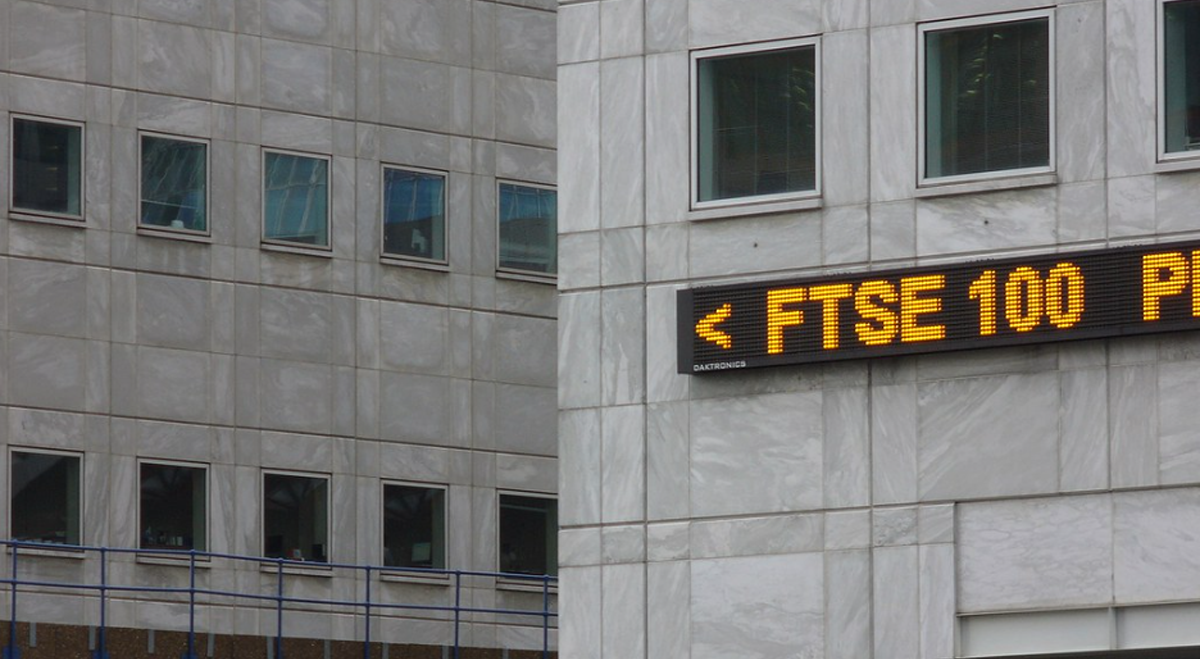
  • FTSE 100 today: Stocks open lower as Middle East tensions keep pressure on markets

    FTSE 100 today: Stocks open lower as Middle East tensions keep pressure on markets

    British equities started Thursday on a weaker footing as ongoing geopolitical strain in the Middle East continued to dampen investor sentiment, with little indication of progress toward renewed U.S.-Iran negotiations.

    By 07:11 GMT, the FTSE 100 was down 0.6%. Germany’s DAX fell 0.4%, while France’s CAC 40 edged up 0.4%. Sterling also softened, with GBP/USD slipping 0.1% to 1.3495.

    Tensions remained high after Iran seized several vessels in the Strait of Hormuz earlier in the week. Meanwhile, the United States maintained its naval blockade of Iranian ports and continued targeting Iran-linked shipping in regional waters.

    Traffic through the strait—accounting for around 20% of global oil supply—remained heavily restricted.

    Although U.S. President Donald Trump announced an indefinite extension of the ceasefire, prospects for a diplomatic breakthrough appeared slim.

    Washington has insisted on the full reopening of the Strait of Hormuz as a condition for any agreement, while Iran has refused to enter talks under ongoing blockade conditions, leaving negotiations at a standstill.

    Iranian President Masoud Pezeshkian said Tehran remains willing to engage, but emphasized that “breach of commitments, blockade and threats” are the key barriers to meaningful dialogue, underscoring the country’s position that current conditions rule out genuine negotiations.

    Iranian officials also placed responsibility on Washington for the stalemate, warning that reopening the strait would be “impossible” as long as military and economic pressure continues.

    The standoff has increased uncertainty around how long the ceasefire can hold, even though it has so far extended beyond its initial timeframe.

    Oil prices moved higher amid the disruption. Brent crude climbed 1.5% to $103.42 per barrel, while West Texas Intermediate gained nearly 1.6% to $94.48, supported by constrained supply and reduced shipping activity.

    UK round up

    London Stock Exchange Group (LSE:LSEG) said it expects full-year revenue growth toward the top end of its 6.5%–7.5% guidance after first-quarter income rose 9.8%, surpassing analyst forecasts on strong performance in its data and analytics division.

    CEO David Schwimmer pointed to solid momentum and continued AI deployment, even as the company faces pressure from activist investor Elliott Management to enhance valuation and performance.

    Sainsbury’s (LSE:SBRY) cautioned that the Iran conflict could impact consumer demand and profitability, projecting 2026/27 underlying operating profit in the range of £975 million to £1.08 billion amid elevated uncertainty.

    The retailer, echoing Tesco, said its greater exposure to non-food sales makes it more sensitive to any pullback in discretionary spending, despite a strong start to the year.

    WH Smith (LSE:SMWH) lowered its full-year profit outlook to £90 million–£105 million and suspended its dividend, citing weaker passenger volumes and softer consumer confidence linked to Middle East travel disruption.

    The company warned that airport sales are likely to come under pressure as higher jet fuel costs drive up airfares, while it adopts a cautious stance to conserve cash and reinforce its balance sheet.

    Asos (LSE:ASC) said it is pursuing refunds on £7 million in U.S. tariffs as part of efforts to protect margins during its turnaround, after the levies were deemed unlawful by the Supreme Court.

    The retailer, already dealing with competitive pressures and subdued demand, warned that broader geopolitical risks—including the Iran conflict—could further impact costs and consumer spending.

  • Wall Street Set for Rebound as Ceasefire Extension Lifts Early Sentiment: Dow Jones, S&P, Nasdaq, Wall Street

    Wall Street Set for Rebound as Ceasefire Extension Lifts Early Sentiment: Dow Jones, S&P, Nasdaq, Wall Street

    U.S. equity futures signaled a firmer open on Wednesday, with markets looking to recover some of the ground lost over the past two sessions.

    The improved tone follows news that President Donald Trump has opted to extend the ceasefire with Iran, prompting renewed buying interest.

    Referring to Iran’s leadership as “seriously fractured,” Trump said on Truth Social that the U.S. would pause further military action until Iranian officials “come up with a unified proposal.”

    At the same time, he emphasized that U.S. forces would continue enforcing a naval blockade on Iranian ports.

    Tehran dismissed the ceasefire extension as “meaningless” and reiterated that the Strait of Hormuz will remain shut until the blockade is lifted.

    Mahdi Mohammadi, adviser to parliamentary speaker Mohammad Bagher Ghalibaf, described the move as an attempt “to buy time for a surprise strike,” adding that the “losing side cannot dictate terms.”

    Shortly after Trump’s remarks, Iran’s Revolutionary Guard Navy said it had detained two container vessels in the Strait of Hormuz over alleged “maritime violations.”

    The back-and-forth between Washington and Tehran has injected uncertainty into markets, although investors remain cautiously optimistic about a potential diplomatic outcome.

    Confidence is also being supported by a solid start to the corporate earnings season.

    “Investors appear to be focusing more on the direction of risk — whether things are improving or deteriorating — rather than the absolute level of geopolitical tension,” said Daniela Hathorn, Senior Market Analyst at Capital.com.

    “Earnings season is playing a key role in reinforcing this narrative,” she added. “Expectations for continued double-digit earnings growth remain intact, helping to justify elevated equity valuations even as macro risks persist.”

    After a mild dip on Monday, U.S. stocks extended their losses on Tuesday. The major indices initially moved higher but reversed direction and ended the day solidly lower.

    The Dow Jones Industrial Average fell 293.18 points, or 0.6%, to close at 49,149.38. The Nasdaq Composite dropped 144.43 points, or 0.6%, to 24,529.96, while the S&P 500 declined 45.13 points, or 0.6%, to 7,064.01.

    The downturn on Wall Street was largely driven by a sharp rise in oil prices throughout the session.

    U.S. crude futures extended Monday’s rebound, climbing more than 2.5% during the day.

    The surge in oil helped offset the steep drop seen last Friday, which had been linked to concerns ahead of the ceasefire’s expiration.

    In an interview with CNBC, Trump said he expects to “end up with a great deal” with Tehran, but also indicated that military action could resume if the ceasefire lapses.

    Separately, the New York Times reported, citing a U.S. official, that Vice President JD Vance’s planned visit to Pakistan had been called off after Iran failed to respond to U.S. proposals.

    Earlier in the session, markets drew support from upbeat corporate earnings reports.

    Shares of UnitedHealth (NYSE:UNH) surged 7% after the health insurer posted stronger-than-expected quarterly results and raised its full-year outlook.

    Homebuilder D.R. Horton (NYSE:DHI) climbed 5.8% following better-than-forecast first-quarter earnings.

    Meanwhile, 3M (NYSE:MMM) slipped 1.9% despite beating earnings estimates, as its full-year guidance disappointed investors.

    Markets were also buoyed by stronger-than-expected economic data. A Commerce Department report showed U.S. retail sales rose 1.7% in March, above expectations of 1.4%, following a revised 0.7% increase in February.

    Excluding autos, retail sales jumped 1.9%, surpassing forecasts of 1.3%, after a 0.7% gain in the prior month.

    On the sector front, gold stocks fell sharply alongside the price of bullion, with the NYSE Arca Gold Bugs Index dropping 6.4%.

    Airline shares also came under pressure, reflected in a 4.3% decline in the NYSE Arca Airline Index.

    Pharmaceuticals, commercial real estate, and utilities stocks showed notable weakness, while energy names advanced in line with higher crude prices.

  • European Shares Muted as Iran Talks Stall and Ceasefire Extended: DAX, CAC, FTSE100

    European Shares Muted as Iran Talks Stall and Ceasefire Extended: DAX, CAC, FTSE100

    European equity markets traded with limited direction on Wednesday as progress in U.S.-Iran negotiations remained elusive, while President Donald Trump moved to extend the ceasefire unilaterally amid continued tensions in the Strait of Hormuz.

    On the macro front, data showed U.K. inflation picked up in March, reaching its highest level in three months, largely due to rising transport costs, according to figures released by the Office for National Statistics.

    The consumer price index rose 3.3% year-on-year in March, accelerating from 3.0% in February and matching market expectations.

    On a monthly basis, prices increased by 0.7%, up from 0.4% the previous month and slightly above the expected 0.6% rise.

    In early trading, France’s CAC 40 slipped 0.2%, while both the U.K.’s FTSE 100 and Germany’s DAX edged up 0.1%.

    Among individual stocks, TUI AG (TG:TUI1) dropped nearly 3% after the travel operator lowered its full-year underlying profit outlook and withdrew revenue guidance, citing heightened geopolitical uncertainty.

    Deutsche Telekom (TG:DTE) fell more than 3% following reports that the company is exploring a full merger with its U.S. subsidiary, T-Mobile US Inc.

    Swedish appliance manufacturer Electrolux declined close to 2% after announcing plans to cease production in Hungary by the end of the year.

    In France, Ipsen (EU:IPN) gained 1.4% after securing conditional EU approval for Ojemda, marking the first targeted therapy for recurrent or refractory pediatric low-grade glioma.

    Sanofi (EU:SAN) slipped around 1% after the U.S. FDA extended its review of the subcutaneous version of Sarclisa by up to three months.

    Danone (EU:BN) advanced 3.4% as first-quarter sales came in ahead of expectations.

    Reckitt Benckiser (LSE:RKT) fell 5.2% after reporting a year-on-year decline in group net revenue for the first quarter of 2026.

    Akzo Nobel (EU:AKZA) surged 5% after posting stronger-than-expected first-quarter earnings.

    ABB Ltd (TG:ABB) rose 3.5% after upgrading its sales outlook for 2026.

    Bunzl plc (LSE:BNZL) added 3% after reaffirming its 2026 guidance and reporting first-quarter trading in line with expectations.

    Tesco plc (LSE:TSCO) climbed about 1% after unveiling a new phase of its ongoing share buyback programme.

  • Trump Prolongs Iran Ceasefire; Fuel Costs Pressure United — Key Market Drivers: Dow Jones, S&P, Nasdaq, Wall Street Futures

    Trump Prolongs Iran Ceasefire; Fuel Costs Pressure United — Key Market Drivers: Dow Jones, S&P, Nasdaq, Wall Street Futures

    U.S. equity futures moved higher after President Donald Trump announced an extension of the Iran ceasefire just ahead of its deadline. However, ongoing disruptions to shipping through the Strait of Hormuz continue to keep oil prices elevated, while rising fuel expenses are weighing on airline profitability, including United Airlines (NASDAQ:UAL).

    Futures move higher

    U.S. stock futures pointed to gains early Wednesday as investors balanced the ceasefire extension with persistent risks in global energy supply.

    As of 03:36 ET, Dow futures were up 285 points, or 0.6%, S&P 500 futures gained 0.6%, and Nasdaq 100 futures climbed 0.8%.

    Trump’s announcement came after Tuesday’s market close. Earlier in the session, Wall Street indices had ended lower as uncertainty lingered over renewed negotiations between Washington and Tehran.

    Despite geopolitical tensions, corporate earnings have remained a “bright spot” for equities, analysts at Vital Knowledge said, noting that most companies have “either beat-and-reiterate or beat-and-raise.” U.S. retail sales for March also exceeded expectations, though largely due to an energy-driven surge in gasoline purchases linked to the Iran situation.

    Investors are closely tracking earnings releases and macro data to gauge the broader economic impact of the conflict. At the same time, some analysts suggest that markets, now trading near pre-conflict levels, may be signalling that the worst of the geopolitical stress has passed.

    Ceasefire extension

    In a social media post after markets closed on Tuesday, Trump said the ceasefire agreement with Iran had been extended just hours before it was due to lapse.

    He stated that the move followed a request from Pakistan, which often acts as an intermediary between the U.S. and Iran, adding that the truce would remain in place “until such time as” Iranian officials present a “unified proposal” for peace.

    The extension was announced unilaterally, leaving uncertainty over the positions of both Iran and Israel.

    Plans for U.S. Vice President JD Vance to travel to Pakistan for further talks were also paused after Iranian state media said its delegation viewed the negotiations as a “waste of time because the U.S. prevents reaching any suitable agreement.”

    Oil volatility persists

    Meanwhile, the U.S. naval blockade of Iranian ports remains in effect, and tanker traffic through the Strait of Hormuz is still heavily restricted.

    Disruptions in this key passageway—through which roughly one-fifth of global oil supply flows—have raised concerns about a potential spike in energy-driven inflation that could prompt central banks to tighten policy further.

    Brent crude, the global benchmark, edged higher to around $98.95 per barrel, staying well above levels seen before the conflict. U.S. West Texas Intermediate crude rose 0.4% to $89.99 per barrel.

    “Sentiment benefits from another extension of a Trump-imposed deadline on Iran, but high oil prices suggest markets seek more concrete steps forward,” said Michiel Tukker.

    Focus on Fed independence

    Kevin Warsh, Trump’s nominee for Federal Reserve chair, emphasised during his Senate confirmation hearing that, if appointed, he would ensure monetary policy remains “strictly independent.”

    When asked whether Trump had conditioned the role on a commitment to cut rates, Warsh said the president “never asks” him to “predetermine” or “fix” any rate decisions.

    Analysts at ING noted that markets had expected limited volatility around the hearing, and that Warsh struck a balance—defending Fed independence while remaining non-committal on policy—thereby avoiding any significant impact on rate expectations or Treasury markets.

    The hearing comes amid renewed scrutiny over the Fed’s autonomy. Trump recently said he would be “disappointed” if the next Fed chair does not lower rates and has repeatedly clashed with current chair Jerome Powell over monetary policy.

    Powell, in a January statement, said a Justice Department probe into a Fed renovation project and the “threat of criminal charges” were a “consequence of the Federal Reserve setting interest rates based on our best assessment of what will serve the public, rather than following the preferences of the President.”

    United Airlines in focus

    Shares of United Airlines (NASDAQ:UAL) edged higher in premarket trading, as relief over the ceasefire extension helped offset disappointment over weaker profit guidance for the second quarter and full year.

    According to analysts cited by Reuters, the softer outlook largely reflects higher fuel costs, while underlying performance—excluding these pressures—remains broadly in line with expectations.

    Rising jet fuel prices tied to the conflict are squeezing margins across the airline industry, even as travel demand remains resilient.

    Peers are also under pressure: Delta Air Lines has scaled back growth plans, Alaska Air has withdrawn its full-year outlook, and low-cost carriers such as Spirit Airlines are facing heightened strain.

    Earnings ahead

    Investors are also preparing for a fresh batch of corporate results due later Wednesday, including updates from Boeing, Philip Morris International, and AT&T.

    After the closing bell, attention will turn to results from Tesla, led by CEO Elon Musk, which are expected to be a key focal point for markets.

  • European Markets Edge Higher After Ceasefire Extension Announcement: DAX, CAC, FTSE100

    European Markets Edge Higher After Ceasefire Extension Announcement: DAX, CAC, FTSE100

    European equities opened slightly in positive territory on Wednesday, as investors reacted cautiously to Donald Trump’s decision to extend the ceasefire with Iran indefinitely, even as tensions around key energy routes persist.

    By 07:08 GMT, the Stoxx 600 rose 0.3%, while DAX gained 0.4%, CAC 40 added 0.2%, and the FTSE 100 remained broadly flat.

    Trump announced via social media late Tuesday that the ceasefire with Iran would be prolonged just before its scheduled expiration, noting that the extension followed a request from Pakistan, which has often acted as a mediator between Washington and Tehran. He said the truce would remain in place “until such time as” Iranian authorities present a “unified proposal” for peace.

    However, the extension was declared unilaterally, leaving uncertainty over how both Iran and U.S.-ally Israel will respond. Plans for U.S. Vice President JD Vance to travel to Pakistan for further negotiations were also paused after Iranian state media described the talks as a “waste of time because the U.S. prevents reaching any suitable agreement.”

    “While there is still a bit of skepticism and cynicism in the market about Iran, most are of the view that Operation Epic Fury is past its peak, with an agreement of some sort more likely than not,” analysts at Vital Knowledge said, referring to the U.S. campaign in the region.

    At the same time, a U.S. naval blockade of Iranian ports remains in force, and tanker flows through the Strait of Hormuz are still heavily restricted. Disruptions in this critical passage—through which roughly 20% of global oil supply moves—have heightened concerns about energy-driven inflation and the potential for further interest rate increases.

    Those concerns were reinforced by fresh data showing UK inflation climbed to 3.3% in March, driven largely by a sharp rise in fuel costs.

    “[W]ith very little shipping traffic passing through the Strait of Hormuz, our view is that the likes of diesel, other refined products and other commodities, will continue to reman elevated which leaves us cautious on the growth outlook,” said Patrick O’Donnell.

    Brent crude, the global oil benchmark, slipped slightly to around $98 per barrel after earlier spikes following the outbreak of conflict, though it remains well above pre-war levels. Europe is also contending with disruptions to natural gas supply linked to damage at Middle Eastern facilities, particularly in Qatar, keeping energy prices elevated.

    Earnings in Focus

    Alongside geopolitical developments, investors were monitoring a wave of corporate earnings to assess the broader impact of the conflict on businesses.

    ABB (BIT:1ABB) gained more than 5% after raising its full-year sales outlook, citing resilient demand despite ongoing uncertainty.

    AkzoNobel (EU:AKZA) also moved higher after reporting a smaller-than-expected drop in first-quarter core profit, supported by pricing actions and cost control measures.

    Meanwhile, Tele2 (BIT:1TEL) rose after posting 11% growth in underlying core profit and a 3% increase in revenue for the quarter.

  • FTSE 100 Opens Mixed as Iran Tensions and UK Inflation Shape Sentiment

    FTSE 100 Opens Mixed as Iran Tensions and UK Inflation Shape Sentiment

    London stocks began Wednesday’s session on an uneven footing, with investors balancing geopolitical uncertainty in the Middle East against fresh inflation data from the UK. Concerns over oil prices and the outlook for global stability kept market sentiment cautious.

    FTSE 100 slipped 0.2% in early trading, while DAX rose 0.2% and CAC 40 edged 0.1% higher. The pound showed modest strength, with GBP/USD up 0.1% at 1.3515.

    Geopolitical developments remained a key driver. Donald Trump said he would indefinitely extend a ceasefire with Iran while maintaining a naval blockade, casting doubt over the chances of a lasting agreement. Iran has yet to respond formally and has previously indicated it would not enter negotiations while the blockade continues.

    Oil markets reacted to the news, with prices easing slightly following the ceasefire extension. However, uncertainty around future negotiations and potential supply disruptions continued to weigh on sentiment. Traders are closely watching the Strait of Hormuz, a vital corridor responsible for around 20% of global oil flows.

    Writing on Truth Social, Trump said Iran was “losing $500 million a day” and “starving for cash,” and that it wanted the Strait reopened. He added that the United States would “continue the blockade” while remaining ready for further action.

    Trump added that Iran’s government was “seriously fractured”, saying Washington would hold off further attacks while awaiting a unified proposal from Tehran, but warned there could be no deal unless conditions around the blockade changed.

    Shipping activity through the strait has been heavily reduced amid the conflict, helping to support crude prices despite the ceasefire. Trump also said Iran wanted the route reopened to generate revenue but was publicly maintaining a tougher stance to “save face.”

    UK Inflation Rises

    Data from the Office for National Statistics showed UK inflation climbed to 3.3% in March, matching forecasts. The increase was largely driven by higher fuel costs linked to the Middle East tensions.

    Fuel prices recorded their sharpest increase in more than three years, adding to broader cost pressures across transport and food. Economists caution that inflation could continue to rise if energy prices remain elevated.

  • European Airline Stocks Rally as Iran Reopens Strait of Hormuz

    European Airline Stocks Rally as Iran Reopens Strait of Hormuz

    Shares of European airlines surged on Friday after Iran confirmed that the Strait of Hormuz had been reopened to commercial shipping.

    EasyJet (LSE:EZJ) rose 7.1%, Wizz Air (LSE:WIZZ) advanced 7.9%, Lufthansa (TG:LHA) gained 5.8%, and Air France KLM (EU:AF) climbed 8%.

    Iranian Foreign Minister Abbas Araghchi said in a post on X that the Strait of Hormuz is now fully accessible to commercial vessels for the remainder of the Lebanon ceasefire. Ships will follow a designated corridor coordinated by the Ports and Maritime Organisation of the Islamic Republic of Iran.

    Following the news, WTI crude oil futures dropped around 11%, falling to just above $84 per barrel.

  • Futures Indicate Further Upside for Wall Street: Dow Jones, S&P, Nasdaq

    Futures Indicate Further Upside for Wall Street: Dow Jones, S&P, Nasdaq

    U.S. equity futures are pointing to a stronger open on Friday, suggesting markets may continue the rally built over recent sessions.

    Investor confidence remains supported by hopes that the U.S. conflict with Iran could be nearing a resolution, following fresh comments from President Donald Trump.

    Speaking in Las Vegas on Thursday, Trump said the “war in Iran is going along swimmingly” and “should be ending pretty soon.”

    Although similar remarks have been made throughout the conflict, they continue to help sustain a constructive tone across financial markets.

    “If a resolution can be found in the near term, then perhaps the market will have been right to see this as a blip rather than something which justifies a more significant derating of corporate valuations,” said Russ Mould.

    He added, “Only time will tell, though sooner rather than later there will need to be evidence of Donald Trump’s repeated claims that the war will be ending soon coming to fruition.”

    Markets are also drawing support from expectations of solid earnings, with a busy calendar of quarterly results from major corporations due next week.

    Companies scheduled to report include 3M (NYSE:MMM), UnitedHealth (NYSE:UNH), AT&T (NYSE:T), Boeing (NYSE:BA), IBM Corp. (NYSE:IBM), Tesla (NASDAQ:TSLA), American Express (NYSE:AXP) and Intel (NASDAQ:INTC).

    However, Netflix (NASDAQ:NFLX) is weighing on sentiment, with shares down 8.9% in premarket trading after issuing weaker-than-expected guidance for the second quarter despite beating first-quarter estimates.

    On Thursday, stocks traded in a narrow range but ended the session higher overall, extending recent gains. Both the Nasdaq and S&P 500 reached new record closing highs.

    By the close, the Nasdaq had risen 86.69 points, or 0.4%, to 24,102.70, the S&P 500 gained 18.33 points, or 0.3%, to 7,041.28, and the Dow Jones Industrial Average added 115.00 points, or 0.2%, to 48,578.72.

    The recent rally has enabled the Nasdaq and S&P 500 to fully recover losses incurred in the weeks following the outbreak of the U.S.-Iran conflict.

    Investors are also encouraged by the prospect of renewed negotiations between Washington and Tehran, although no official talks have been confirmed.

    Reports suggest both sides may consider extending the current ceasefire by an additional two weeks to facilitate discussions.

    Further boosting sentiment, Trump said on Truth Social that Israel and Lebanon have agreed to a 10-day ceasefire.

    He also indicated that Israeli Prime Minister Benjamin Netanyahu and Lebanese President Joseph Aoun have been invited to the White House for peace talks.

    Iran has continued to demand that Israel halt its attacks on Hezbollah in Lebanon as part of any ongoing ceasefire.

    “It’s like the events of the past month-and-a-half have been placed in the rearview mirror by investors,” said Dan Coatsworth. “The market’s sanguine perspective may be tested if the rhetoric about an end to the fighting isn’t matched by reality sooner rather than later.”

    On the economic front, the Federal Reserve reported an unexpected decline in U.S. industrial production for March.

    Output fell 0.5% during the month, following a 0.7% increase in February, while economists had expected a modest 0.1% rise. The decline was partly driven by sharp drops in utilities and mining output.

    Sector-wise, transportation stocks stood out, pushing the Dow Jones Transportation Average up 4.1% to a record closing level.

    J.B. Hunt (NASDAQ:JBHT) led the gains, rising 6.3% after delivering better-than-expected quarterly results.

    Telecom stocks also performed strongly, with the NYSE Arca North American Telecom Index climbing 3.8%.

    Gains were also seen in networking, hardware, software and energy stocks, while airline shares moved notably lower.