Category: Top Story

  • Market Open: Pets at Home Profits, BP Chair Exit

    Market Open: Pets at Home Profits, BP Chair Exit

    European markets weakened as Pets at Home profits fell and BP faced governance scrutiny, while Brent crude and gold moved lower.

    Market Overview

    European markets moved lower at the open, with the FTSE 100 down 0.27 per cent, the CAC 40 falling 1.03 per cent and the DAX declining 0.80 per cent as investors assessed weaker corporate updates and ongoing geopolitical developments. In the US, sentiment remained firmer overnight, with the Nasdaq rising 0.30 per cent and the S&P 500 adding 0.19 per cent. Markets also continued to monitor oil price stability following signs of progress in US-Iran discussions, while UK retail and consumer data pointed to continued pressure on discretionary spending.

    Commodity markets were mixed, with Brent crude easing as traders weighed supply expectations against Middle East risks. Gold and copper both softened, reflecting cautious sentiment around global growth expectations. Sterling was broadly firmer against the US dollar and Australian dollar, while Bitcoin edged higher against the pound. Investors also reacted to easing UK grocery inflation and signs consumers remain focused on affordable leisure spending.


    Market Numbers

    FTSE 100: Down (-0.27%), 10,478.87
    CAC40: Down (-1.03%), 8,173.110
    DAX: Down (-0.80%), 25,184.89
    NASDAQ: Up (0.30%), 30,057.6
    S&P 500: Up (0.19%), 7,531.4


    In the Headlines

    Profit Pressure – Pets at Home (LSE:PETS)
    Pets at Home reported a slide in annual profits as price reductions and softer consumer demand weighed on margins. The update highlights continued pressure across UK retail as households remain cautious on discretionary spending.

    Leadership Dispute – BP (LSE:BP.)
    BP’s former chair said he was removed without explanation, raising questions around governance and leadership stability at the energy major. The development comes as investors continue to focus on strategic direction and energy market volatility.


    Currencies (vs GBP)

    USD: Up (0.03%), $1.3451
    CHF: Down (-0.12%), Fr.1.05522
    EUR: Down (-0.14%), €1.1543
    JPY: Up (0.01%), ¥214.244
    AUD: Up (0.42%), $1.882660
    Bitcoin (BTC/GBP): Up (0.09%), £56,405.4


    Commodities

    Copper: Down (-0.45%), 6.42270
    Gold: Down (-0.54%), 4,483.18
    Brent Crude: Down (-2.78%), 94.29
    Natural Gas: Down (-0.17%), 2.994

  • FTSE 100 Slips as Hormuz Tensions Overshadow Hopes for Iran Breakthrough

    FTSE 100 Slips as Hormuz Tensions Overshadow Hopes for Iran Breakthrough

    British equities edged lower on Wednesday as uncertainty surrounding U.S.-Iran ceasefire negotiations and ongoing tensions in the Strait of Hormuz outweighed signs of tentative diplomatic progress, reversing earlier gains across London markets.

    The FTSE 100 fell 0.09%, underperforming its European peers, while Germany’s DAX rose 0.54% and France’s CAC 40 added 0.35%. Sterling was little changed, trading 0.01% higher at $1.3447 as of 07:22 GMT.

    Oil prices retreated after Tuesday’s sharp rally, with Brent crude down 2.20% at $94.56 a barrel and WTI crude falling 2.7% to $91.37, as traders assessed conflicting developments surrounding the Strait of Hormuz and wider Middle East negotiations.

    Market sentiment remained fragile after Iran accused the United States of breaching the maritime ceasefire through strikes on targets in southern Iran. Washington said the military response was defensive, citing Iranian drone activity near U.S. naval vessels and reports of speedboats preparing to deploy naval mines, according to the New York Times, citing two U.S. officials.

    At the same time, reports that several LNG tankers had recently passed through the Strait of Hormuz improved expectations that the key shipping route could remain operational, easing immediate concerns over global energy supply disruptions and pressuring crude prices lower.

    Diplomatic discussions mediated by Qatar also continued, with access to Iran’s frozen overseas assets remaining a central point of disagreement, according to IRGC-linked Tasnim News. The report stated that any potential memorandum of understanding could require the release of approximately $24 billion in blocked Iranian funds.

    Separately, internet monitoring group NetBlocks said Iran’s international internet connectivity had been largely restored on Wednesday after 88 days of near-total isolation, a development interpreted by some investors as a tentative confidence-building signal during negotiations.

    New Zealand Foreign Minister Winston Peters said he had spoken with Iranian Foreign Minister Abbas Araghchi regarding Tehran’s position in the talks, while reiterating that freedom of navigation through the Strait of Hormuz would be essential for any lasting regional agreement.

    However, more hardline rhetoric from Tehran continued to complicate the outlook. A member of Iran’s parliamentary national security committee said the country should make “maximum use” of the Strait of Hormuz because “the world” depends on it, while also calling for changes to the legal framework governing the waterway. Iran’s economy minister separately stated that the country was increasing use of land borders and northern ports to reduce reliance on southern maritime trade routes affected by the U.S. naval presence.

    UK Market Round-Up

    Pets at Home (LSE:PETS) reported a 30.2% decline in annual underlying pre-tax profit, broadly in line with market expectations, as weaker retail performance and price reductions offset continued growth in its veterinary operations.

    Meanwhile, UK energy regulator Ofgem announced that the domestic energy price cap will rise by 13% between July and September, increasing average monthly household bills by around £18 for customers using both gas and electricity. The move reflects higher wholesale energy prices linked to escalating tensions surrounding the Iran conflict.

  • Hollywood Bowl Increases Earnings and Shareholder Returns as UK and Canadian Expansion Continues (BOWL)

    Hollywood Bowl Increases Earnings and Shareholder Returns as UK and Canadian Expansion Continues (BOWL)

    Hollywood Bowl Group (LSE:BOWL) reported strong first-half results for the six months ended 31 March 2026, with revenue rising 9.5% to £141.5 million and adjusted EBITDA after rent increasing 8.9% to £42.2 million. Growth was supported by resilient consumer demand for affordable leisure activities and higher spend per game across the estate. Like-for-like sales increased 2.3% overall, including a 2.6% rise in the UK and modest growth in Canada despite weather-related disruption. The company said disciplined cost management helped offset labour and broader input cost pressures during the period.

    Adjusted profit before tax climbed 8.1% to £32.1 million, while net cash improved to £26 million. The stronger balance sheet supported a 10.2% increase in the interim dividend and the launch of a £5 million share buyback programme. Hollywood Bowl is continuing to accelerate its growth strategy through new site openings and refurbishments across both the UK and Canada. Management reiterated long-term targets of reaching 95 UK locations by 2035 and 35 Canadian centres by 2032, supported by initiatives including dynamic pricing, AI-driven marketing and a highly cash-generative operating model designed to support both expansion and shareholder returns.

    Hollywood Bowl’s outlook continues to be driven by strong financial performance and relatively attractive valuation metrics. Although some technical indicators point to potential short-term weakness, the group’s solid underlying fundamentals and appealing dividend yield continue to support a positive longer-term view.

    More about Hollywood Bowl

    Hollywood Bowl Group (LSE:BOWL) is the largest operator of ten-pin bowling centres in the UK and Canada, offering experience-led leisure activities including bowling, food and beverage services, and amusement attractions. The company focuses on family entertainment and social outings, targeting growth through investment in prime locations, venue refurbishments and expansion within two fragmented leisure markets.

  • Pets at Home Profit Falls Amid Retail Weakness as Vet Division Supports Recovery Strategy (PETS)

    Pets at Home Profit Falls Amid Retail Weakness as Vet Division Supports Recovery Strategy (PETS)

    Pets at Home (LSE:PETS) reported a difficult performance for FY26, with statutory revenue declining 0.8% to £1.47bn and statutory profit before tax falling 28.3% as weaker retail trading and lower group gross margins weighed on earnings. Underlying profit before tax dropped 30.2%, while free cash flow also declined, leading the company to reset its capital allocation strategy. The group has reduced its dividend payout while preserving balance sheet strength and authorising a new £50m share buyback programme.

    The company continues to rely on the stronger performance of its Vet division, where consumer revenue increased 5% and underlying profit rose 10.4%, supported by growing subscription adoption and higher joint venture fee income. Pets at Home is continuing to expand its veterinary footprint through additional practices and extensions. Meanwhile, a Retail Turnaround Plan introduced during the second half of the year has begun to stabilise store trading, improve customer satisfaction metrics and return transaction volumes to growth. Management said the strategy centres on volume-led growth, targeted price investment and the planned launch of the company’s own pet insurance offering in 2026 as part of its broader integrated pet care model.

    Pets at Home’s outlook remains supported by solid underlying financial performance and an attractive valuation profile, including a relatively high dividend yield. The ongoing share buyback programme is viewed positively, although weaker retail conditions and the recent profit warning continue to present operational risks.

    More about Pets at Home

    Pets at Home Group (LSE:PETS) is one of the UK’s leading pet care retailers, operating an omnichannel network of approximately 460 pet care centres alongside a rapidly expanding veterinary services business. The group provides pet food and accessories, grooming, veterinary care and subscription-based pet wellness plans, and is preparing to enter the pet insurance market as it targets continued growth in the expanding UK pet care sector.

  • The New Resource Race: Inside the Global Push for Critical Minerals

    The New Resource Race: Inside the Global Push for Critical Minerals

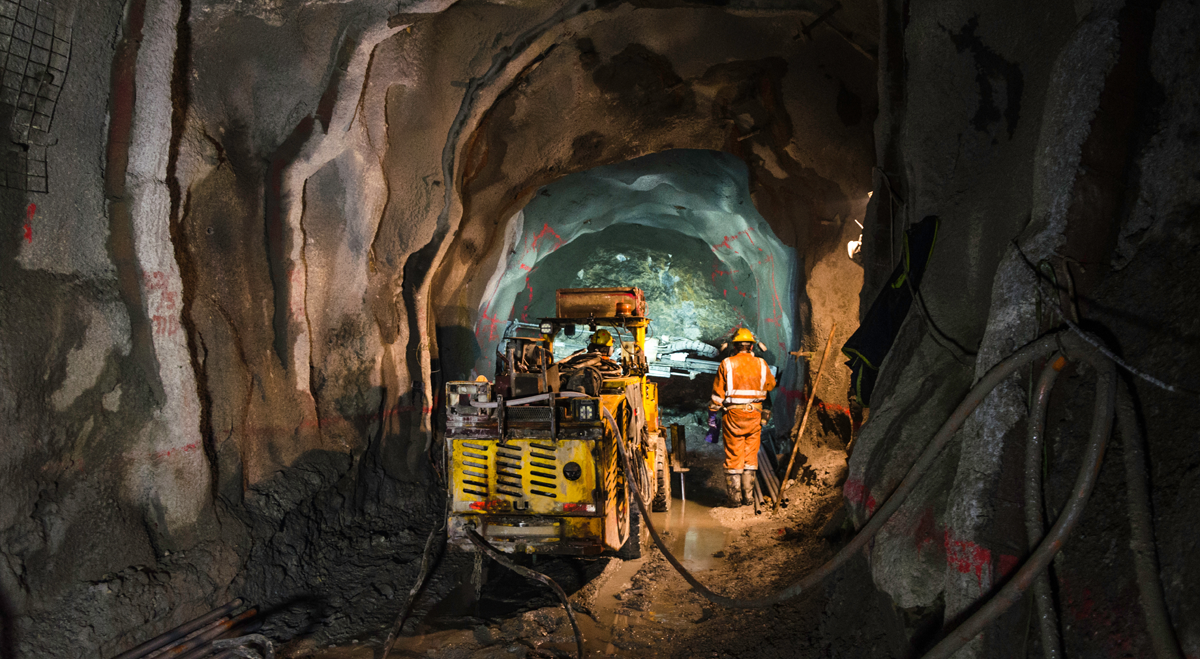
    Critical mineral demand is forecast to surge by 500% by 2050, transforming an industry already worth hundreds of billions into a multi-trillion-pound global market. With supply pressures intensifying, many believe the sector could present one of the defining investment opportunities of the next industrial age.

    The Innovation Report – Episode Two – Critical Minerals, takes viewers inside the escalating global race for critical minerals such as tungsten, silver, lithium and rare earth elements, the raw materials essential to modern technology, yet still heavily concentrated in a small number of countries. Through expert analysis, on-the-ground exploration and interviews with mining executives and geologists, the documentary explores why governments and industries are urgently seeking secure and reliable supply chains before shortages become critical.

    At the centre of the story is tungsten, a metal prized for its exceptional strength and heat resistance, making it vital for aerospace, defence, advanced manufacturing and emerging technologies.

    Featuring Guardian Metal Resources (LSE:GMET) (AMEX:GMTL) (USOTC:GMTLF) and drawing on expert insight and real-world exploration, this episode explores how global supply chains, geopolitical pressures, and decades of underinvestment have exposed vulnerabilities that could impact UK industry, energy security, and national resilience.

    When China tightened tungsten exports in 2025, it exposed just how fragile global critical mineral supply chains have become. With limited alternatives and demand continuing to rise, the pressure to develop new sources has never been greater.

    But this is about far more than mining. It’s a story of innovation, energy security, technological sovereignty and the future of the clean energy transition.

    From AI-powered exploration and 3D geological modelling to the reopening of historic mines and the development of more responsible supply chains, the film highlights how the next generation of resource development is rapidly evolving.

    As governments and industries confront the realities of mineral dependence, one question is becoming impossible to ignore: who will control the materials powering the future?

    Watch the full Market Link documentary to discover why critical minerals are fast emerging as some of the world’s most strategically important resources.

  • UK oil stocks retreat despite rebound in crude prices after new U.S. strikes on Iran

    UK oil stocks retreat despite rebound in crude prices after new U.S. strikes on Iran

    Shares in major UK energy companies moved lower in early London trading on Tuesday, even as oil prices recovered following overnight U.S. military strikes in southern Iran that renewed uncertainty around the stability of the fragile ceasefire and prospects for a diplomatic resolution.

    Shell plc (LSE:SHEL) declined 0.40%, while BP plc (LSE:BP.) fell 0.71% by 09:14 GMT.

    Smaller producers also trade lower

    Mid-sized and independent energy producers also weakened alongside the oil majors. Harbour Energy (LSE:HBR) dropped 1.97%, Serica Energy (LSE:SQZ) lost 1.83%, and Ithaca Energy (LSE:ITH) slipped 1.56%.

    Oil rebounds after military action near Strait of Hormuz

    Brent crude futures rose 3.4% to $96.59 per barrel after tumbling 6.78% on Monday to close at $93.42.

    Meanwhile, U.S. West Texas Intermediate crude traded down 3.64% at $93.08.

    The U.S. military said it carried out “self-defence strikes” overnight targeting Iranian missile launch sites and boats allegedly involved in laying mines close to the Strait of Hormuz.

    CENTCOM spokesperson Timothy Hawkins told CNN that forces acted “to protect our troops from threats posed by Iranian forces,” while maintaining that the ceasefire agreement remained active. Iranian authorities did not immediately confirm that assessment.

    Negotiation hopes mixed with continued diplomatic tensions

    The strikes came only hours after Donald Trump said meaningful progress had been achieved in negotiations, posting on Truth Social that Iran’s stockpile of enriched uranium would either be transferred to the United States or destroyed at a mutually agreed location.

    Iranian officials provided a more cautious assessment. Foreign Ministry spokesperson Esmaeil Baqaei acknowledged progress on “a large portion of discussion topics” but warned that “frequent changes in the positions of American officials complicate every negotiation,” adding that no immediate agreement could yet be declared.

    A senior Iranian delegation led by parliament speaker Mohammad Bagher Ghalibaf and Foreign Minister Seyed Abbas Araghchi travelled to Qatar on Monday for another round of discussions, which a U.S. official reportedly described as encouraging.

    Nuclear dispute and sanctions remain major obstacles

    According to CNN, disagreements over nuclear language and sanctions relief continue to represent the main barriers to a final agreement.

    Washington is reportedly insisting on what officials have described as a “no dust, no dollars” approach, requiring Iran to eliminate nearly 1,000 pounds of highly enriched uranium before any sanctions relief or financial concessions are granted.

    The Strait of Hormuz, a vital route handling around one-fifth of global oil supplies, has remained largely shut since the conflict began.

    U.S. Secretary of State Marco Rubio said the waterway would reopen “one way or the other,” although he cautioned that reaching a deal could “take a few days.”

    Energy sector faces uncertainty over future oil price support

    Major oil producers have benefited from elevated crude prices throughout the conflict, supporting earnings across the sector.

    However, investors remain aware that any durable peace agreement leading to the reopening of the Strait of Hormuz could quickly remove one of the key drivers behind recent strength in oil markets.

  • Market Open: B&Q Sales Slowdown, Union Jack Oil Loss

    Market Open: B&Q Sales Slowdown, Union Jack Oil Loss

    FTSE 100 rises as oil prices climb on Middle East tensions while Kingfisher and Union Jack Oil remain in focus.

    Market Overview

    European equities moved higher in early trading, with the FTSE 100 up 0.94 per cent to 10,535.44, while the CAC40 gained 1.76 per cent and the DAX rose 2.01 per cent. In the US, sentiment remained softer overnight, with the Nasdaq down 0.37 per cent and the S&P 500 lower by 0.42 per cent. Markets continued to balance hopes for easing tensions around Iran against concerns over rising energy prices following renewed US strikes in the region.

    Commodity markets reflected ongoing geopolitical uncertainty, with Brent crude climbing sharply while gold eased back and copper remained flat. Sterling weakened modestly against major currencies including the US dollar and euro, while Bitcoin traded lower against the pound. Investors also continued to monitor energy supply risks around the Strait of Hormuz alongside broader inflation implications from elevated oil prices.


    Market Numbers

    FTSE 100: Up (0.94%), 10,535.44
    CAC40: Up (1.76%), 8,258.260
    DAX: Up (2.01%), 25,389.10
    NASDAQ: Down (-0.37%), 29,707.5
    S&P 500: Down (-0.42%), 7,516.7


    In the Headlines

    Sales slowdown – Kingfisher (LSE:KGF)
    B&Q owner Kingfisher said sales growth slowed after a late start to spring reduced demand for seasonal and outdoor products. The update highlights continued pressure on UK consumer spending and retail demand amid uncertain economic conditions.

    Strategic pivot – Union Jack Oil (LSE:UJO)
    Union Jack Oil reported a swing to a loss as the company shifts its strategy towards growth assets in the United States. Investors are watching the transition closely as energy firms seek expansion opportunities amid volatile commodity markets.


    Currencies (vs GBP)

    USD: Down (-0.22%), $1.3470
    CHF: Down (-0.02%), Fr.1.05694
    EUR: Down (-0.21%), €1.1573
    JPY: Down (-0.12%), ¥214.421
    AUD: Down (-0.03%), $1.881270
    Bitcoin (BTC/GBP): Down (-0.75%), £56,854.5


    Commodities

    Copper: Down (1.26%), 6.4893
    Gold: Down (-0.76%), 4,526.63
    Brent Crude: Up (4.79%), 96.32
    Natural Gas: Flat (0.00%), 3.0385

  • European equities muted as renewed U.S. strikes on Iran push oil prices higher: DAX, CAC, FTSE100

    European equities muted as renewed U.S. strikes on Iran push oil prices higher: DAX, CAC, FTSE100

    European stock markets traded close to flat on Tuesday while crude oil prices advanced, as investors assessed the impact of fresh U.S. military action against Iran that weakened expectations for a near-term peace agreement.

    By 07:05 GMT, the STOXX Europe 600 was broadly unchanged. Germany’s DAX declined 0.3%, France’s CAC 40 slipped 0.4%, while the UK’s FTSE 100 rose 0.5%.

    Fresh military escalation clouds hopes for peace deal

    The U.S. military launched what it called “defensive” strikes in southern Iran, targeting and sinking two vessels belonging to the Islamic Revolutionary Guard Corps that were reportedly attempting to deploy mines in the Strait of Hormuz.

    Iran responded by firing missiles at U.S. aircraft, according to reports. The Wall Street Journal later cited a U.S. official saying that further American strikes targeted missile launch systems near Bandar Abbas.

    Recent optimism surrounding a potential agreement between Washington and Tehran to end their nearly three-month conflict has since faded. Weekend reports suggested both countries had agreed in principle to a deal, while Donald Trump stated that negotiations were progressing “nicely.” However, Trump also cautioned that fighting could resume and intensify if no agreement is ultimately reached.

    Oil recovers as markets monitor Strait of Hormuz developments

    Oil prices moved higher, recovering part of Monday’s losses that had followed reports of diplomatic progress aimed at reopening the Strait of Hormuz.

    Brent crude futures, the global benchmark, were last trading 2.4% higher at $98.39 per barrel after briefly falling below the $100 level earlier in the week.

    Despite the recent pullback, Brent remains significantly above pre-conflict levels of around $70 a barrel, maintaining concerns that elevated energy costs could continue to fuel inflationary pressures globally.

    Energy stocks gain while Ferrari slips

    European energy companies benefited from the rebound in oil prices, with shares in Eni (BIT:ENI), Repsol (TG:REP) and TotalEnergies (EU:TTE) moving higher.

    Elsewhere, Milan-listed shares of Ferrari N.V. (BIT:RACE) fell more than 5% after the company revealed its first fully electric vehicle.

  • FTSE 100 rises as Iran negotiations ease market nerves despite renewed oil price spike

    FTSE 100 rises as Iran negotiations ease market nerves despite renewed oil price spike

    UK equities moved higher on Tuesday as optimism surrounding potential ceasefire negotiations between the United States and Iran helped improve investor sentiment, offsetting renewed strength in oil prices that pushed Brent crude back towards the $100-a-barrel mark.

    The FTSE 100 advanced 0.75%, outperforming weaker European counterparts. Germany’s DAX fell 0.28%, while France’s CAC 40 declined 0.38%. Sterling weakened 0.21% against the dollar to $1.3473 as of 07:15 GMT.

    Oil rebounds as tensions remain high around Strait of Hormuz

    Brent crude rose more than 2% after partially retreating in the previous session, following confirmation from U.S. Central Command that American forces had carried out “self-defence strikes” targeting Iranian missile launch facilities and boats operating near the Strait of Hormuz.

    Iran has effectively restricted almost all non-Iranian shipping traffic through the strategic waterway since the outbreak of hostilities, disrupting roughly one-fifth of global oil and liquefied natural gas flows.

    A report from Nikkei indicated that Iran had agreed in principle to remove naval mines from the strait within 30 days under a developing memorandum of understanding tied to ceasefire discussions.

    UK inflation pressures persist as retail prices climb

    Data from the British Retail Consortium showed UK shop price inflation accelerated to 1.2% in May from 1.0% in April, driven by supply chain disruption linked to the conflict and higher energy costs.

    Furniture as well as health and beauty products recorded some of the strongest price increases as businesses faced rising raw material and transport expenses. Food inflation, however, eased to a one-year low of 2.7%.

    The BRC urged the UK government to take further action to reduce cost pressures facing retailers and consumers.

    Diplomatic signals remain mixed

    On the diplomatic front, Donald Trump stated on Truth Social that Iran’s enriched uranium would either be transferred to the United States “to be brought home and destroyed” or eliminated locally “in conjunction and coordination” with Tehran.

    A U.S. official later confirmed that Iran had agreed in principle to those terms. However, Iranian Foreign Ministry spokesman Esmaeil Baqaei warned that “the frequent changes in the positions of American officials complicate every negotiation.”

    Meanwhile, U.S. Secretary of State Marco Rubio said any agreement could still “take a couple days,” tempering expectations of an immediate breakthrough.

    UK market round-up

    Kingfisher plc (LSE:KGF) reported a 0.7% decline in first-quarter underlying sales amid subdued home improvement demand but maintained its full-year profit guidance, citing resilient performance across core categories despite weaker seasonal trading caused by a delayed start to spring.

  • easyJet faces Italian antitrust investigation over baggage booking practices (EZJ)

    easyJet faces Italian antitrust investigation over baggage booking practices (EZJ)

    easyJet (LSE:EZJ) is under investigation by Italy’s antitrust authority over alleged unfair commercial practices connected to baggage service bookings on its digital platforms.

    The Italian regulator said the airline’s website and mobile application automatically presented bundled baggage and sports equipment check-in options for return journeys as the default selection during the booking process.

    According to the authority, customers were shown only the average total price for the service, even in situations where travellers intended to purchase baggage options for just one segment of their trip.

    Probe to assess compliance with Italian consumer rules

    The investigation will focus on whether easyJet’s booking practices comply with consumer protection regulations in Italy, particularly regarding pricing transparency and the presentation of optional services.

    Italian authorities are examining whether the platform design may have influenced customer purchasing decisions by making bundled return-trip services appear as the standard option.

    Regulatory scrutiny continues across airline sector

    The probe reflects ongoing regulatory attention across Europe on how airlines market ancillary services such as baggage, seat selection and additional travel extras through online booking systems.

    Any findings against the airline could potentially result in corrective measures or financial penalties, depending on the outcome of the investigation.

    More about easyJet

    easyJet is a UK-based low-cost airline operating short-haul passenger services across Europe and neighbouring regions. The company serves a large network of leisure and business destinations through its fleet of Airbus aircraft and generates additional revenue through ancillary services including baggage, seat selection and holiday packages.